History of Shenzhen's Homestead Land Development
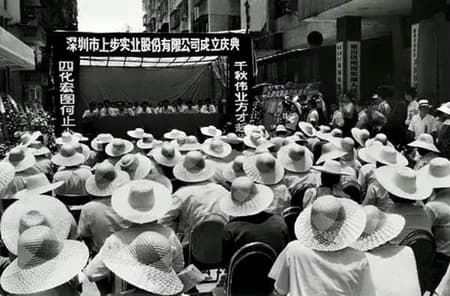
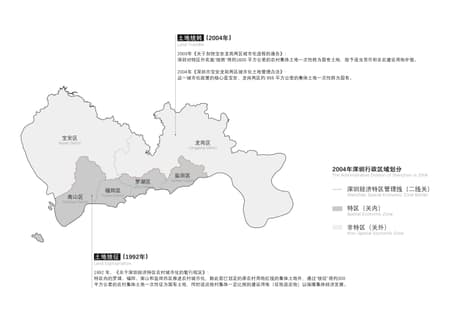
Since the reform and opening up, Shenzhen has entered a phase of rapid urbanization, requiring a large amount of land for urban construction. To this end, the government implemented "land acquisition" within the Special Economic Zone in 1992, and completed "land transfer" in Bao'an and Longgang districts outside the Special Economic Zone in 2004, achieving full nationalization of land. At the same time, all farmers in Shenzhen were converted to non-agricultural urban residents, and the original rural collective economic organizations were restructured into shareholding cooperative companies. After 2004, Shenzhen no longer had any rural collective land, and therefore, the concept of "homestead land" no longer existed in name.
Uncontrolled urbanization and changes in the fabric of homestead land
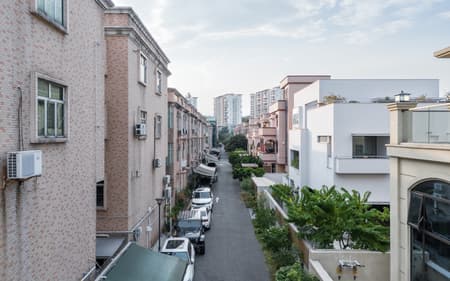
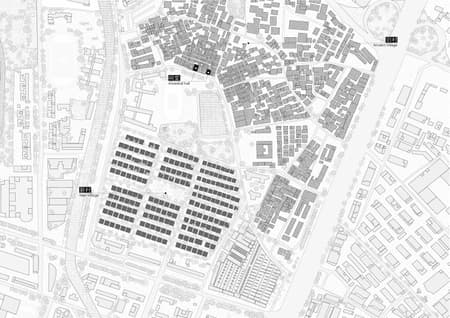
The residential dwellings in the villages of Shajing predominantly feature the" Three-Bay-Two-Corridors " style. Following the Reform and Opening-up, low-end manufacturing flourished. The industrial transformation led to a surge in the influx of people into Shajing and disorderly spatial expansion. In the two decades following the centralized requisition of land, and in an effort to accommodate the housing needs of the rapidly growing population, self-built structures sprang up like mushrooms after rain, rising to heights of five to eight stories. The disorderly demolition and reconstruction destroyed the original traditional village fabric.
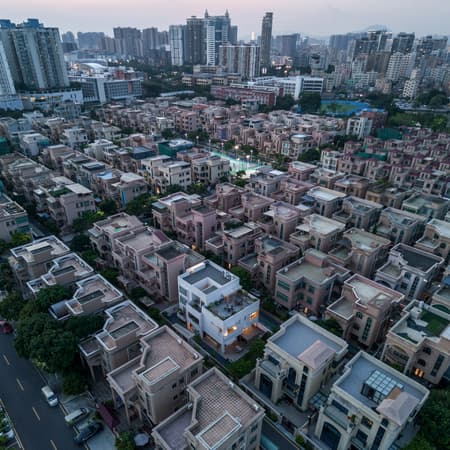
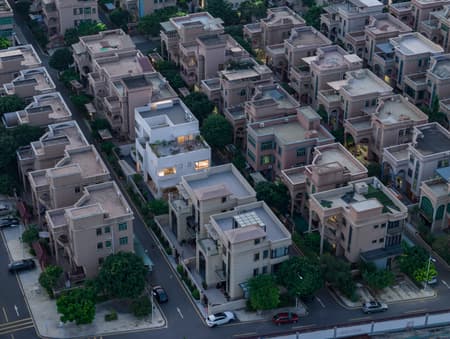
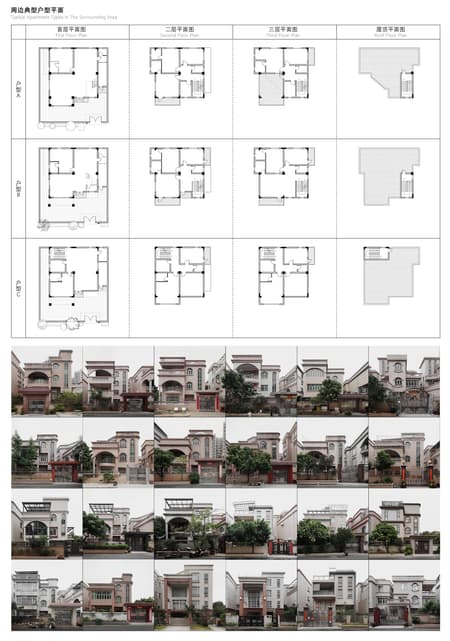
As villagers gradually became wealthy through rent collection, they began building uniformly planned new villages outside the old village to meet their demand for improved living standards. The new villages included villa-style homesteads and high-rise collectively-owned apartment buildings. The villa-style homesteads were constructed by villagers according to design plans provided free of charge. Consequently, the new villages resulted in numerous copies of the same type of homestead.
Observational design approach
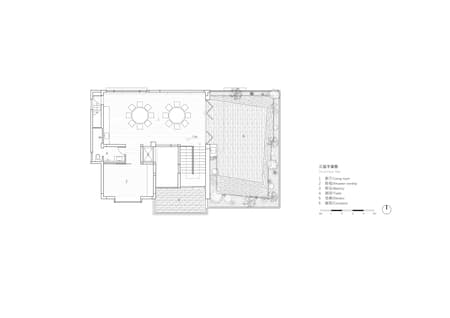
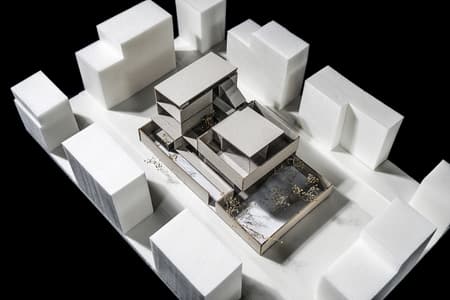
In the initial scheme of the renovation design, the focus was on functionality. On one hand, it emphasized the relationship between the public areas and the courtyard; on the other hand, it outlined a simple site plan showing the relationships between the bedrooms, courtyard, public areas, and the garden. After several discussions, the client agreed with the core strategy of strengthening the relationship between people's lives and the courtyard. However, they wanted us to better respond to their actual living habits, ensuring that all spatial designs aligned with their needs and usage patterns. Therefore, we paid more attention to listening to and recording the client's lifestyle, using an observational approach to the design. For us, this homestead renovation was not a spatial experiment showcasing architectural skills. Our goal was not for the homeowners to adapt to our pre-set lifestyle, but rather for the house to naturally integrate into their daily lives.
Continuing the cultural lineage of the village collective
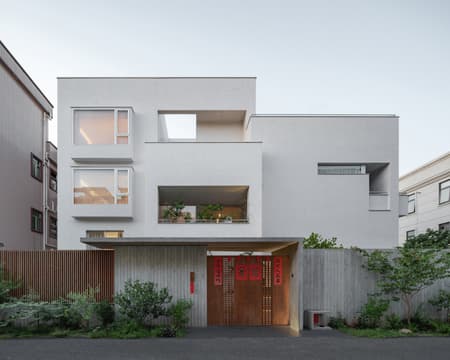
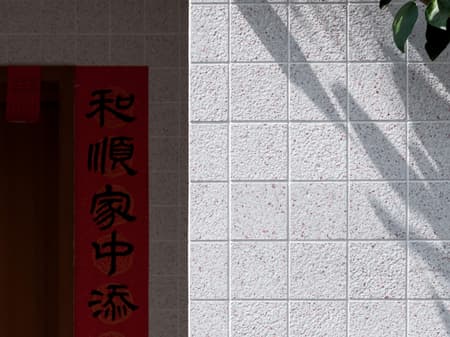
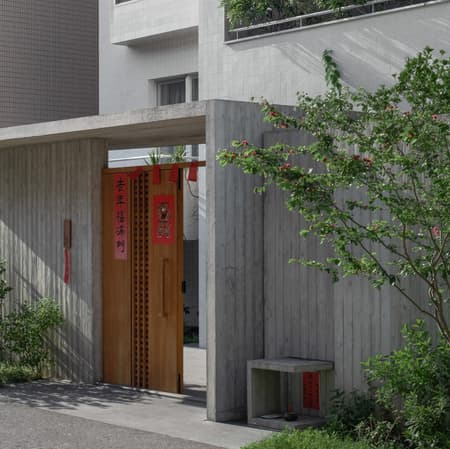
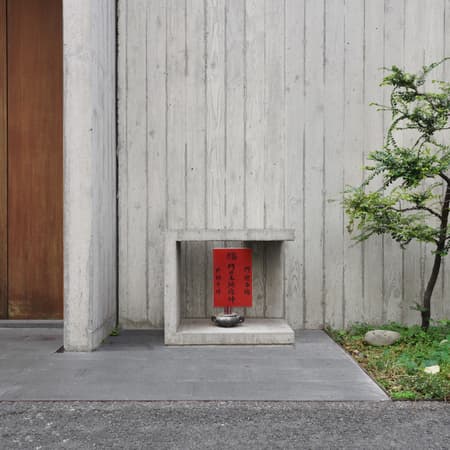
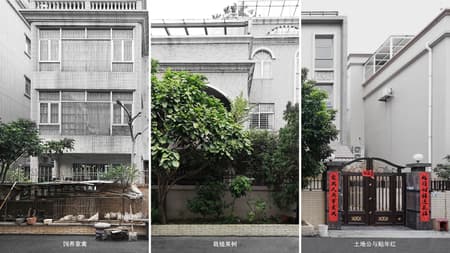
The new village's layout is uniform and orderly, with each homestead land facing south, and each household has a complete wall defining its private space. Each house also has a small entrance courtyard. In this efficiency-driven, seemingly impersonal planned space, the boundary walls ironically reflect the village's collective cultural heritage. The walls become a showcase of each family's daily life and culture. Outside the walls, due to different preferences, some raise poultry, while others plant fruit trees. What they all share is a commitment to preserving traditional customs, not only by pasting red decorations at the entrance but also by placing a shrine to the Earth God on the left front of the house. The homeowner is a gardening enthusiast, so we designed the area outside the wall to be left blank, allowing her to create her own little haven. This narrow patch of greenery not only showcases her hobbies and aesthetic sense, but her daily care for the plants also becomes an opportunity to chat and exchange pleasantries with neighbors.
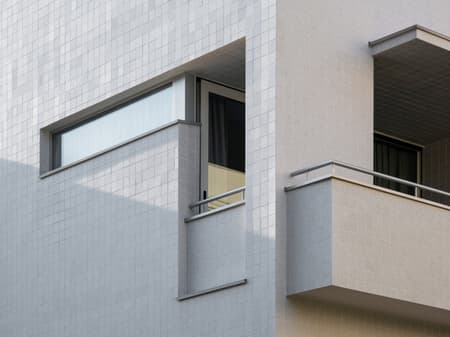
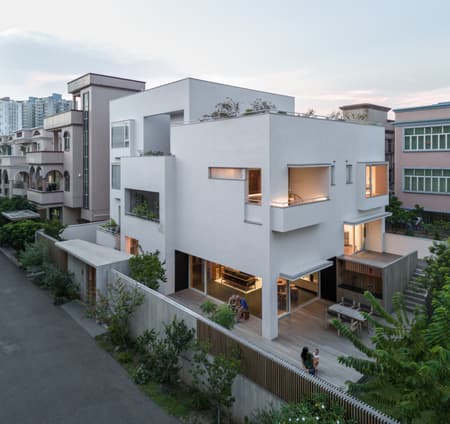
In addition, the exterior walls of all the houses in the new village are uniformly made of 10*10cm ceramic tiles, mainly in pink and earthy yellow. To echo the surrounding environment, the exterior wall material also follows the 10×10cm specification, but instead of regular ceramic tiles, precast terrazzo mixed with pink pebbles was chosen. The use of white cement in the precast terrazzo creates a natural transition in material color between the building and the interior. At the same time, the pink pebbles also give the building a slightly pinkish base color, showcasing rich material details at a close-up scale.
Hall of village and living room
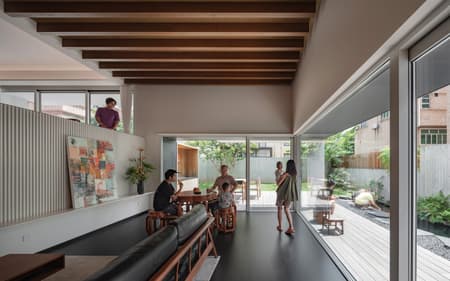
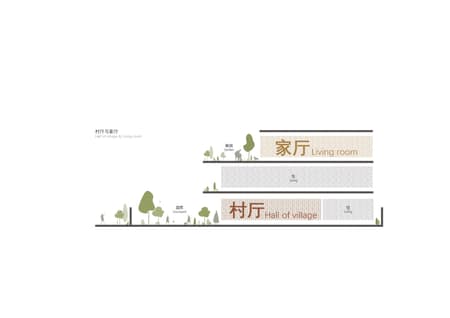
The homeowner is warm and hospitable, and is very popular among the villagers. Whenever we discuss the design scheme in his living room, neighbors often drop by for a cup of tea and a chat. These visits aren't formal, but rather a casual and relaxed part of daily life. Furthermore, we observed that ancestral halls in the old village have gradually become deserted with the changing times, with fewer villagers going there for socializing. Instead, the living rooms of respected and well-liked villagers have become the new social spaces. This led us to an idea: to create a "hall of village" with public social functions on the homestead land, in response to the changing social spaces and methods of villagers in this era of transformation.
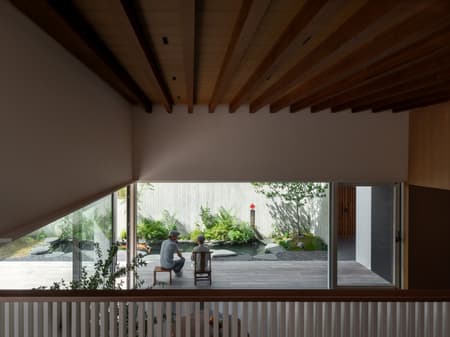
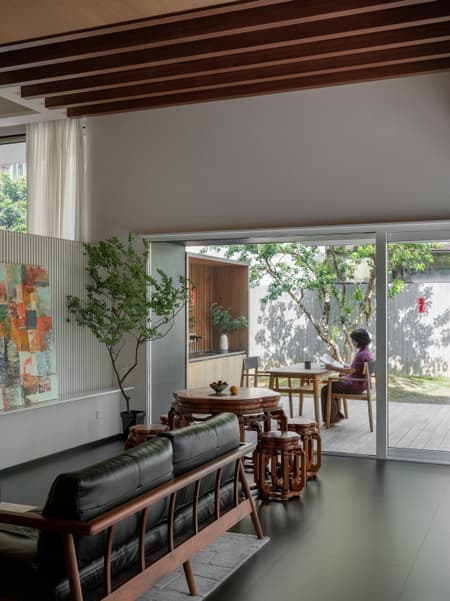
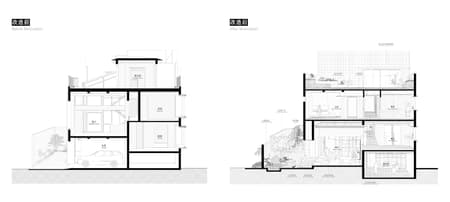
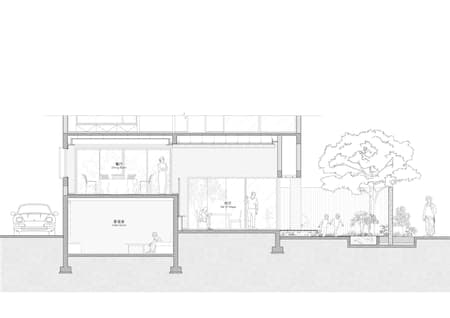
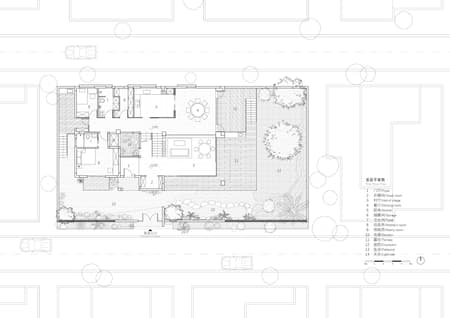
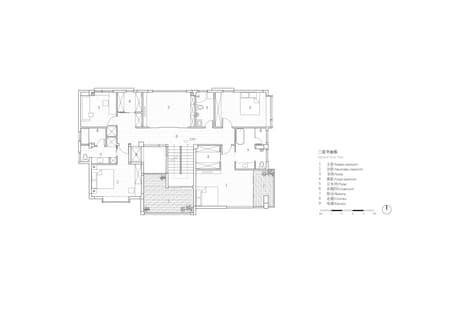
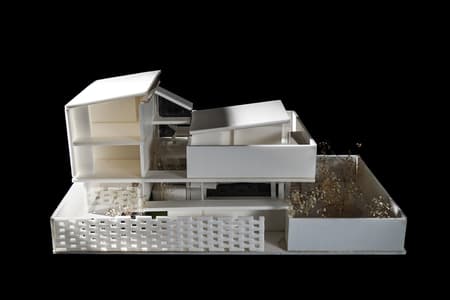
Before the renovation, the first floor was an elevated garage, with the living room on the second floor, disconnected from the courtyard. In the new layout, the "hall of village" on the first floor and the courtyard become a social gathering place for the homeowner and fellow villagers. Meanwhile, we also adopt architectural and interior design techniques to make the "hall of village" and courtyard more public and open. Not only were the walls and gates designed with openwork facades, but curtains were also omitted from the "hall of village," allowing large floor-to-ceiling windows to blur the boundary between indoors and outdoors. The living room on the third floor and the outdoor terrace become more private shared spaces for communication among the homeowner's family.
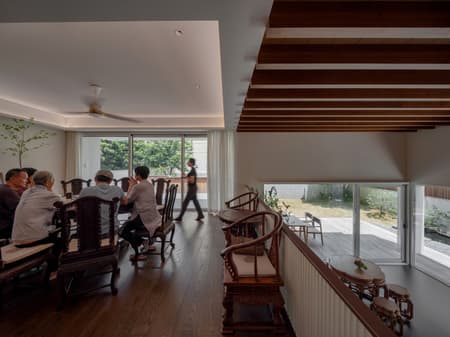
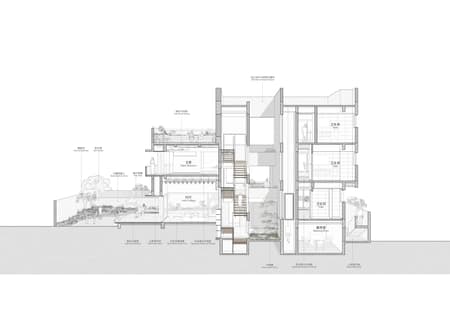
The homeowner's hospitality is also evident in their frequent invitations for guests to stay for meals and tea. Therefore, the dining room is not only a place for family meals but also a gathering space for friends and relatives. The design creates a double-height space in the "hall of village," with the staggered dining room and "hall of village" each possessing a sense of territory while maintaining a spatial connection. The lowered eaves outside the " hall of village " add an interesting spatial experience to the cross-sectional relationship between the dining room, the " hall of village," and the entrance courtyard.
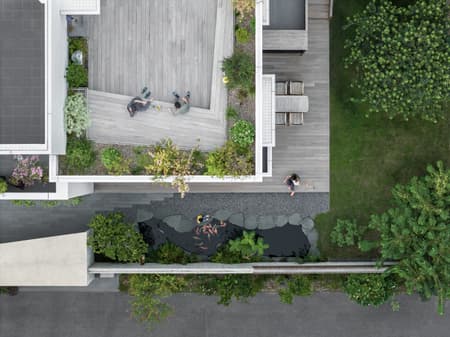
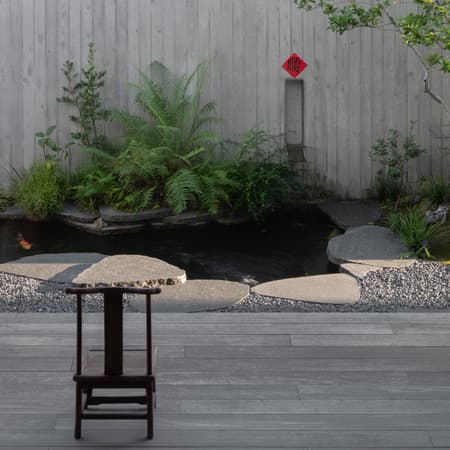
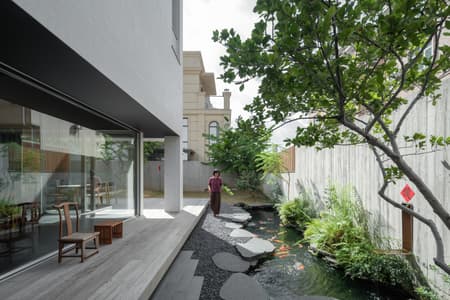
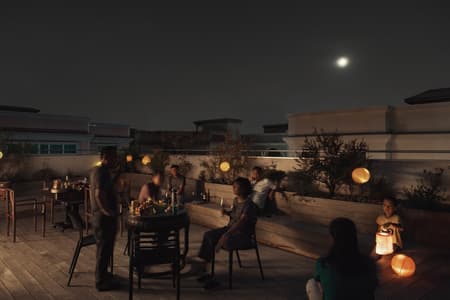
When considering the landscape design of the "hall of village" and "living room," each outdoor scene corresponds to a different lifestyle. In the entrance courtyard on the south side of the " hall of village," the koi pond serves as an important connecting element for gatherings and conversations. The east courtyard of the " hall of village," with its lawns and small trees, becomes a playground for children to run and play. The third-floor outdoor terrace provides a spacious, enclosed wooden platform for the owners' large family gatherings, offering an unobstructed view of the starry sky.
Daily life rooted in traditional culture
In the past, residents of Shajing would have shrines in their homes to worship Guanyin and household gods. On the first and fifteenth of each lunar month, solemn ceremonies would be held to offer incense and pray to the gods. On New Year's Eve, in the afternoon, every household would begin pasting Spring Festival couplets and door gods, praying for peace and prosperity in the coming year. Even after moving away from their old homes, these traditions continued. The shrine of the Earth God on the left side of the wall, the red New Year's decorations and door gods on the entrance door, all blend harmoniously into the fabric of the courtyard, embodying the homeowners' heartfelt wishes for a happy life.
In Shajing, after urbanization, villagers no longer rely on farming for a living, but they still love to plant fruit trees in their yards and enjoy the joy of harvesting fruit; they also like to keep koi fish at home, symbolizing wealth, fortune, and longevity. The recessed "hall of village" provides a covered walkway for shade and shelter from the rain, and the extension of indoor and outdoor spaces makes the entrance courtyard and the east courtyard important places for daily life. In the daily life of four generations living together, the elderly accompany their great-grandchildren to feed the koi fish in the courtyard, the lady of the house and her daughter-in-law chat and take care of the children in the courtyard, and the husband prunes the fruit trees in the courtyard.
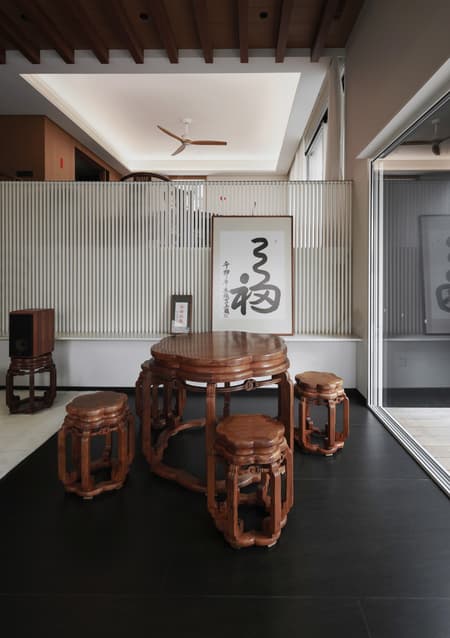
The male homeowner loves traditional Ming and Qing dynasty style furniture, and from the initial design stage, the owner made it clear that most of the old furniture would be reused after the renovation. Therefore, the interior space design needed to provide a harmonious match with the existing Ming and Qing dynasty style furniture, and the newly added furniture should also blend naturally with the old furniture, complementing each other.
Light well that responds to the climate and traditional culture of Lingnan
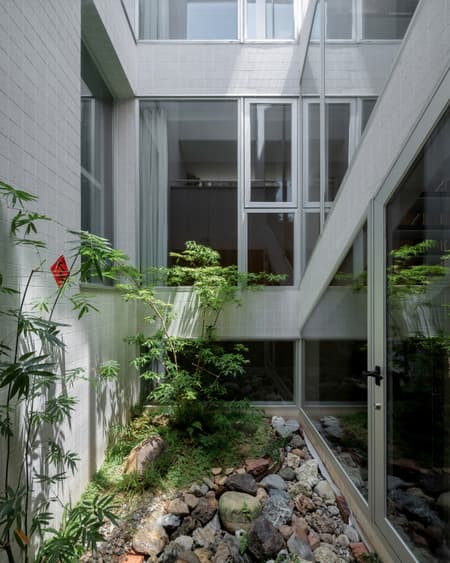
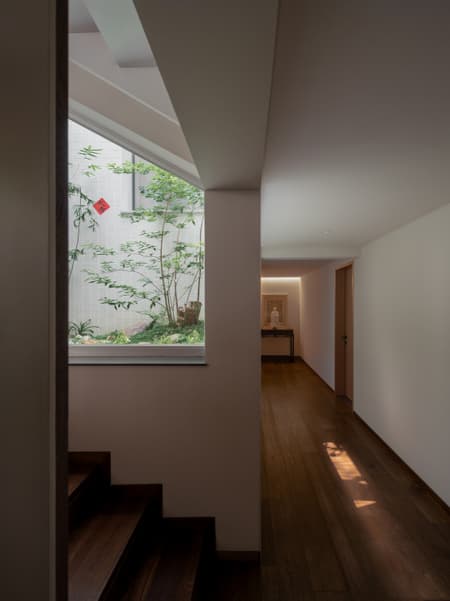
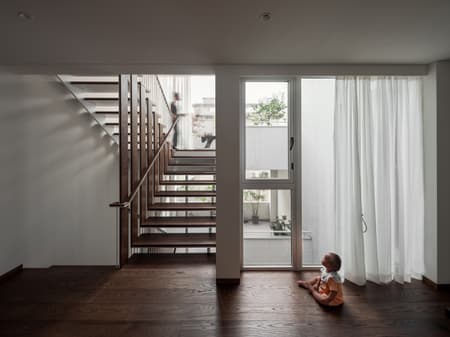
In traditional old houses in Shajing, the light well not only provides ventilation and lighting but also symbolizes wealth accumulation, connection to the god, family harmony, and prosperity. The design places the light well next to the stairs and corridors, providing a comfortable space for those walking through. The second and third floors on the south side of the light well are outdoor terraces, allowing for greater air circulation. The base of the light well also becomes another courtyard design by the homeowner. The stones paving the courtyard were collected during her travels in Southwest China, carrying memories of her journeys. Whenever new guests enter the house, the homeowner first tells them the story behind this courtyard design.