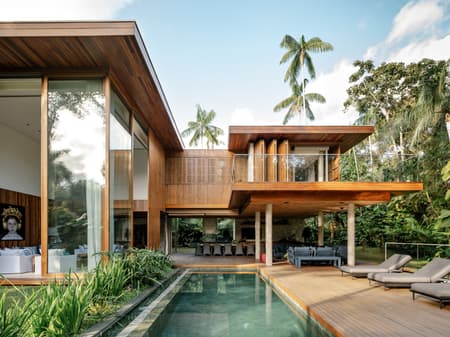
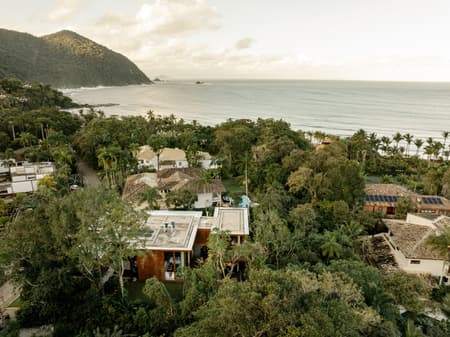
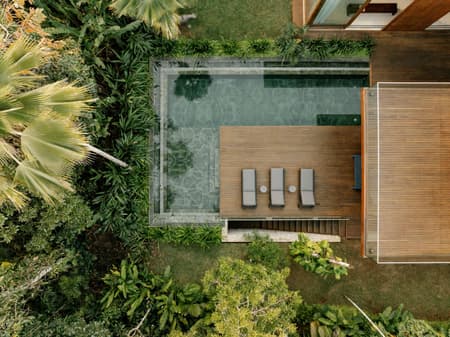
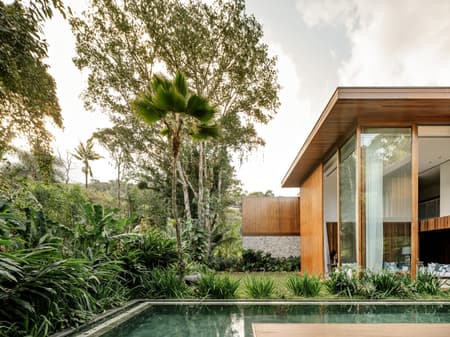
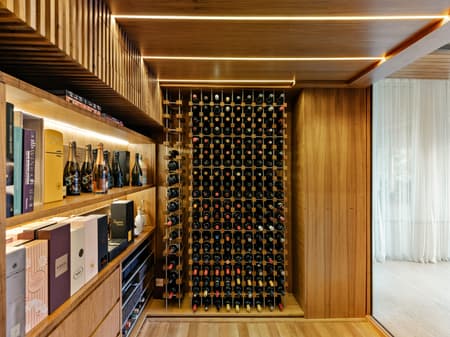
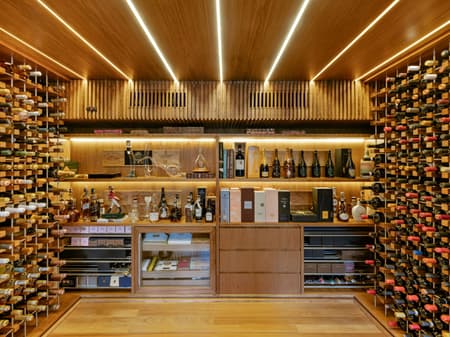
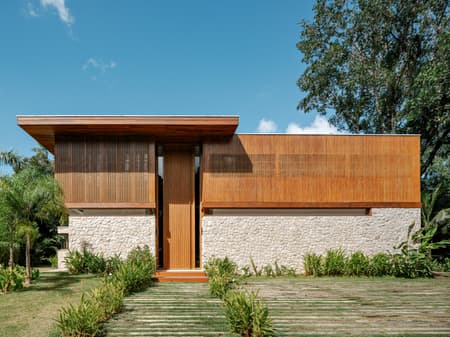
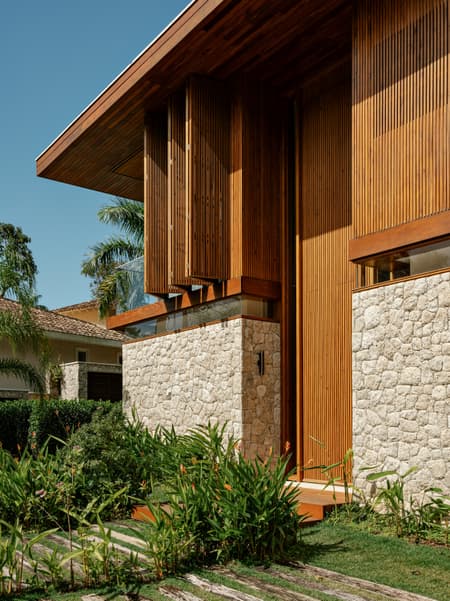
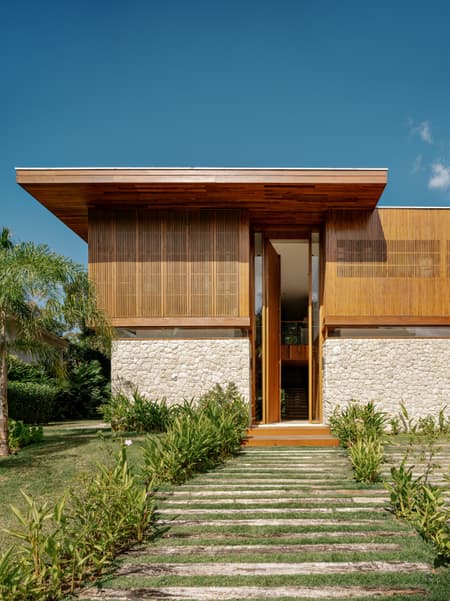
Summary text. Designed by David Bastos, founder of DB Arquitetos (@DBarquitetos), this two-story beach house is located in a gated community in Guarujá, on São Paulo’s southern coast. Built within the footprint of the original structure—which was demolished to meet the new needs of the entrepreneurial owners—the residence occupies a 1,950 m² lot with 690 m² of built area. With a contemporary design and timeless aesthetic, the project emphasizes clean lines, large openings, and natural materials, promoting seamless integration between interior spaces and the surrounding landscape. Constructed in concrete, the house combines moledo stone, reforested wood, slatted panels, and expansive glass surfaces, ensuring cross ventilation and visual connectivity throughout. On the ground floor, living, dining, and wine areas open to the gourmet space and pool, while the upper floor bedrooms face the greenery and engage with the social area’s 6.7-meter double-height ceiling. Sustainable solutions—including solar energy, rainwater harvesting, and automation—underscore the home’s environmental commitment. The interior features mostly new furnishings with a neutral base accented by blue and white, natural fibers, and artwork from the owners’ collection.
Press release. Designed by David Bastos, founder of DB Arquitetos (@dbarquitetos), this two-story beach house is located in a gated community in Guarujá, on the southern coast of São Paulo. Built on a 1,950 m² lot with 690 m² of constructed area, the residence was designed for a couple of entrepreneurs in the transportation and gastronomy sectors, seeking a spacious retreat fully integrated with nature and with strong visual connectivity among the social areas.“They reached out to us through friends who were already our clients. They got to know our work by visiting some of these projects and through publications about the firm,” says David Bastos.
From the first visits to the site, the architect realized that the previous house, very rigid and constrained by the condominium’s former construction rules, would not allow for a significant expansion. Demolition proved to be the best decision, enabling the creation of a new home fully adapted to the couple’s needs. Still, respecting local regulations, the new project was built within the same footprint as the original structure.
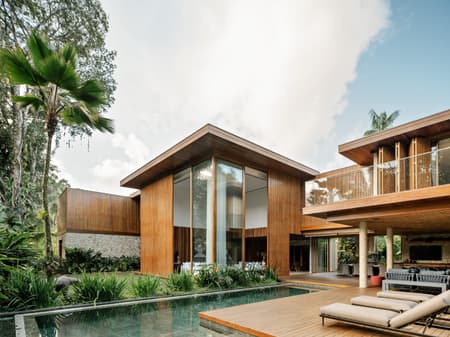
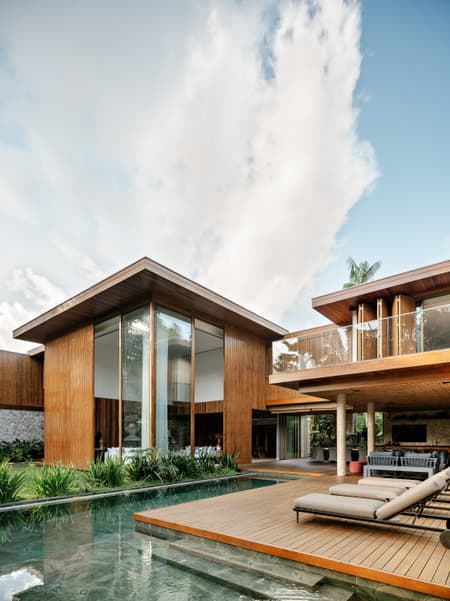
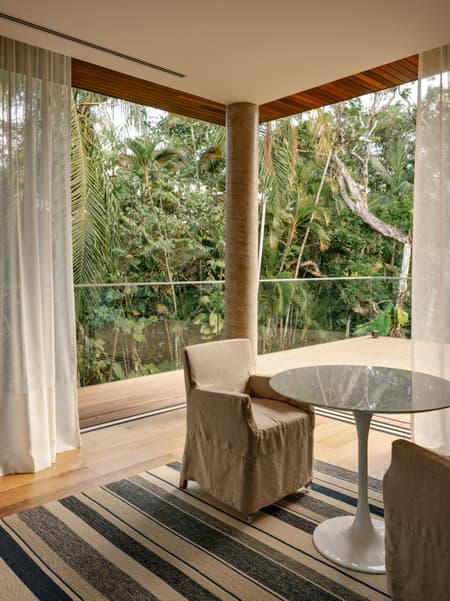
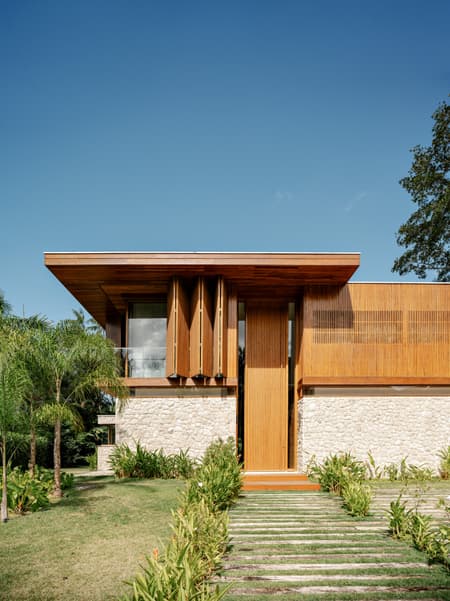
The design concept was driven by the desire to create a contemporary beach house that combines comfort, lightness, and full integration with nature. Simple lines, natural materials, and large openings define a timeless, airy aesthetic in constant dialogue with the greenery.
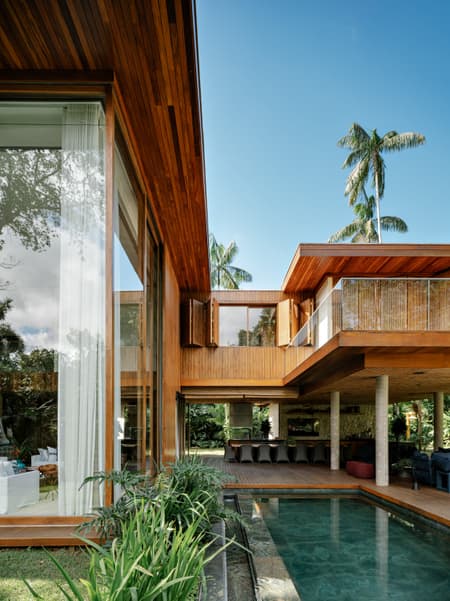
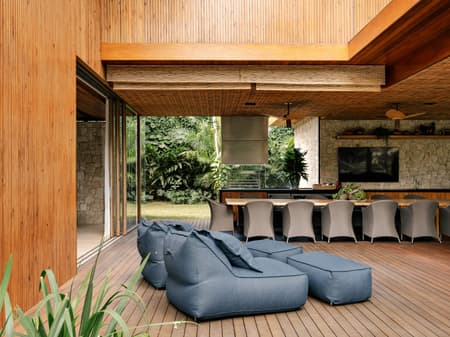
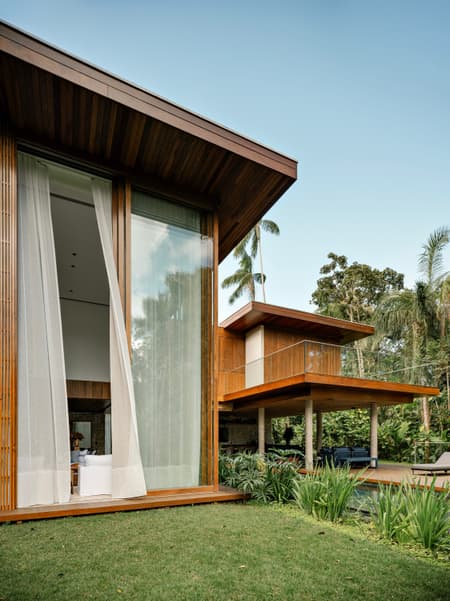
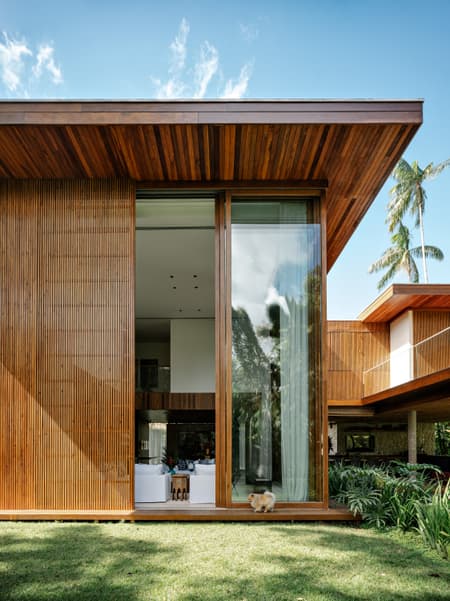
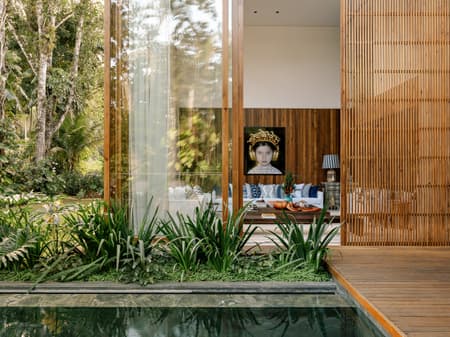
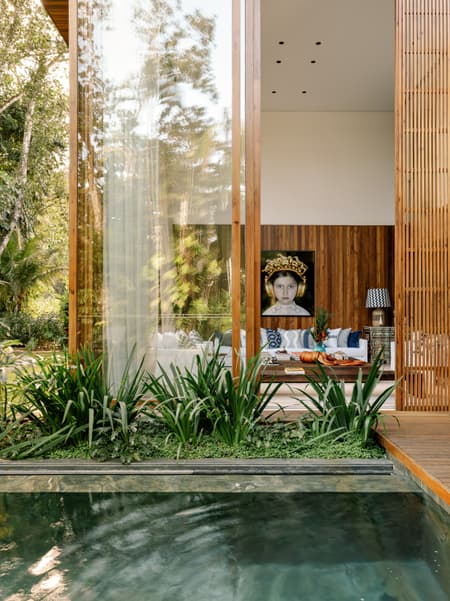
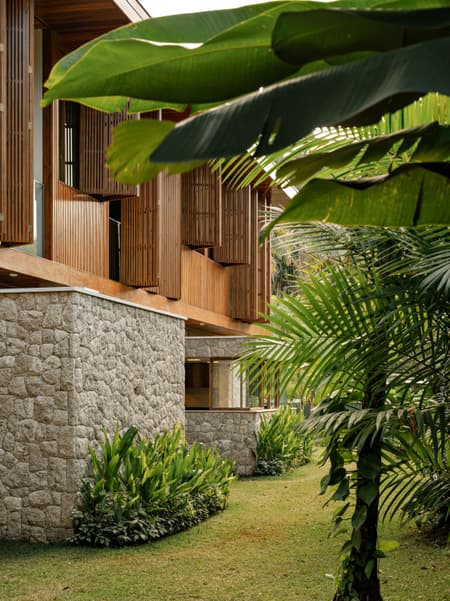
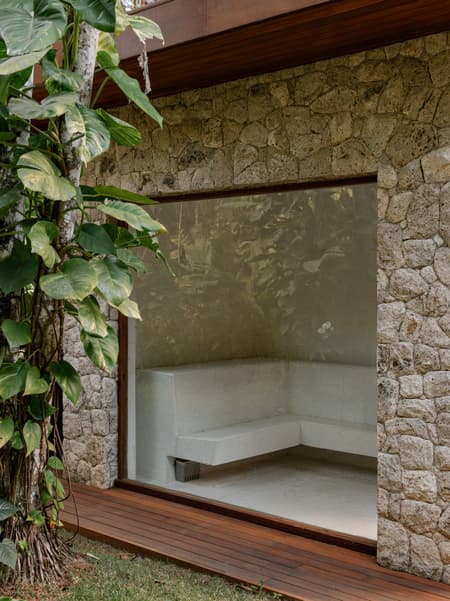
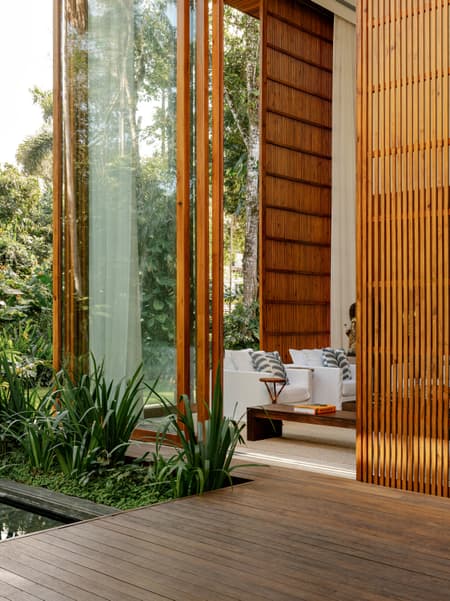
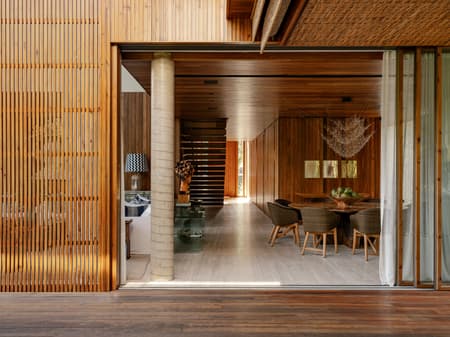
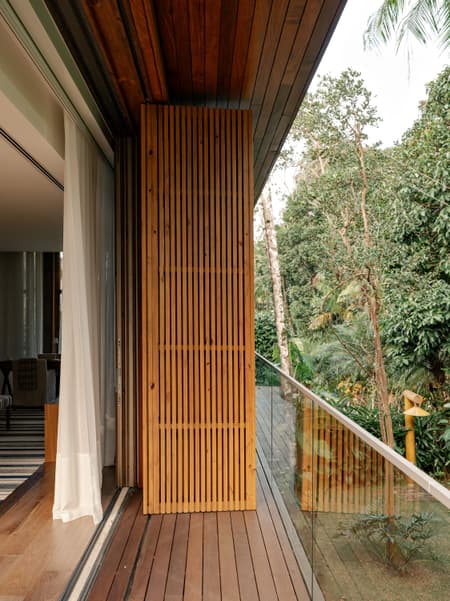
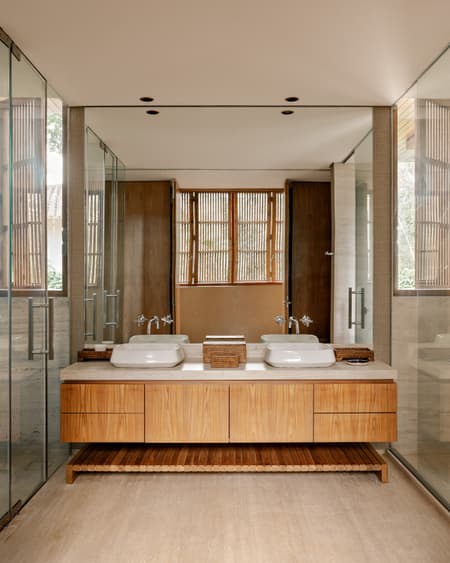
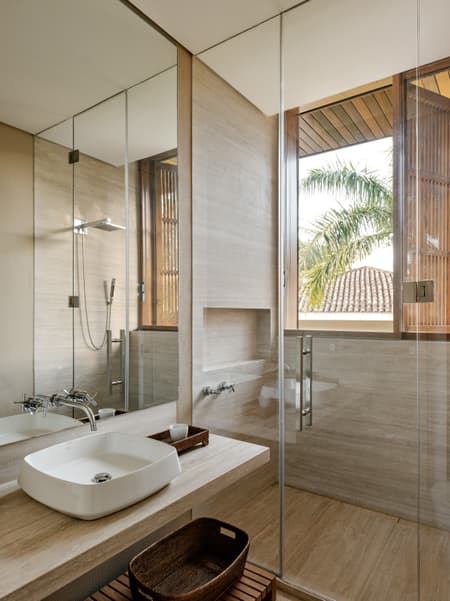
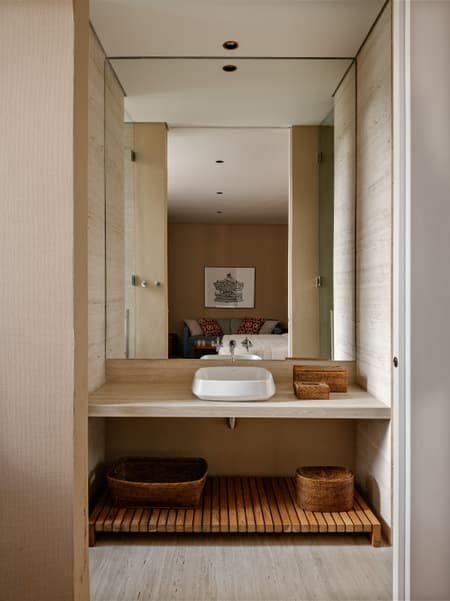
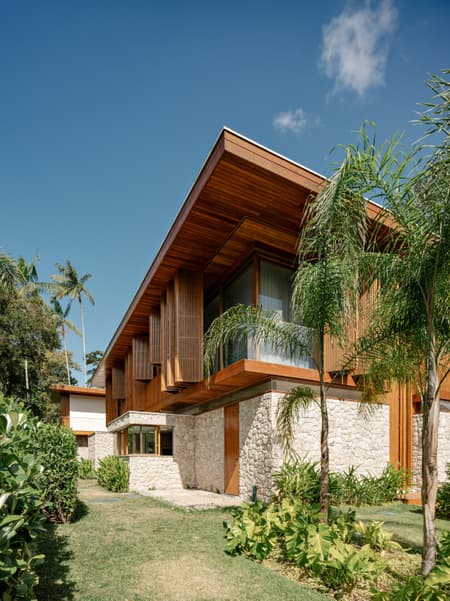
The new residence was executed with conventional concrete structure, including pillars, beams, and slabs, with finishes that highlight the natural qualities of the materials. Moledo stone is used in the pool, wet areas, and parts of the façade, while reforested wood appears in decks, eaves, ceilings, and window frames. Slatted panels and glass surfaces complete the ensemble, promoting a fluid relationship between indoors and outdoors.
Sustainable solutions were adopted across multiple fronts: solar panels for energy generation, maximizing natural light through windows and skylights, LED lighting, and low-consumption appliances. The rainwater harvesting system supplies garden irrigation, and certified wood and water-based paints reinforce environmental responsibility. Additionally, cross ventilation ensures thermal comfort, and the use of technology and automation optimizes energy consumption.
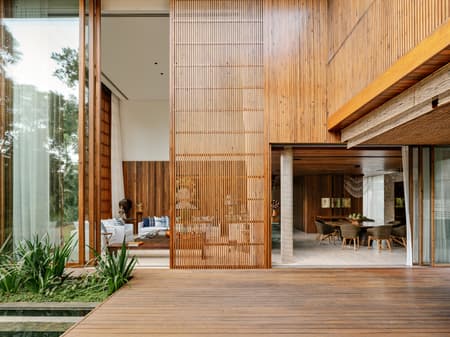
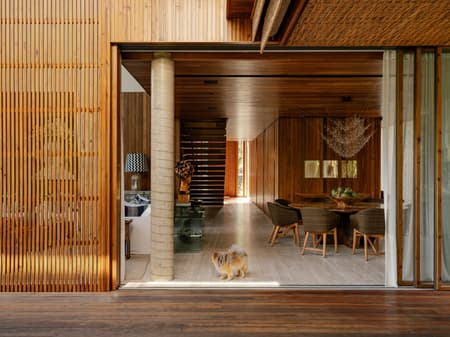
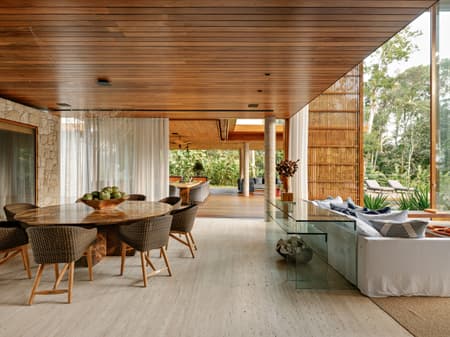
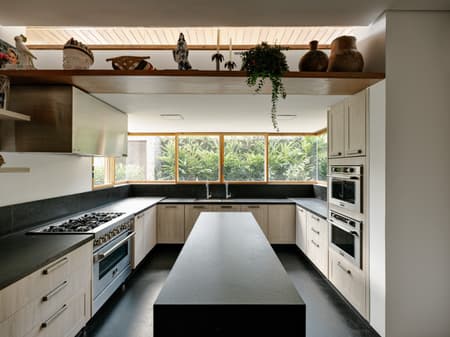
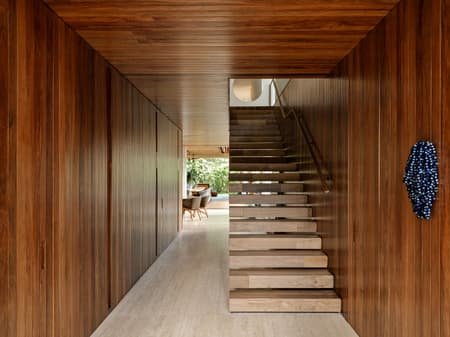
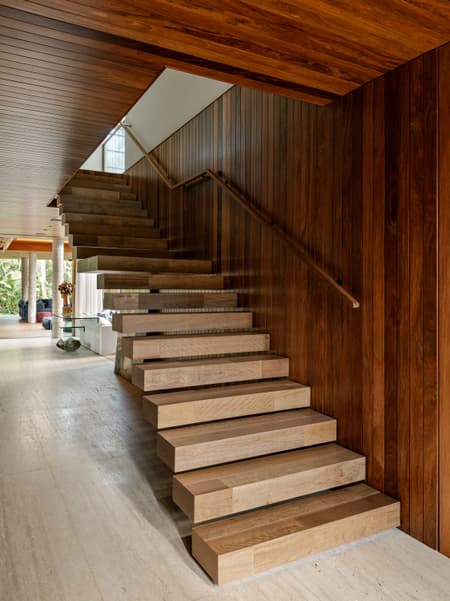
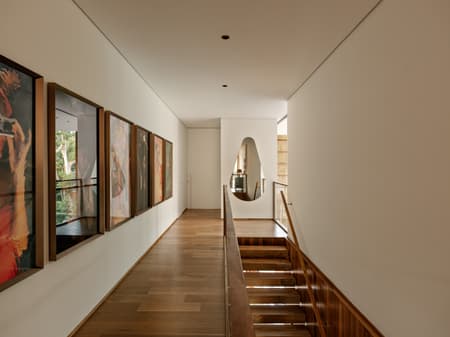
On the ground floor, all areas—except the kitchen and powder room—flow seamlessly. The hall and stairs lead to the living, dining, and wine areas, which fully open onto the gourmet space and pool. Upstairs, the bedrooms face the landscaped surroundings, connected by a gallery that offers privileged views of the social area’s 6.7-meter double-height ceiling.
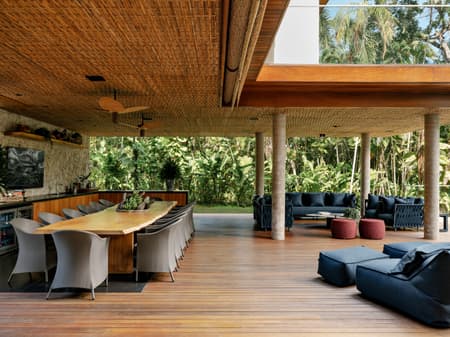
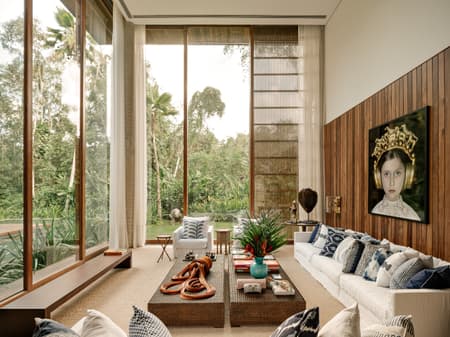
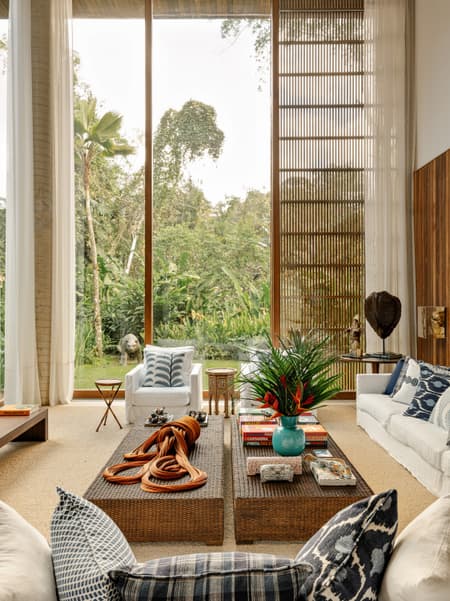
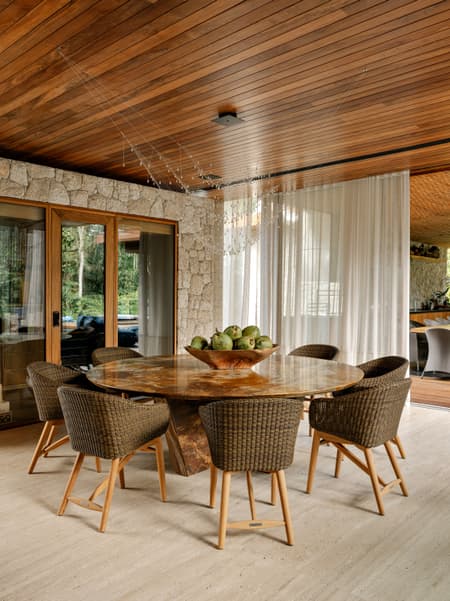
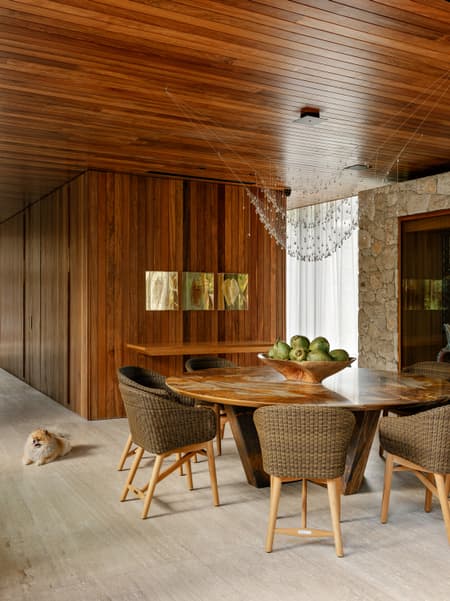
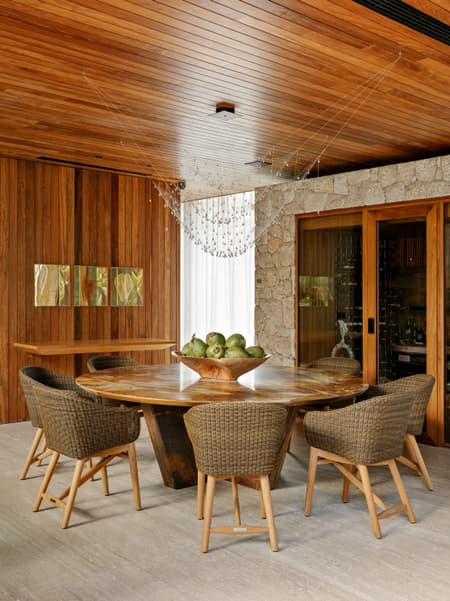
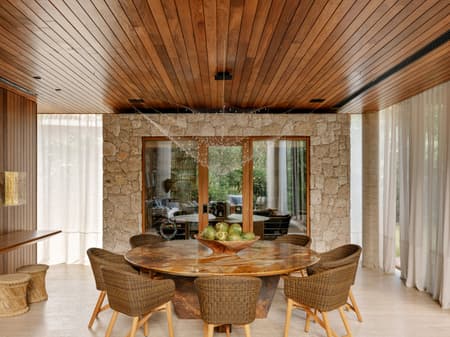
In the interior design, only a few pieces were reused from the clients’ collection—including a marquetry chest repurposed as a side table in the living room, a trunk, some paintings, and the blue side tables in one of the suites. About 95% of the furniture is new, selected to reinforce the light, welcoming beach atmosphere desired by the client. Blue and white tones appear in cushions made with imported Celina Dias fabrics over a neutral base of sofas and armchairs. A natural fiber rug by Phenicia unifies the space. The dining table, designed by DB Arquitetos, features a Yellow Bamboo stone top (Brasigran) and is paired with fiber chairs from Casual Móveis. The Lacrima del Pescatore lamp by Ingo Maurer (Fas Iluminação) adds a sculptural, sophisticated touch.
The art curation highlights a sculpture by Armarinhos Teixeira, commissioned specifically for the project, while other works belong to the clients’ collection—including a painting by Adriana Duque prominently displayed on the main living room wall.
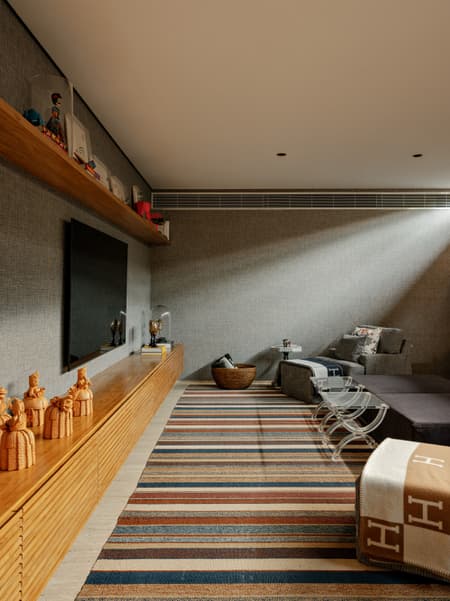
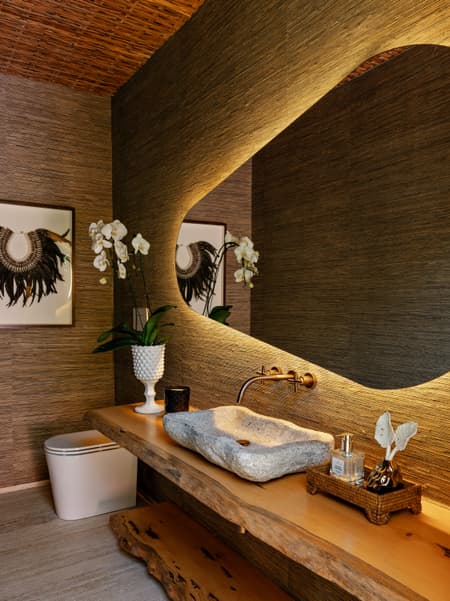
The color palette emphasizes the natural tones of wood and fibers used in rugs, chairs, and coverings, combined with organic textures in wallpapers. Blue and white accents appear throughout the house, enhancing the sense of freshness and the beach identity.
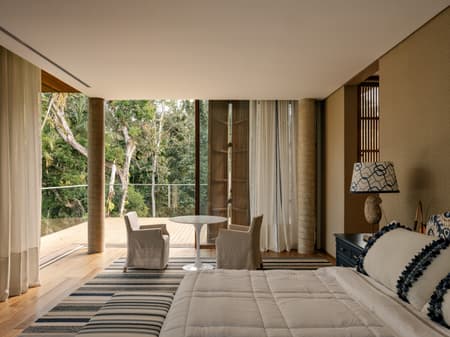
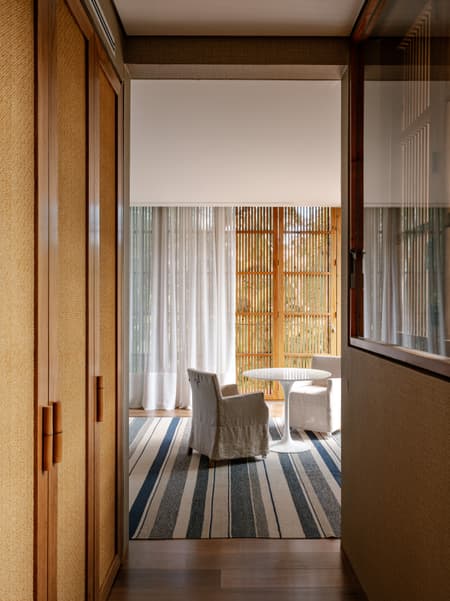
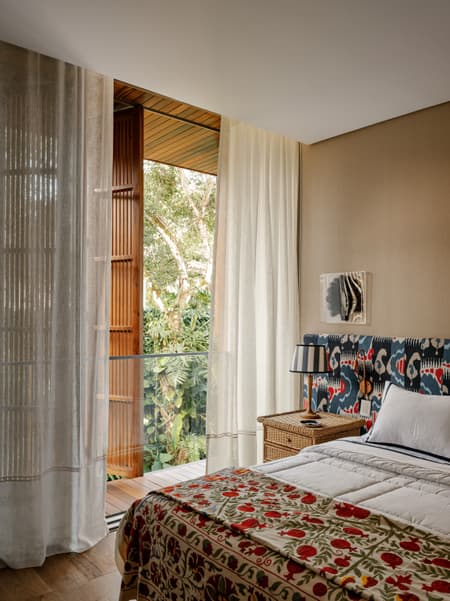
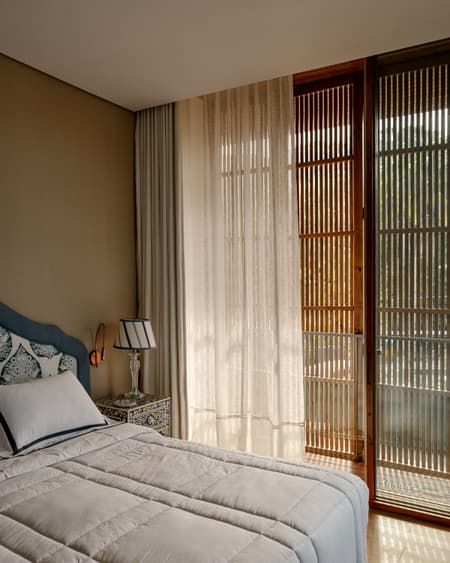
In the master bedroom, Mado “camarão” windows allow full opening onto the balcony, connecting the room to the surrounding landscape. Straw wallpaper and Celina Dias fabrics used in cushions, curtains, and the bench at the foot of the bed create a cozy, natural atmosphere, complemented by a custom-colored fiber rug by Phenicia.
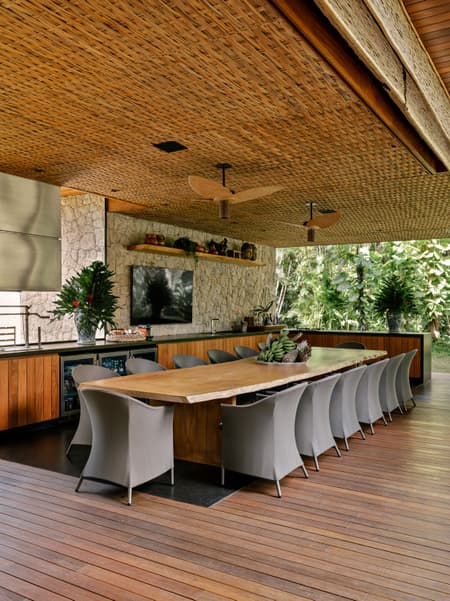
The gourmet area, designed as a large balcony beneath the master suite, reflects the house’s relaxed essence. Materials such as stone, wood, and straw weaves, along with palm curtains filtering natural light, create a welcoming social space. The centerpiece is a 5.5-meter pequiá wood table, serving as the family gathering point.
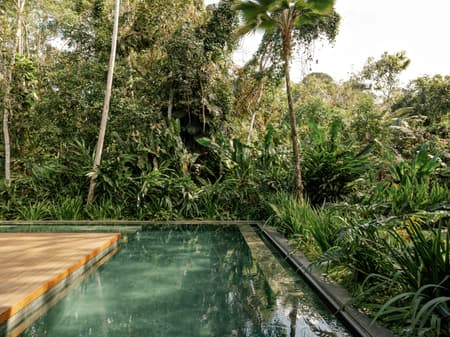
The pool, lined with Vitória Régia green marble (Brasigran), balances sophistication and naturalness. The cumaru wood deck, by Hydrotech, enhances comfort and visual continuity with the surroundings.
With a contemporary beach style, the house embodies the balance between elegance, relaxation, and direct contact with nature. One of the project’s highlights is the living room, where sliding wooden and transparent glass panels align seamlessly with the 6.7-meter double-height ceiling—a technical and aesthetic achievement that reinforces spatial openness and integration with the outdoors.
From conception to final decoration, the project was developed and executed over two years, resulting in a residence that reflects David Bastos’ refined and timeless approach to seaside living.