

Renovation town house WBVD. in Bruges' historic city centre by BASIL architecture
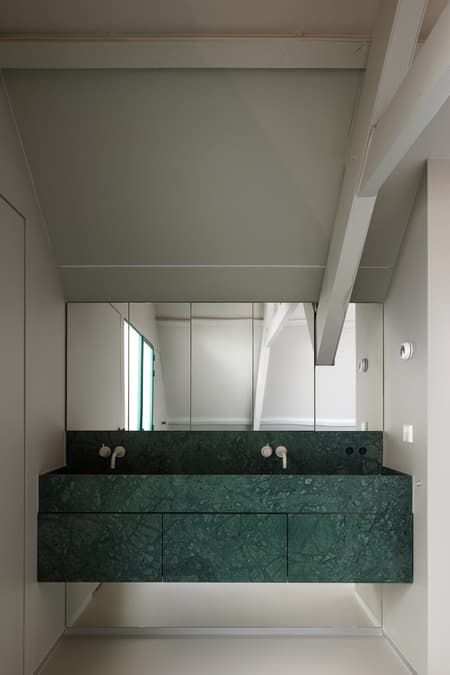
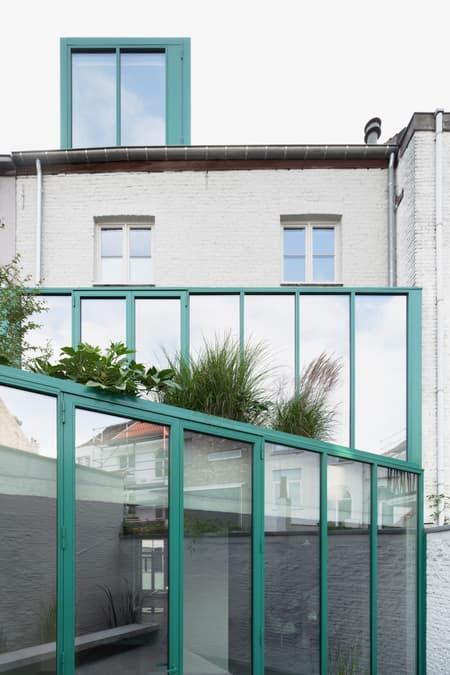
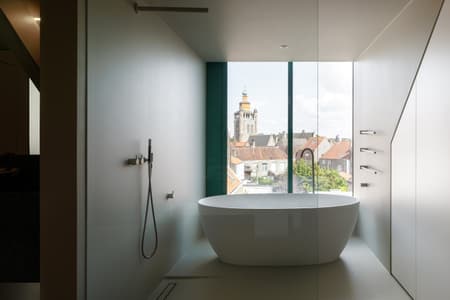
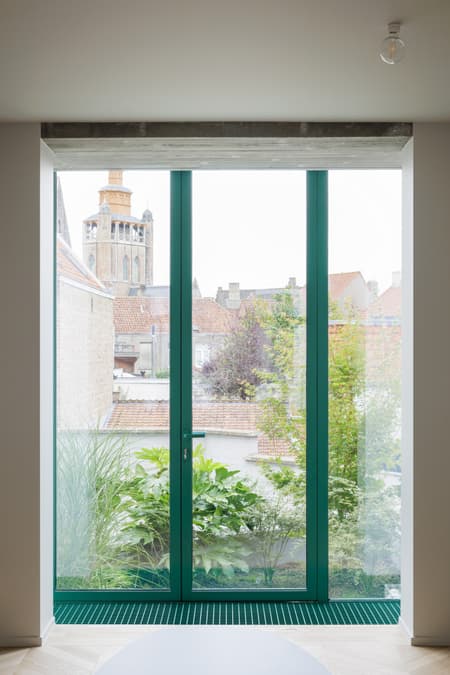
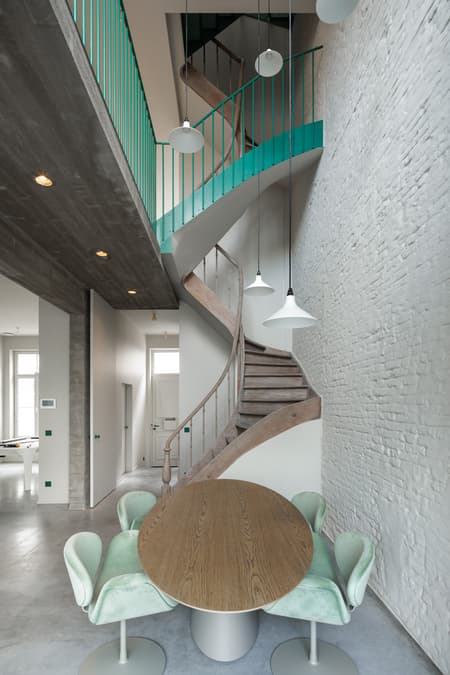
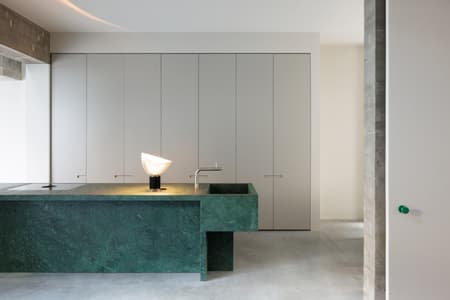
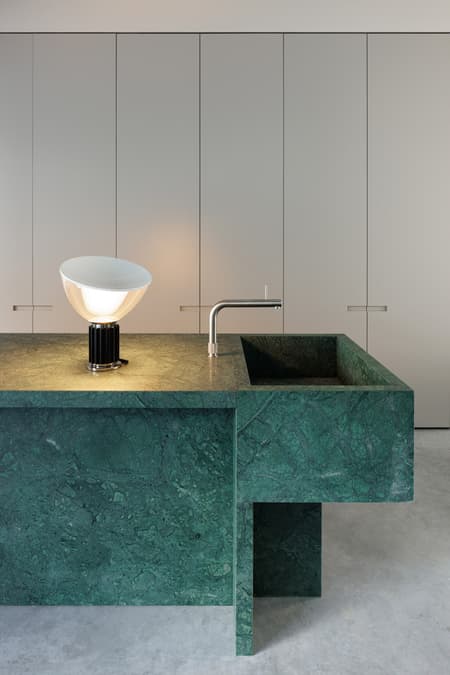
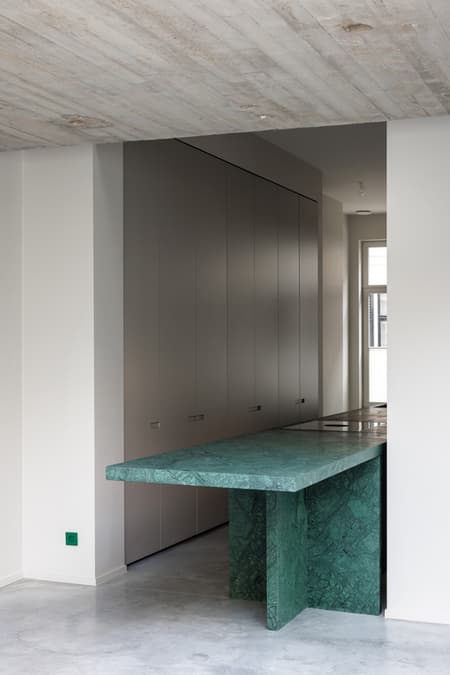
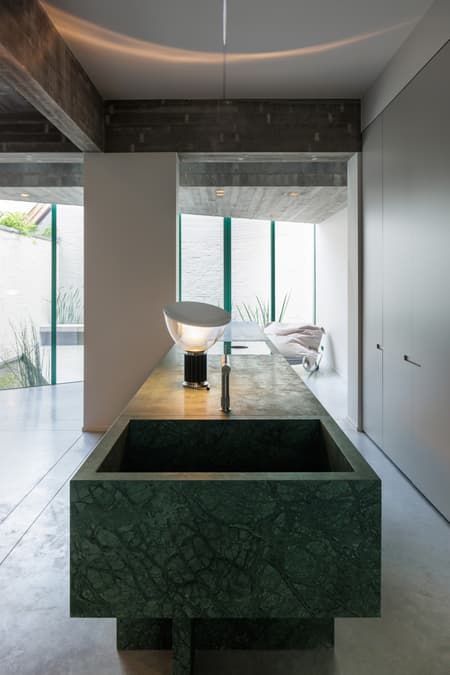
The street façade of this 1870s townhouse reveals nothing of the architectural interventions that were used to transform it into a contemporary home. Once the room-high door of the entrance hall is opened, you are surprised by the openness and architectural interventions. The original main volume was retained and extended with two diagonally stacked glass volumes. In the process, each intervention was accentuated in concrete or green colours. The kitchen with the void and the light flooded central stairwell are the eye-catchers of this design, in addition to the bathroom with a view of the historic city centre of Bruges.
The brief for the renovation of this neoclassical building, formerly used as offices, was a real quest. The client had originally planned to create holiday apartments, but this was not accepted under the strict urban planning regulations of the Unesco-protected city of Bruges.
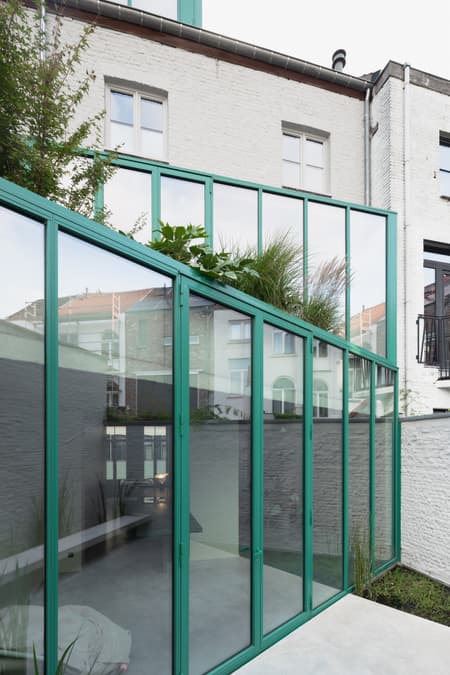
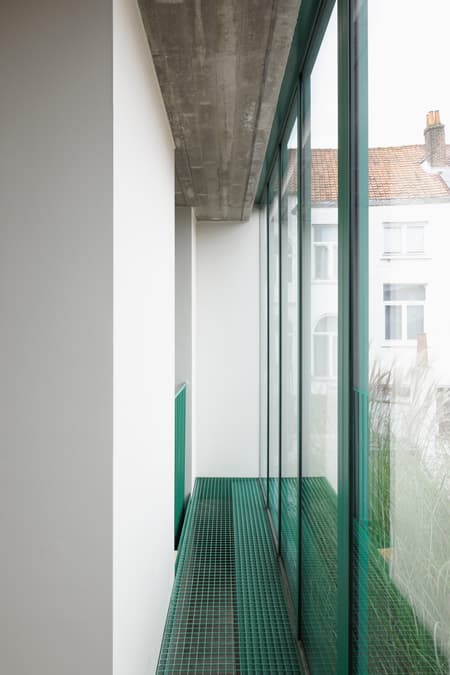
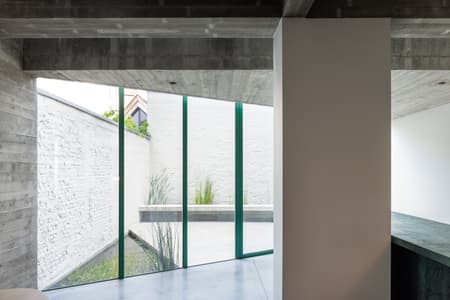
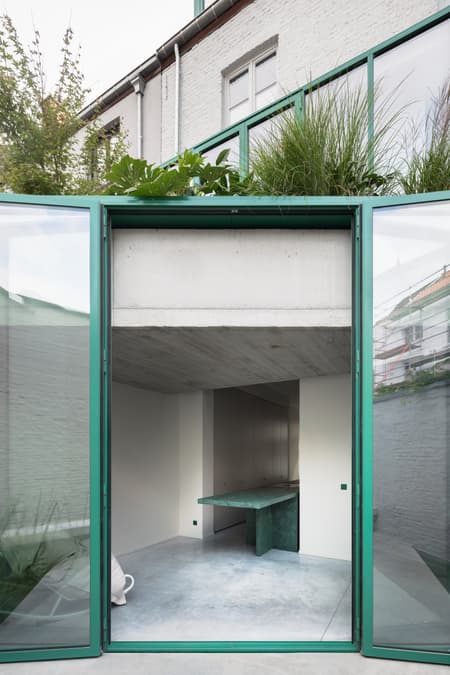
The final decision was to create a airy lifelong townhouse with a lift serving all four floors. The limited footprint and orientation made it necessary to open up the first two floors as much as possible and to partially hollow them out in order to create a vertical interaction between the living areas distributed over the two levels. Thanks to its diagonal position, the ground floor extension answered the optimal use of space for the kitchen breakfast area, as well as the terrace. At the same time, the new extension remains visibly detached from the original main volume to allow maximum light to enter deeply.
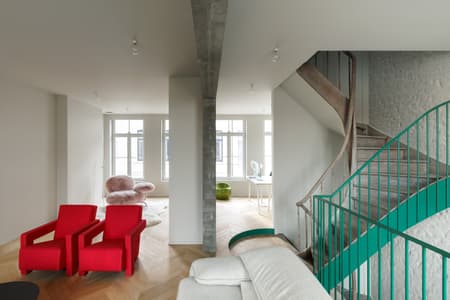
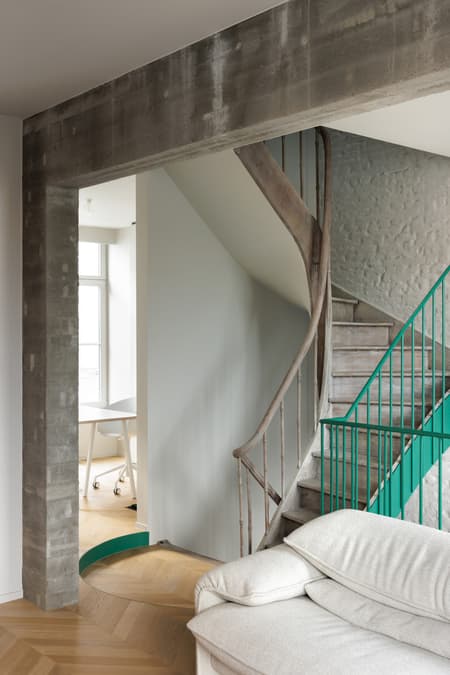
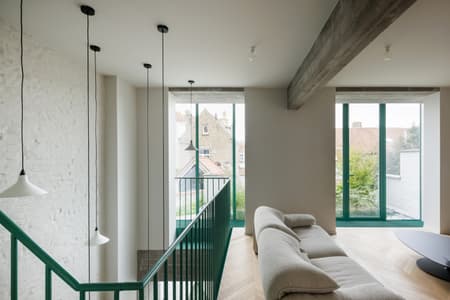
The first floor was opened up as much as possible, the authentic staircase was made visible and a void was created interacting with the ground floor to create a sunlit living space with views of the new green roof.
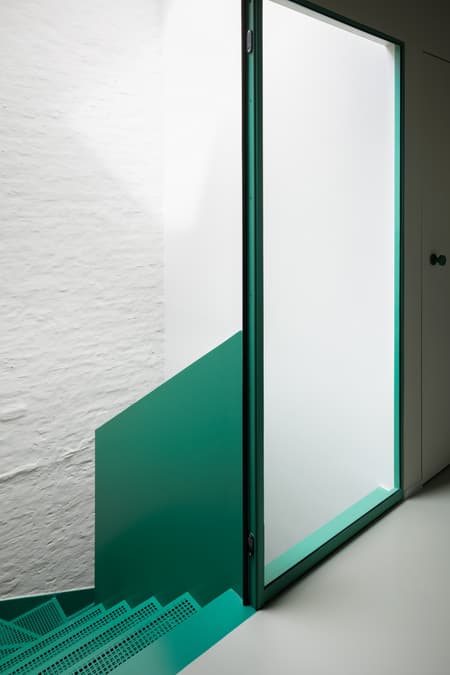
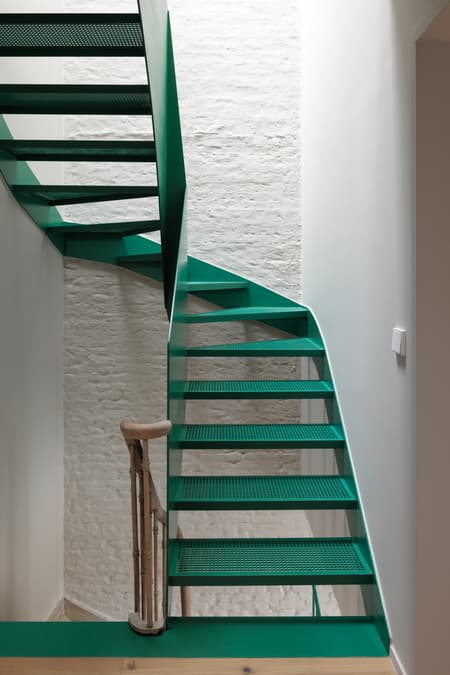
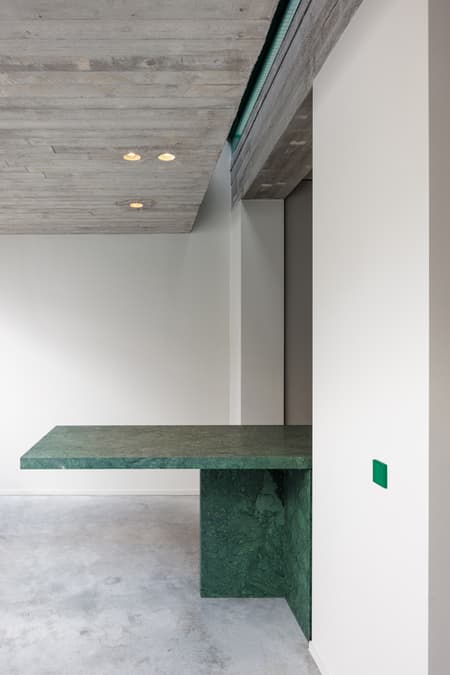
The triangular extension and other structural interventions were deliberately executed visibly in a concrete structure made on site. The executed beams in the main volume also refer to the original room division typical of a town house from 1870. Also characteristic of the architectural concept are the green accents on the new interventions: exterior joinery, kitchen, staircase, switches and door handles...
Conceptually, there was a need to open up existing room structures to the maximum, as well as demolish rear building volumes. This was to generate additional openness and light, as well as a more valuable courtyard.
The difficult accessibility of the site and the lack of a possibility to install a tower crane led to the construction of as many interventions as possible on site. Hence the choice of on-site realised timber formwork, and the choice to keep all used materials small scale.
To ensure lifelong living within this 4-storey house, a lift shaft was provided to access all levels.
To maximise light and interaction with the surroundings, the ground and first floor were transformed into living spaces. Where on the first floor, a room next to the enclosed stairwell was cut out to result in a captivating open void that interacts with all living spaces. The existing enclosed stairwell was extended with a perforated green staircase up to the top floor. In order bring daylight deep into the core of the house, a rooflight was incorporated in the ridge of the stairwell,
and all unnecessary walls around it were removed. The closed roof structure of the former attic was opened with a more accentuated dormer window which houses the bathroom and also provides fascinating views and light into the master bedroom. The realised outdoor space is characterised by a ‘floating’ terrace. Surrounded by a water garden, which also acts as a rainwater buffer reflecting sunlight into the house.
The client's basic question was to create a home suitable for lifelong living, regardless of its four storeys. This was answered by the strategic insertion of a lift shaft with adjacent technical duct up to the ridge of the house. The authentic façade was integrally preserved and restored to its former glory in order to preserve the historic appearance of the Unesco-protected Bruges city centre and its valuable streetscape.
The existing very closed room structure of the main house was opened up to the maximum and provided with a very felxible infill with beams and minimal load bearing supports and walls so that an open plan could be created where walls and spaces could be simply repositioned in the future.
The aspect of reusing and repurposing the existing main volume is already one of the pillars of sustainability and material conservation. As does the maximum on-site creation and realisation of structural elements... In addition, the house is maximally insulated to minimise heat losses and energy requirements.
November 2023


.jpg?w=450&q=75&dpl=dpl_76Rq87wxQwFvSi96M2iBpo5TN6QL)
.jpg?w=450&q=75&dpl=dpl_76Rq87wxQwFvSi96M2iBpo5TN6QL)
.jpg?w=450&q=75&dpl=dpl_76Rq87wxQwFvSi96M2iBpo5TN6QL)
.jpg?w=450&q=75&dpl=dpl_76Rq87wxQwFvSi96M2iBpo5TN6QL)
.jpg?w=450&q=75&dpl=dpl_76Rq87wxQwFvSi96M2iBpo5TN6QL)