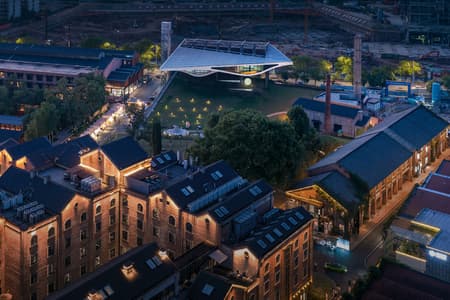
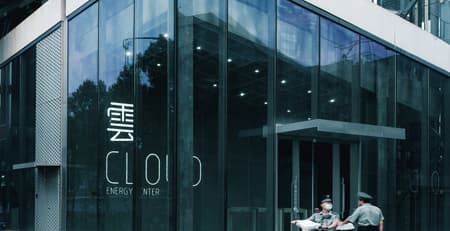
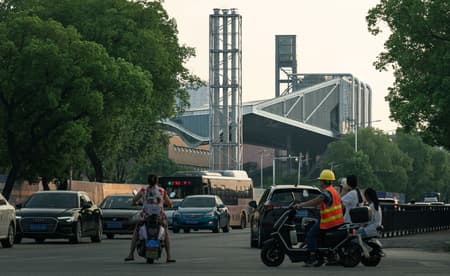
The inquisitor was Mr. Liu Zili, Chairman of Taowenlv, owner of the Jingdezhen Ceramic Art Ave Taoxichuan. Since 2012, he invited Professor Zhang Jie’s team from Tsinghua University to lead the preservation and renovation planning. Once the state-owned Cosmos Ceramics Factory and Ceramic Machinery Factory, Taoxichuan has since transformed into a national cultural industry and innovative entrepreneurship model zone, a nighttime tourist destination, and a street packed with intangible cultural heritage. It serves as a stage for many artists and creators who have migrated to Jingdezhen.
Back in 2019, the first phase of Taoxichuan had just been unveiled, but many areas were still under development. The existing infrastructure was strained, with insufficient electrical capacity and water pressure for the upper floors. Infrastructure had to catch up to the site’s growing ambition.
Initially, the client wanted to minimize the visual impact of scattered utility units. After a series of technical evaluations and energy-saving optimizations, they decided to build a centralized energy center to provide heating, cooling, water pressure, and electricity for the expanded campus, while also managing energy efficiency and fire safety across the site.
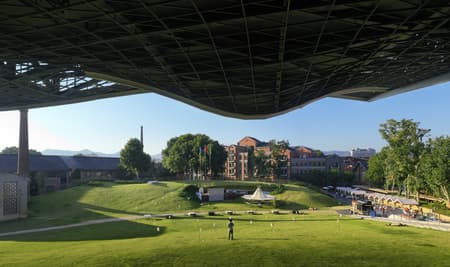
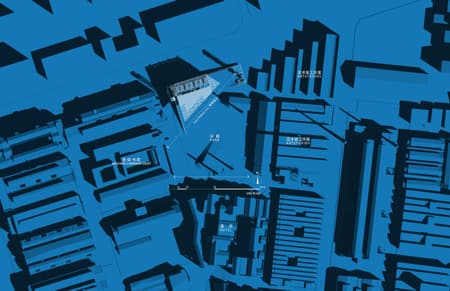
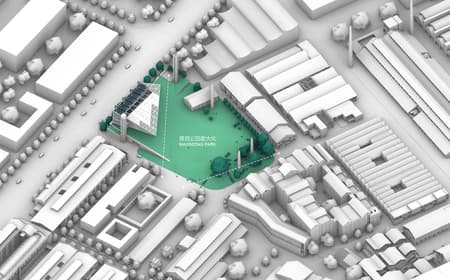
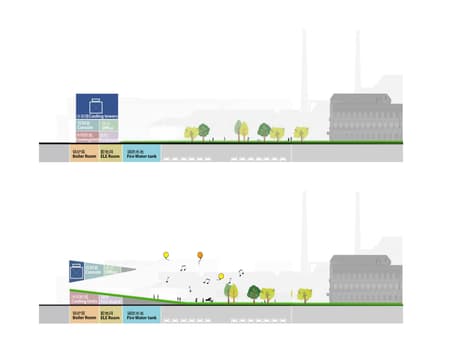
The energy center would be located on a vacant lot, which would be excavated to construct an underground parking lot connected to nearby hotels. This construction would be integrated with the laying of heating and cooling pipelines and smart network. Once complete, it would be re-covered with greenery, restored to a green park.
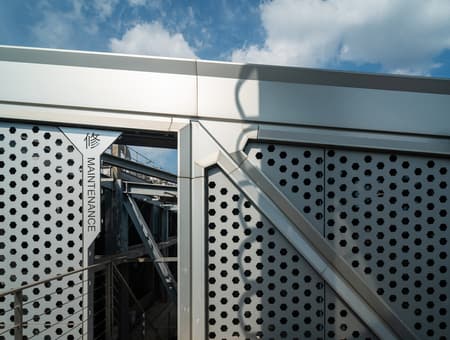
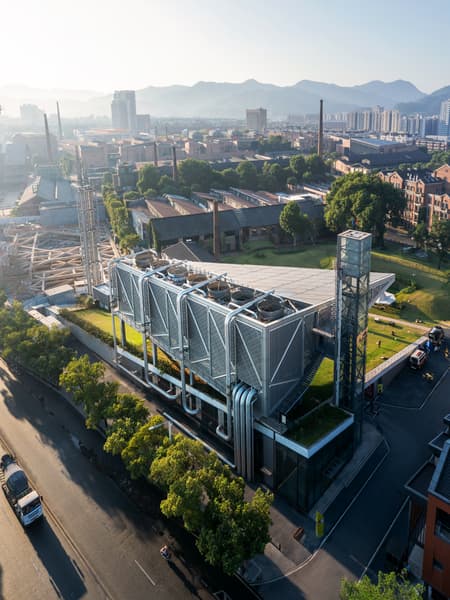
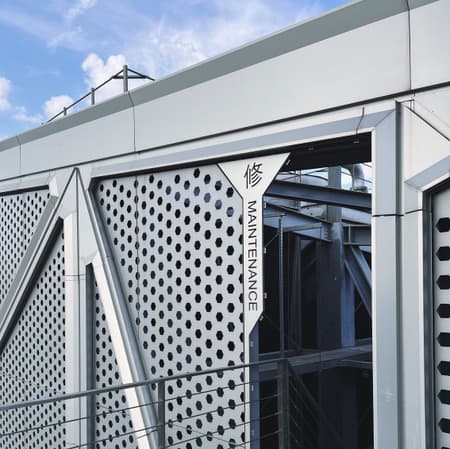
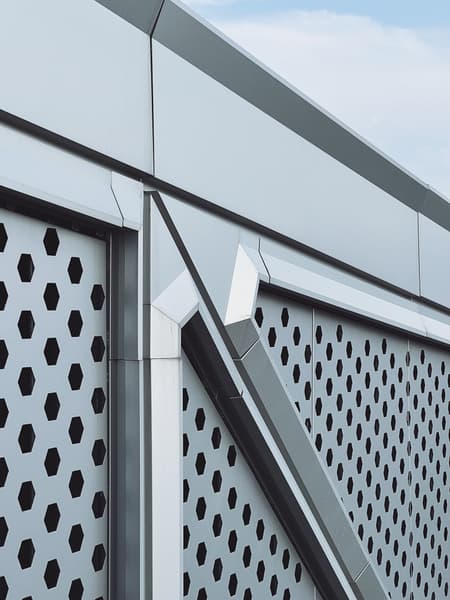
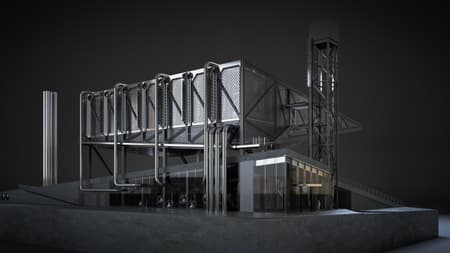
An energy station, often referred to a utility building, is not a place where you will host a party. It usually consists of a fire water tank, pumps, boilers, refrigeration units, substation, and control center, all enclosed in a big box with massive cooling towers sitting on top, surrounded by louver screens.
A skillful architect could come up many ways to “dress up” such a box. But what intrigued me was whether there was a way to meet the functional needs of the energy center while maximizing the open space in the park.
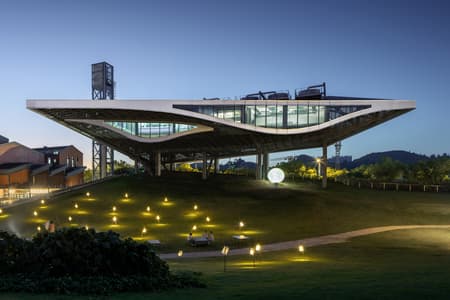
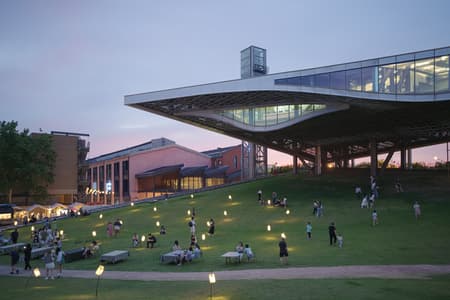
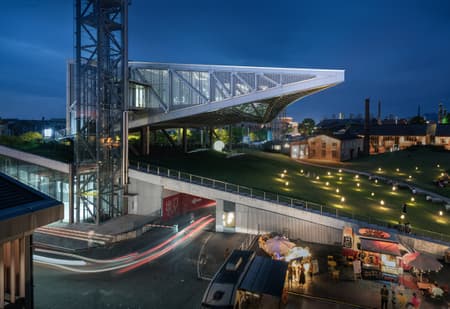
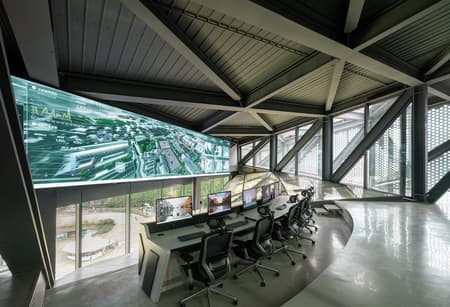
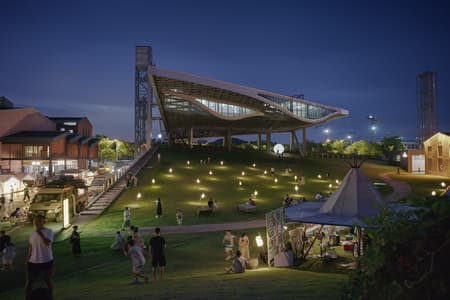
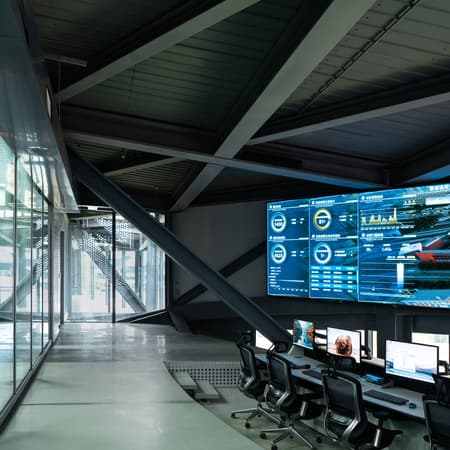
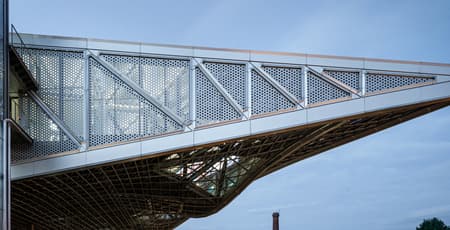
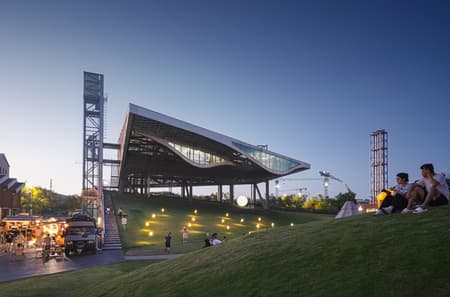
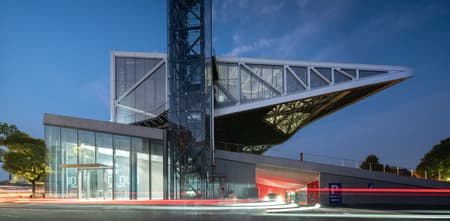
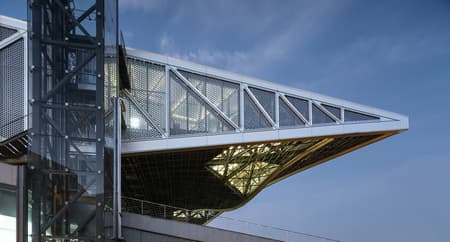
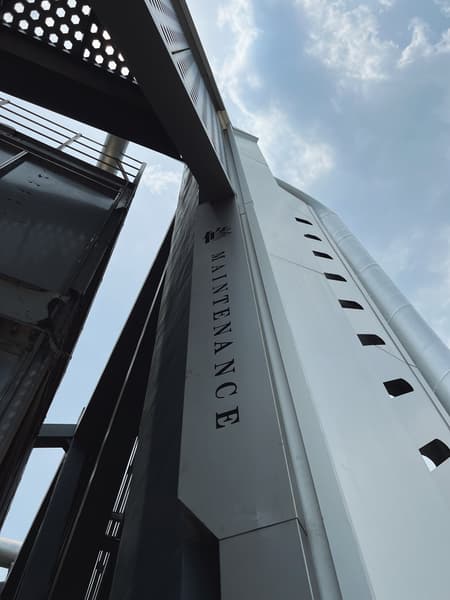
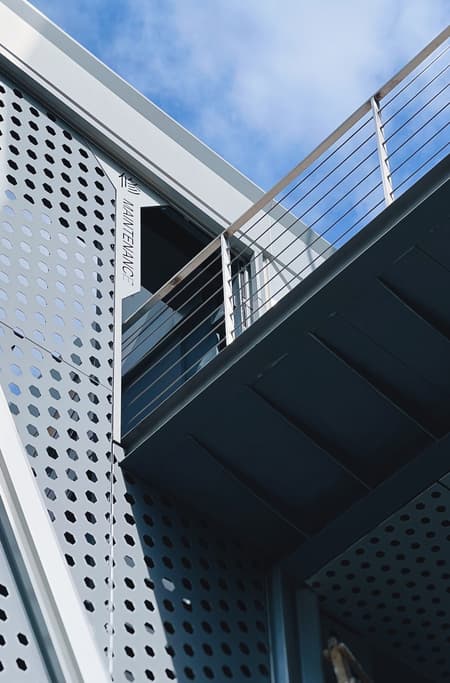
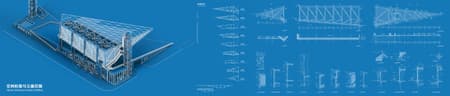
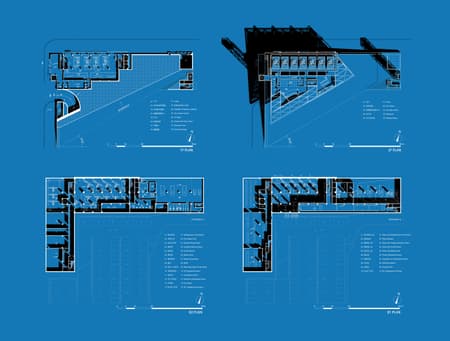
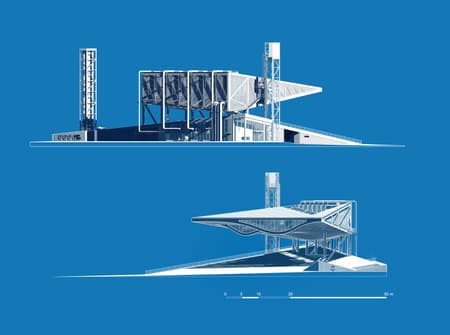
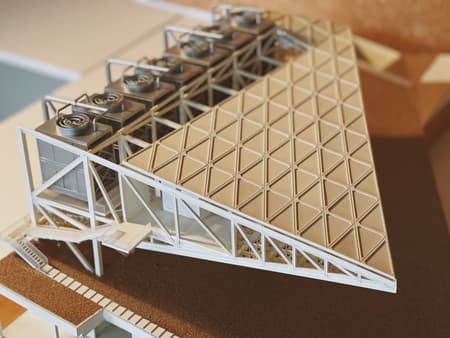
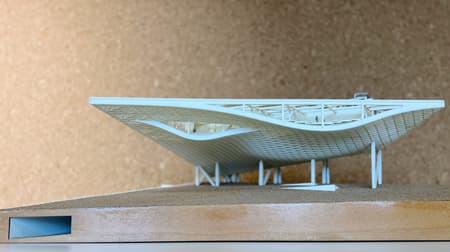
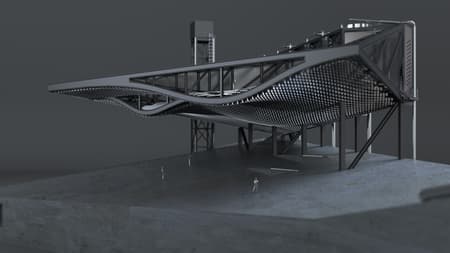
We divided the building into two parts: the cooling units, power distribution, boiler room, and fire water tank are buried underground, blending into the landscape as a grassy slope like tearing up a corner of the lawn; seven massive cooling towers and control center were suspended above, forming a wedge shape.
Although the building interior is still closed for the public, by splitting the volume, it returns the space to the park, which would be otherwise occupied by the building footprint. On hot summer days, the large "canopy" created by the structure became a welcome, shaded space for relaxation—and a natural viewing platform for whatever fun was happening in the park.
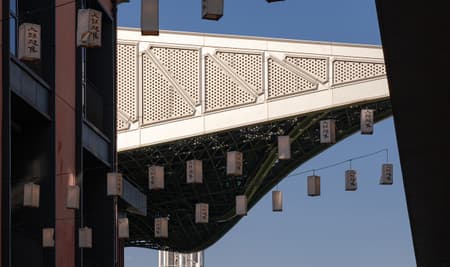
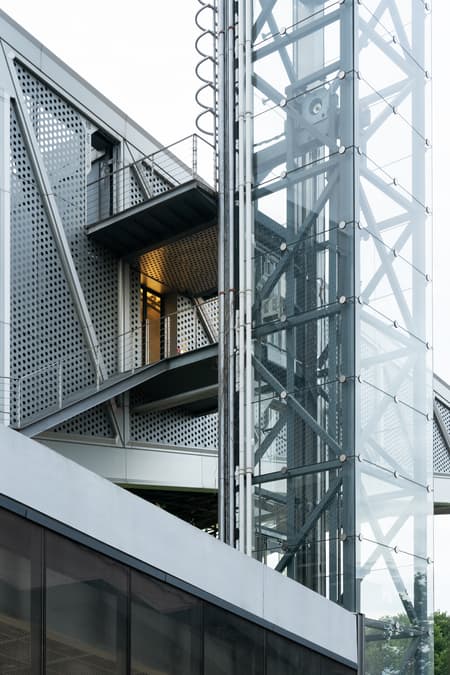
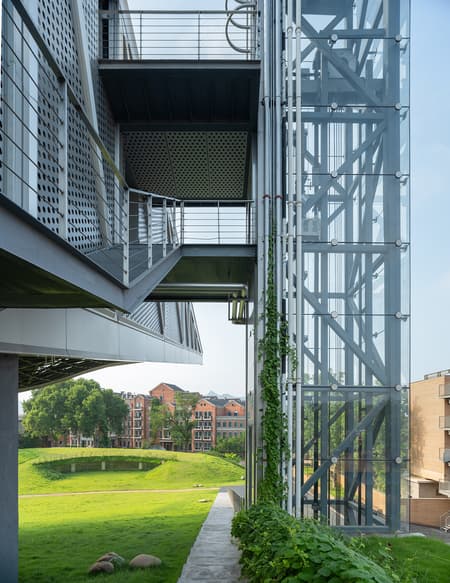
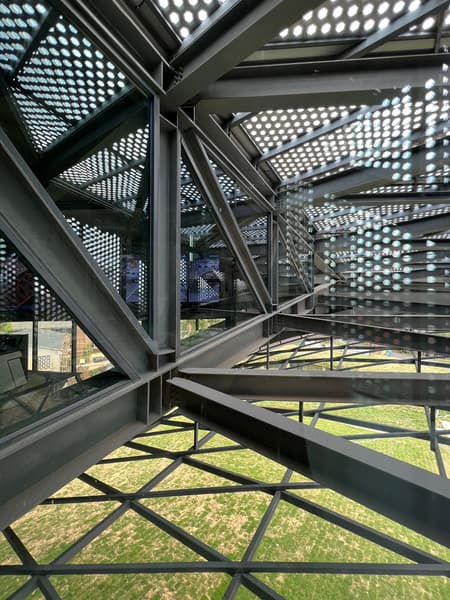
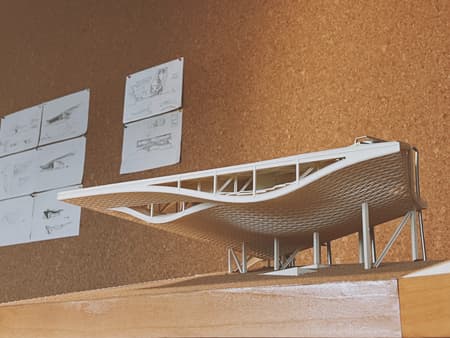
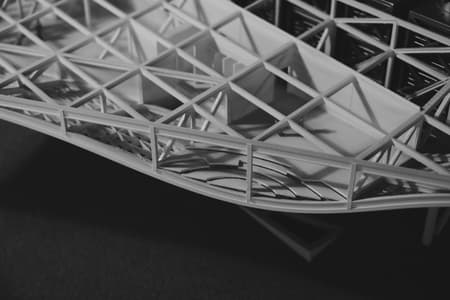
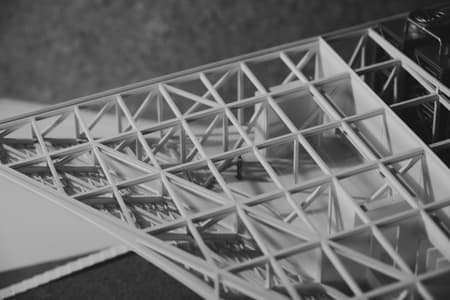
The north elevation along the street, has bold, strait industrial features, exposing the real equipment and pipes like a massive machine. On the park-facing side, however, the building looks softer, lighter and more organic, with two curved “eyes”—— the control center and a meeting room, both created using the internal space of the truss structure.
We envisioned hanging wind-driven scales under the suspended structure as a finishing touch. These scales would ripple in the breeze, turning the structure into an art installation—a mechanical cloud floating above the grass. That’s how it got the name "Cloud Engine."