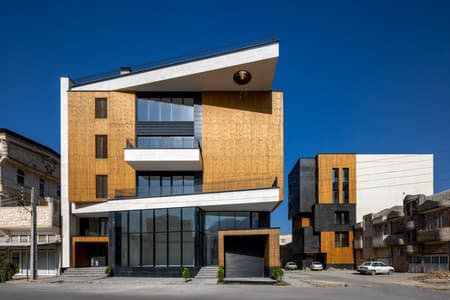
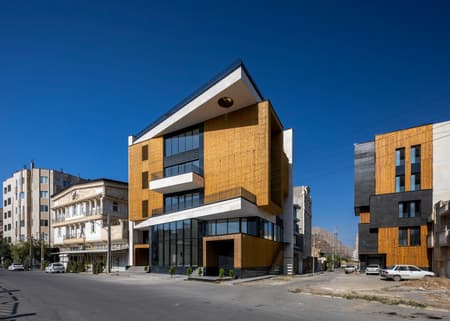
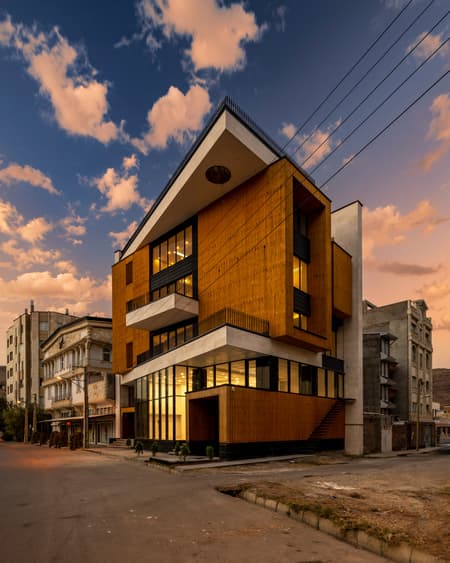
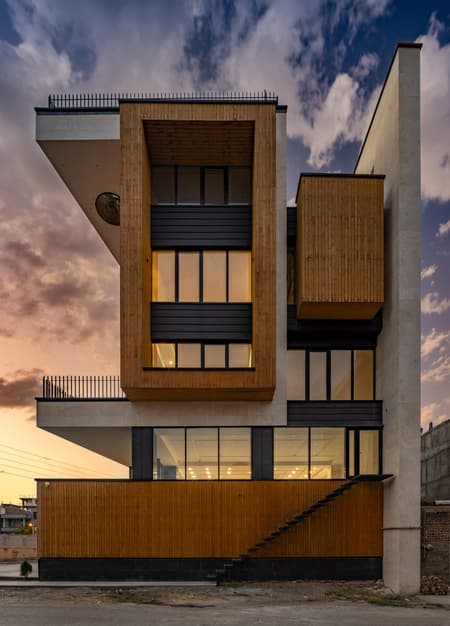
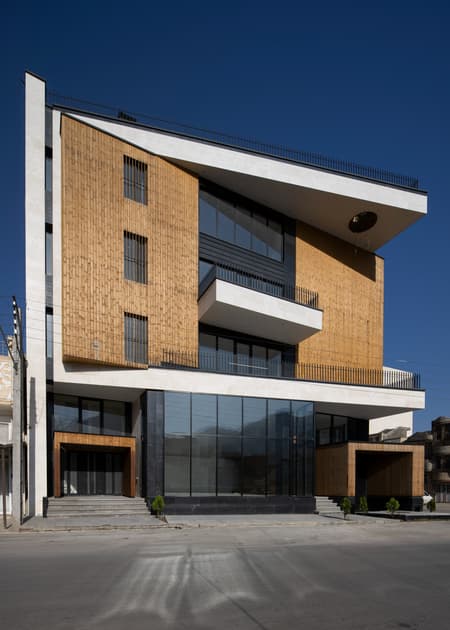
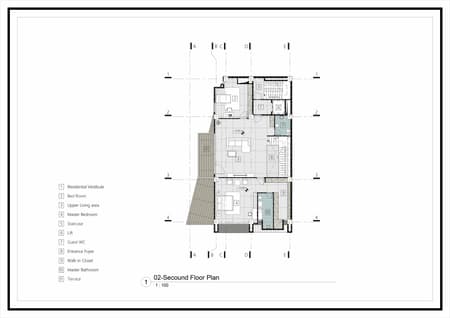
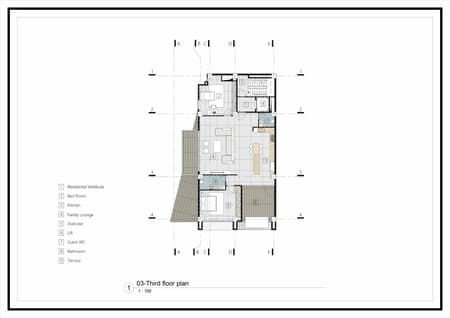
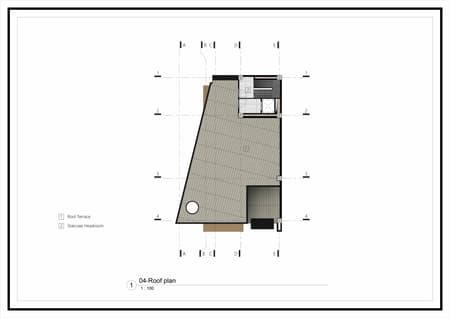
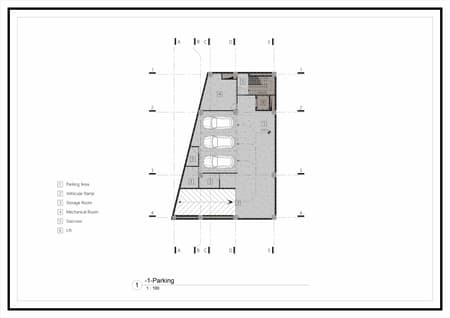
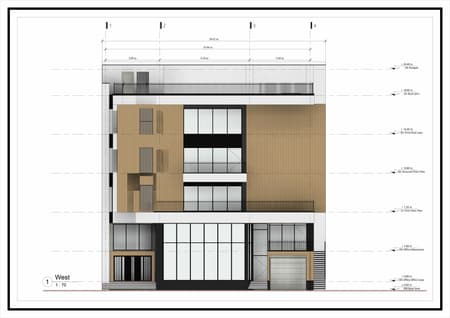
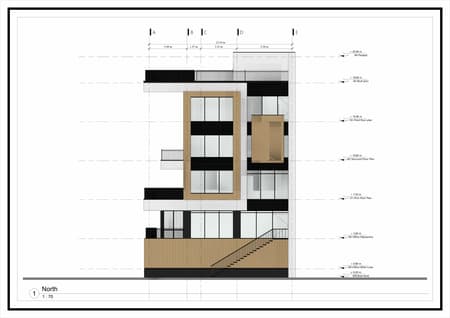
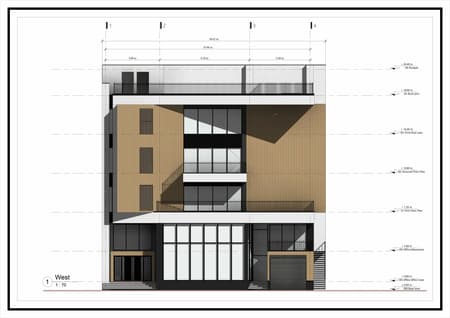
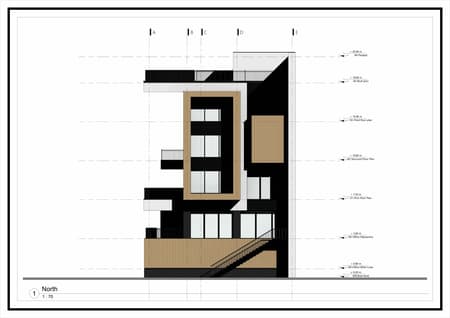
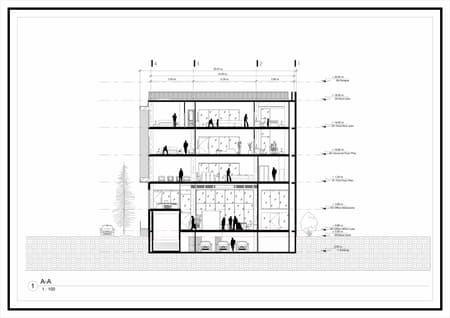
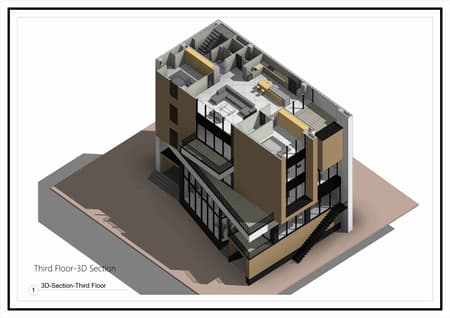
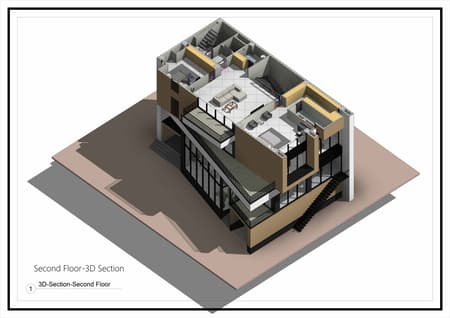
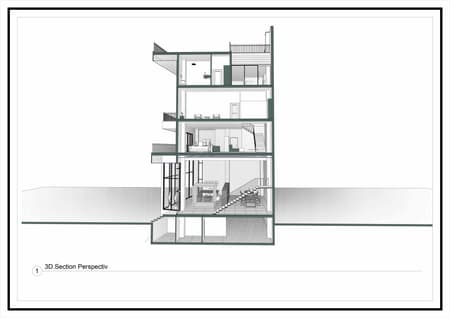
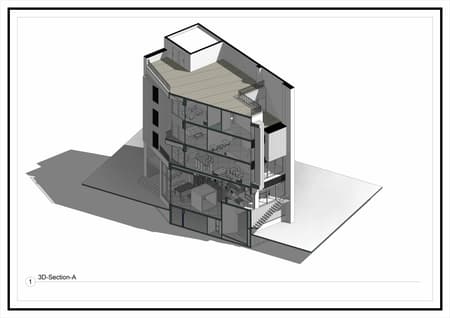
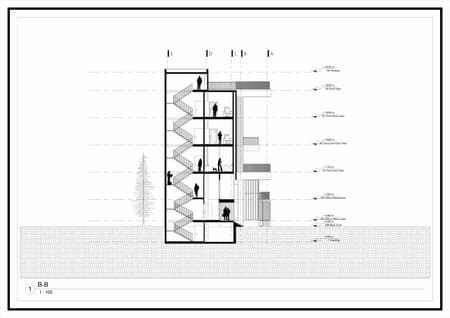
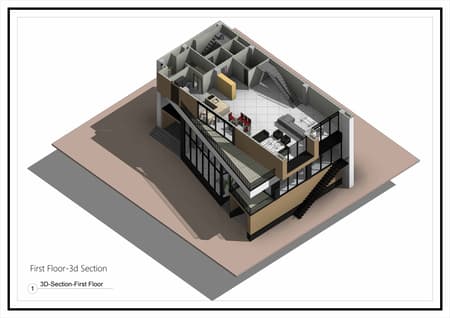
Ramand is, before being a project, a decision—a decision about how a cube can stand on a dual-cornered site without compromising its own geometry and without disregarding the city. The wooden volume is a controlled rotation, neither a formal gesture nor an exaggeration; merely the minimal deviation required for the form to settle into the site. Its geometry does not impose itself on the city, but aligns with it. The wooden skin is not an emotional choice, but a means to soften the hard cube. In a site surrounded by schools, the wood transforms potential seriousness into a conversational tone, aware of the daily gaze of children building their spatial memory.
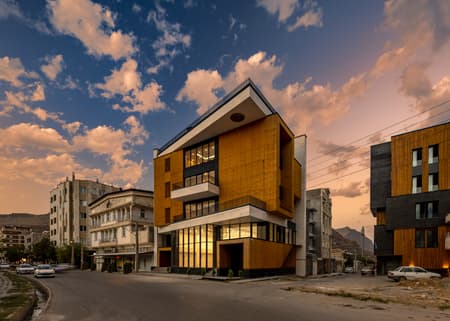
Situated at the corner of a local street and a narrow lane, the project takes the natural challenge of the corner as an opportunity for form. The volume does not simply sit on the ground nor align with the street; it appears like a polished wooden piece from the street, subtly rotated, settling into the lane. This rotation defines the character of the project: no exaggeration, no theatricality—a gentle tilt, an angle that keeps the form alive and attracts the passerby. The elongated, linear volume, clad in wood against pure white lines, creates a controlled contrast of shadow and light, allowing the project to be seen in the street without shouting. Warm wood, white edges, monolithic surfaces, and subtle recessions transform the cube into a narrative of balance—between warmth and purity, stillness and tension.
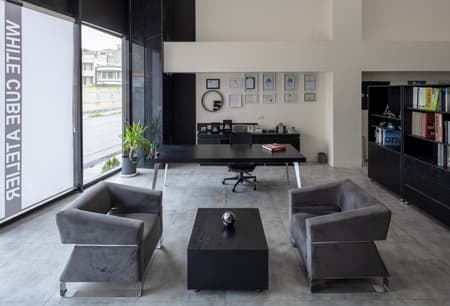
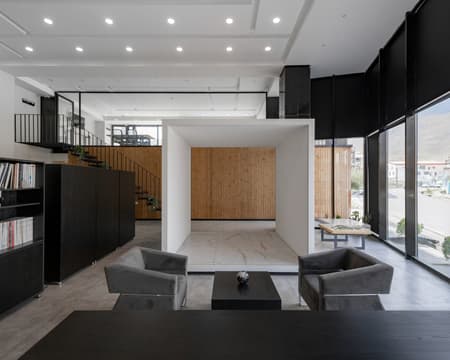
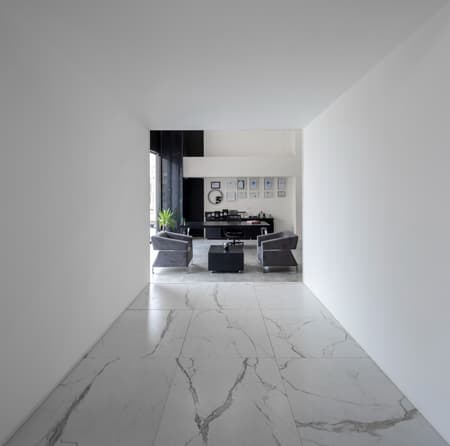
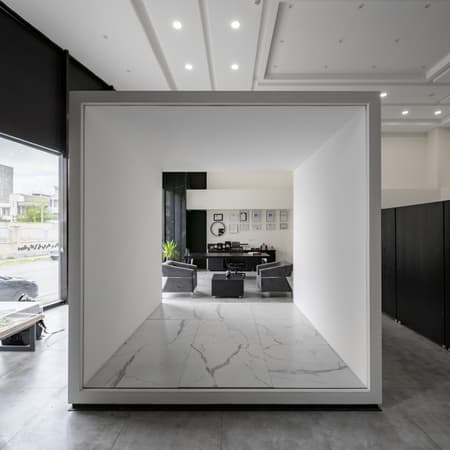
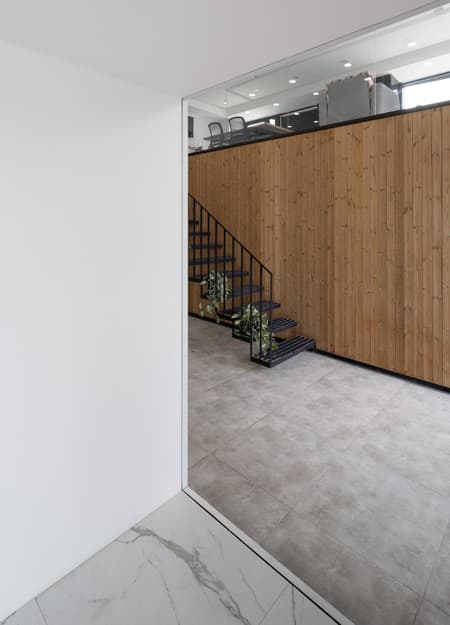
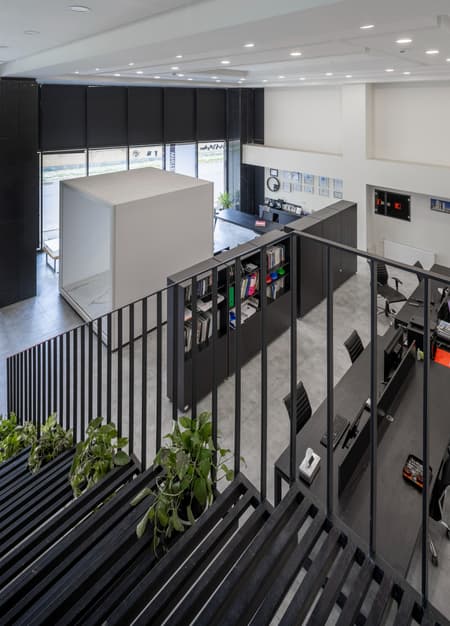
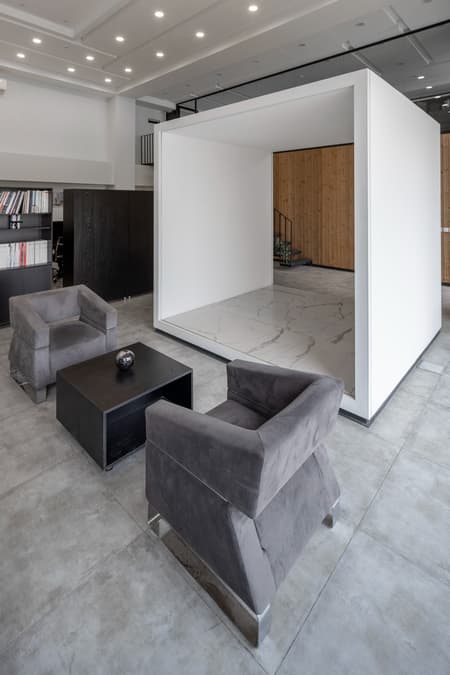
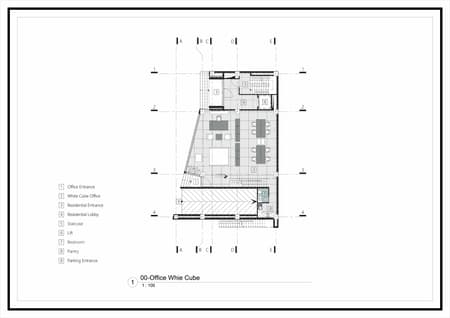
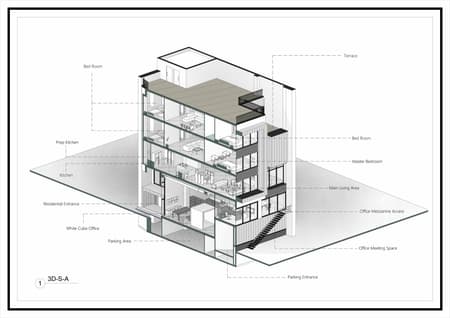
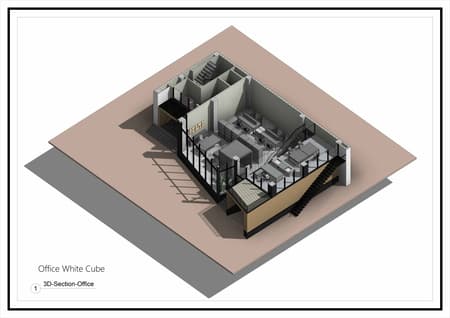
The story of Ramand continues inside. Passing through the glazed ground floor, one reaches the white office cube—a presence that is neither mere décor nor a repetition of the white cube motif. It is a pause, a calculated interruption in the daily flow of the office, a threshold between the external world and the intellectual realm. Its apparent simplicity forms the architectural language of the office, where architecture avoids exaggeration and draws its character from this unassuming volume. Ramand is an architecture of volume as change; it does not stand rigidly on the corner, but creeps, slides, and rotates gently to engage the city.
Why "Ramand"? From the root "Ramidan" (to flow): one that has a process, that changes without rupture, that moves along a continuum, sliding from one state to the next, constructing its world gradually. In architecture, this is a building that transforms—not by abrupt gestures, but through flow. Ramand is not merely a project name; it is the behavior our architecture chooses: a volume that moves so subtly that only from certain angles its rotation is revealed, and from others it appears so pure and untouched as if it had never moved. This behavior defines not only the external form, but also the manner in which one enters our intellectual world. The white entrance cube represents the physical manifestation of this behavior.
Entering the office becomes a symbol of clear, calm, and honest thinking. Thus, "Ramand" exists not only in the physical body of the project, but also in the way we think. We believe architecture begins with small, precise turns—subtle deviations that may be invisible from most angles, yet guide perception toward a purer meaning.