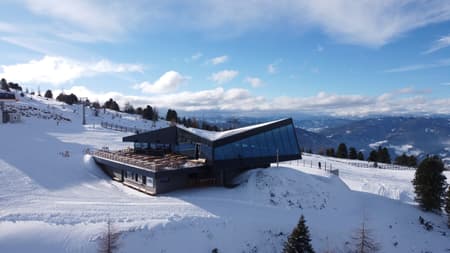
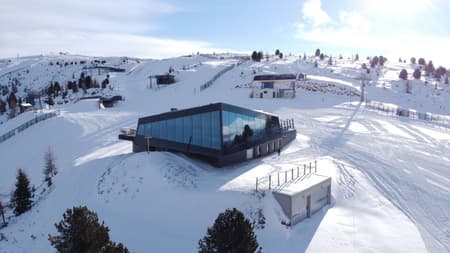
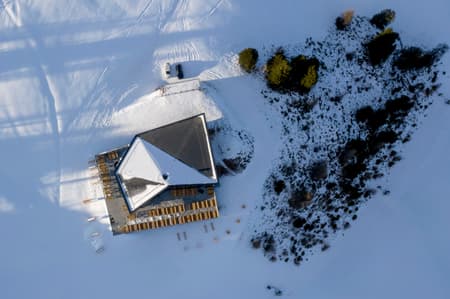
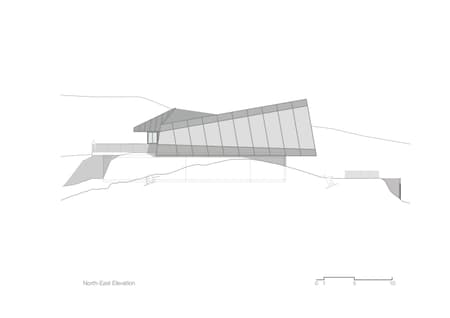
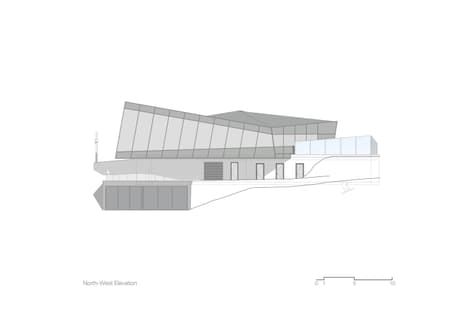
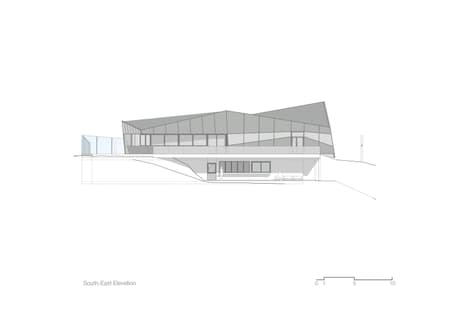
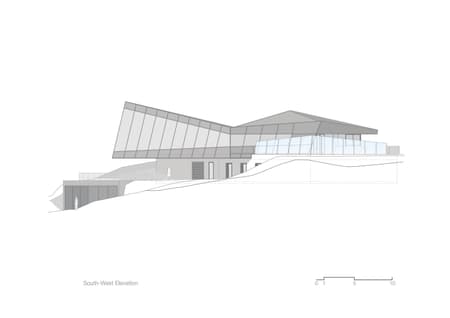
For many years, the summit plateau of Kreischberg was occupied by a small, almost improvised structure topped with an oversized umbrella that served as an après-ski bar. When this building was dismantled, the landscape briefly appeared to reclaim its original terrain. This moment became the conceptual starting point for the new project: in the midst of an extraordinary alpine setting, the aim was to create an architecture that does not dominate but rather acts as a carefully placed intervention—restrained in its presence yet powerful in its spatial impact.
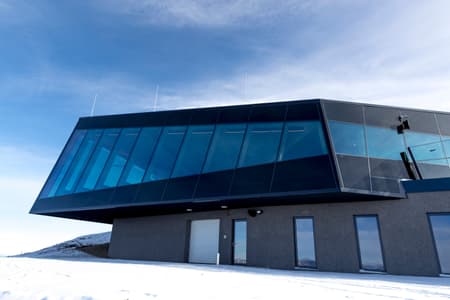
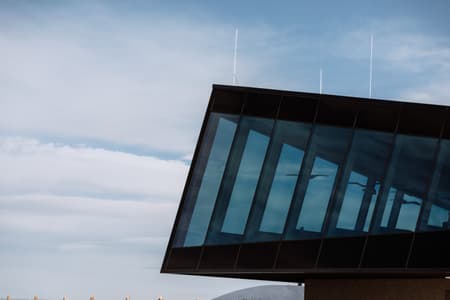
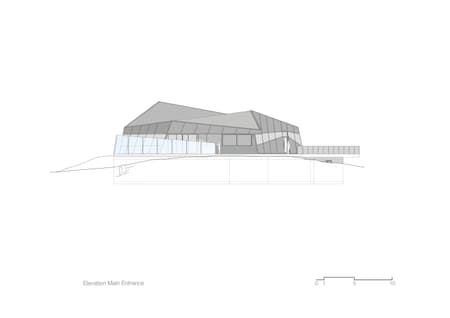
The client’s initial brief called for a crystalline or rock-like volume to house a new summit restaurant. The design evolved from this idea into the form of an abstracted eagle at rest—a sculptural figure that simultaneously evokes crystalline rock formations while offering a subtle reference to the region’s wildlife, particularly the eagles native to the area.
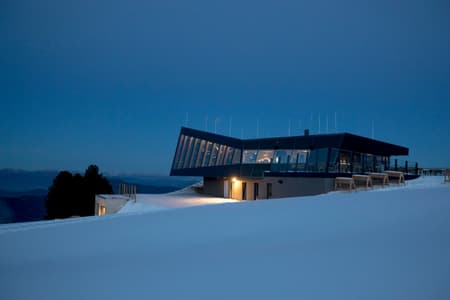
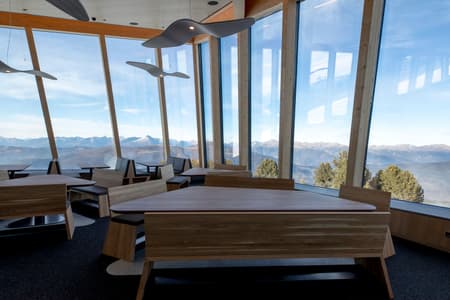
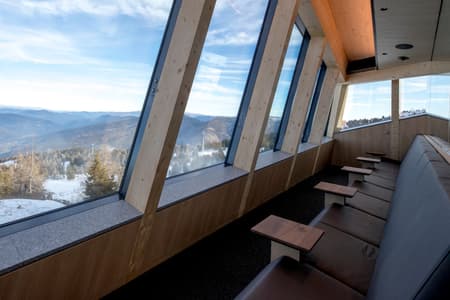
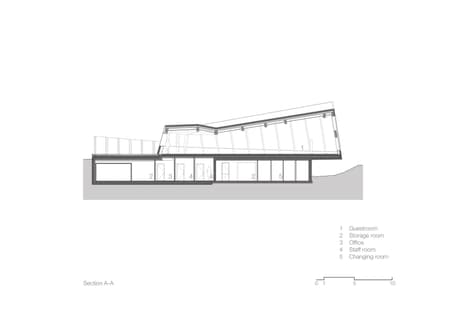
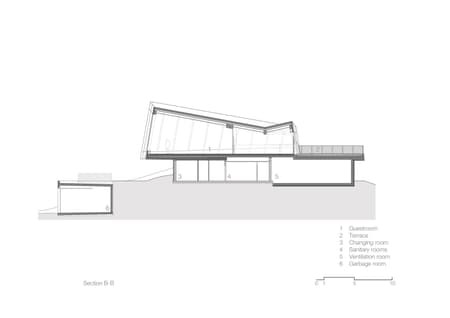
The defining motif of the project is the panoramic setting. The building’s geometry is derived directly from the surrounding sightlines. The most prominent façades face north and east, opening toward the landscape through large-scale glazing nearly six metres high. This generous height intensifies the experience of the panorama, allowing interior and exterior to visually merge.
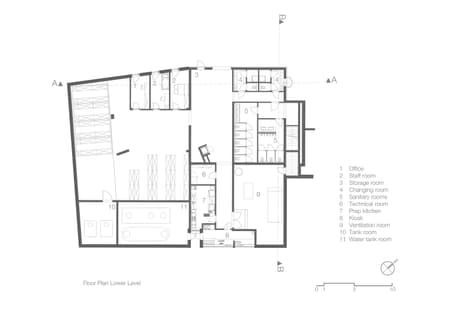
The remaining façade surfaces are also fully glazed, composed of a combination of transparent and opaque panels, with no two panes identical. The lower level—partially embedded in the slope—was constructed using prefabricated concrete elements to optimise the construction schedule. The main level above, which houses the restaurant, is built entirely in glulam timber (CLT); only the service core around the kitchen was realized in precast concrete.
Set within an alpine landscape offering uninterrupted 360-degree views, the building emerges as a sculptural form shaped by the dialogue between the client’s vision and the surrounding terrain—a crystalline, rock-like landmark on the summit.
The load-bearing structure, made of prefabricated glulam and cross-laminated timber (CLT) elements, defines the interior space as well. Wood and stone dominate the material palette, while the building envelope is clad in glass panes, framing sweeping views of ski slopes and distant mountain ranges.
The project was realized within an exceptionally tight timeframe—from December 2019 to December 2020—requiring a highly coordinated planning process. A comprehensive 3D BIM model was therefore developed for the entire building structure and all façade components. In close collaboration with façade consultants as well as mechanical and electrical engineers, this interdisciplinary digital model enabled efficient coordination and helped address both the short delivery times and the demanding construction conditions at high altitude.
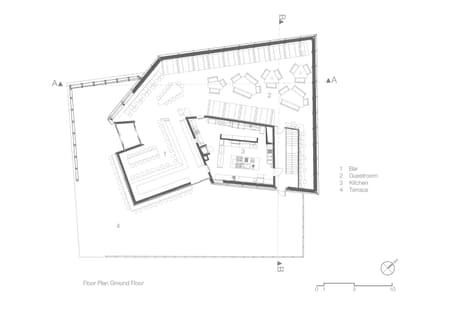
Inside, the restaurant accommodates around 200 guests, with a further 200 seats available on the expansive outdoor terrace. The terrace floor consists of prefabricated concrete slabs set in a mortar bed with integrated heated copper pipes. Acting as an outdoor underfloor heating system, it reliably prevents ice formation even at temperatures as low as –25°C. Stainless steel railings
with delicate mesh infill panels were chosen to minimise visual obstruction of the surrounding mountain landscape. A distinctive feature is the “Eagle Drive-In” located on the lower level, where skiers can enjoy quick snacks and drinks without having to remove their skis.
Despite its expressive form, the building remains typologically a mountain lodge—albeit in a contemporary interpretation. Large, exposed glulam columns and beams structure the dining space and, together with the CLT ceiling panels, create a warm and welcoming atmosphere.
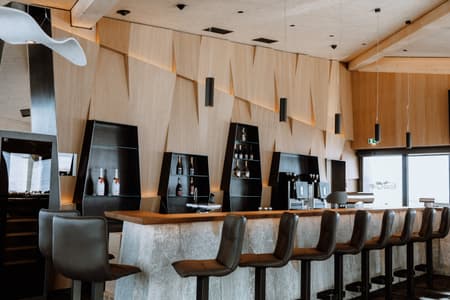
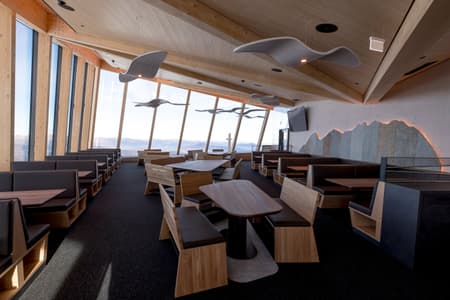
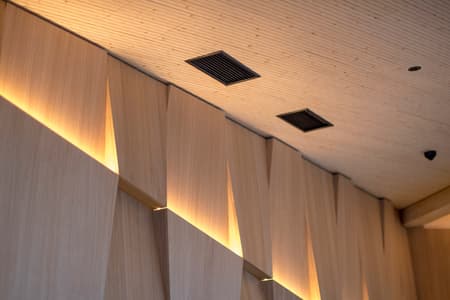
Radially arranged beams form a dynamic ceiling structure that shifts continuously as one moves through the space. The triangular gaps between them are lined with perforated wooden acoustic panels that double as a suspended ceiling, accommodating ventilation ducts and technical installations.
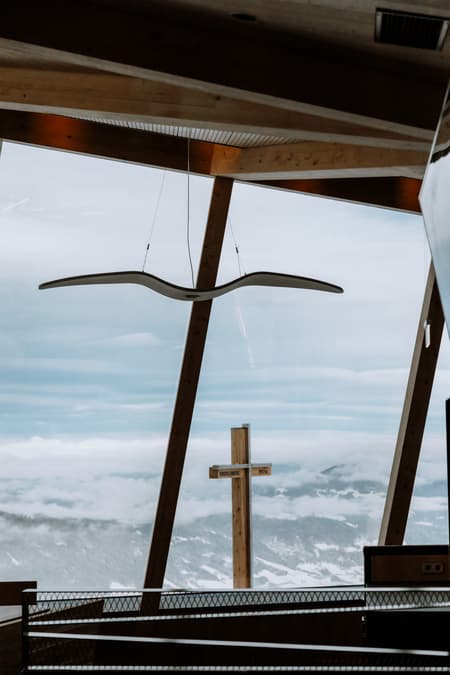
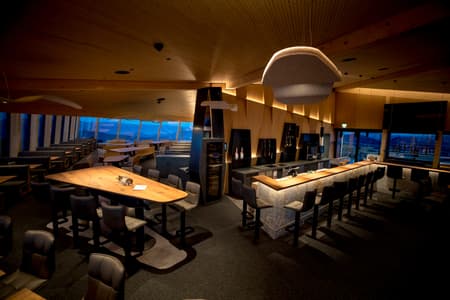
A defining design element is a series of pendant lights developed specifically for the project. Shaped like birds and made entirely of compressed, recycled felt, they evoke a flock in motion across the room—a poetic reference to the local wildlife and the eagle motif. Together with the perforated wooden ceiling panels, they contribute to a balanced acoustic and atmospheric environment.
Slender glulam columns arranged in a two-metre grid and slightly inclined inward carry the structural loads while simultaneously defining the rhythm of the façade. The intermediate zones— featuring parapet heights ranging from 30 to 140 centimetres—are clad in timber, concealing a heating system that warms the parapet surfaces made from locally sourced stone and enhances overall thermal comfort.
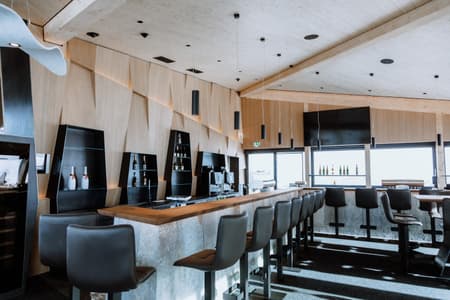
Upon entering the building, the bar area immediately draws attention. Large steel frames tensioned between inclined timber surfaces define the space. At its centre stands a fifteen metre-long bar counter, featuring backlit stone panels on the front and a surface clad in oak.
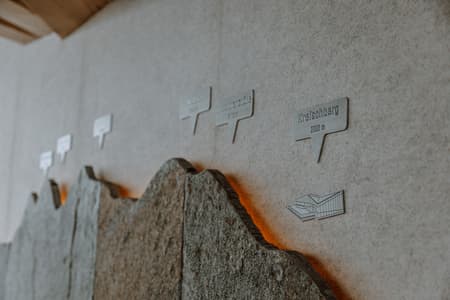
Stone slabs also line the wall of the main dining area. In a carefully crafted process, they were cut to trace the silhouette of the surrounding mountain range.
Seating groups along the façade follow the building’s two-metre structural grid. Custom-designed oak tables and benches organise the space, with seats upholstered in black leather. At the centre of the dining room, organically shaped oak tables can be combined to form a long communal table for larger groups.
Because the restaurant sits directly within the ski area, many guests enter wearing wet ski boots— posing challenges for both acoustics and material durability. A sphere-textured carpet significantly reduces noise levels while remaining resistant to moisture. Supported by an electric underfloor heating system, the flooring dries quickly and contributes to a comfortable indoor climate.
The ventilation system integrated within the suspended ceiling works in conjunction with the underfloor heating as part of the building’s heating strategy and also prevents condensation from forming on the expansive glazed surfaces