In the rapid urbanization process of contemporary China, how to safeguard cultural roots and reshape humanistic spaces amidst the forest of steel and concrete has become a key proposition in architectural practice. In 2021, “Towards A New Campus”- The 3rd Action Hakka School Rebirth:The Six Project Collective Exhibition in Shenzhen- unfolded an architectural exploration in Longgang District—the cradle of Hakka culture.
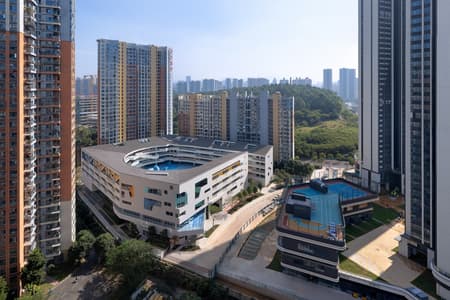
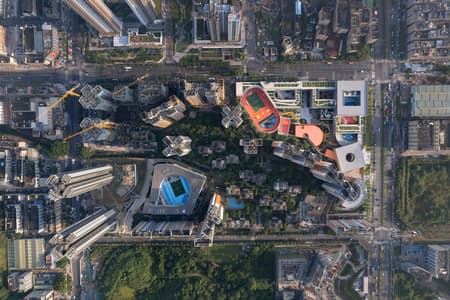
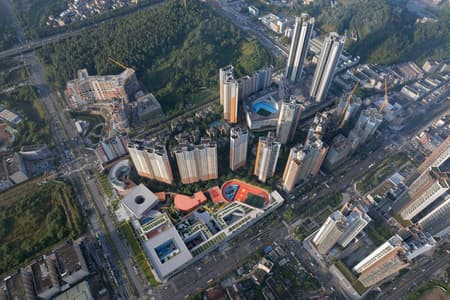
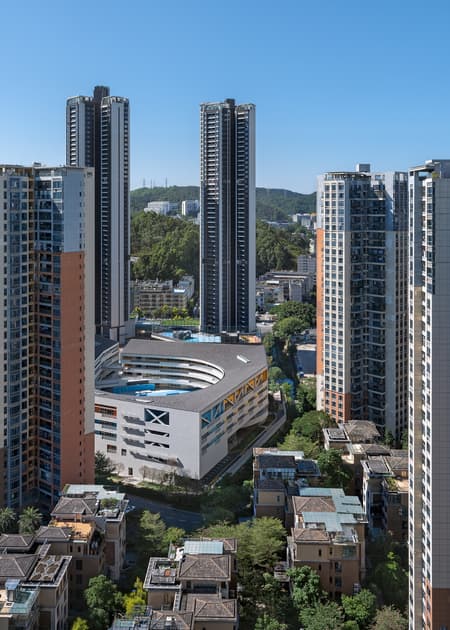
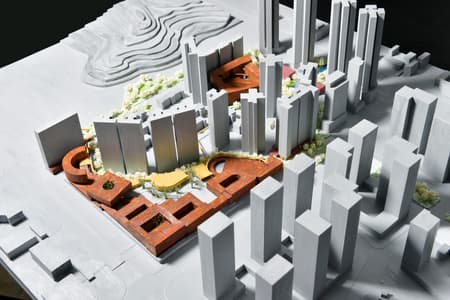
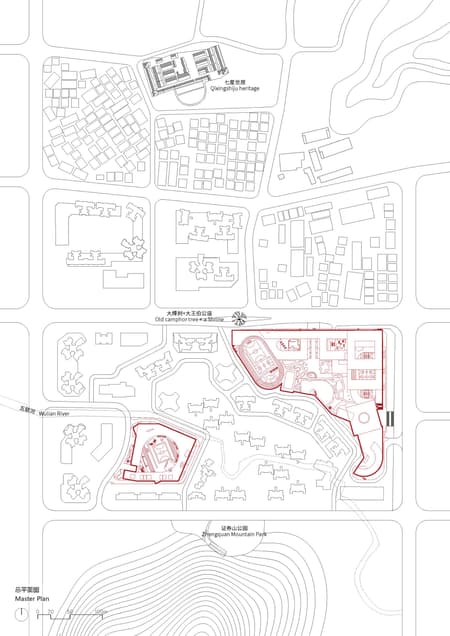
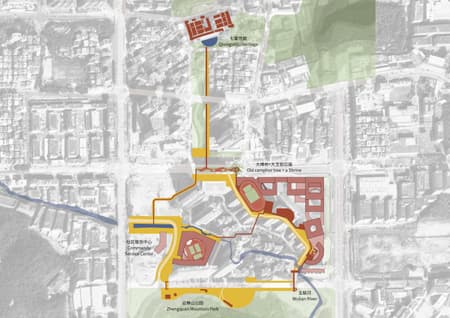
The site consists of residential areas, industrial parks, and an urban village. At the village entrance, incense continues to burn at the Dawang Bogong Temple sheltered beneath a century-old banyan tree. A few hundred meters north stands the Hakka Walled Houses, Qixing Shiju Historic Residence. From the north to the south, the two hills and a solitary tree sketch a subtle urban-natural-cultural axis. The Weilong School (primary and secondary school) in the northeast corner sits beside a major urban road, while the Weiwu School (primary school) in the southwest is crossed by a small river, with a high-rise residential complex located in between.
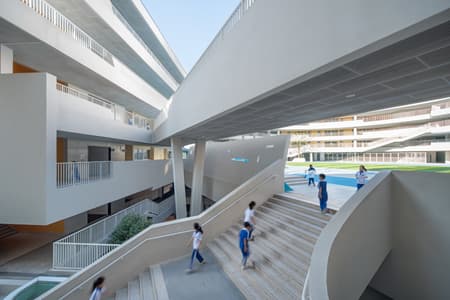
In Hakka culture, the core archetypal settlement form—the walled houses—is characterized by a strong sense of territory and richly layered courtyard spaces. Drawing inspiration from this traditional structure, we reinterpreted the spatial logic of the Hakka Walled Houses through a contemporary architectural language. Our aim is to explore place-making rooted in regional typological research, reshape boundary of the campus, realize the school as a shared resource for the community, and explore systematic and innovative strategies for managing public space.
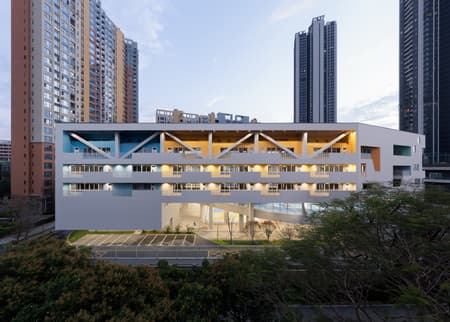
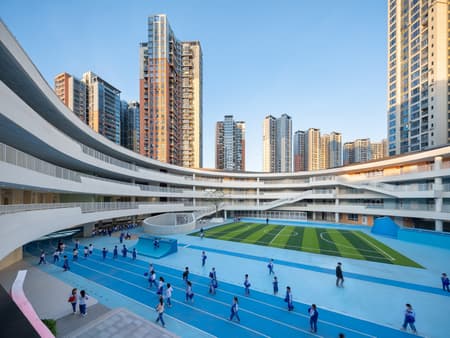
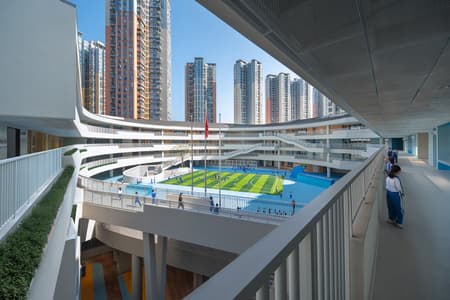
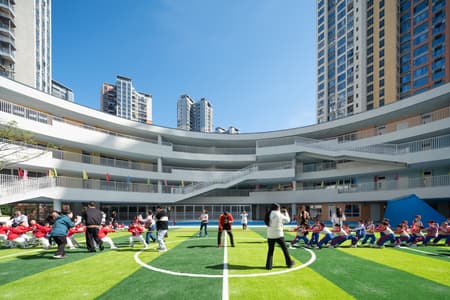
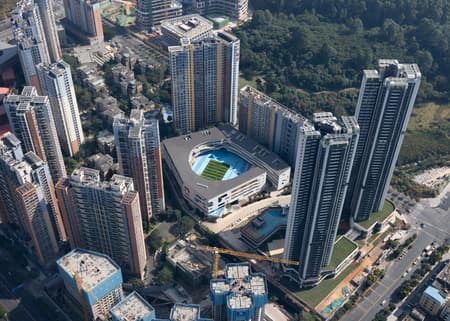
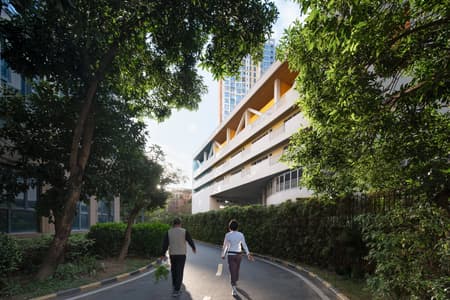
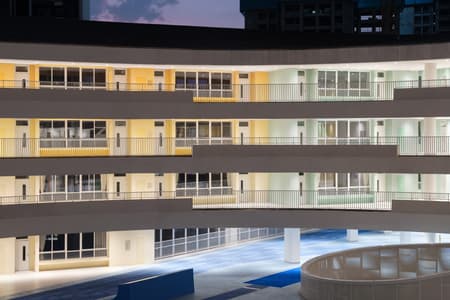
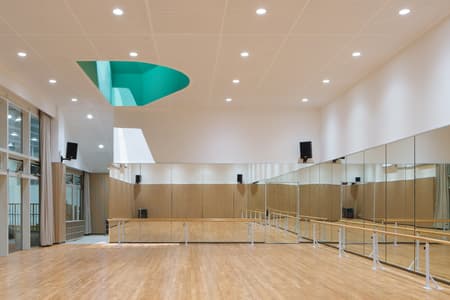
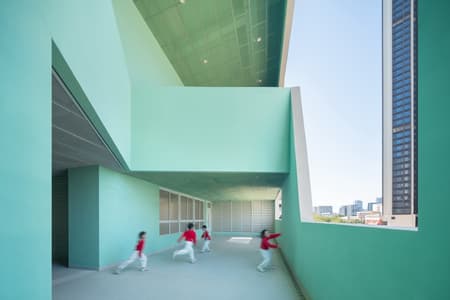
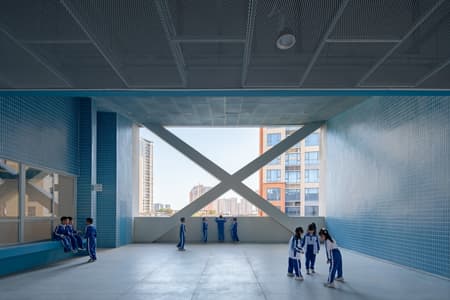
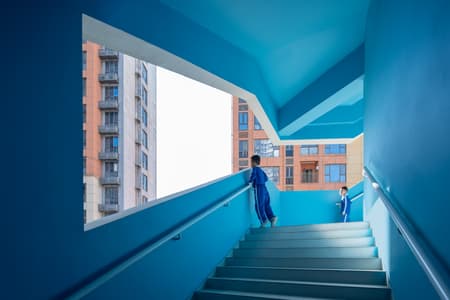
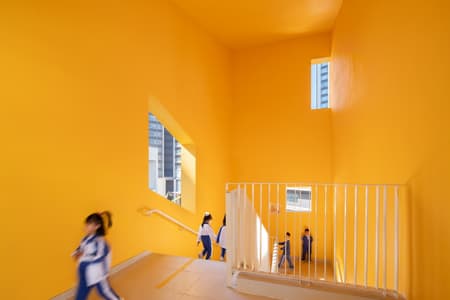
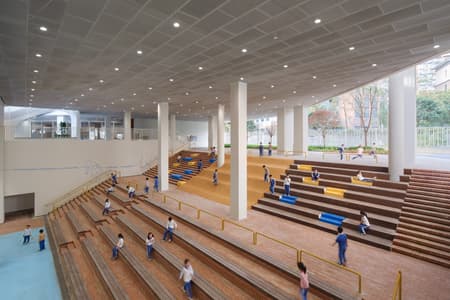
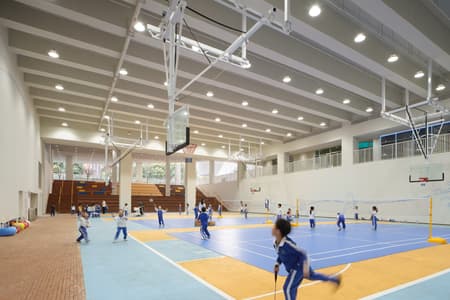
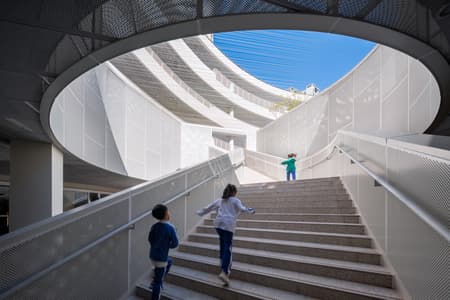
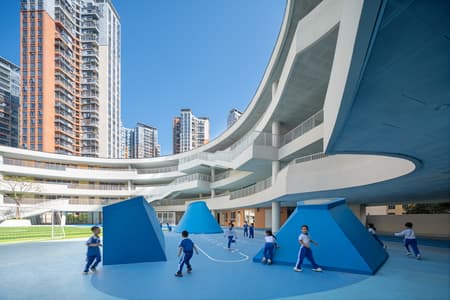
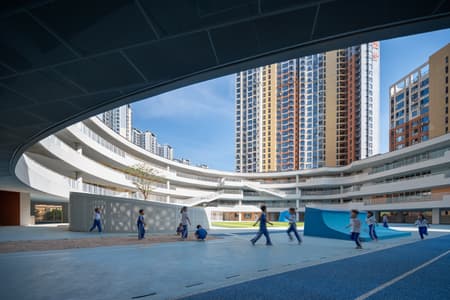
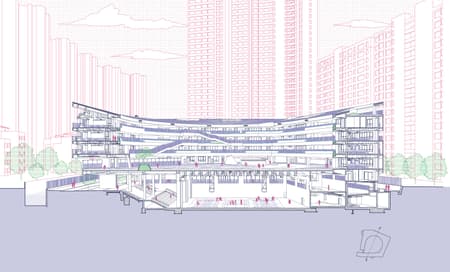
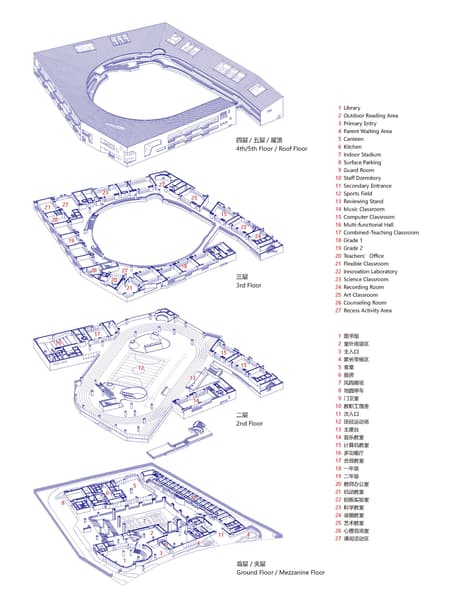
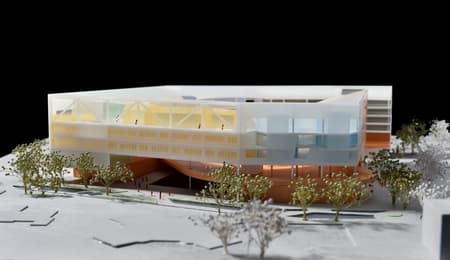
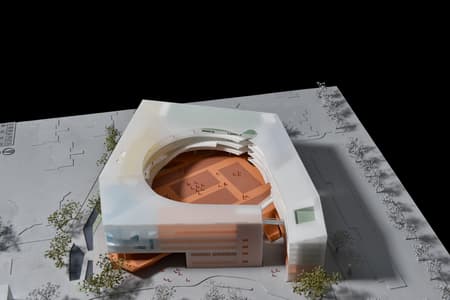
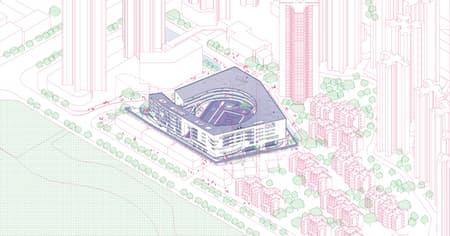
Weiwu School, occupies an irregular plot, encircled by towers. Its “outward-folding, inward-curving” plan maximizes land use while the design strategy responds to the high-density environment, stitching together fragmented spatial textures and reinserting cultural and spiritual meaning into the community. While emphasizing enclosure above, the design places community-shared cultural and athletic facilities on the ground. A large central sports field doubles as a stage for major community events, reinforcing neighborhood cohesion. The architectural language draws inspiration from Hakka dwellings, adapted to the local climate and school’s function needs. Its diverse facade expressions address challenges of a dense campus, balancing shading, ventilation, privacy and openness.
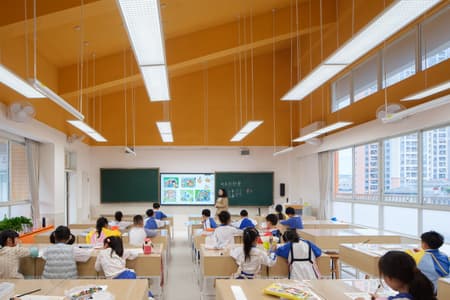
There is an urgent need today to mend the fragmented urban blocks left behind by years of frenzied real estate development, reweaving them into complete, livable living spaces. In a high-rise residential area in Longgang District surrounded by urban villages, industrial parks, and major arterial roads, we have inserted two primary and secondary schools, thereby completing the overall construction of the neighborhood block. The powerful geometric order of the Hakka walled village serves as an anchor against the surrounding homogenized development. The open campus boundaries and internally connected settlement clusters function not only as public spaces where children can discover their potential, but also provide the spatial conditions to break through the enclosed walls of traditional campuses, enabling exploration and co-creation with the community. This makes it possible for the academies to nourish the community and grow together with it.