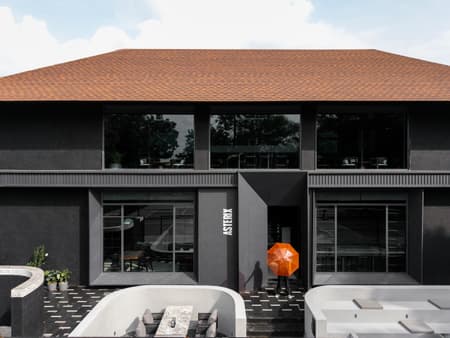
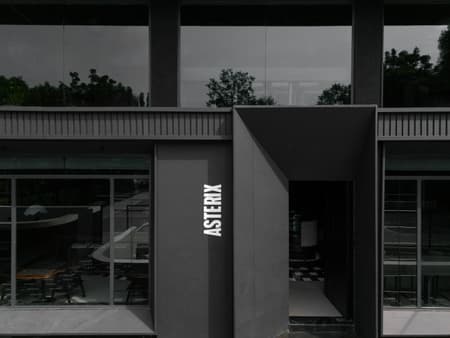
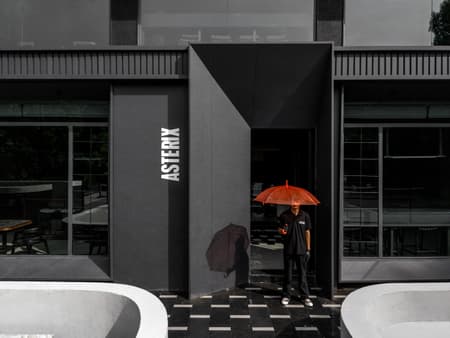
Asterix Café reimagines the contemporary café as a social and cultural destination, where coffee, recreation, and community engagement converge within a distinctly immersive architectural environment.
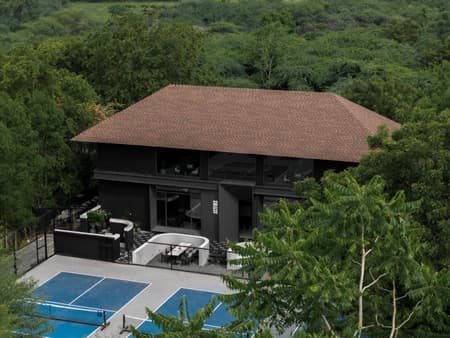
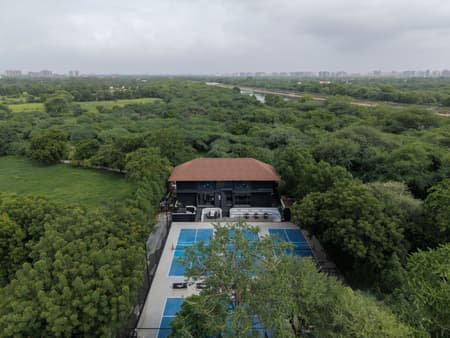
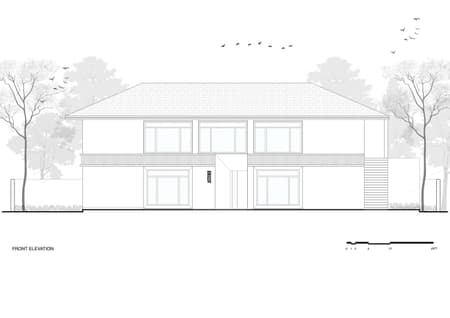
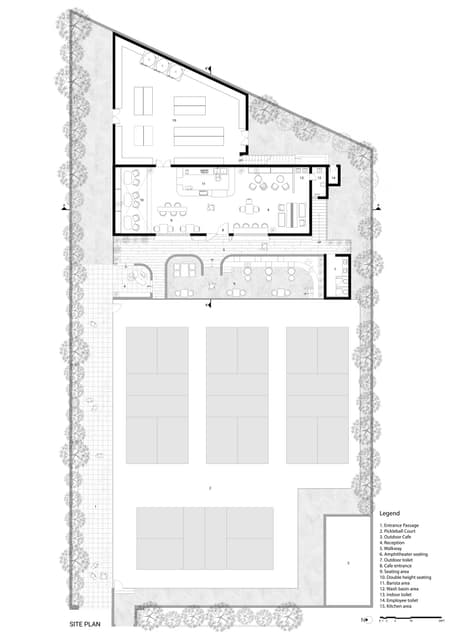
Located in Adalaj, Gujarat, the project occupies a site anchored by pickleball courts, positioning the café within an active recreational setting. At the time of the initial site assessment, the structure existed as a bare shell comprising a roof slab, four peripheral walls, and open window frames, offering little spatial character or identity. The client envisioned the project as a landmark destination that would challenge the conventional association of cafés with bright, pastel-toned interiors while establishing a unique presence within the local context. The primary challenge lay in transforming this unfinished shell into a memorable experience-driven environment within a limited timeline, while ensuring that a predominantly dark material palette remained welcoming, comfortable, and visually engaging. "Conceived as a cave for the contemporary city, Asterix offers a place of refuge, discovery, and shared experience."
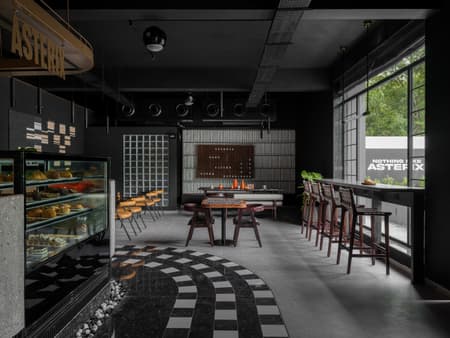
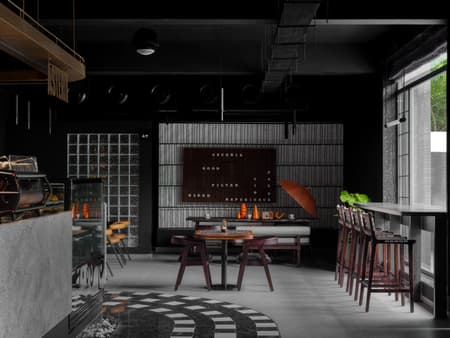
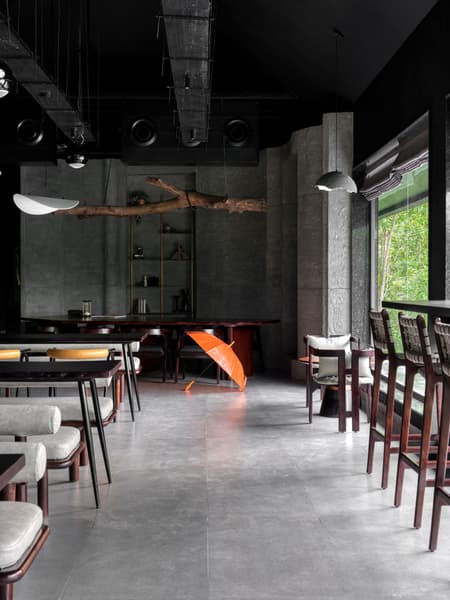
The design responds to this brief through the metaphor of a cave, an exploration of depth, enclosure, and discovery that departs from conventional orthogonal planning. Rather than organizing the café as a series of clearly defined rooms, sculpted and organic forms guide visitors through interconnected spaces that unfold gradually, encouraging movement, curiosity, and interaction. Darkness becomes more than an aesthetic choice; it serves as a tool for shaping atmosphere, directing attention, and heightening sensory perception.
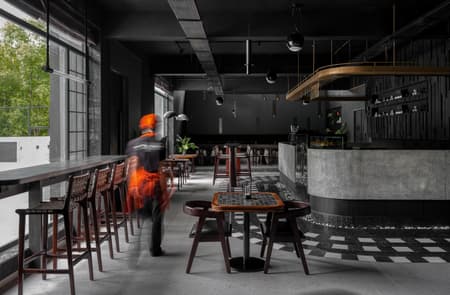
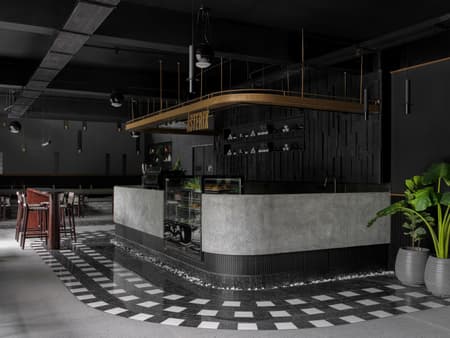
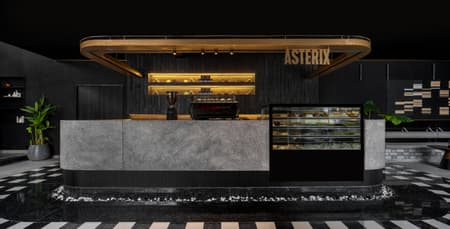
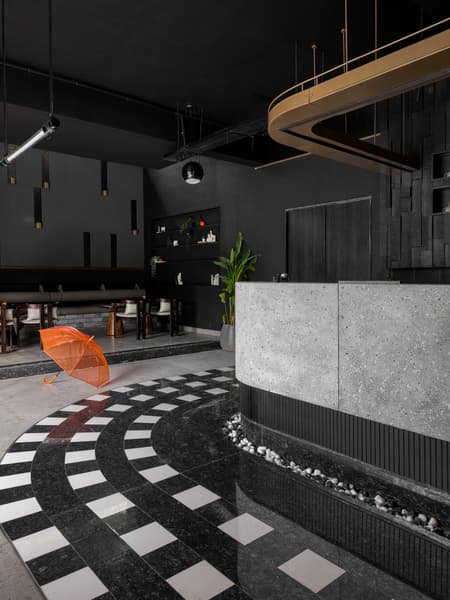
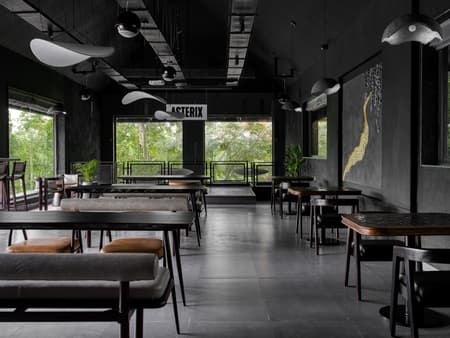
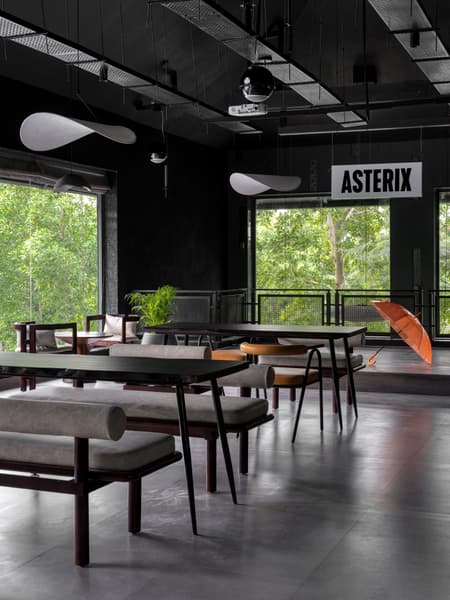
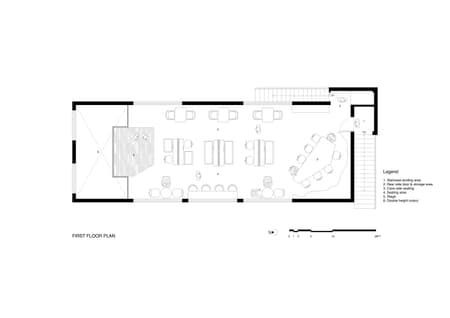
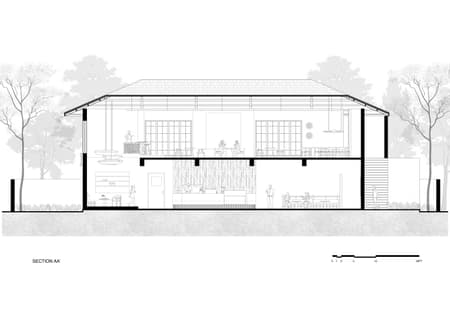
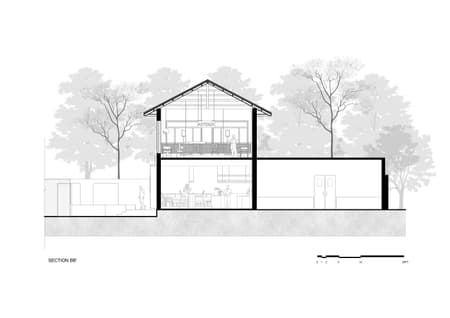
Programmatically, the café is organized across two distinct yet connected levels. The ground floor functions as an intimate coffee destination centered around a prominent barista counter that serves as both a visual anchor and social gathering point. Above, the first floor extends the role of the café beyond food and beverage service, accommodating stand-up comedy performances, karaoke nights, screenings, exhibitions, workshops, and community events. A double-height void connects the two levels, reinforcing visual continuity and fostering interaction between the café’s diverse activities.
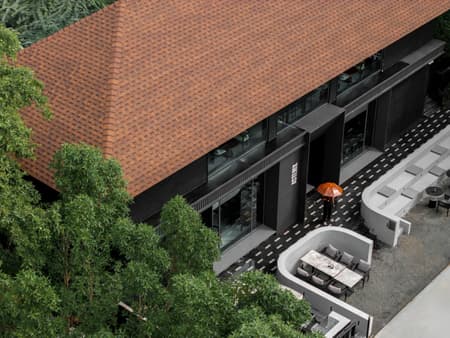
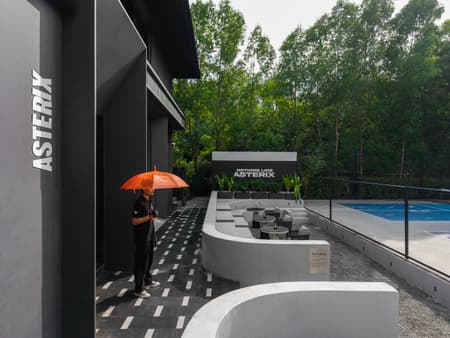
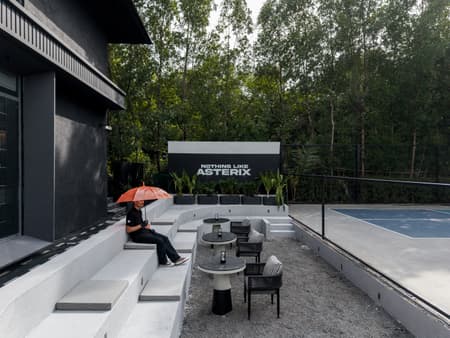
The project’s relationship with its surroundings plays an equally important role in shaping the experience. An amphitheater extends the café toward the adjacent pickleball courts, creating a shared threshold between recreation and social engagement. This connection allows visitors to move seamlessly between sport, leisure, and hospitality, transforming the café into an extension of the larger recreational landscape rather than a standalone destination.
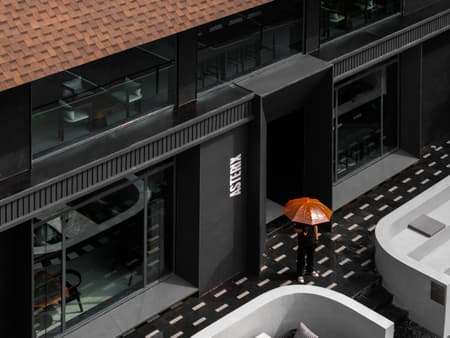
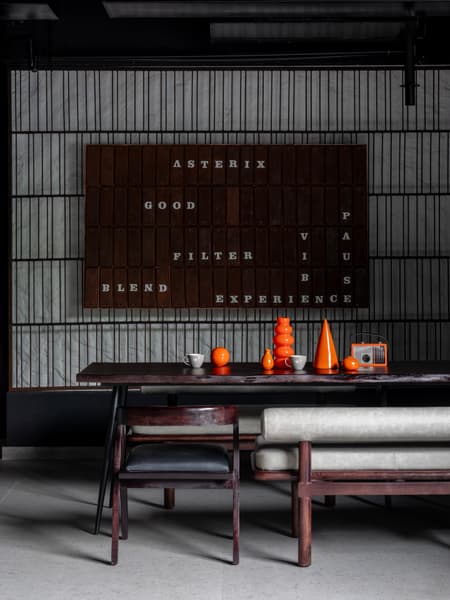
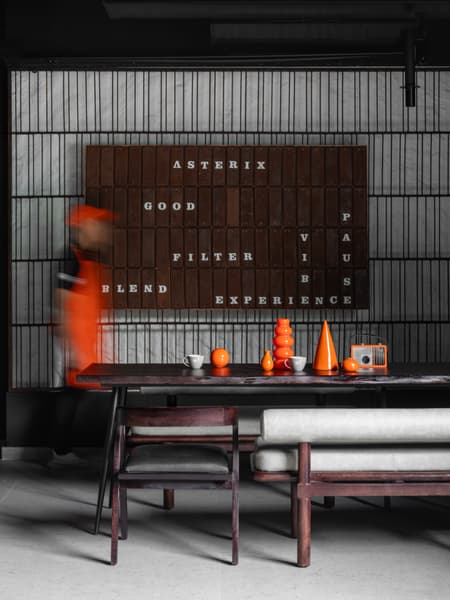
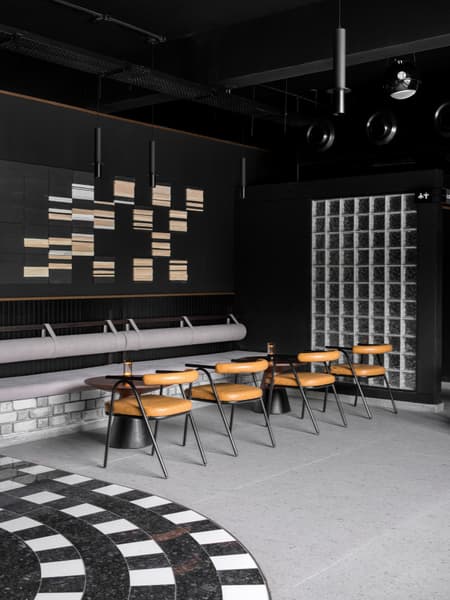
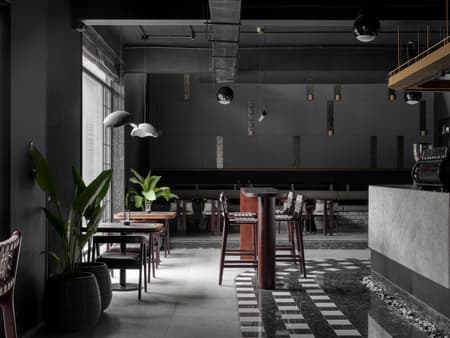
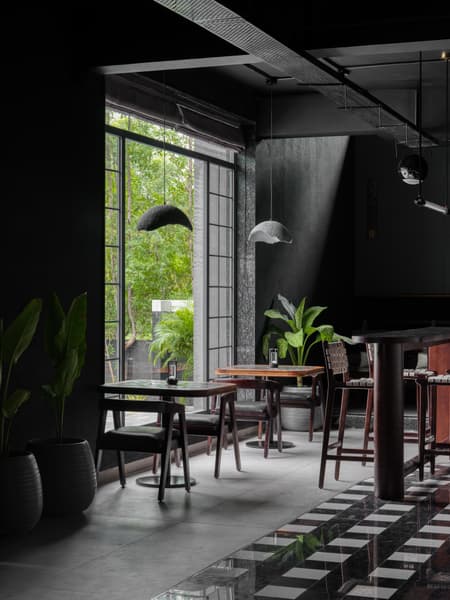
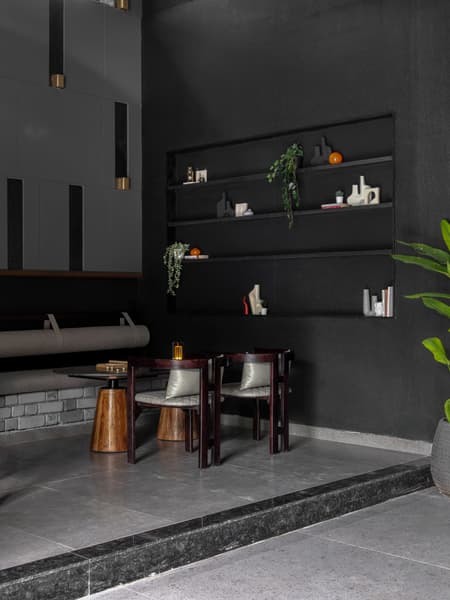
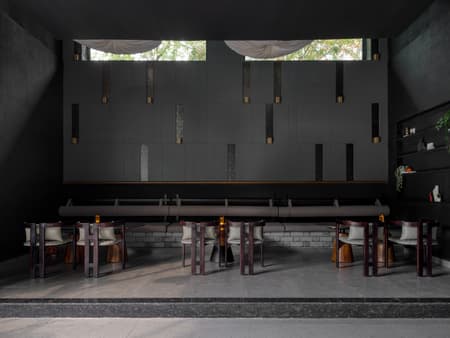
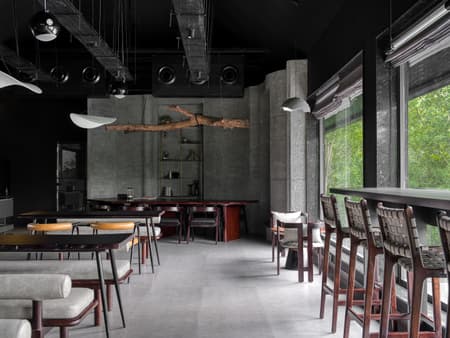
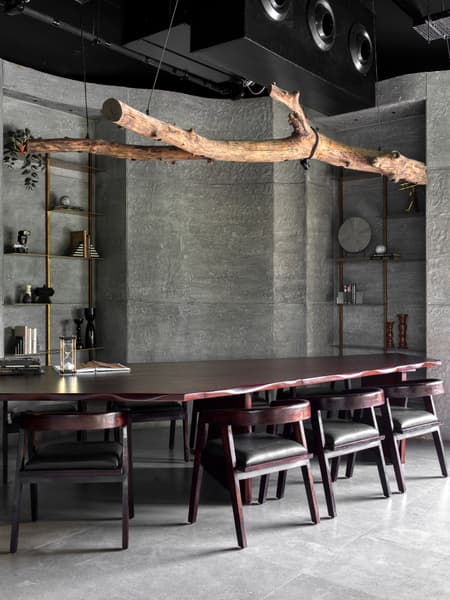
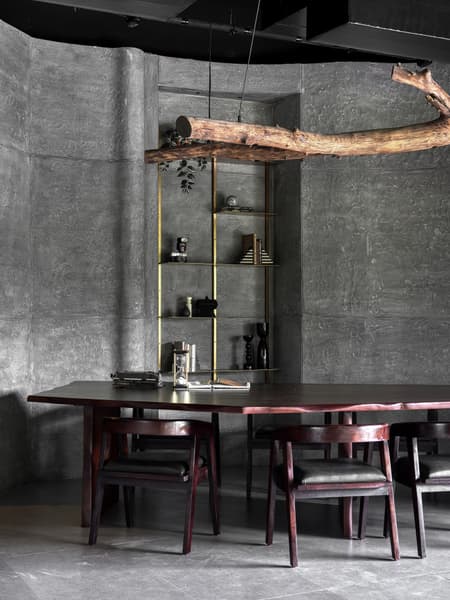
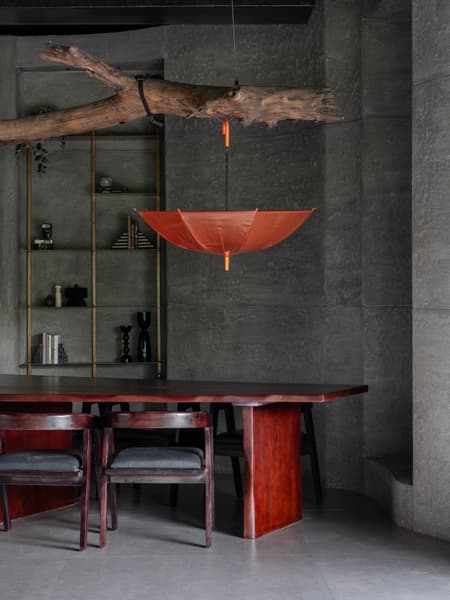
Materiality is approached through a restrained palette of blacks and grays, enriched through variation in texture, finish, and light. Matte-finished pine wood, micro-concrete, terrazzo plaster, beaten metal sheets, brushed bronze accents, and natural stone were selected for their ability to absorb, reflect, and diffuse illumination in different ways. Rather than flattening the space, the monochromatic palette creates depth and contrast, allowing light to reveal the subtleties of form, texture, and craftsmanship. Construction techniques emphasize material layering and surface treatment, enabling the realization of the project’s sculpted geometries while maintaining clarity and precision in detailing.
The user experience is defined by a progression from openness to immersion. Visitors move through a sequence of spatial conditions ranging from intimate seating niches to communal gathering areas, each shaped by carefully controlled lighting and tactile material expression. The cave-inspired upper level spaces, combined with flexible furniture arrangements and integrated event infrastructure, encourage prolonged occupation and collective participation, supporting a wide range of social and cultural activities.
By reinterpreting the café as a multifunctional environment, Asterix Café expands beyond the traditional role of a coffeehouse to become a community-oriented destination. Its integration with recreation, performance, and social interaction demonstrates how hospitality spaces can foster deeper forms of engagement and connection. Through its immersive spatial language, adaptable programming, and strong relationship to its surroundings, the project proposes an alternative model for contemporary café culture, one where architecture supports not only consumption, but also gathering, expression, and shared experience.