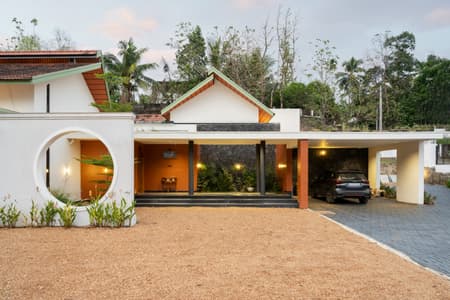
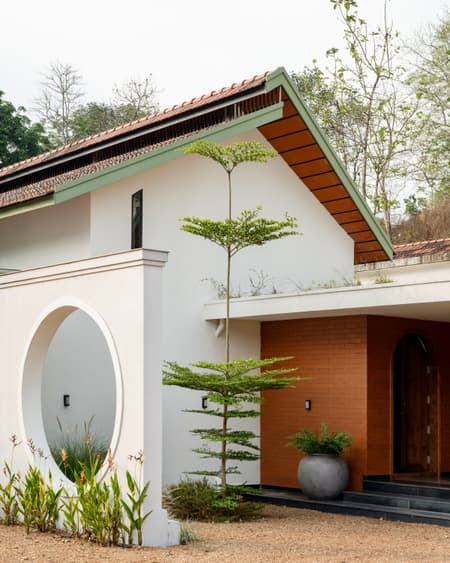
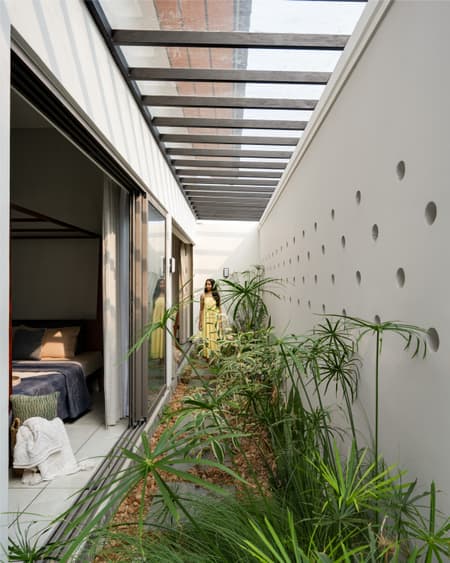
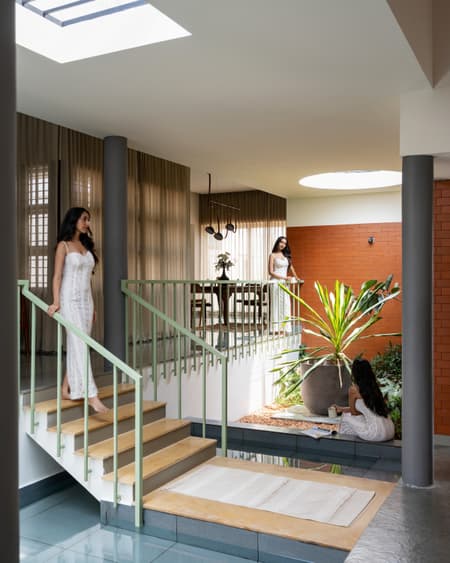
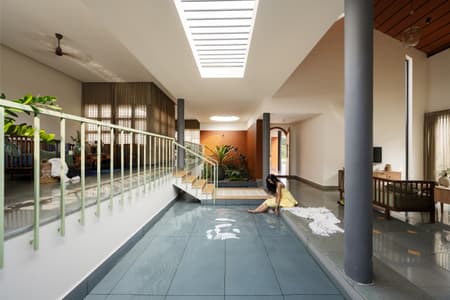
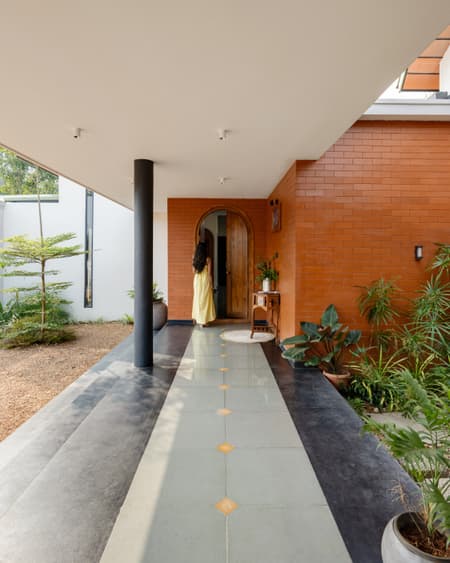
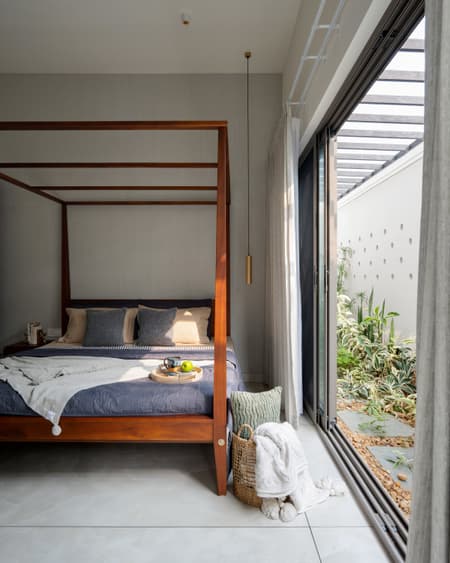
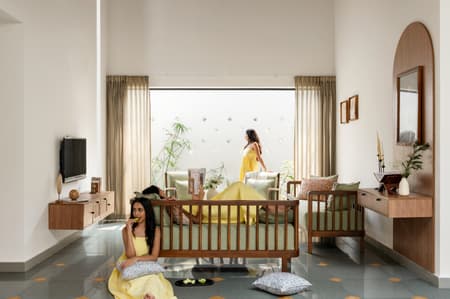
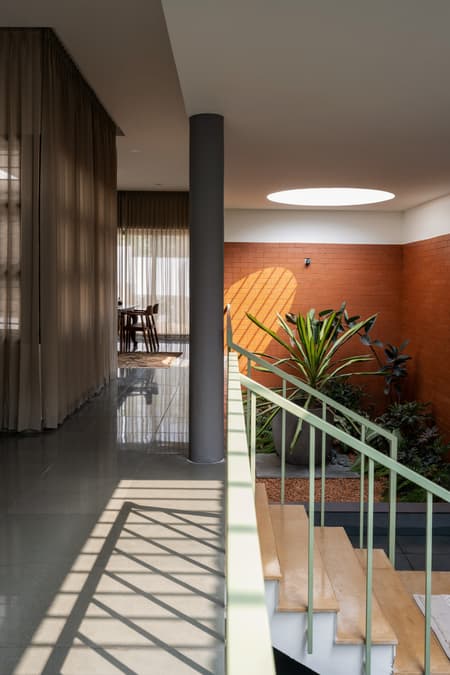
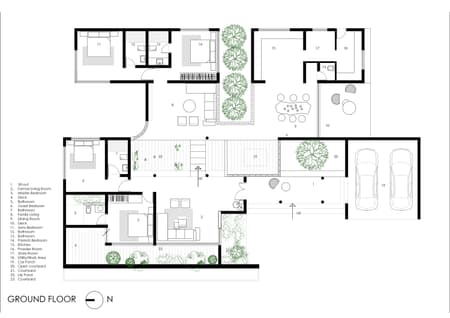
A horizontal home where courtyards and water become the primary organizers of space. Set within Kerala’s tropical landscape, this single-storey residence reinterprets the spatial logic of the traditional tharavadu through a contemporary architectural lens. Conceived as a low, horizontally spread composition, the house is organised as a series of interconnected volumes, where courtyards and shallow water bodies act as both thresholds and connectors. Rather than relying on enclosed corridors, movement through the home is shaped by a sequence of open, transitional spaces, verandahs, courts, and shaded passages. These in-between zones become the primary lived spaces, mediating light, air, and seasonal change. Courtyards are positioned not as visual inserts but as spatial anchors, allowing vegetation, sky, and reflection to remain constantly present within the built fabric.
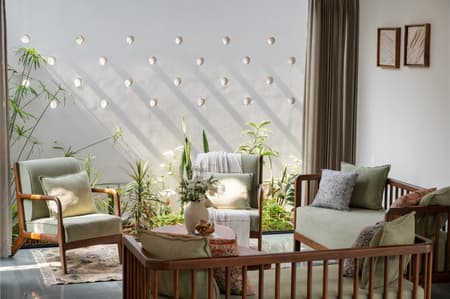
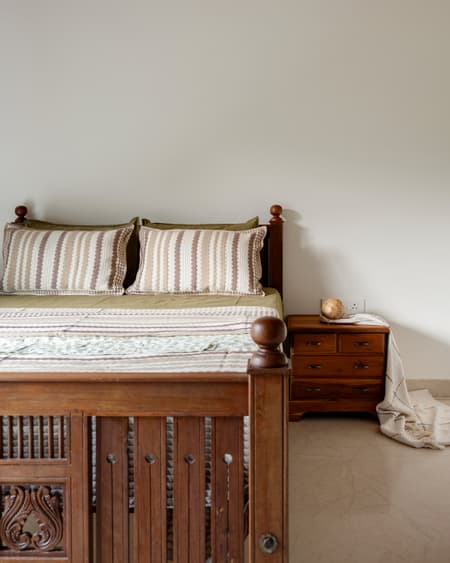
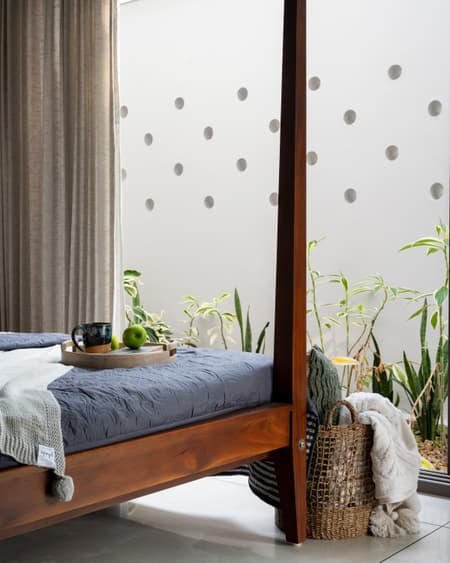
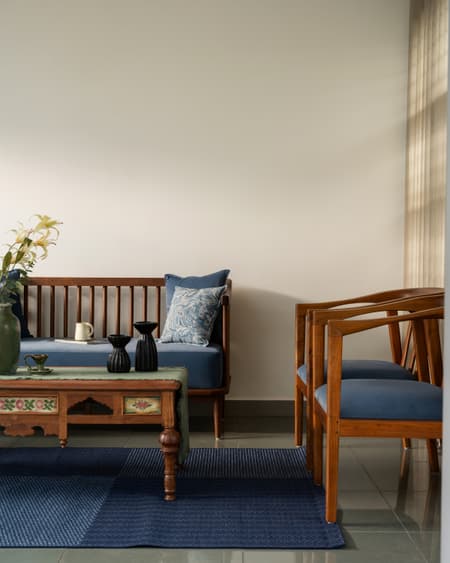
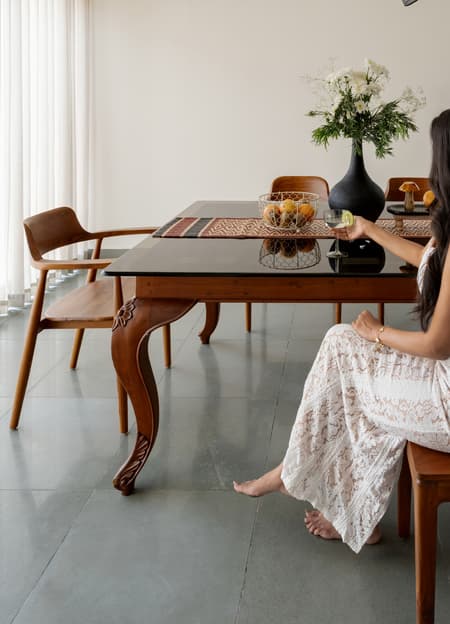
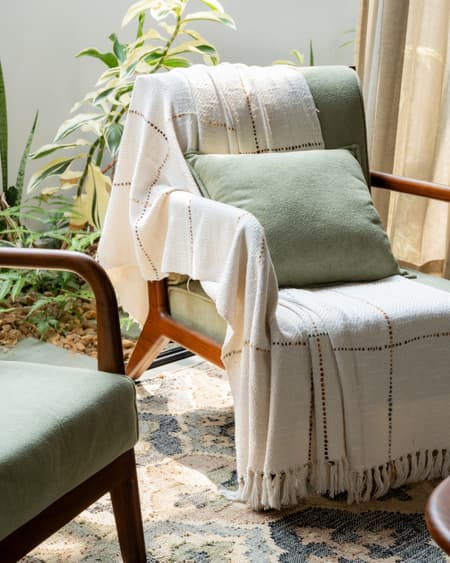
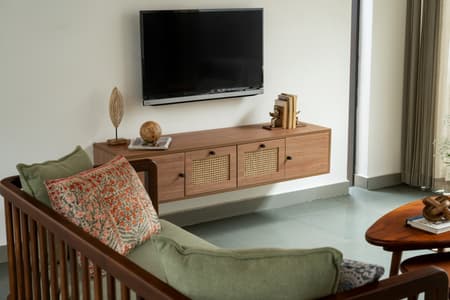
Water is introduced as a quiet but defining element, reinforcing the sense of pause and transition while subtly cooling the surrounding spaces. The architecture remains deliberately restrained, allowing natural light, shadow, and material textures to articulate the experience of the house. This dialogue between past and present extends into the interiors. Select pieces of antique wooden furniture are placed alongside contemporary elements crafted in similar tones and finishes. Rather than creating contrast, the approach seeks continuity, where memory is carried through material and proportion rather than ornamentation.
The project negotiates familiarity through reduction, distilling the essence of the tharavadu into a more minimal and adaptable form. In doing so, it shifts the focus from the object itself to the experience of inhabitation, where architecture is defined not by enclosure, but by the spaces it opens up to light, landscape, and time.