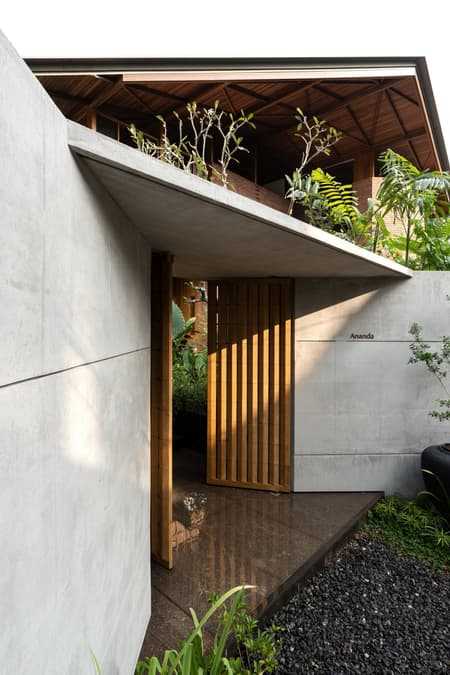
Madhu and Mandy, a couple based in Dallas,USA approached thought parallels to design a residence adjacent to their ancestral home in India. They sought a contemporary architectural interpretation of the region's vernacular style. Both of them being aesthetically astute and well-traveled, ideated a refined vision of what a home should embody. They broke a stereotype of usually cliched project requirements.
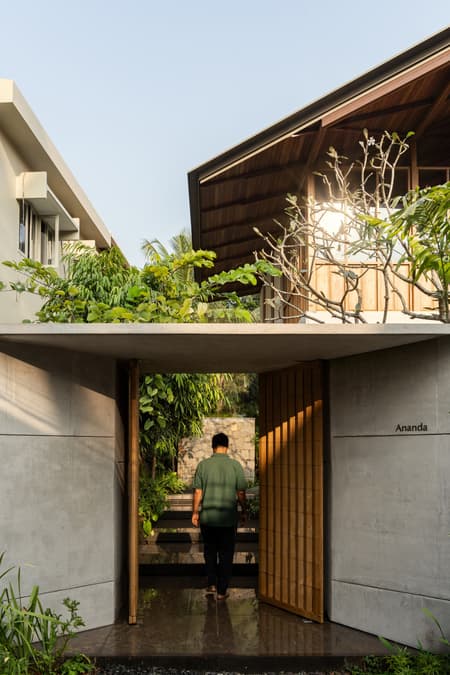
Madhu named the house ‘Ananda’, a word derived from Sanskrit which means eternal bliss or a state of ultimate happiness and fulfilment. The architecture tried to resonate ananda in its own terms with a space which can invoke a sense of physical and emotional wellbeing. A place of rest, tranquility and togetherness with family.
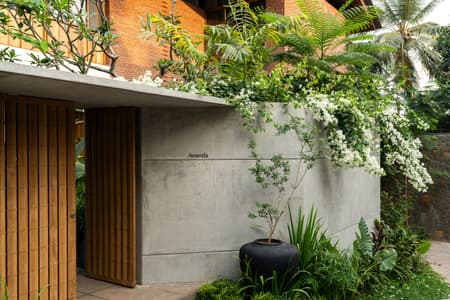
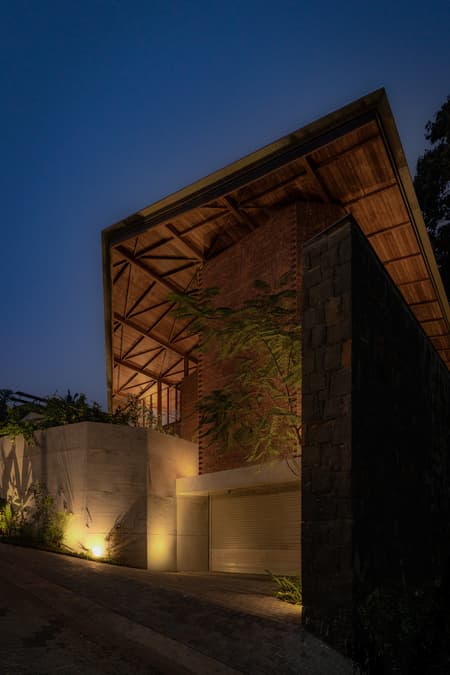
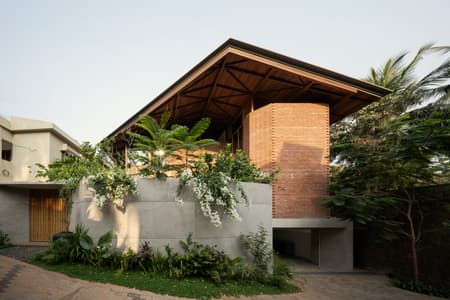
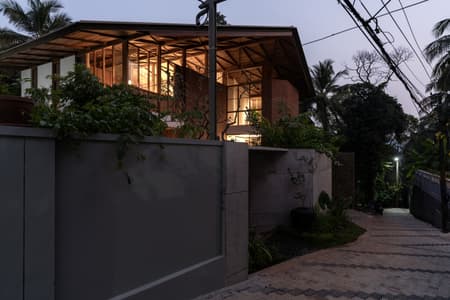
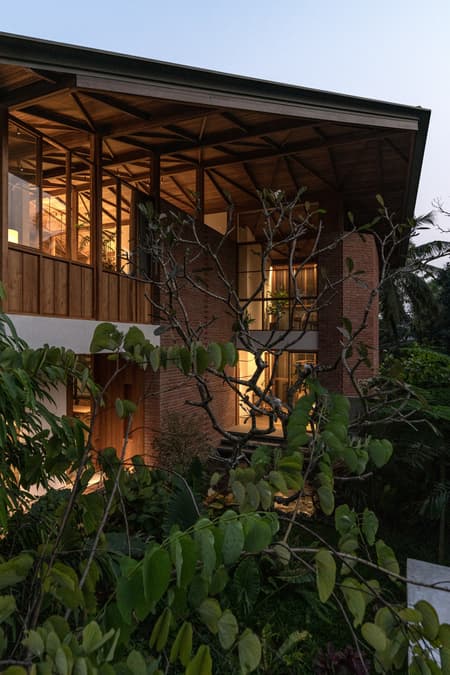
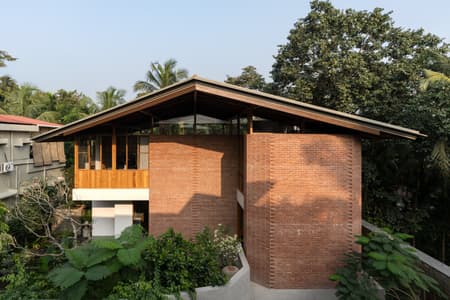
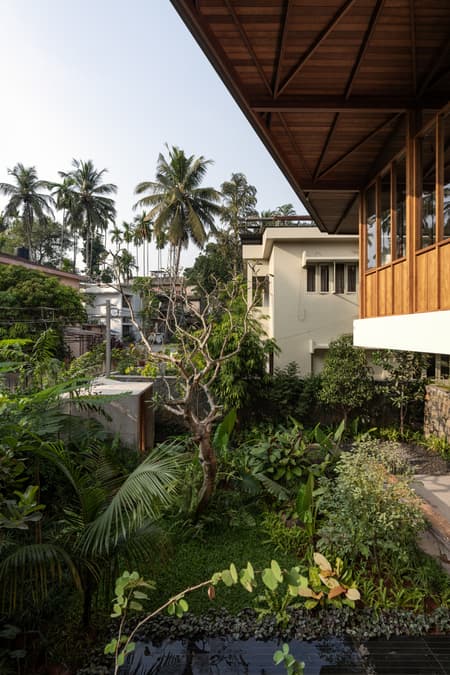
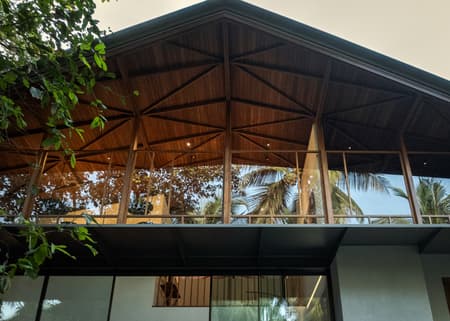
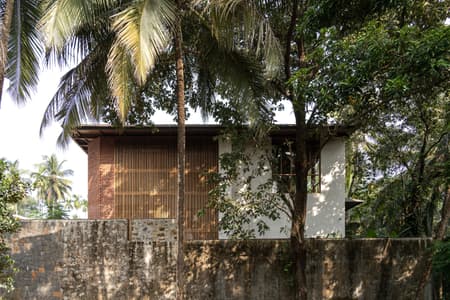
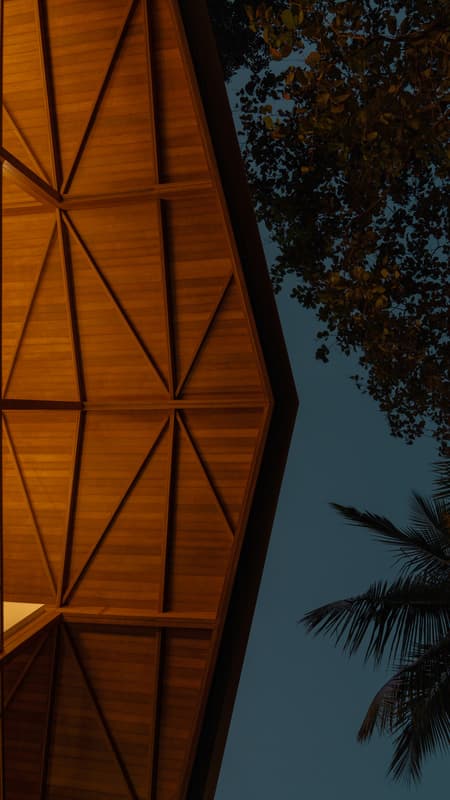
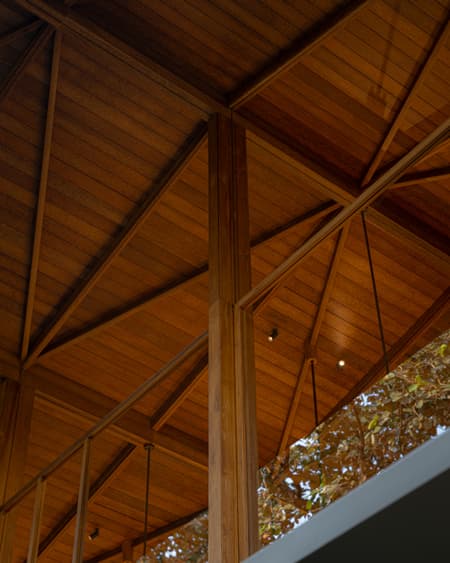
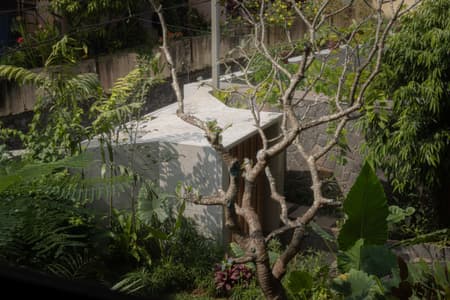
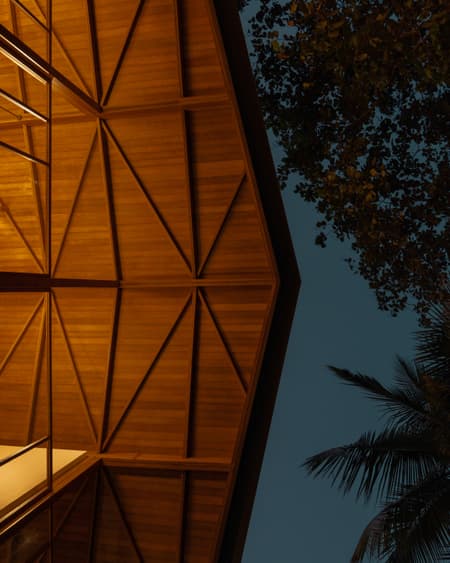
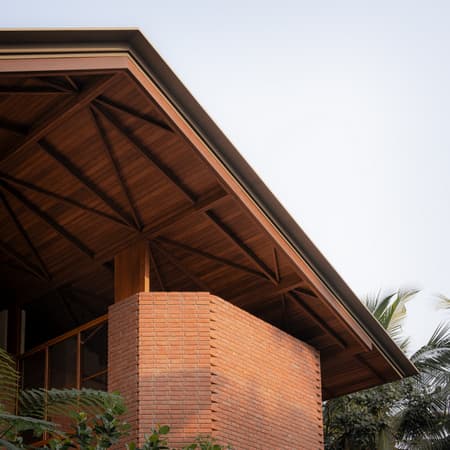
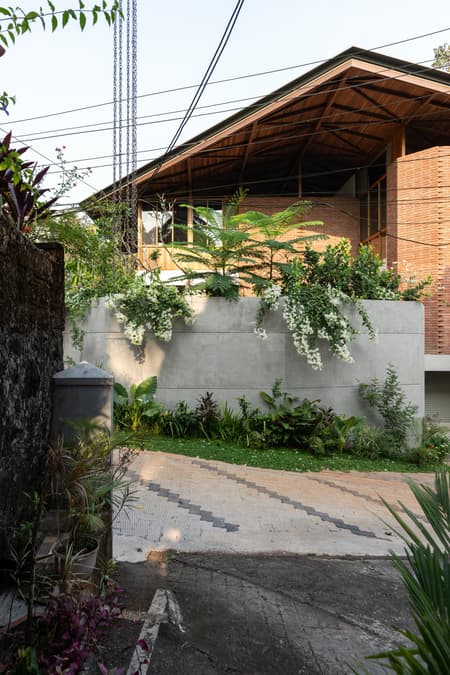
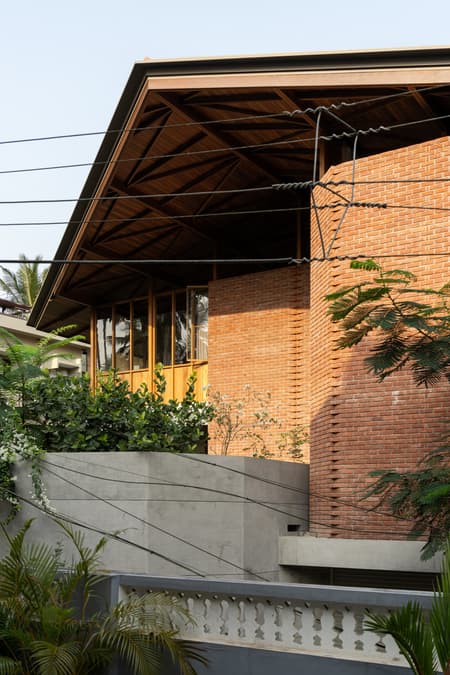
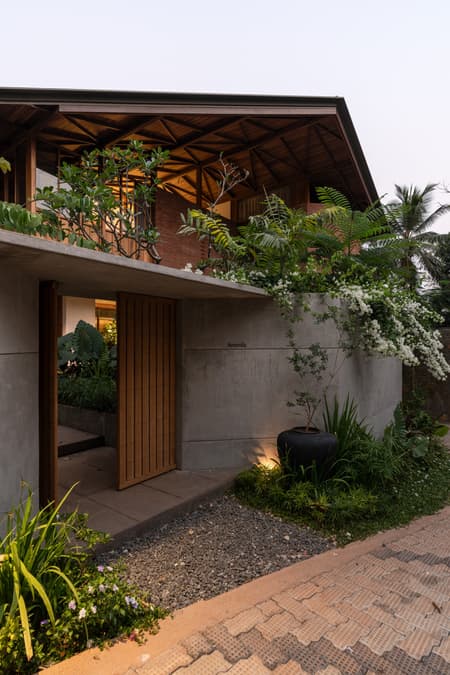
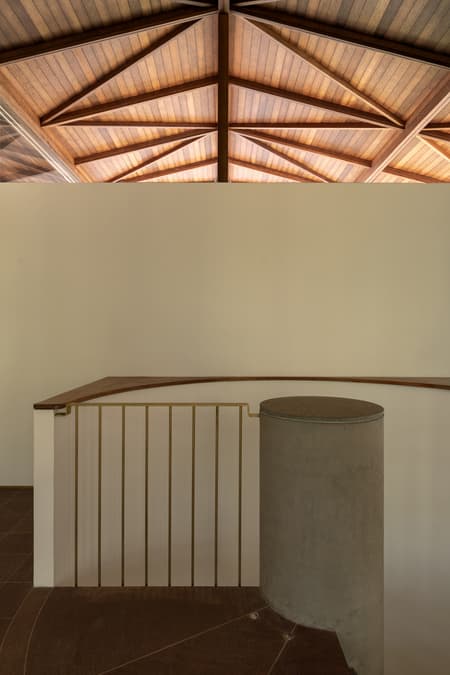
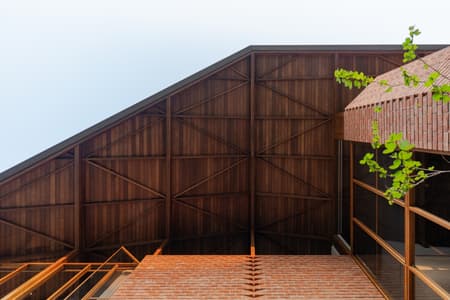
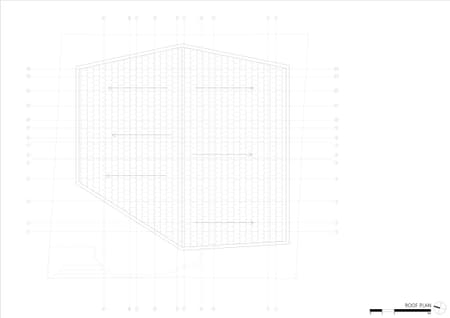
Situated in a dense urban fabric and accessed via a narrow thoroughfare, the site offered limited opportunities for a conventional elevation. To address the lack of a clear vantage point, we shifted the visual focus upward, driving the eyed towards the roof. Consequently, the expansive overhanging roof serves as the primary design anchor, creating a riveting presence that is functional as well as aesthetic.
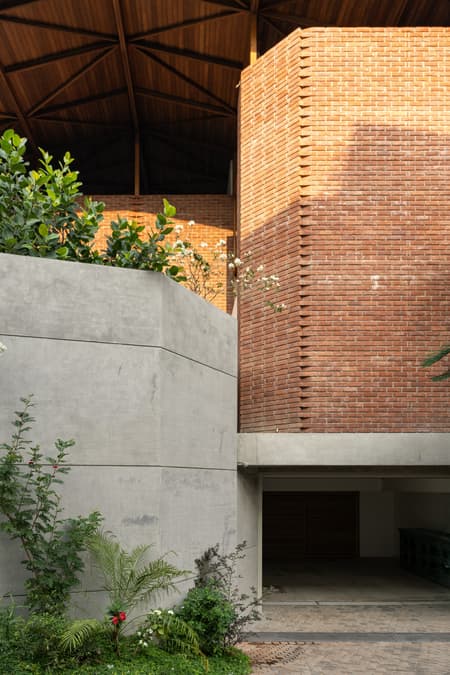
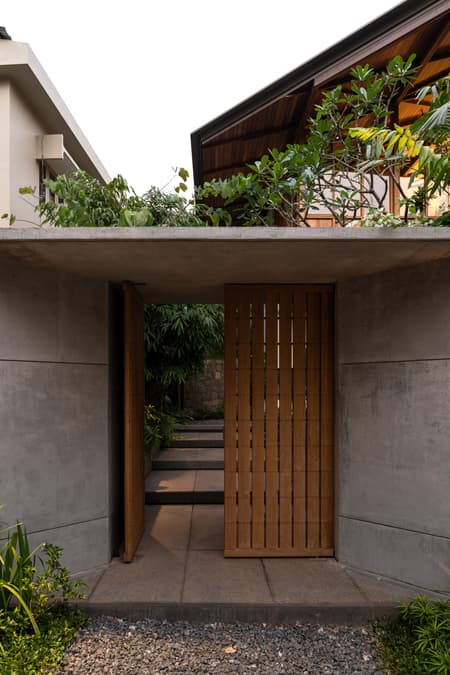
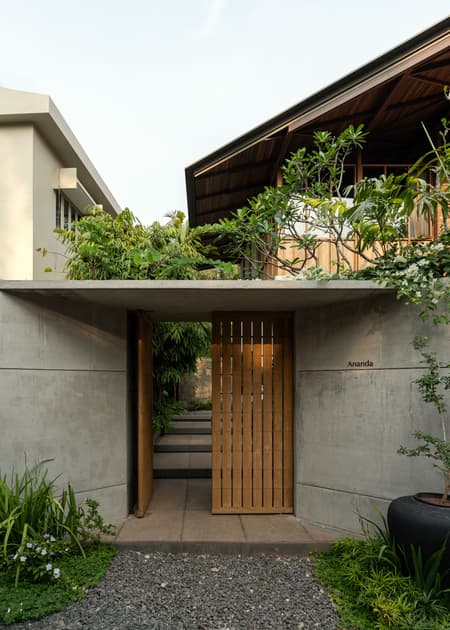
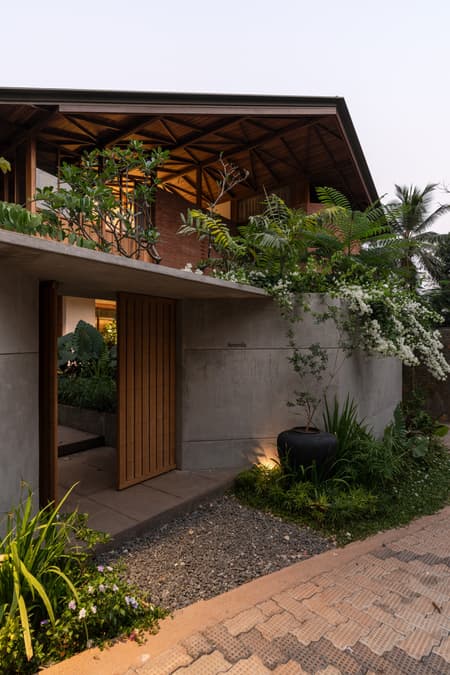
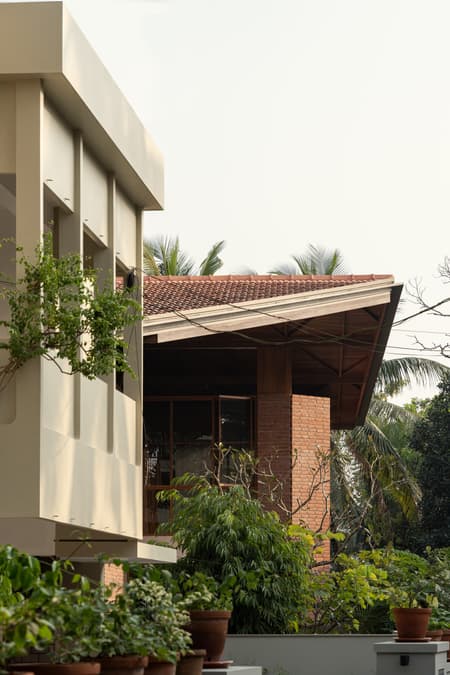
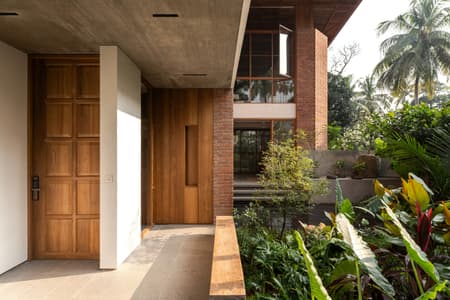
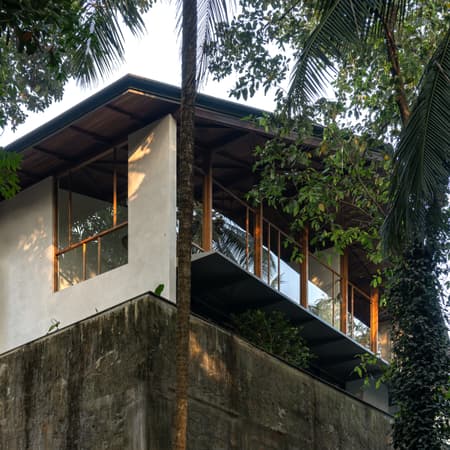
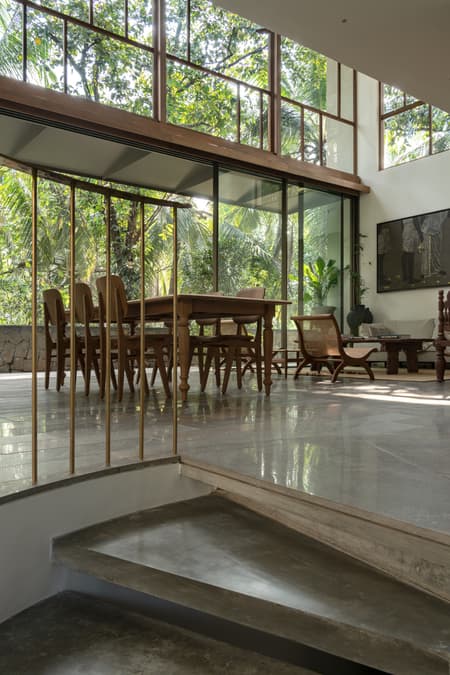
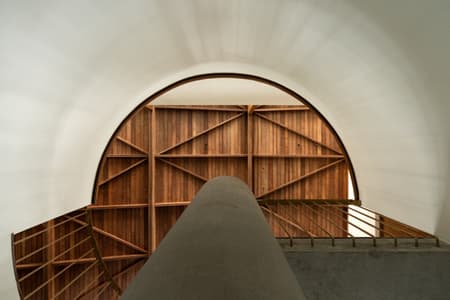
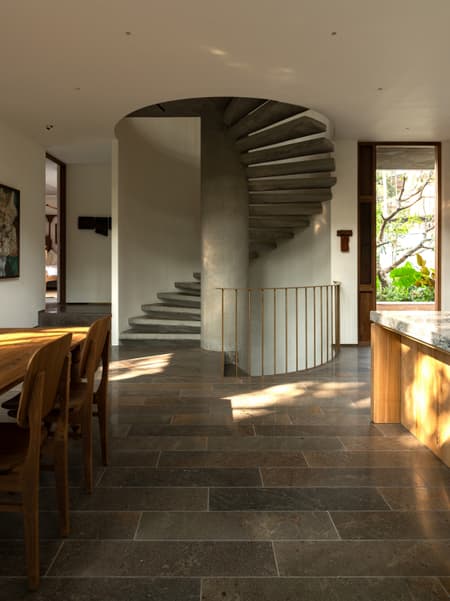
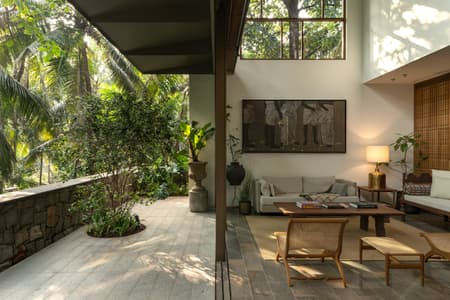
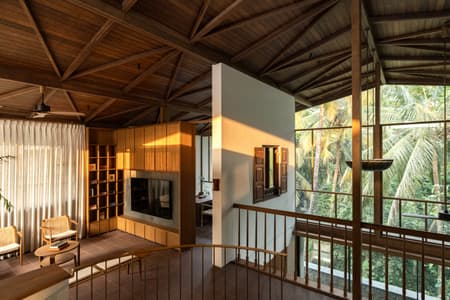
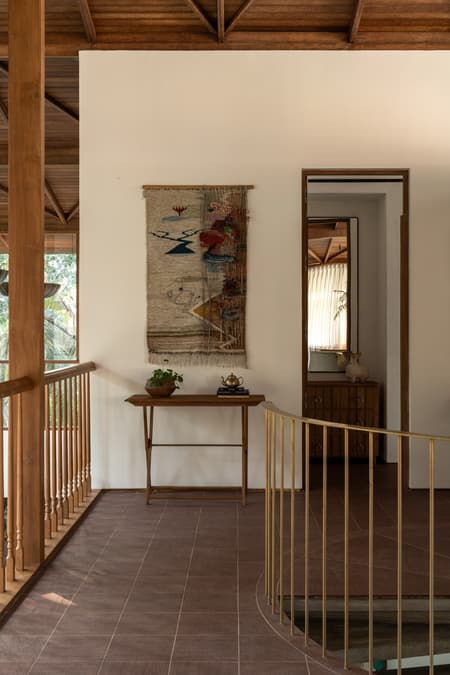
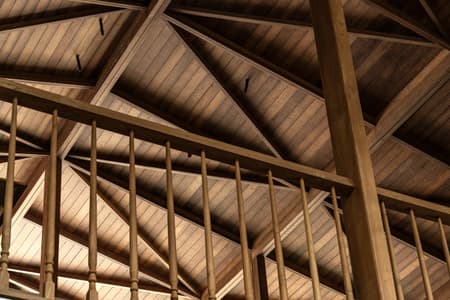
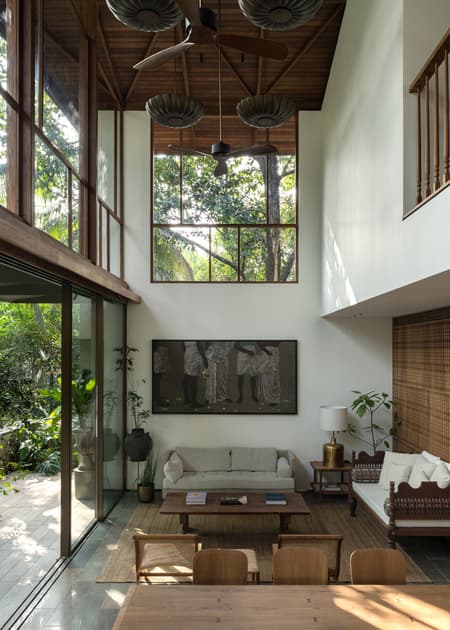
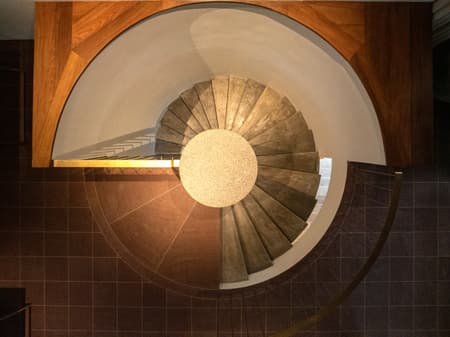
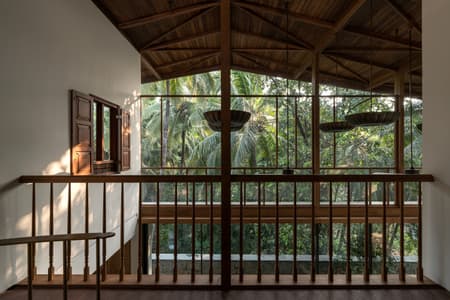
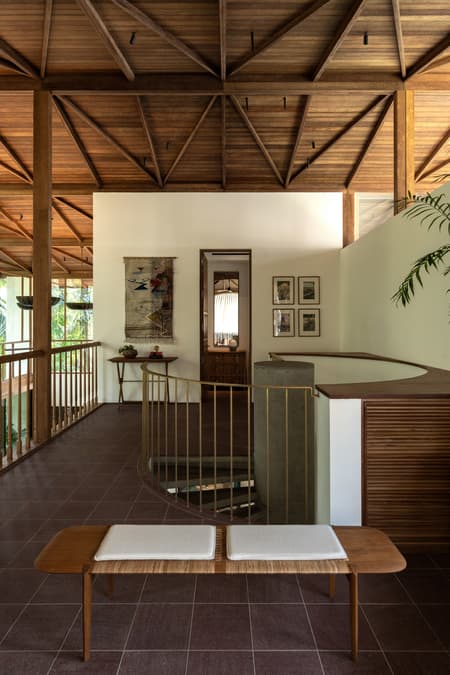
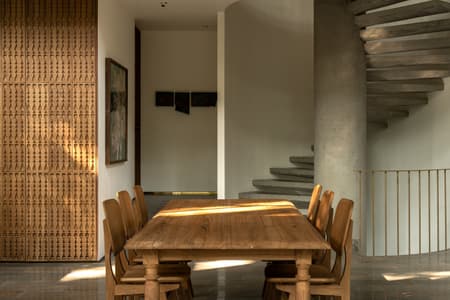
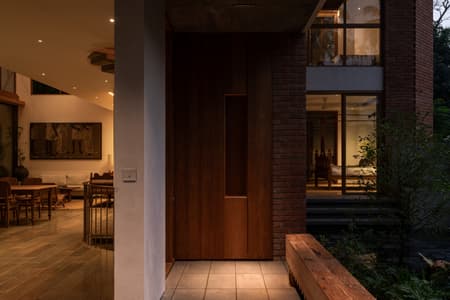
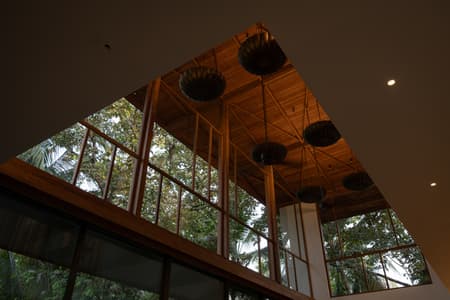
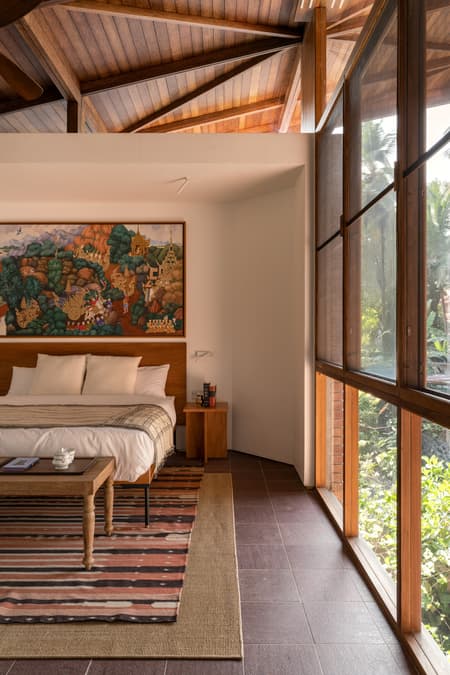
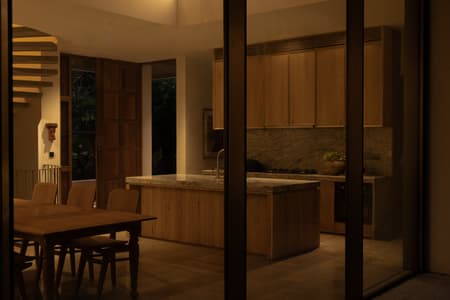
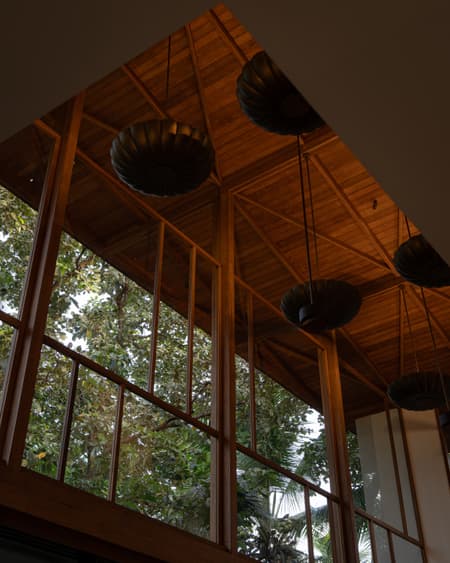
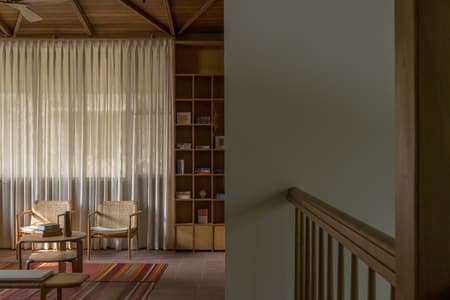
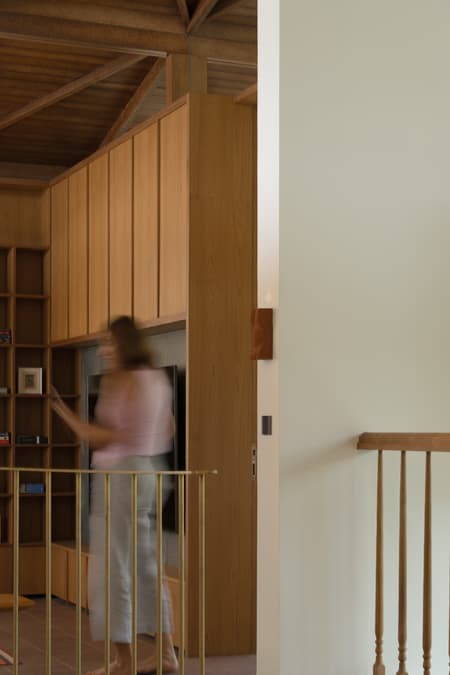
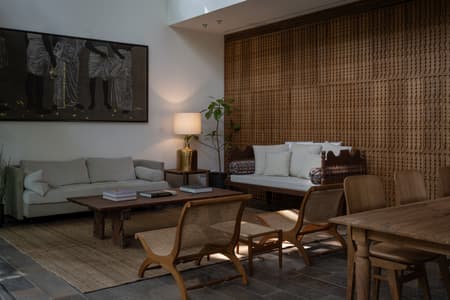
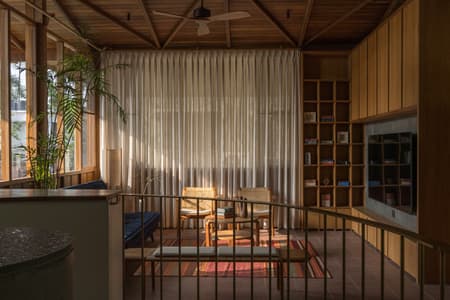
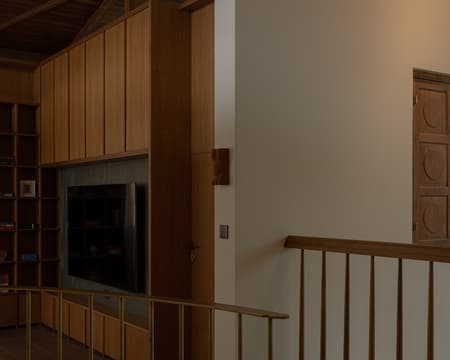
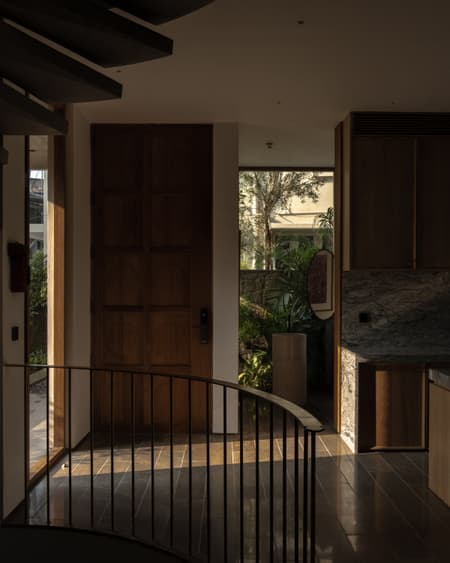
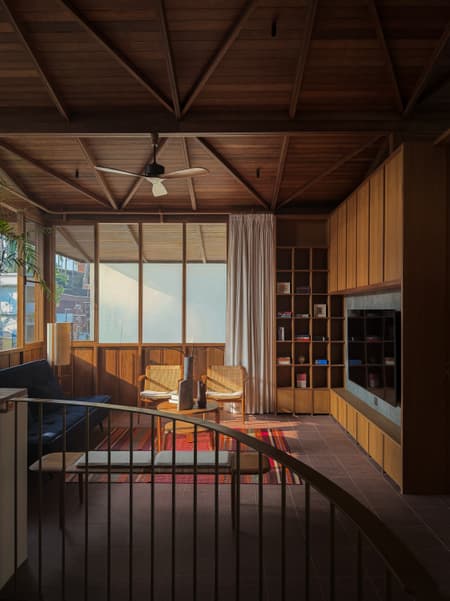
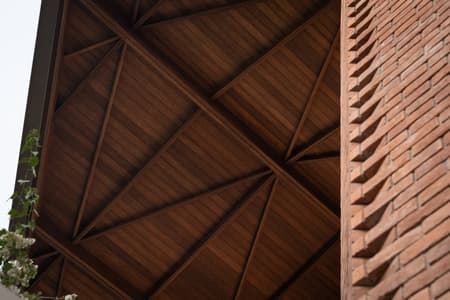
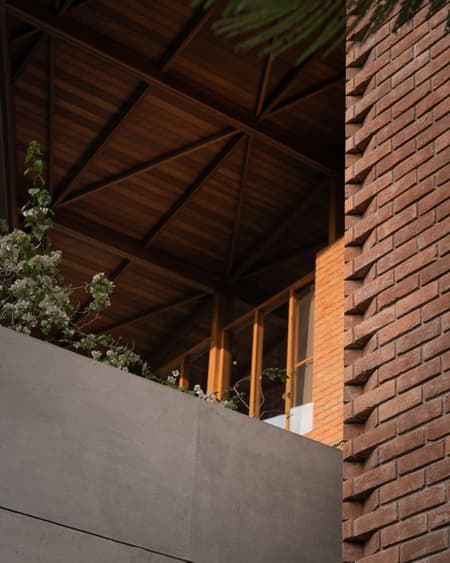
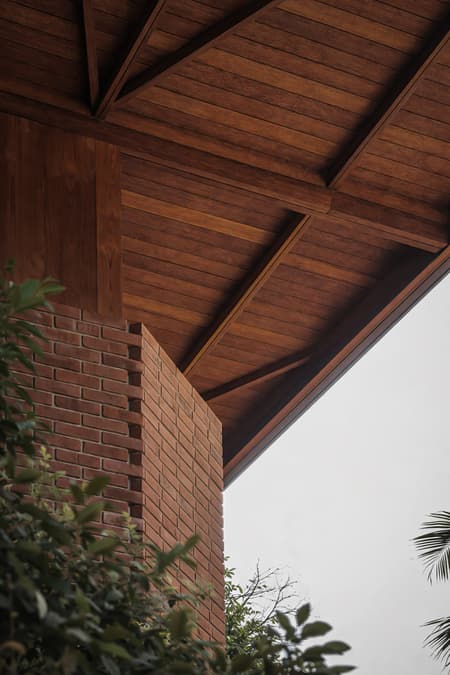
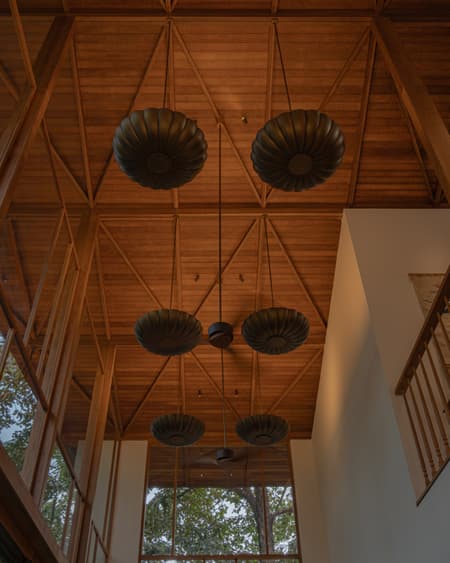
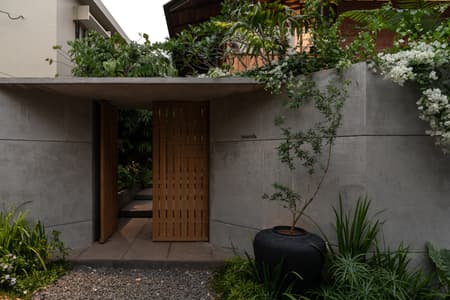
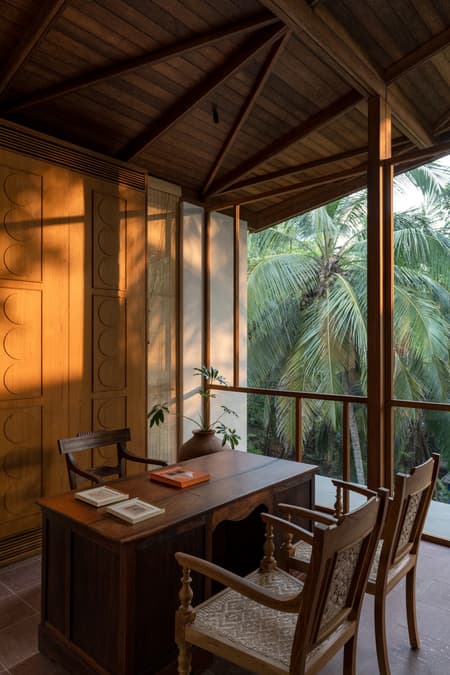
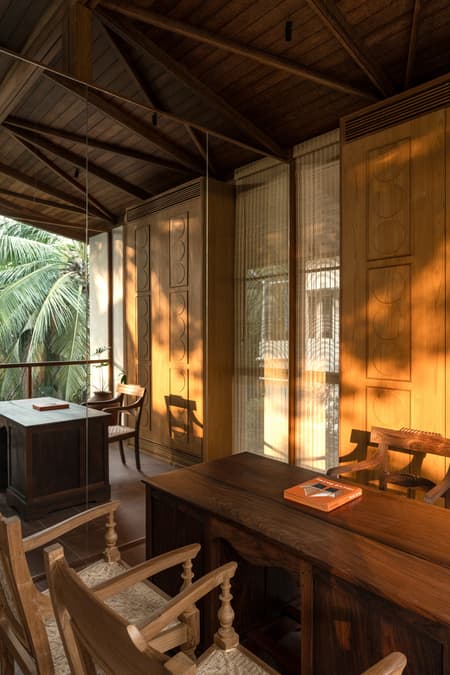
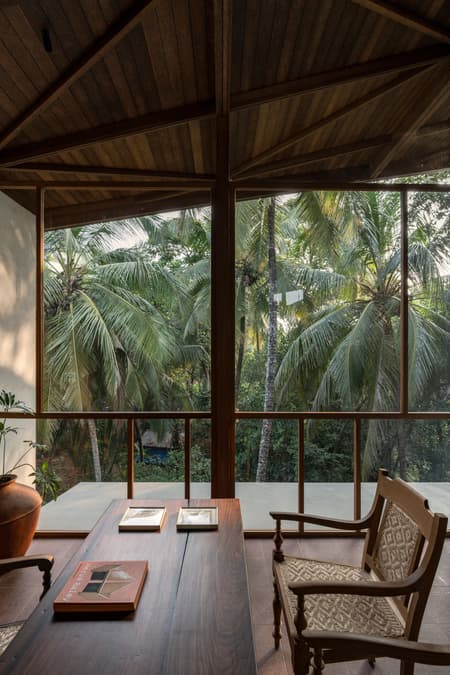
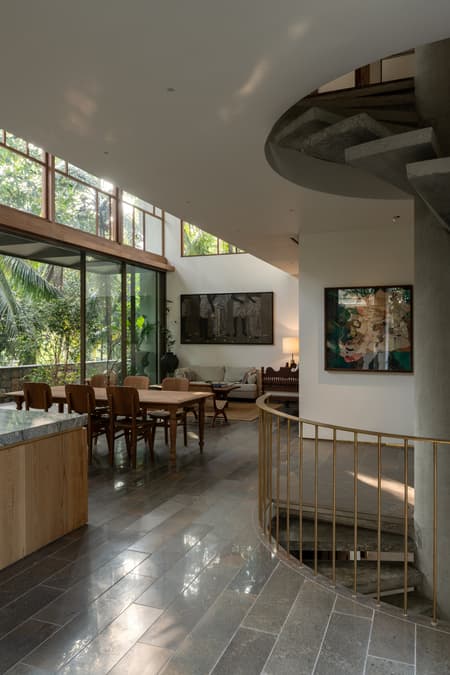
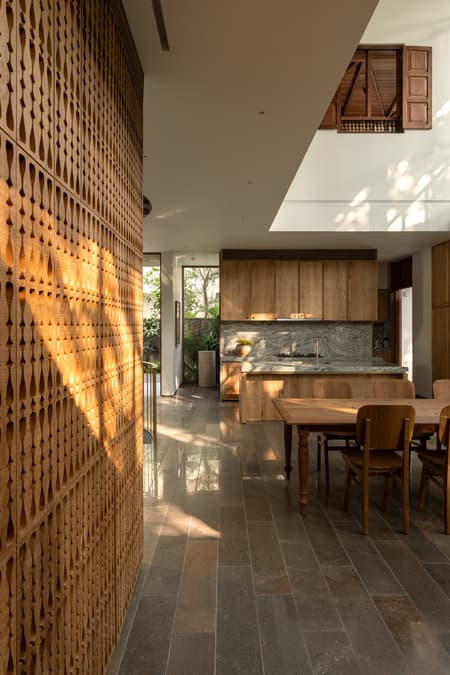
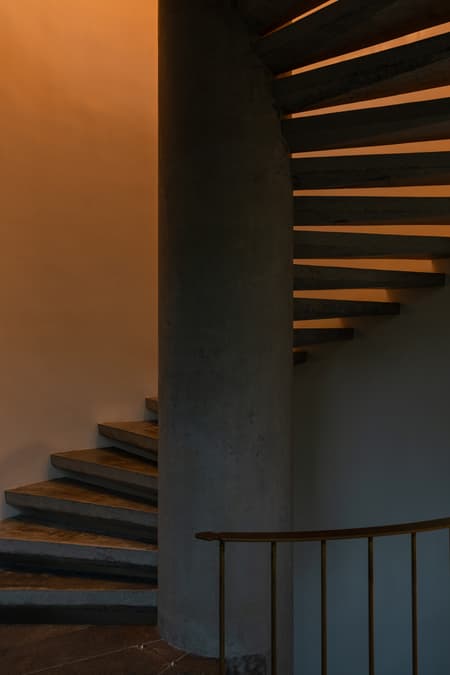
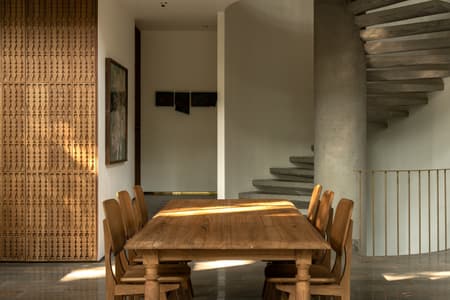
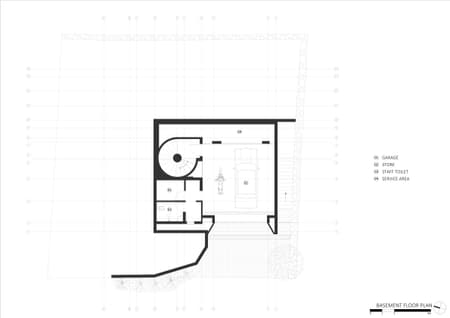
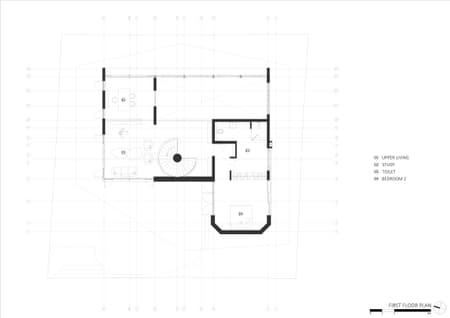
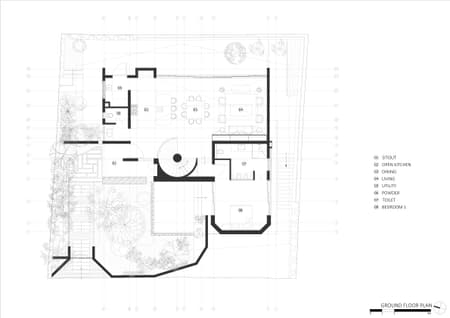
Integration of the existing topography made it possible to structure the different spaces on each levels due to the sloping nature of plot. Vehicular entry is restricted to the lowest level. The pedestrian entry is on the higher side of the plot. All three floors are connected by a concrete spiral stair which delineates the plan in particular way. The north east facing living and dining areas with double height space on expansive glazed openings overlook dense landscape beyond. Devoid of false ceiling the main roof spans the whole house with large protruding overhangs acting as a protective element for the tropical climate of the region. The composite roof structure takes care of thermal and water proofing issues apart from achieving a very light weight structural solution.
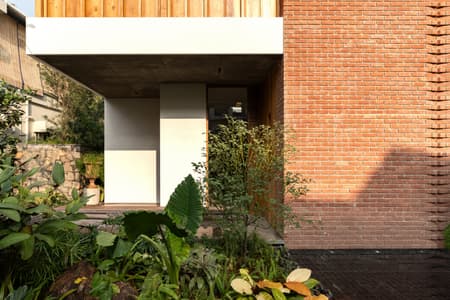
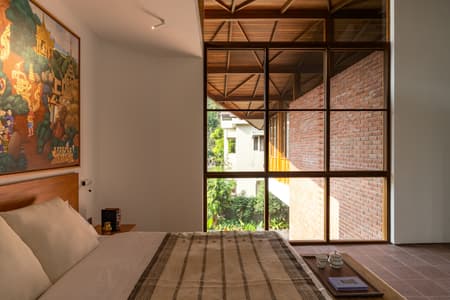
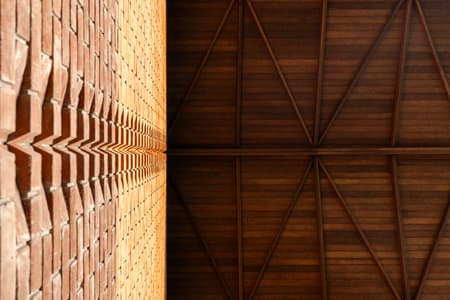
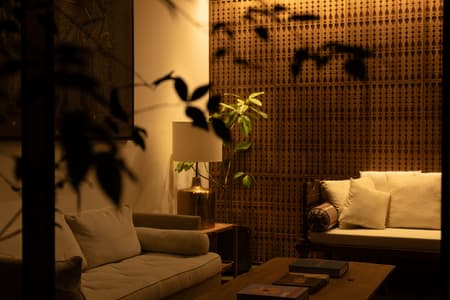
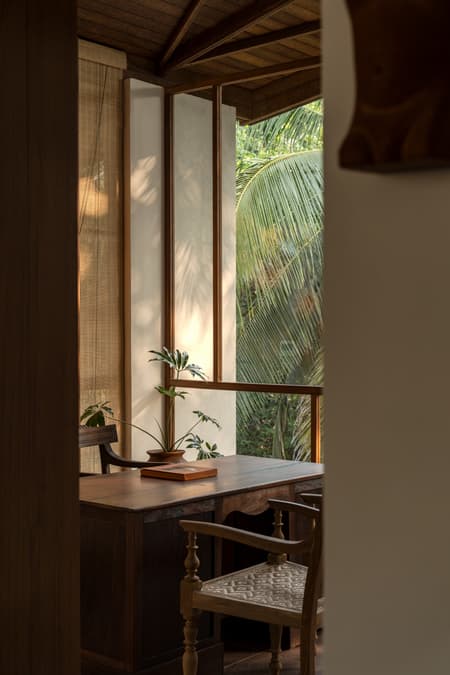
The coconut wood used for roofing becomes a sustainable choice of materiality due to its abundance locally and to the fact that only senile palms are cut for procuring wood. Its a biologically viable replacement for the more impervious hardwood choices. Coconut palm being a woody permanent monocotyledon and doesn't fall in the ambit of forest trees but an agricultural species which excludes it from forestry stewardship council (FSC). Lime plaster walls, country bricks, random rubble masonry, exposed concrete, natural stones and local flora all constitute a diverse material palette. The local craftsmanship in carpentry and construction were used well.