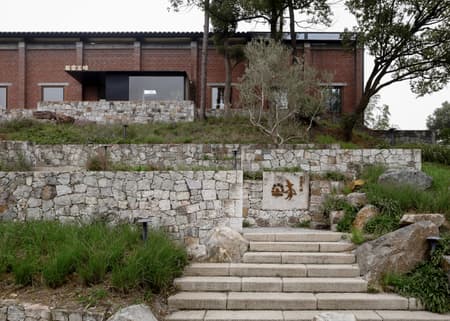
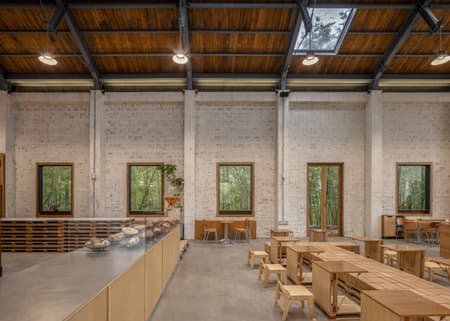
The project is located in Shangwang Village, Fusheng Town, Shaoxing, Zhejiang, China. The auditorium was originally built in the 1970s as a rural facility to accompany Nixon’s visit to China, carrying a special historical context. In 2022, Cycle&Cycle acquired the construction and usage rights to the site, carried out renovations and reconstruction at the architectural level, and completed the project by the end of 2023. In early 2025, the client decided to transform it into a rural stone-oven bakery, and Tens Atelier was invited to carry out the overall planning of the entire interior space.
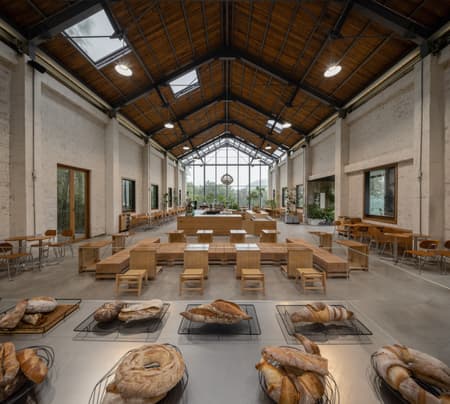
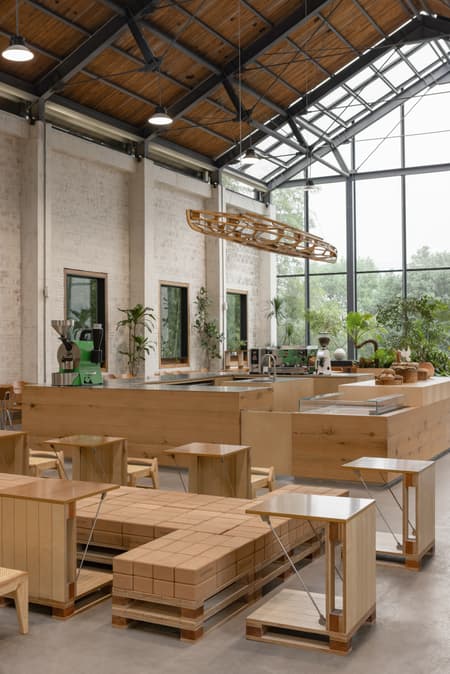
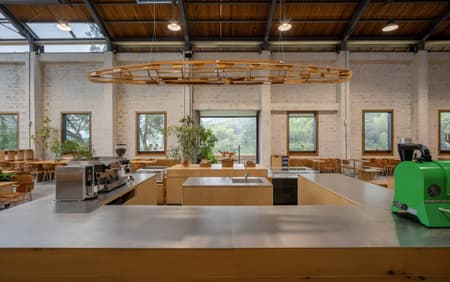
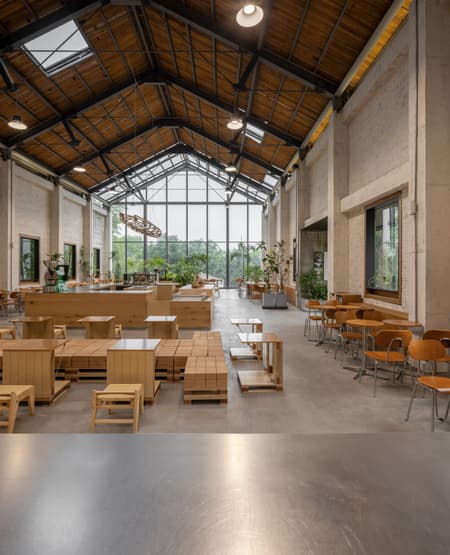
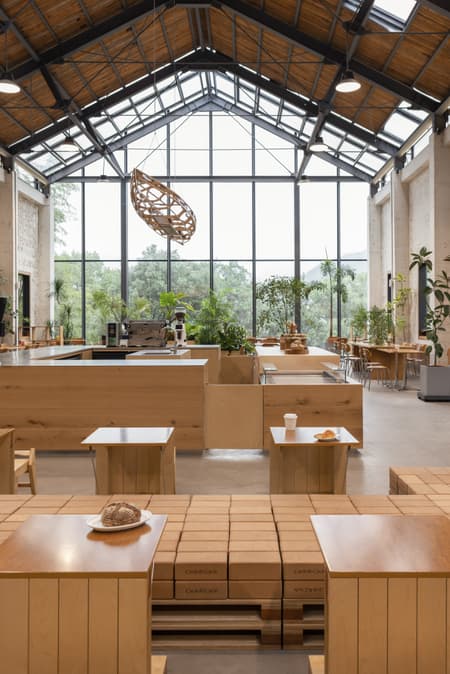
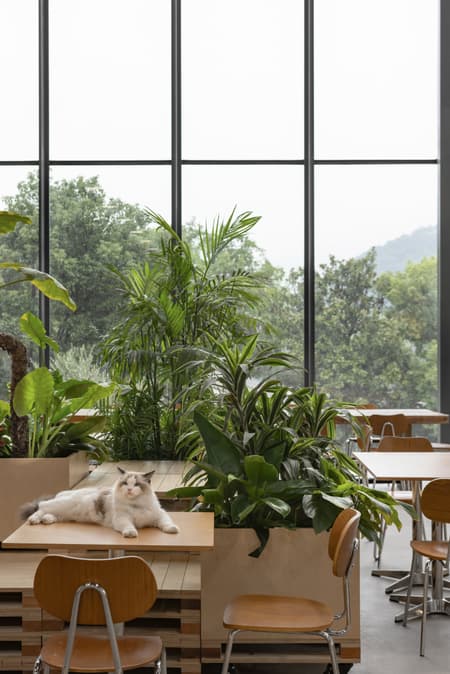
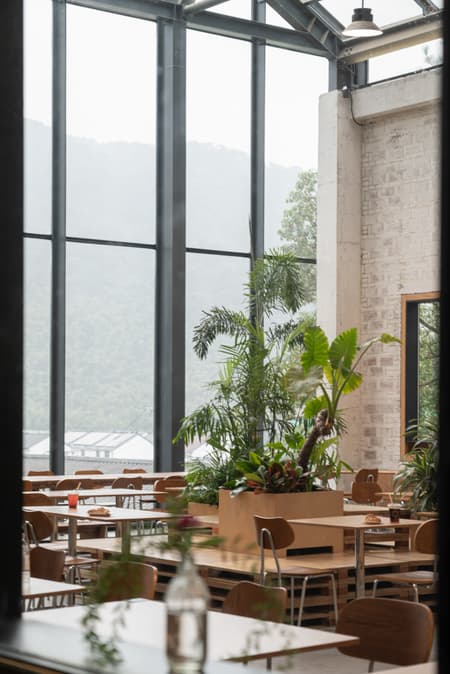
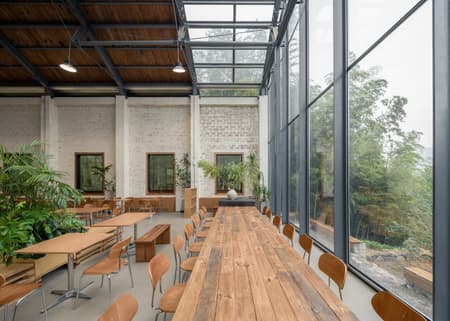
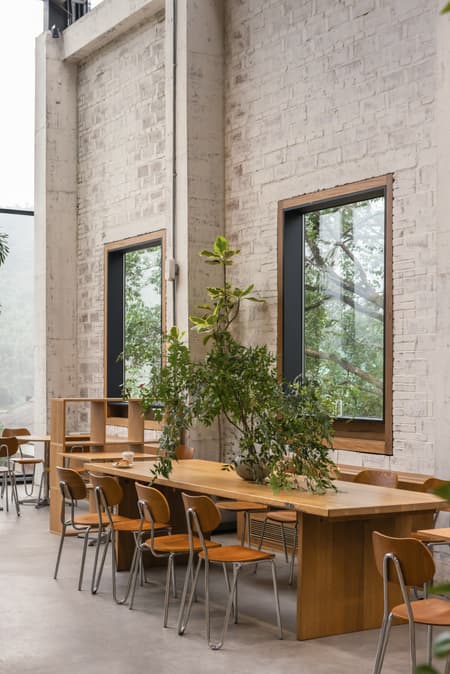
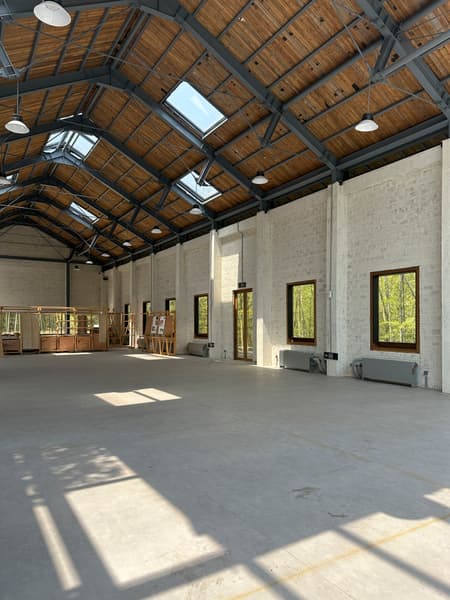
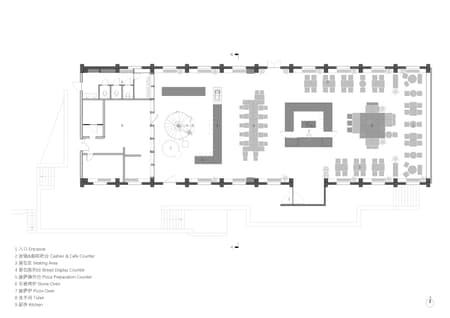
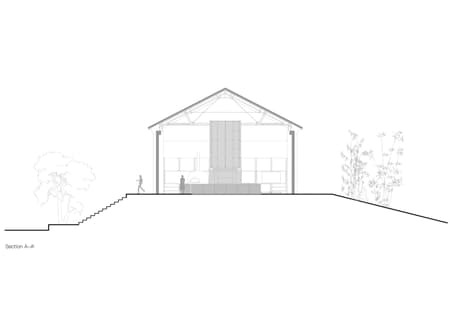
The site itself has excellent conditions, with a general topography that is higher in the west and lower in the east. The east side offers an expansive view overlooking the village, fields, and mountain scenery. In the interior layout, this area is designated as the main dining zone, where full-height glass curtain walls maximize the introduction of natural light and landscape. The west and north sides are surrounded by bamboo groves, making the space relatively inward and enclosed; therefore, these areas are integrated as auxiliary functions such as the back kitchen and restrooms, while forming a complete and orderly internal structure through an "inner architecture" approach.
The overall spatial layout unfolds in response to the site's topography, maintaining openness and continuity while allowing the stone-oven and the view beyond the glass curtain wall to become the core "landscapes" on either side. Furthermore, as the project is situated in a rural context, we have not turned the space toward an urban, refined expression. Instead, we attempt to intervene in a more restrained and rustic manner, responding to the rural natural environment through materials and craftsmanship.
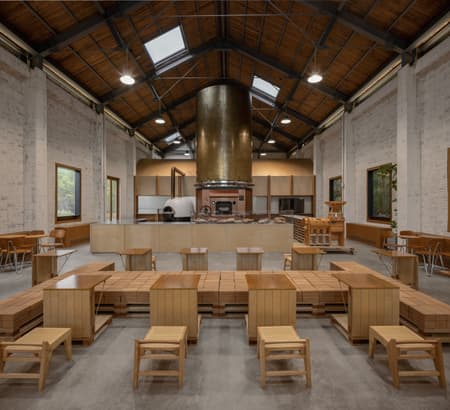
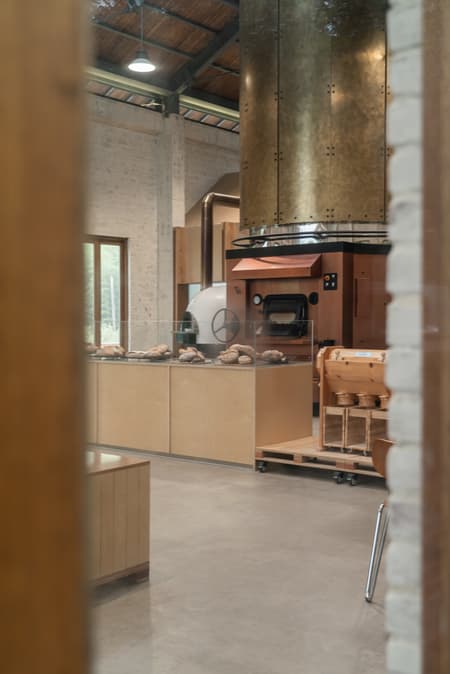
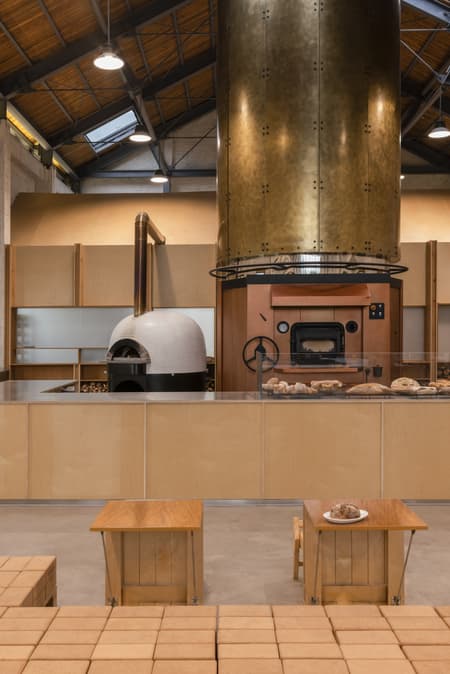
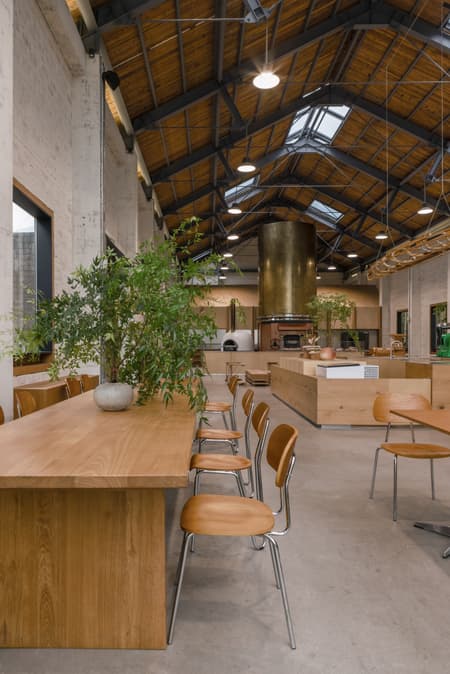
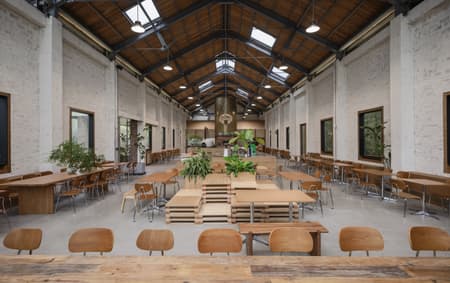
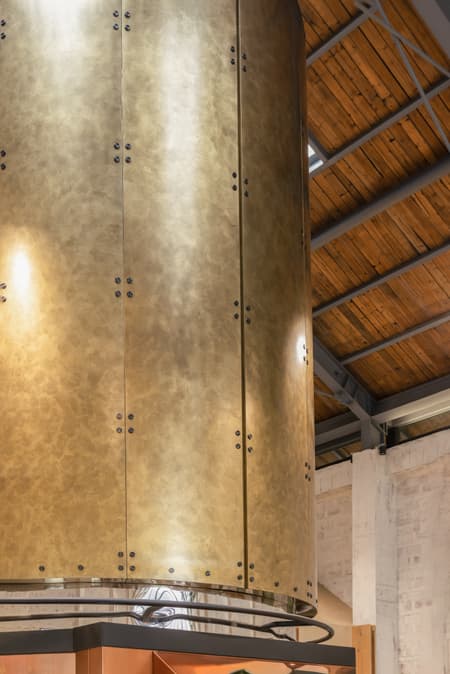
The interior is a single, open-plan space with no internal walls or partitions, lacking the basic functionality required for a dining establishment. The Client’s original vision was to return bread to its rural roots and create a stone-oven bakery of truly world-class standard. This reverence for bread is embodied within this ceremonial hall-like structure. The stone-fired oven has therefore become an indispensable piece of equipment—the unit itself had already been ordered, measuring 2.7 meters in diameter and 2.2 meters in height. While an oven of this size would certainly command the intended visual impact in an urban setting, it appeared disproportionately small when placed within this space, failing to generate the anticipated spatial tension.
Based on this assessment, we redesigned the scale of the stone oven. Rather than having the space accommodate a piece of equipment, we chose to make the equipment an integral part of the space itself. We raised the oven to a height of six meters, extending it vertically to the ceiling, transforming it into the centerpiece of the space and establishing it as the absolute focal point—second only to the views outside.
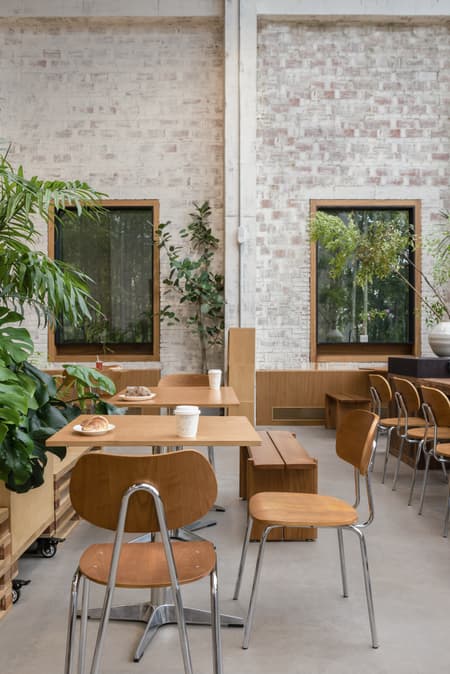
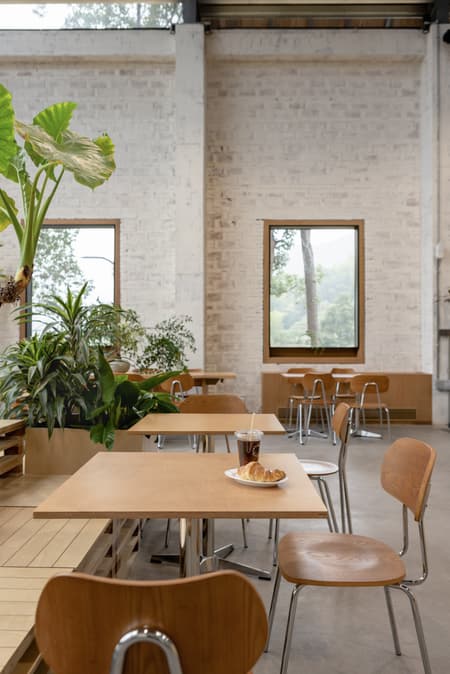
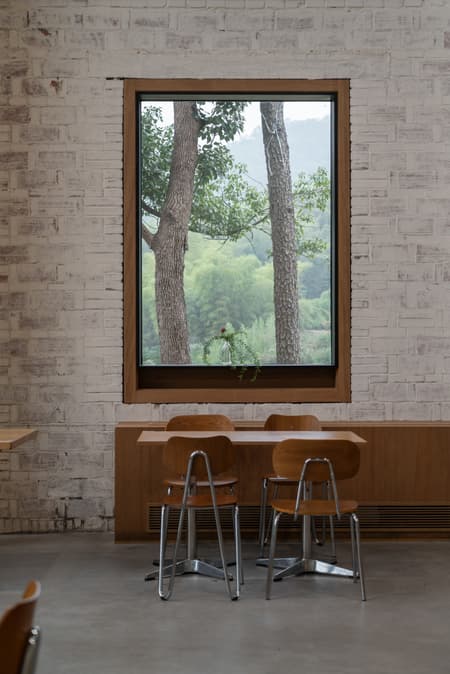
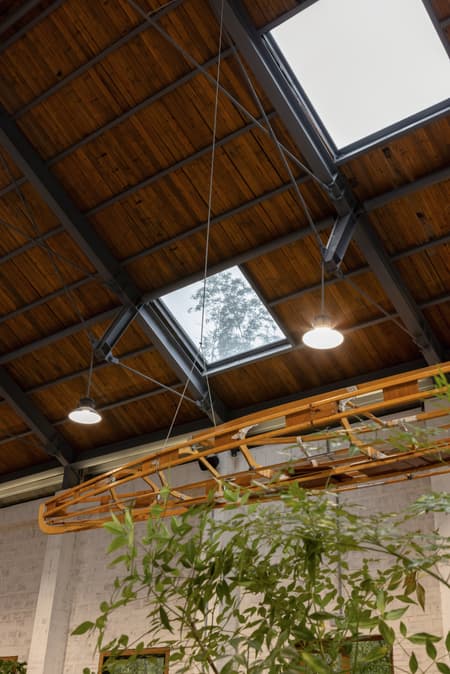
Due to overall environmental changes, the design faced strict budget constraints. Based on a reassessment of the existing conditions, the original plan to strip the white paint from the walls to reveal the red brick texture was adjusted due to high labor costs, and the existing coating was retained instead. At the same time, the redesign of skylights in the ceiling was also restrained, with the decision to fully preserve the original ceiling system. By minimizing unnecessary alterations, the spatial qualities and structural characteristics of the site are presented more directly, allowing cost control while reinforcing the authenticity and purity of the space.
As the project’s construction team also comes from the local village, much of the craftsmanship is carried out using traditional techniques. Given this reality, the design strategy has been shaped accordingly—while keeping the design expression restrained, it is essential to ensure that the construction remains straightforward and the craftsmanship achievable, to ensure the project’s successful completion.
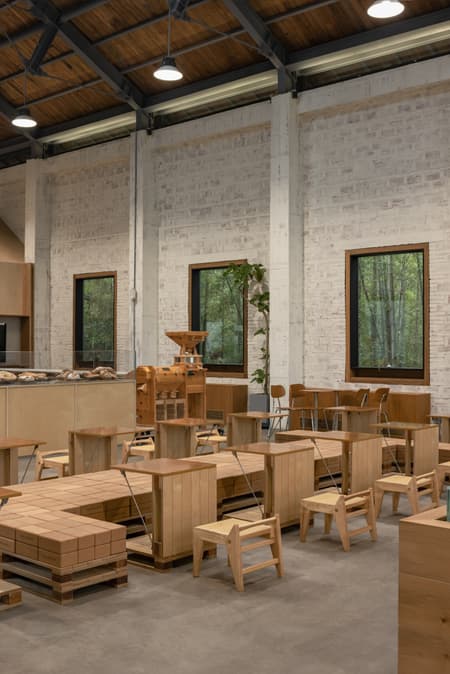
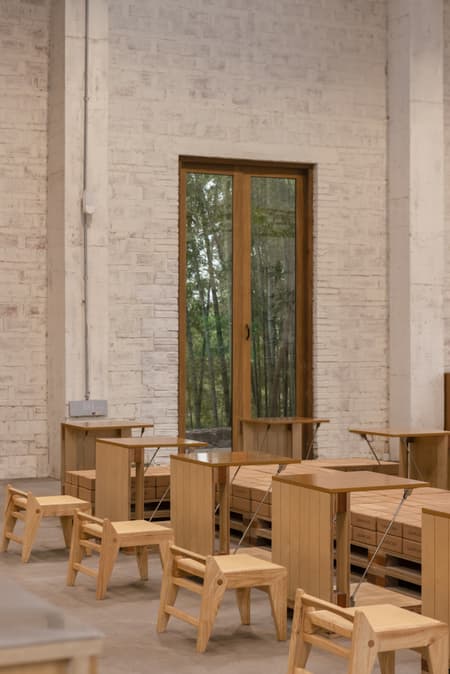
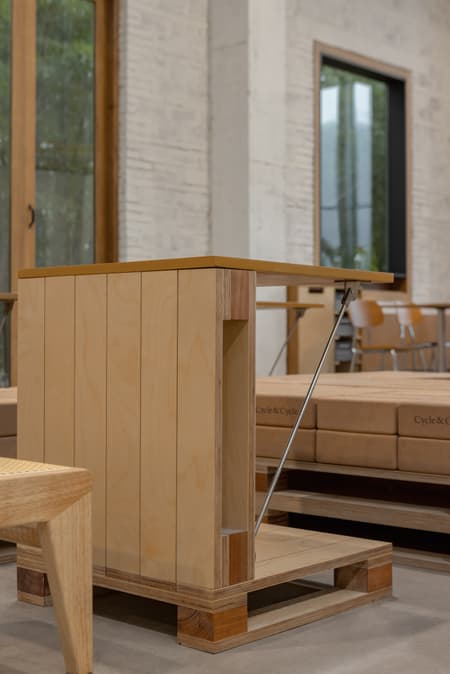
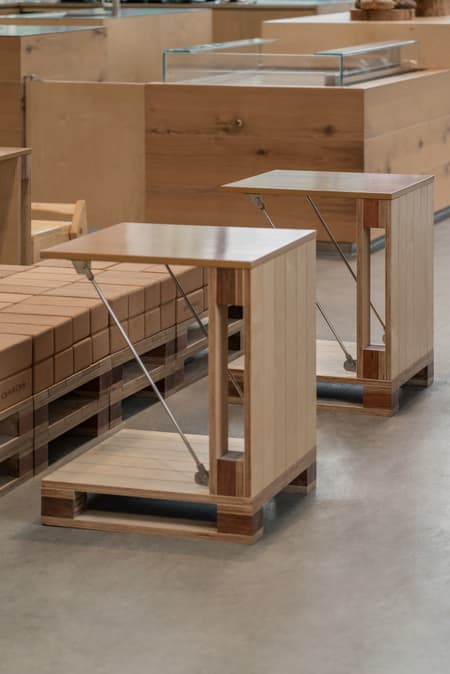
In terms of material strategy, the initial plan was to incorporate recycled furniture and discarded wood from the village, along with the region’s abundant bamboo resources, to achieve a localized approach to construction. However, during implementation, both the costs and the difficulty of execution proved to be higher than expected. Ultimately, we adopted a more pragmatic approach: using standardized materials as a base, with on-site processing and assembly. For the dining area on the east side, we had originally planned to purchase ready-made wooden pallets to create a relaxed, informal atmosphere. Yet during field research and sample comparisons, we found that the quality of the available ready-made pallets fell short of the project’s needs. In the end, we chose to use standard marine plywood, which was cut and assembled on-site by local carpenters to recreate the structural form of wooden pallets.
Some of the furniture and installations in the space are also derived from the timber bracket modules; combined with cork yoga blocks, they have been designed as movable seating, ensuring both functionality and reusability. After the project was completed, these components were reused in the brand’s installations in other settings, extending the lifecycle of the materials.
We believe the value of design lies not in deliberately creating something “novel,” but in preserving the inherent character of the site through minimal intervention. By returning the space to its natural essence and downplaying overt design gestures, we aim to foster a dialogue between the space and its rural context.
We hope that today’s Stone Oven Bakery is more than just a restaurant—it continues the public spirit of the original auditorium, becoming a place that connects people, food, and the environment, and offering another possibility for rural life in a contemporary context.