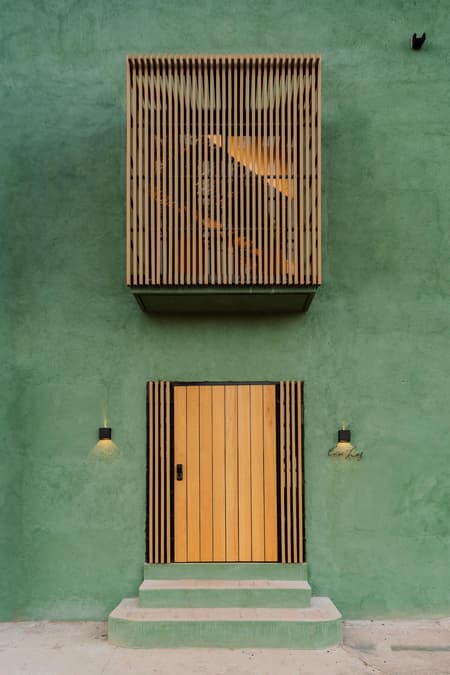
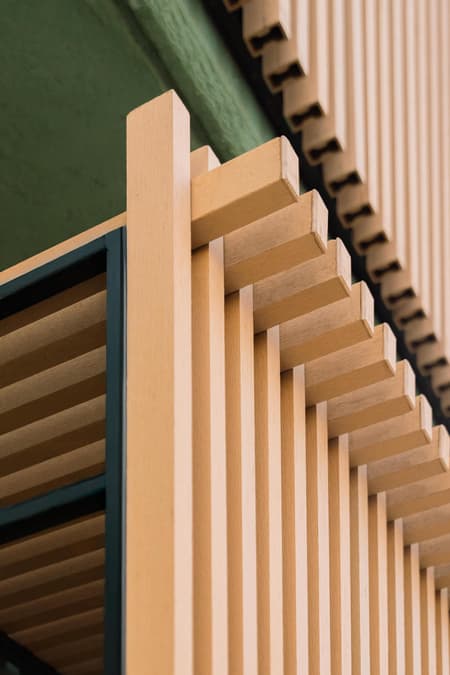
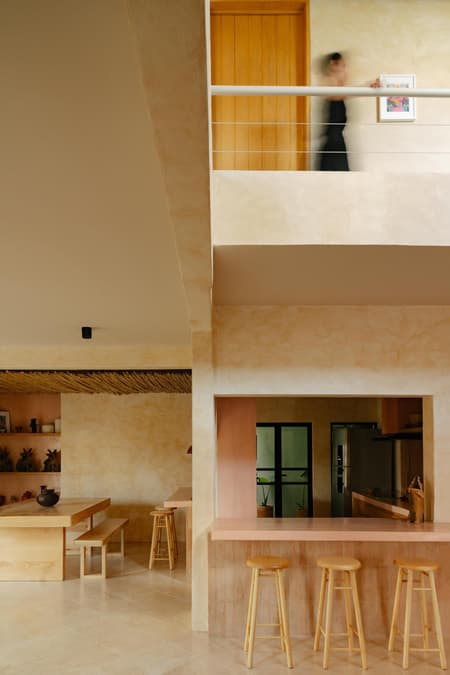
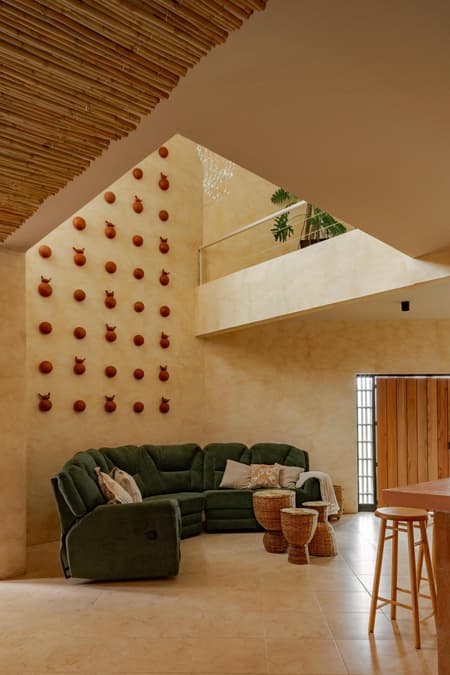
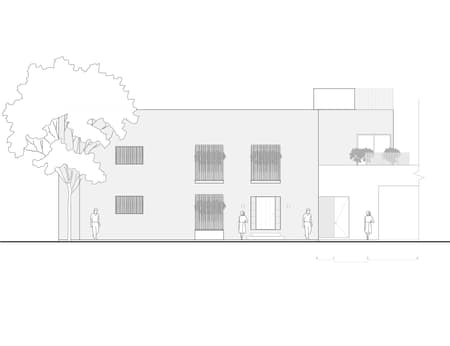
Casa Luz is an architectural and interior design intervention in an existing home in the city of Oaxaca that reflects on how to inhabit from a local perspective without resorting to nostalgic or literal gestures. The proposal is built upon a sensitive reading of the context, where materiality, light, and craftsmanship become the primary means of expression.
Far from a radical transformation, the project begins by recognizing the pre-existing conditions of the home to reconfigure it through specific operations that improve its functionality and spatial quality. The incorporation of curved elements, the opening of views, and the continuity between spaces allow for a more fluid domestic experience where circulation becomes an essential part of inhabiting.
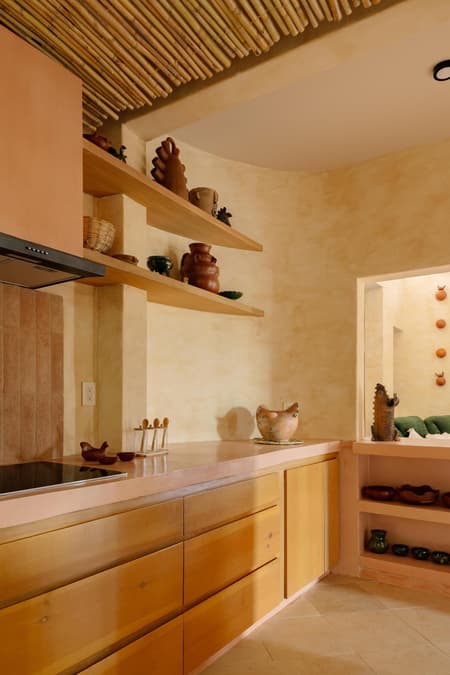
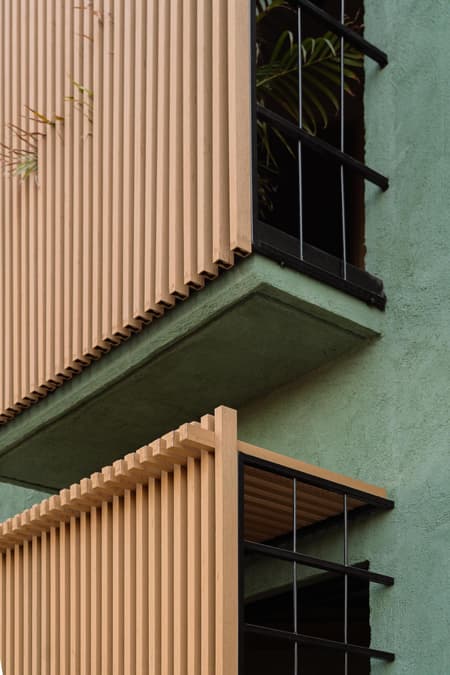
One of the main challenges was finding a balance between the contemporary and the vernacular. Instead of replicating traditional forms, a reduced material palette was chosen that values texture, color, and imperfection as aesthetic qualities. The walls, treated with limewash technique, acquire a vibrant condition that changes with natural light, while accents in microcement in pink tones introduce contrast and depth.
The integration of local materials and processes is central to the proposal. Clay pieces made by Oaxacan artisans are naturally incorporated into the space, establishing a direct dialogue between architecture and craftsmanship. Similarly, the use of reed in ceilings adds warmth, improves acoustic conditions, and reinforces the project's identity through both tactile and constructive elements.
Lighting is conceived as a tool to reveal the architecture. Through warm fixtures and a strategy that combines natural and artificial light, the spaces acquire different atmospheres throughout the day, emphasizing reliefs, textures, and transitions.
More than imposing an image, the project creates an atmosphere. A home that, from restraint and precision, proposes a way of living connected to the essentials: matter, light, and time. In this sense, architecture is not presented as an object, but as a support for everyday life, deeply rooted in its context.