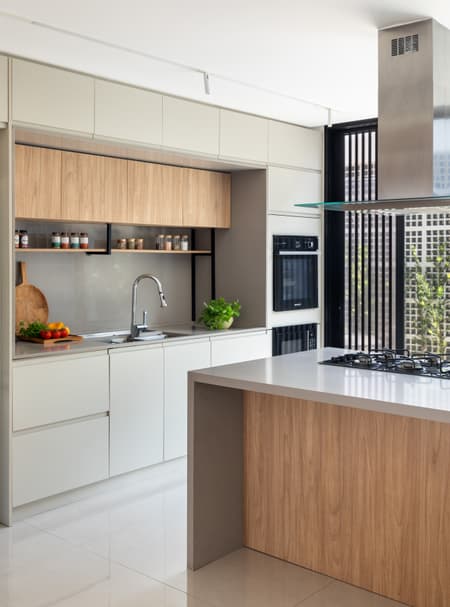
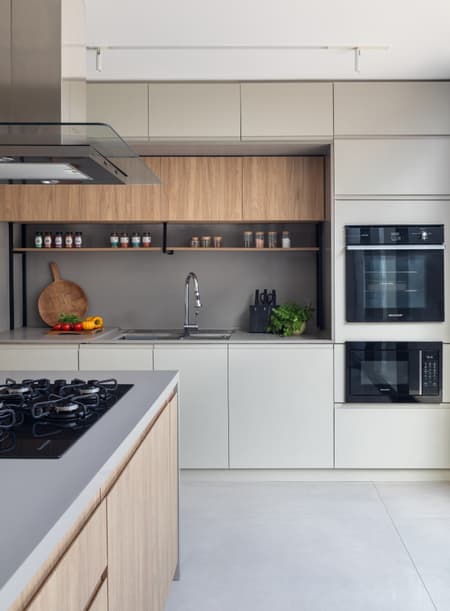
Located on Barra da Tijuca Beach in Rio de Janeiro, this three-story residence, totaling 990 square meters (10,656 sq ft) on a 590-square-meter (6,350 sq ft) lot, was designed by Rafa Gomes and Sandro Batalha of @StudioPlano. The project began with the demolition of an existing structure after it was deemed structurally unviable, making way for a new home tailored to a couple—he a plastic surgeon, she a non-practicing architect—with three daughters, a baby on the way, and four dogs. The brief was clear: a spacious home with generous living areas and well-connected environments.
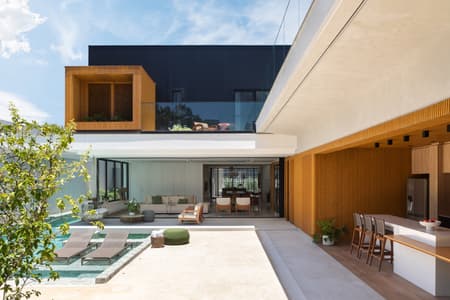
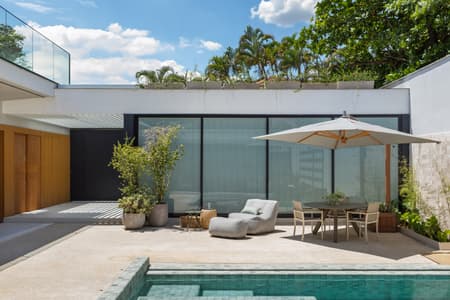
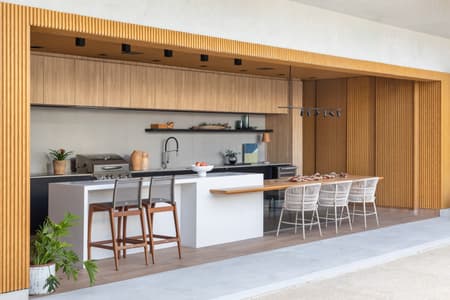
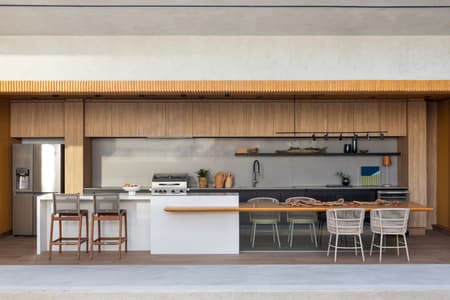
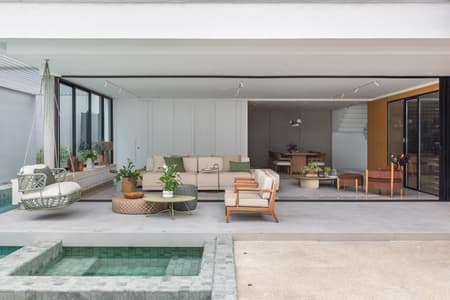
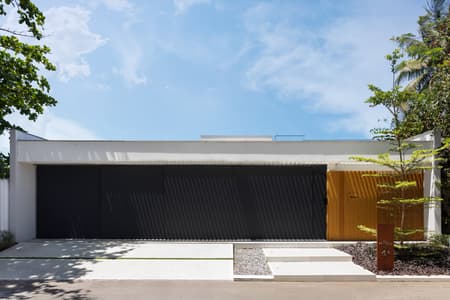
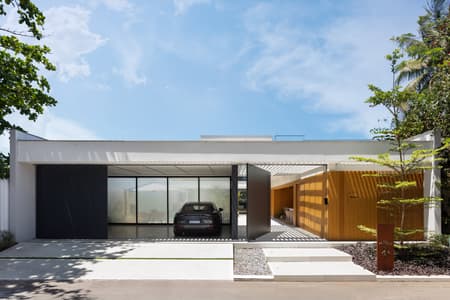
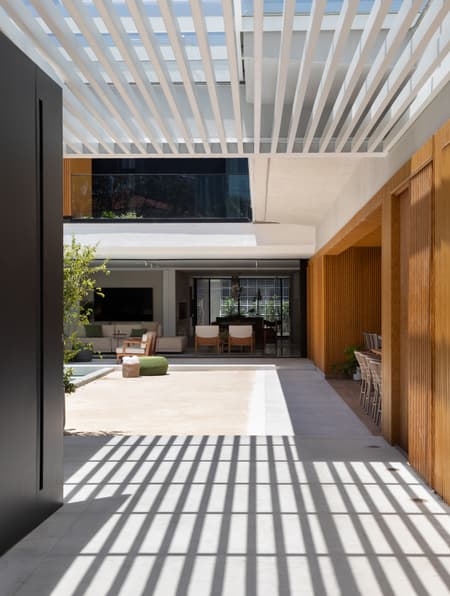
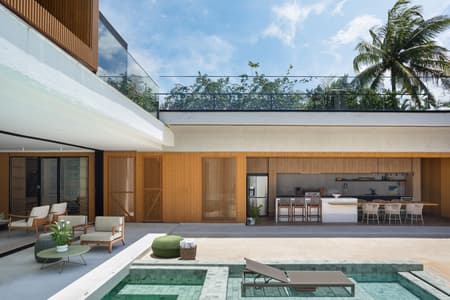
Organized linearly along the long, rectangular lot, the layout places the garage and entry at the front, followed by the leisure area. The main volume houses the social spaces on the ground floor, the private quarters on the upper level—with a terrace and fire pit for the couple—and a rooftop gym with an outdoor area. The rear accommodates technical and service areas. A concrete structure defines the construction, while the façades combine slatted aluminum panels in wood tones, black, and graphite. On the right side of the façade, a wood-clad volume extends from the entrance gate into the interior, housing the gourmet area connected to the sauna and reinforcing the indoor-outdoor relationship. On the ground floor, permeability is nearly total, enhanced by large glass openings that eliminate physical barriers when fully opened. Outdoors, the layout prioritizes sun exposure for the pool, which features a spa area and a lap lane running along the perimeter of the house.
Located on Barra da Tijuca Beach in Rio de Janeiro, this three-story residence, set on a 590-square-meter (6,350 sq ft) lot with a total built area of 990 square meters (10,656 sq ft), was conceived by architects Rafa Gomes and Sandro Batalha of @StudioPlano. The project emerged after the original structure—initially slated for renovation and expansion—was deemed structurally unfeasible. The decision to demolish it paved the way for an entirely new home, designed from the ground up to meet the needs of a couple—he a plastic surgeon, she a non-practicing architect—with three daughters, a baby on the way, and four dogs. “The clients asked for a spacious house, with generous living areas and well-connected environments,” says Rafa Gomes.
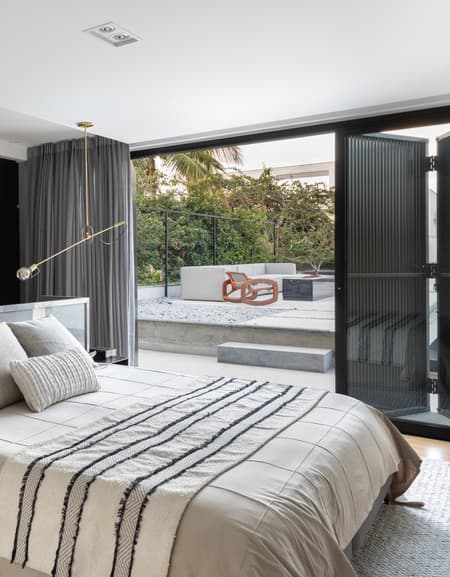
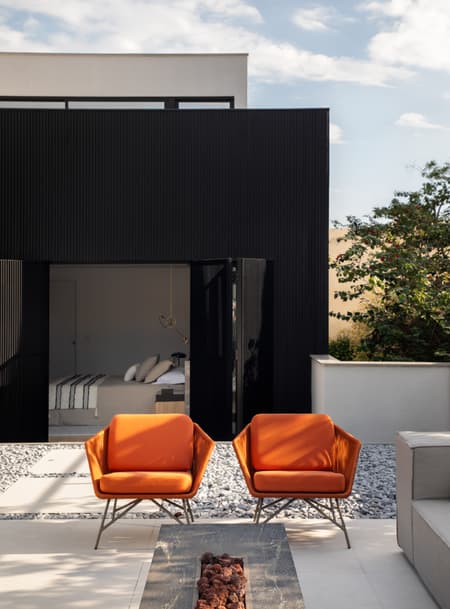
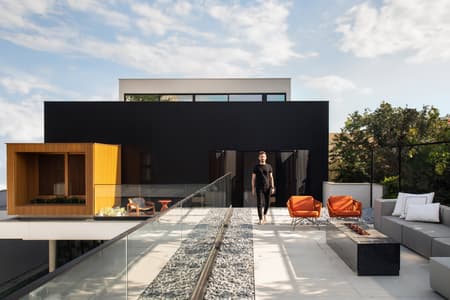
The program unfolds linearly along the elongated rectangular lot. At the front, a volume defined by large graphite planes accommodates the garage and entry foyer. Next, the outdoor leisure area is strategically positioned to facilitate use by guests. The main volume concentrates the social spaces on the ground floor, the private quarters on the upper level—including the couple’s private terrace with a fire pit—and a rooftop gym with an outdoor exercise area. The rear portion houses the technical and service areas.
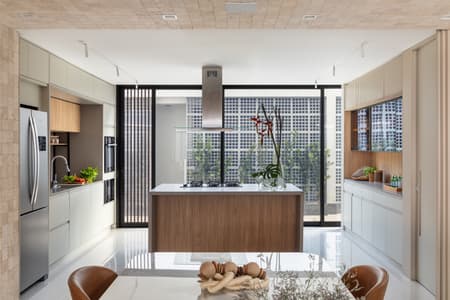
The project’s concept is based on a volumetric approach that avoids compartmentalization, promoting spatial continuity and guiding movement through natural transitions between spaces. A concrete structure forms the building’s backbone, while the façades combine slatted aluminum panels in wood tones, black, and graphite. On the right side of the façade, a wood-clad volume extends from the entrance gate into the interior, housing the gourmet area connected to the sauna and reinforcing the indoor-outdoor connection. On the ground floor, permeability is nearly total, enabled by expansive glass openings that eliminate physical boundaries when fully opened. Outdoors, the layout prioritizes optimal sun exposure for the pool, which includes a spa area and a lap lane running along the perimeter of the house.
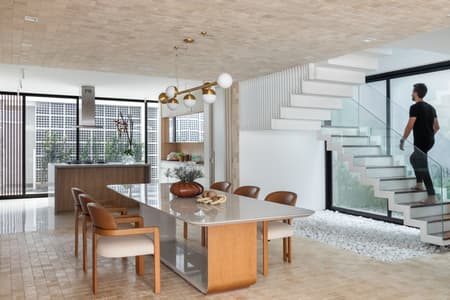
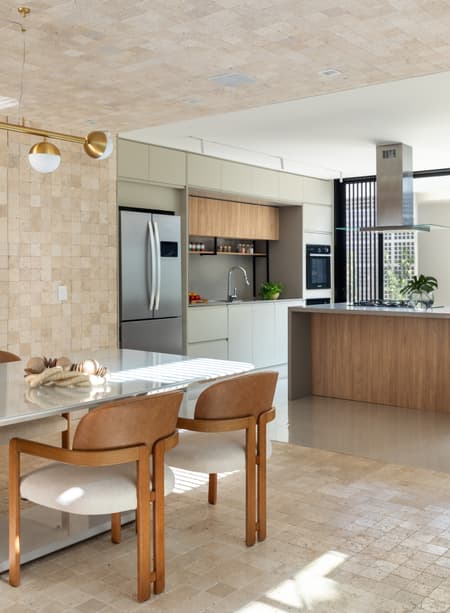
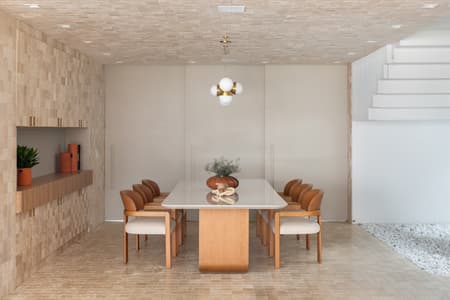
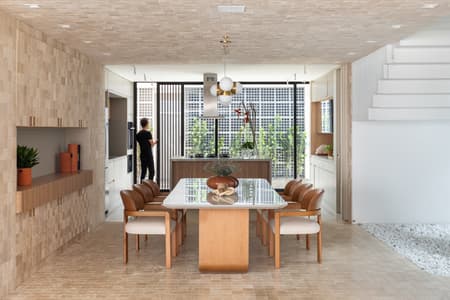
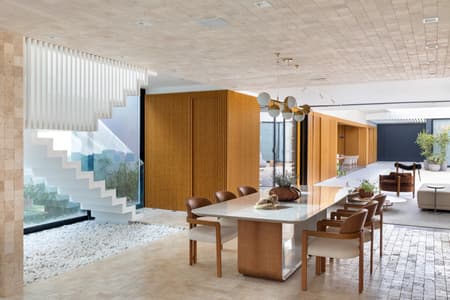
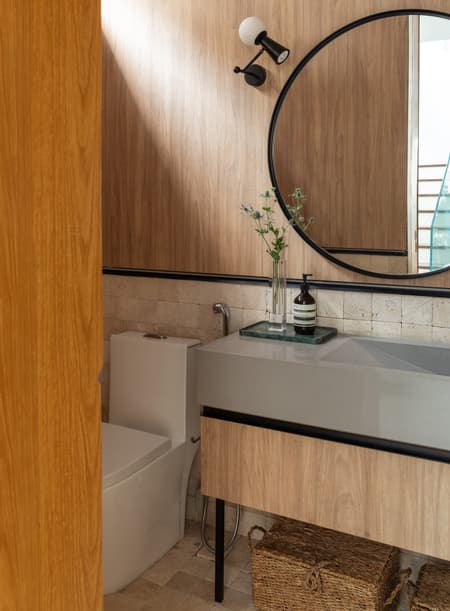
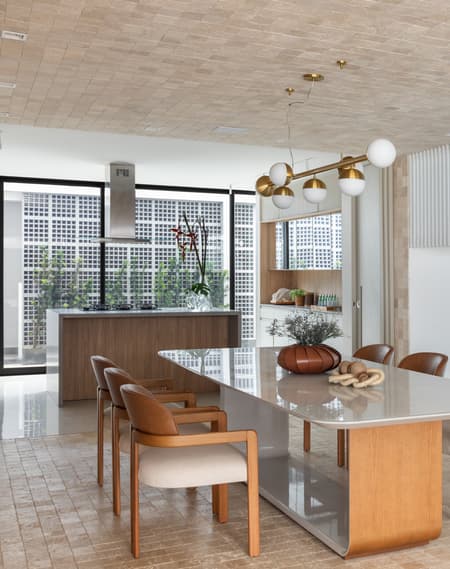
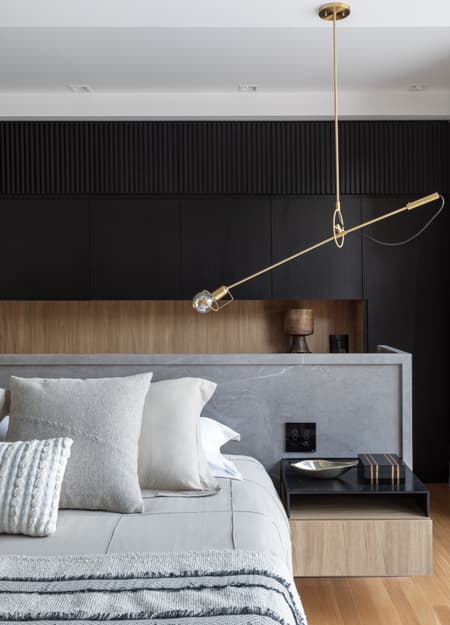
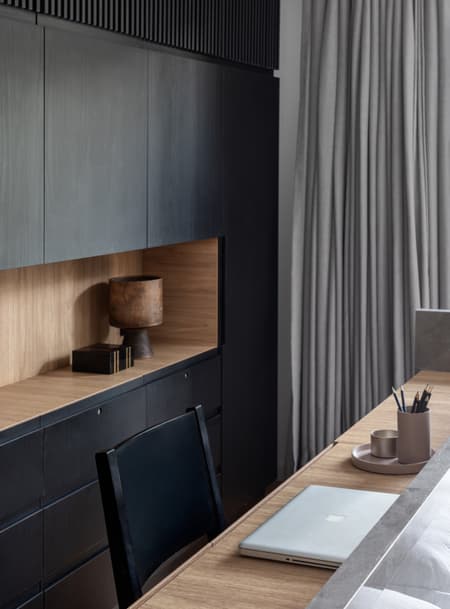
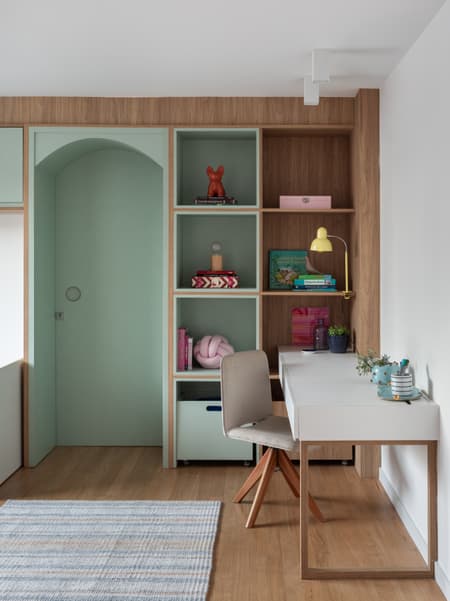
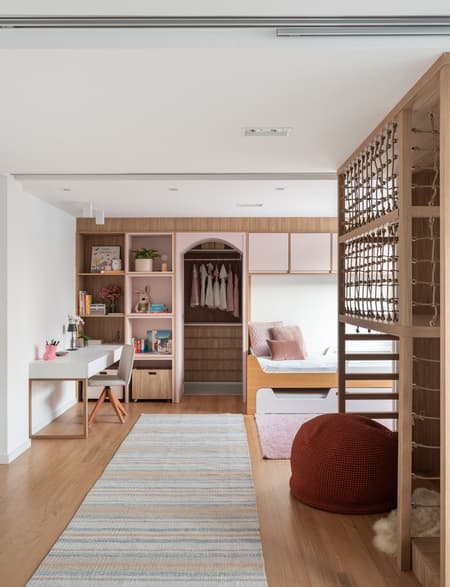
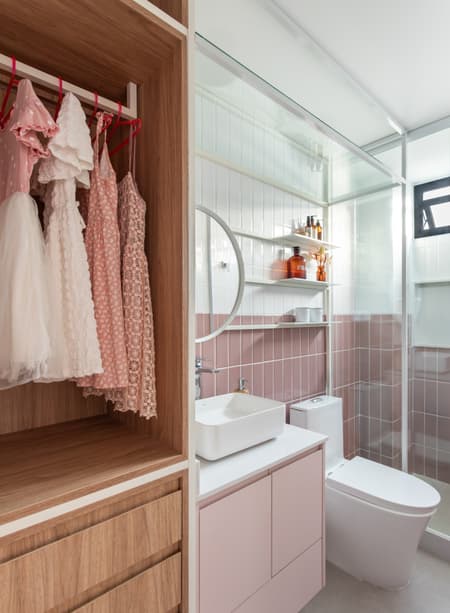
On the ground floor, porcelain tile flooring with a polished concrete look extends across both indoor and outdoor areas, reinforcing visual continuity. The dining area stands out with full cladding—floor, walls, and ceiling—in small travertine marble tiles. In the bedrooms, tauari wood flooring adds warmth and pairs with custom millwork in a range of finishes, including light wood, ebonized tones, white, pale pink, and muted green, depending on the context of each space.
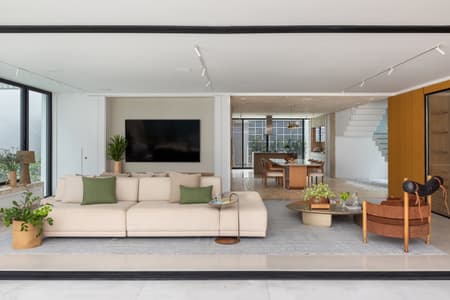
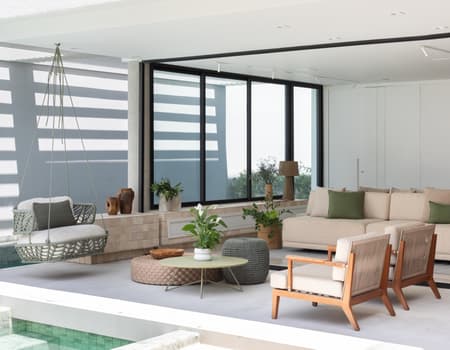
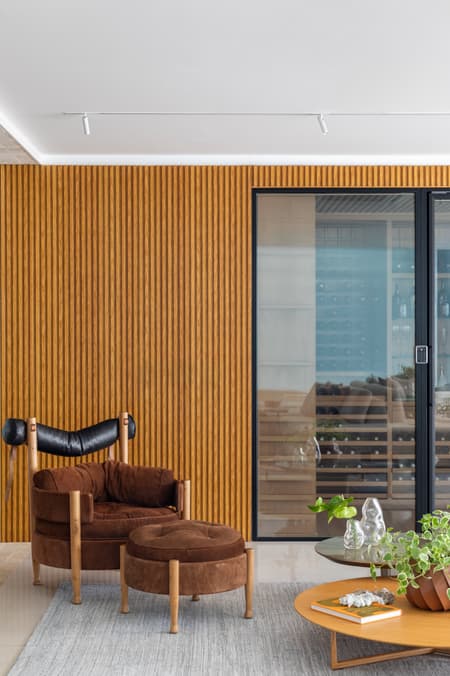
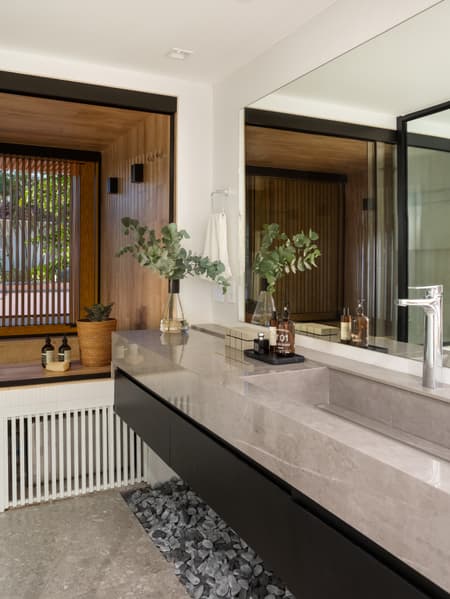
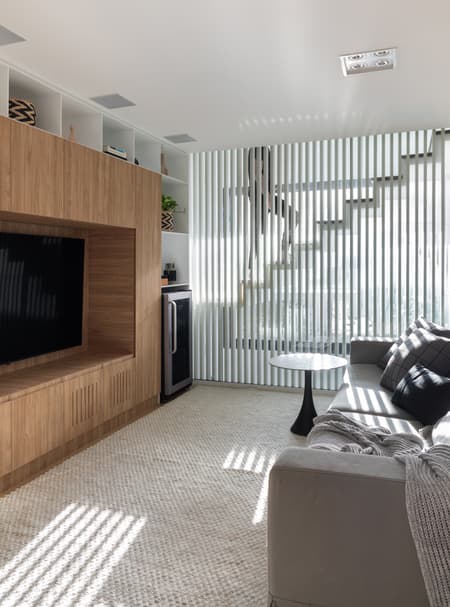
The interior design follows a contemporary language, with clean lines, timeless materials, and a palette of neutral tones warmed by wood elements. All furniture was selected specifically for the home, prioritizing visual lightness and flexibility. Highlights include the terrace swing, which enhances the connection to the outdoors, and the Vivi armchair by Sergio Rodrigues, positioned beside the wine cellar.
The entire process—from design to construction and final styling—took approximately two years. “Developing a project of this scale from the ground up required significant dedication, given the large number of phases, items, and suppliers involved. The need to conceive, coordinate, and oversee every decision, from macro to micro, throughout the entire process, represented a considerable responsibility,” concludes architect Sandro Batalha.