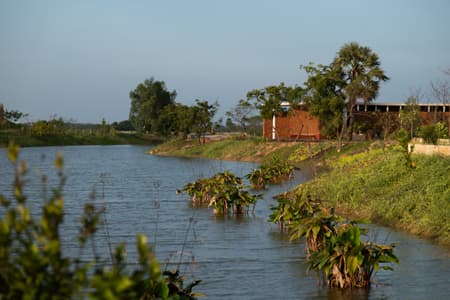
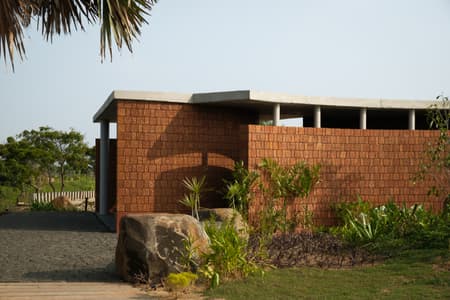
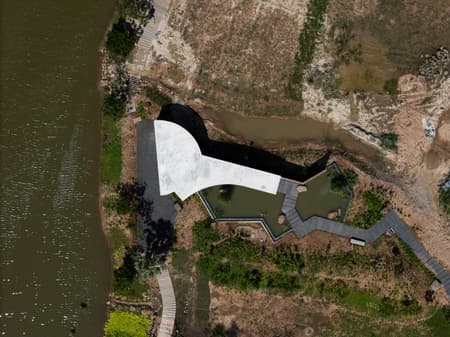
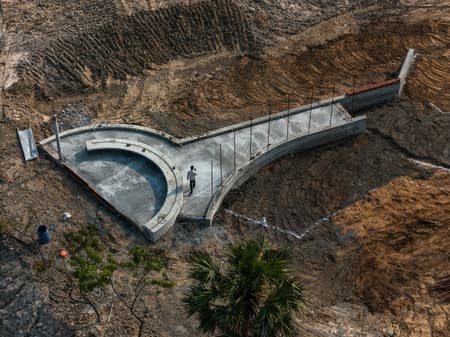
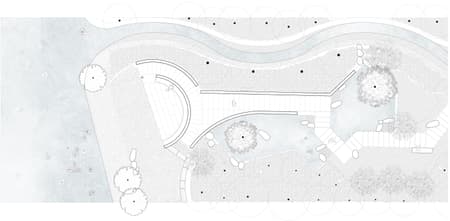
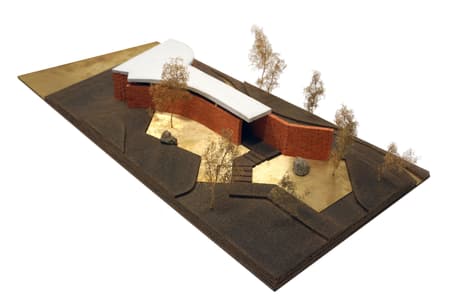
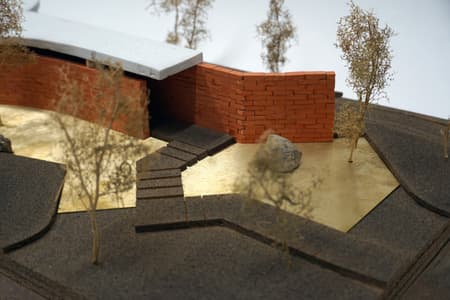
Four Walls is a lakeside pavilion in a coastal site south of Chennai, India. Designed by London-based architects Studio Mango, the building forms the endpoint of a linear park within Sanctuary by Aarth, a new residential development for which the practice also designed the villas.
Constructed as the first element within the wider masterplan, the client requested a building simple in its conception but that could serve several different programmatic requirements. A gallery space was necessary to display the villa designs, while a larger space was required for gatherings. The pavilion would frame visitor’s first encounter with the lake, around which the development is organised.
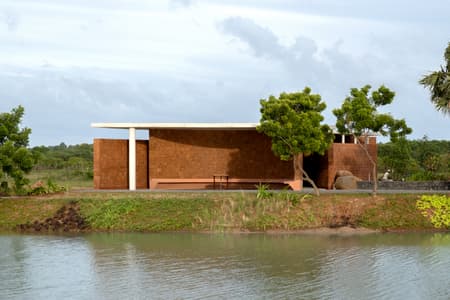
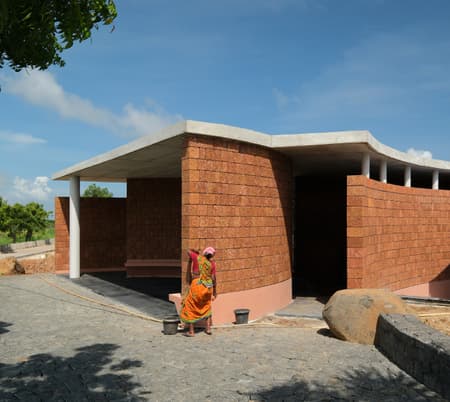
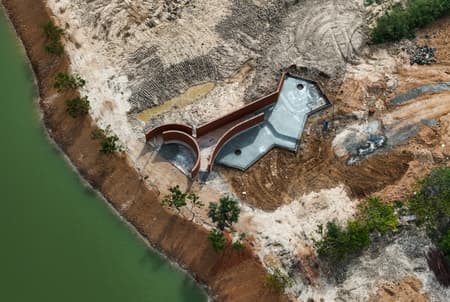
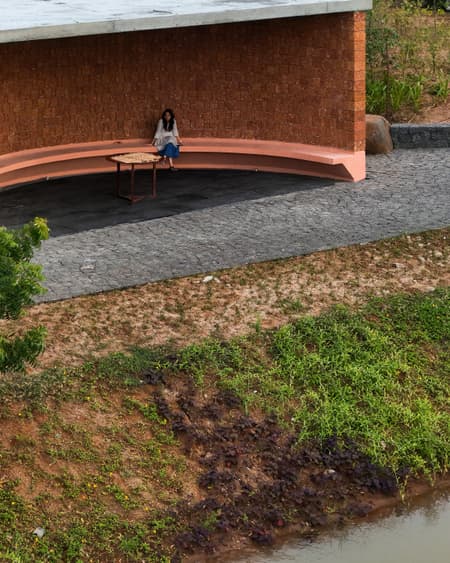
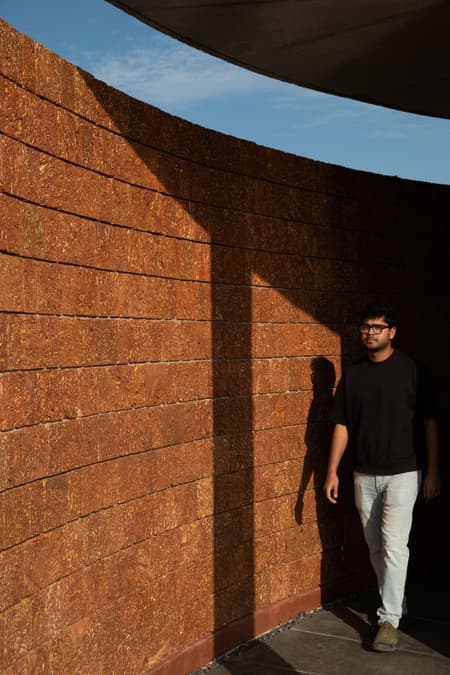
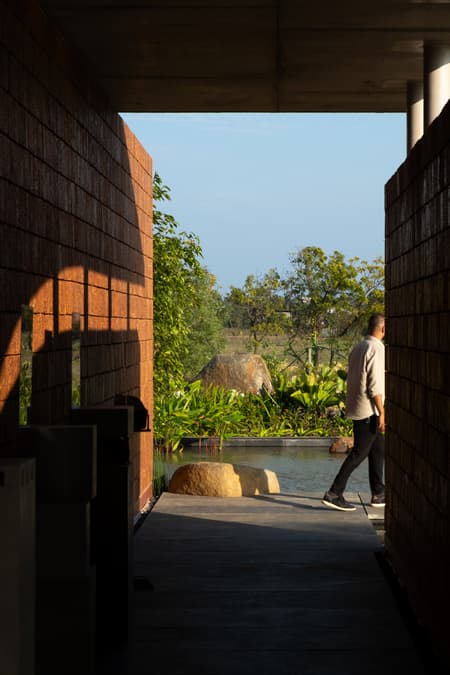
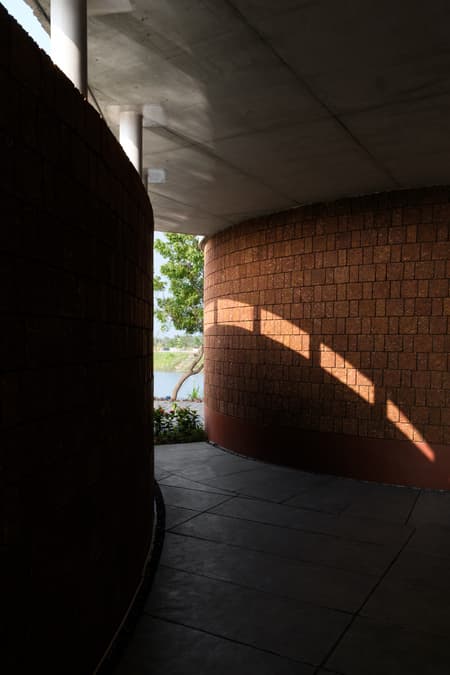
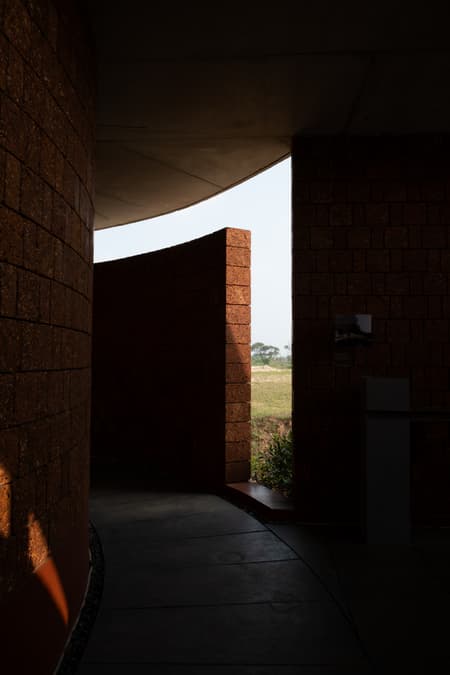
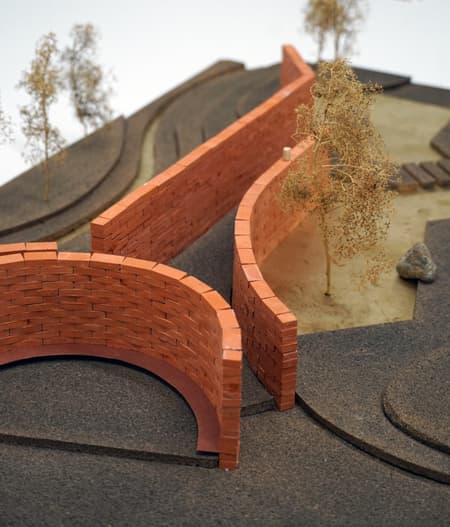
The architects started with a simple concept, to employ the minimum number of architectural gestures to define the different programmatic requirements. Each of the four walls is conceived to shape the visitor’s experience, only revealing the lake at the culmination of the journey. On arrival, a wall opens to the walkway, drawing visitors within. A second wall runs parallel, forming a linear, more focused gallery space. Two curving walls then compress the route, drawing visitors around to reveal the beauty of the lake for the first time. Here a large semi-circular space offers sheltered views across the water.
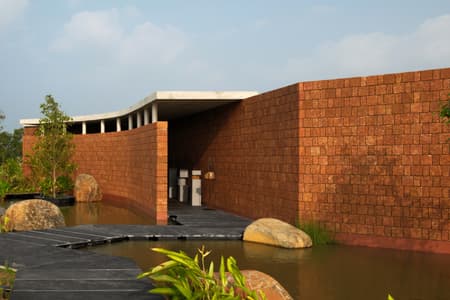
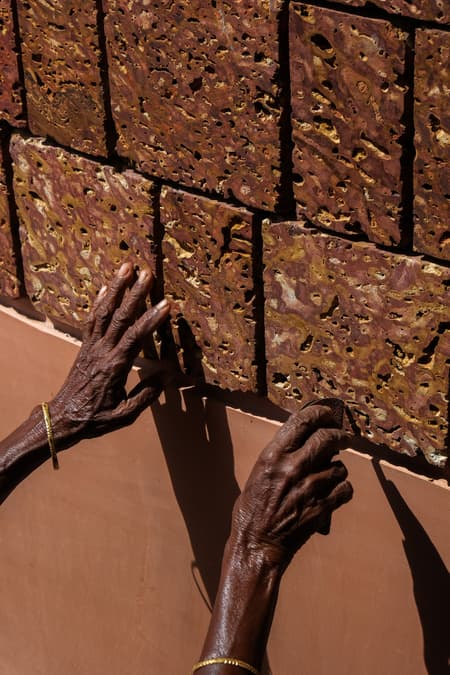
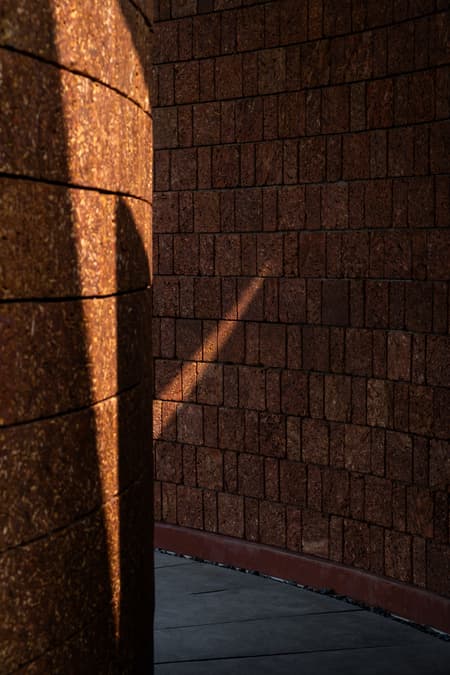
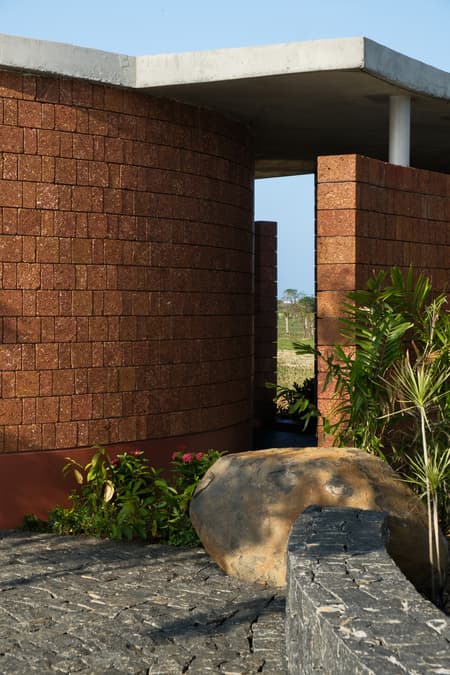
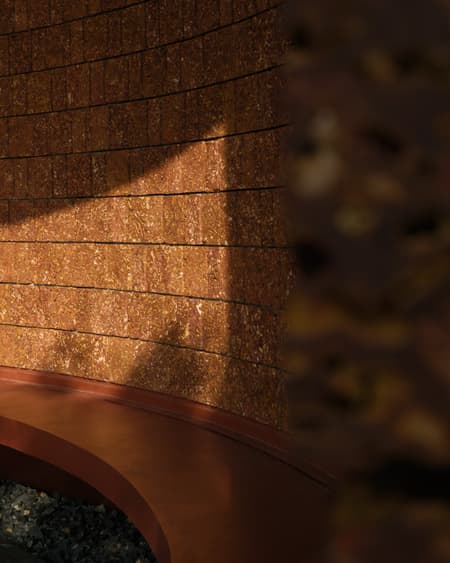
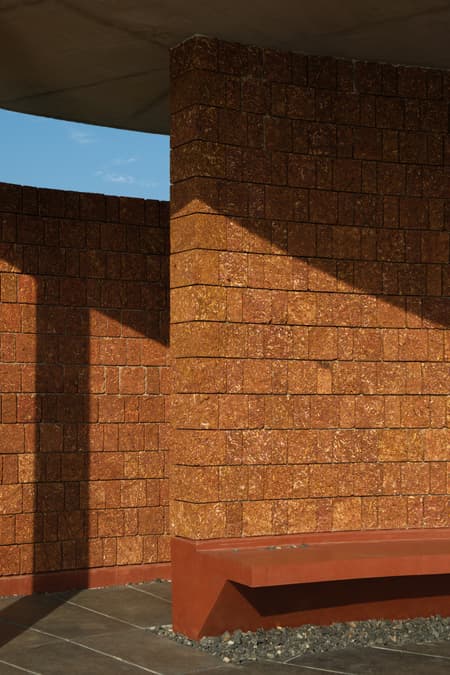
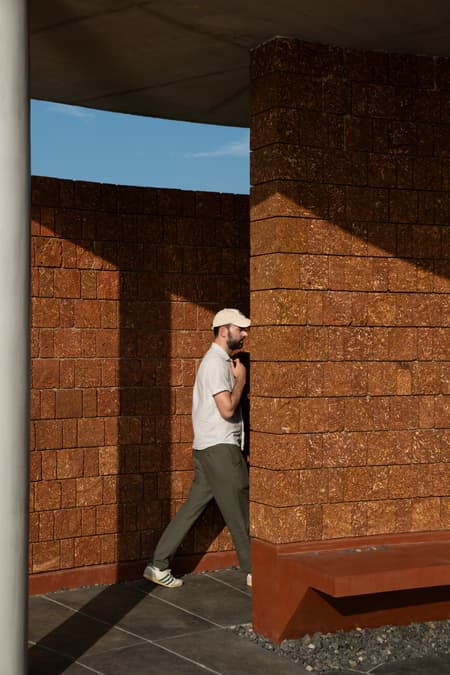
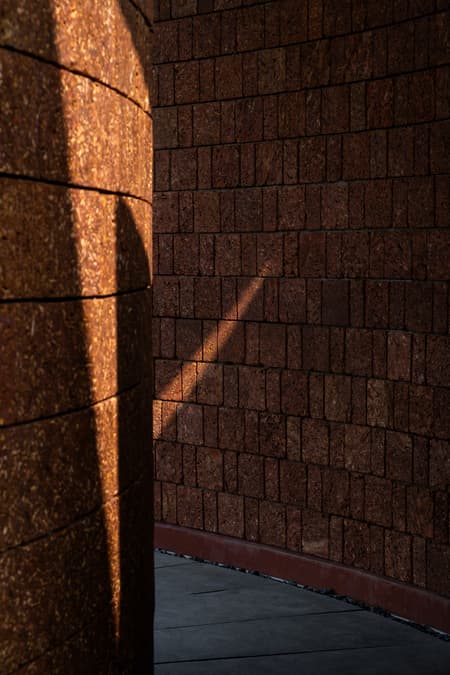
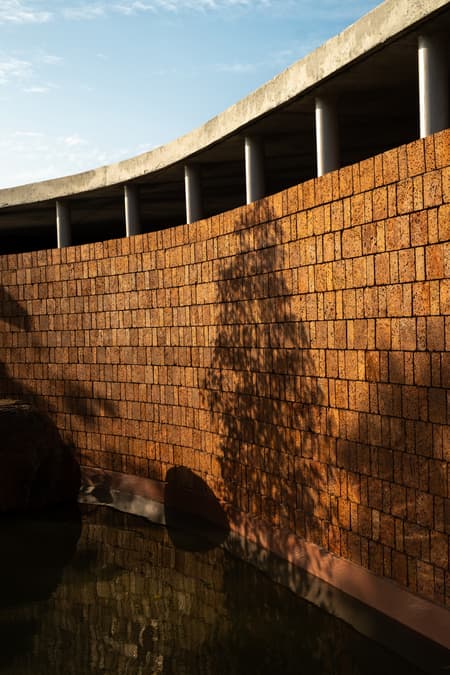
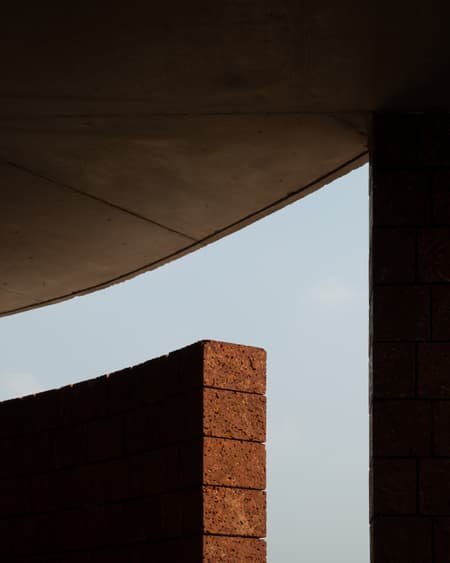
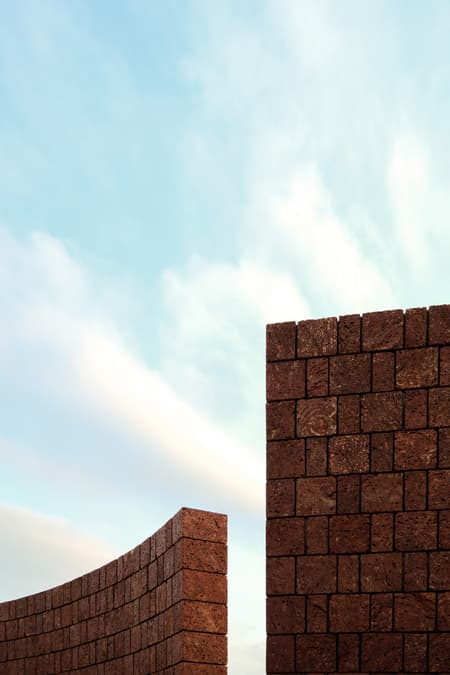
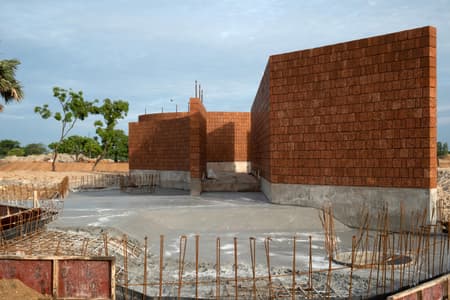
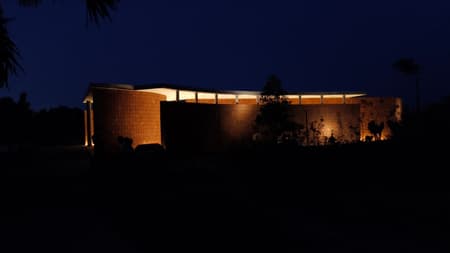
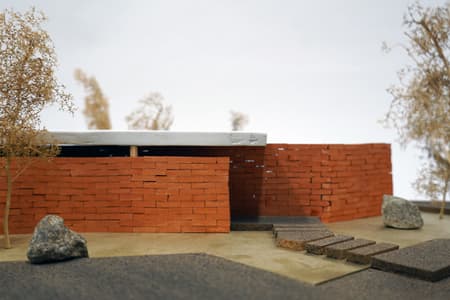
These simple architectural gestures are brought to life through laterite, a local, iron-rich stone known for its striking red colour and natural variation. It is a material found abundantly across South India where it is used commonly as a building block. The walls rise from a red concrete plinth, which extends to form a cast in-situ bench overlooking the water. Gravel borders mediate between material junctions, giving a deep-rooted feeling to the four walls. Above, a thin, exposed concrete canopy alternately rests on the walls and is supported by slender columns, lifting it away from the structure below. Shafts of light cut through the space, striking the curved walls and drawing visitors towards the lake beyond.
The project champions locally sourced materials and craft. Kadappa, a dark grey limestone weaves a path up to the pavilion where visitors are greeted by a water feature at the entrance, anchoring the building within its coastal context. Granite boulders, relocated from across the site are semi submerged in the water, holding the edge of the walkway.