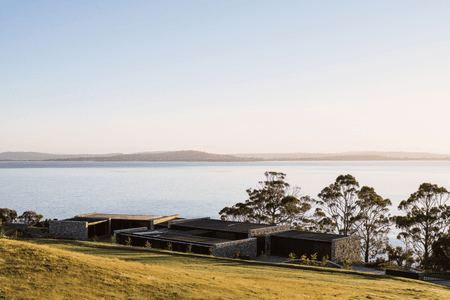
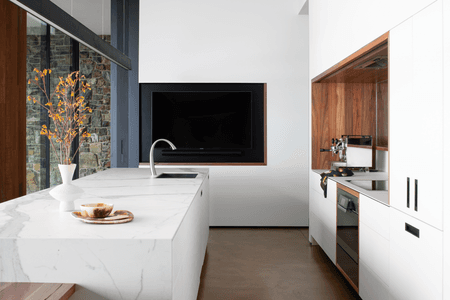
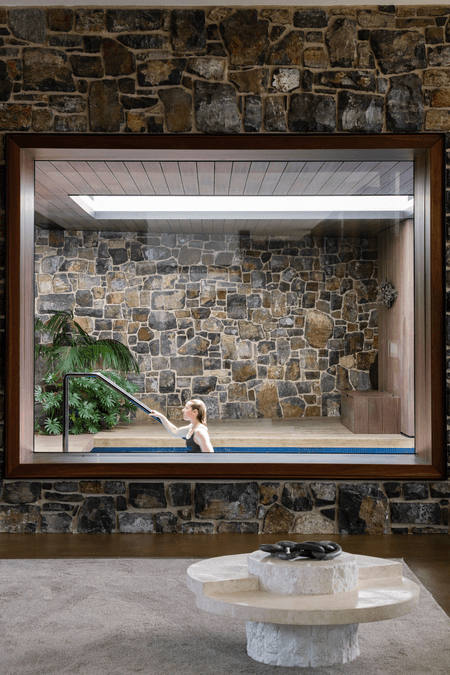
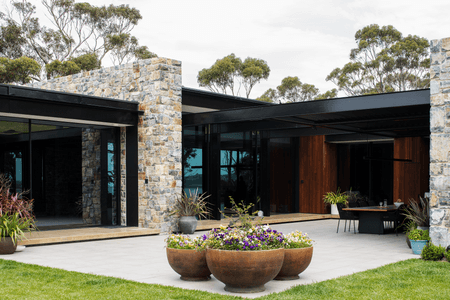
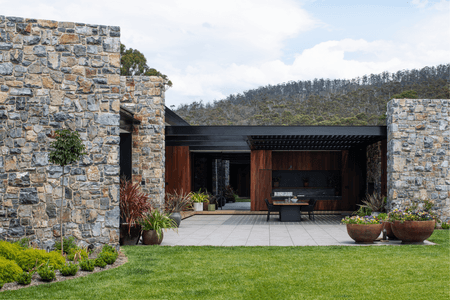
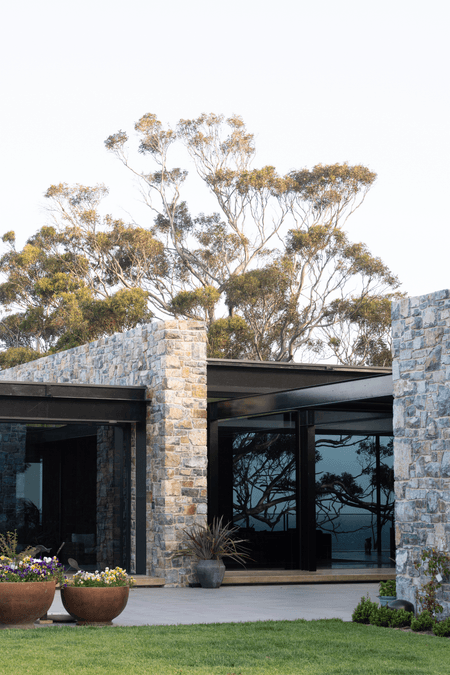
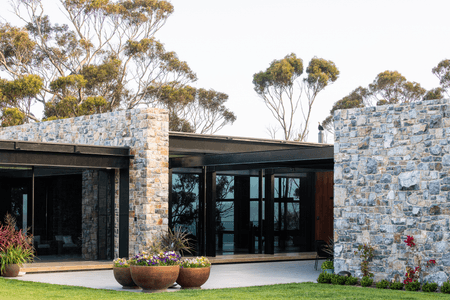
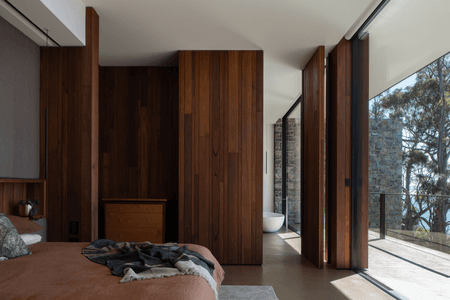
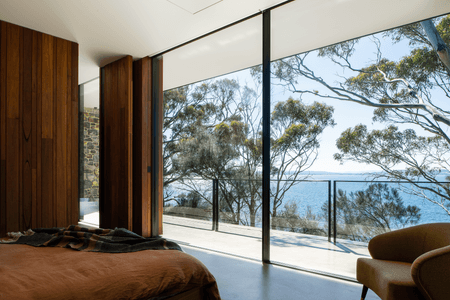
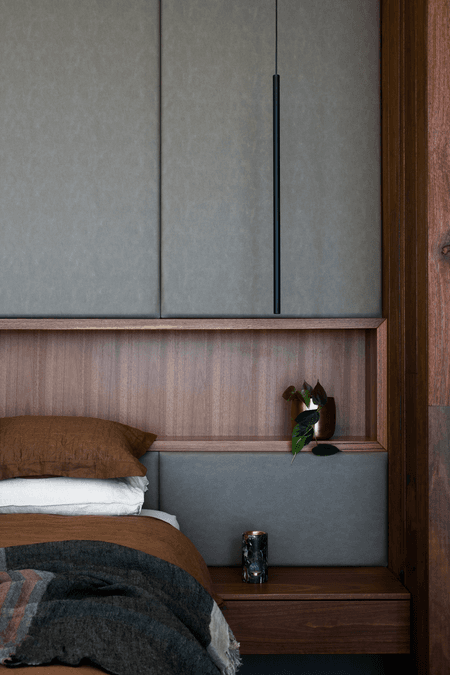
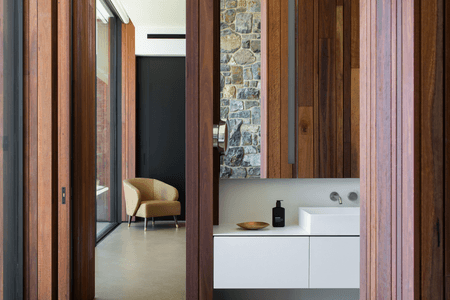
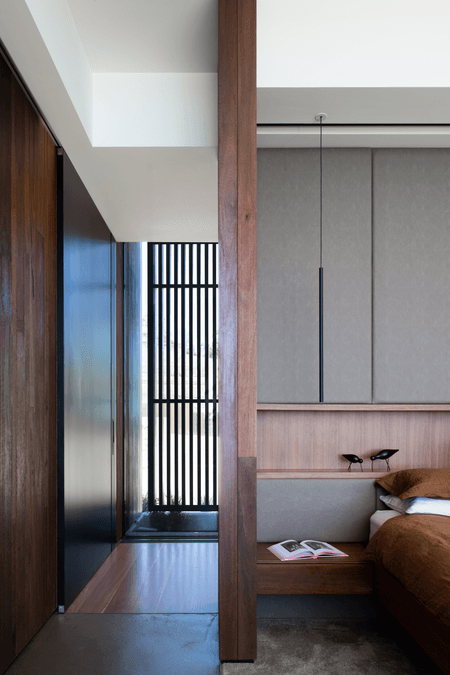
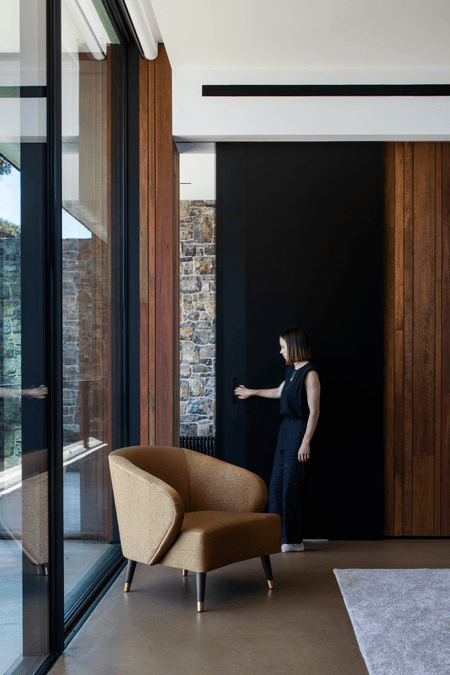
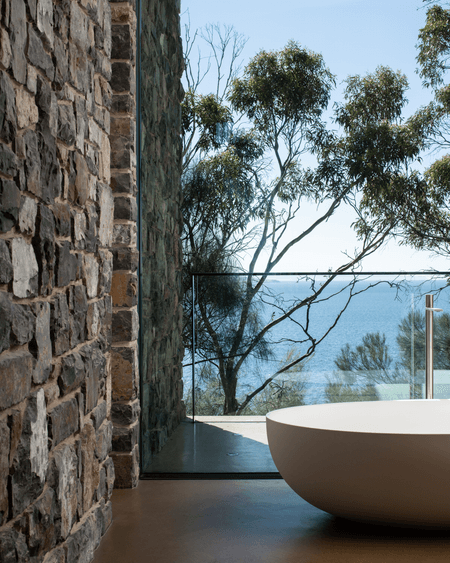
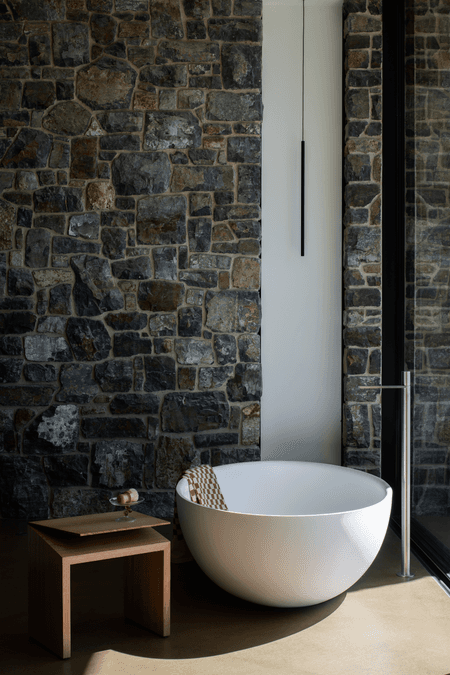
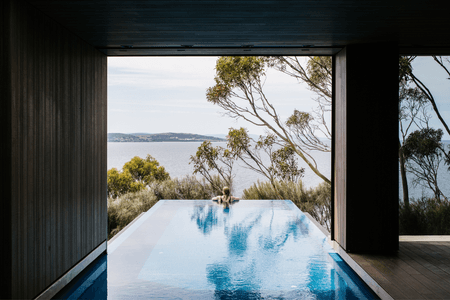
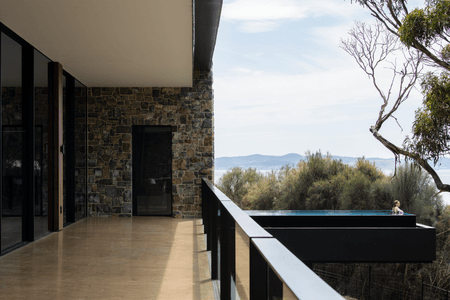
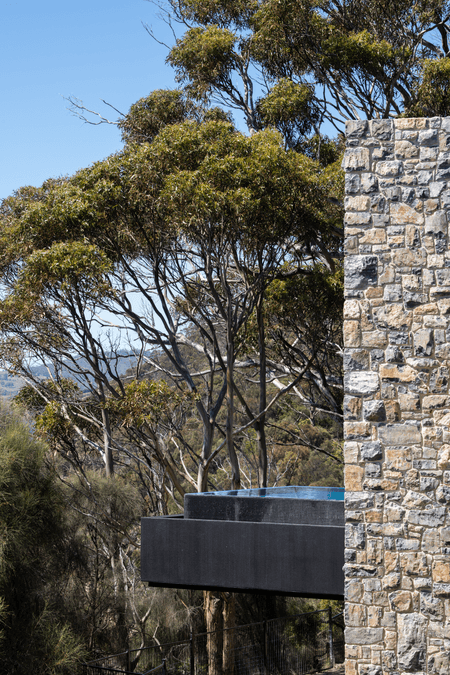
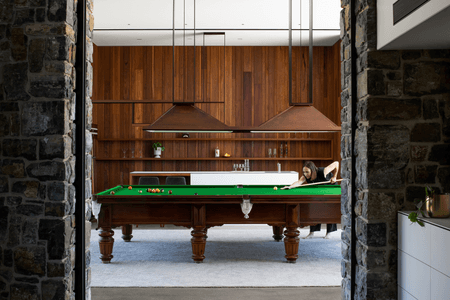
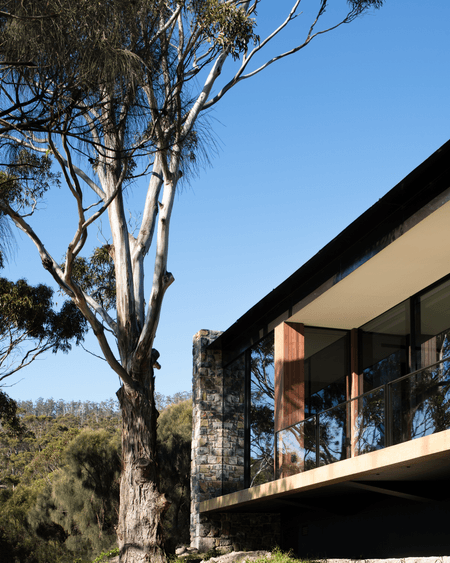
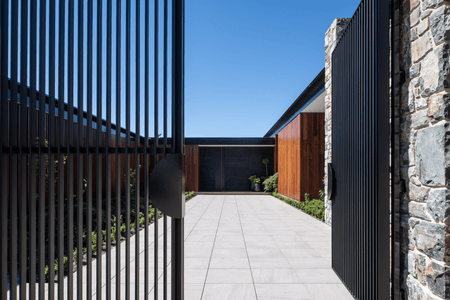
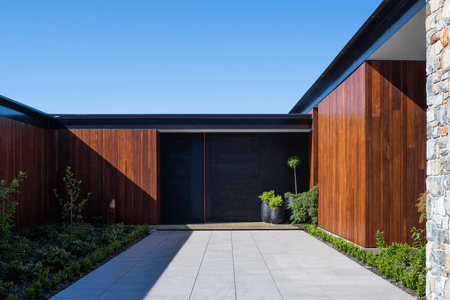
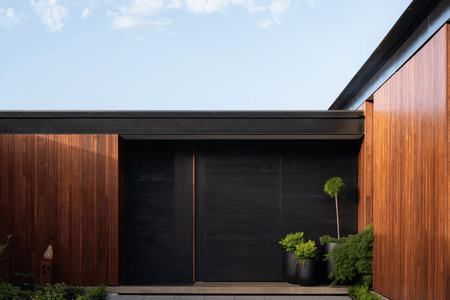
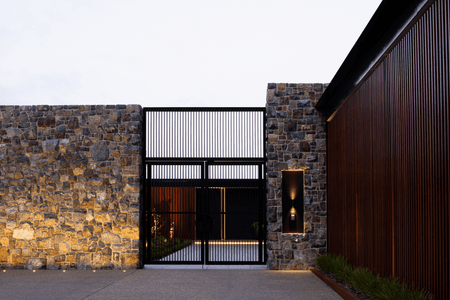
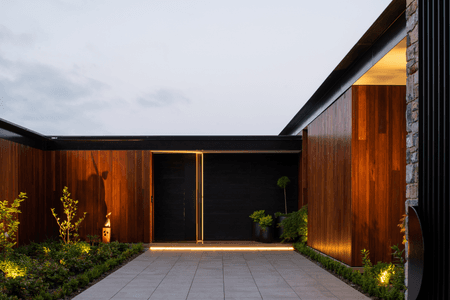
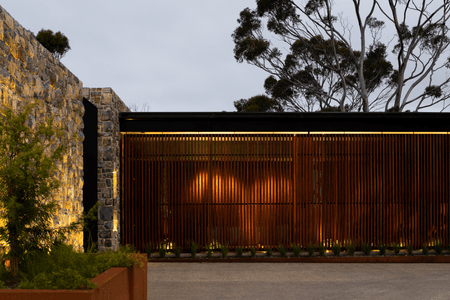
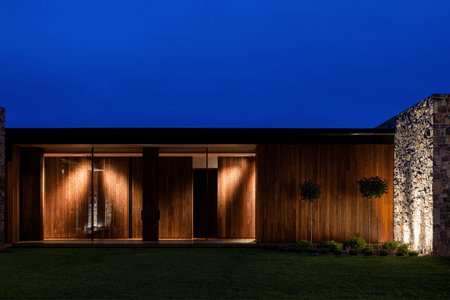
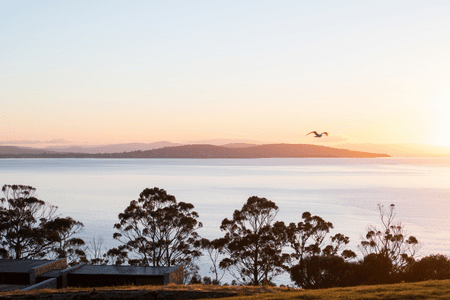
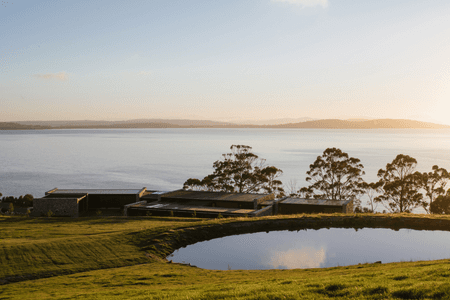
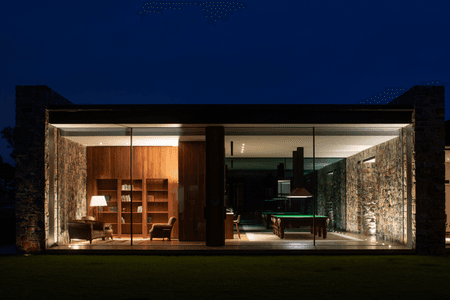
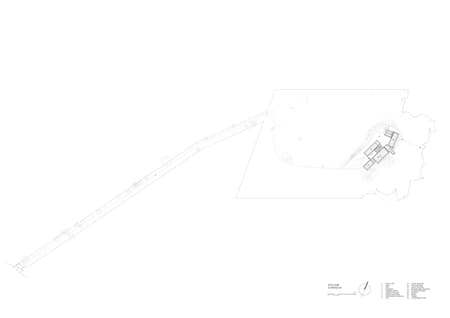
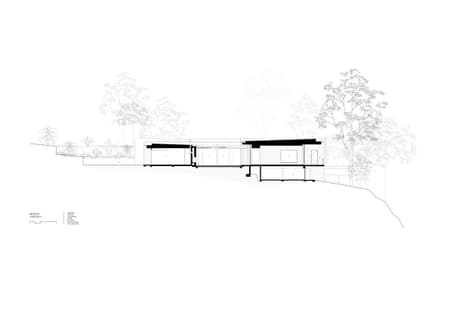
Tinderbox House is, at its core, a practical, understated family retreat, for a successful and local Tasmanian family. Responding to the many natural and manmade constraints of the site, the highly crafted design is an attempt to add to the ecosystem rather than imposing itself on it.
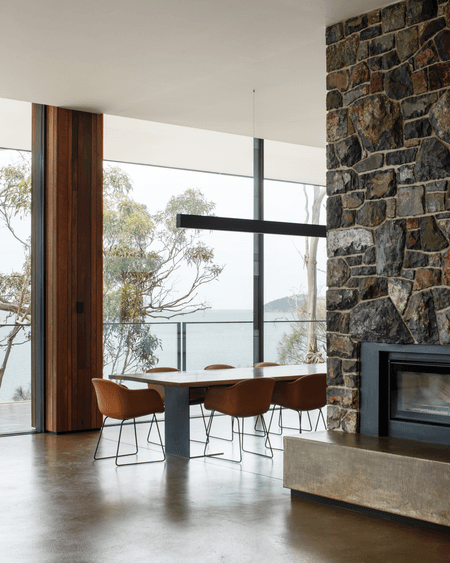
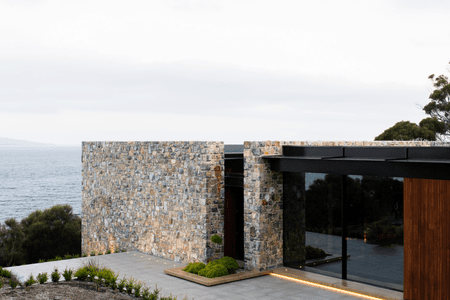
was a coastal view from every room in the house. The problem was that the view was to the South – the cold side of the house.
We had intimate knowledge of site conditions via a partially unbuilt work for the previous owner. He had left us with a gaping wound courtesy of an excavated house site above an infamous underground cellar with a tunnelled access to the rocky foreshore below the site. The cellar provided guidance to the logical location and layout for the new house, but the question was how to orientate the building.
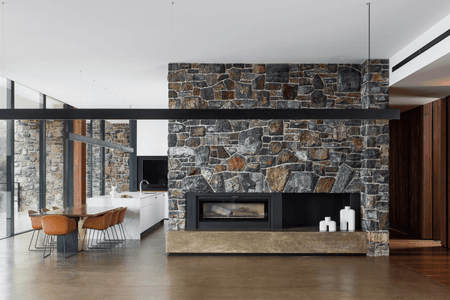
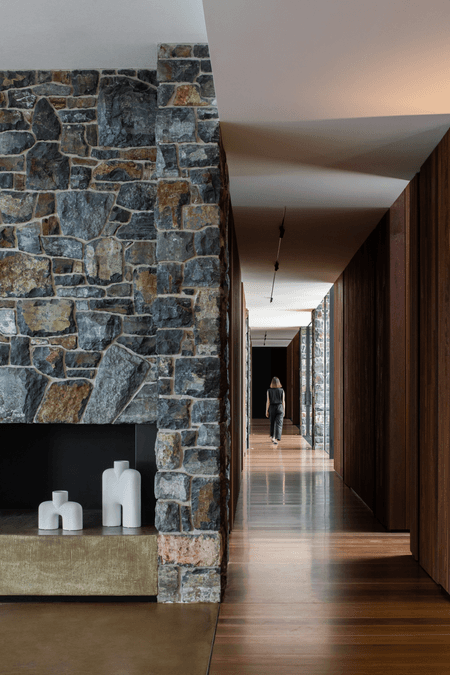
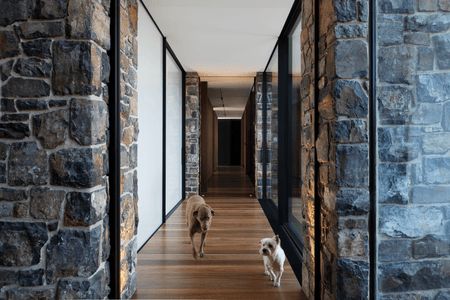
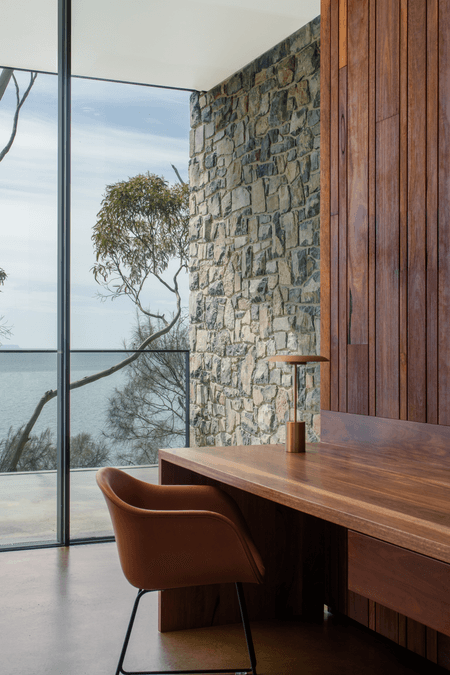
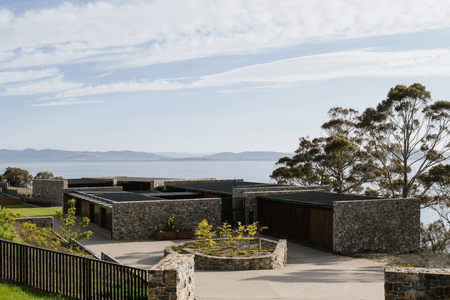
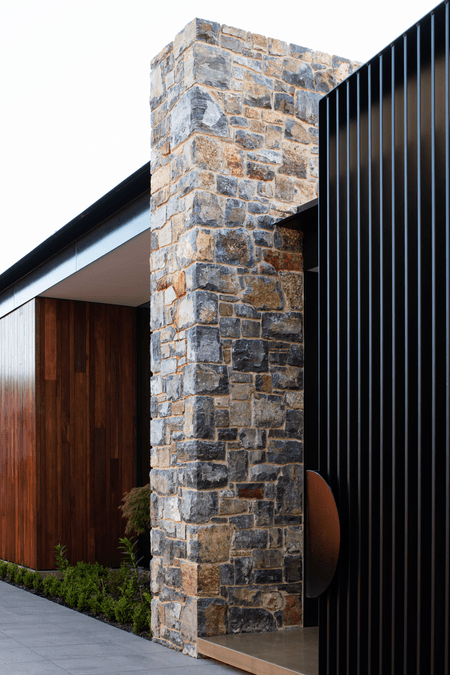
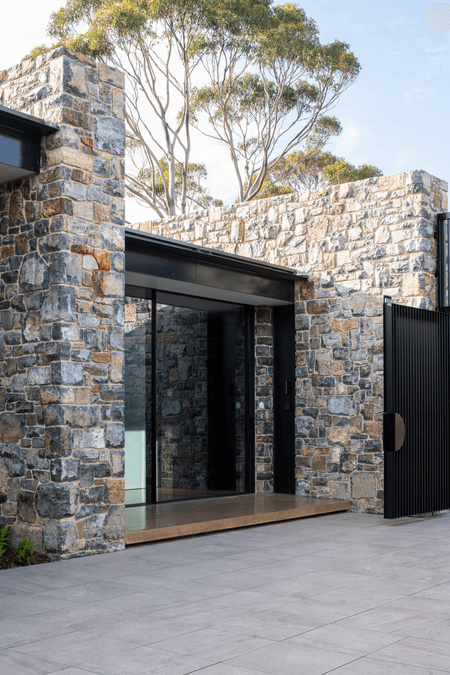
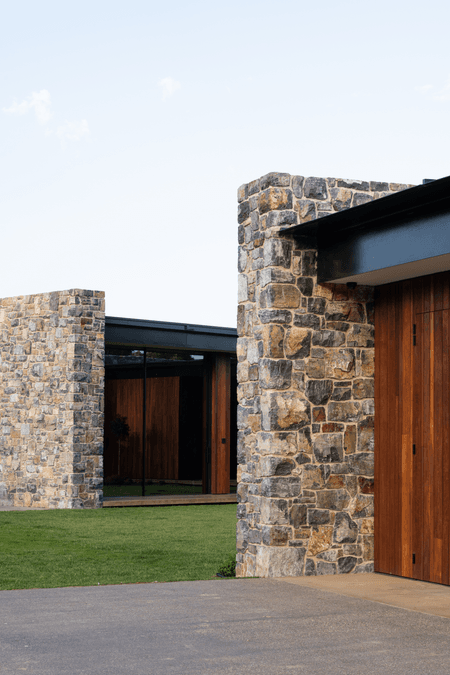
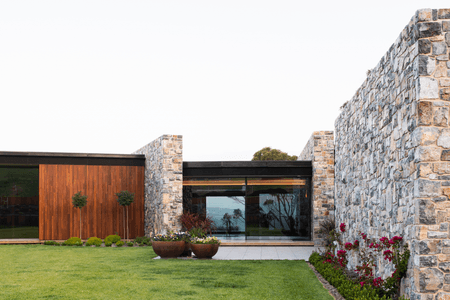
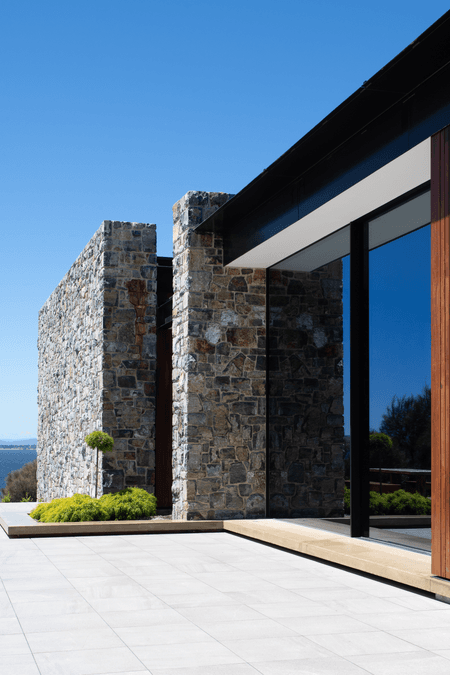
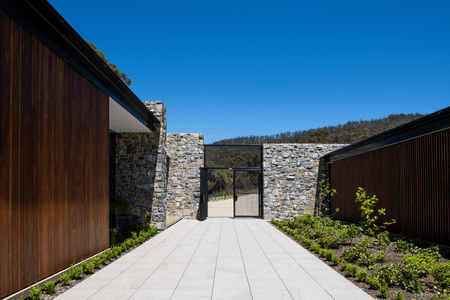
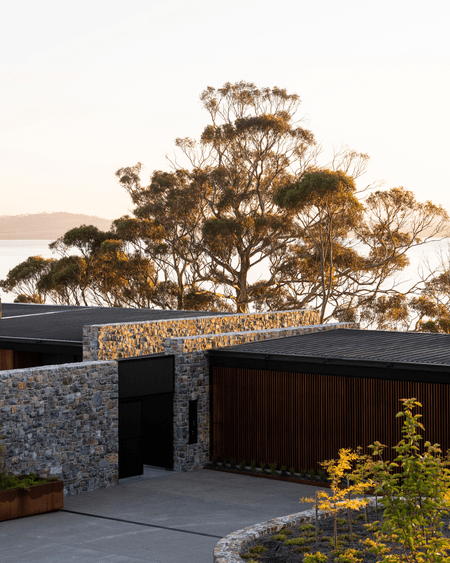
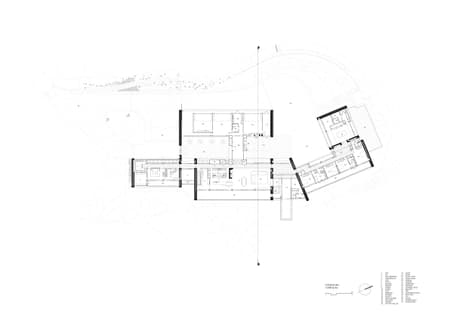
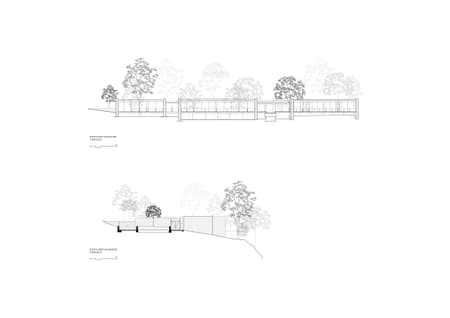
We began with an inwards focused courtyard house achieving maximum solar exposure on the north and west and concentrated coastal and rural views. This proved not to meet the client’s expectations of expansive views from every space towards the water (south). We solved this by creating a linear sequence of pavilions segmented visually and physically by a series of mudstone bookend walls. Each pavilion was fully glazed to the south and to the north or west.
The requested south facing views presented major solar efficiency challenges, addressed via the mudstone wall elements, the concrete floor and sub-floor providing thermal massing inside the house. We coupled the thermal massing with an internal west and north facing courtyard and a fully glazed perimeter. We super insulated the floor, walls and ceilings, employed a continuous thermal break along the internal perimeter, fully enclosed the subfloor and provided a commercial scale solar/battery storage system together with a geothermal hot water heating and ventilation system.
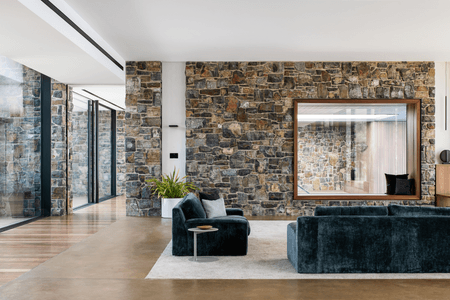
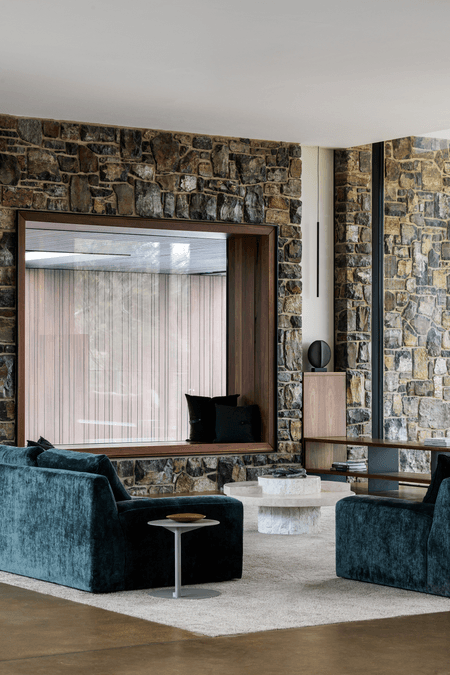
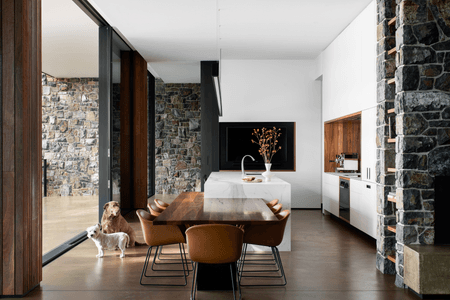
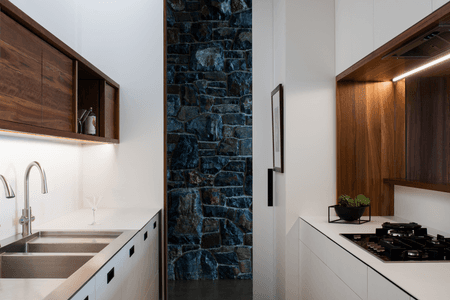
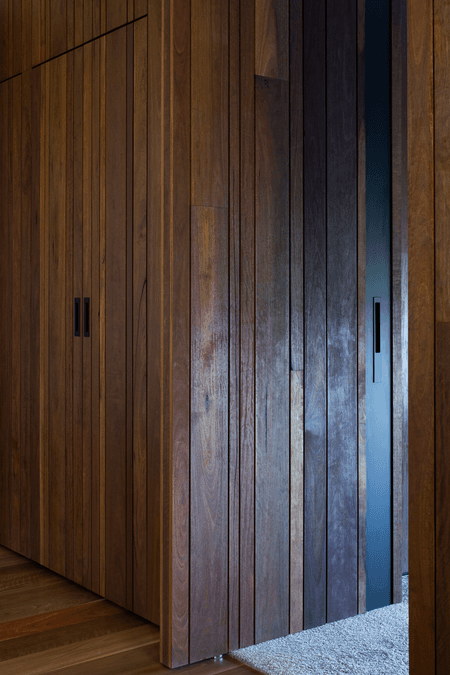
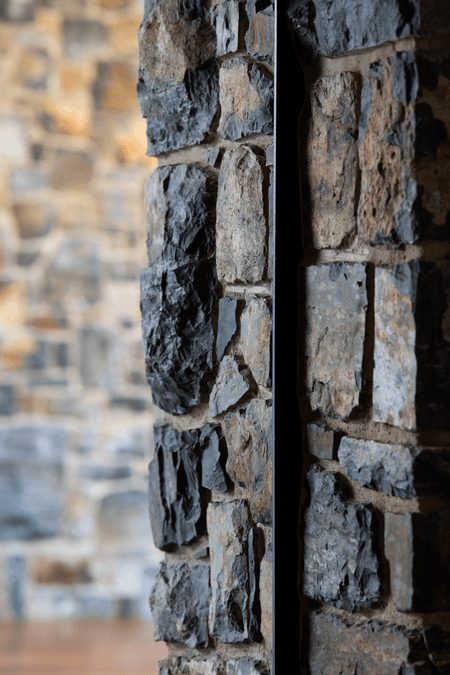
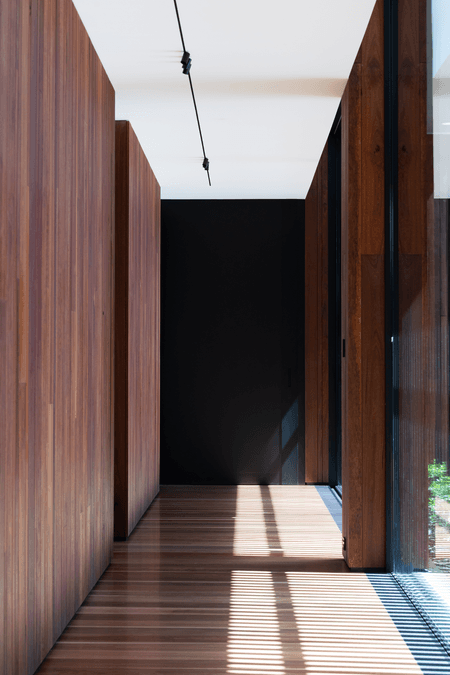
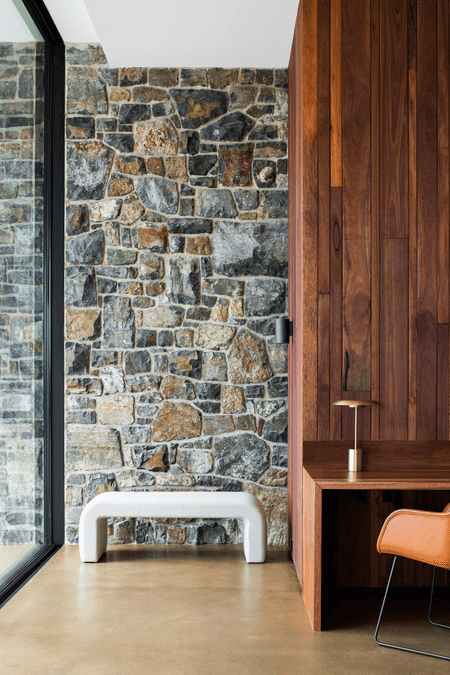
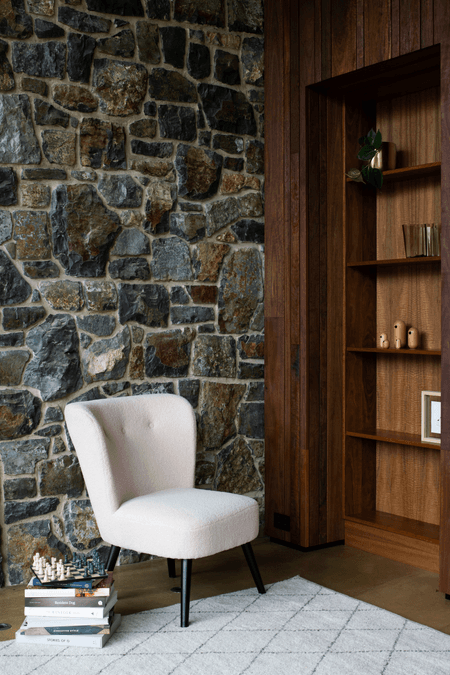
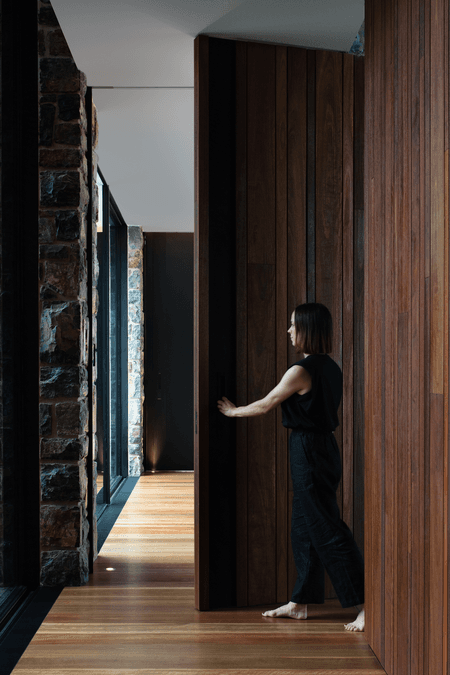
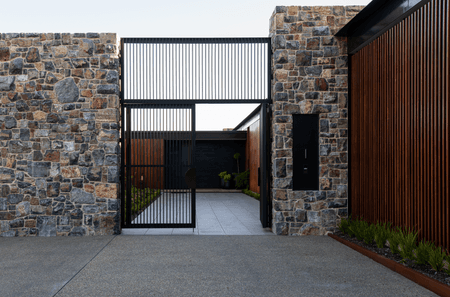
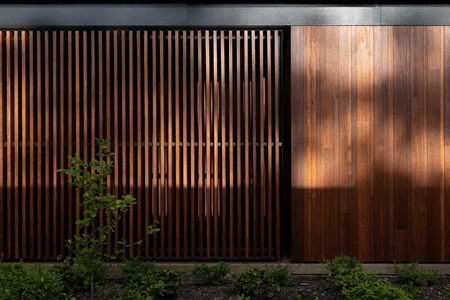
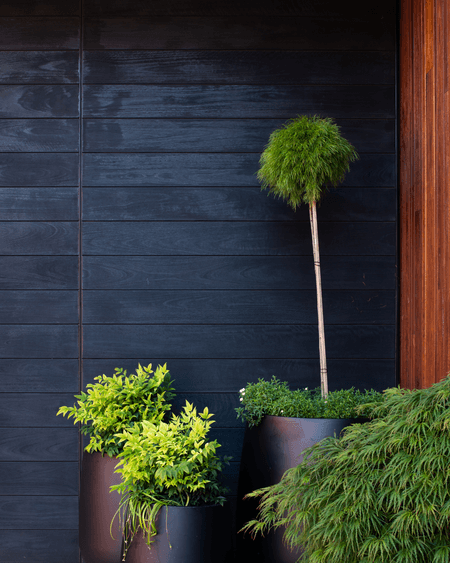
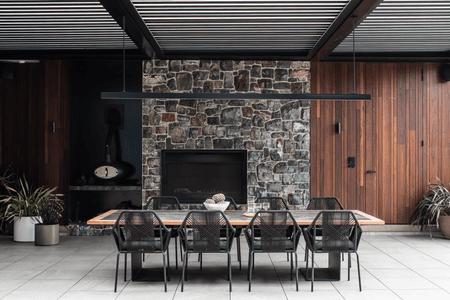
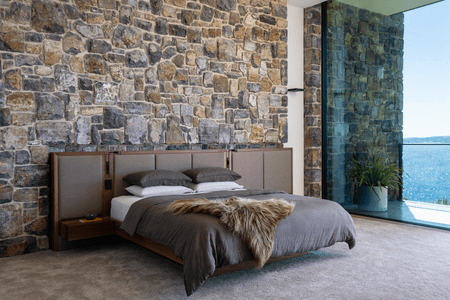
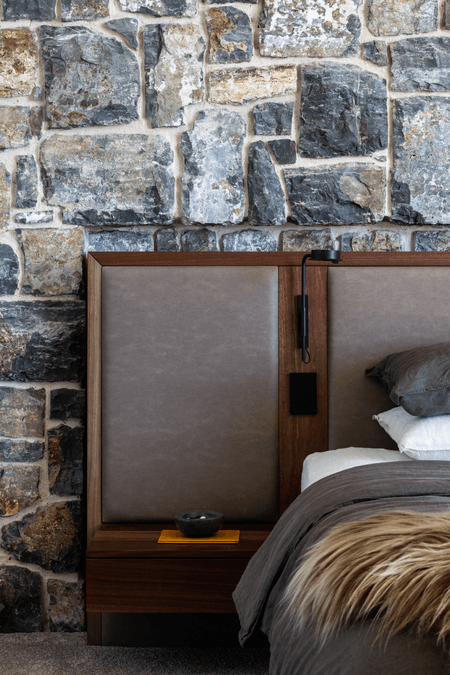
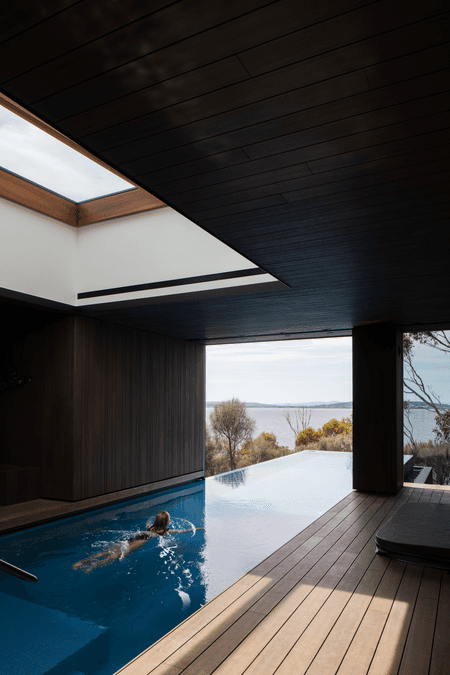
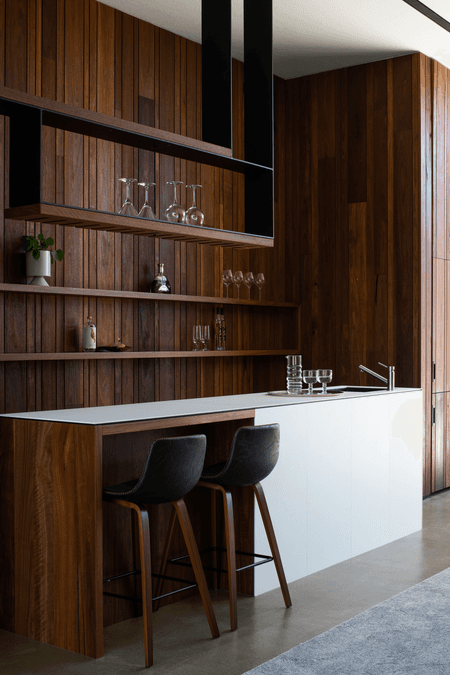
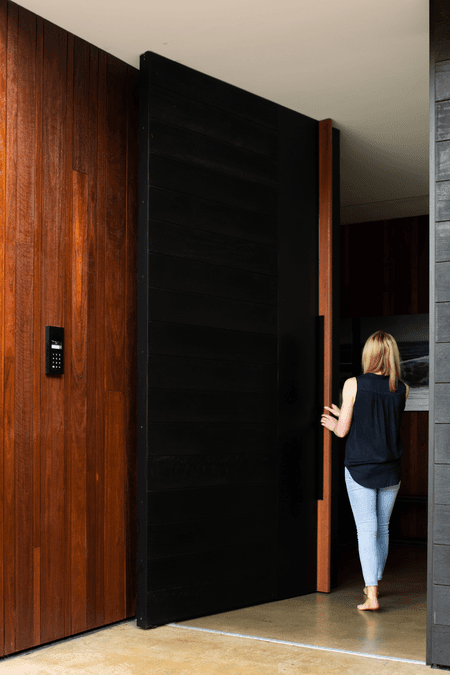
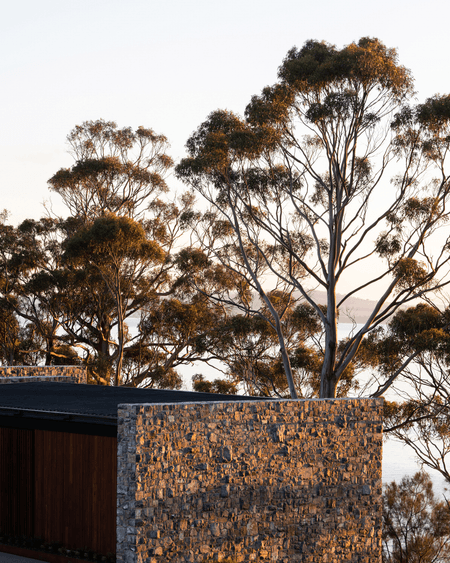
The mudstone walls were the core material, a selection made collaboratively between client, architect and stonemason. The stone needed to be local and the tones had to reflect the warm tones in the landscape. These tones then informed the other material selections namely warm caramel burnished concrete floors and the ochre toned spotted gum timber cladding which also had to be bushfire resistant.
The client had to have a view to the water from every room, but every room had to have light and warmth. The challenge was the south facing site. The house needed to perform, be functional in that all spaces needed to have the volume to match the ‘large’ living style of the owners, yet it had to provide rich, intimate interior spaces which felt like a home. The house needed to operate as a small home for the couple who lived in it daily, but more importantly it had to be able to accommodate a large and growing family who would visit (and sleep over) often.
This project was very much a collaborative one. The clients wanted to include a small number of nominated subcontractors, namely the stone mason and the smart home contractor, with whom they have previously worked. Integration of these contractors into the main building team was not without its challenges, but very likely resulted in a more successful build.
The clients desire to seek out the ‘best’ locals in their discipline was realised in this complex commercial scale project.