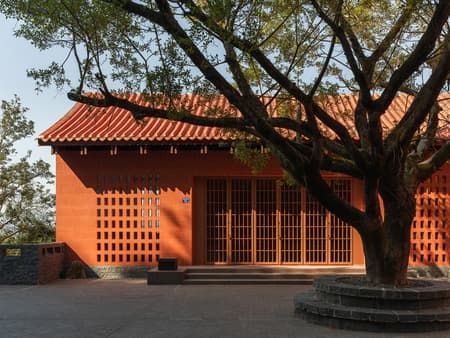
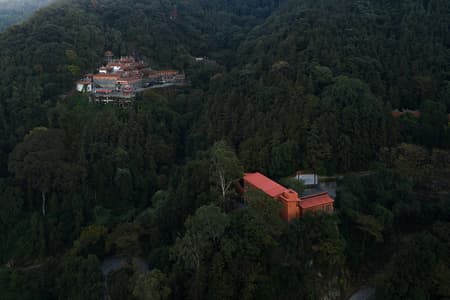
Qingshuiyan Ancestral Hall Supporting Facility Renovation Set within the core scenic area of the thousand-year-old Qingshuiyan Ancestral Hall in Anxi, Quanzhou, this project renovates a decommissioned old bus station left unused after its functional relocation. The site is anchored by a moss-draped ancient banyan tree at the center of a forest-framed open square, with a dilapidated two-story station building, native rock formations, and ancient mossy paths defining its unique natural and historic context. First built in the Northern Song Dynasty, Qingshuiyan Ancestral Hall sits at the northern foot of perennially mist-shrouded Penglai Mountain. As a vital folk belief center for Fujian, Taiwan and Southeast Asian communities with over 100 million believers, the hall shaped the project's core ethos of harmony with nature and local heritage. The in-situ renovation integrates tea houses, vegetarian restaurants, and rest areas as a complementary facility for the ancestral hall.
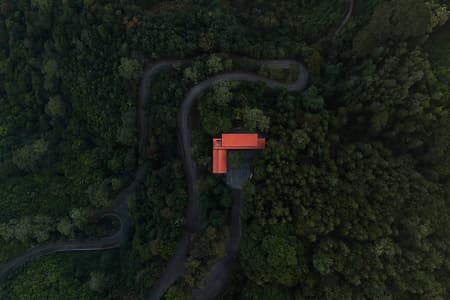
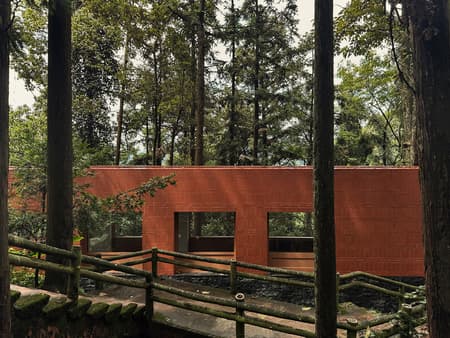
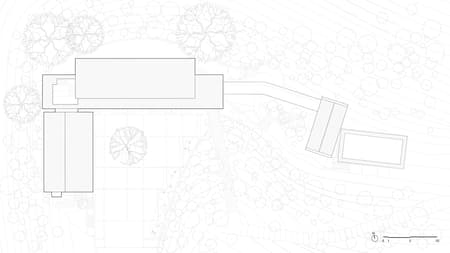
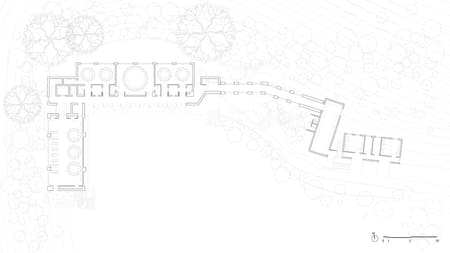
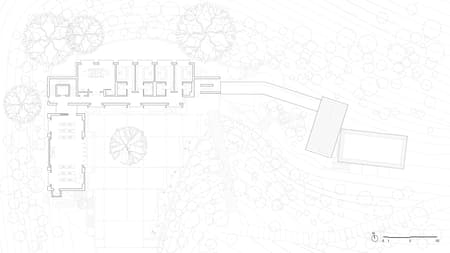
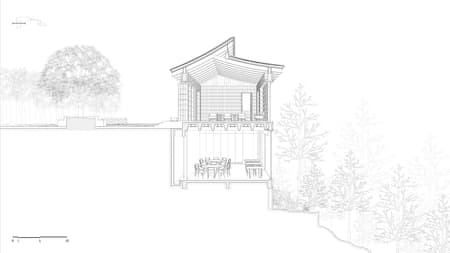
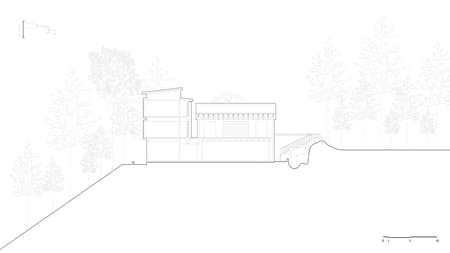
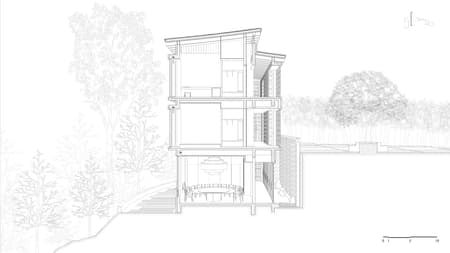
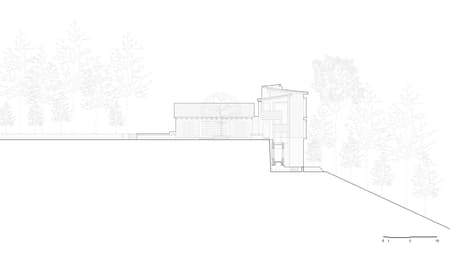
The design's guiding principle is to preserve every existing tree, fostering harmonious coexistence between new construction and the native forest. The central ancient banyan serves as the key thread for organizing spatial layout and circulation. Responding to the narrow site and significant elevation differences, the design places main functional programs underground, gradually sets back the ground-level volume, and creates an eastern transitional grey space to blur the boundary between the building and the surrounding forest.
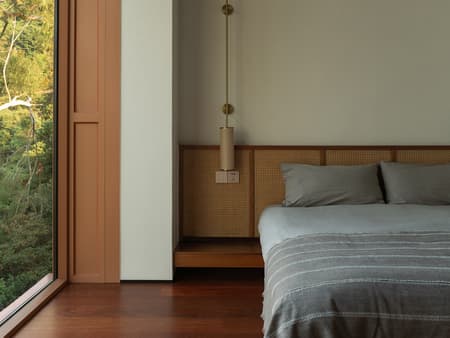
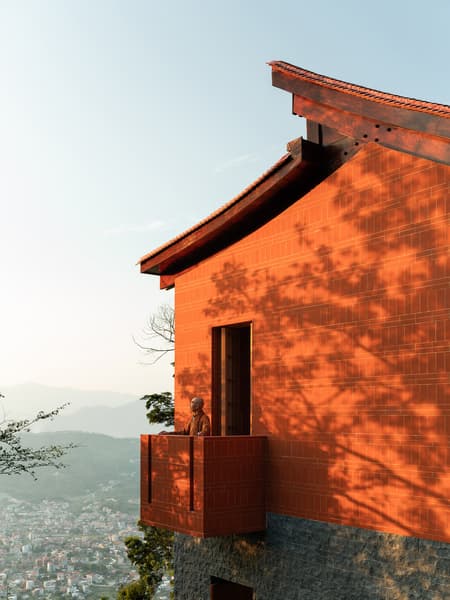
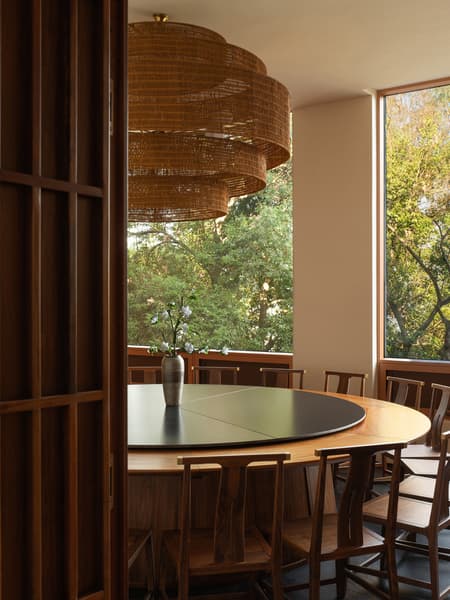
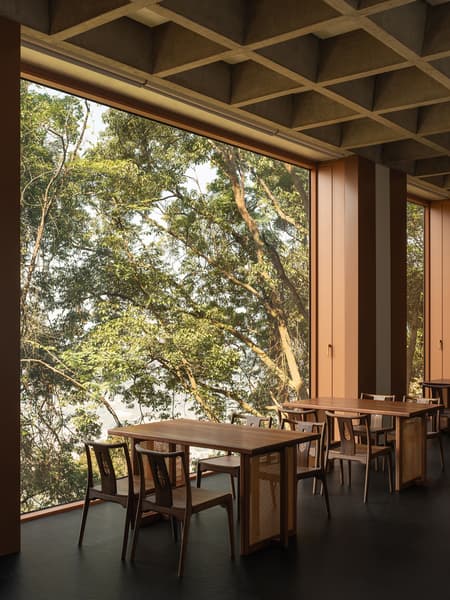
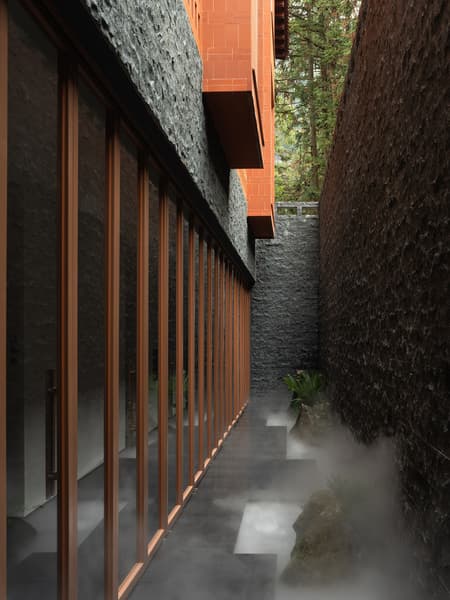
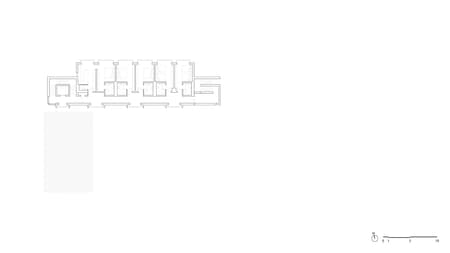
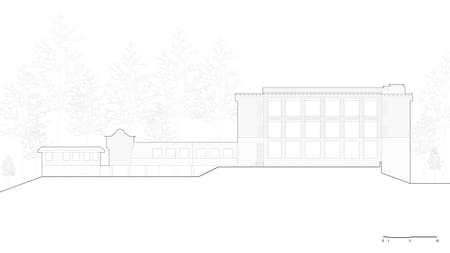
The functional layout unfolds in close alignment with the site's natural terrain. The first-floor main entrance acts as both a foyer and open hall facing the square, leading into the tea house area, where rooms face a south-facing courtyard and overlook the forest canopy to the north; the east-side open space directly faces the ancient mountain trail guarded by a pair of historic stone lions. Descending to the basement, visitors arrive at the vegetarian restaurant's foyer, with a sunken courtyard's landscape stones and flowing water creating a serene, cave-like atmosphere leading to the tree-shaded outdoor courtyard. A logistics corridor cuts through the forest, connecting an existing auxiliary building converted into a kitchen. Opposite the foyer, the multi-functional hall frames tree shadows and distant mountain views, with access to the courtyard and a stone path leading back to the square. The second floor houses private rest spaces, with an eastern platform extending into the forest to engage with the mountain landscape, and a western roof terrace offering unobstructed views of the distant Ancestral Hall.
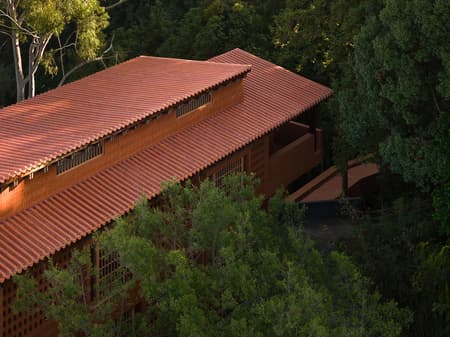
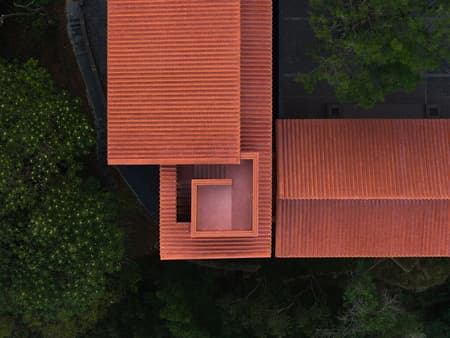
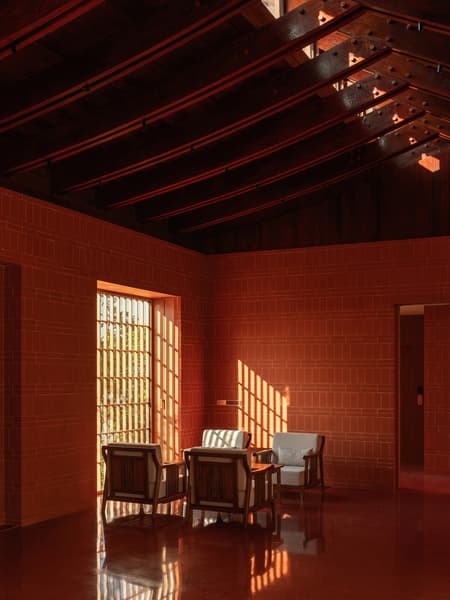
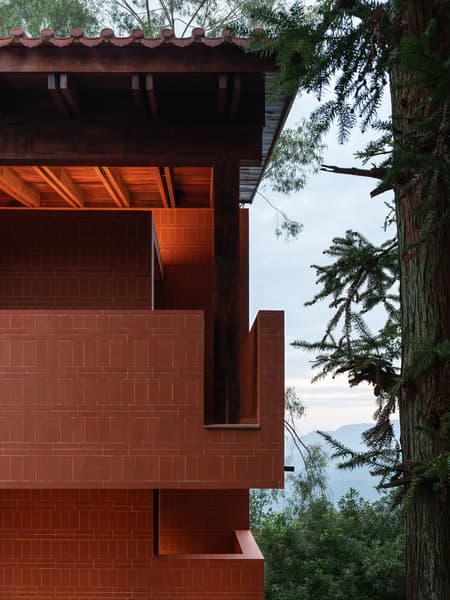
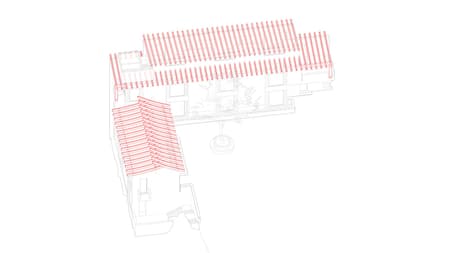
Locally sourced materials anchor the project in its context. Bluestone excavated from the site forms the building's natural "base", its rough, natural-faced masonry blending seamlessly with the mountain forest's rustic character. Fair-faced concrete is used for the multi-functional hall's one-piece cast waffle slab, where the grid acts as both load-bearing structure and dynamic light container, enhancing the space's depth. Minnan red brick, a core local material, is used as non-load-bearing cladding, with a homogeneous masonry facade and embedded glass bricks that turn interior walls into soft, warm light sources. The wooden structure deconstructs traditional Minnan gable roofs into staggered single-slope units, with red roof tiles continuing traditional craftsmanship to form a historical dialogue with the Ancestral Hall.
Drawing spatial reference from the Ancestral Hall's intimate, winding cave-like interior, the design adopts a transitional "interlayer" zone inspired by traditional Minnan fortress buildings, creating a rhythmic play of spatial compression and expansion. The landscape design adheres to the principle of leveraging the site's existing context, with minimal artificial intervention to shape three themed landscape zones that follow the natural terrain, integrate Zen aesthetics, and narrate the passage of time.
Ultimately, the project integrates the site's unique characteristics, draws spatial inspiration from Qingshuiyan Ancestral Hall, and extracts local construction logic, shaping an architecture that grows from the site and will eventually merge back into the rocks and forest, creating a space that resonates harmoniously with its environment and history.