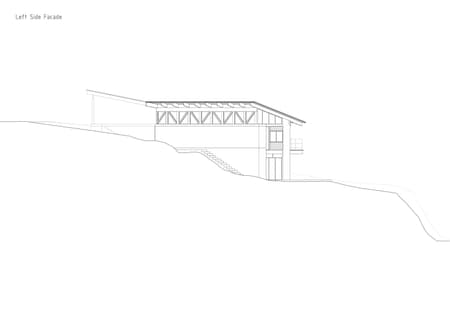
Set on the slopes of Ilaló, within a residential development committed to the responsible management of water, native vegetation, and the surrounding Andean landscape, the House of the Rolling Rooms was designed for Andrea and Nicolás, a young couple with a clear and thoughtful vision of how to live. From the outset, their goal was to build a home that integrates with its environment rather than dominates it — a project that could serve as a model for future construction in the area.
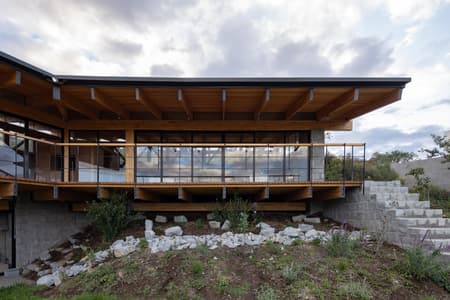
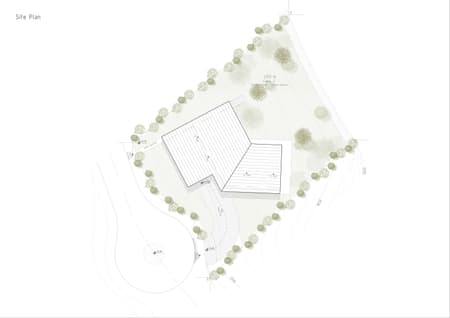
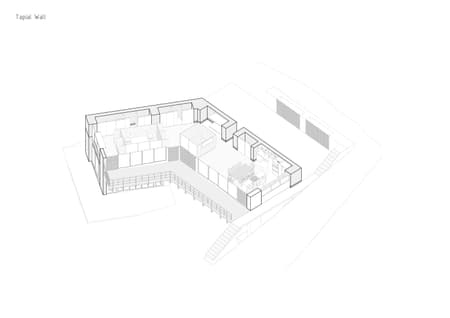
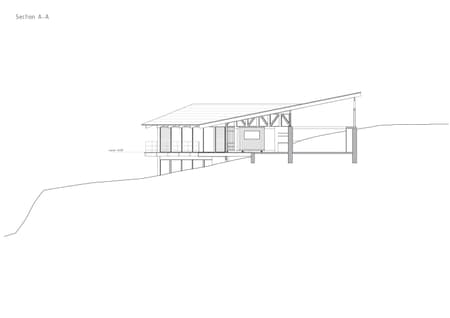
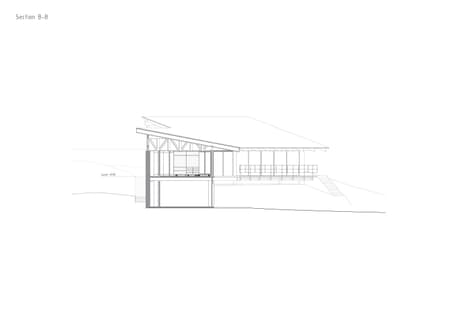
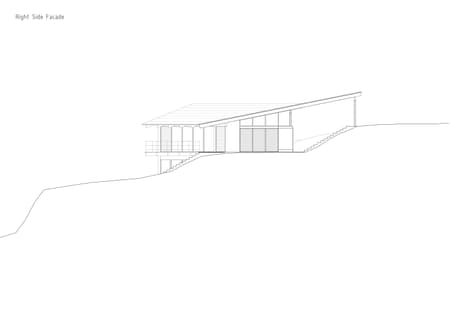
The project's main strategy was to deeply understand the site's conditions: topography, views, orientation, and vegetation. Instead of imposing a flat platform, the house subtly bends along the contour lines, adapting to the natural slope. This approach allowed for a zero-cut, zero-fill construction, preserving the integrity of the land and minimizing environmental impact.
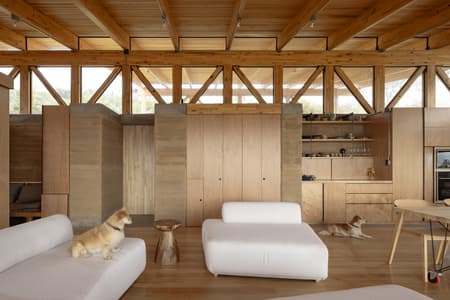
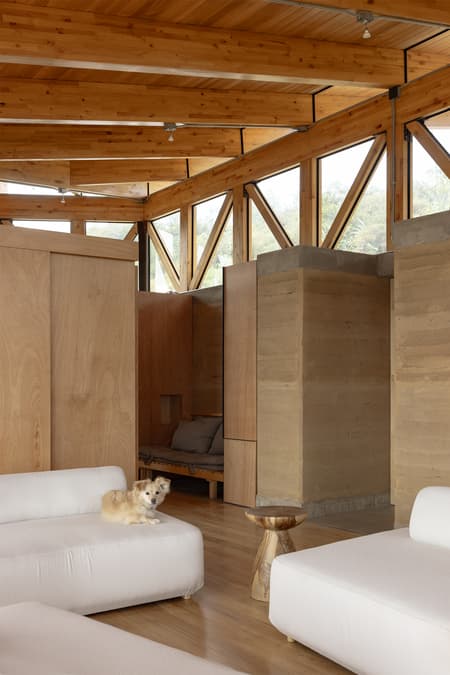
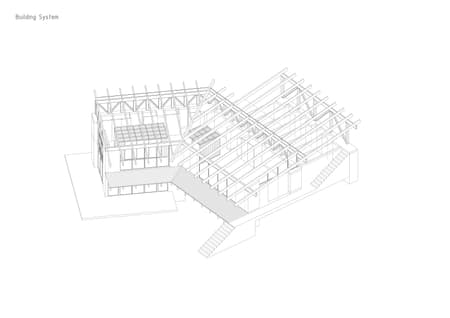
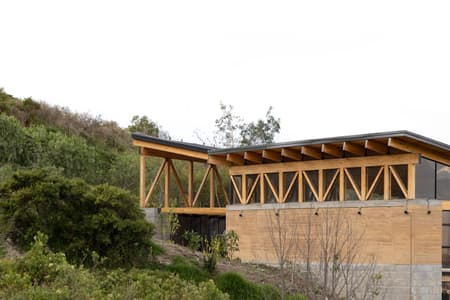
The foundation and base walls are built with local stone, providing thermal mass and a material continuity with the site. On top of these, a rammed earth wall —stabilized and finished with lime plaster— rises as both the structural backbone and the project’s central organizing element.
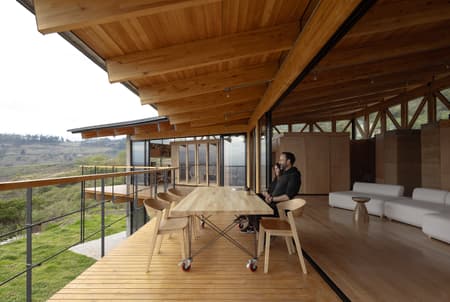
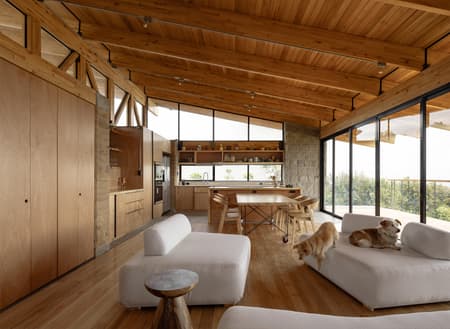
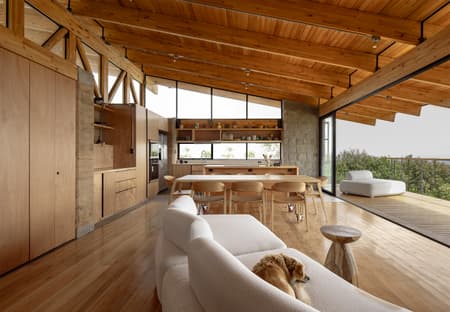
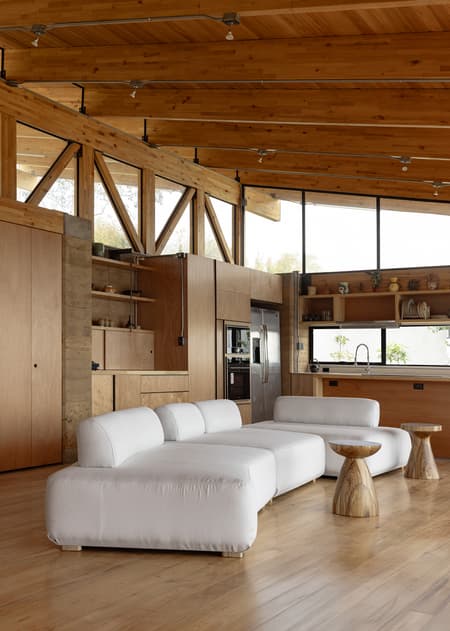
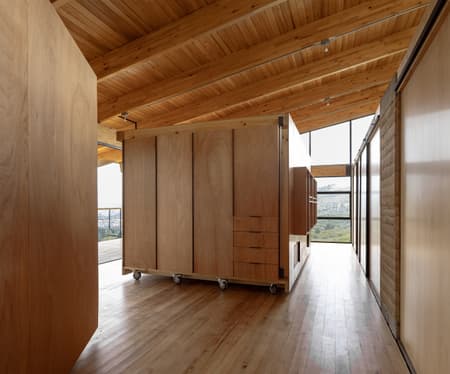
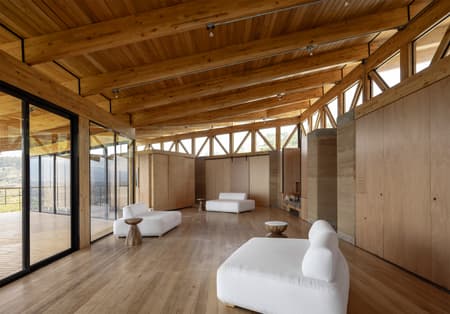
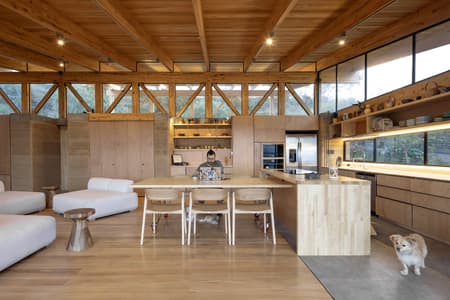
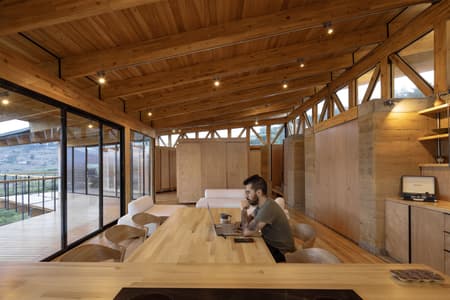
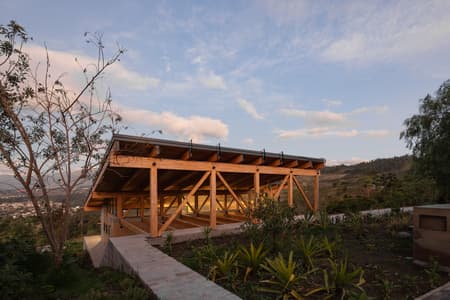
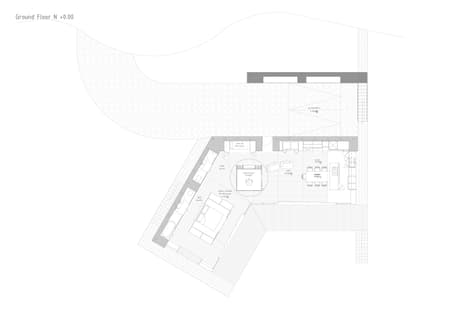
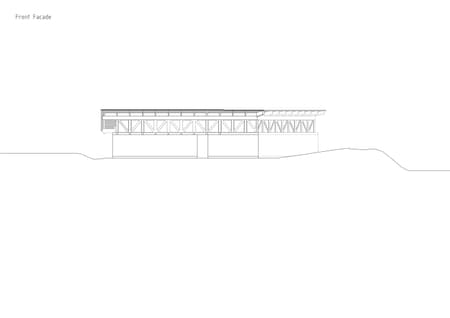
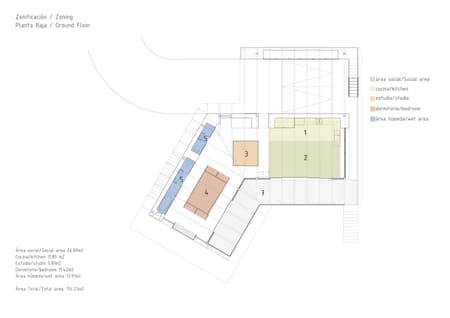
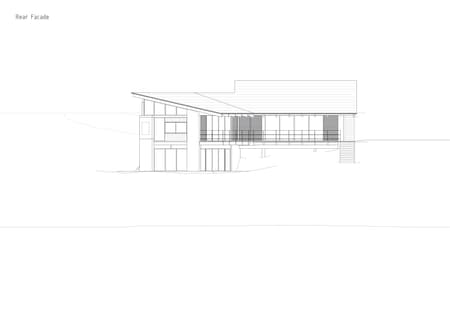
A large single-pitch roof covers the house, supported by the rammed earth wall and laminated wood beams. This roof creates a simple yet powerful spatial gesture, sheltering a variety of activities beneath it. The interior space is entirely open —no partitions or traditional rooms— and organized around a single “serving wall” that houses the kitchen, bathrooms, utilities, and storage.
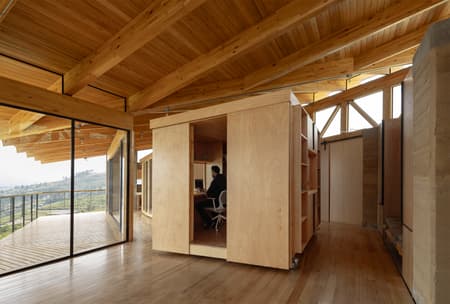
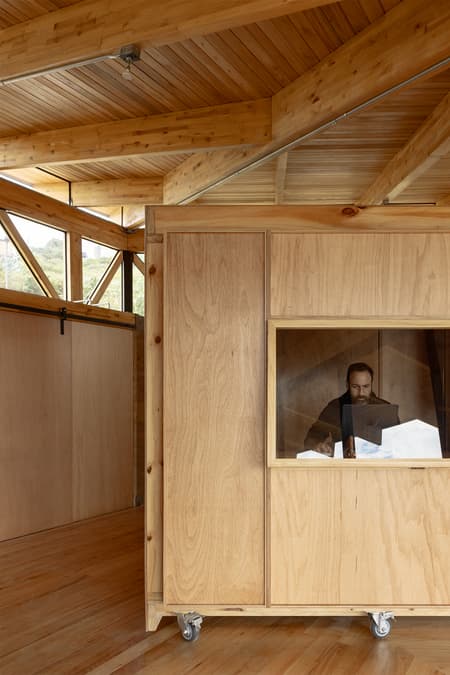
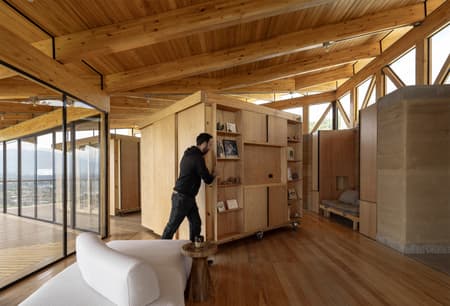
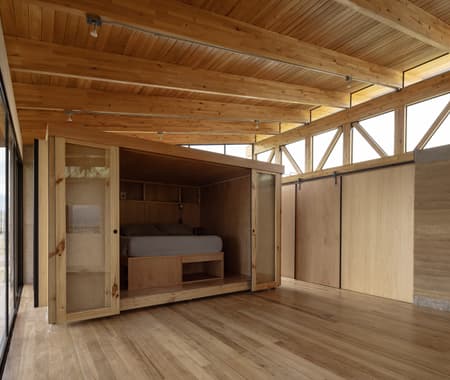
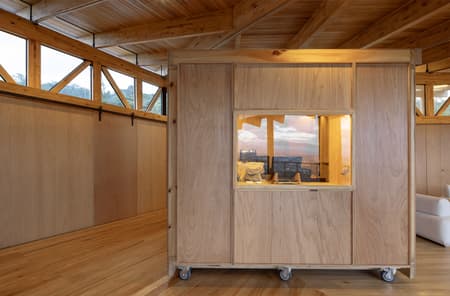
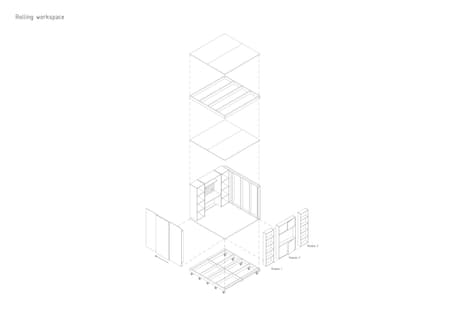
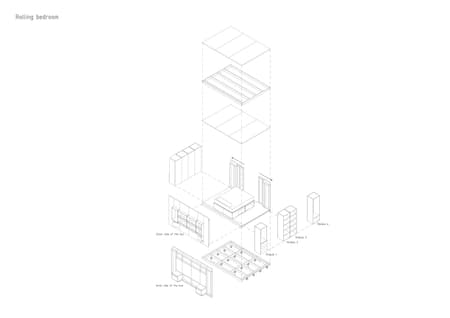
Instead of fixed rooms, the project introduces two rolling wooden volumes: one contains the bedroom, closets, and vanity; the other, Andrea’s workspace and a built-in TV area with a sofa bed. These rolling rooms can be moved, reshaped, or rotated, allowing the house to change constantly—opening up for social gatherings, closing down for privacy, or adjusting to light, climate, or mood.
The living area is made of low modular seats with movable backrests. The dining area is equipped with a rolling table and lightweight chairs. The only fixed element is the kitchen island, which serves as the anchor for the open plan. This freedom of arrangement gives the house a unique dynamism: a living architecture that never settles into a single configuration.
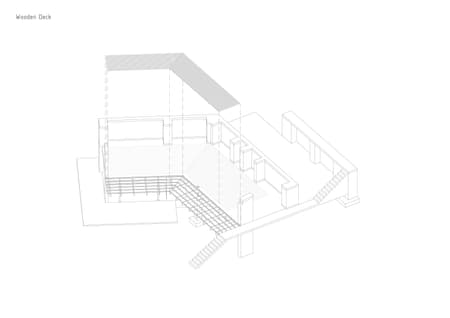
The house protects its northern facade from the road, yet maintains a sense of transparency thanks to a wooden beam that visually connects the interior with the outside. To the south, the house opens fully to the valley through floor-to-ceiling openings, which extend onto a wooden deck running the full length of the façade. This threshold between inside and outside becomes the heart of daily life: a place for rest, contemplation, and connection to nature.
There is no defined main entrance; instead, one approaches the house by walking through the landscape, arriving inside almost imperceptibly — dissolving the boundary between architecture and terrain.
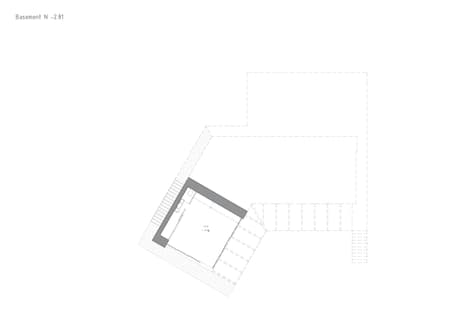
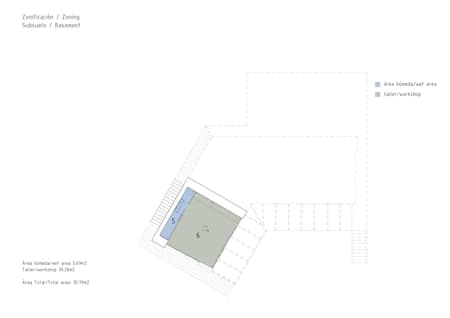
A ceramics studio complements the house, intentionally separated from the main volume to differentiate domestic life from creative work. Located on the lower part of the slope, the studio fits naturally into the topography, avoiding any excavation.
Outdoor areas are connected by a stone pathway system —parking, stairs, storage rooms, and a productive garden. The landscape is planted with native, low-maintenance species, and designed to appear as though it has always been there, with the house quietly appearing within it.
The house includes rainwater infiltration, gray and black water separation, vermi-filtration treatment, solar water heating, and a hybrid photovoltaic system. These systems are not hidden, but celebrated as part of a way of life that values autonomy, resilience, and environmental responsibility.
More than a dwelling, this project is a proposal for how to live differently. Instead of responding with rigid solutions to a static program, the House of the Rolling Rooms invites change, experimentation, and freedom. It is a home where furniture moves, boundaries blur, and the landscape becomes part of the interior experience.
In a world that is constantly shifting, this house proves that it is possible to build with just enough, in harmony with the land, and with a spatial structure that evolves with time, with the climate — and most importantly, with its inhabitants.

.jpg?w=450&q=75&dpl=dpl_6NKhQbYoNKZ4YGsW1tKTDHjTc7uH)