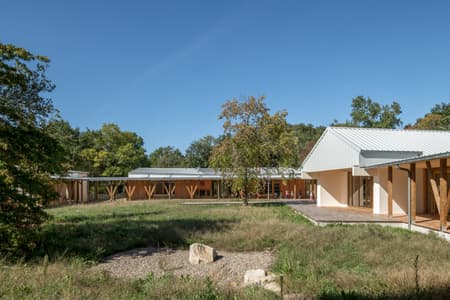
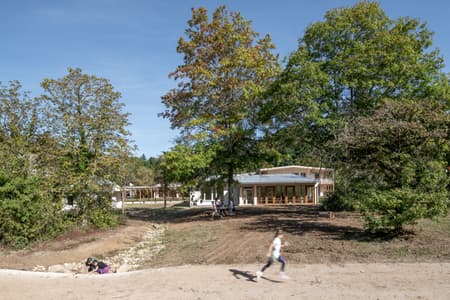
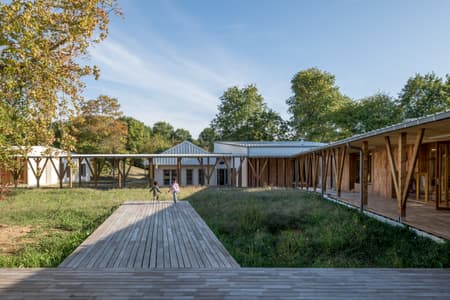
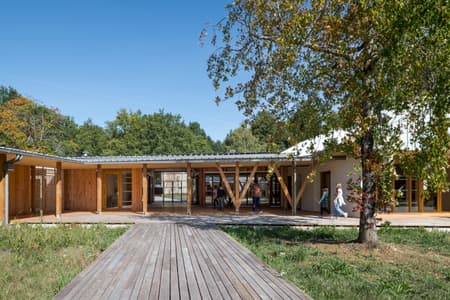
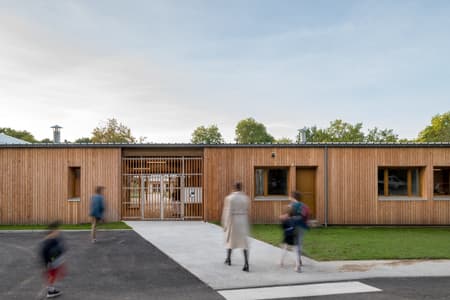
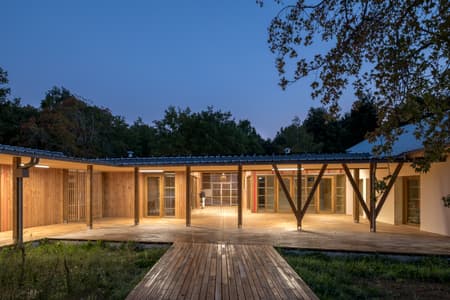
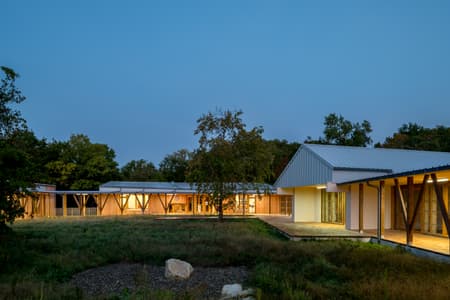
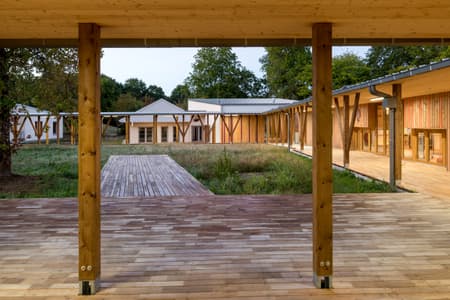
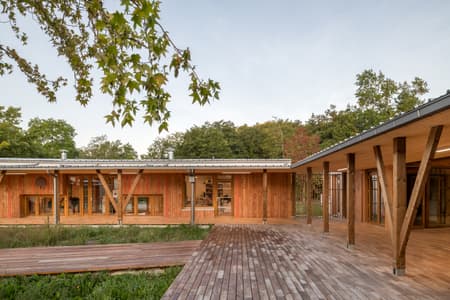
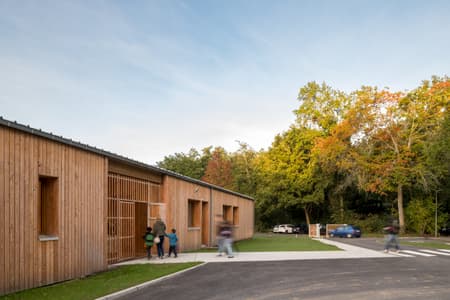
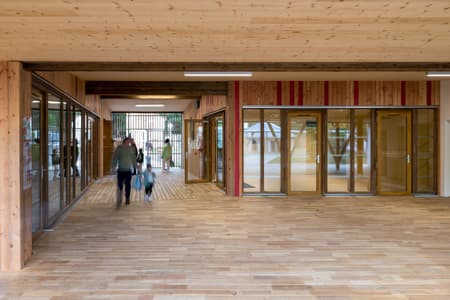
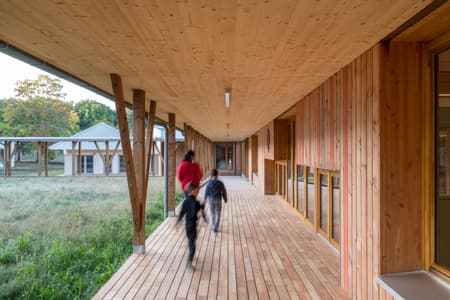
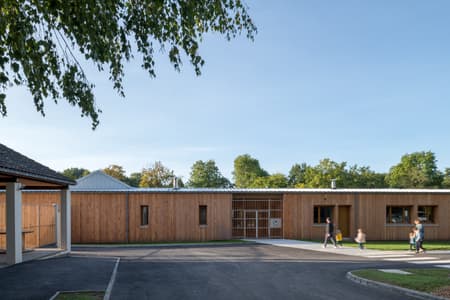
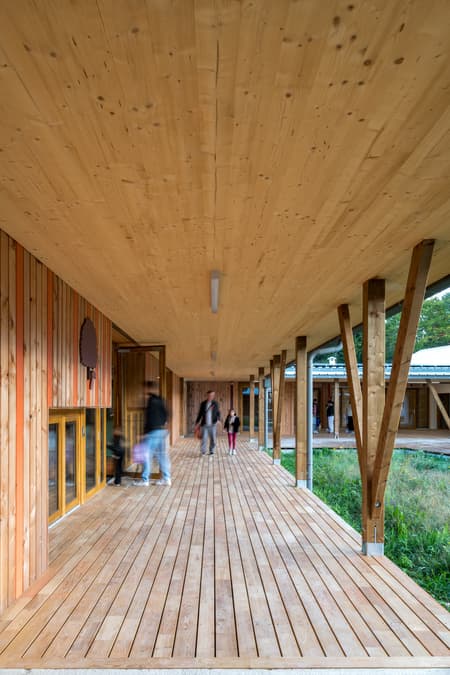
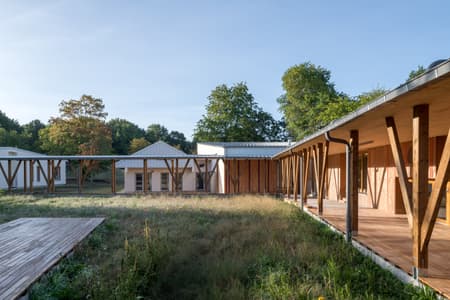
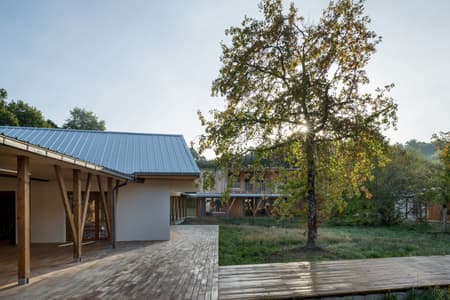
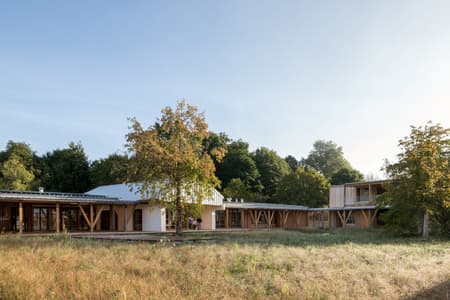
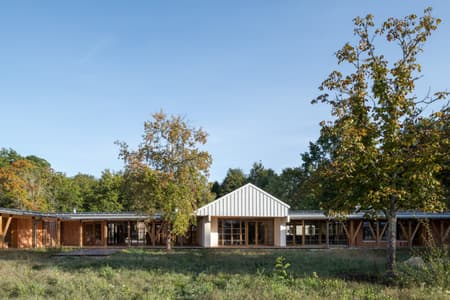
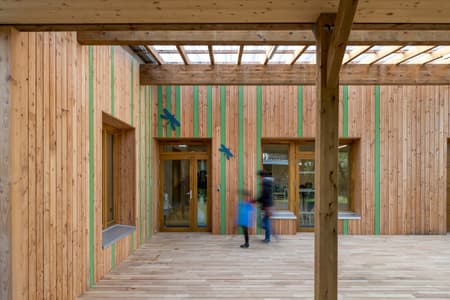
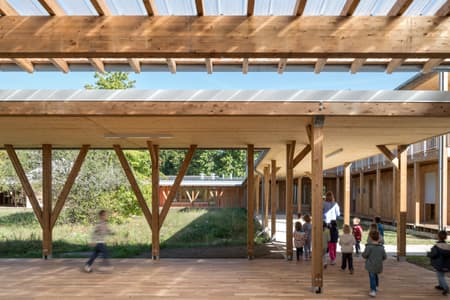
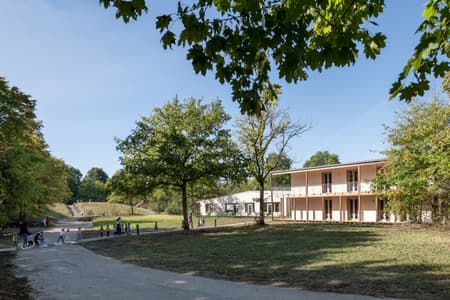
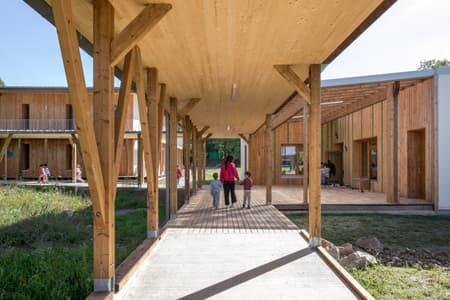
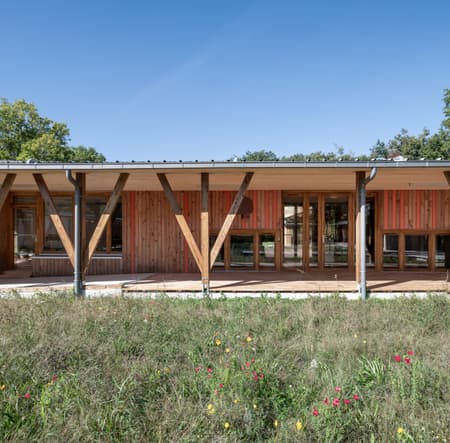
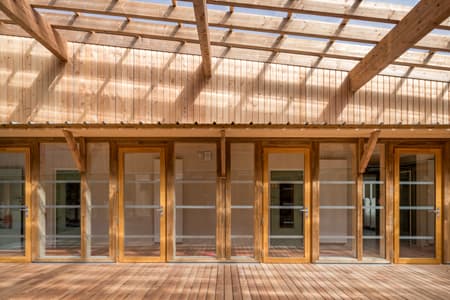
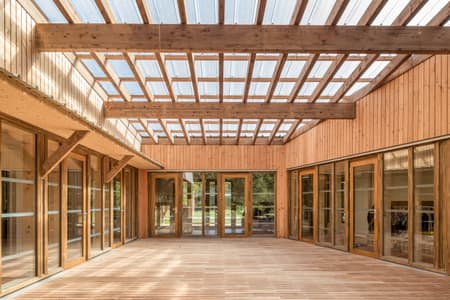
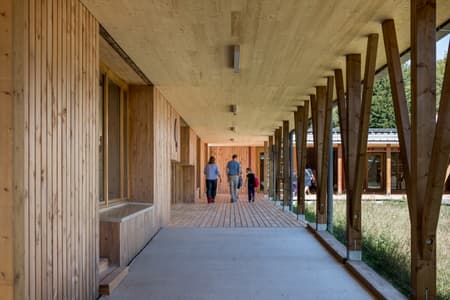
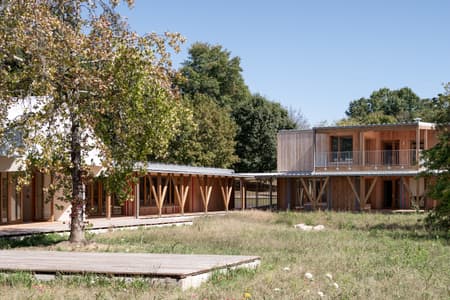
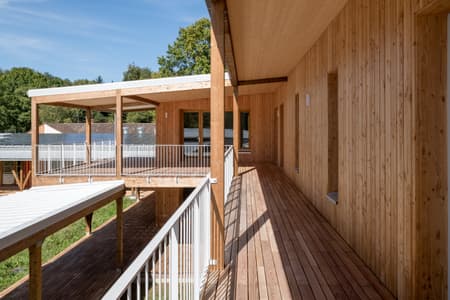
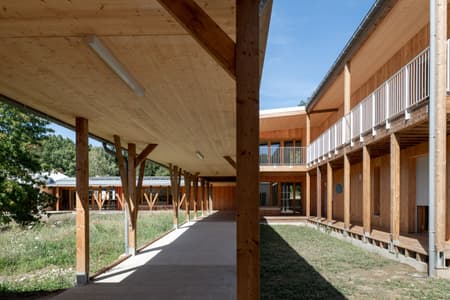
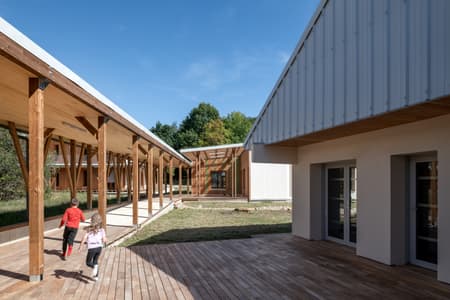
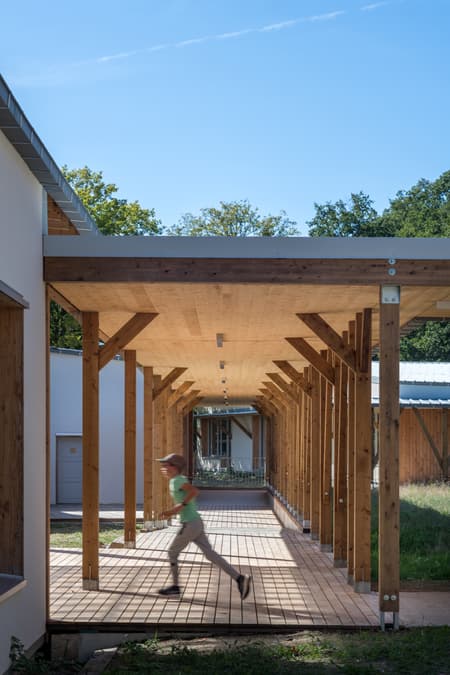
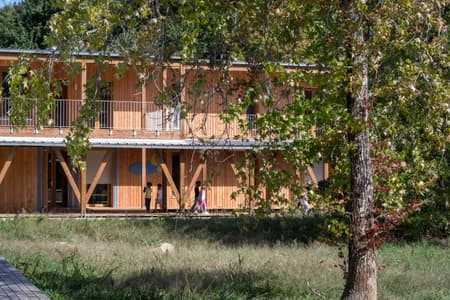
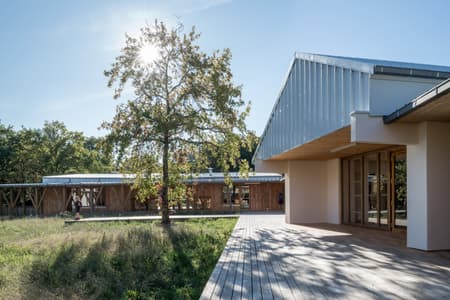
Children enter the leisure centre through a porch onto a lawn lined with a gallery that connects all the centre’s facilities.
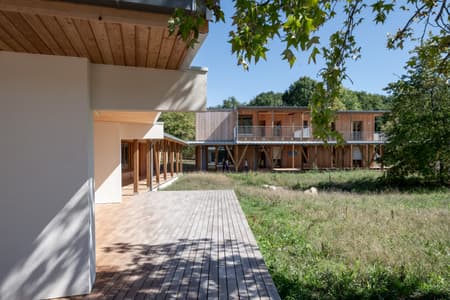
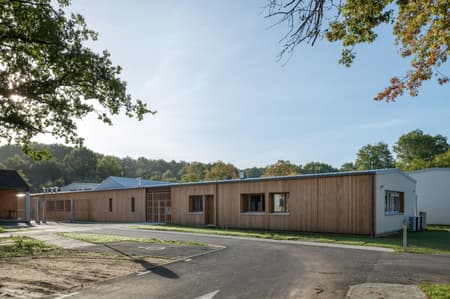
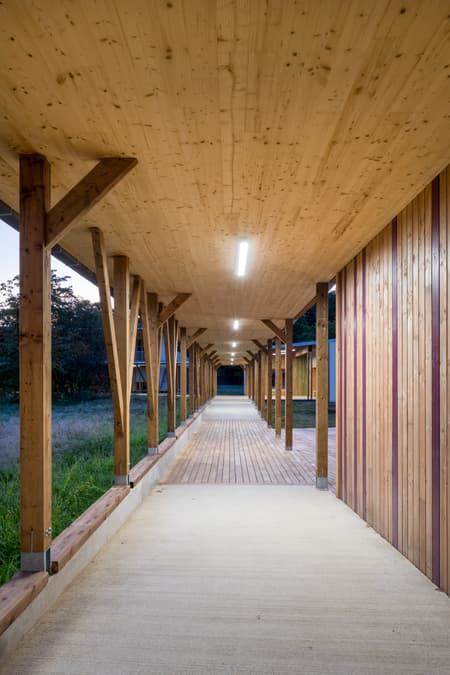
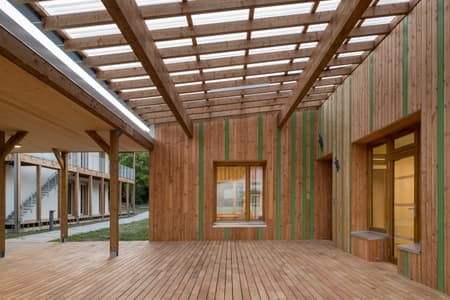
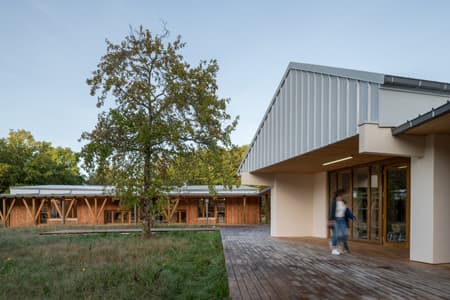
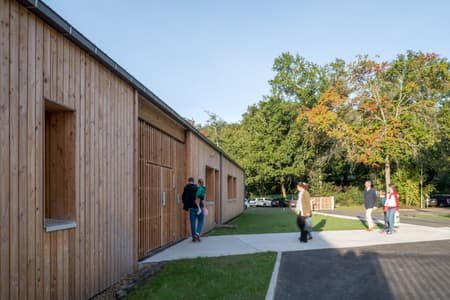
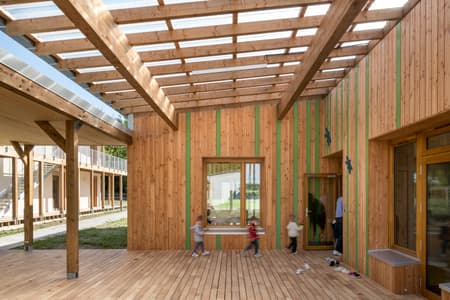
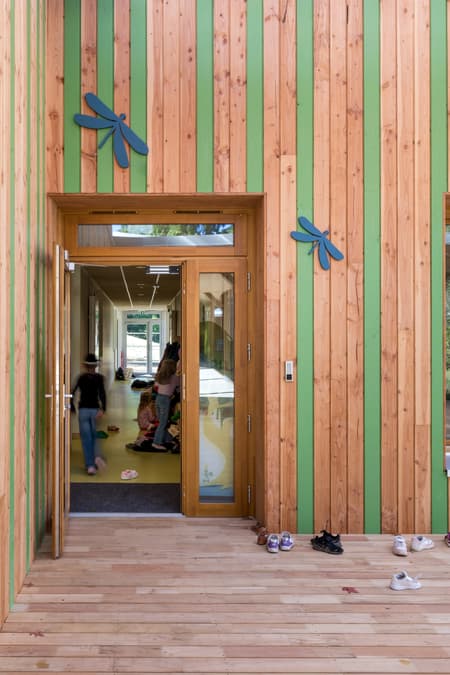
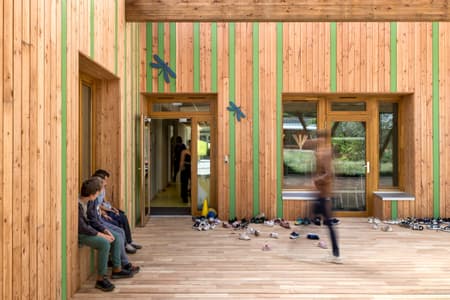
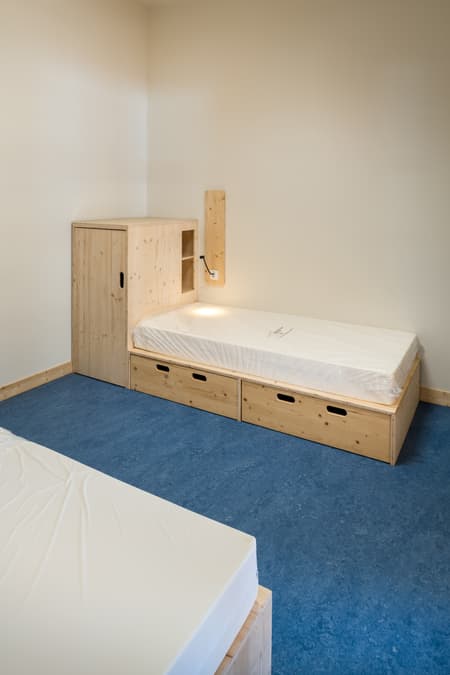
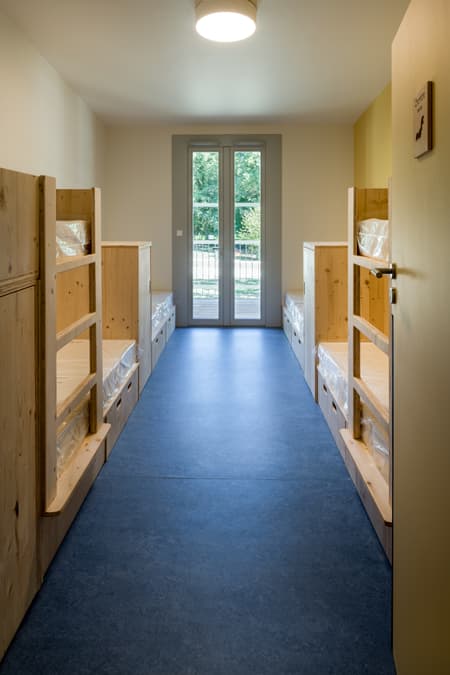
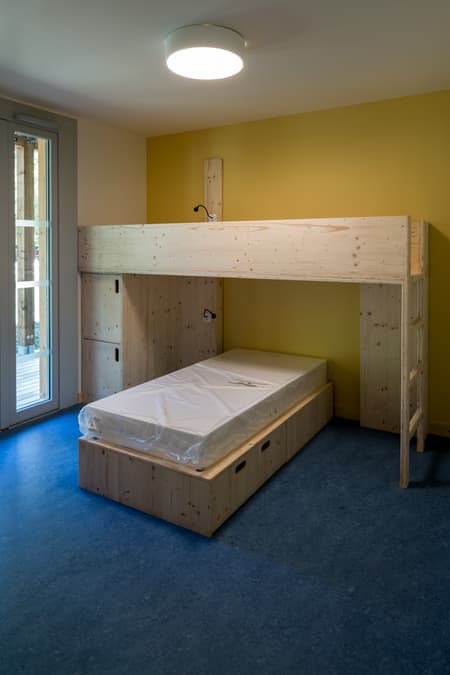
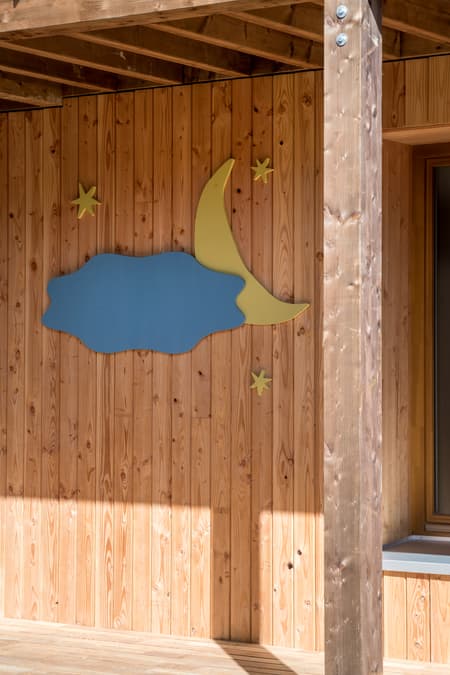
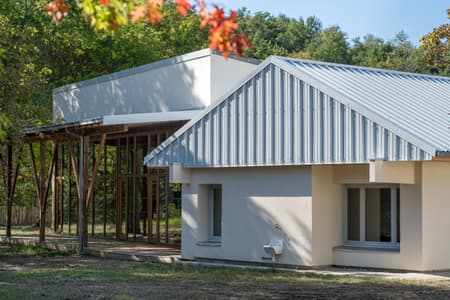
The natural wood cladding of each block is complemented by touches of colour that identify the different houses, serving as landmarks.
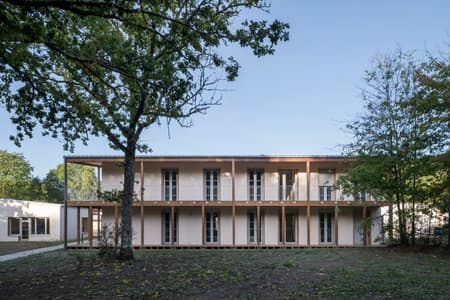
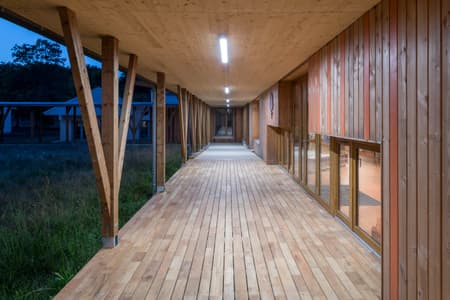
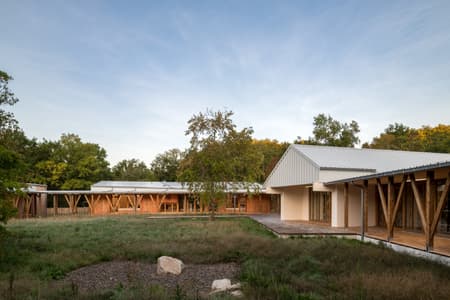
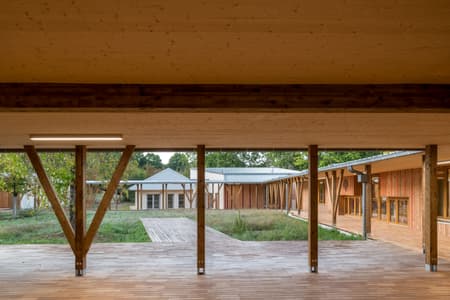
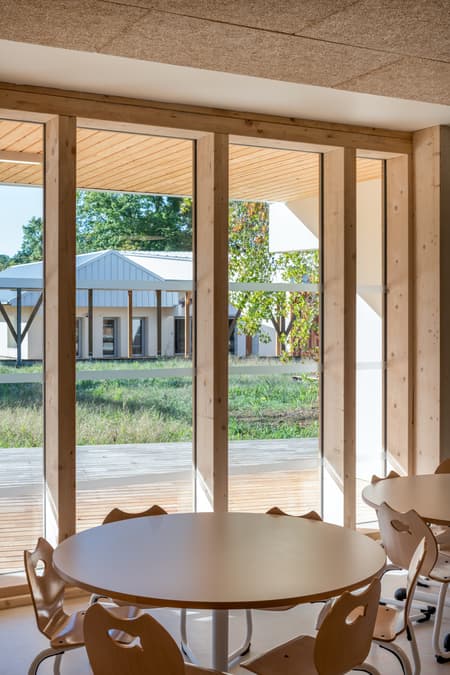
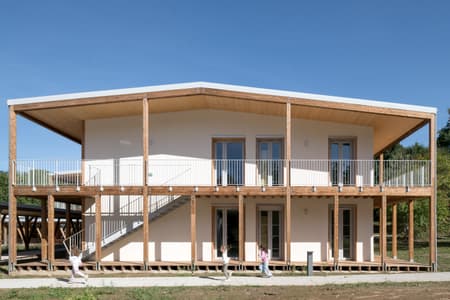
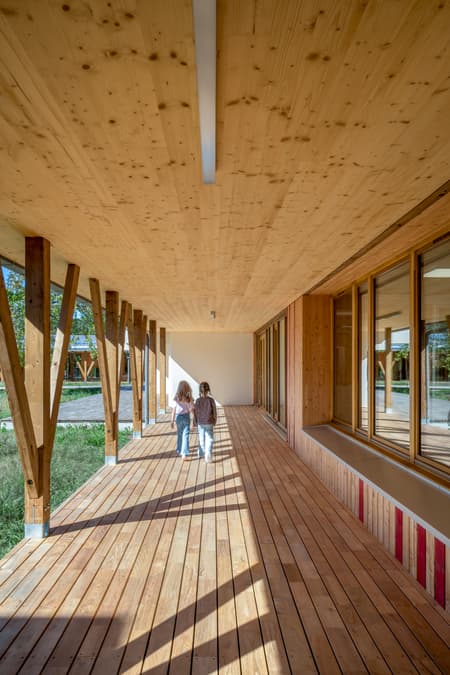
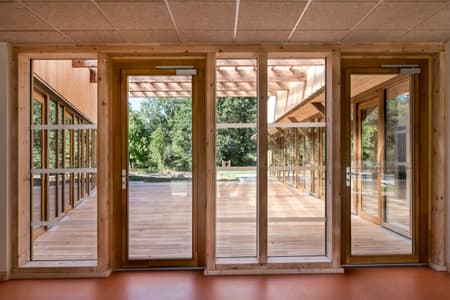
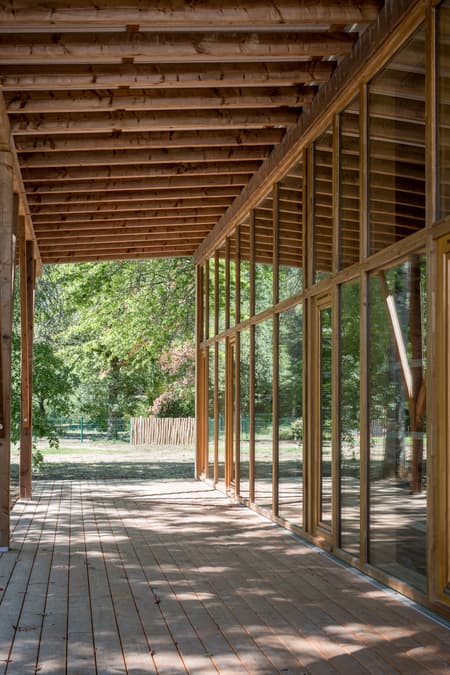
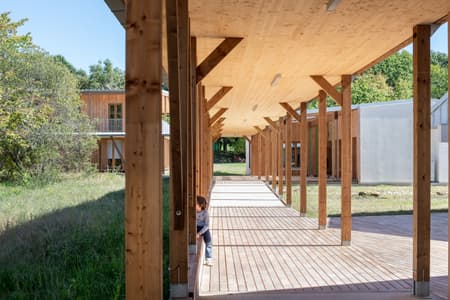
The wooden gallery connects the various areas around the meadow : reception, administration, a centre for 6 to 11 year olds, accommodation, catering, and a kitchen. This spatial experience creates a reassuring and identifiable movement starting from the heart of the site towards the buildings, the true starting point for discovering the wilder fringes of the site.
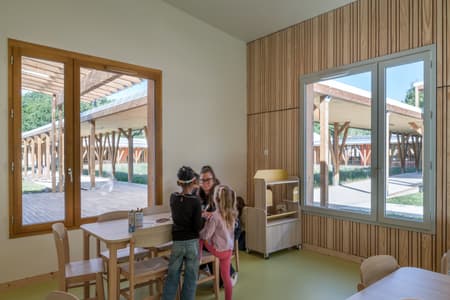
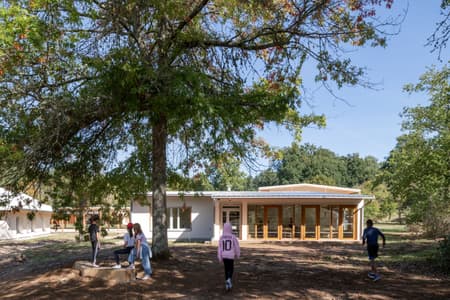
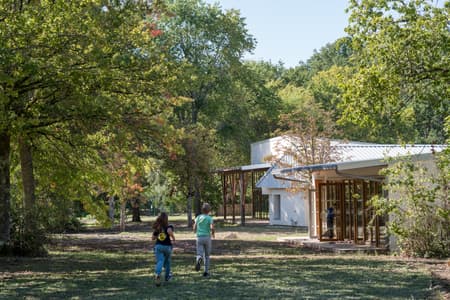
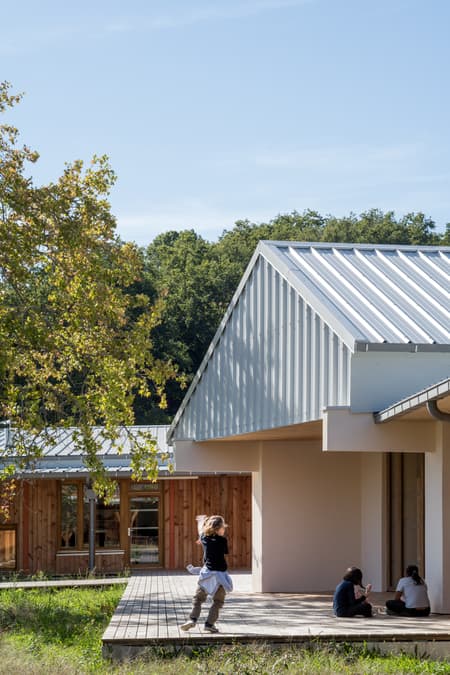
A series of tree-like pillars punctuates the architectural walkway. Covered playgrounds provide sheltered outdoor areas for playing in all seasons, opening onto the majestic woodland. Each hub is connected to a section of the park.
A variety of games taking advantage of the topography created from the excavated earth on the site provides climbing, sliding, rolling and orienteering activities. There is a small outdoor theatre, hills with slides, tunnels, footbridges, sports fields for matches and archery tournaments set in a vast wooded area. Part of the campsite is used for an outdoor experience.
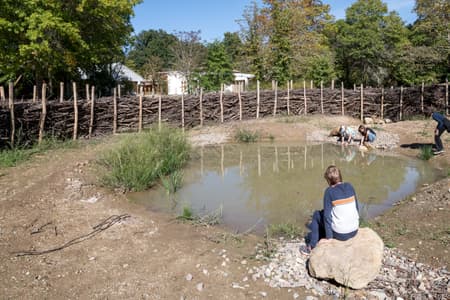
The exploration of this biodiversity ranges from woodland to more natural meadows.
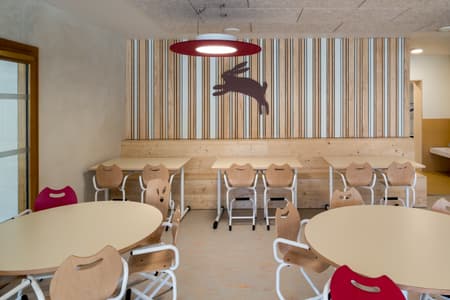
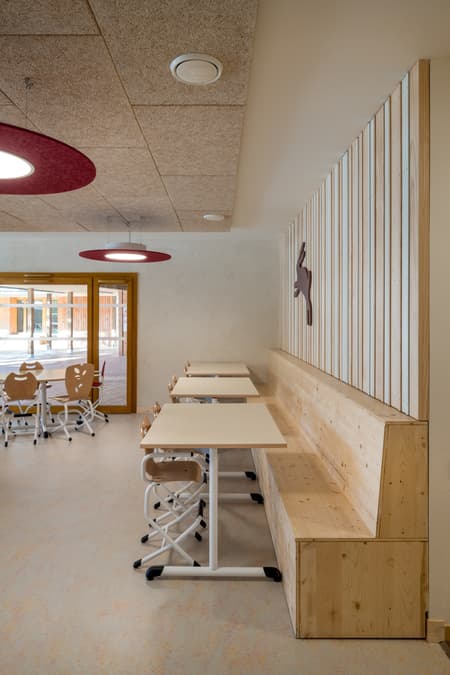
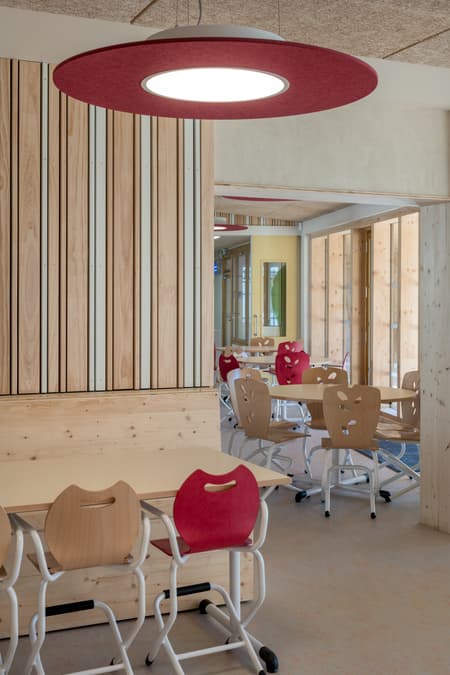
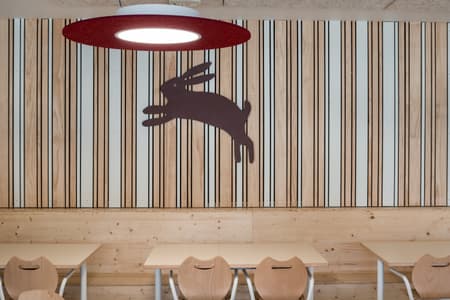
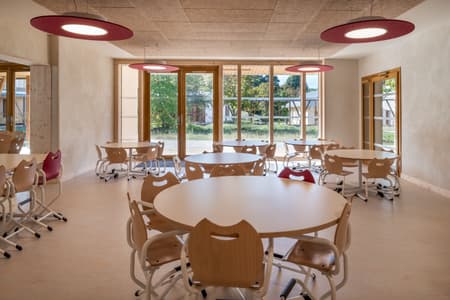
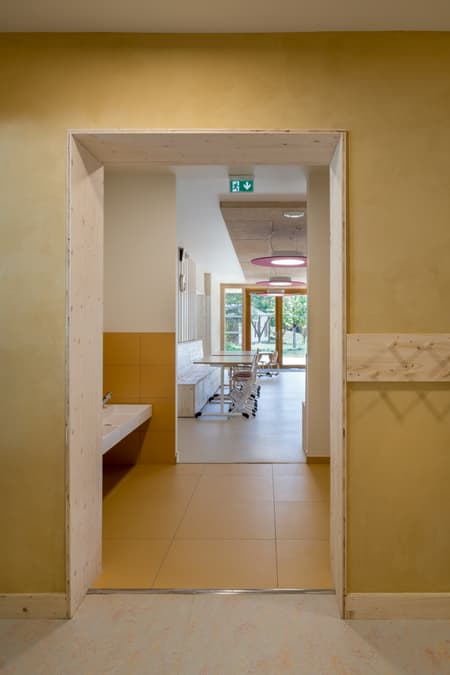
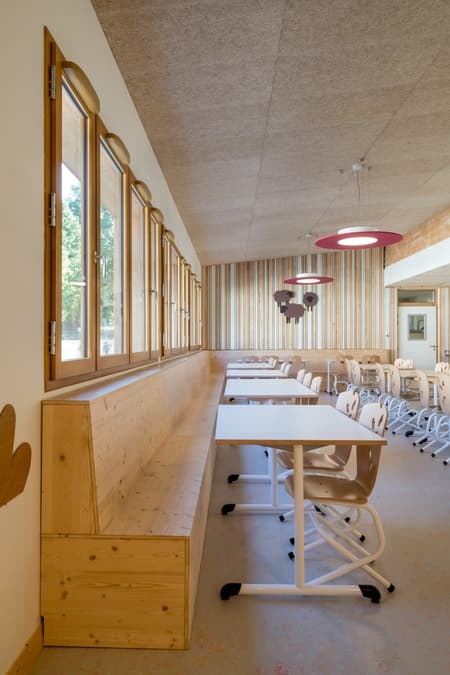
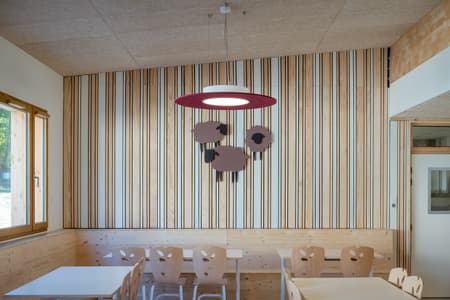
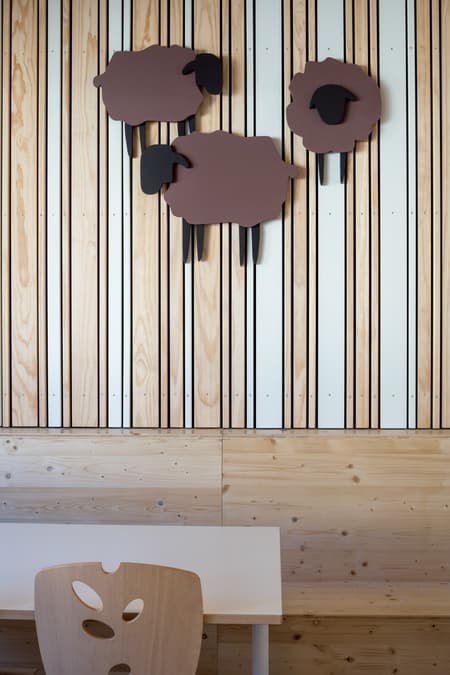
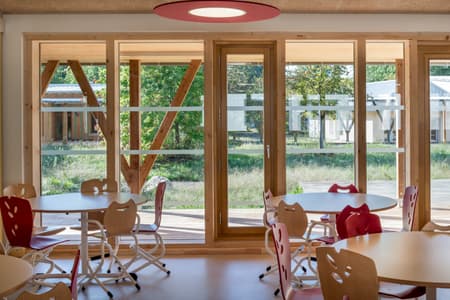
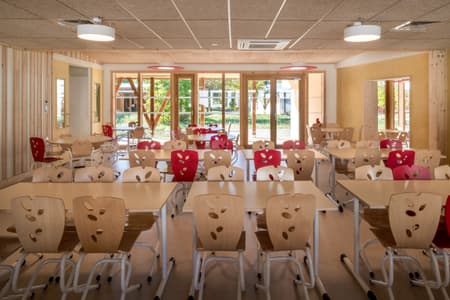
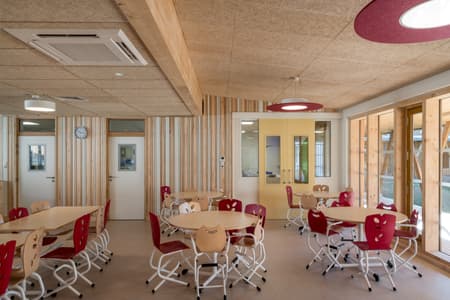
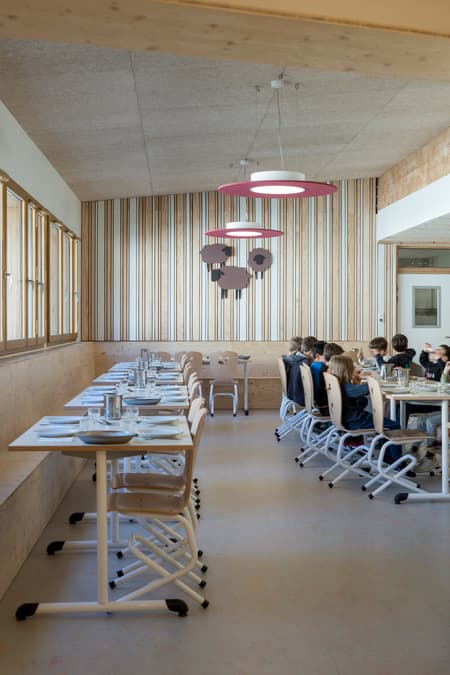
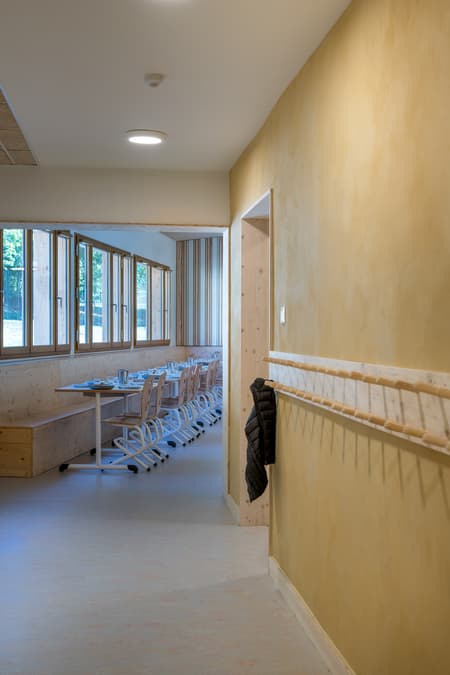
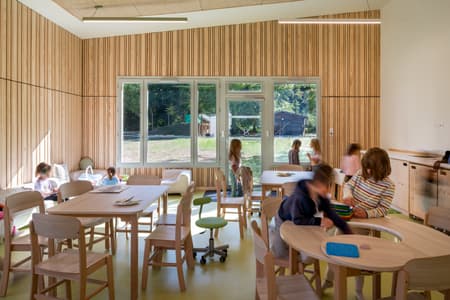
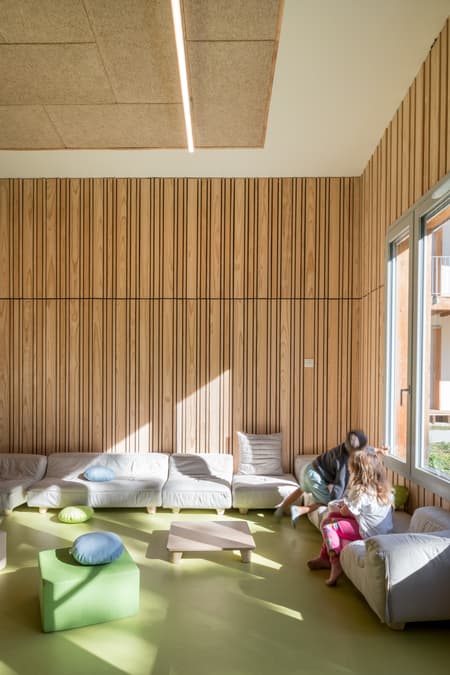
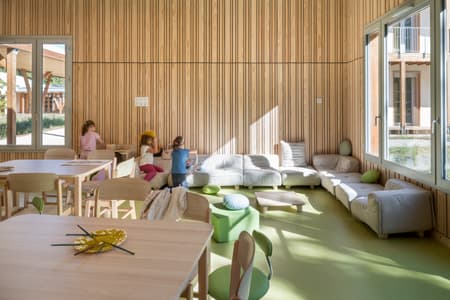
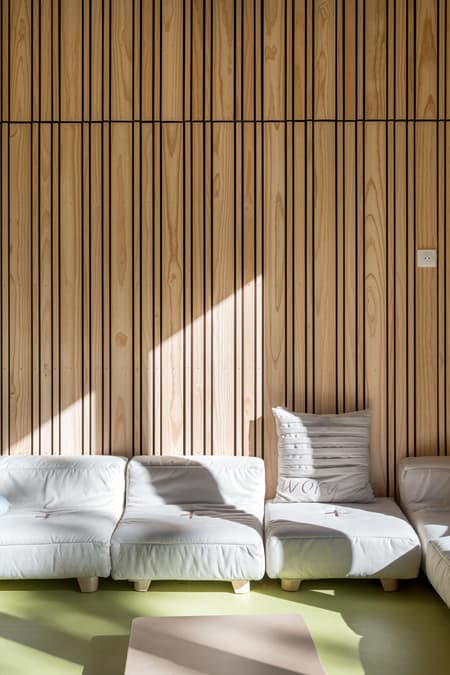
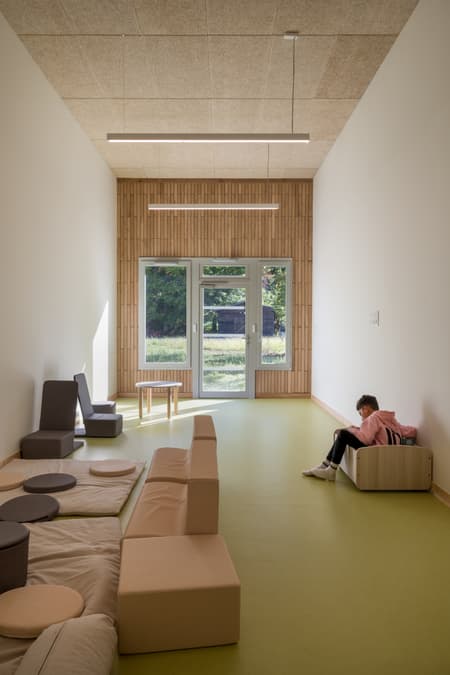
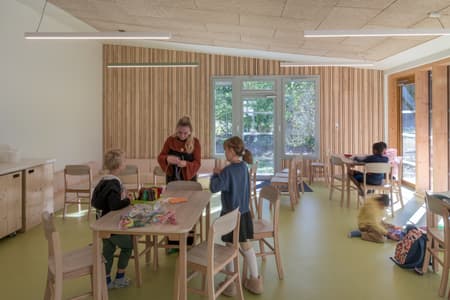
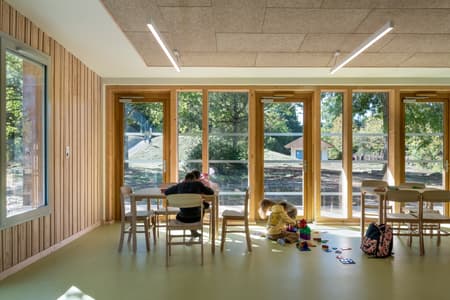
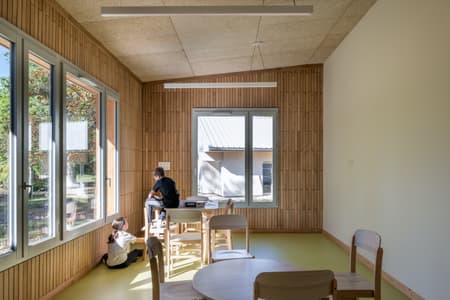
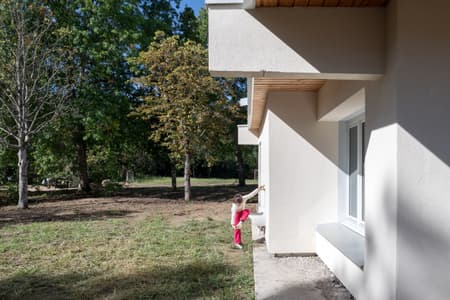
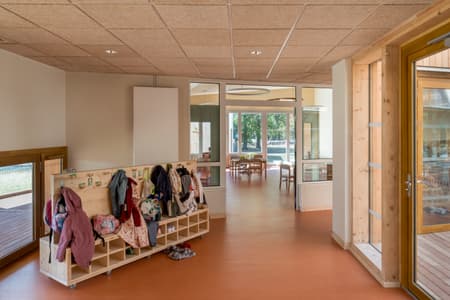
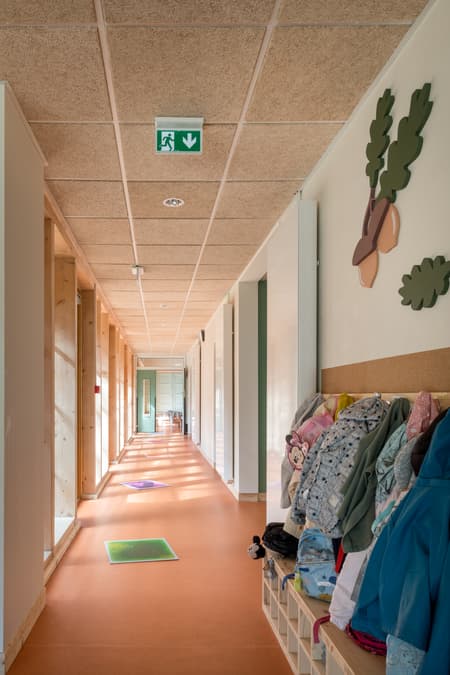
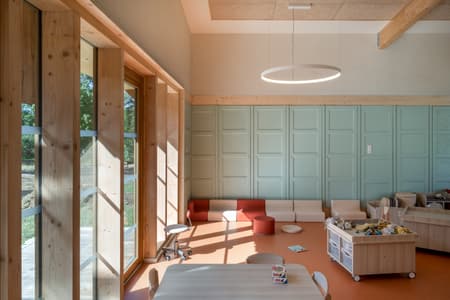
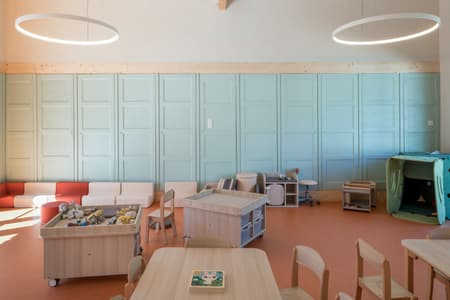
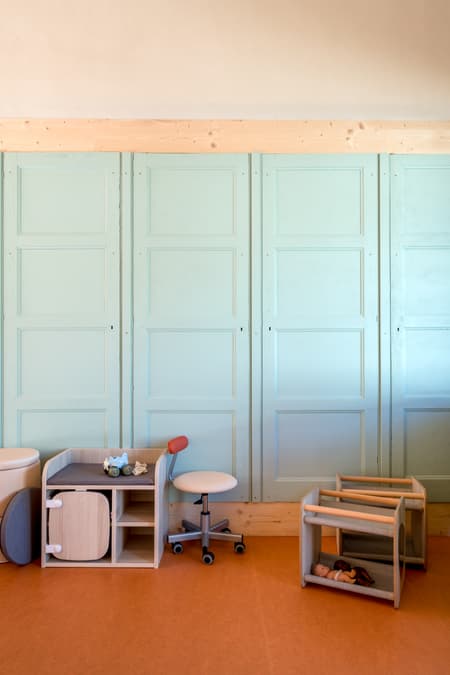
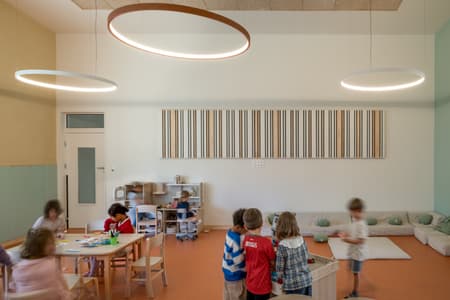
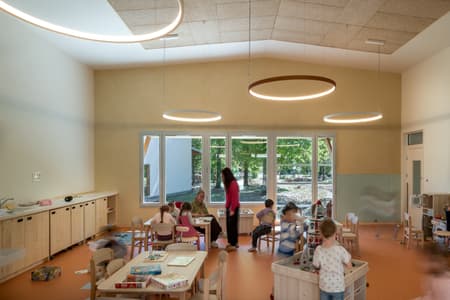
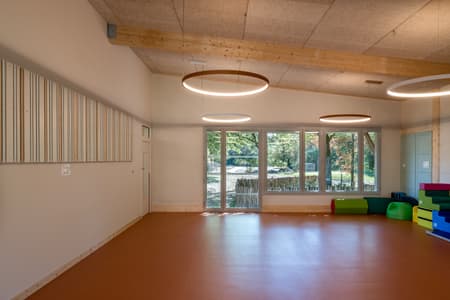
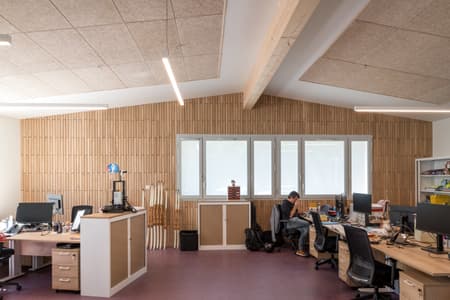
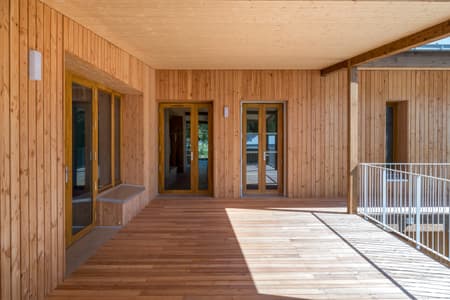
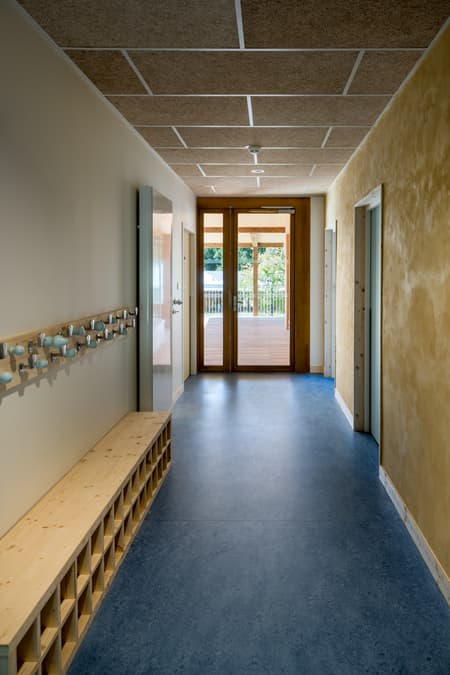
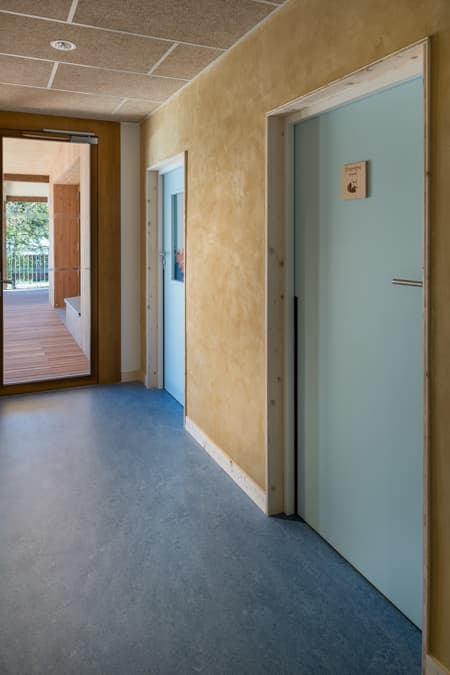
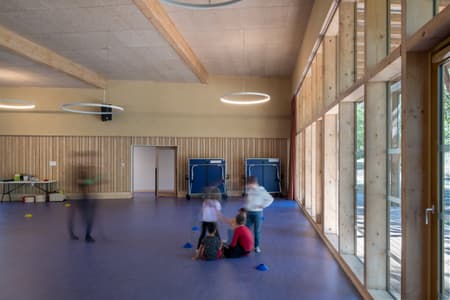
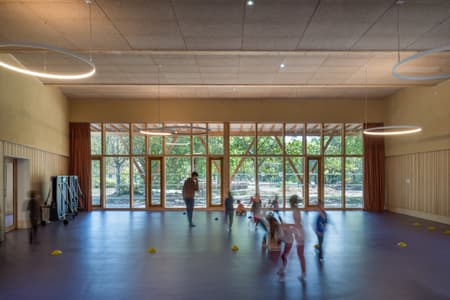
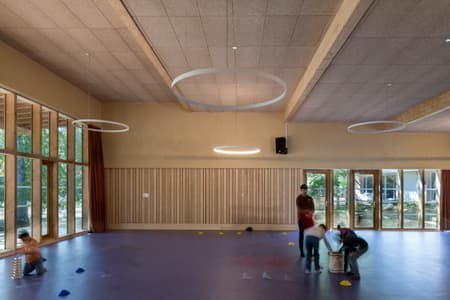
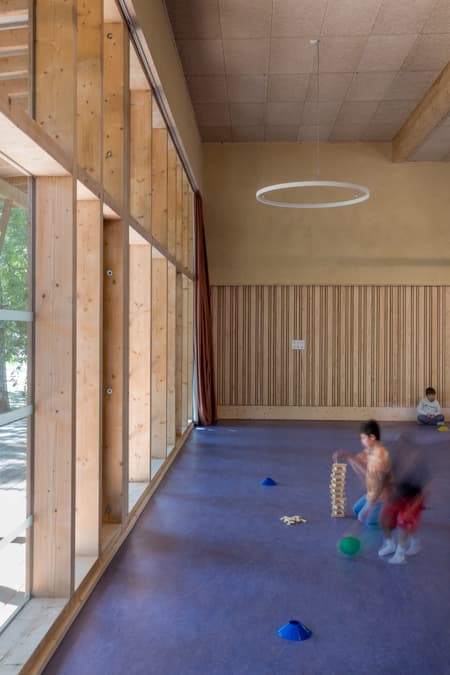
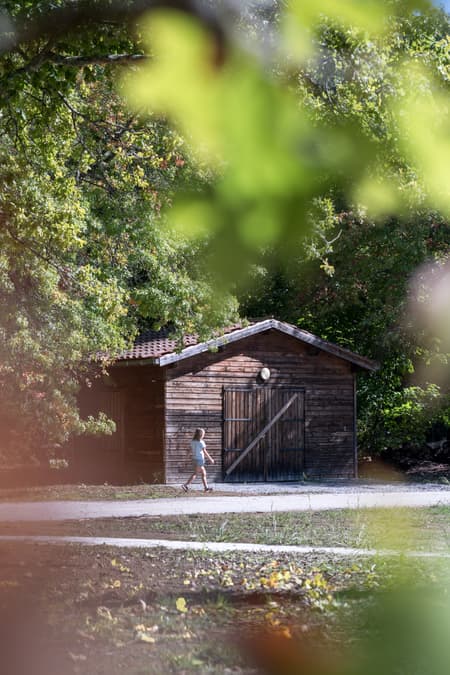
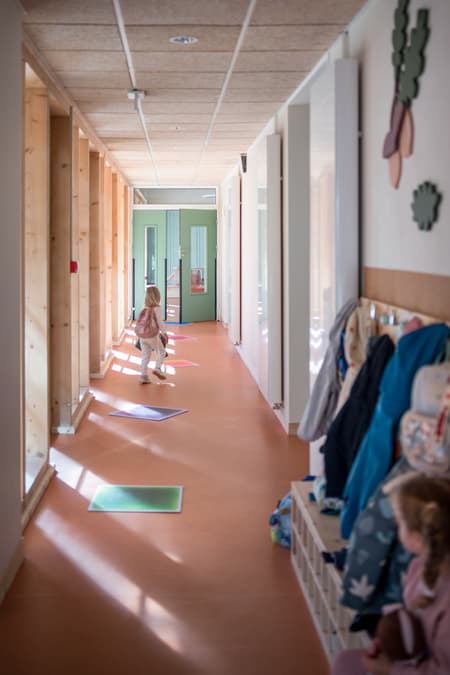
Each building has its own identity, while featuring similar materials : wood cladding on covered areas for durability and plaster on exposed facades. The activity rooms are deliberately set apart from the standard classrooms, with large sloping ceilings and reused elements such as doors used as interior cladding, providing surfaces of expression.
The architecture is educational for children, created from renewable materials and energy efficient. It offers spatial and acoustic comfort to users, made from eco-friendly materials sourced from nature and available on site, such as wood, hemp, straw and earth.