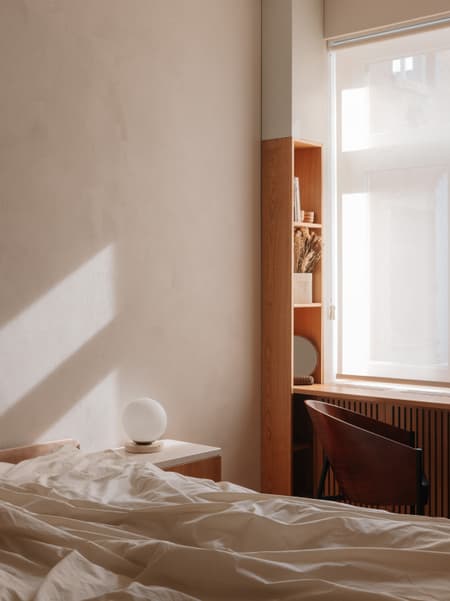
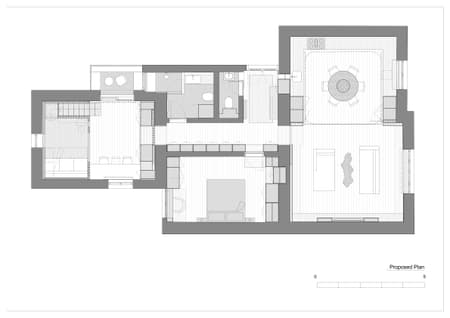
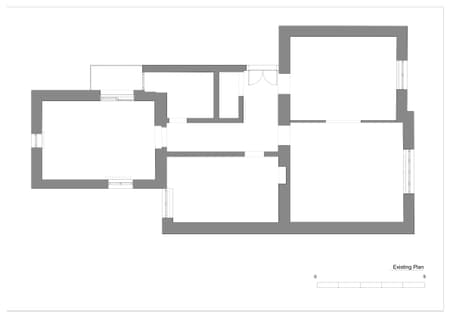
Titled “Treehouse Apartment”, this sustainable 100m² retrofit by Project V Architecture transforms a Sarajevo apartment —set in an Austro-Hungarian-era courtyard block—into a warm, immersive world crafted from natural materials. Designed for a young family, the home features cherry wood linings, clay-painted walls, stone worktops, linen curtains, travertine and minimalist detailing. Its most surprising element: a bespoke prefabricated children’s Tree house, made from spruce glulam. The apartment evokes a sense of timelessness, building on a rich history of minimalism and 20th century modernism from Sarajevo, and hosts a curated selection of contemporary Bosnian craft and artwork throughout.
Groundedness and Interconnectivity
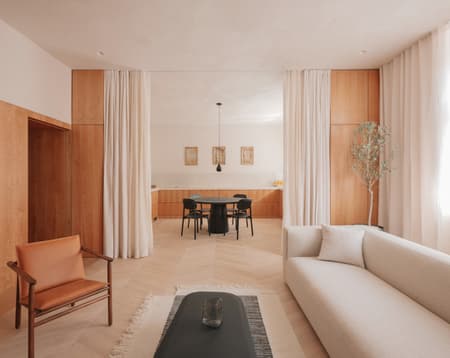
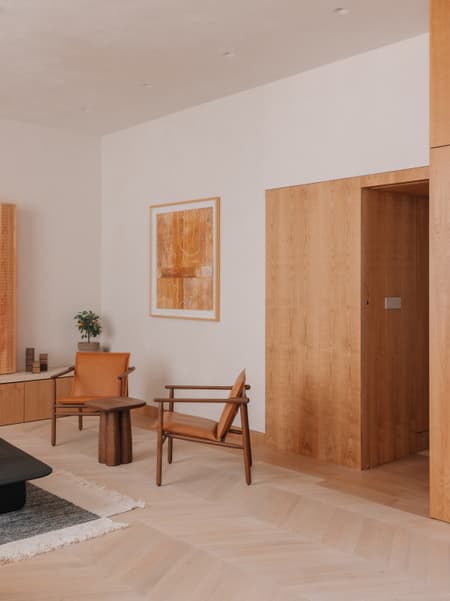
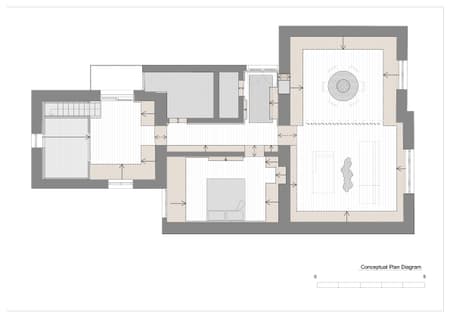
Central to the project is the concept of groundedness, expressed through a continuous cherry veneer wall element that rises from the floor and wraps around the entire apartment at varying datum heights. As an “inhabitable skirting board”, this dynamic cherry ribbon begins as a floor border and transforms into kitchen units, benches, cupboards, or wall paneling, concealing functional and technical elements.
Resembling a horizon line, this seamless wood element evokes a miniature forest, connecting the inhabitants to the ground and nature—merging utility with poetics—and creating a calming environment.
Thresholds and Interconnectedness
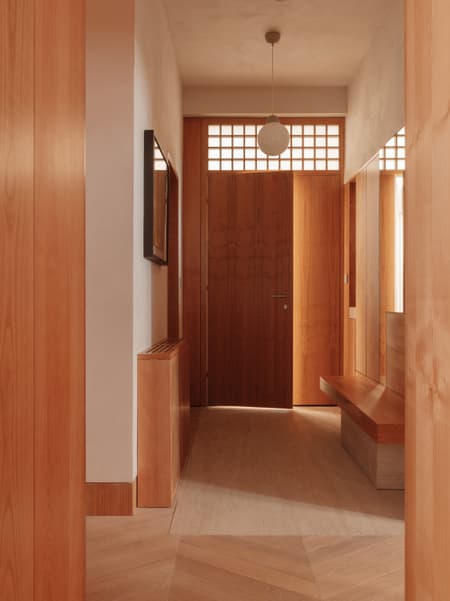
The hallway acts as a threshold, a space to pause, lined in clay paint and flush cherry cabinetry rising to a 2.1m datum above the doorways. This conceals built-in storage and integrates seating with precise geometries and detailing, that introduces the apartment’s material language and design ethos from the moment one steps inside.
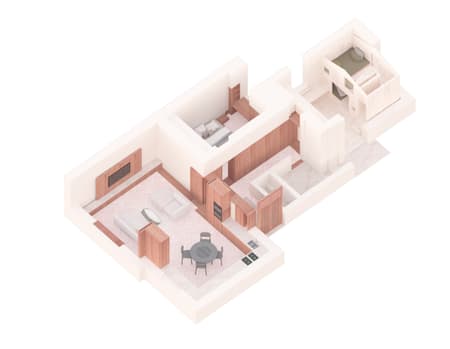
Each doorway is a cherry clad portal into rooms with subtly distinct characteristics, unified by a common materiality. The hall is connected to the surrounding context with views and light coming in from all sides, creating a dynamic interplay of light, shadow and changing atmospheres throughout the day. At either end, the hall opens into two contrasting worlds: the playful children’s Tree House and the serene adult living area, while sliding pocket doors allow these zones to be joined or separated.
The Tree House
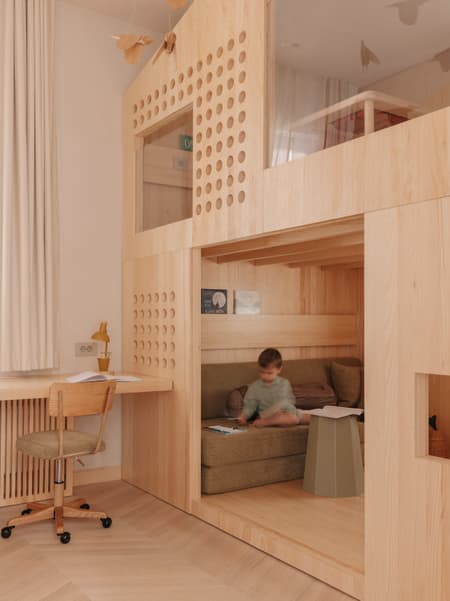
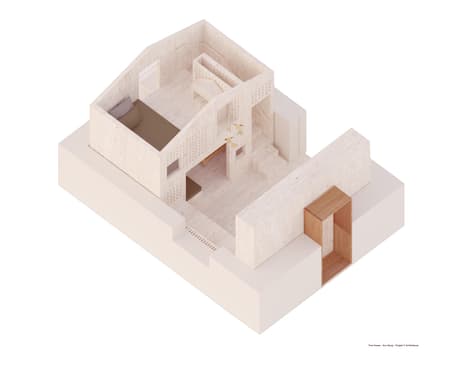
At the west end of the apartment, a whimsical yet refined Tree House emerges—a sanctuary for play and imagination. Overlooking the courtyard, as if perched in a tree, it is constructed with locally sourced prefabricated spruce GLT working with Krivaja Homes, a Bosnian mass timber construction factory.
The Tree House is miniature architecture—a cross between large furniture and a small house—scaled to a child’s perspective, utilising the apartment’s tall ceilings; with multiple levels, a lofted space, built-in stairs and CNC’d openings that filter light and views, encouraging movement and interaction.
Built with precision and care, its construction connects to Bosnia’s rich wood-building heritage, offering both a playful retreat and an inspiring early encounter with sustainable design.
Architect’s Quote: “This space is for the children and their friends—the future of our society. We hope it inspires a deep appreciation for wood, craft, and sustainability.”
Furniture Islands and Craftsmanship from Bosnia and Herzegovina
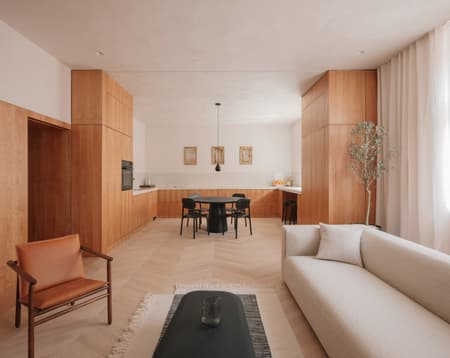
The apartment showcases a curated selection of handcrafted furniture and art, celebrating contemporary craftsmanship from Bosnia and Herzegovina. Including renowned furniture makers Zanat and Artisan, as well as working with independent craftspeople and ceramic artists to create bespoke pieces and in-built features. These “centre pieces”, such as Zanat’s Koba Table in the kitchen, anchor the rooms like “islands” around which daily life unfolds.
Art as Place-Making
Artworks by Bosnia-based artists Muhammad Bajramovic and Kemil Bektesi are integrated throughout the apartment. Their works are made of matter tied to the region’s industrial and productive past, incorporating themes of heritage, labour and transformation.
Architect’s Quote: “The interior brings together Architecture, Arts and Crafts from across Bosnia and Herzegovina to build on an identity of place; through careful composition of forms, materials and curation of content.”
Functionality and Transformability
The kitchen and living room have been merged into one large space, filled with eastern light. Floor to ceiling linen curtains allow for varied levels of intimacy and openness between the two spaces—from fully enclosed to semi-sheer and fully open—while offering a sense of theatricality, in which the space can adapt fluidly for everyday use or entertaining. These curtains can be neatly concealed within tall cabinetry when not in use. Here, the cherry ribbon climbs up to form sculptural wooden columns that meet the ceiling and frame the dining area. Functional elements are hidden within the surrounding cabinetry, leaving a clean, minimalist space.
Natural Materials and Minimalist Detailing
The design employs natural materials—locally sourced and fabricated where possible— cherry and spruce wood, clay paint, travertine, marble and linen. This warm palette softens the urban setting, creating a tranquil interior. The richness of the cherry grain gives a sense of depth and comfort, while the interplay of natural textures, light, tones and shadows give warmth and character. The bathrooms are lined in travertines and marble, fragments of which are also found elsewhere in the apartment.
Architect’s Quote: Each project we do aims to inspire sustainable living, using local materials and craftsmanship. We strive to create architecture that offers hope, identity, and a sense of place and purpose, without leaving home.
Project V Architecture is an international prizewinning architectural studio founded in Sarajevo in 2017. This project builds on their long-term work as experts in the field of environmentally sustainable, socially and culturally engaged architecture, as well as their research and teaching in Bosnia and Herzegovina, the UK and EU, focused on sustainable architecture and post-war reconstruction.
Their previous Project ‘Zemlja’ was awarded the prestigious Grand Prix award at last years Collegium Artisticum BiH 2024 (the highest award for BiH architecture). The project was published internationally in The New York Times, The Radical Project, Divisare, Elle Decor Italia, Vogue Adria, Yellowtrace and others.
Project V Architecture were awarded the International LafargeHolcim European Silver Award for Sustainable Construction in 2021 and were a finalist in the EU New European Bauhaus 2023 Award, for their Most Mira Peace Centre project in Bosnia-Herzegovina.