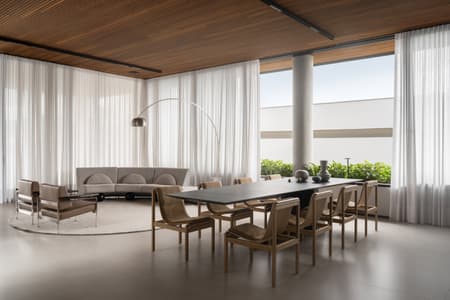
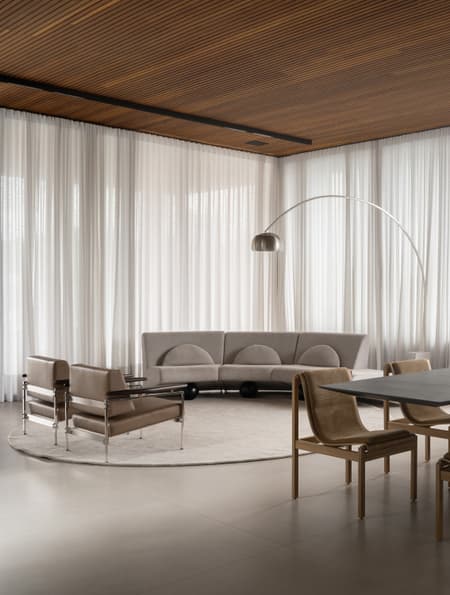
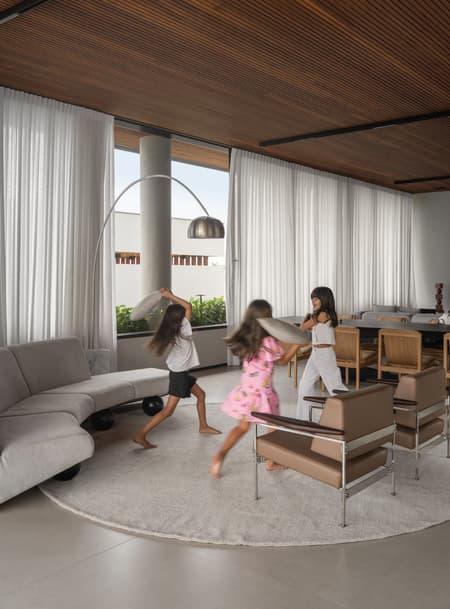
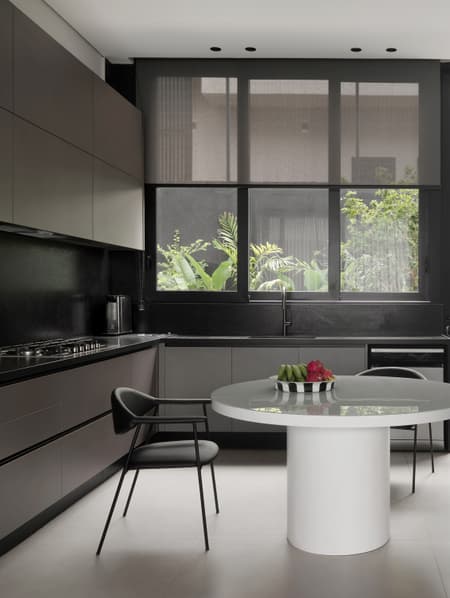
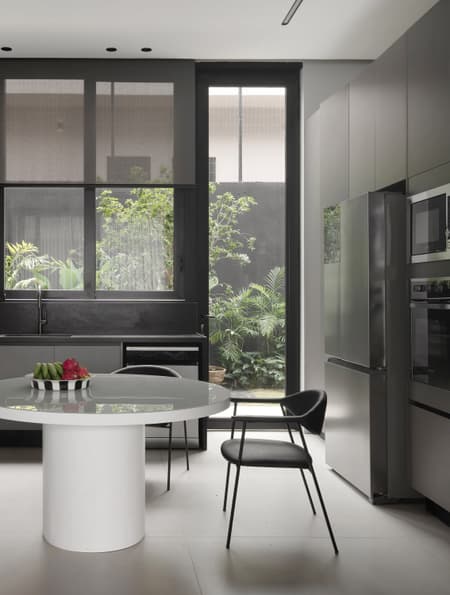
Designed by architect Júnior Piacesi of @PiacesiArquitetura, this residence was conceived from the ground up on a 600 sqm lot located within a gated community in Divinópolis (MG). With 875 sqm of built area — including all levels, paved access areas, and terraces — the house is arranged over three floors and was designed for a couple with a young child.
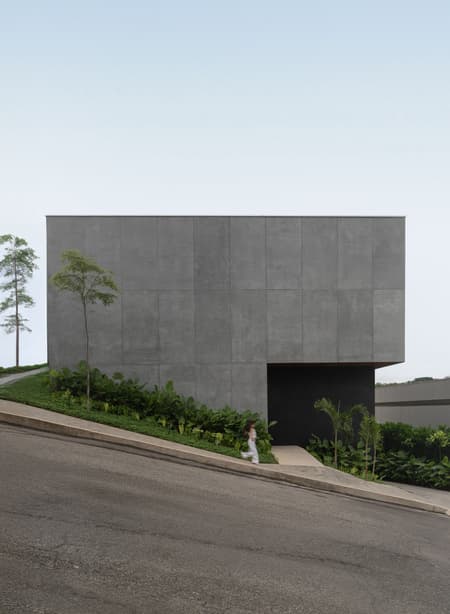
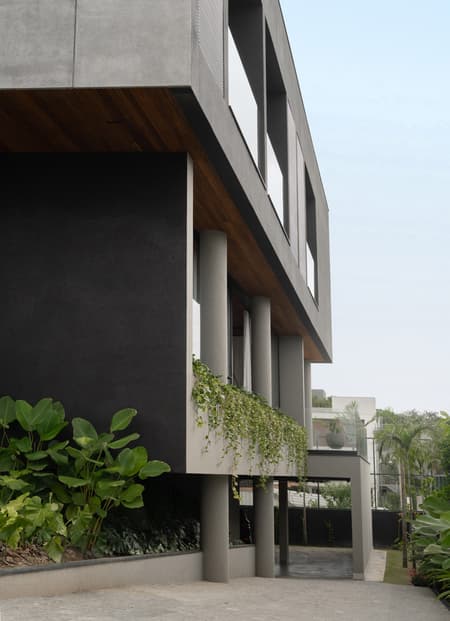
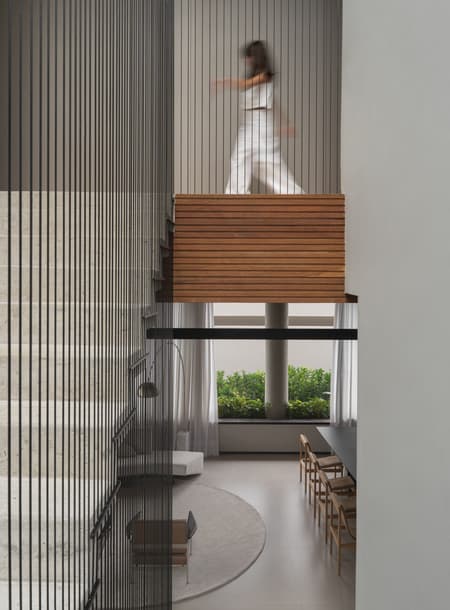
The site’s natural slope was key to the architectural concept, allowing the program to be organized across three levels without creating an excessive volume on the front façade. The garage, social areas, and private quarters were strategically positioned to enhance the views and encourage vertical circulation, through which natural light flows throughout the residence.
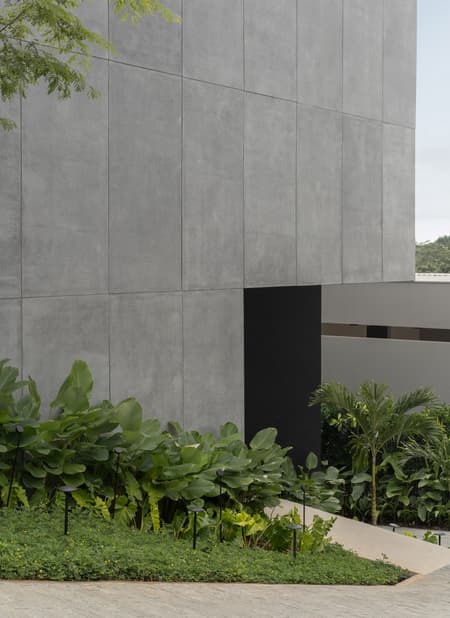
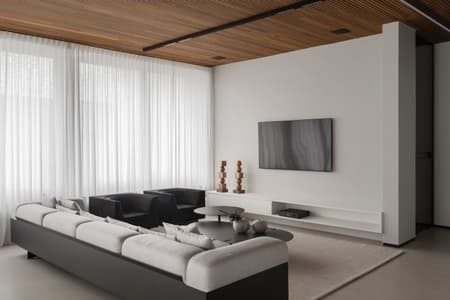
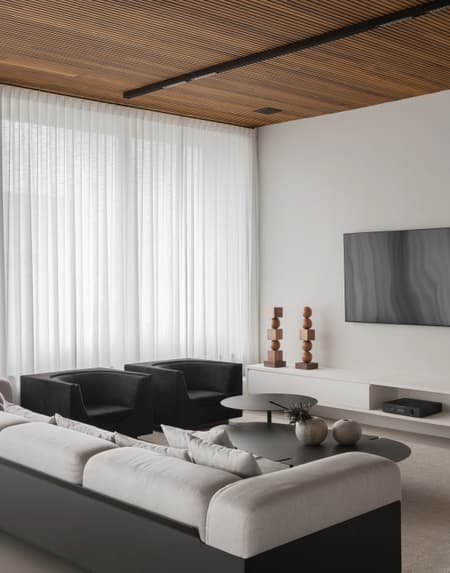
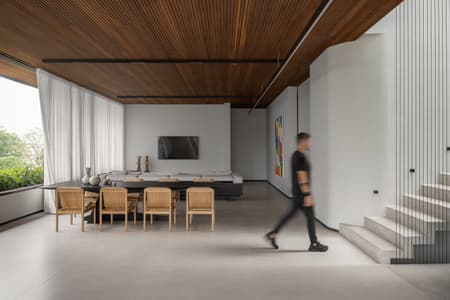
The design is based on a structural grid that follows the logic of the lower levels. The main structural framework develops continuously, aligning with walls and the ground-floor garden, which connects to the vehicle access ramp. The structure is made of reinforced concrete, with masonry and glass enclosures. The façades feature custom cement panels, while the ceilings are finished in slatted wood and the window frames in black-painted aluminum.
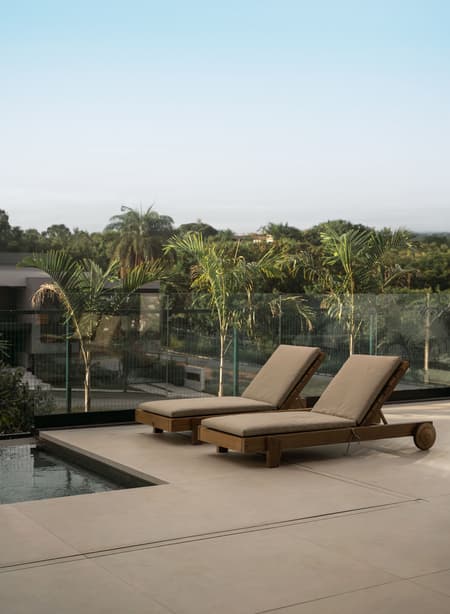
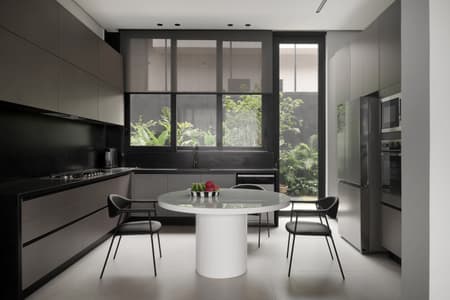
The basement houses the garage, storage room, workshop, service suite, and the pool’s mechanical room. The ground floor accommodates integrated living, dining, and lounge areas, along with the kitchen, pantry, laundry and service bathroom, a gourmet terrace, an additional bathroom, sauna with shower, deck, and swimming pool. On the upper floor, a private family lounge with a garden precedes the master suite — complete with walk-in closet and terrace — as well as three additional suites, all also featuring walk-in closets and terraces.
The concept stems from the idea of creating a spacious and comfortable home, with a rationalized structure and large openings. The careful selection of materials reinforces the minimalist character, while the structural organization and façade design lend the project its brutalist identity.
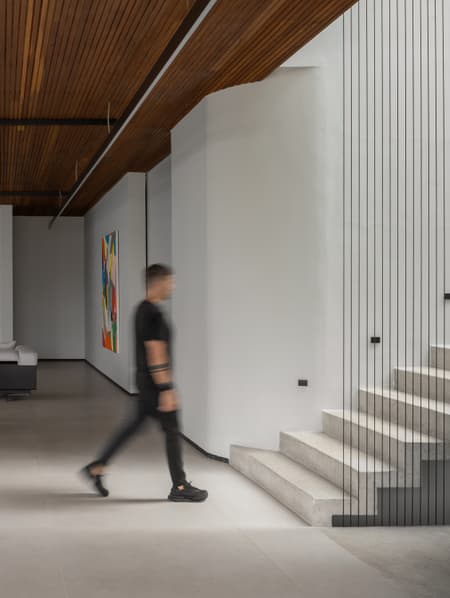
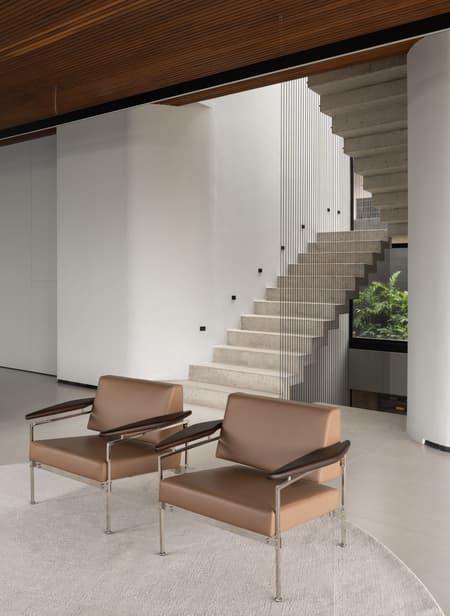
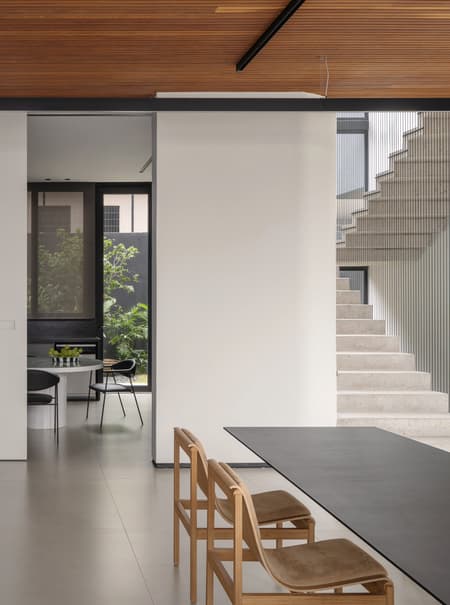
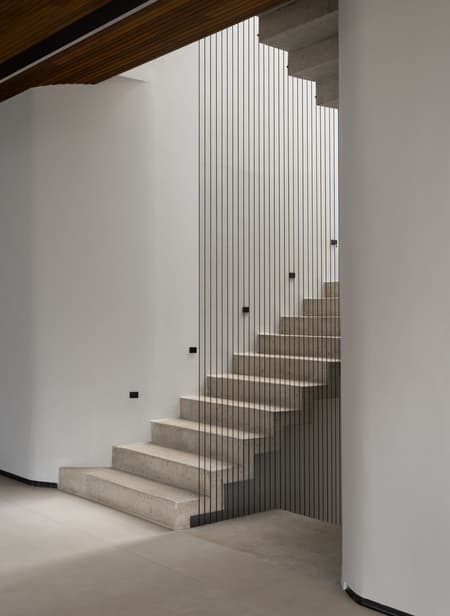
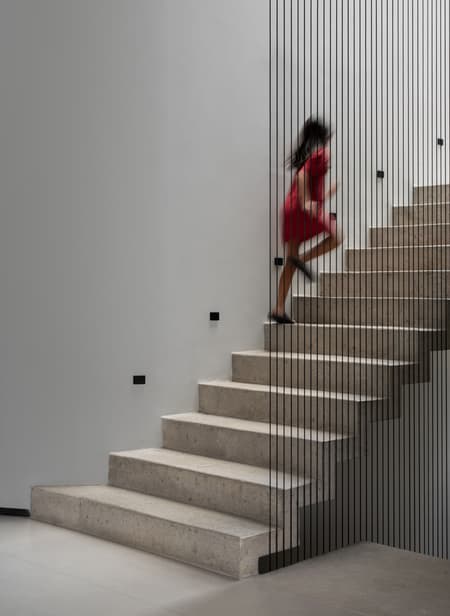
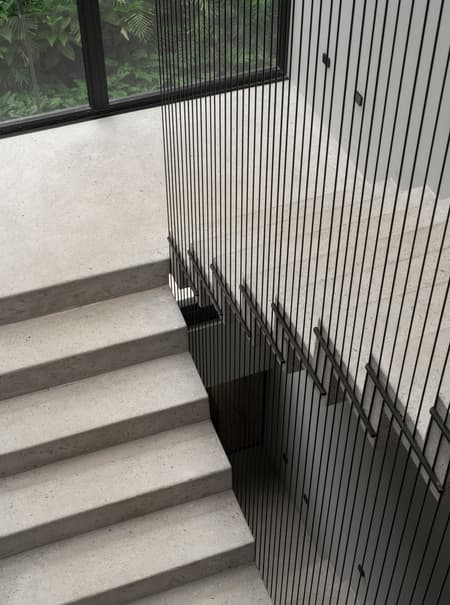
A central element of the spatial experience, the exposed concrete staircase, treated with a varnish finish, organizes circulation between the floors. On one side are the main living areas, such as living rooms and bedrooms, oriented toward sunlight and views; on the other, vertical circulation and service spaces. The restrained use of materials such as concrete and metal contrasts with expansive glass surfaces, which flood the interiors with natural light.
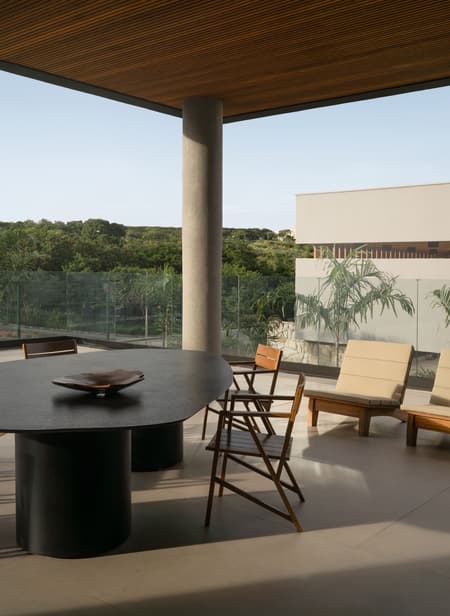
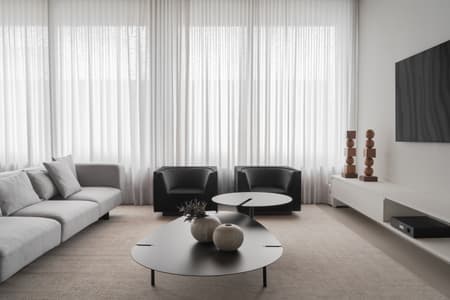
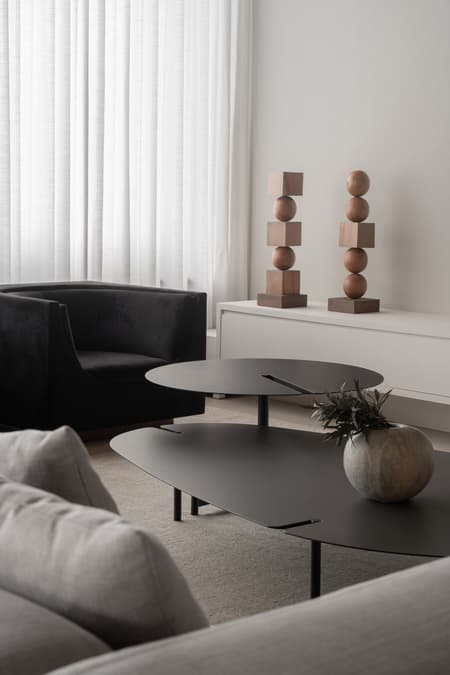
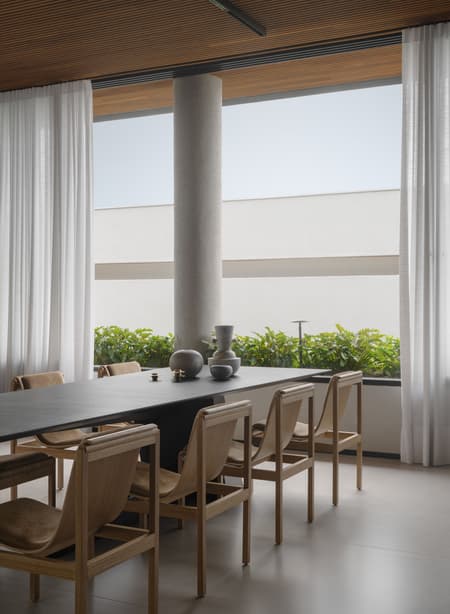
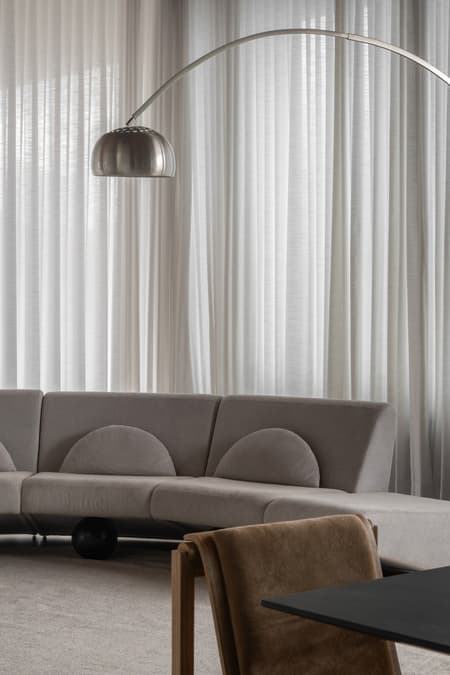
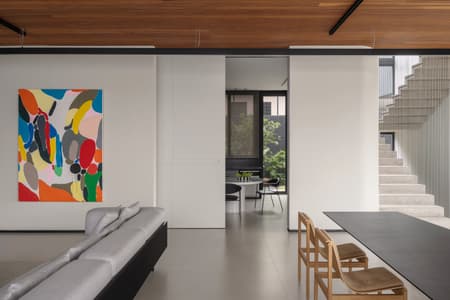
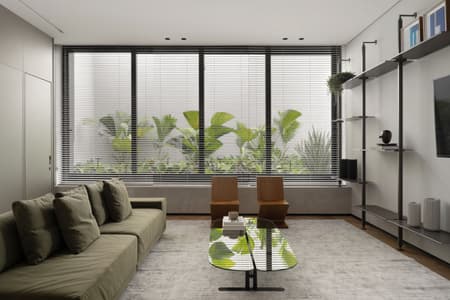
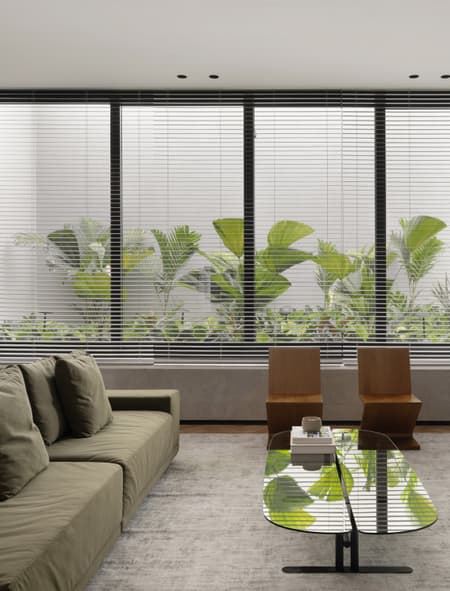
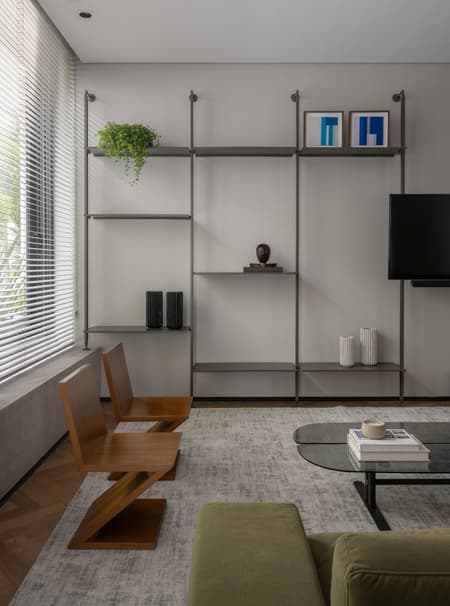
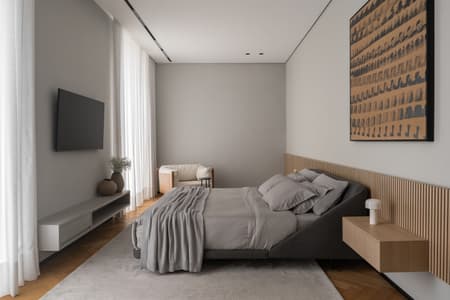
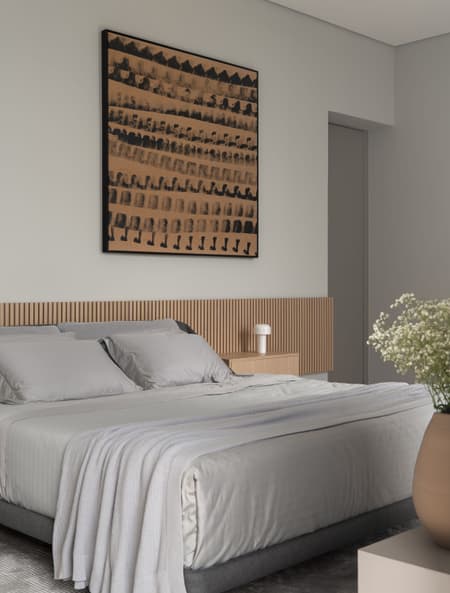
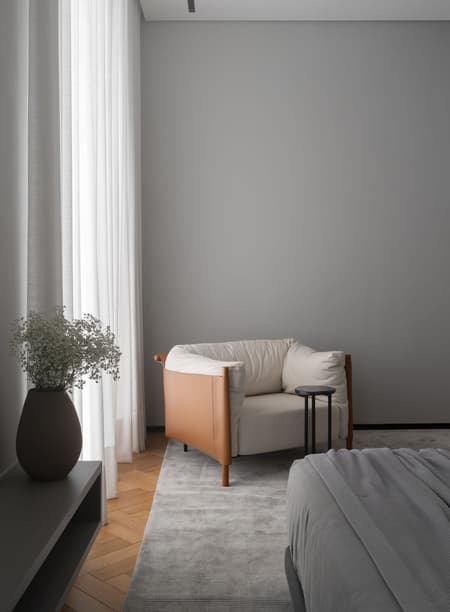
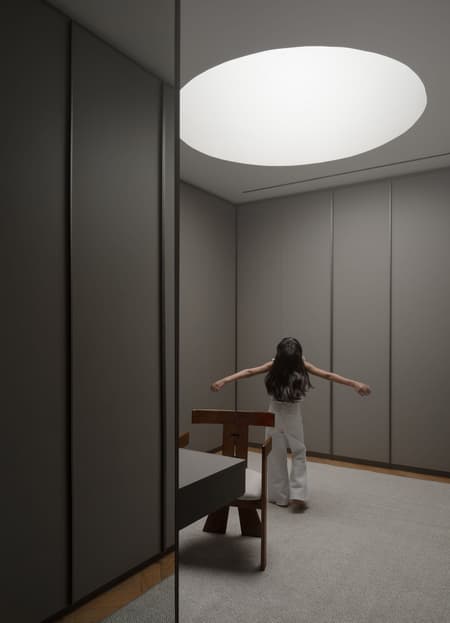
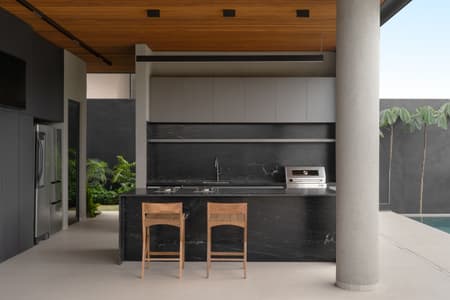
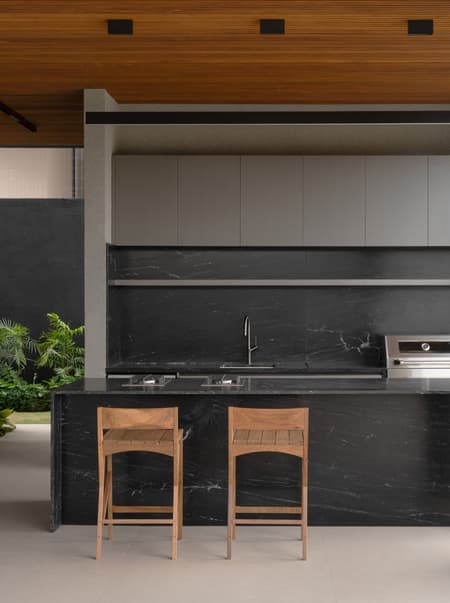
In terms of décor, all items are new. The selection of furniture for the integrated social areas was carried out in line with the architectural concept, prioritizing the relationship between design and comfort, with an emphasis on renowned Brazilian designers. In the living room, the composition includes the Lonzo sofa by Jayme Bernardo; a pair of Cubo armchairs by Jorge Zalszupin; Max dining chairs by Arthur Casas; the Springboard dining table by Giorgio Bonaguro; the Bardot curved sofa by Arthur Menezes; a pair of Beto armchairs by Sergio Rodrigues; and the Sela armchair by Fabricio Ronca. In the closet, the Barbatana chair is by Alva Design. In the outdoor area, the specification includes Atibaia bar stools and Atibaia chairs, both by Paulo Alves, as well as Rio Manso armchairs and Timbó loungers by Carlos Motta. The palette features neutral tones — white, black, and shades of gray — reinforcing a contemporary aesthetic with brutalist inspiration.
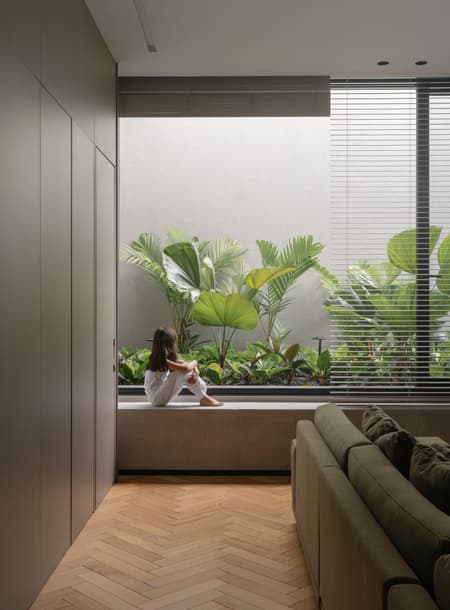
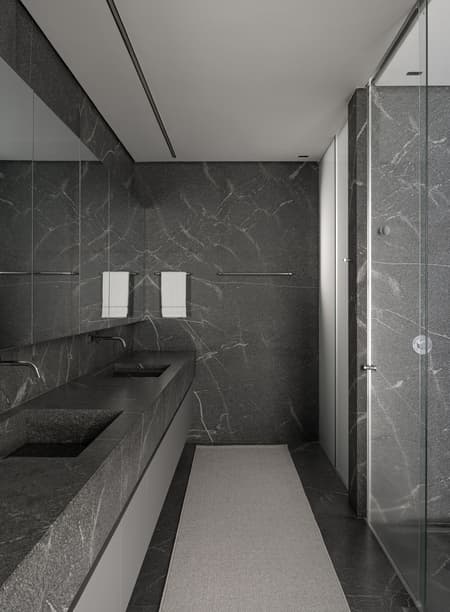
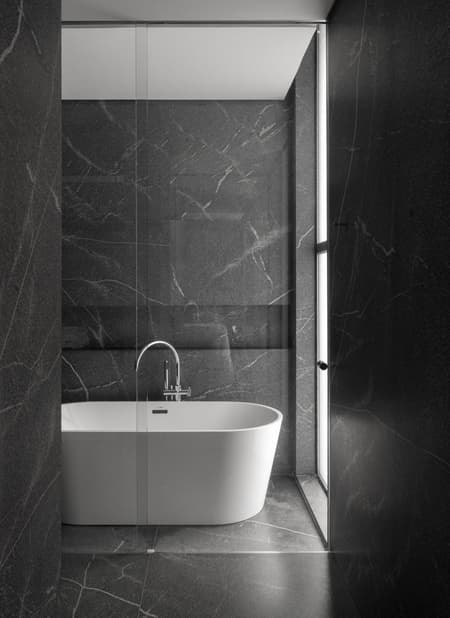
Highlights include the outdoor dining table, entirely made of São Gabriel granite and designed by the firm; the master suite closet, illuminated by a skylight; the couple’s bathroom, which uses the same material on floors and walls to create visual continuity; and the TV room, defined by a winter garden.
“The main challenge was optimizing the structure, coordinating the spaces across the different levels while following the natural slope of the site, in order to organize and hierarchize an extensive program without creating excessive volumetric massing,” concludes architect Júnior Piacesi.
The project took three years, from design and approvals to construction and the finalization of the interiors.