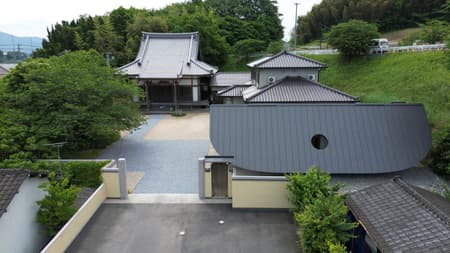
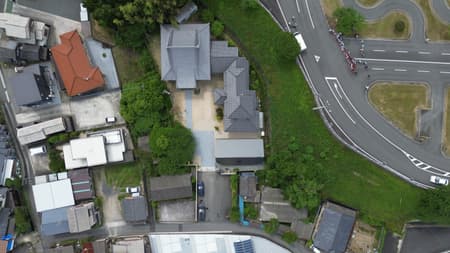
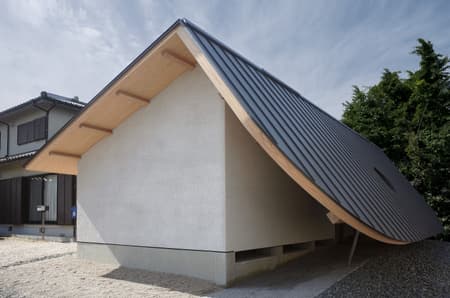
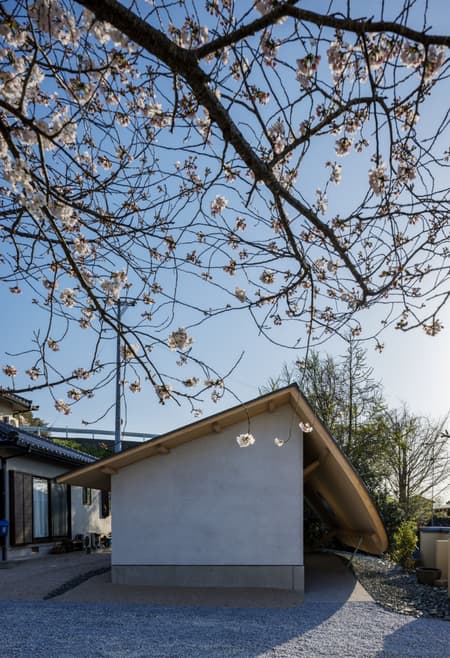
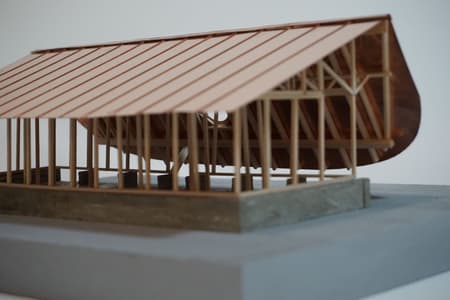
This project replaces an aging reinforced-concrete ossuary with a new timber structure constructed from locally sourced cedar. Located in a regional Japanese city facing population decline and changing burial customs, the project explores how contemporary spaces of worship can respond to shifting social conditions while maintaining continuity with traditional architectural principles.
Rather than reproducing historical temple forms, the design investigates the perceptual qualities that define sacred architecture in Japan. By translating these characteristics into a simple, hut-like volume, the building seeks to evoke a familiar spiritual atmosphere through spatial composition, proportion, and light rather than formal imitation.
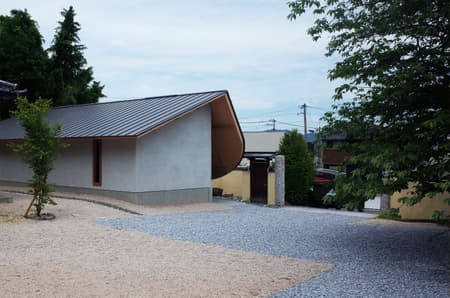
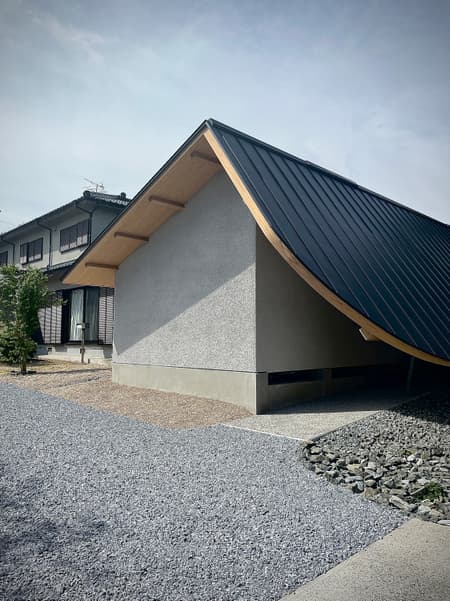
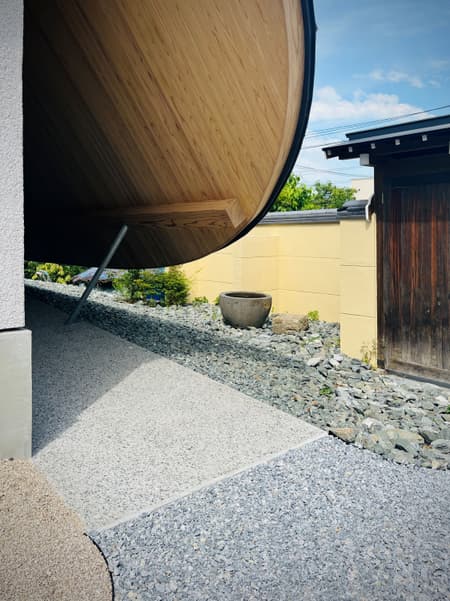
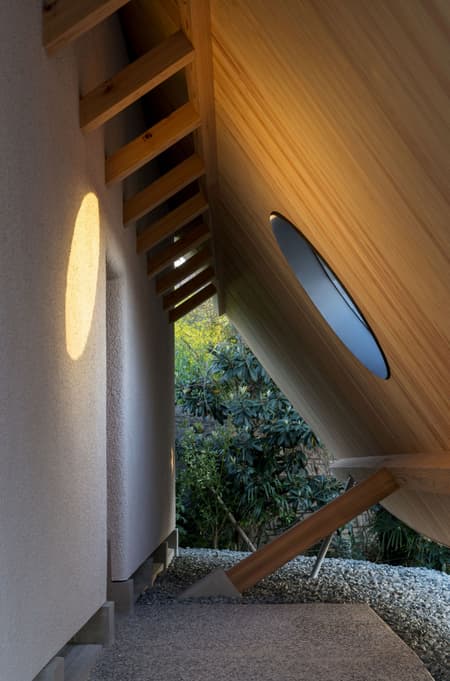
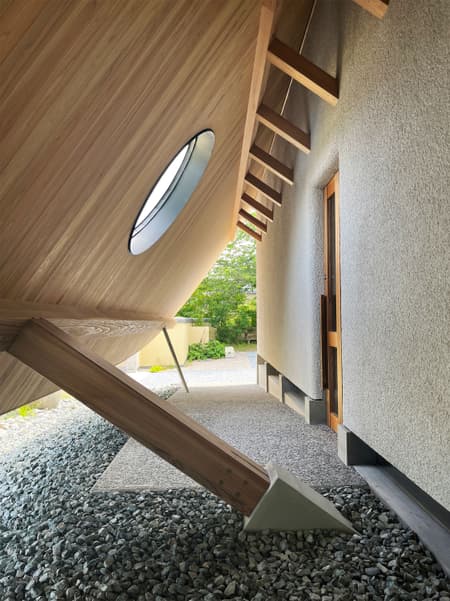
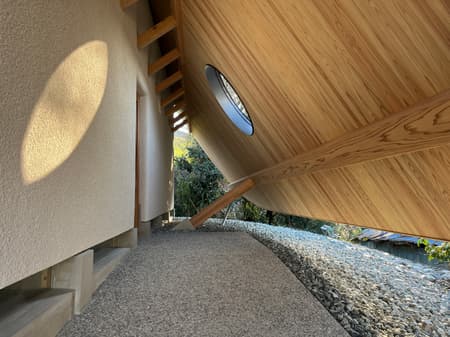
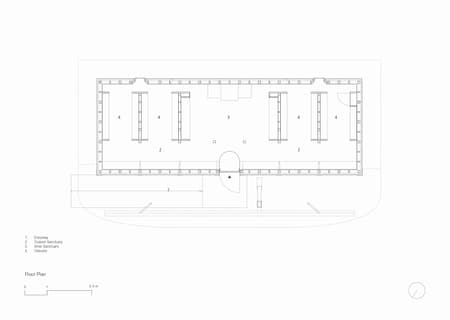
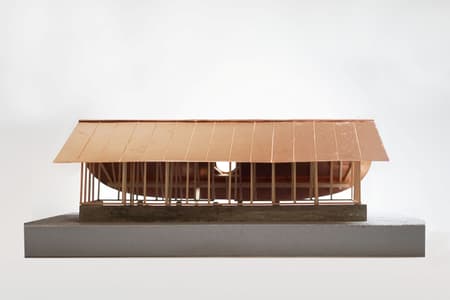
The building adopts a narrow, elongated footprint in order to minimize structural impact on an existing retaining wall along the northwest edge of the site. This configuration creates a long approach beneath a deep eave extending along the building’s façade. Entry occurs from the long side, referencing the hirairi arrangement commonly found in temples and traditional townhouses. Moving beneath the eave establishes a gradual transition from exterior to interior, functioning as a psychological threshold between everyday life and a space of prayer.
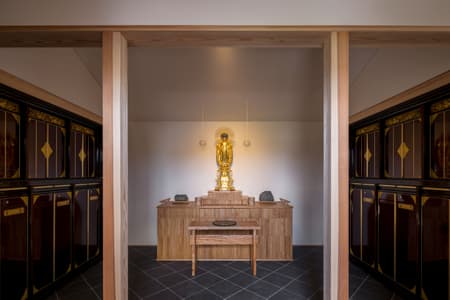
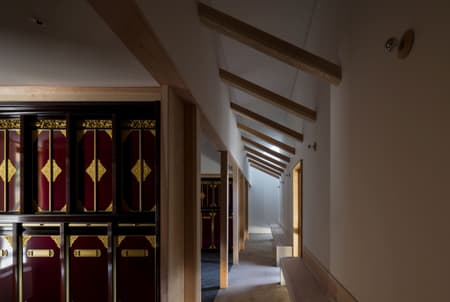
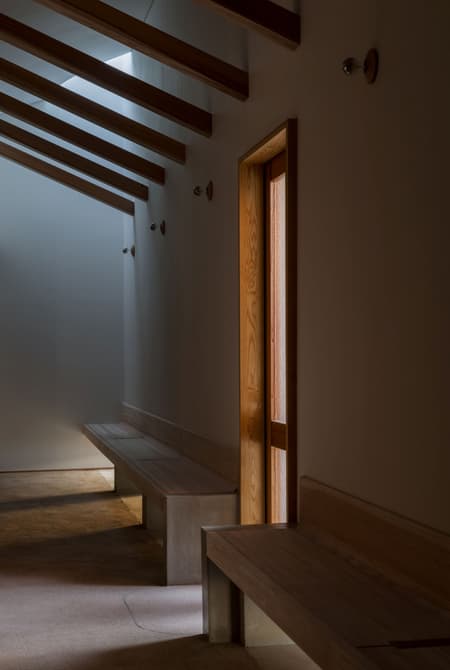
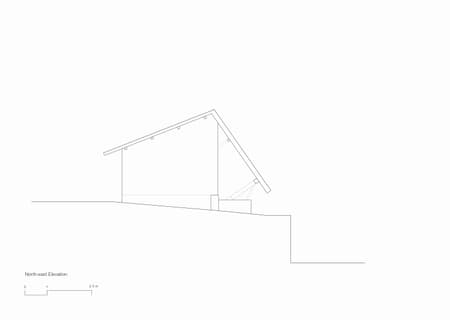
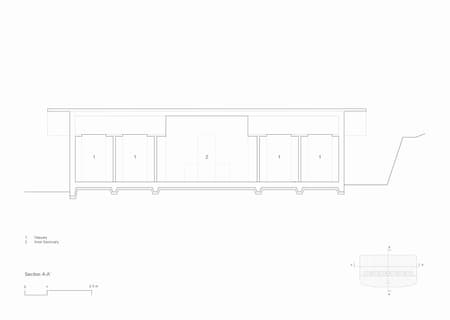
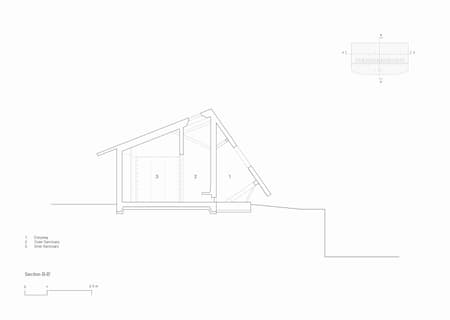
The plan is organized into three primary zones: an inner sanctuary containing the altar, an outer sanctuary for visitors, and the ossuary. A colonnade defines the boundary between inner and outer spaces, symbolically separating the realm of the Buddha and the deceased from that of the living. This layered spatial hierarchy guides visitors progressively toward the sacred center. In section, the inner sanctuary is lower and darker, while the outer sanctuary
is taller and brighter, reflecting the traditional spatial principle in which sacred elements are positioned deeper within the building.
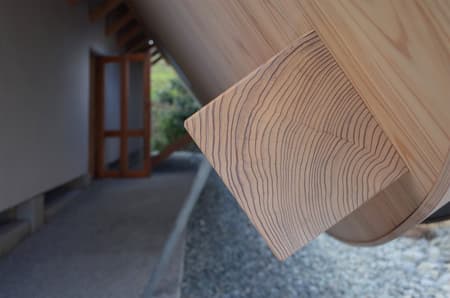
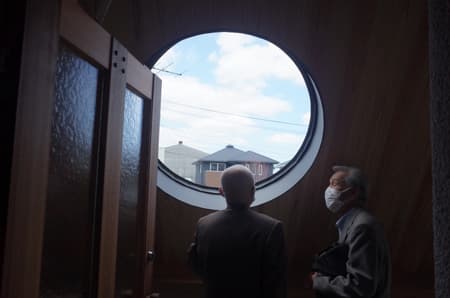
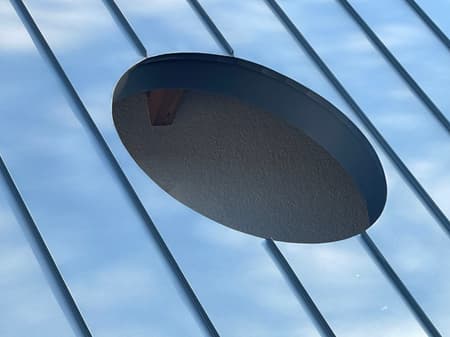
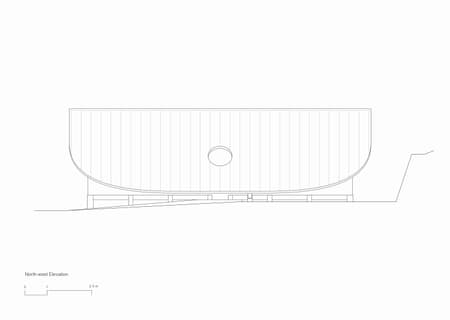
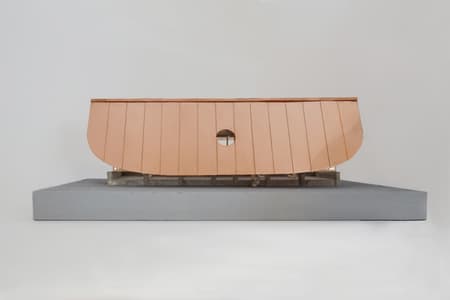
A deep eave with a gently curved edge provides shelter and emphasizes the entrance sequence. Slanted cedar columns transfer structural loads diagonally into the ground, while their 180 mm square dimensions recall the scale and presence of temple gate pillars. Opposite the entrance, a large circular window frames the surrounding
landscape, introducing a scale uncommon in everyday architecture and encouraging contemplation. Structural details are simplified to reinforce the perception of the building as a unified and autonomous form.
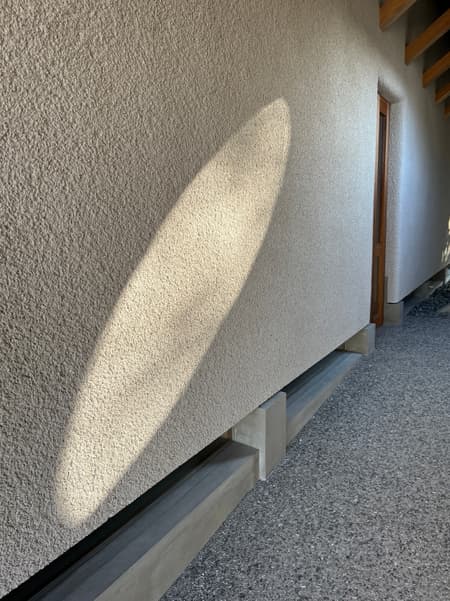
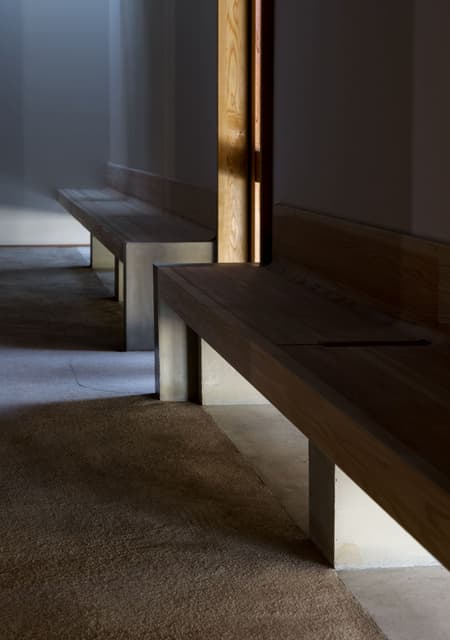
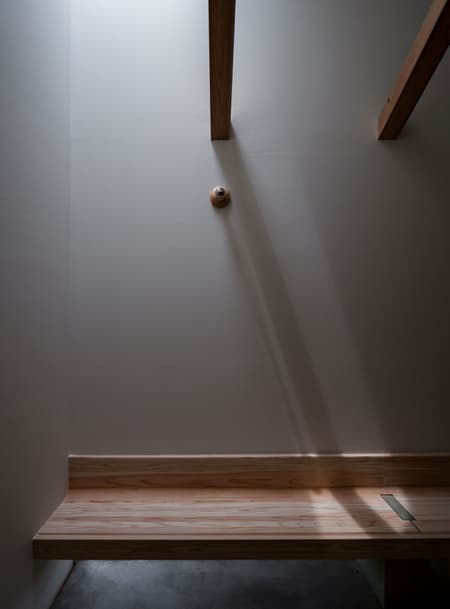
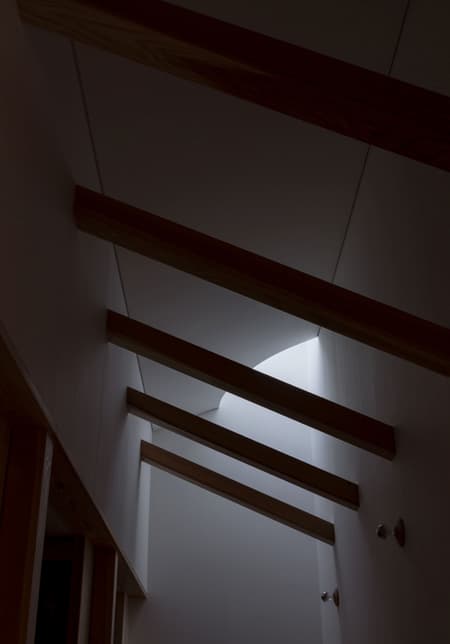
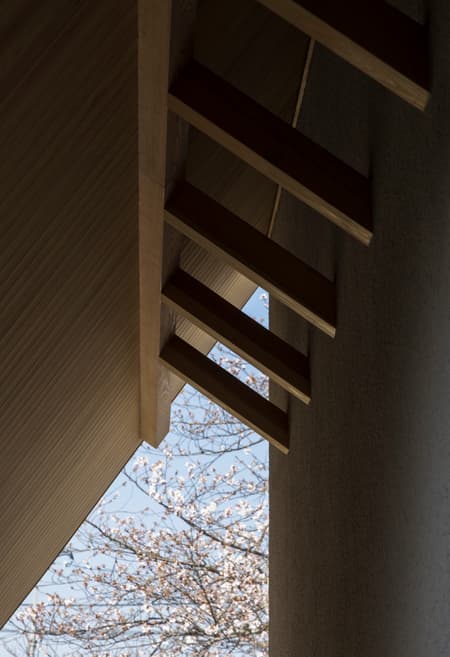
Natural light plays a central role in shaping the interior atmosphere. Low perimeter openings allow soft daylight to graze the floor, while skylights introduce diffused light through angled structural members. Artificial lighting is minimized, allowing changing daylight conditions to define the space.
All cedar used in the project was sourced from the Chikugo River basin and selected by a local sawmill. Construction employed traditional hand-carved joinery executed by regional craftsmen, supporting local industry while transmitting construction knowledge to future generations. The result is a contemporary ossuary rooted in local material culture and collective memory.