Located in the historic center of Bernal, Querétaro, JGG I Shopping Center occupies a building protected by Mexico’s National Institute of Anthropology and History (INAH). The project is guided by a respect for the building’s heritage value and seeks to reactivate its role within the contemporary life of the town. Rather than treating preservation as a static exercise, the intervention aims to restore the building’s capacity to accommodate new activities while maintaining its historic identity.
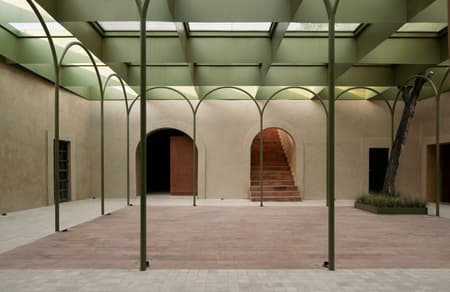
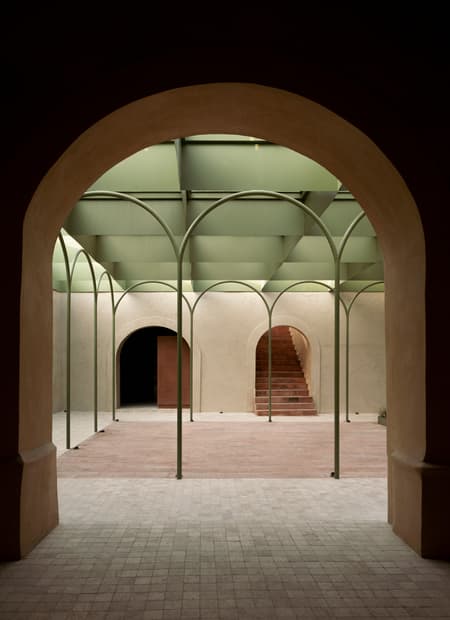
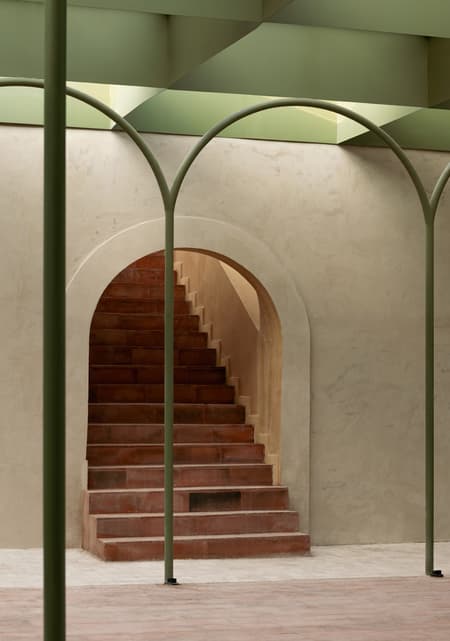
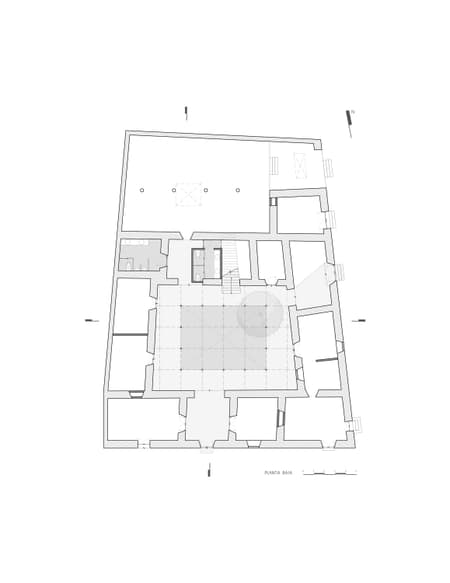
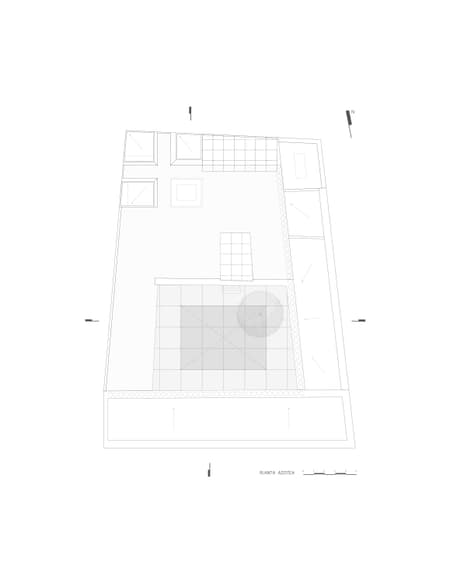
The proposal is organized around the recovery of the central courtyard, a defining element of 19th-century Mexican architecture. Over time, the courtyard had lost its original function after being occupied by storage areas and secondary uses, disrupting the spatial logic of the complex. The project reestablishes this space as the heart of the building, transforming it into a flexible gathering area capable of supporting the commercial and tourist dynamics of Bernal.
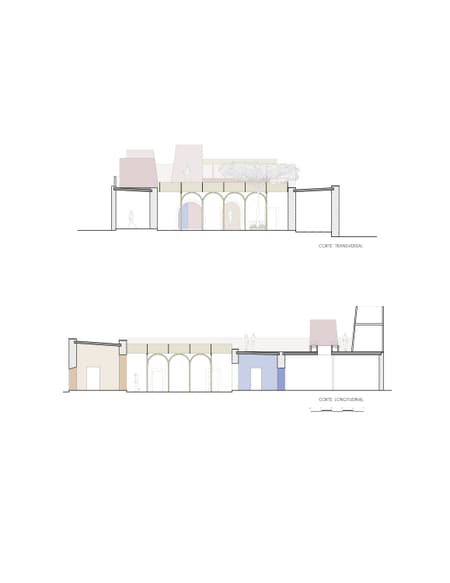
At ground level, the intervention focuses on restoring the courtyard, recovering historic access points, and rehabilitating sanitary facilities, returning functionality and public character to the property. The design strategy places emphasis on the recovered void, allowing the courtyard to once again become the principal organizing element of the project.
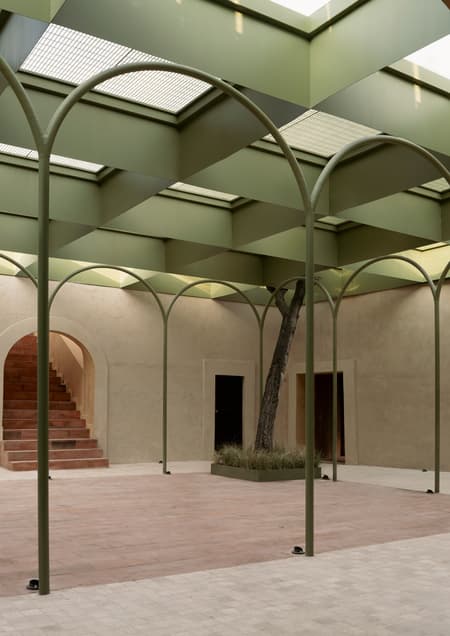
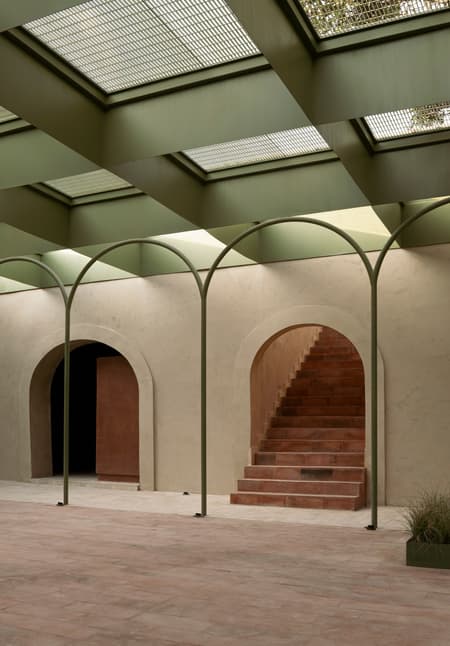
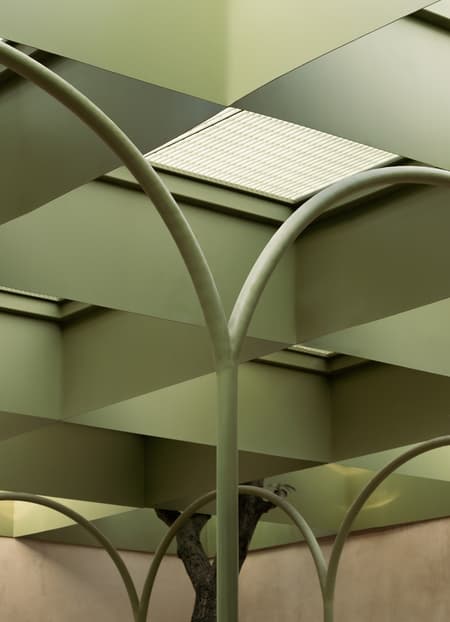
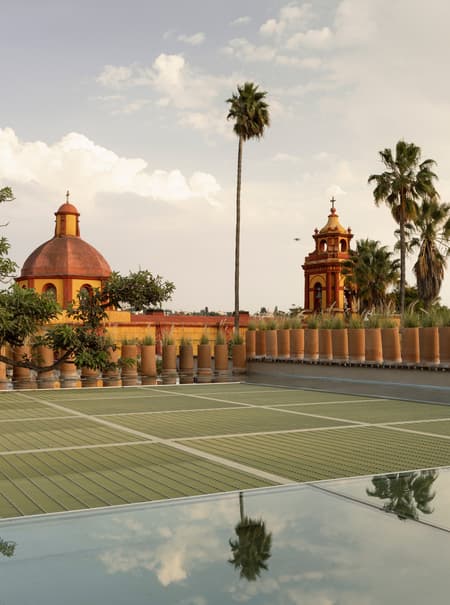
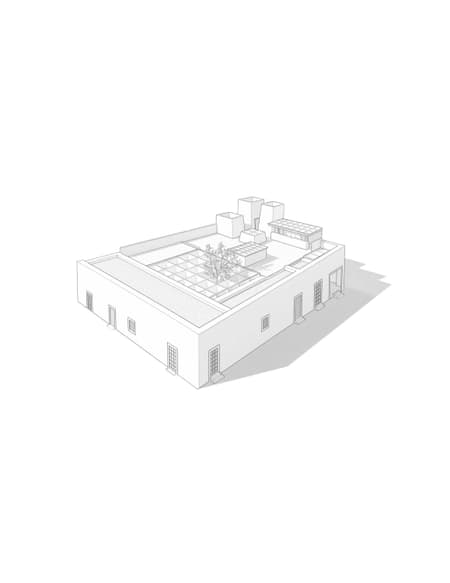
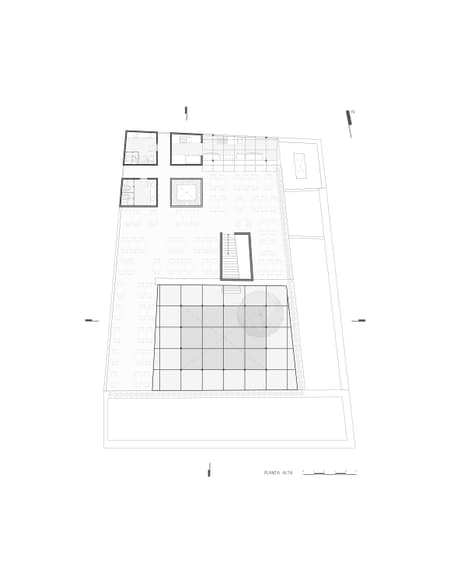
A lightweight steel structure composed of a sequence of slender arches was introduced to organize the space without competing with the historic fabric. Above it, a permeable roof filters natural light, generating changing atmospheres throughout the day while highlighting the textures and materiality of the original walls. The new intervention is intentionally light and reversible, establishing a respectful dialogue between past and present.
Material decisions follow a principle of continuity with the building’s traditional construction systems. Lime-based plasters and natural pigments were used in a manner compatible with the existing masonry, supporting both the conservation of the structure and the preservation of its architectural character. These choices respond not only to technical restoration requirements but also to a broader reflection on local identity.
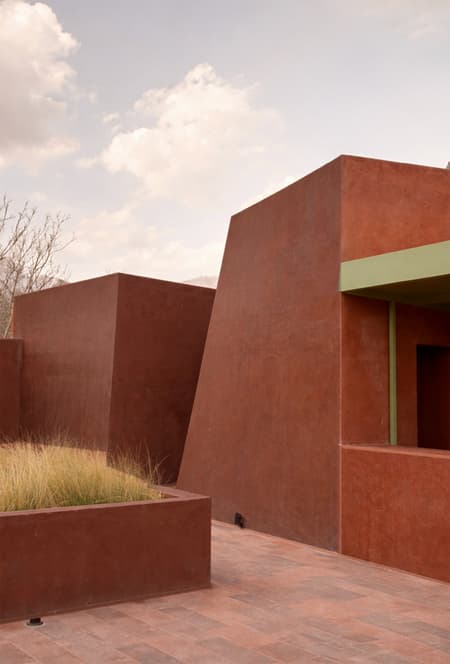
Color plays a fundamental role within the project. Historically, many Mexican buildings of the nineteenth century were characterized by vibrant tones derived from mineral and plant-based pigments, creating a distinctive urban identity. Drawing inspiration from this tradition, the project reintroduces color as a contemporary interpretation of this cultural heritage. Rather than replicating historical palettes, the intervention uses color as a means of maintaining a living connection with Mexican architectural traditions, reinforcing the building’s presence within its context while celebrating the richness of local culture.
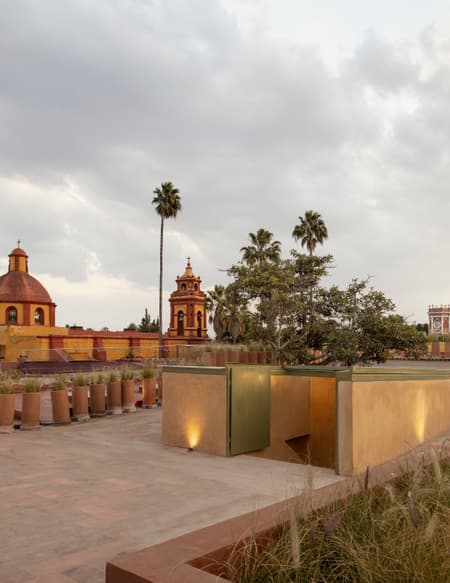
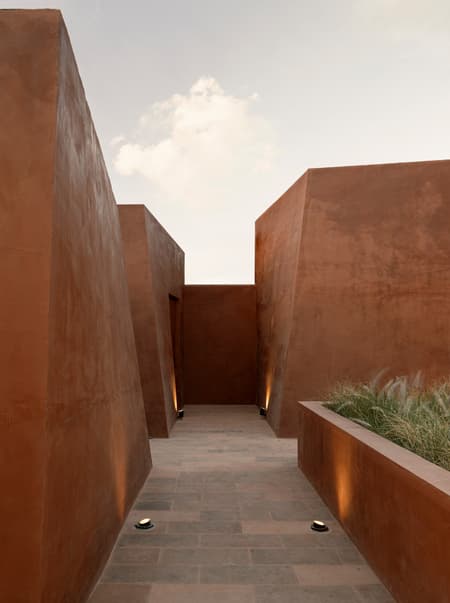
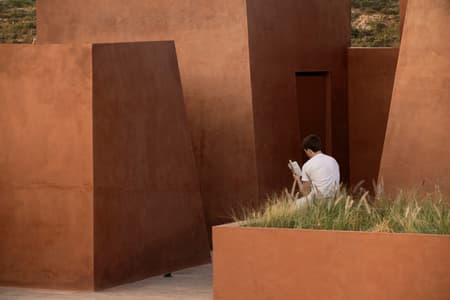
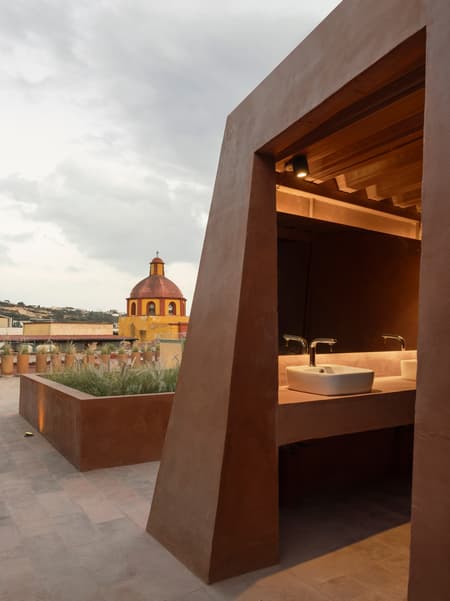
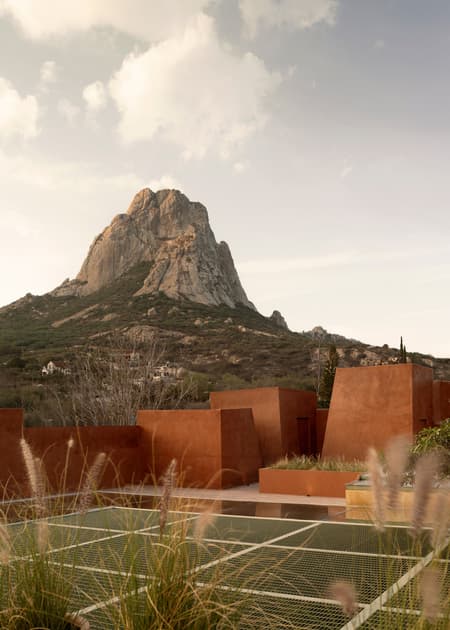
The upper level incorporates restrooms, a kitchen, and a terrace overlooking Peña de Bernal. New service volumes are configured as simple geometric forms that subtly recede from the historic structure, preserving views toward the landscape and maintaining the visual prominence of the original building. Their scale and placement ensure that the historic reading of the property remains intact.
The project seeks to balance permanence and transformation. Through the recovery of the courtyard, the introduction of new programs, and the reinterpretation of traditional materials and colors, the intervention allows the building to evolve without losing its essence. The result is a renewed public space that honors its history while remaining actively engaged with the contemporary life of Bernal.