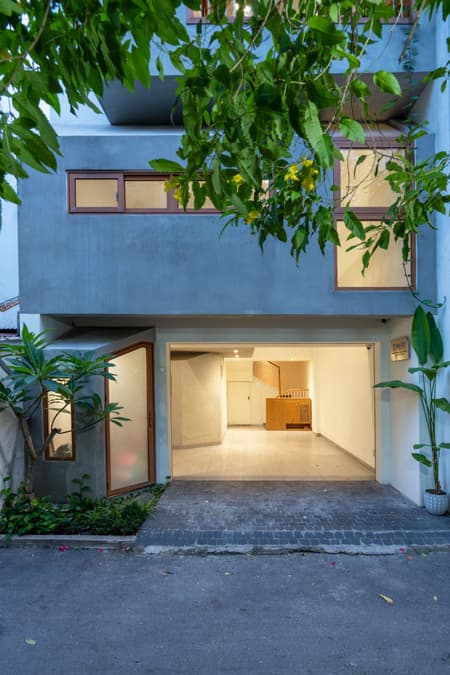
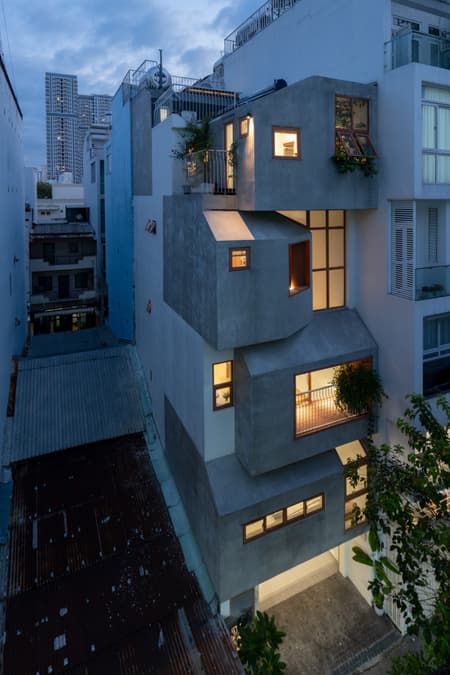
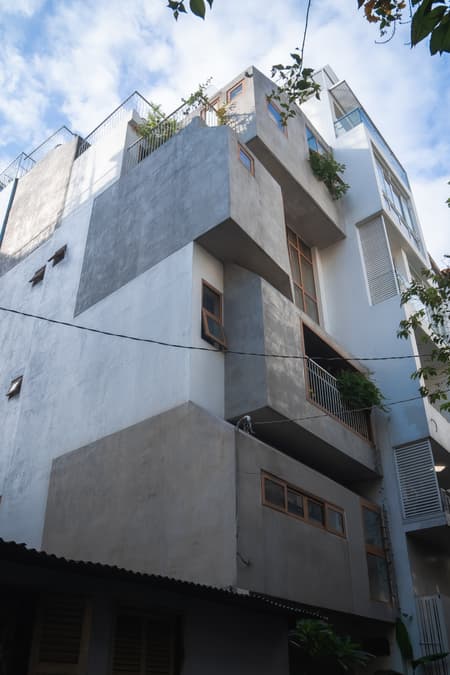
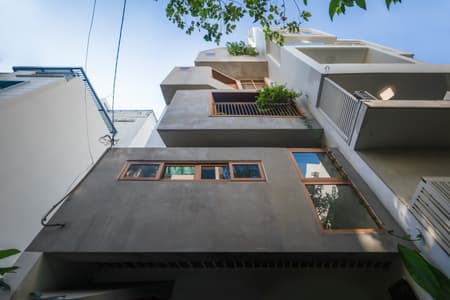
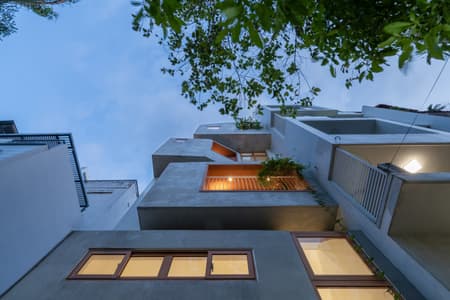
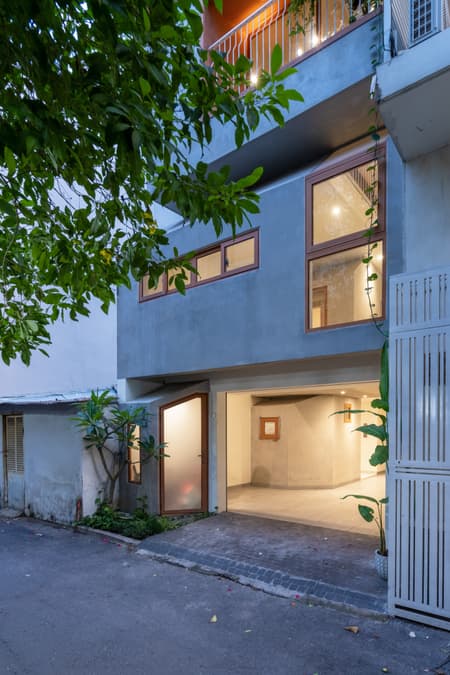
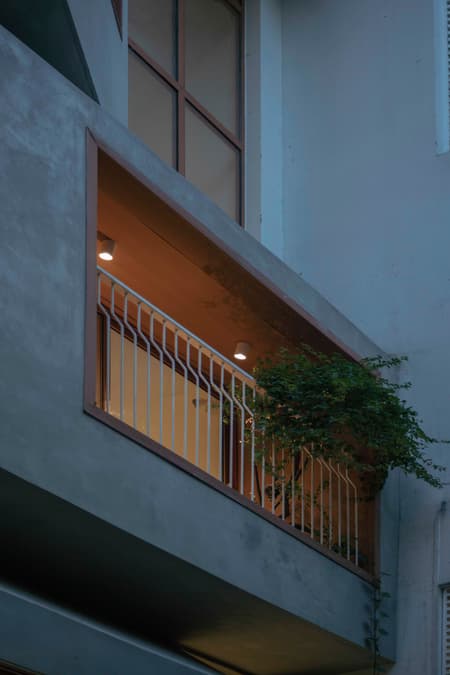
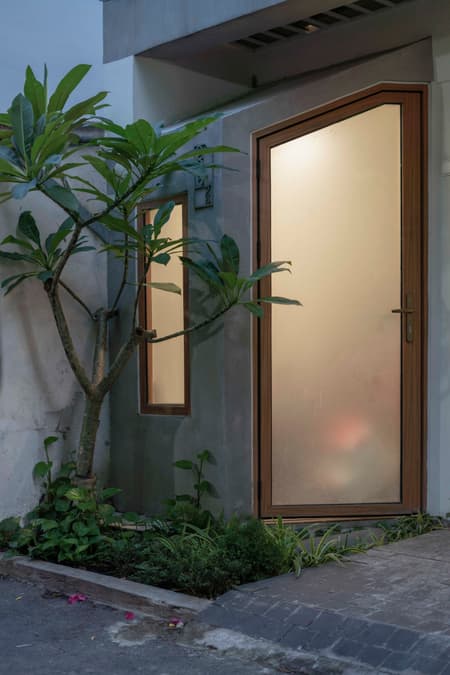
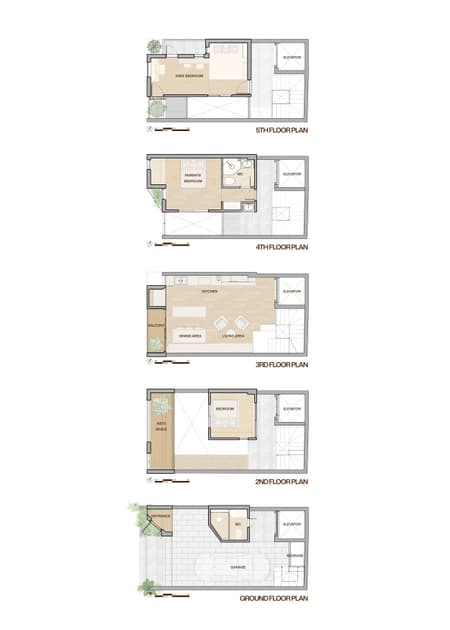
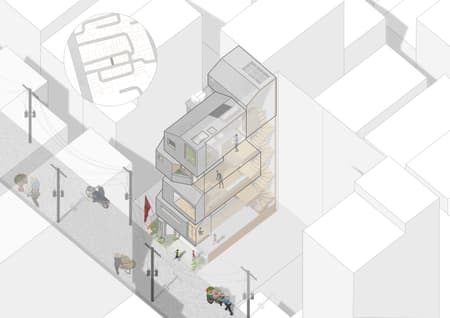
Located in a densely populated neighborhood of District 10, Ho Chi Minh City, TiTi’s House was designed for a young family of five – a couple and their three children. Despite its modest 50m² footprint, the house offers a comfortable living environment that balances shared and private spaces for each family member.
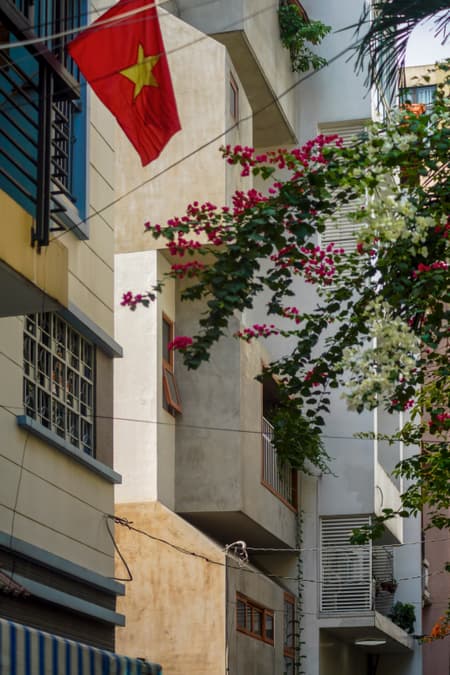
As a result of population growth, urban sprawl, and intense construction over the past decades in Saigon, many old, tightly-packed residential areas with complex and diverse townhouses have emerged. The plot of TiTi’s House is a typical example: a narrow-fronted, elongated rectangular lot with limited area, situated in a long-established residential neighborhood. Such conditions often come with challenges in ventilation and natural lighting. The difficulty was not only in dealing with the limited space but also in ensuring personal areas for each family member, while preserving the warmth, familial connection, and neighborhood relationships that characterize daily life in a traditional Vietnamese household. These contextual and familial needs were addressed through an open spatial layout, minimal material palette, and integrated furniture solutions.
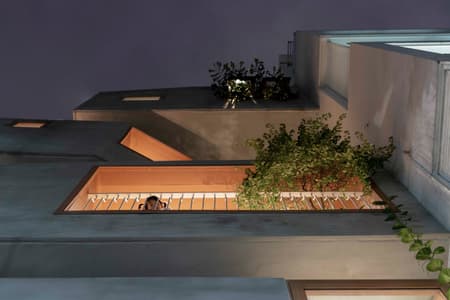
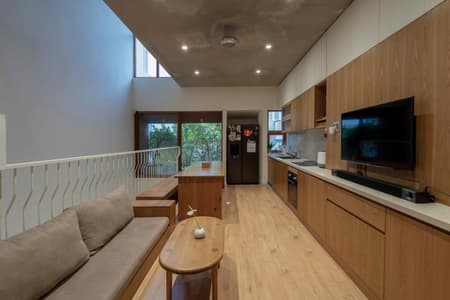
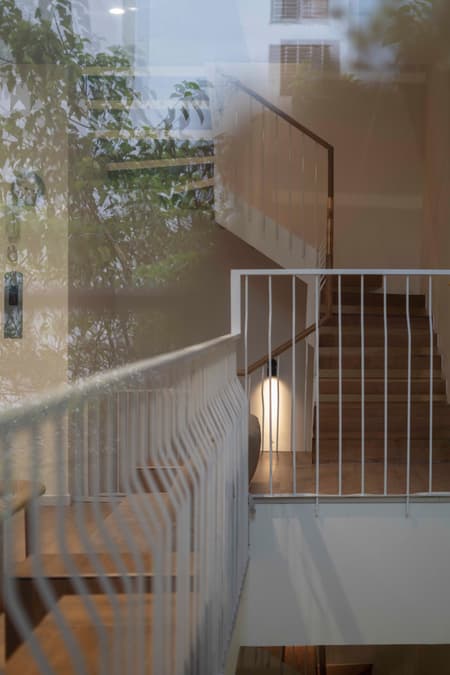
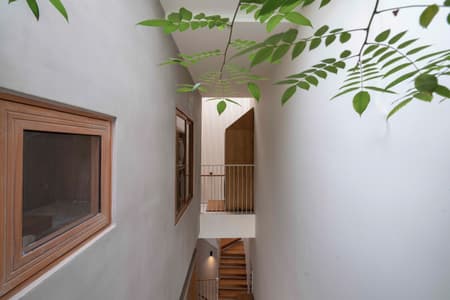
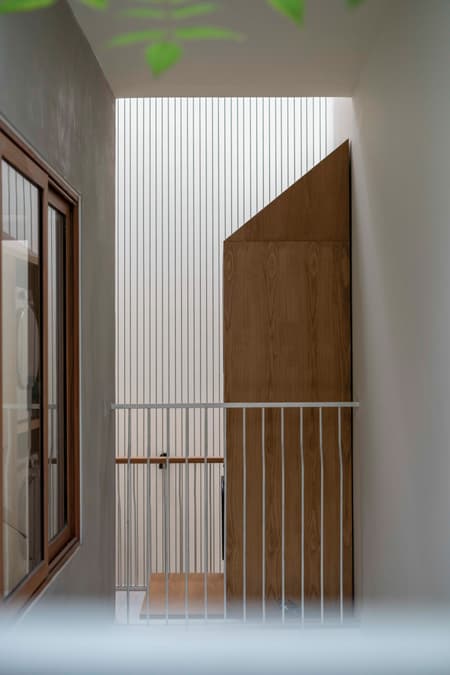
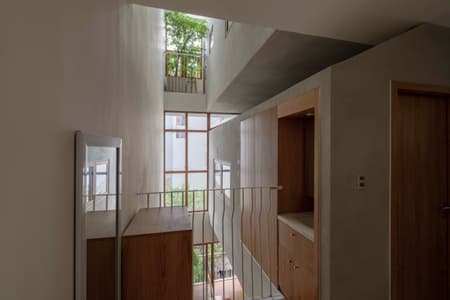
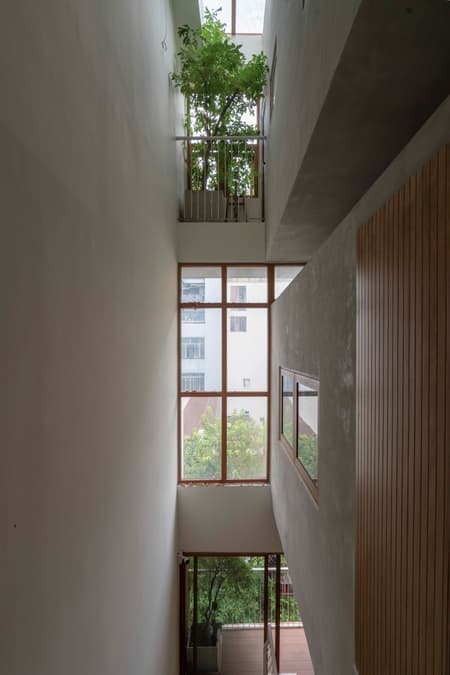
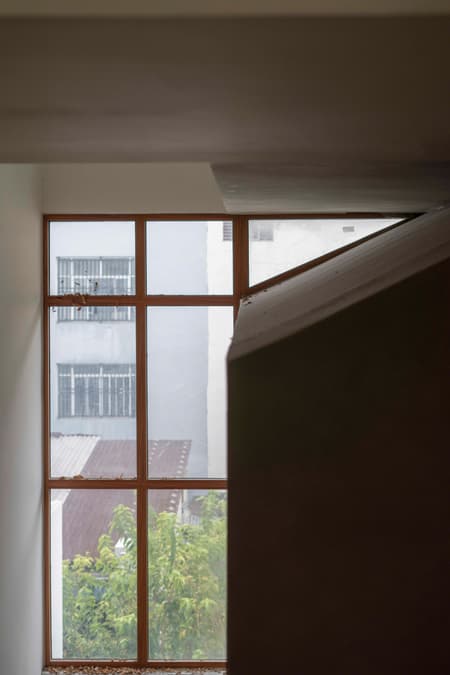
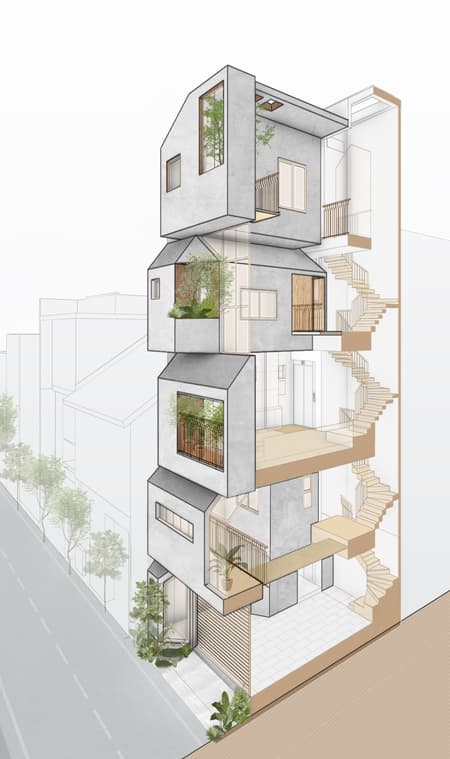
Rather than maximizing every square meter, we introduced a central skylight that allows flexible spaces to break the claustrophobic feel common in narrow houses. On hot and humid days, the chimney effect helps hot air rise and escape through open windows, keeping the lower levels cool. More than just a ventilation feature, the skylight connects people: even on separate floors, the sound of TiTi playing piano in the living area carries through the house, and the smell of food drifts upstairs – subtle reminders of each other's presence. Sound and scent, though intangible, become spatial extensions.
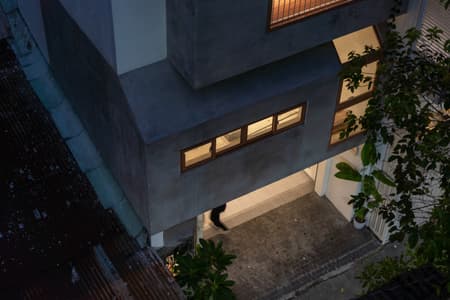
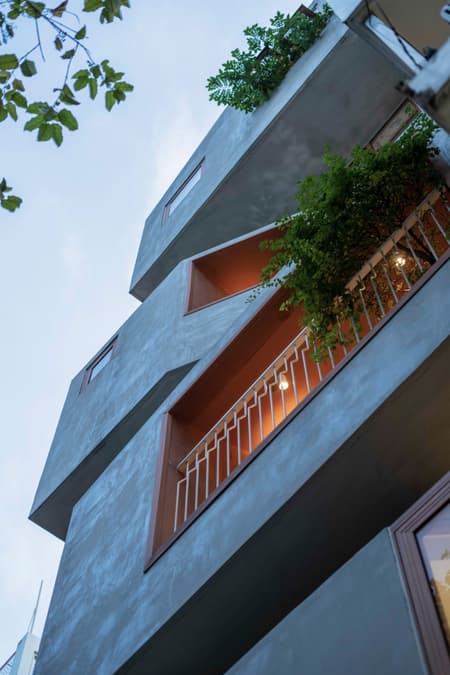
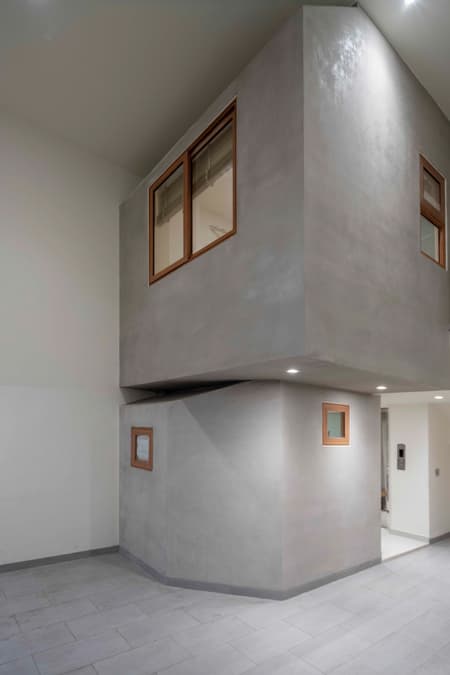
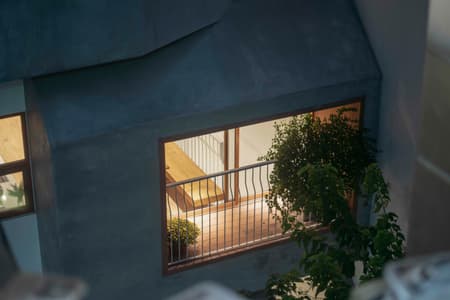
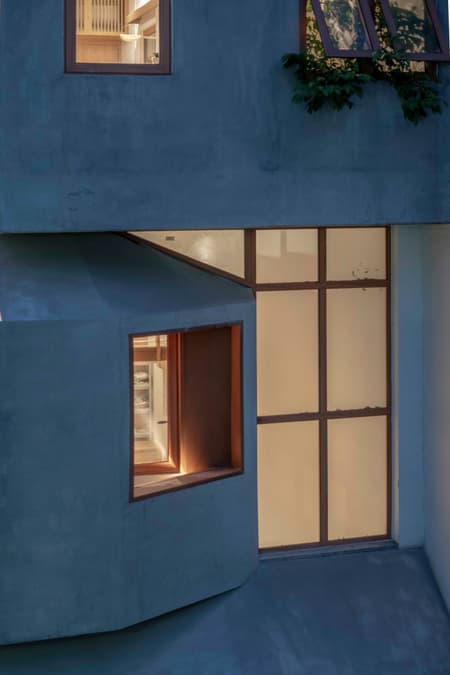
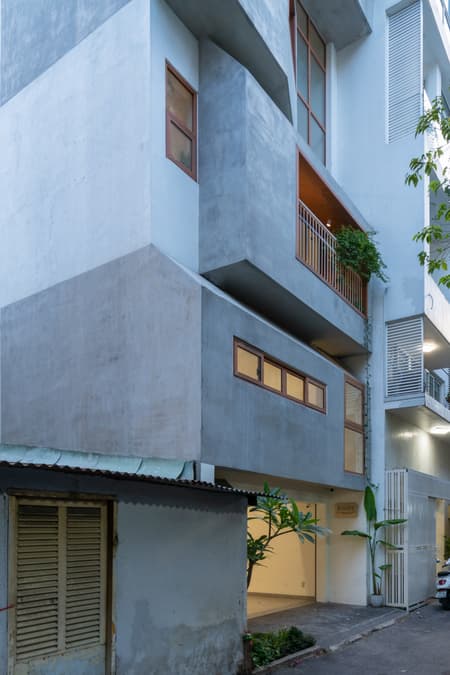
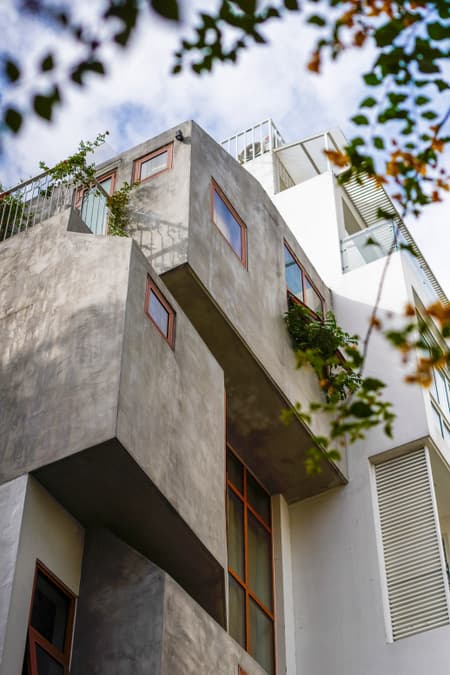
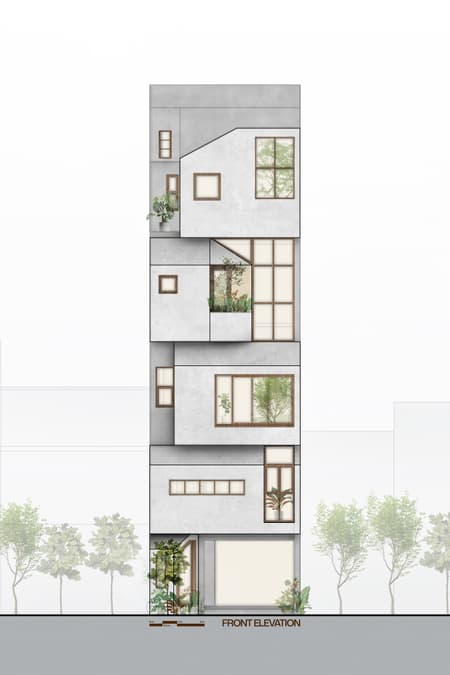
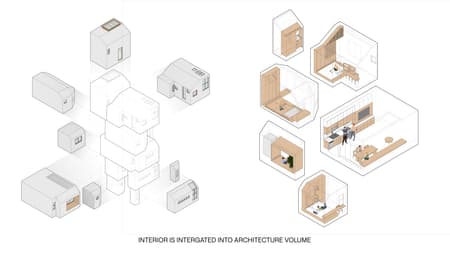
Townhouses remain the most common housing type in the city, with diverse architectural expressions. Designing for this typology continues to be both a creative endeavor and a structural challenge – inside and out. The external form of TiTi’s House is composed of stacked, simple box volumes with slanted roofs that evoke childhood memories of little houses from imagination. This was our way of embedding personal emotion into a familiar building type. Each box is like a private “shelter” that the parents wished to give their children – a place for free exploration and creativity. But the moment a door opens, laughter and calls from the parents can be heard. The warmth of family is present in every corner of the house, in subtle and varied ways.
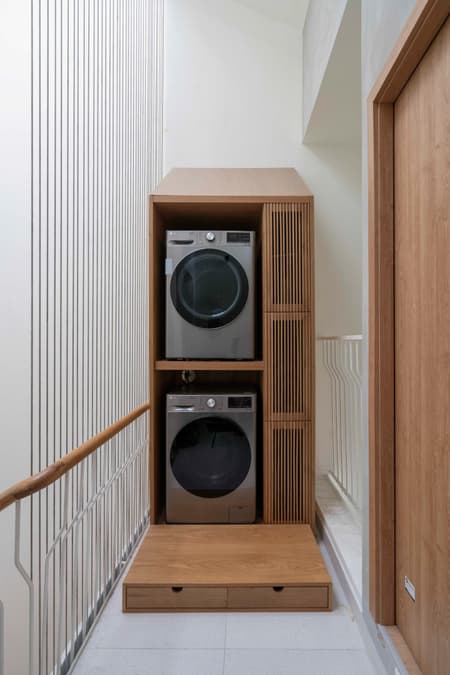
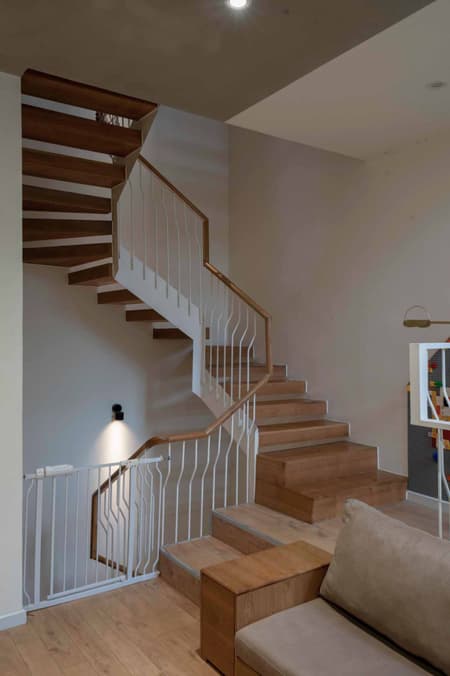
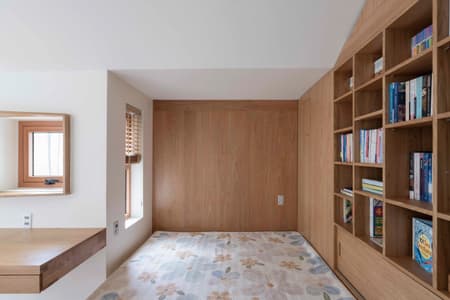
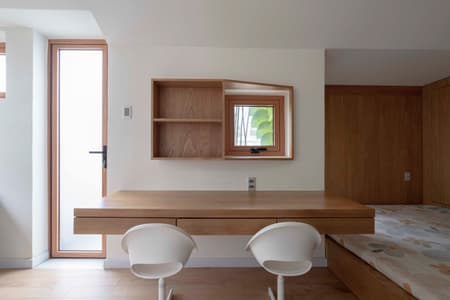
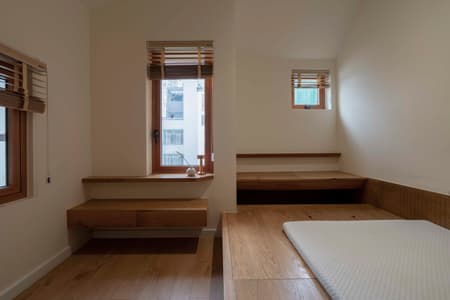
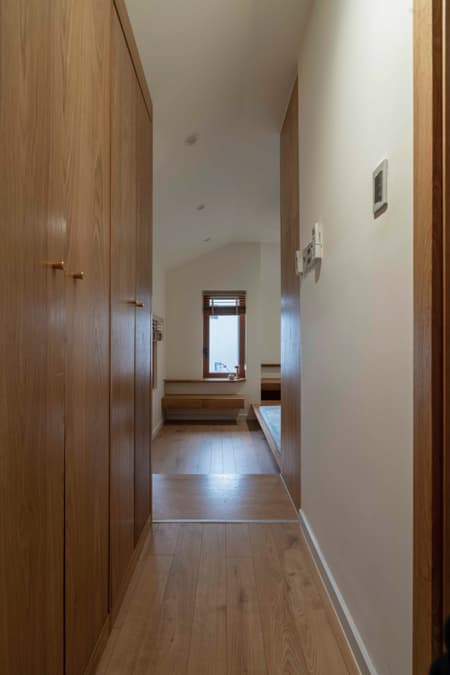
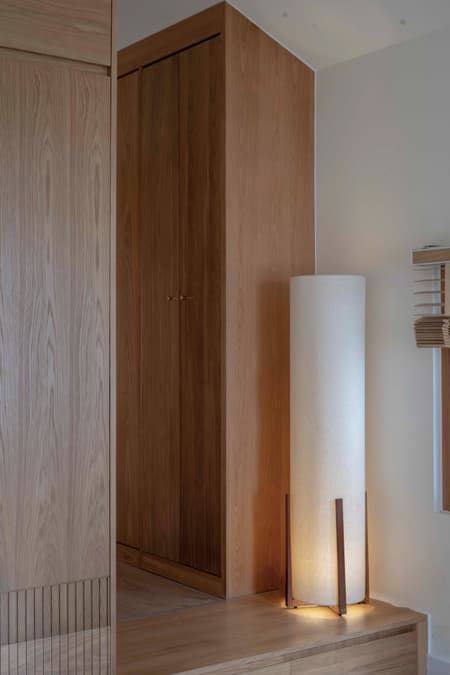
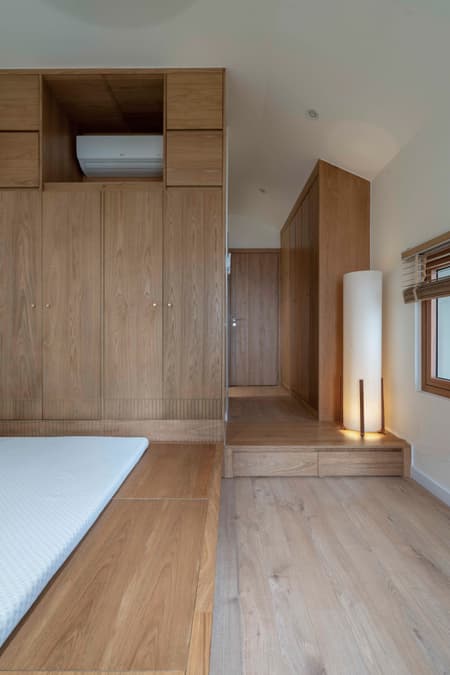
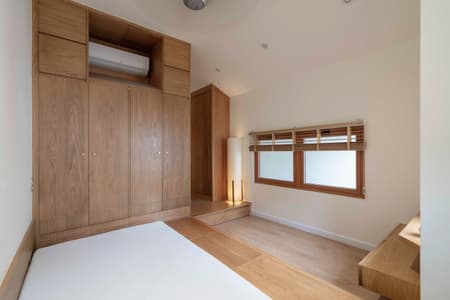
Materials were carefully selected to avoid a sense of confinement. White walls combined with gray ceilings provide a neutral canvas, while wooden details and greenery bring a soft, calming atmosphere. Integrated furniture – like beds with storage compartments – helps accommodate multiple functions without crowding the space. The shapes of cabinets and shelves echo the building’s sloped roofline, creating continuity between the interior design and the architectural form.
TiTi’s House reflects our approach to small-scale urban residential design. From this project, we realized that spatial limitation doesn’t necessarily mean lack or discomfort – especially when the living environment is built around the essential experiences of its inhabitants. Every spatial decision – openings and closures, material choices, and detailed considerations – was made to create a place that is both fitting and warm, where everything is in its right place: sufficient, intimate, and meaningful. Though modest in size, the house is full of connections – between people and with nature.