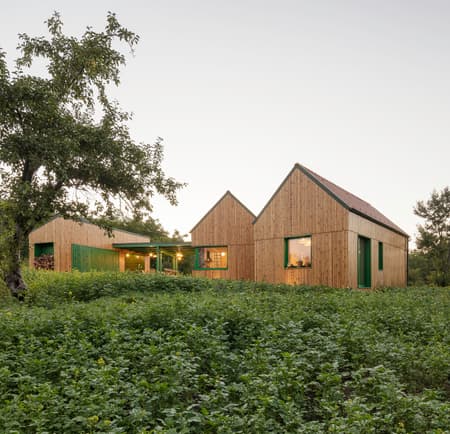
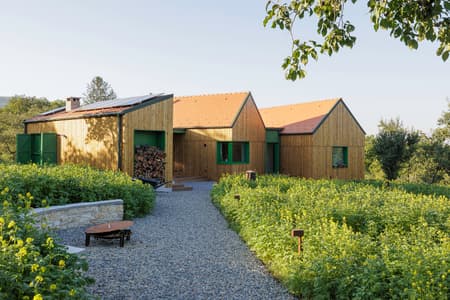
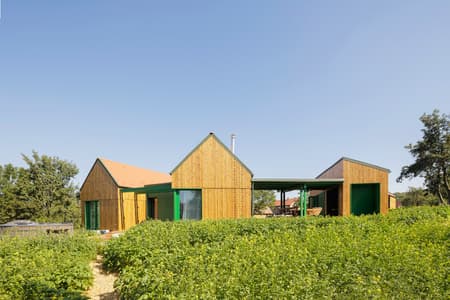
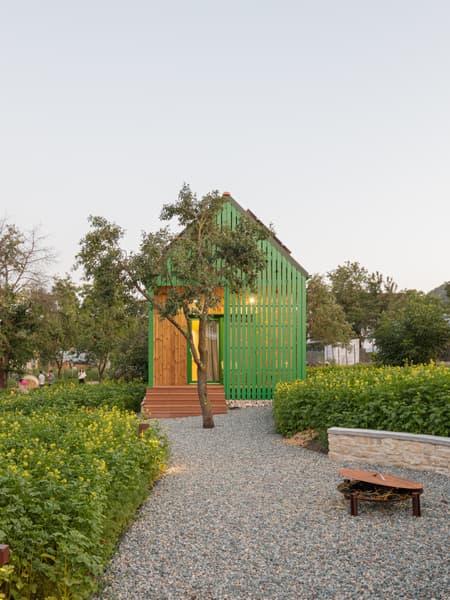
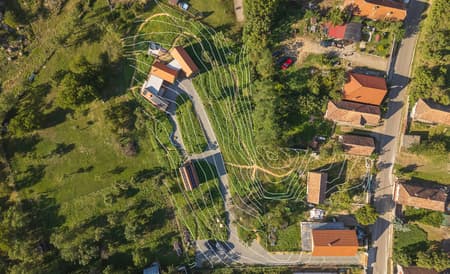
Located in Moldovenești, Cluj County, this project reinterprets the traditional Transylvanian rural household within a contemporary framework. Set in a culturally rich landscape, the design responds by preserving local identity while accommodating modern living. The proposal consists of three main components—a primary holiday home, a guest house, and a converted barn—arranged as separate volumes around a courtyard, echoing traditional layouts and integrating into the existing orchard.
The main house occupies the highest point, offering expansive views and organized into distinct functional zones. The guest house and barn reinforce a fragmented composition that follows the natural slope, minimizing environmental impact. Privacy and social interaction are balanced through spatial arrangement, with shared outdoor elements like a central fireplace.
Material choices emphasize sustainability, using prefabricated wood modules with hay insulation, and reused stone. Overall, the project creates a cohesive, energy-efficient environment that blends tradition, landscape, and contemporary architectural living.
Located in Moldovenești, Cluj County, the project is set within the cultural landscape of the Transylvanian hills, near landmarks such as Cheile Turzii gorge, Piatra Secuiului mountain peak, and the historic village of Rimetea. Locally, the 16th-century Jósika Castle and village churches shape the immediate context. The design responds by continuing the rural identity in a contemporary way, balancing tradition with modern living needs.
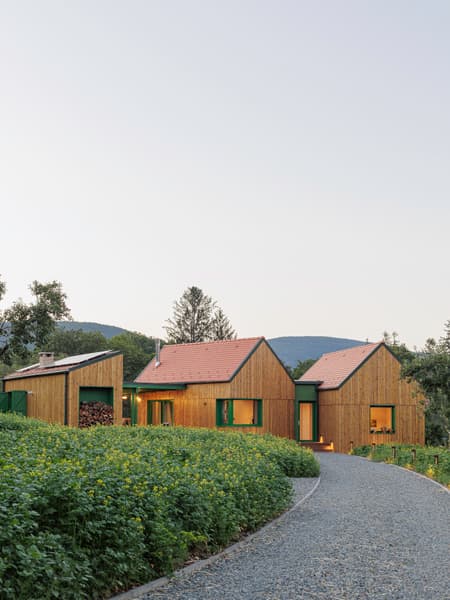
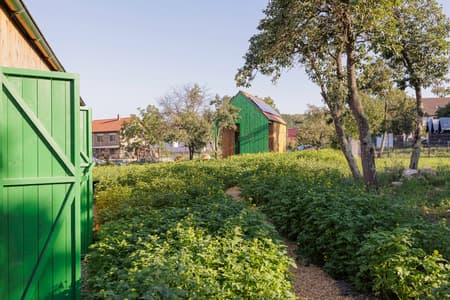
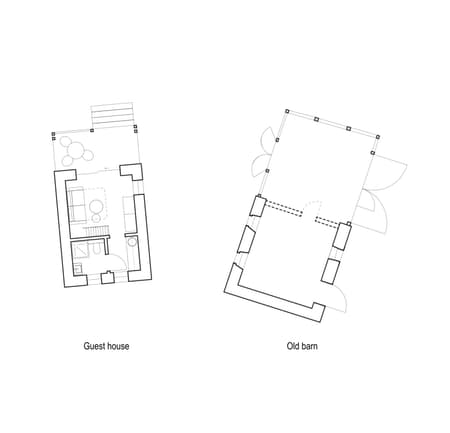
The project includes three components requested by the client: a main holiday home, a smaller guest house, and the conversion of an existing barn into a social and remote-working space. Rather than combining these functions into one building, the proposal follows the traditional layout of rural households, where separate volumes are arranged around a courtyard. This fragmented composition integrates naturally into the existing orchard.
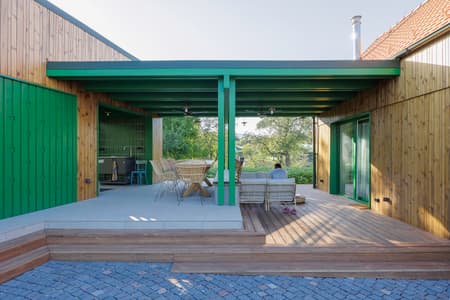
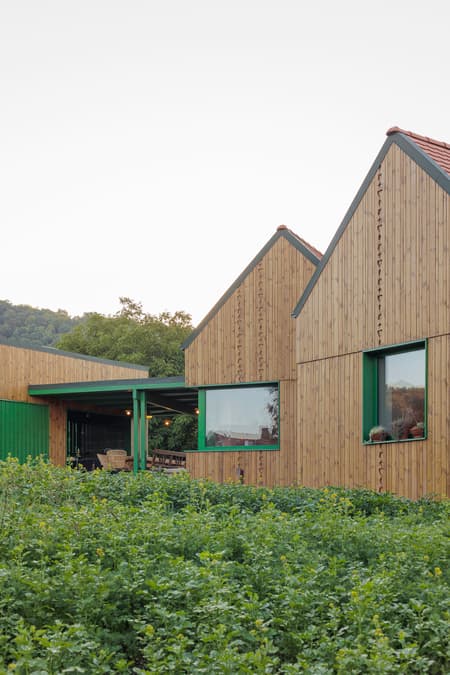
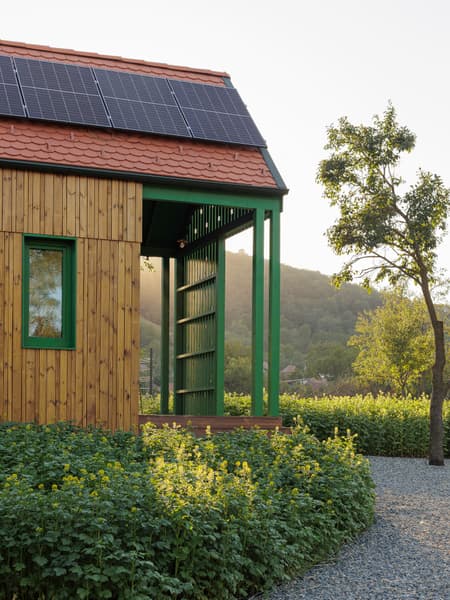
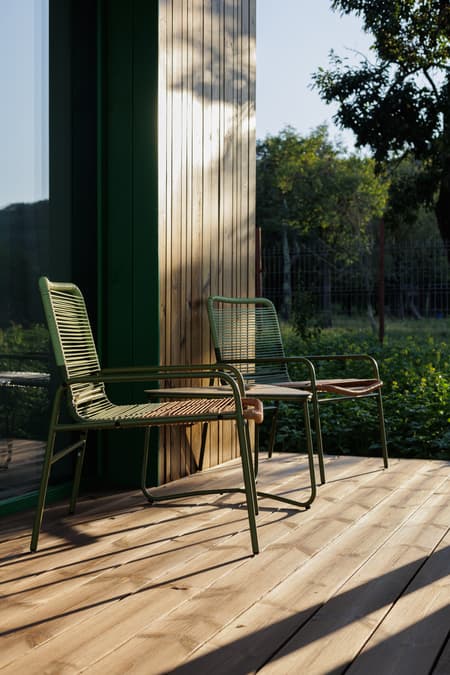
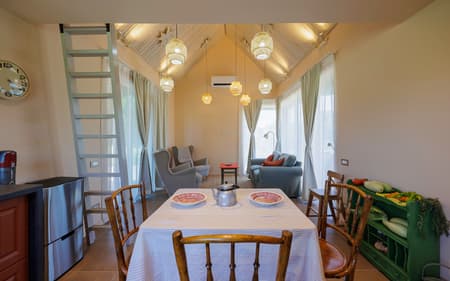
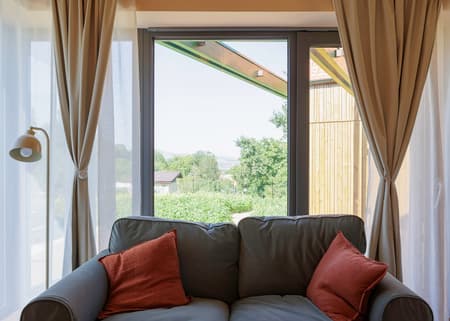
The main house, positioned at the highest point, benefits from views of the surrounding hills and aligns visually with Jósika Castle. It is organized into three volumes: a day area (living room and kitchen), a night area (bedrooms and bathroom), and a technical wing with service spaces and a covered grill. A partial double-height living room enhances spatial openness. Between volumes, a shaded terrace extends the living space toward the courtyard, while a second, open terrace with a jacuzzi faces the landscape. Openings are carefully placed to maintain visual connections to either the courtyard or distant views.
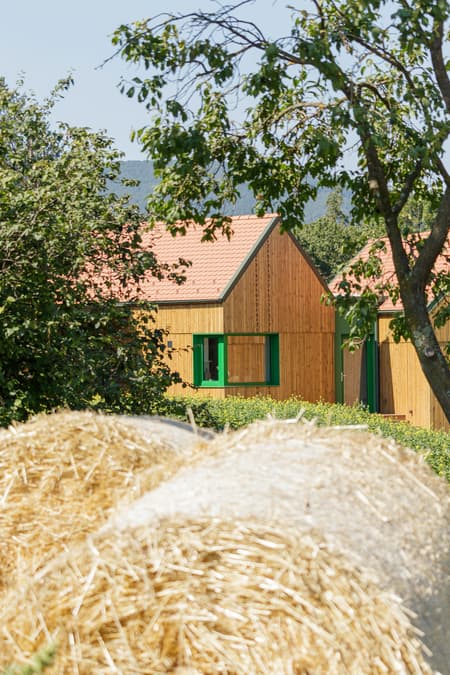
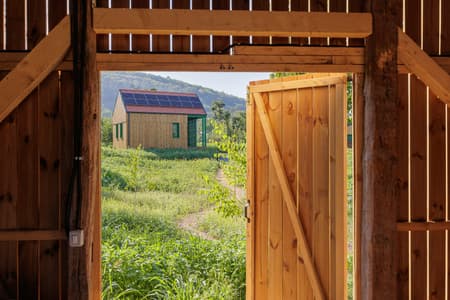
The guest house is positioned separately as a fourth element, reinforcing the scattered composition reminiscent of traditional annexes and local beehive groupings. All buildings follow the natural slope, rotated and staggered to minimize impact on the terrain. Their modest scale and distance from the street preserve the village character.
Privacy and interaction are balanced through layout and design. Filtered views between buildings ensure independence, while a central outdoor fireplace creates a shared social focus. The orchard is largely preserved, with minimal intervention. Vehicle access and parking are limited to the site’s edge, maintaining a pedestrian-friendly interior landscape.
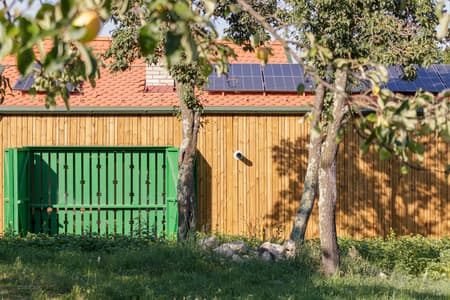
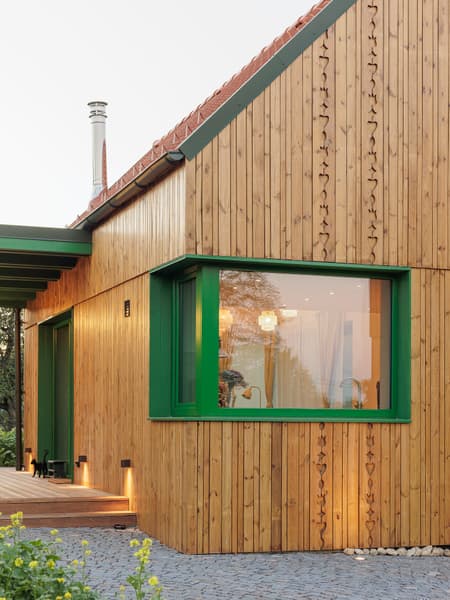
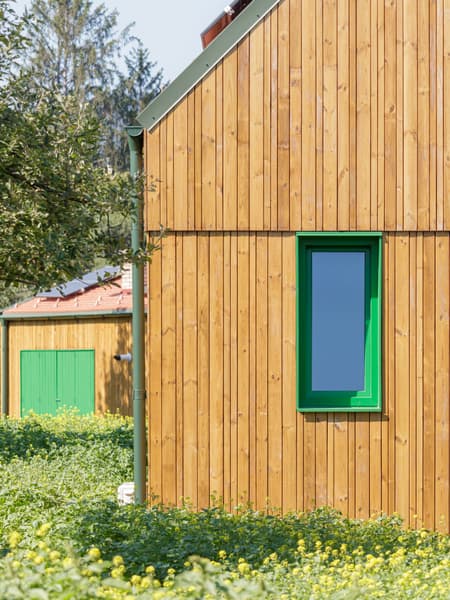
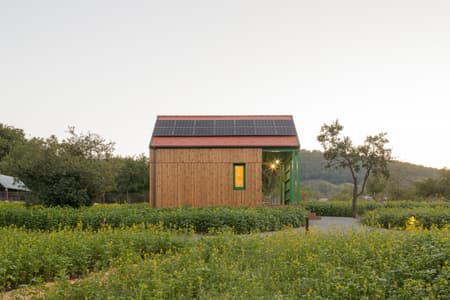
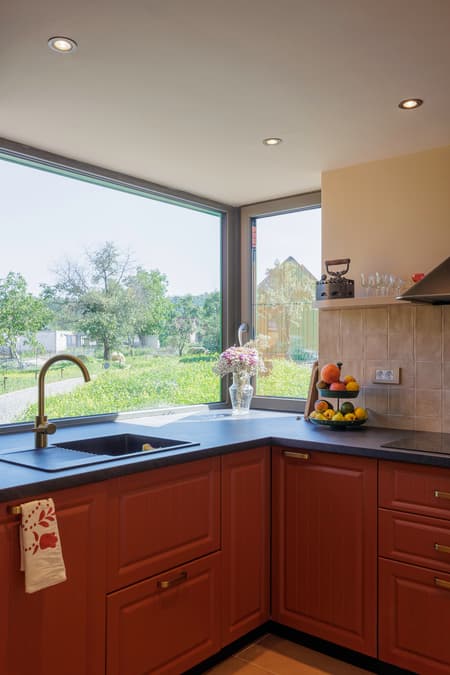
Materials combine contemporary construction with local and sustainable choices. Prefabricated wooden structures rest on concrete foundations and are insulated with compressed hay for efficient thermal performance. Reused limestone clads the base, while façades are finished in thermo-treated pine, echoing traditional rural annex constructions. Roofs use ceramic tiles, including reclaimed ones for the barn. Interiors feature restrained use of light-toned wood for warmth. Photovoltaic panels and a water well support energy and resource independence.
The color palette is defined by natural wood tones with green accents on windows and doors, referencing traditional local architecture and ensuring continuity with existing structures.
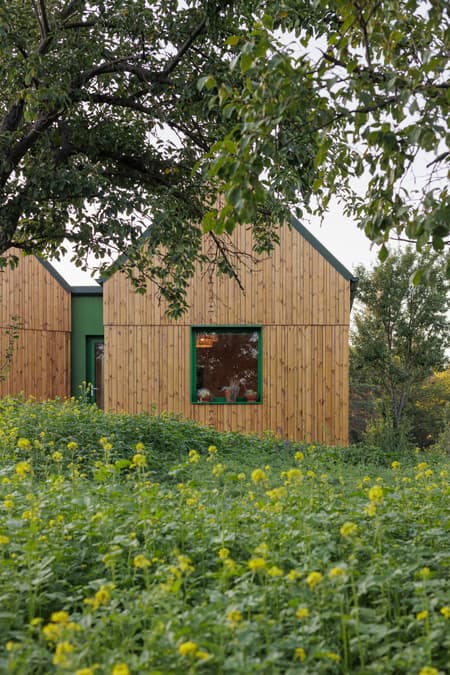
The spatial experience unfolds gradually: a winding path reveals the buildings in sequence, highlighting crafted details inspired by local motifs. Circular pathways connect the ensemble, weaving through preserved trees and new planting areas. Currently seeded with mustard to enrich the soil, the landscape will evolve into a productive garden with flowers, vegetables, and grains.
Overall, the project reinterprets the traditional Transylvanian courtyard as a contemporary, sustainable living environment, rooted in local identity while adapted to present-day life.