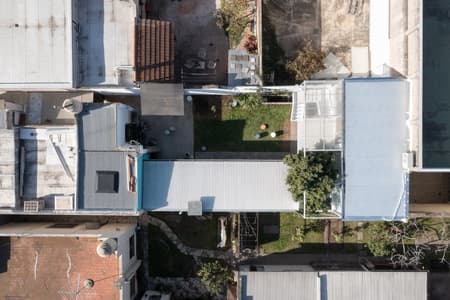
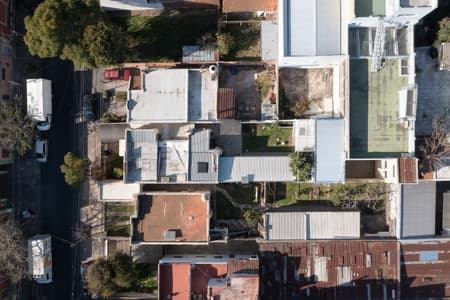
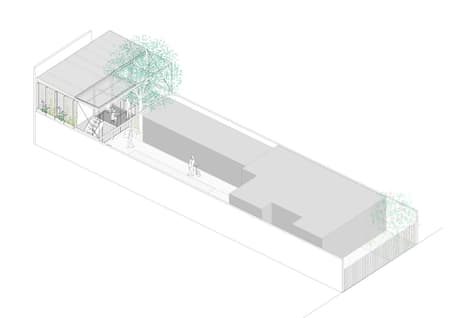
The workshop of “Proyecto Mutan” is located in the province of Buenos Aires, in the neighbourhood of Villa Martelli, a suburban low-scale tissue that presents a mixture of houses and industrial constructions. They are a group of designers who work with post-consumer recycled plastic which they transform into design objects.
The initial programme requirements included the incorporation of an exhibition area, a meeting room and an office space. This was the starting point to rethink the working spaces, always searching for a direct relation with the exterior, and proposing an open system of connections that vary their functions according to the moment and specific needs of the users.
The original workshop occupied the lateral of the plot, leaving room for an avocado tree, and extended itself to the back of the plot in a series of fragmented spaces. The need for continuing with the functioning of the workshop’s activities, along with a reduced budget, were key points to determine the choice of materiality and the actions to implement.
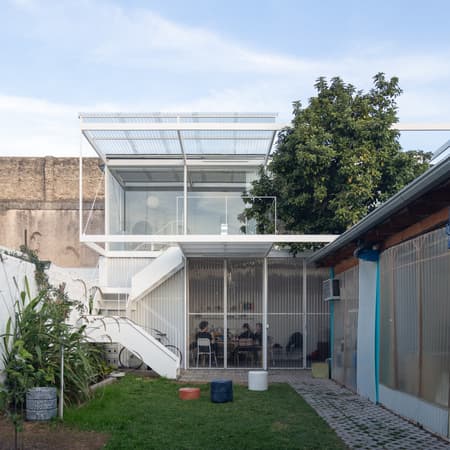
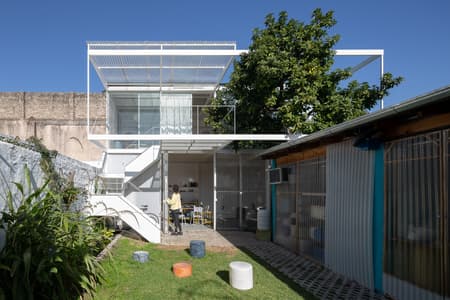
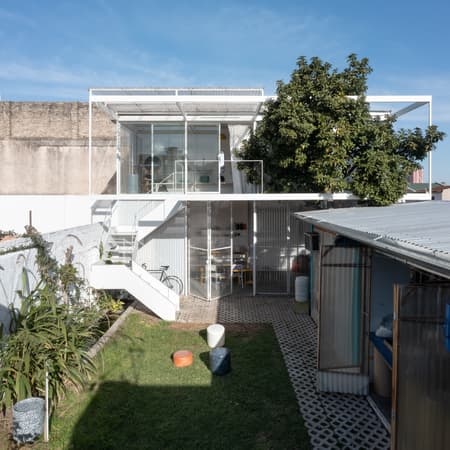
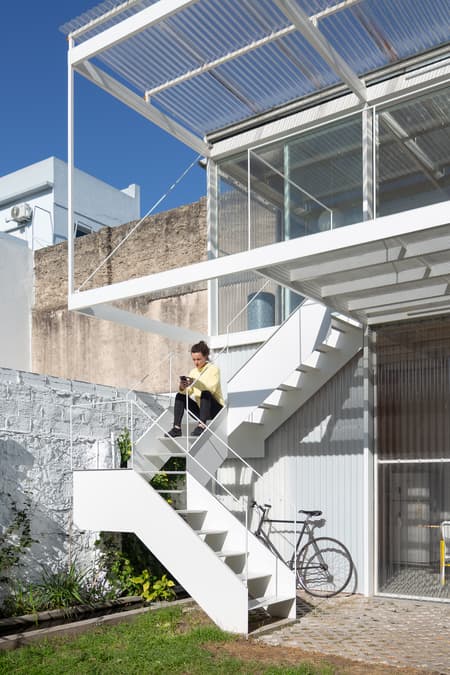
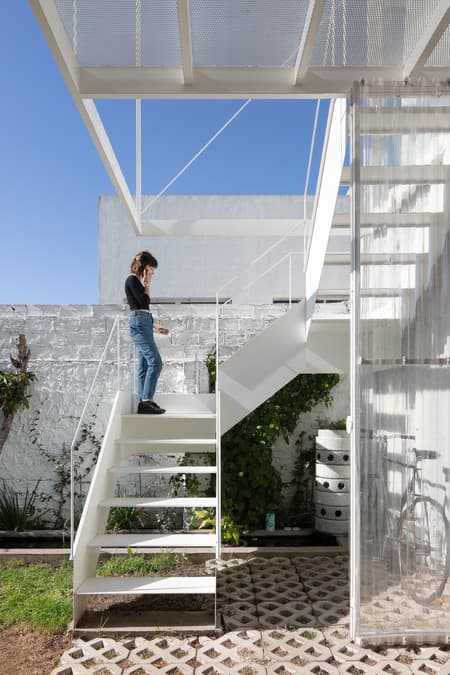
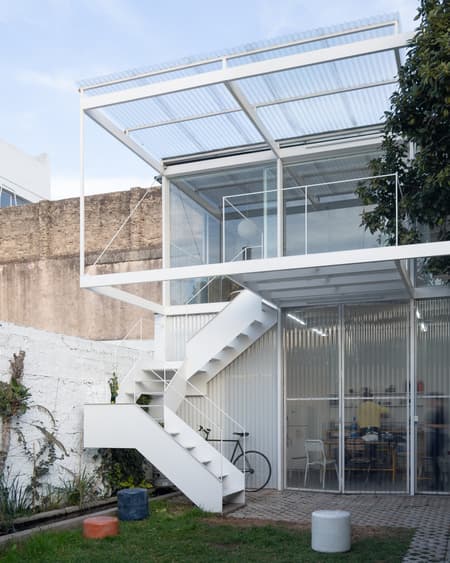
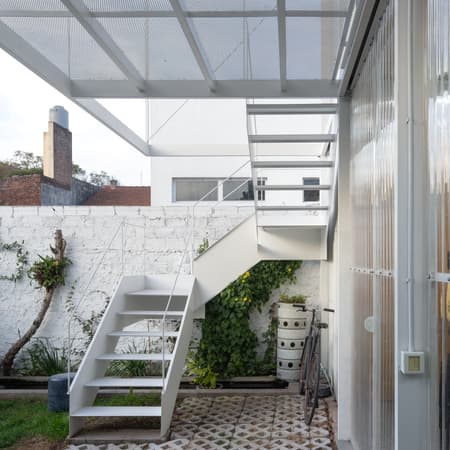
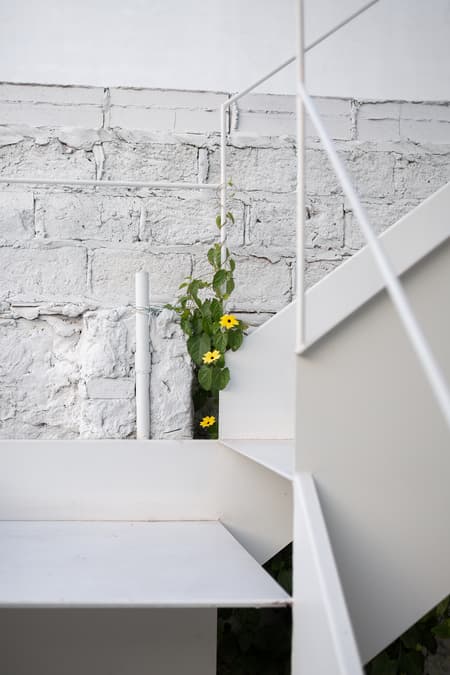
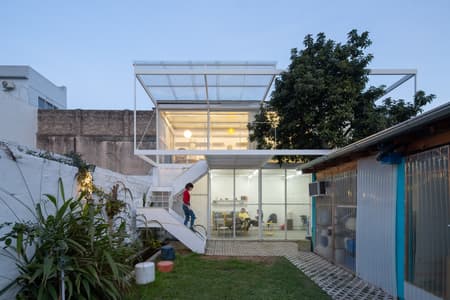
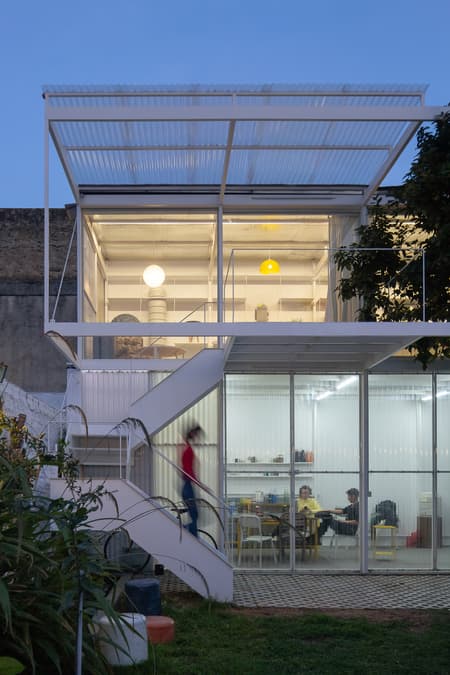
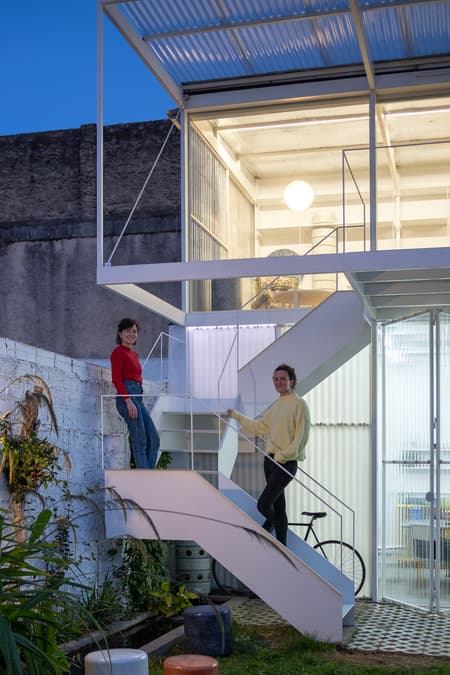
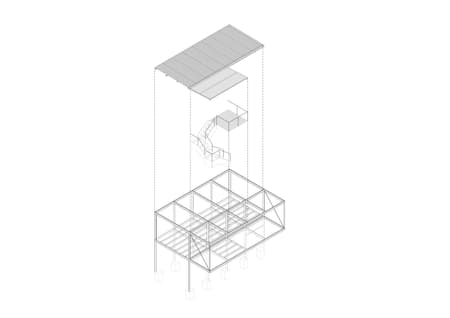
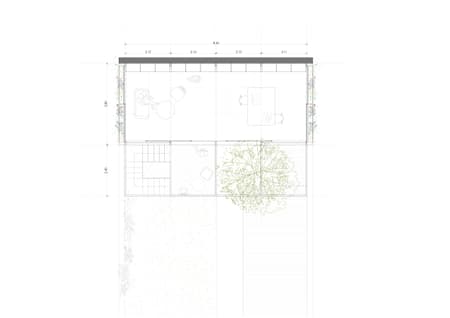
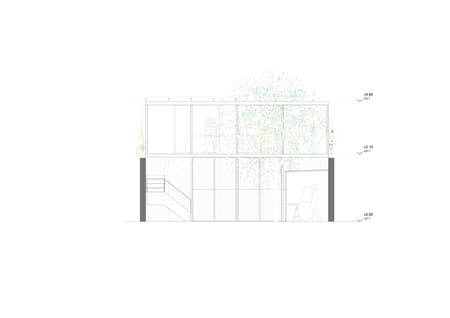
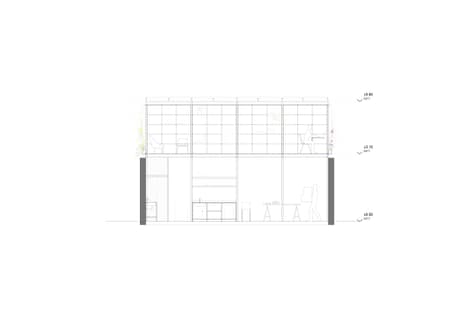
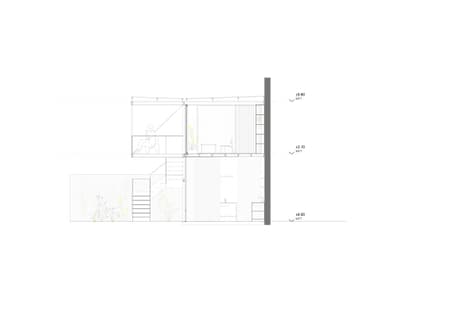
The strategy consisted of thinking our intervention as a multi-functional plug-in. A light metallic structure that perches on top of the pre existing construction, incorporating a new programme while reorganizing the space in order to potentiate it in a single action.
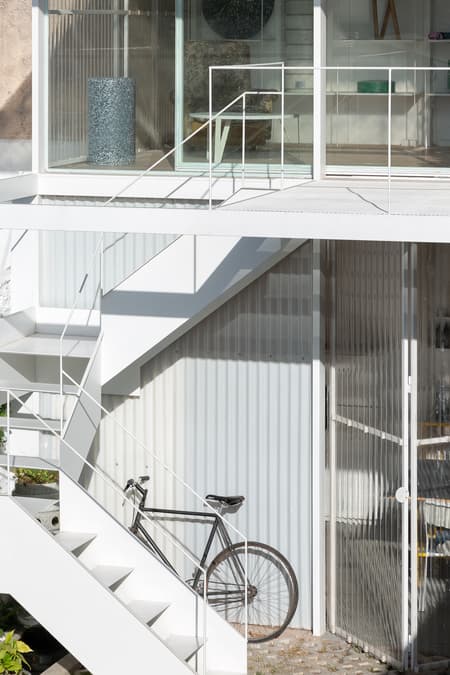
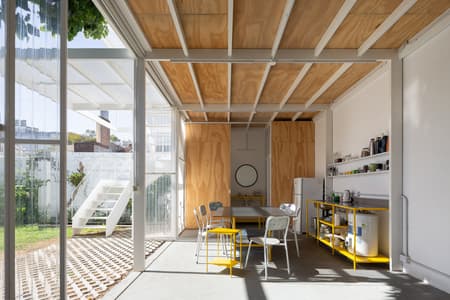
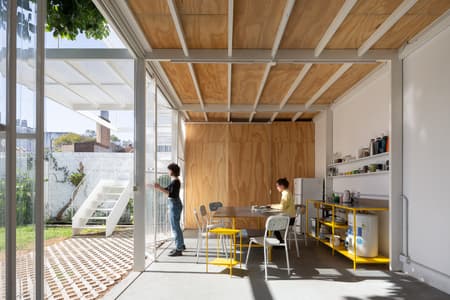
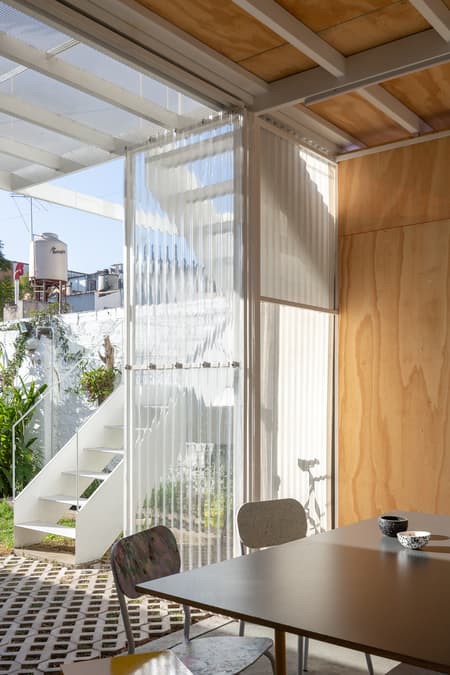
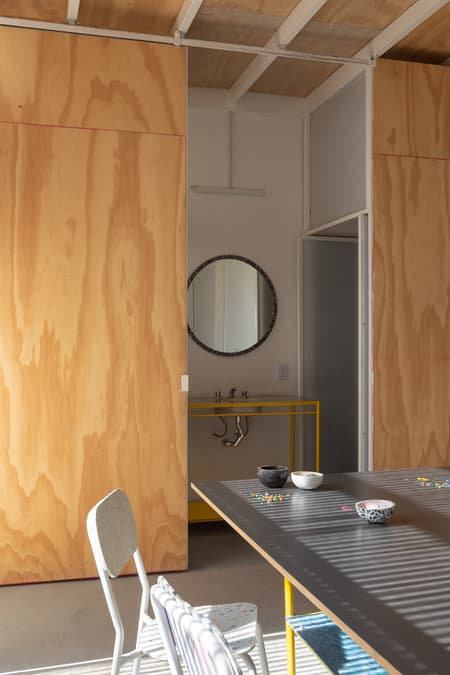
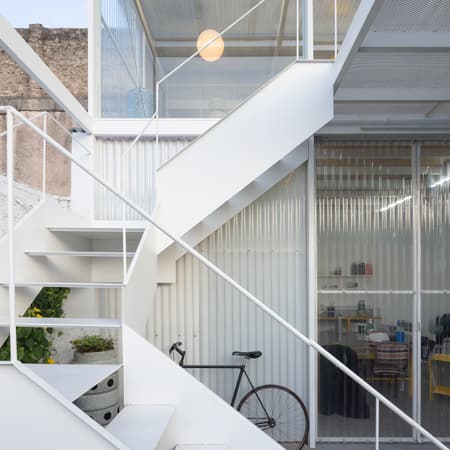
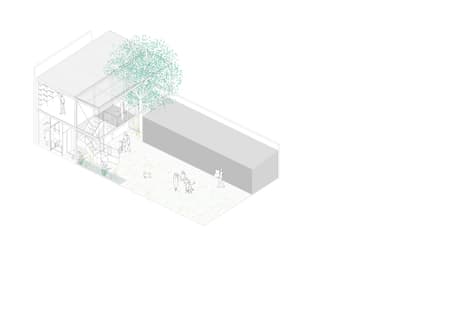
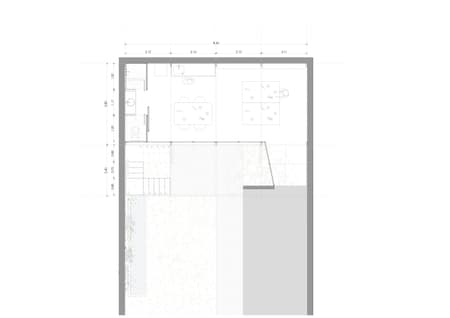
A ground floor plan that operates as a joint space, a multi purpose and gathering area: it works as kitchen / dining room / service equipment, while also functioning as the extension of the workshop, with a system of foldable external panels that allow a fluid continuity with the garden.
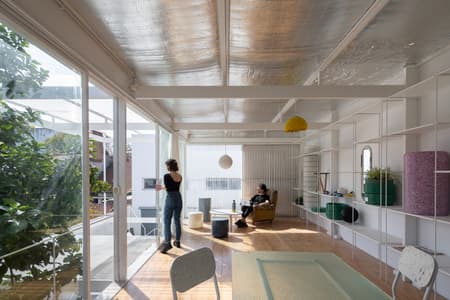
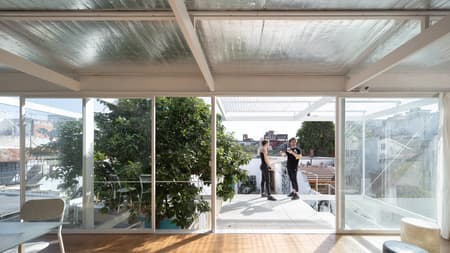
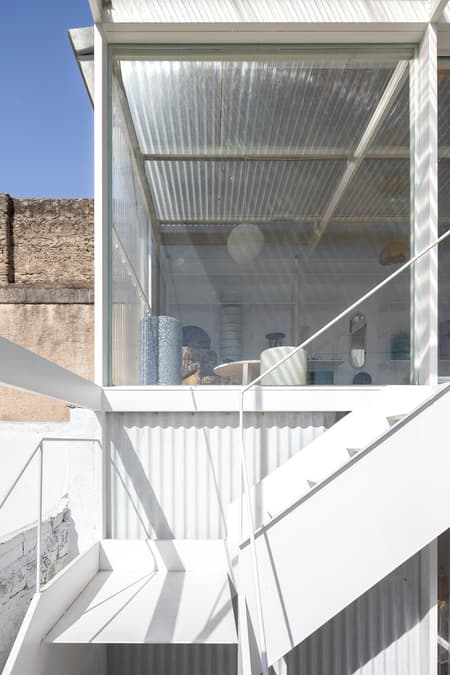
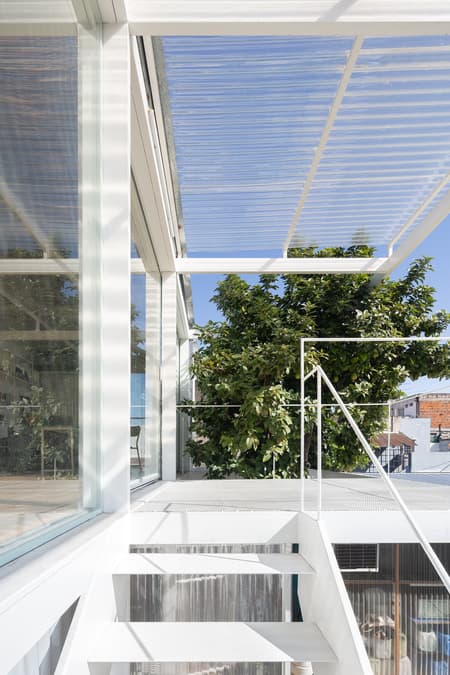
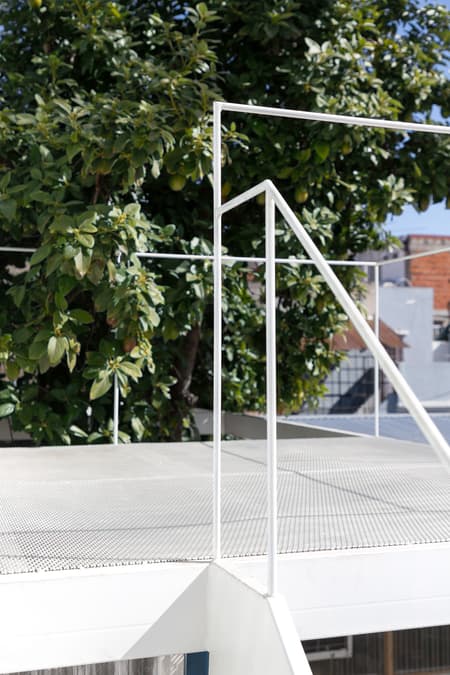
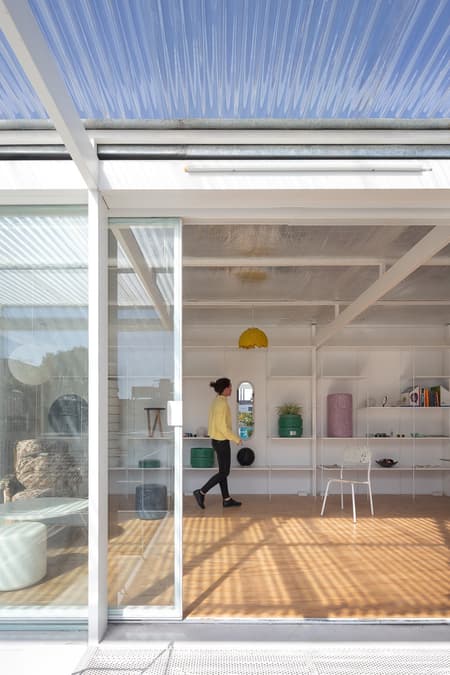
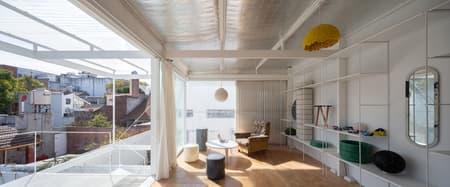
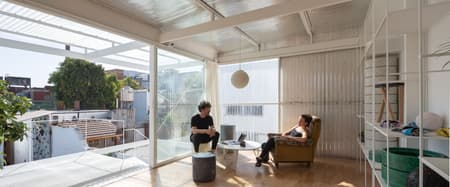
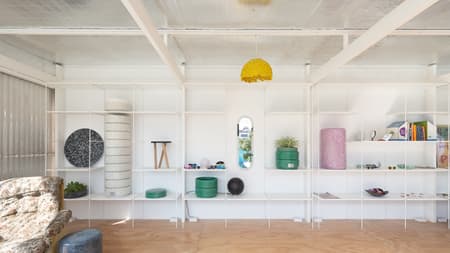
An upper floor plan that surpasses the height of the original construction maintaining a direct relation with the treetop. This plan works as a showroom of the objects produced in the workshop, whilst giving place to an office and meeting area. The terrace and the possibility of actioning the sliding lateral panels of the space allow cross ventilation while recovering the views of the neighborhood.
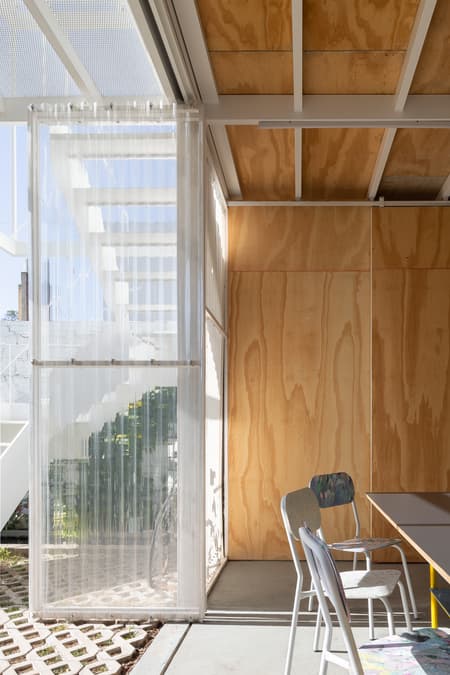
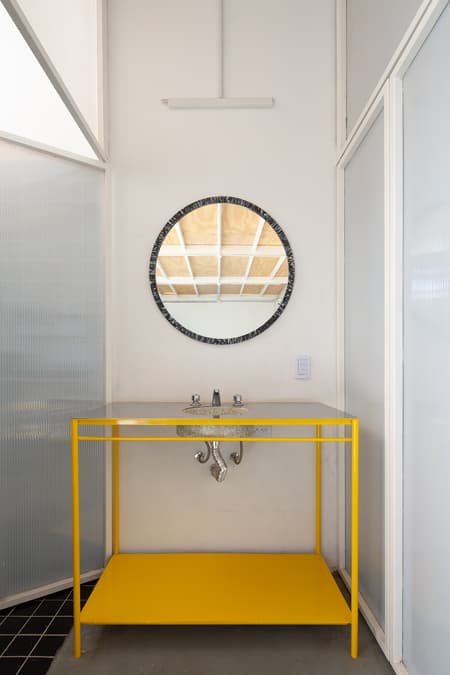
We designed the volume with the logic with which a piece of furniture is conceived, so that it can be modified and operated on by the users according to their needs: from the service equipment, the exhibitory modular shelving system whose shelves can be rearranged depending on the size of the objects to be displayed, to the dynamic perimeter panels that offer different grades of transparency, and are foldable or sliding, consisting of fabric, plastic, glass or vegetation.