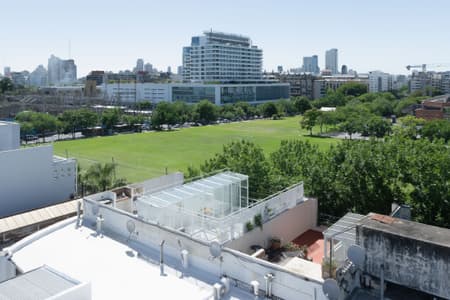
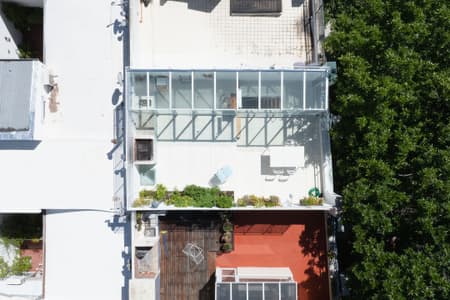
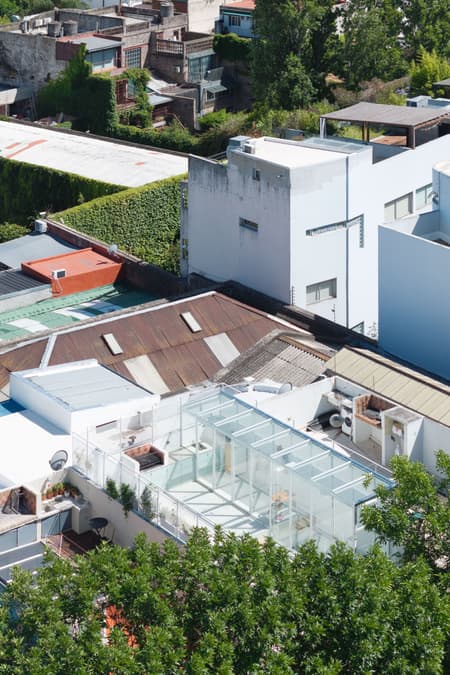
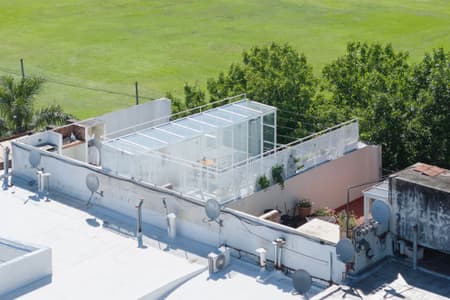
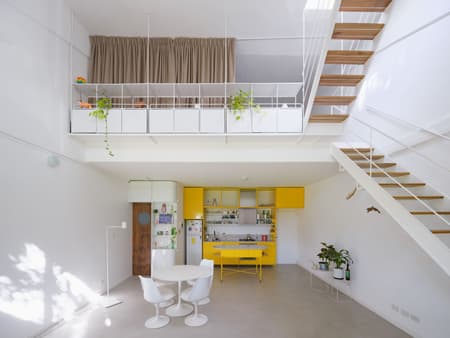
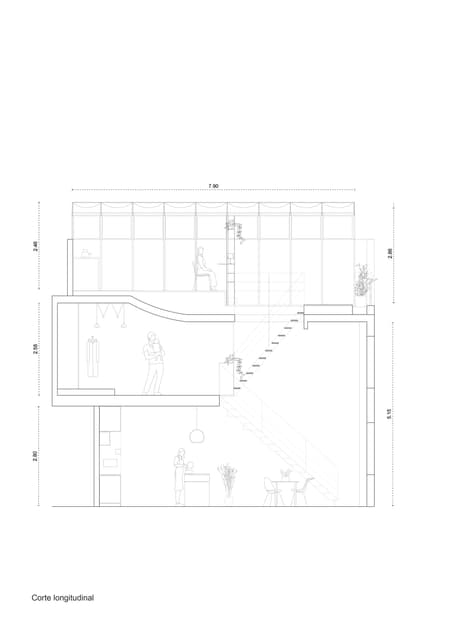
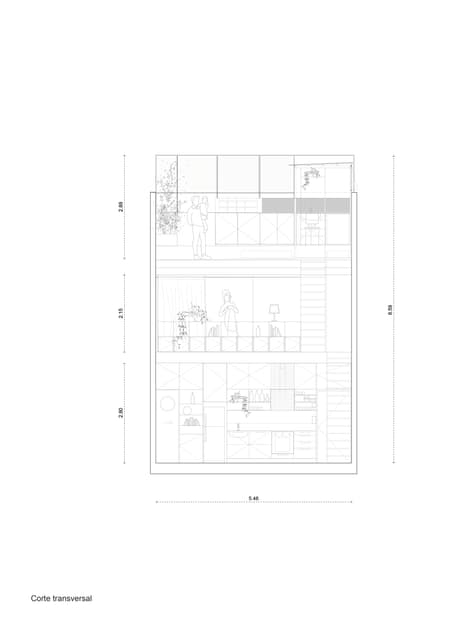
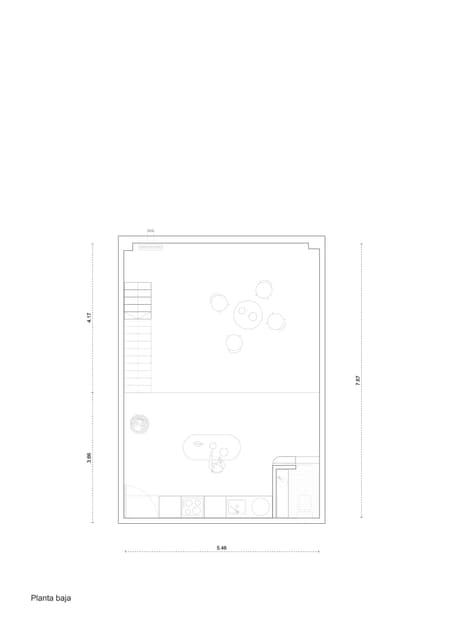
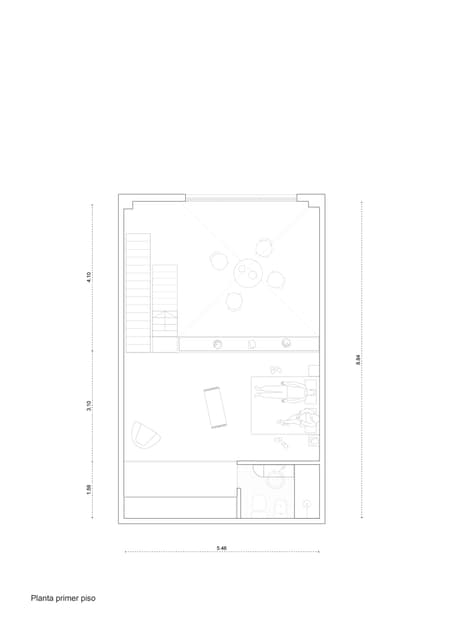
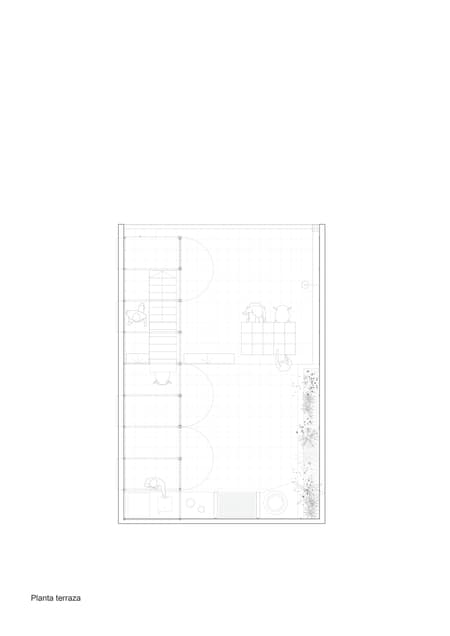
In a former three-story factory that was converted into residential and office spaces during the 1990s in the neighborhood of Colegiales, the client asked us to transform a unit that previously functioned as an office into a home. The building consisted of two open floors without partitions, and a disused terrace due to the shape of its structure—a curved concrete slab that prevented its use. This upper slab was originally accessed through a hatch door that separated the unit from the exterior terrace.
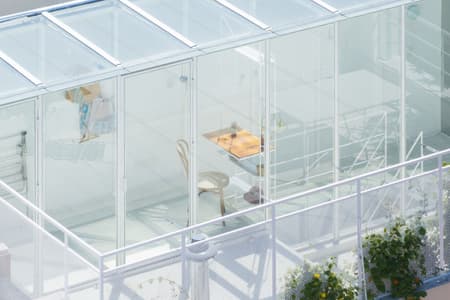
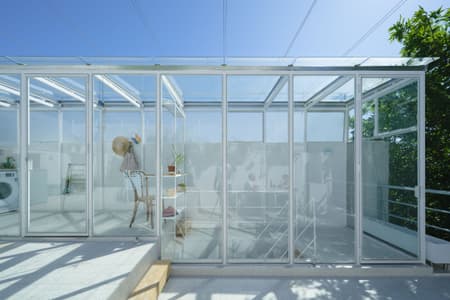
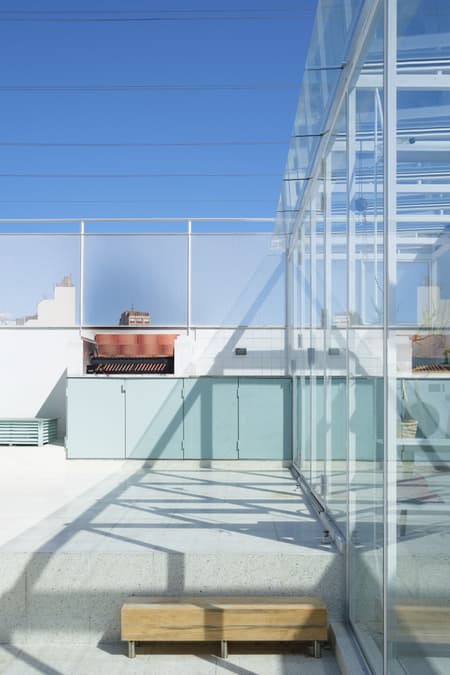
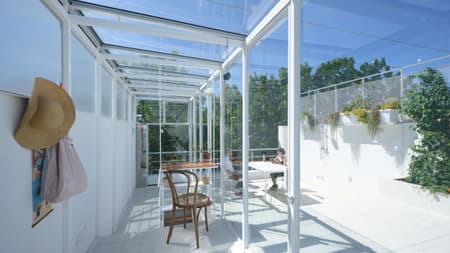
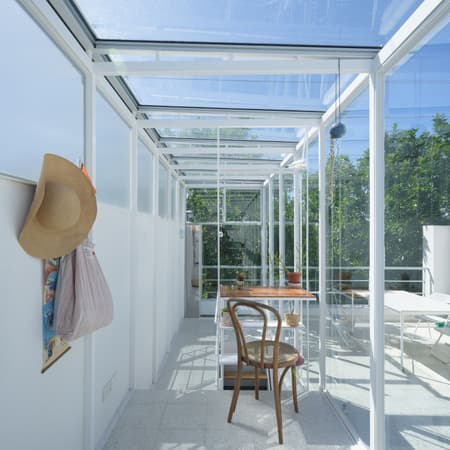
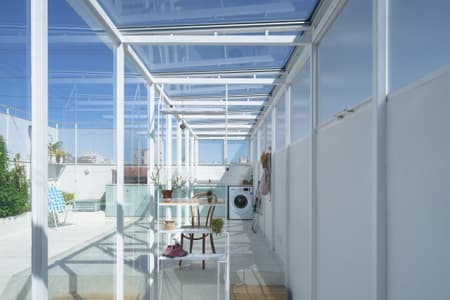
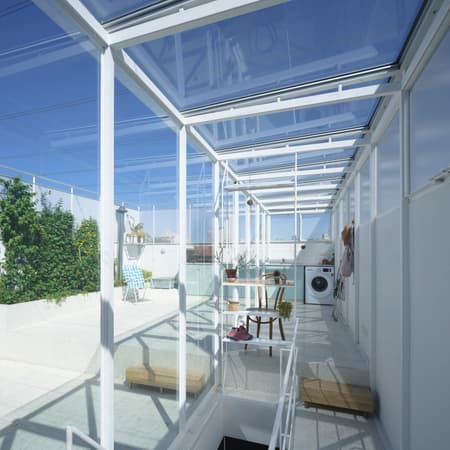
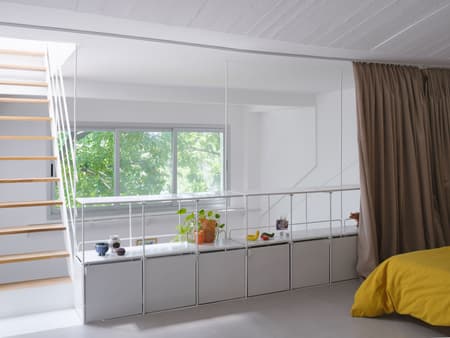
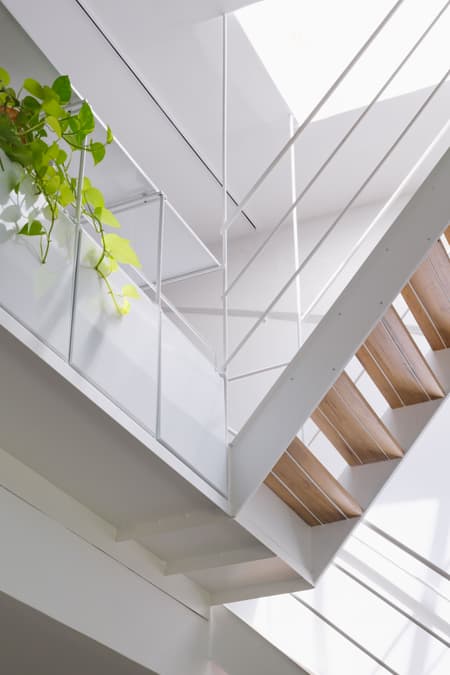
The project strategy consisted of removing this boundary to incorporate the exterior space—not just as an additional room, but as the central point of the house. To achieve this, we placed a glass box with a metal structure against one of the party walls, blurring the limits between inside and outside and creating a new hybrid space that could function both as a patio with a grill and plants, and as a workspace and service area. Its glass roof allows light to filter down to the lower levels and creates a view towards the sky from below=. This was one of the client’s most emphatic initial requirements, making the glass box function as a small beacon–skylight.
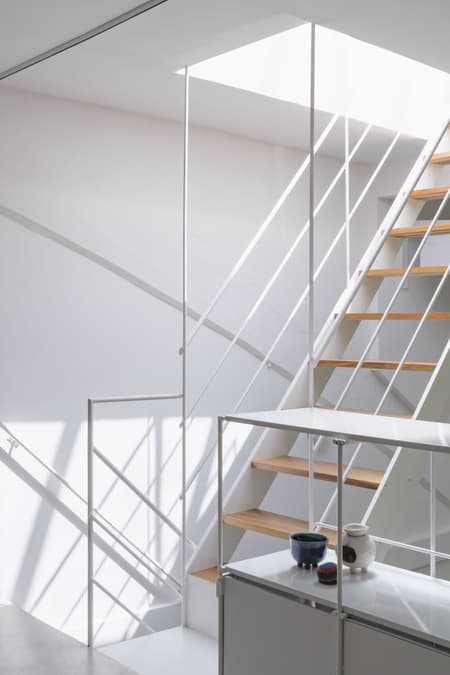
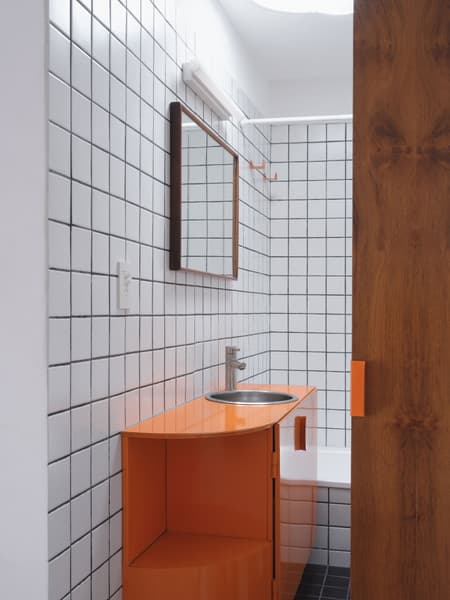
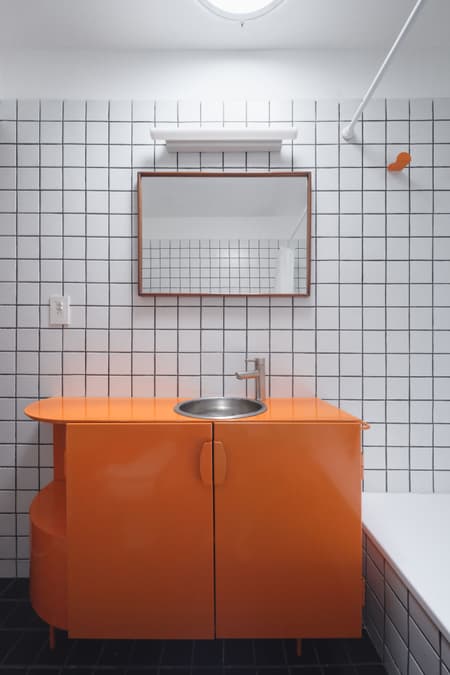
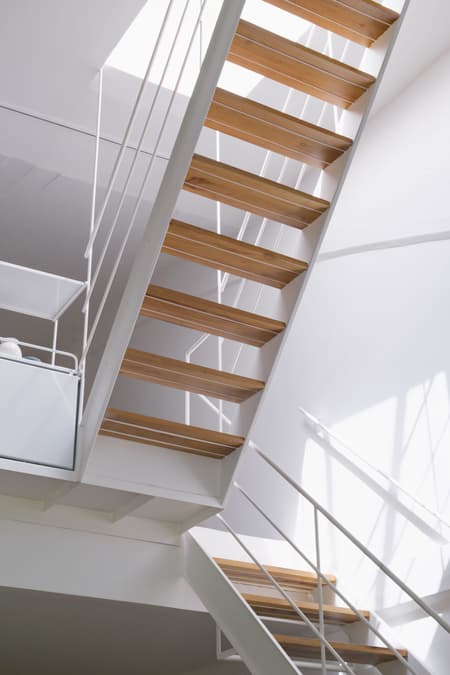
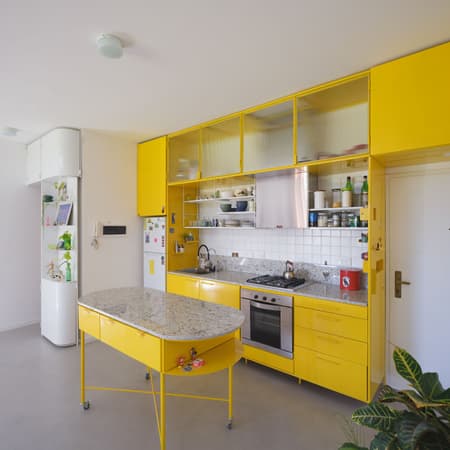
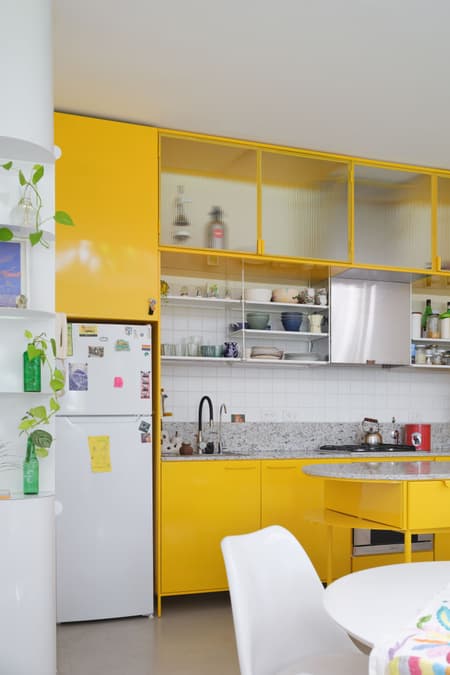
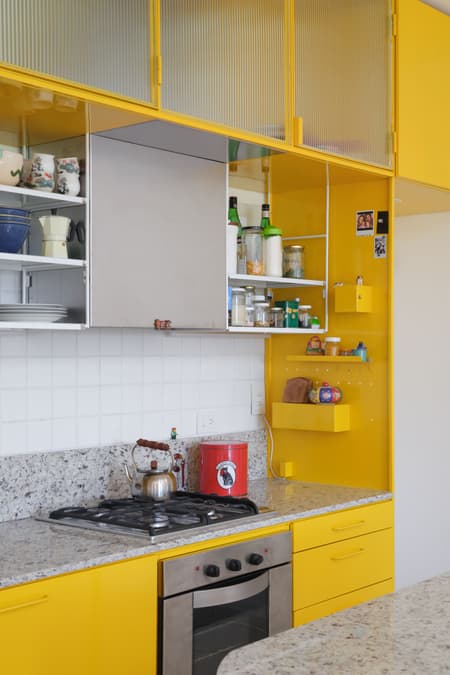
From this lightweight roof structure, the staircase is suspended, descending as if floating and forming, in itself, a bookshelf–railing. Each element of the home’s furniture, in fact, was designed to fulfill more than one function with minimal resources: visual filters along the party walls that also serve as plant supports, a step that doubles as a bench, a railing that becomes shelving and a desk, a bookshelf that also functions as a railing, a kitchen that also acts as an entryway, a shelving unit that conceals a door, and vanities that provide storage as well as towel racks. Structure and furniture converge in a design logic that understands each part of the whole as an element capable of activating different uses and spatial reconfigurations.