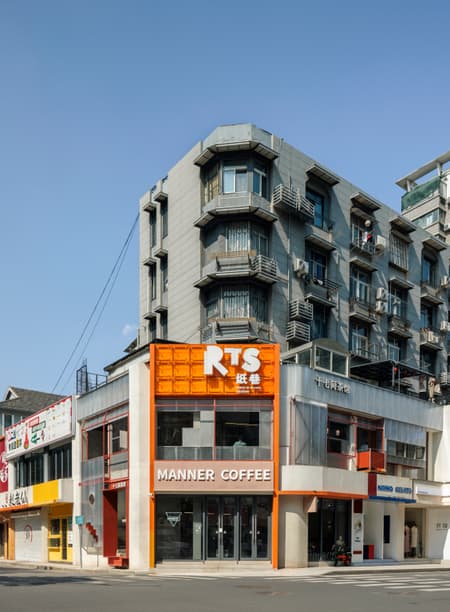
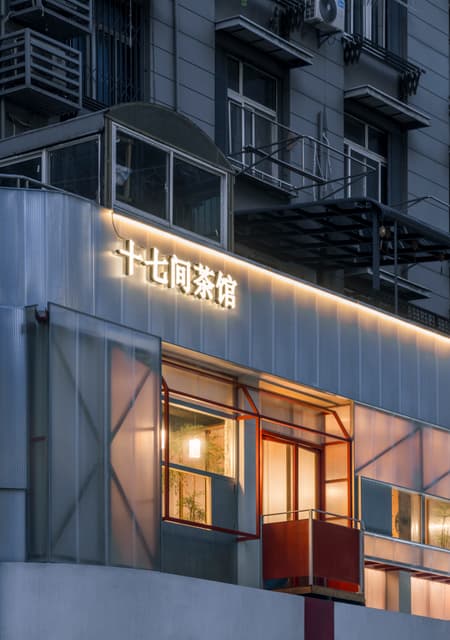
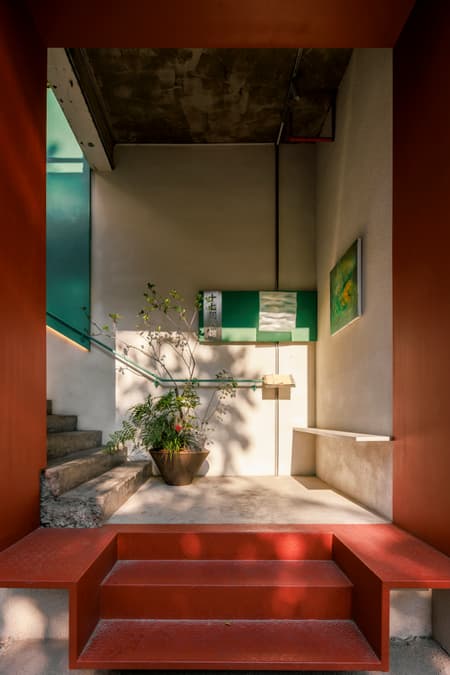
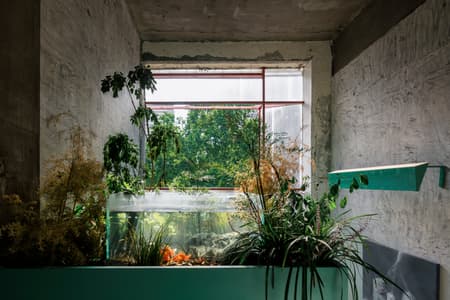
Seventeen Teahouses is located in Chaozhi Lane, Nanjing, a short alley sandwiched between the bustling Xinjiekou commercial district and an old residential area. The project occupies two floors on a street corner, accessible only by stairs. The absence of a ground-floor facade naturally places it outside the street's view; the strong presence of the street-facing facade at the corner further amplifies this "unseen" situation.
Under these conditions, the facade is not merely an image issue, but a pressing issue: how to respond to the city, establish identity, and avoid becoming a simple sign or decoration?
Another issue stems from the commercial operation itself. Seventeen Teahouses uses private rooms as the core experiential unit, meaning that spatial design must repeatedly balance privacy and a sense of unity; simultaneously, the brand hopes to present a more youthful and everyday feel, avoiding being categorized into a certain established style. Under these circumstances, how can the space be organized and understood?
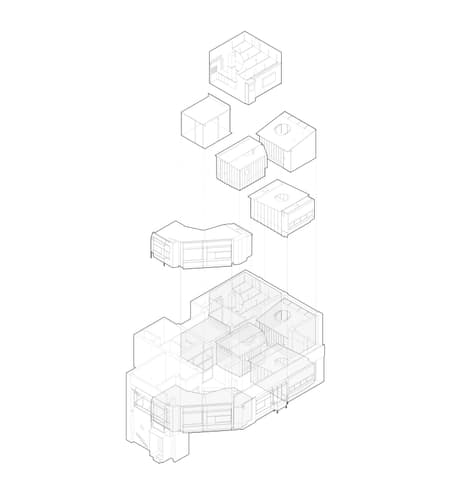
The core inspiration for this project comes from the architectural deconstructionist ideas of Gordon Matta-Clark. The design does not borrow the formal language of his work, but rather introduces "slicing, opening, and recombining" as a method into the existing spatial structure, thereby loosening the originally stable and closed orthogonal order.
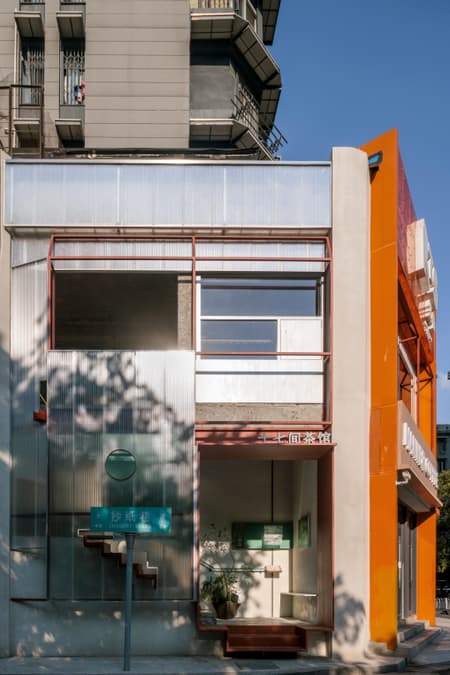
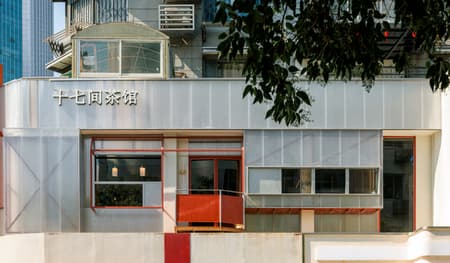
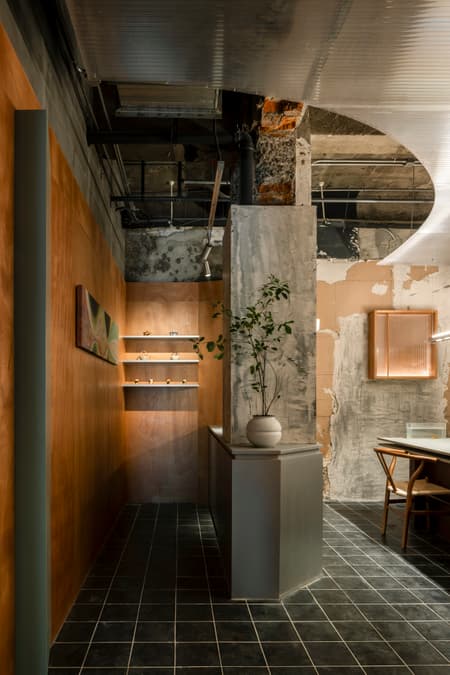
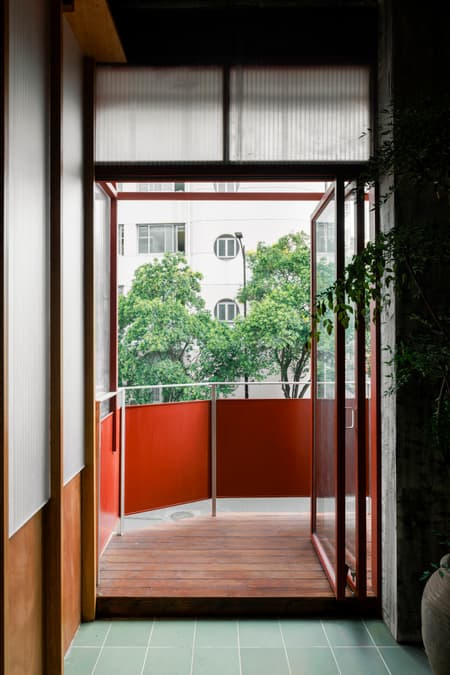
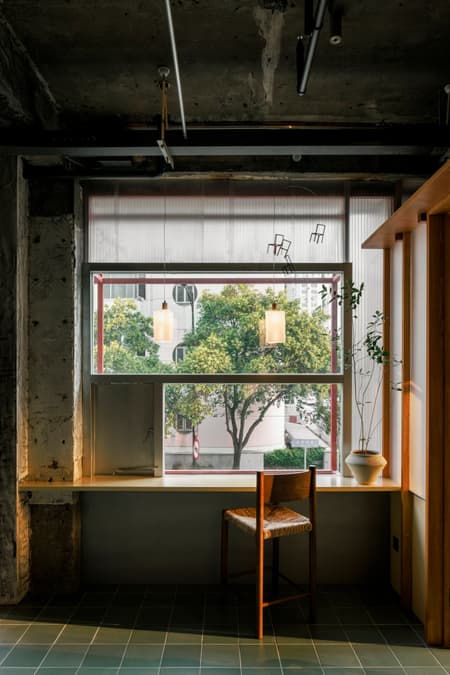
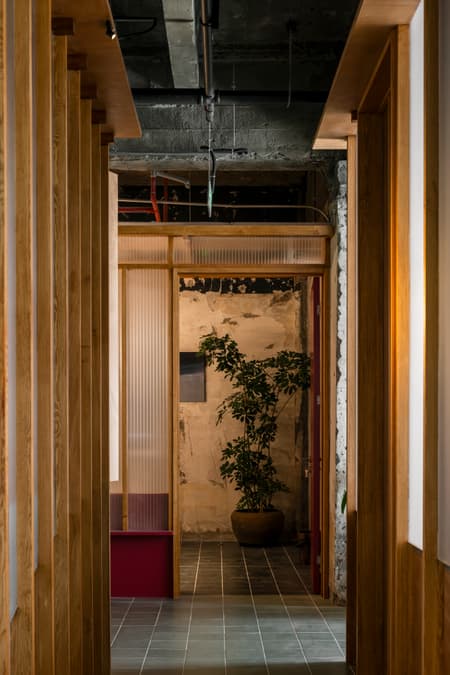
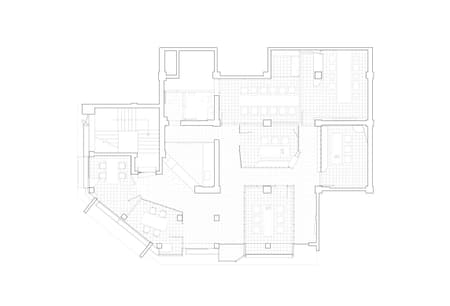
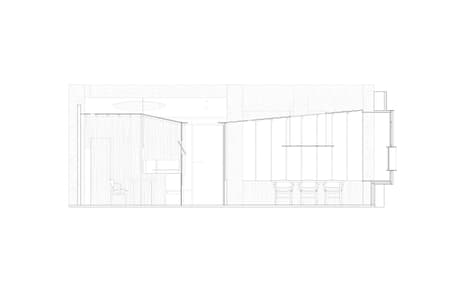
The originally continuous interior space is consciously broken down: through the division of volume, changes in vertical relationships, and the introduction of partial openings, the space is no longer understood as a series of independent rooms, but rather as a series of interconnected spatial fragments that can be walked and perceived. As people move within it, they constantly experience turns, pauses, and changes in perspective, and the spatial layers gradually unfold accordingly.This spatial generation logic further extends to the building facade. The facade is not an outer shell attached to the building, but becomes the external interface of the internal spatial relationships. Translucent polycarbonate panels encase the original building structure, allowing the layers of interior space to emerge subtly against the urban landscape. Red linear and planar components act as structural markers, reorganizing windows, corners, and entrances into a clear and restrained order.
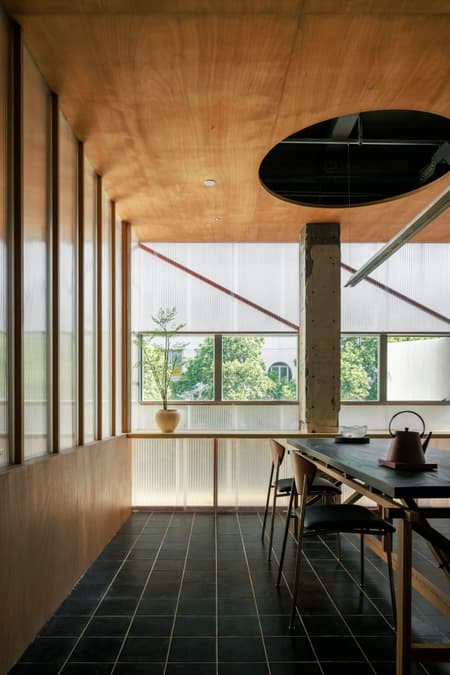
This spatial generation logic further extends to the building facade. The facade is not an outer shell attached to the building, but becomes the external interface of the internal spatial relationships. Translucent polycarbonate panels encase the original building structure, allowing the layers of interior space to emerge subtly against the urban landscape. Red linear and planar components act as structural markers, reorganizing windows, corners, and entrances into a clear and restrained order. At night, the building appears almost luminous, responding to the street in a stable
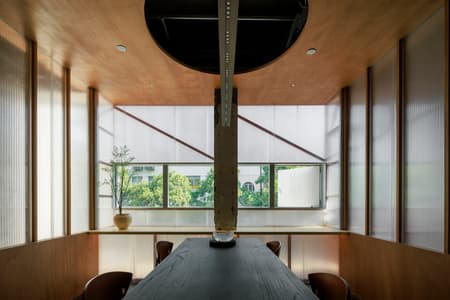
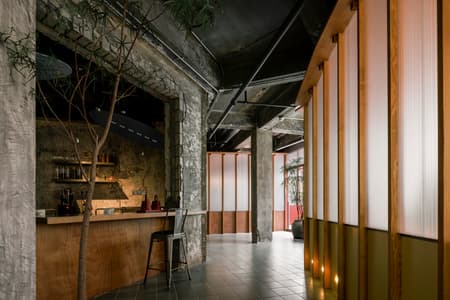
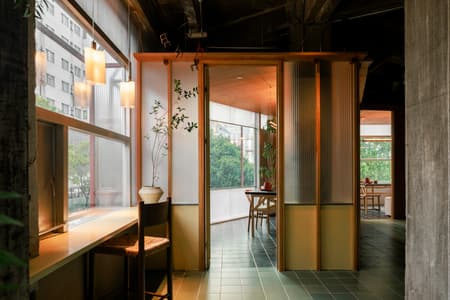
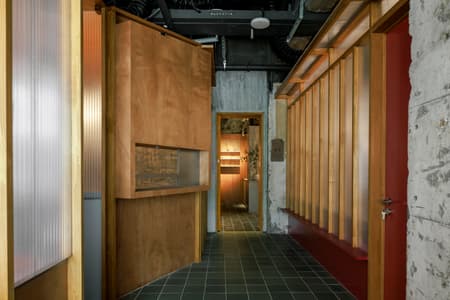
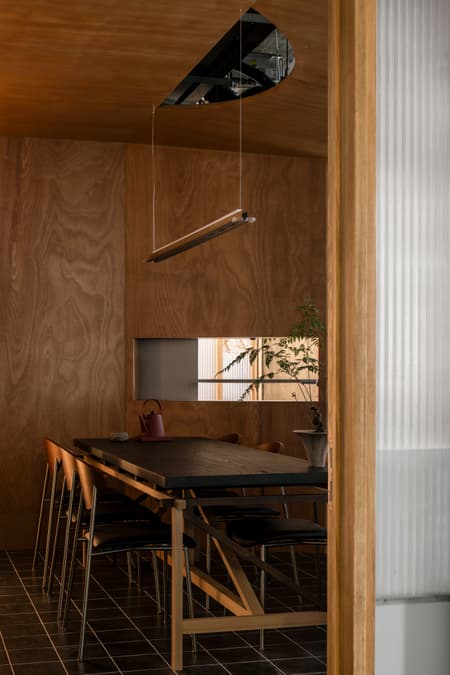
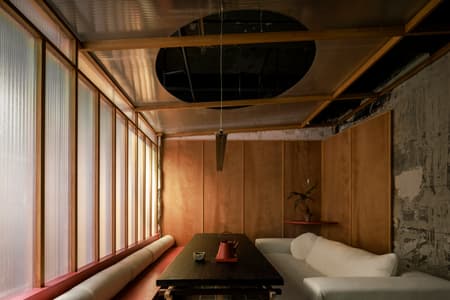
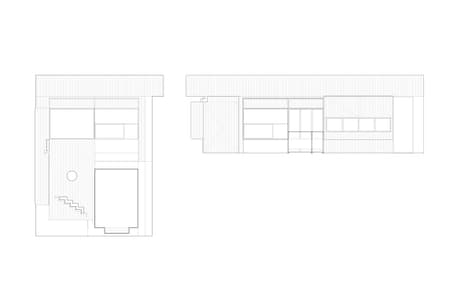
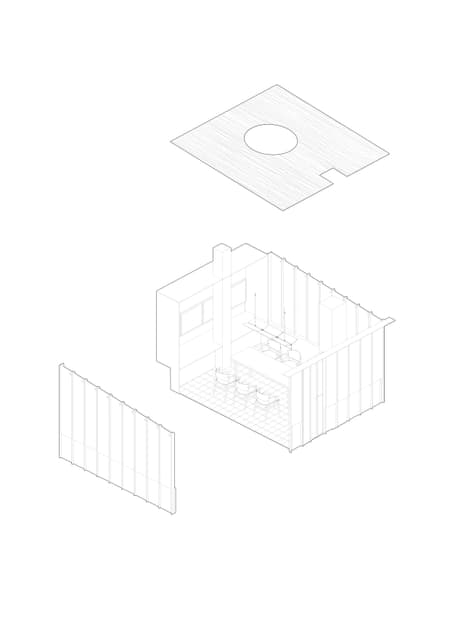
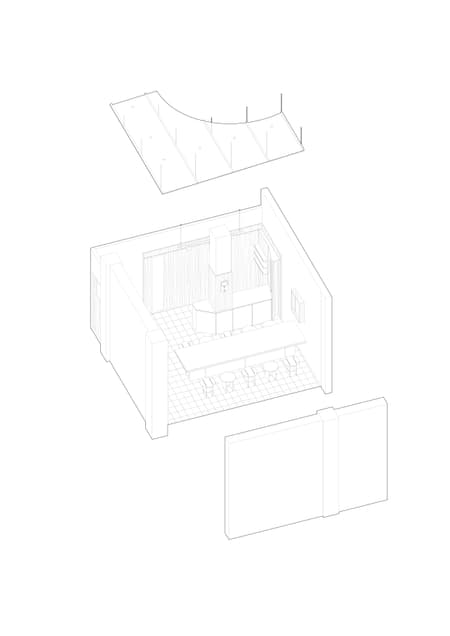
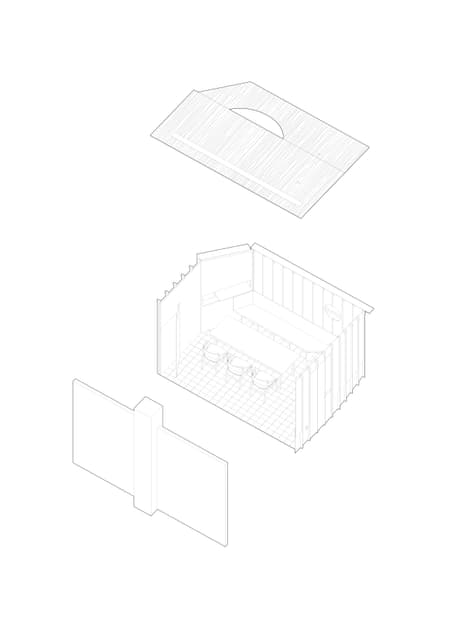
Within the deconstructed and reassembled spatial structure, the interior is organized using what Heng Architecture consistently excels at—a "box-within-a-box" approach. The private rooms are inserted into the overall space as relatively lightweight structures. The reception/counter is similarly embedded into the interior in the form of a façade opening, making it understood within the overall structure as a type of "room" rather than an isolated functional.
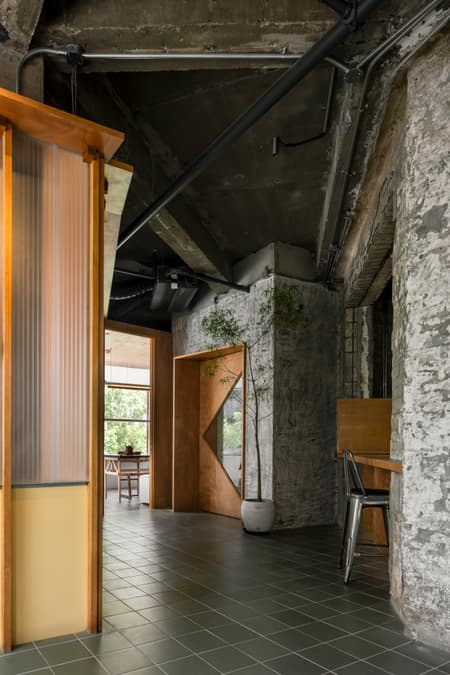
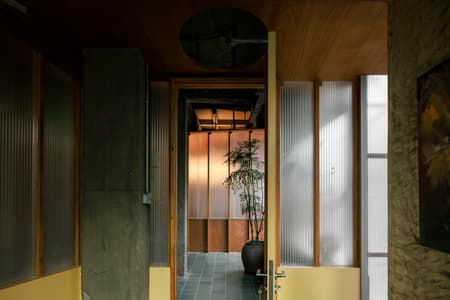
There is no traditional lobby in the space; therefore, walking itself becomes a crucial way to organize the space. The gaps between the private rooms are transformed into perceptible public areas: from a relatively constricted angled space at the entrance, gradually transitioning to an enlarged "indoor plaza," and then extending to the passageways leading to the various private rooms, thus creating a series of street-like spatial experiences.
Specific components and details together constitute a geometric order that can be intuitively perceived: the rectangular volume of the private rooms, the triangular chamfers on the doors, and the recurring circular and semi-circular openings in the walls and ceilings… These geometric operations are not intended to emphasize form, but rather to create a richer experience in small-scale spaces through controllingenclosure in the private rooms while naturally presenting a transparent, everyday, and youthful spatial atmosphere.
The design of Seventeen Teahouses does not attempt to mask the site's limitations with complex forms, but rather treats the intuitive needs of commercial space and the perceptual experience of architectural space as two sides of the same coin.
Creating a new expression within the old city involves finding new organizational methods within existing structures and constraints. By redistributing and superimposing space through architectural techniques, a richer user experience is created within a limited scale, making the space itself part of the brand experience.