

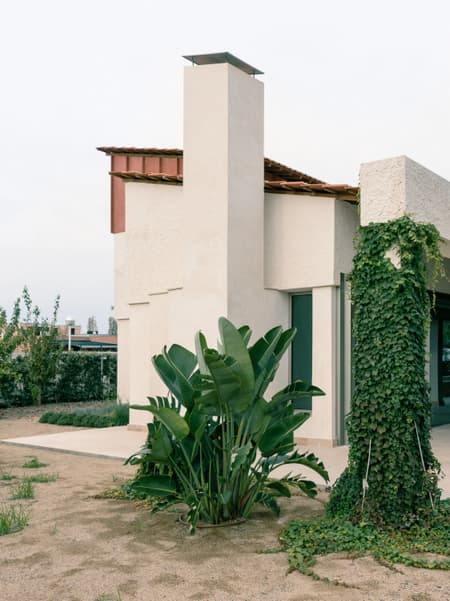
This house in the coastal city of Salou, Spain, is the result of a collaborative effort with our clients. Alba's vision, who wanted a sloped roof with exposed wooden beams, and Oriol's desire for a home connected to the garden without sacrificing privacy, led us to explore concepts of openness, proportion, and form. We drew inspiration from local poultry farms and Colombian estates to create a residence that harmonizes with the surrounding architecture while introducing new formal expressions.
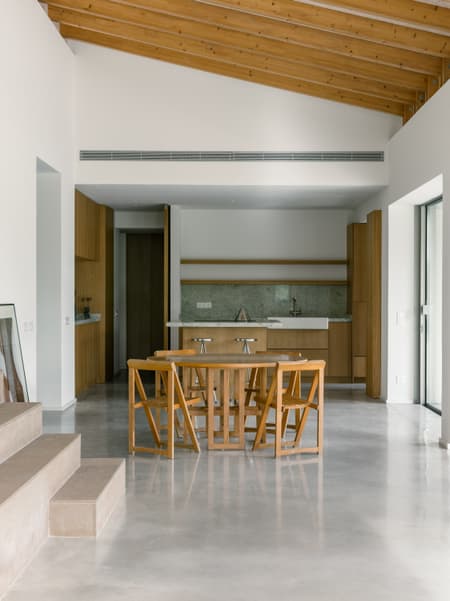
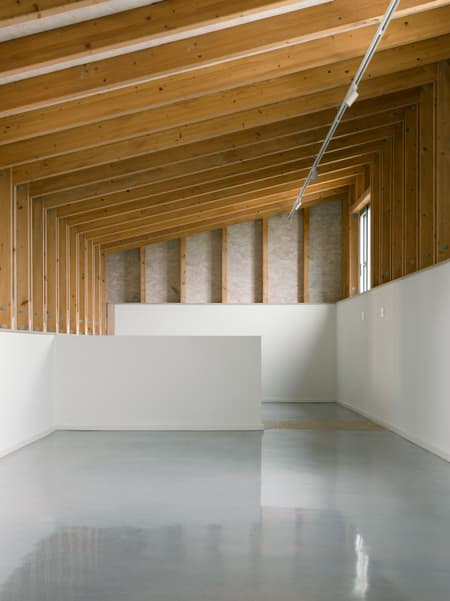
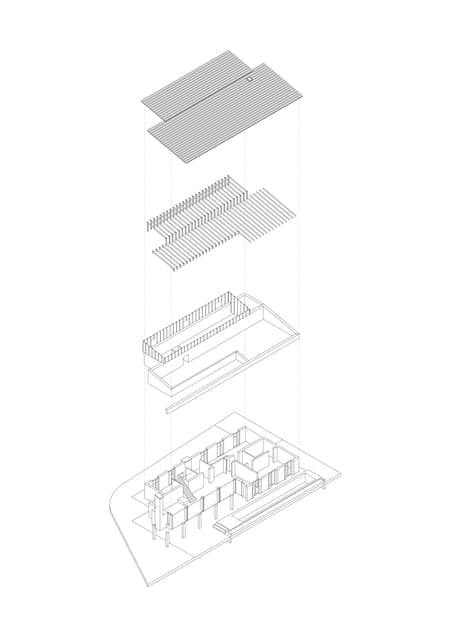
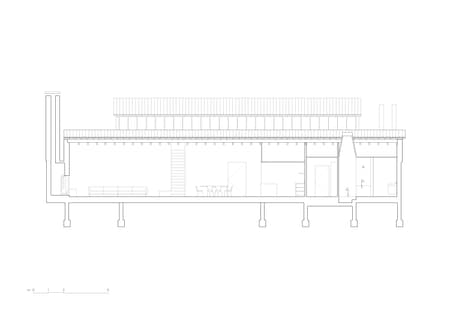
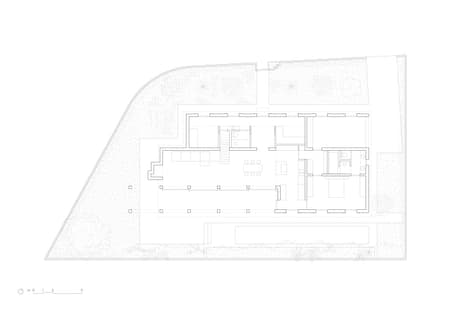
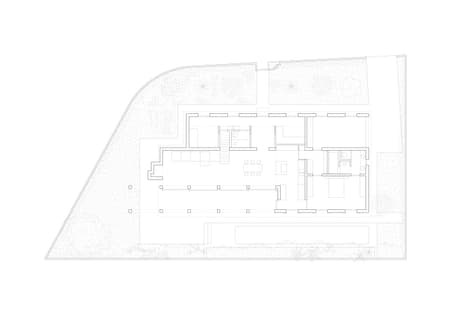
The goal was to maximize the surface area on the ground floor and enhance the connection with the outdoors. Therefore, on the north facade near the entrance, two individual bedrooms sharing a full bathroom were arranged in a sequence of spaces, eliminating the need for hallways. On the south facade, a large area houses the living spaces, which fully open onto a covered outdoor porch inspired by South American colonial architecture. The gallery with red tiles and square pillars not only serves as a transitional and living area but also functions as a climate control device. The master bedroom, located on the east side of the house, allows direct access to the pool from the room. The upper floor, built in wood with a terracotta-red façade, is an open space that serves as an art studio and playroom, with the possibility of converting it into a third bedroom with an independent bathroom in the future.
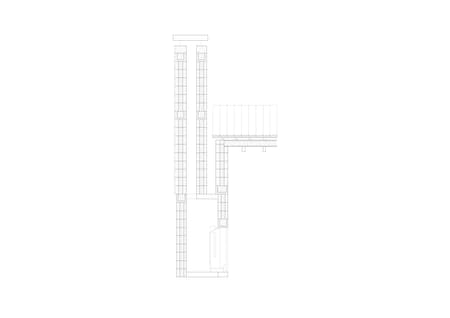
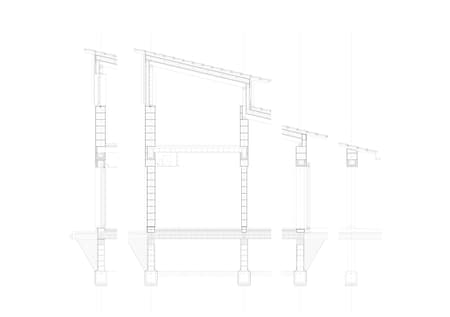
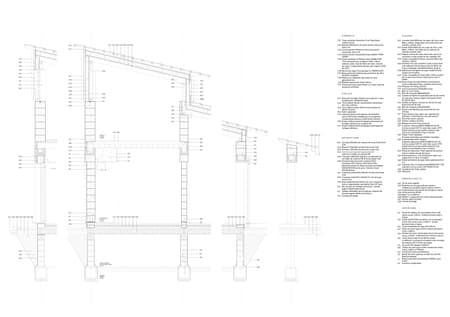
Based on traditional Mediterranean architecture, our sustainability strategy focused on optimizing the building’s thermal inertia, as seen in Catalan farmhouses, using the building's mass to smooth out interior temperature variations. The 40 cm thick cellular concrete brick walls are coated with lime mortar, making them breathable walls with high inertia, meeting the insulation requirements of the Spanish technical code.
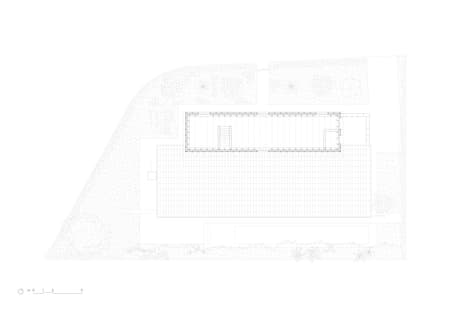
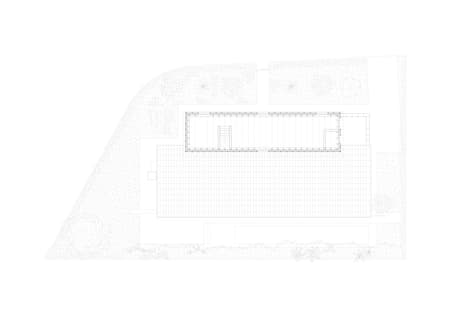
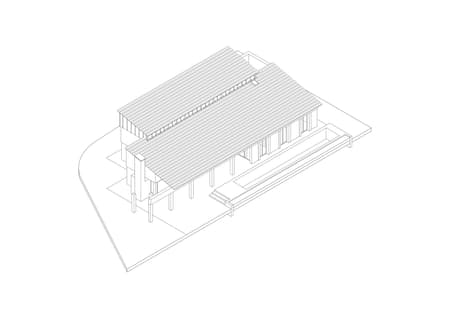
The ventilated roof, slightly separated to allow air circulation, along with 20 cm of cork insulation, helps maintain a stable interior temperature. This roof creates an overhang on the south facade, designed to provide shade in the living areas during the summer and allow solar radiation to enter in the winter through large windows that connect to the garden. The collected water is used for garden irrigation.
The entire building is erected on a ventilated sanitary slab, which separates the structure from the natural ground and prevents moisture. The house's flooring is concrete, reinforcing the concept of thermal inertia. This material stores energy, and along with the ventilated sanitary slab, maintains a pleasant temperature in summer. Additionally, it is equipped with an underfloor heating system, ensuring thermal comfort in winter. The pool, oriented to the south and located very close to the house, helps keep the home cool during the summer thanks to the evaporation of water. Moreover, deciduous trees are strategic allies, allowing sunlight to penetrate the house in winter and providing shade in summer.







.jpg?w=450&q=75&dpl=dpl_76Rq87wxQwFvSi96M2iBpo5TN6QL)
.jpg?w=450&q=75&dpl=dpl_76Rq87wxQwFvSi96M2iBpo5TN6QL)
.jpg?w=450&q=75&dpl=dpl_76Rq87wxQwFvSi96M2iBpo5TN6QL)