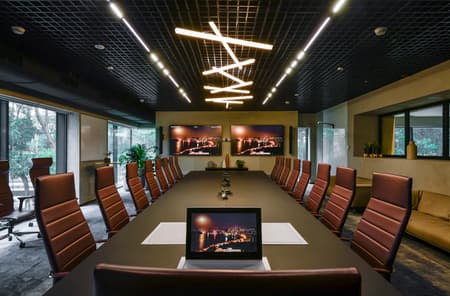
The word “Environment “ or “Campus” replaces the conventional “Office”.
This simple shift ignites a meaningful conversation about the organizational frameworks and particularities of BCG’s attitudes and work flows as well as critically re-imagining the space within which it can thrive. The idea of viewing the stratified and disconnected space implied within the designated full/ partial floor plates of Tower 2 at Maker Maxity as Architectural Ground emerged collaboratively through a series of workshops with BCG's Project team, Rahul Agarwal, Rajiev Malhotra, Manmeet Bassi, Ravi Mishra, Saloni Vyas, Oyster Aranha, with critical interventions and prompts from the MDP's Alpesh Shah, Rahul Jain, Ashish Garg, Rahool Panandikar, Gaurav Jindal, Aparna Bijapurkar, leading this initiative.
The notion of regional context is made possible by BCG's philosophy of not prescribing an aesthetic identity. Through the workshops, a 'language' began to emerge, based on a less-literal reading of Architectural models, devices, and materials within and outside of the city.
The integrated campus becomes a plausible reality through a series of salient operations derived from Traditional Indian planning devices.
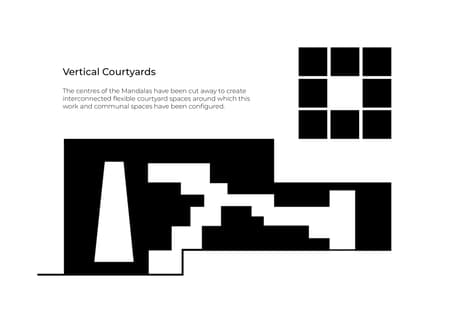
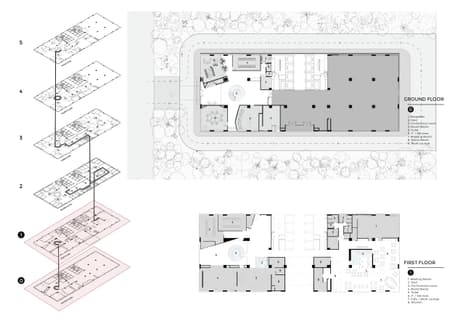
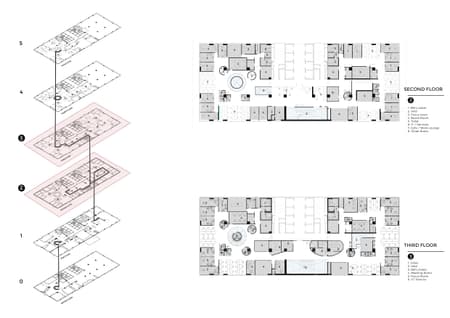
1. The Mandala: The square grid floor plates echo the 9 square diagram of the Mandala. A full floor plate consists of two connected “Mandalas”.
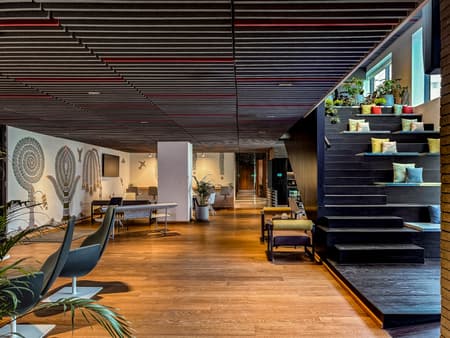
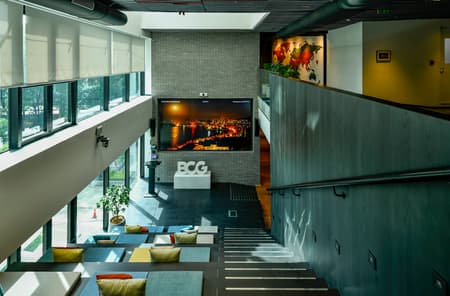
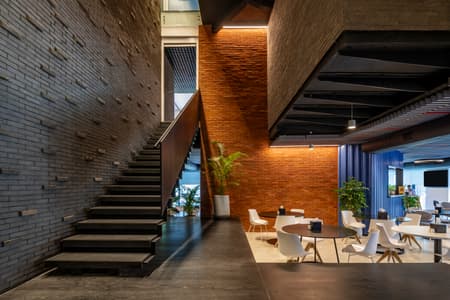
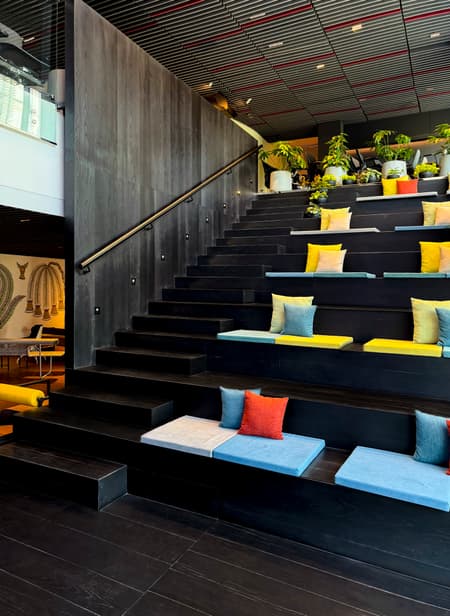
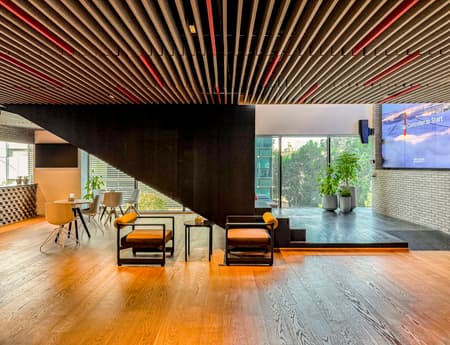
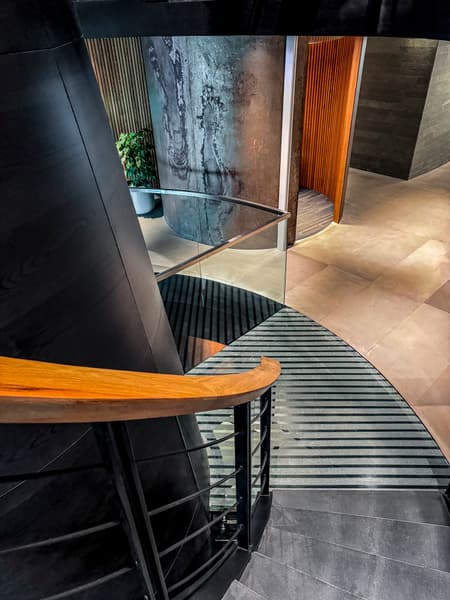
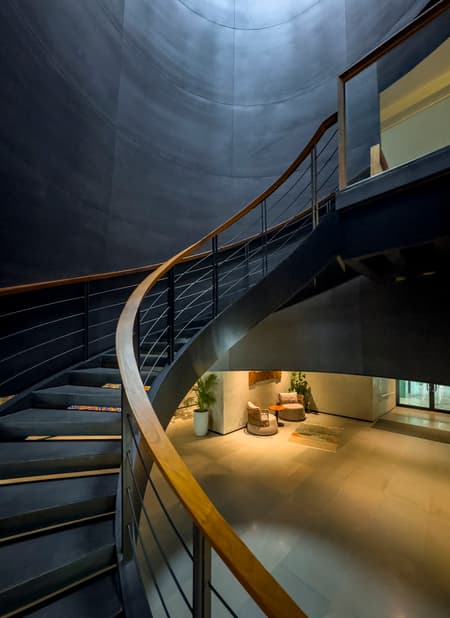
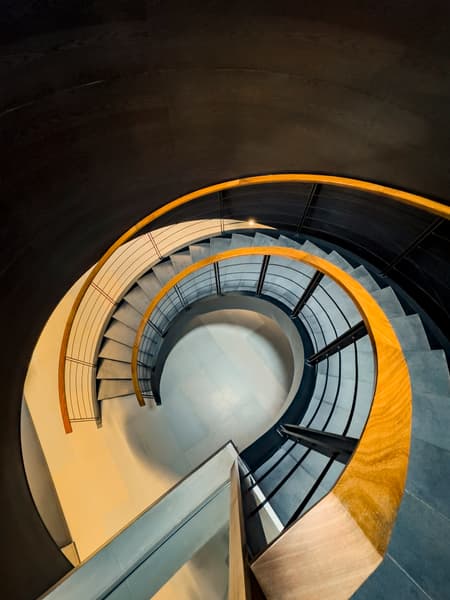
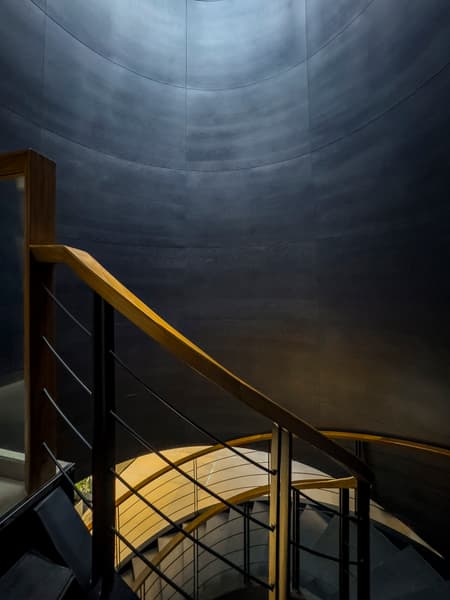
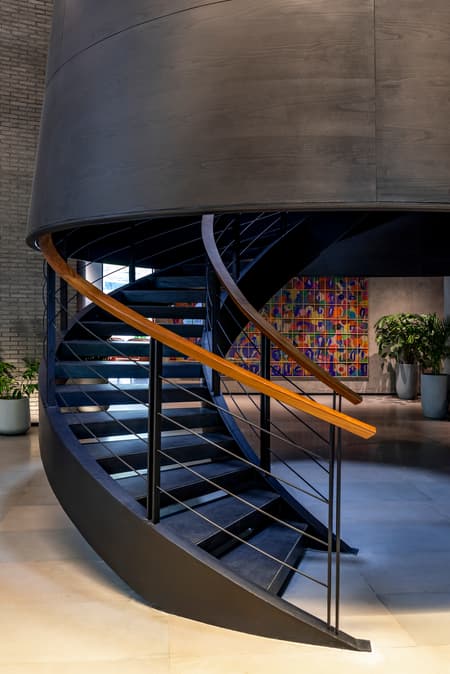
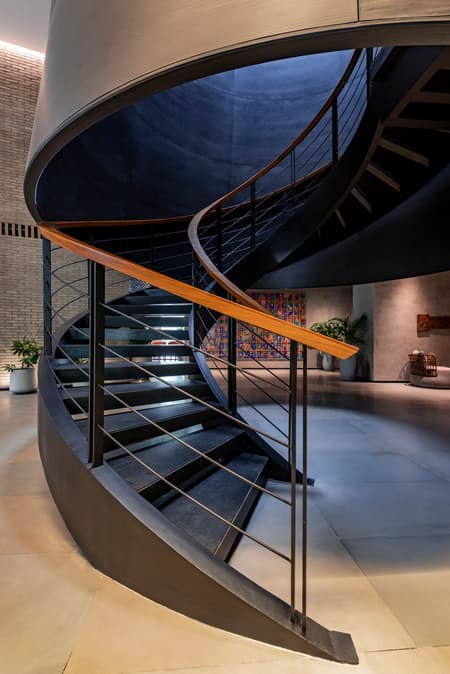
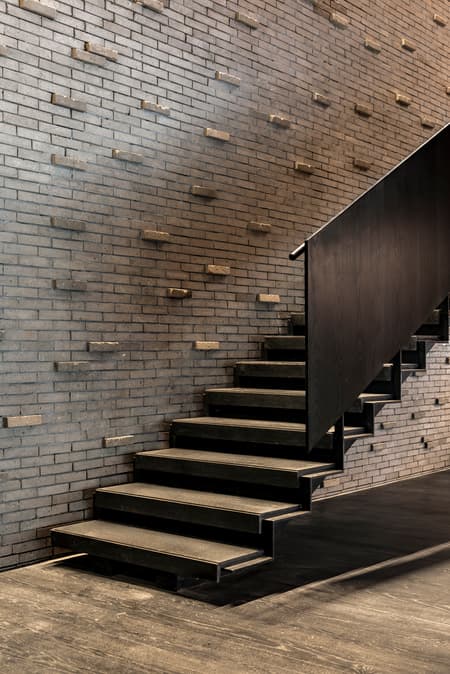
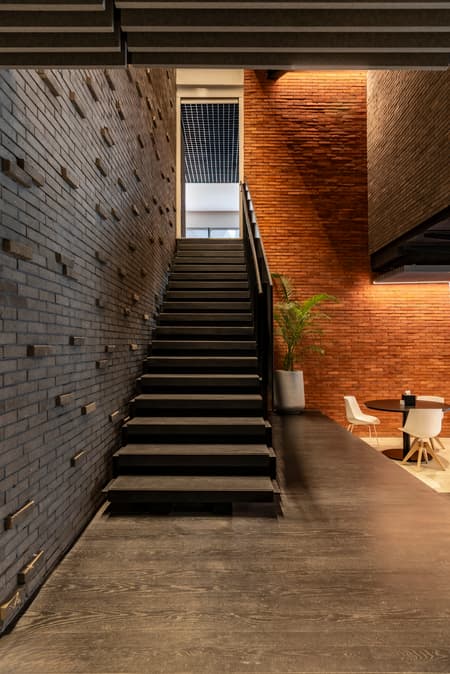
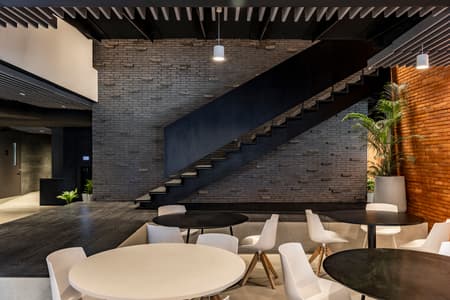
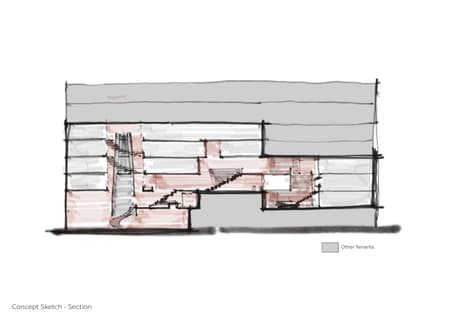
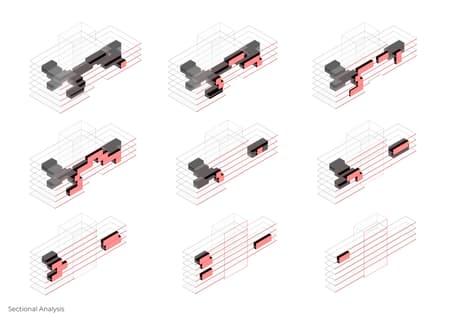
2. The stepwell + Street : A three dimensional stepped street slices through the floors, connecting different spaces and is interspersed with communal areas. The notion of the ‘street ‘ continues into the workspaces, shifting away from generic corridors towards the fluidity and coherence of an articulated architectural ground.
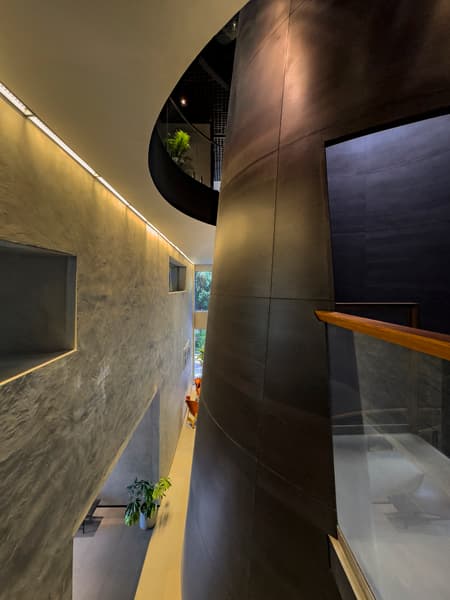
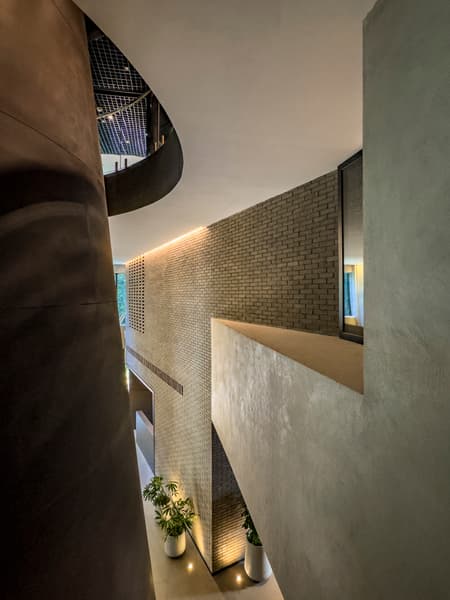
3. Vertical Courtyards : The centres of the Mandalas have been cut away to create interconnected flexible courtyard spaces around which this work and communal spaces have been configured.
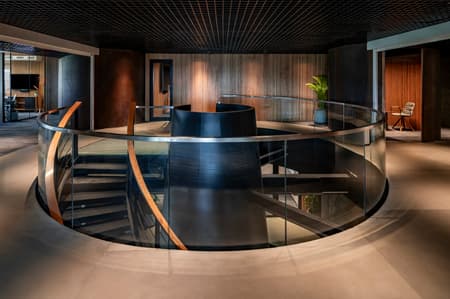
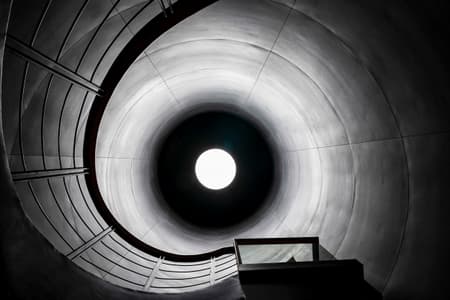
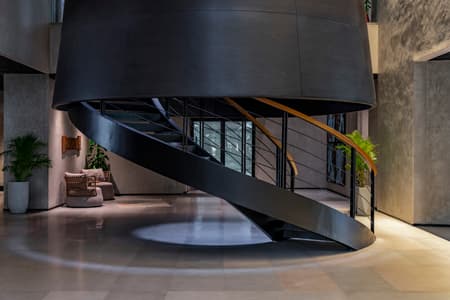
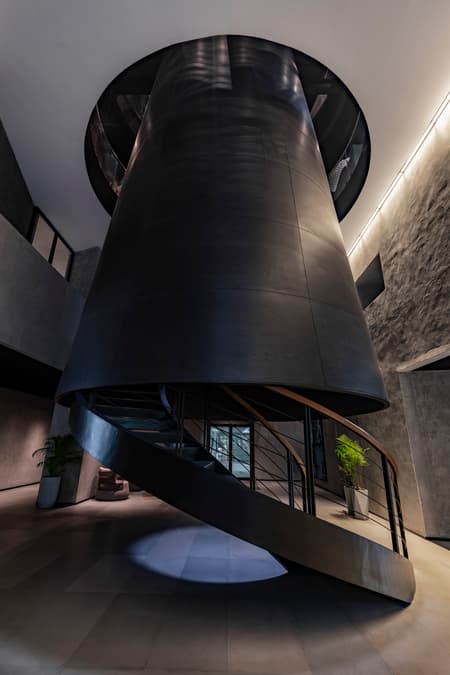
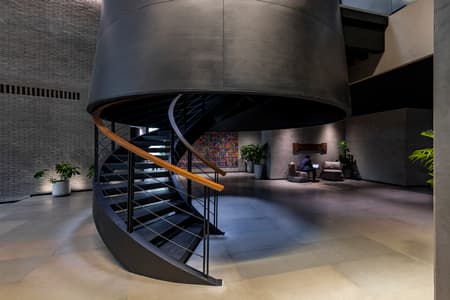
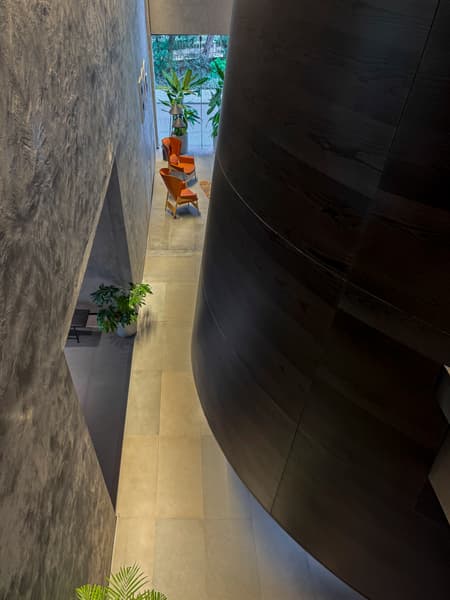
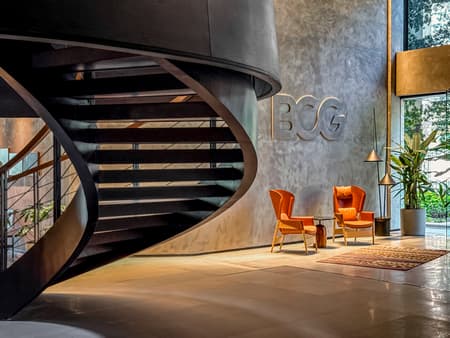
The independently accessible double level lobby and visitor interface areas are organized around a ‘skylit’ circular courtyard sheltered by the truncated cone that slices through the campus, echoing Bombay’s industrial past.
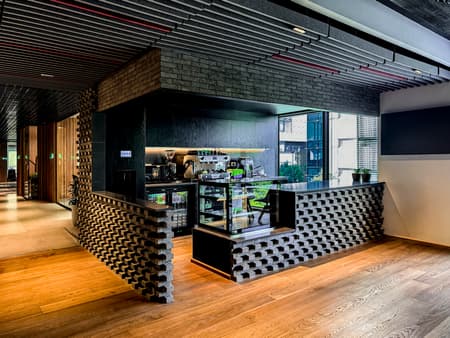
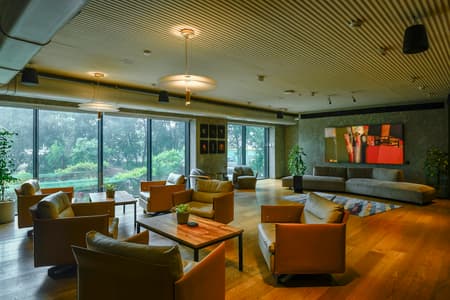
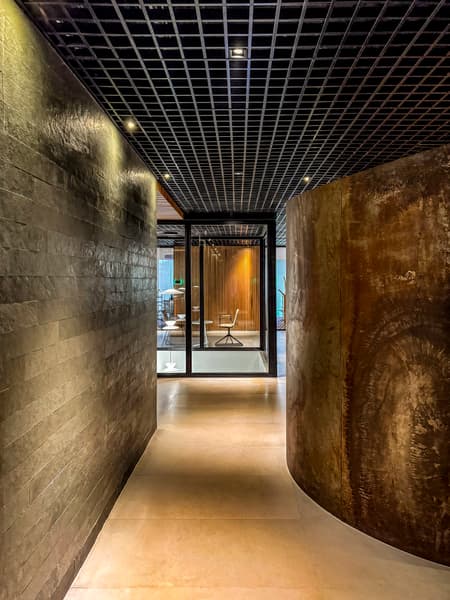
Low impact, sustainable materials (brick / stone/ terrazzo ) ,large textured walls, etched and cast graphics and a fluid arrangement of rooms and pre-function spaces speak of a certain ethos anchored in genuine sustainability and interpretation of history, art and the implied social connections within the campus.
Sophisticated technology (MEP/ IT/ AV/ ect) merges with simple materials and strategies. The complexity and beauty comes from the re-interpretation of each subject and the hybridities that form through their connections. The end result is a highly calibrated hypothesis . The horizontal campus as a vertical campus within an existing shell is a fairly radical gesture but is essential for a fluid, Human centric sustainable environment.
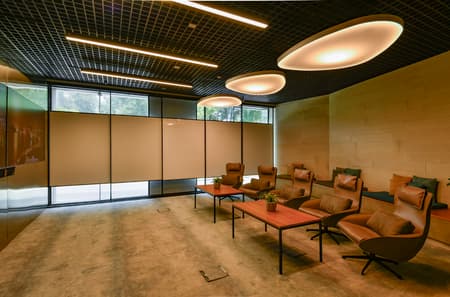
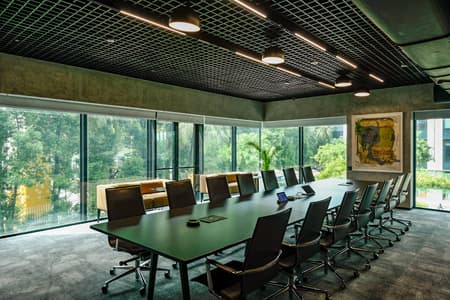
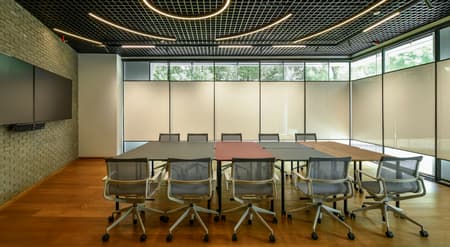
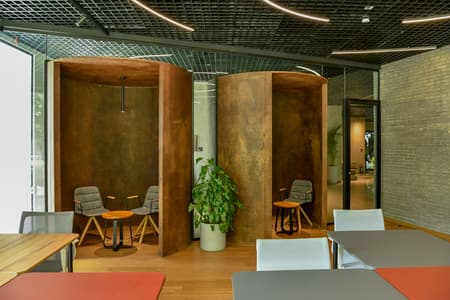
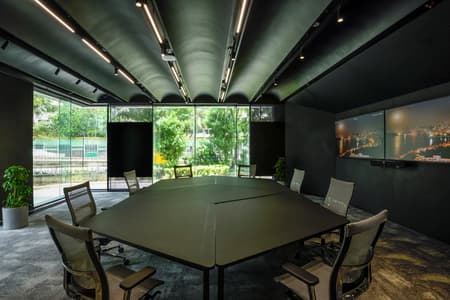
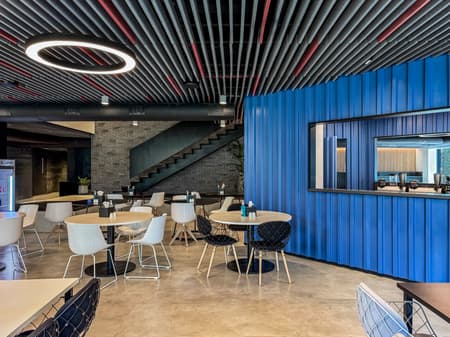
The integrity of the ‘village’ is fundamental to the space but the interpretation of this archetype through its aggregation of open workspaces, MDs cabins, meeting /cafe team rooms and phone booths/ focus rooms is distinct, as are the activated horizontal and three-dimensional ‘street’ connections between villages. Identifying the phone booths/focus rooms as physical fulcrums lets us interpret these small areas as platonic or hybrid architectural forms around which space can bend and flow.
1. Where did the idea for the project come from and how was the concept developed? (595 keystrokes) The concept emerged from the rejection of generic, placeless corporate interiors. Instead, the design reinterprets the horizontal campus as a vertical campus, introducing fluid spatial connections within a high-rise tower. Drawing from Indian planning archetypes—the Mandala, stepwell, courtyard, and Indian street—the design creates both collaborative and introspective zones. By working with local craftsmen and materials, the project embodies cultural specificity, embedded sustainability, and BCG’s values of adaptability, collaboration, and place-based identity.
2. What is the dynamic between the project and the surrounding landscape and/or urban area? (max 665 keystrokes) Located within a glass-box commercial tower in a prominent business park, the project radically reinterprets the interior while respecting the building shell. Conventional stratified office floors are replaced with interconnected spatial layers, with connections turning into hubs of connections - amphitheatre, cafes. The design brings Mumbai’s vibrant urban character into the vertical campus, referencing the city’s industrial past of smokestacks and mills through the truncated cone and courtyards. The result is a workspace that inserts cultural specificity into the anonymous high-rise landscape while maintaining BCG’s non-generic, place-responsive identity.
3. Sustainability and eco-compatibility strategies, materials, technologies, certifications (if any): ( 686 keystrokes) Sustainability is embedded through locally sourced materials, Indian craftsmanship, and low-impact material strategies. Brick, stone, terrazzo, and etched graphics reflect regional identity while minimizing embodied carbon and transportation emissions. Rejecting factory-produced materials, the design supports local artisans and handmade craft. Courtyards and stepped circulation optimize natural light, ventilation, and flexible programmatic use, while integrated MEP, IT, and AV systems ensure long-term operational efficiency. The project embodies embedded intelligence—a sustainability approach rooted in simplicity, resilience, and cultural continuity, rather than certifications.
4. Describe your project, highlighting its strengths and defining characteristics.
(1395 keystrokes) The BCG Mumbai office transforms a conventional high-rise into a vertical campus that reflects the firm’s adaptive, context-driven philosophy. Rejecting generic corporate typologies, the design draws from Indian planning archetypes: the Mandala organizes spatial flow; stepwells and streets create dynamic circulation; vertical courtyards foster daylight, ventilation, and interaction; and the truncated cone echoes Mumbai’s industrial heritage.
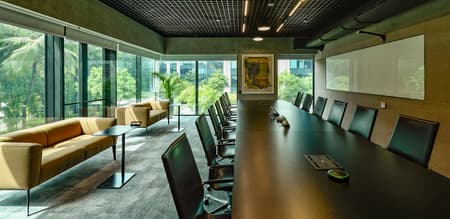
Workspaces are structured as “villages” — clusters of collaborative zones balanced with introspective areas, sculptural focus rooms, and social hubs. This layered approach addresses diverse work styles, enhancing human experience.
Materiality reinforces local identity through brick, stone, terrazzo, and handcrafted elements, blending sustainability with cultural resonance. Passive design strategies optimize light and air, while integrated technologies ensure operational efficiency. Sustainability is treated as embedded intelligence, balancing longevity, adaptability, and reduced environmental impact.
Set within a cluster of glass-box towers, the project inserts cultural specificity into Mumbai’s commercial landscape. Through its hybridization of archetypes, materials, and spatial narratives, BCG’s Mumbai office offers a forward-looking, human-centric model for future workplaces — one that balances global standards with deep local meaning.
5. Some thoughts about the project. A few words from the client.
(390 keystrokes) “This project reflects our belief that space should respond to who we are, not the other way around. The design pushes boundaries yet feels deeply intuitive. It brings our people together, encourages chance encounters, and gives us a space that feels unmistakably ours—not just in aesthetic, but in spirit. It’s collaborative, thoughtful, and uniquely contextual—everything BCG stands for.”