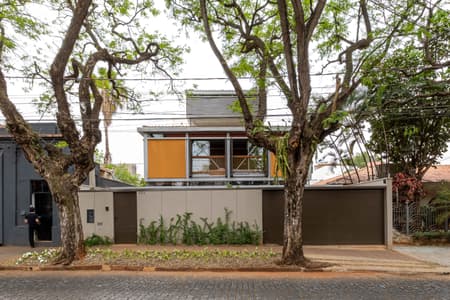
Brazil, 2024 – Araraquara House, located on an iconic avenue in the heart of Araraquara city, in São Paulo state, represents a milestone in the career of JBMC Arquitetura e Urbanismo and its founder, João Batista Martinez Corrêa. After more than four decades in the business, with several projects carried out around Brazil, he is returning to his origins to realize his dream of building a residential house in the city and place where he was born and lived until he was 18 in the company of his parents, siblings and cousins.
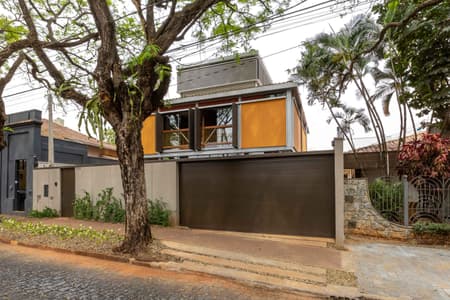
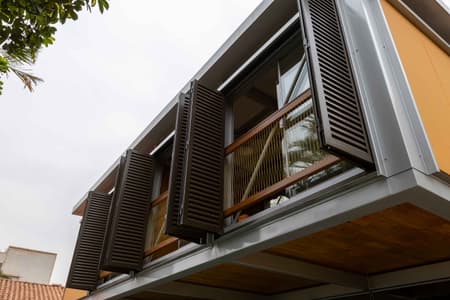
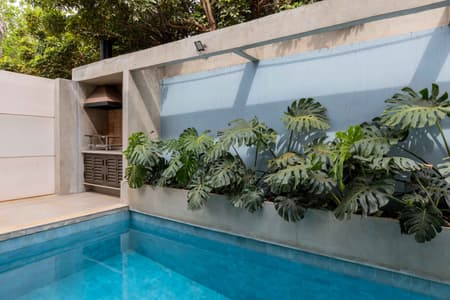
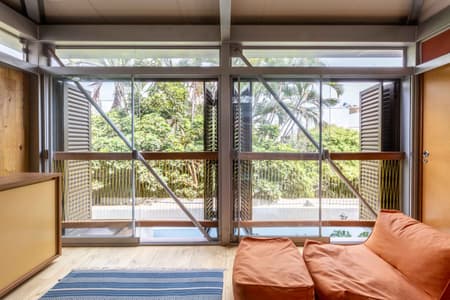
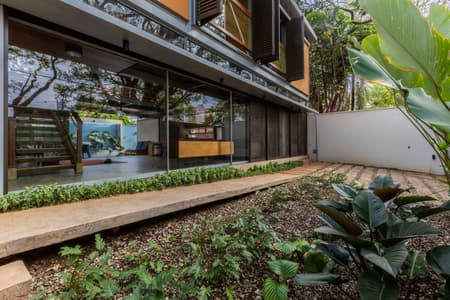
The project was an opportunity to explore new construction techniques and materials, reinforcing his experimental profile and total creative freedom. With its front facing the leafy avenue, the residence blends harmoniously into its surroundings, reflecting a design that prioritizes both functionality and a connection within nature.
Developed during the COVID-19 pandemic, the project made intensive use of BIM technology, ensuring precision and synchronization between all the disciplines involved - from structural design to electrical and plumbing installations. This collaborative approach was essential in facing the challenges posed by the current coronavirus pandemic, when physical presence on the construction sites was limited.
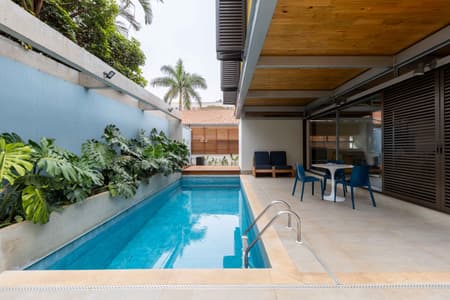
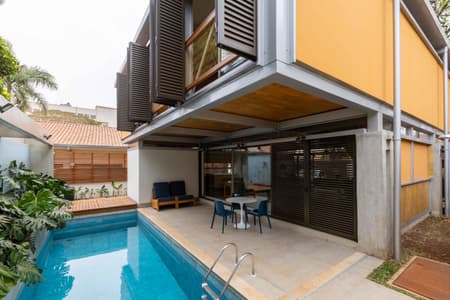
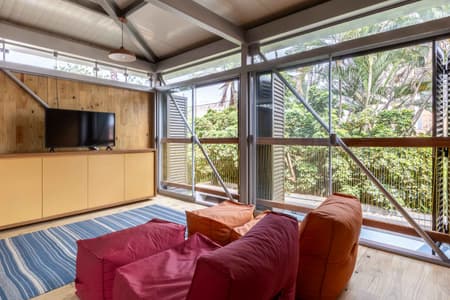
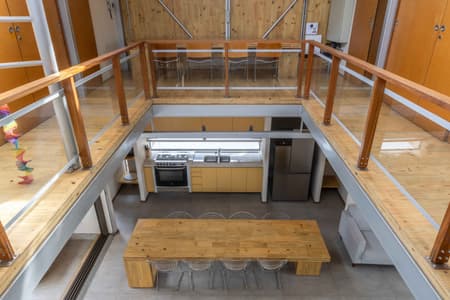
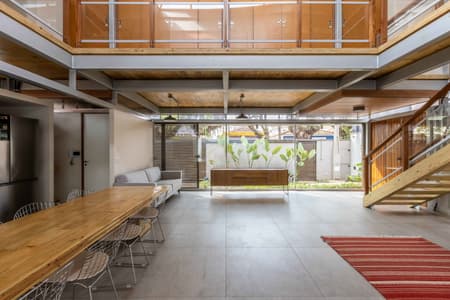
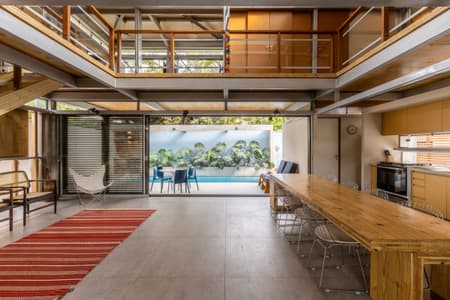
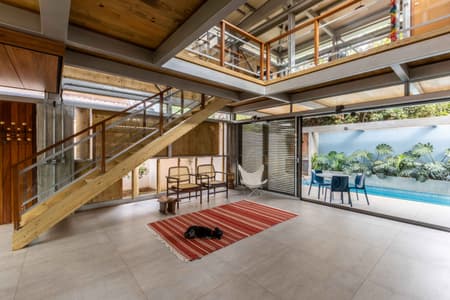
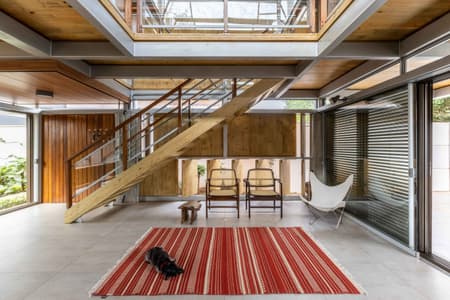
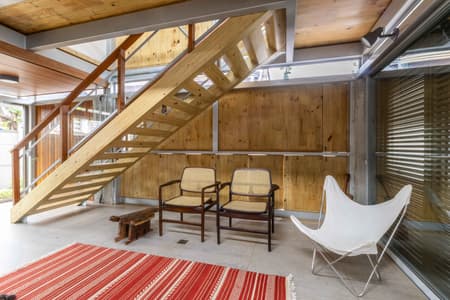
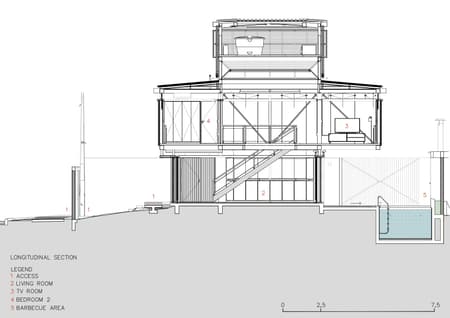
The house, built on a small plot at the back of the family home, consists of two main floors and a technical area to house the water and air-conditioning systems. The second floor houses the social areas, such as the living room, dining room, integrated kitchen, laundry room and toilet. With strategically positioned openings to the front and back of the plot, a harmonious connection is established between this level of the residence and the neighborhood's green surroundings.
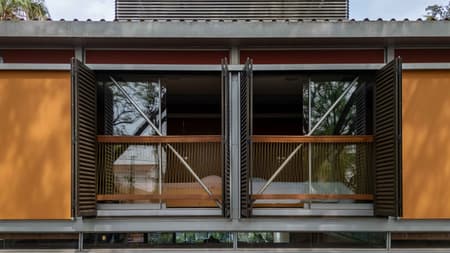
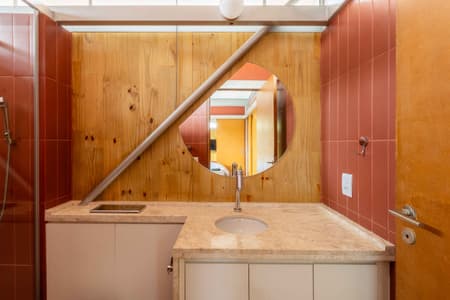
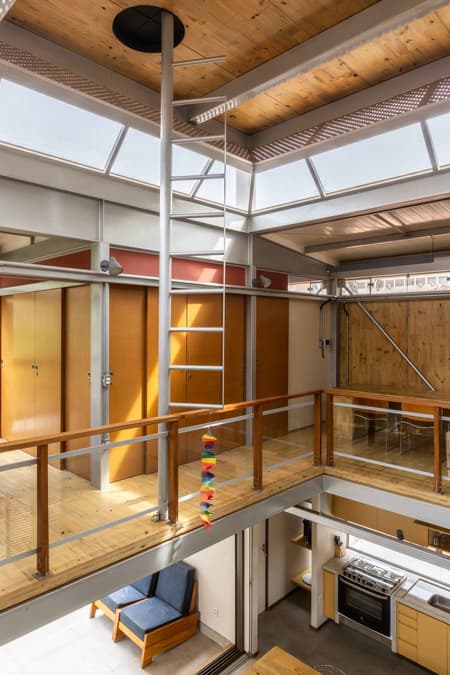
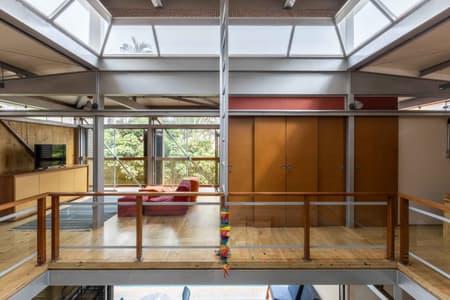
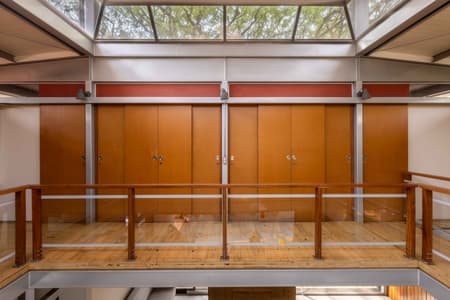
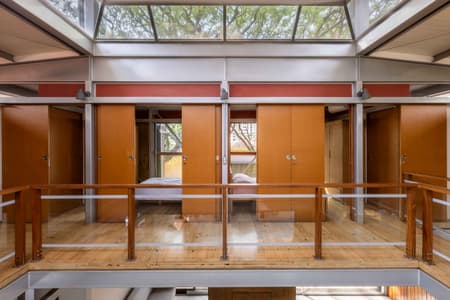
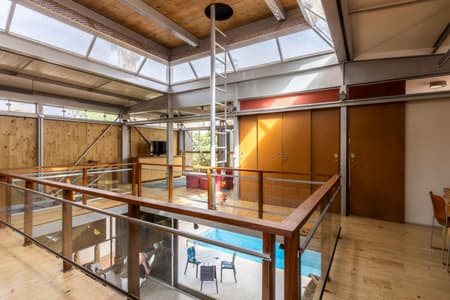
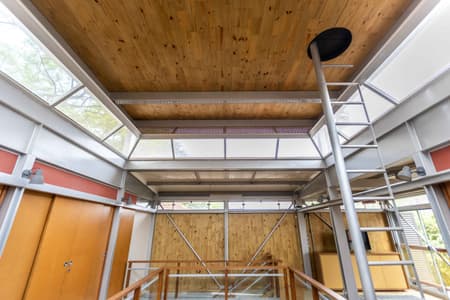
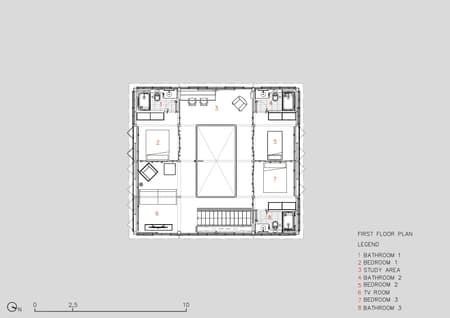
On the second floor, intended for private use, there are three small bedrooms with integrated bathrooms, a studio and a TV room, all around a central void that provides privileged views of the level below, where the pool is, and the trees that surround the house. In the center of this floor, the glass skylight stands out, creating a “chimney” effect, favoring not only air circulation, but also better natural lighting for the two floors.
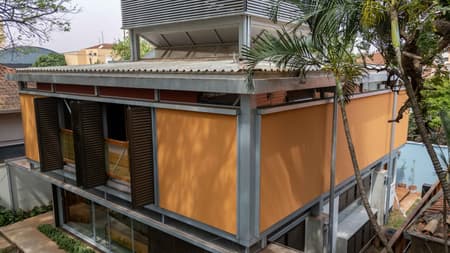
Structurally, the house is made of steel, wood and concrete, giving the project solidity and lightness. The structure, designed in tubular steel profiles, was manufactured in the nearby town of Ibaté, allowing the entire structure to be assembled and tested before it was installed on site, guaranteeing precise and efficient execution, with no surprises during the assembly process. The steel structure rested on just four reinforced concrete pillars, cast on site and arranged in peripheral positions that provided the large spans of the first floor.
The use of CLT (Cross Laminated Timber) was an innovation in the construction of the upper floor slab, including the wet areas, such as the toilets, which received a special waterproofing treatment. In the dry areas, the floor was sanded and treated with resin, maintaining the natural appearance of the wood. Due to the region warm weather, the external walls are made up of CLT panels, rock wool thermal insulation and cementitious cladding, ensuring both thermal comfort and energy efficiency in the interiors.
Another stand out feature of the project is the natural ventilation system provided by the rooflight, a tubular steel structure located between the technical floor and the upper floor. This ingenious solution takes advantage of convection to keep the house ventilated and comfortable, while at the same time protecting the interior from rainwater.