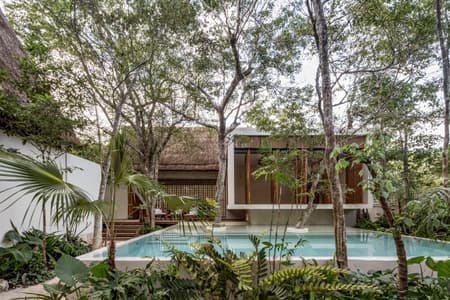
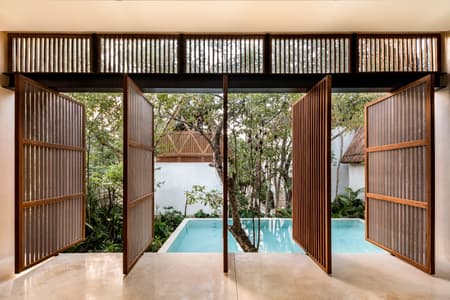
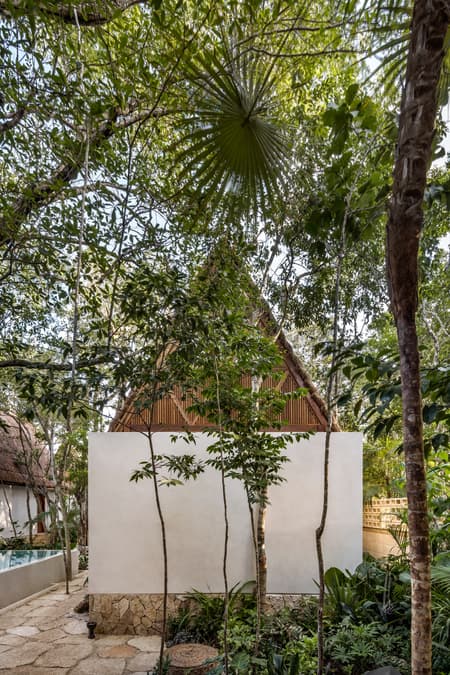
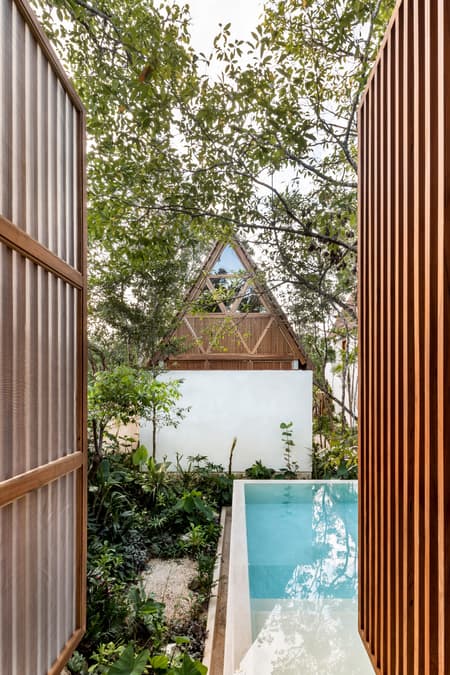
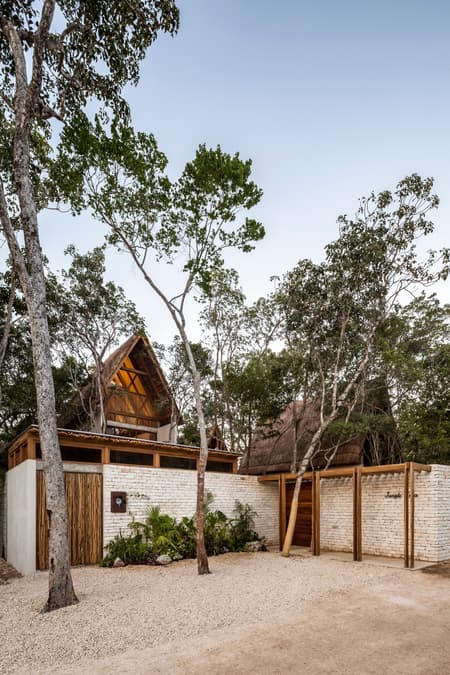
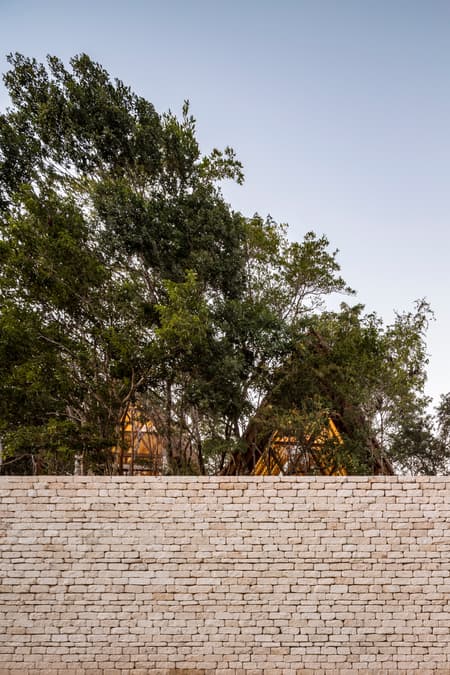
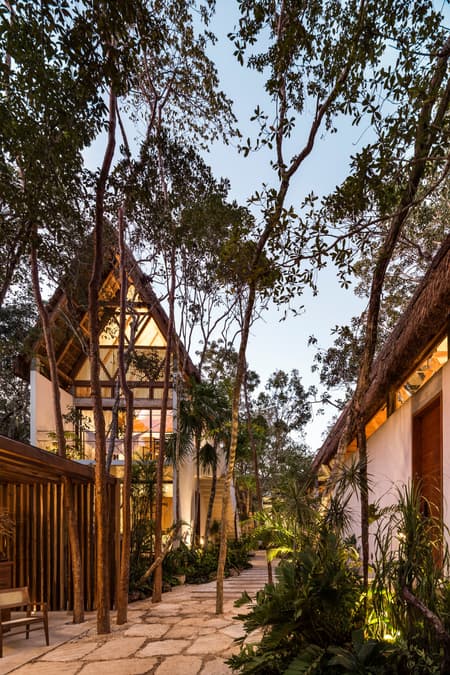
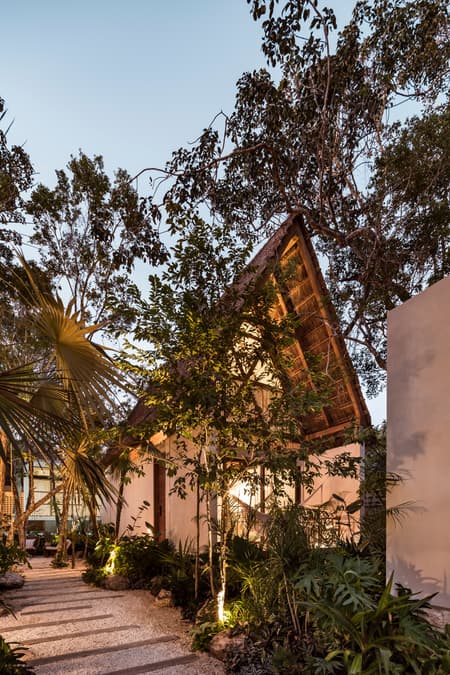
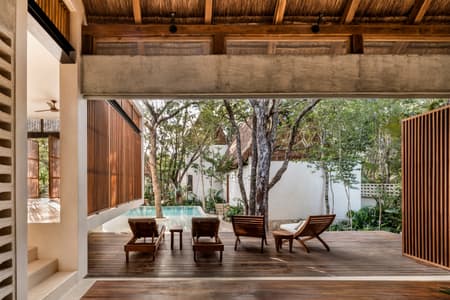
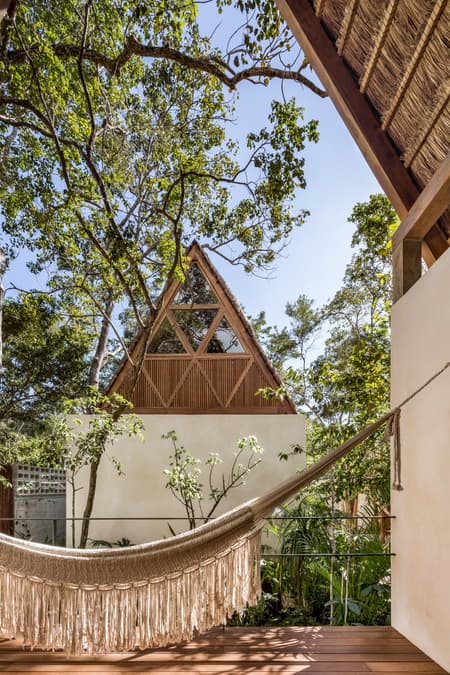
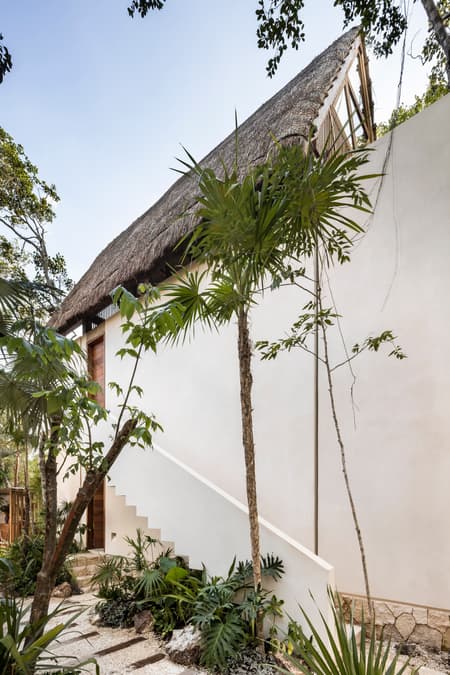
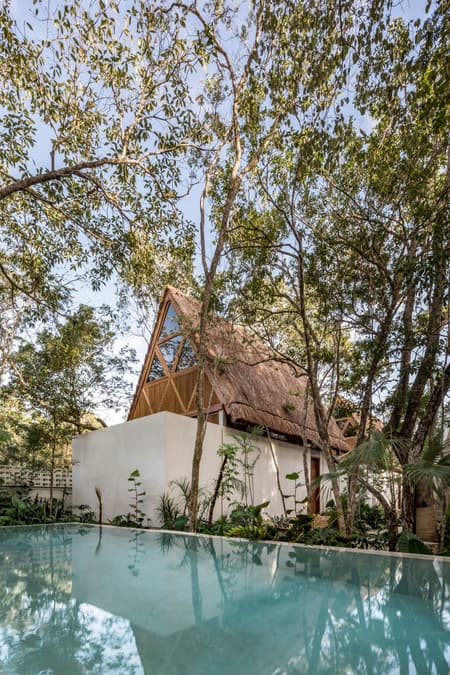
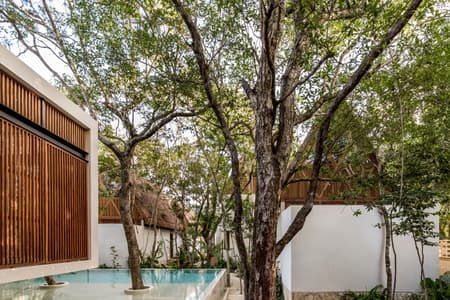
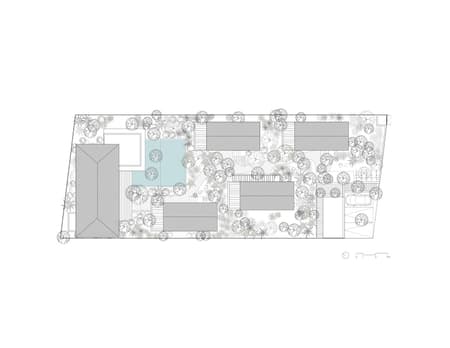
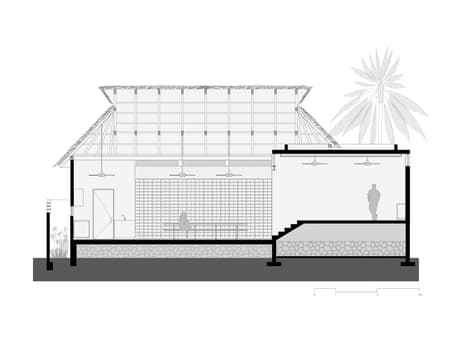
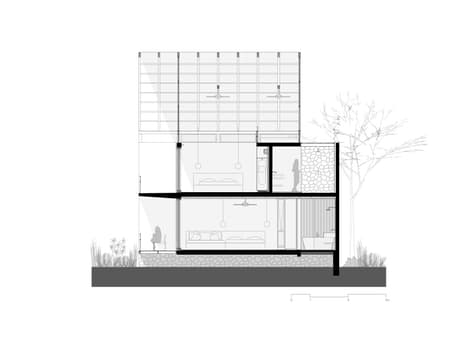
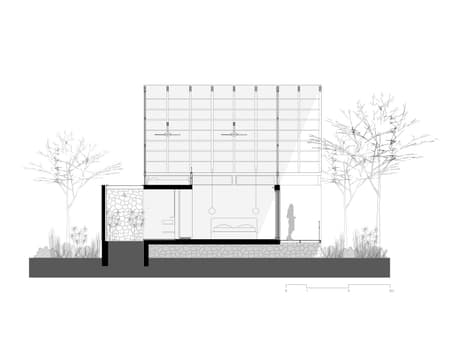
Situated in Tulum, this small boutique hotel rises between the trees, in which the main concept consisted in preserving 70% of the existing vegetation in order to build around it. By achieving this, every space of the project is always in relation to its natural surroundings.
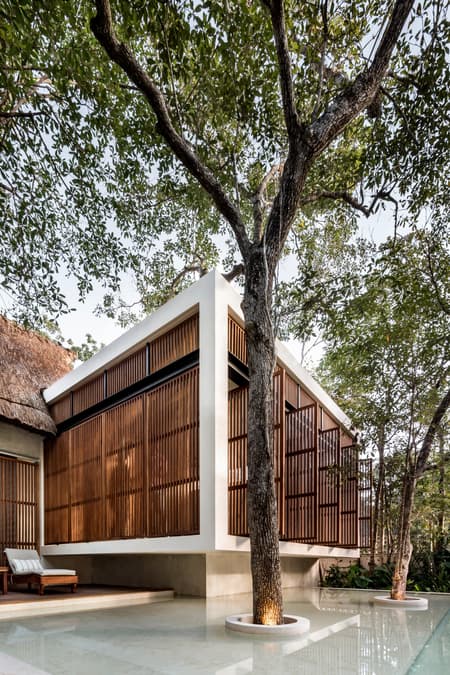
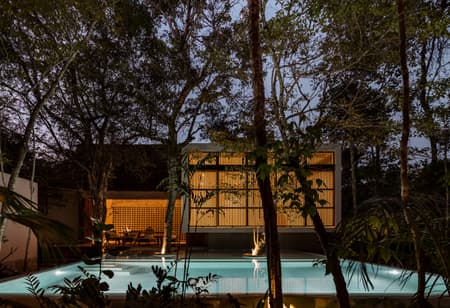
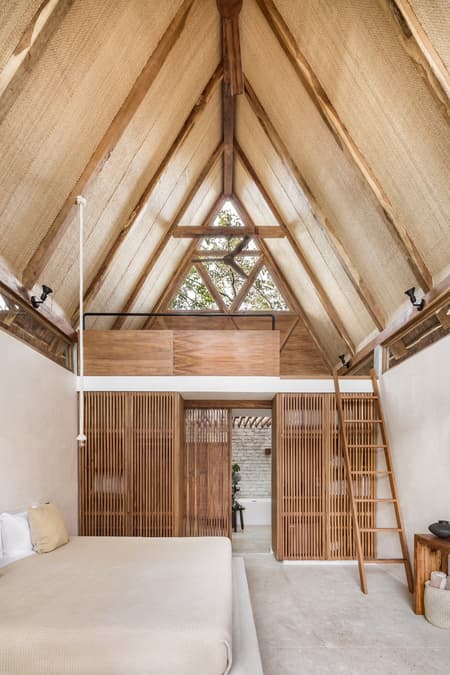
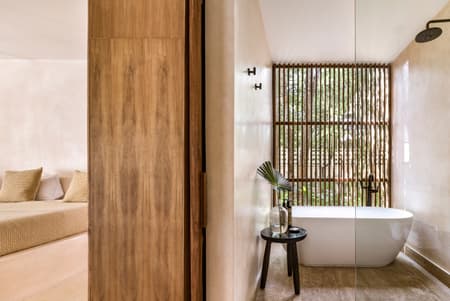
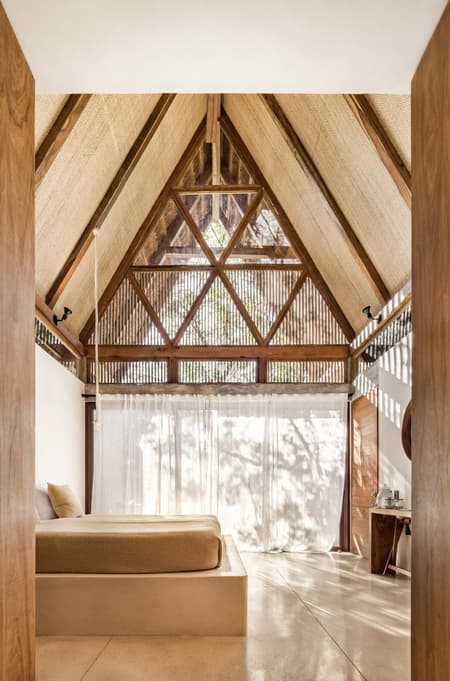
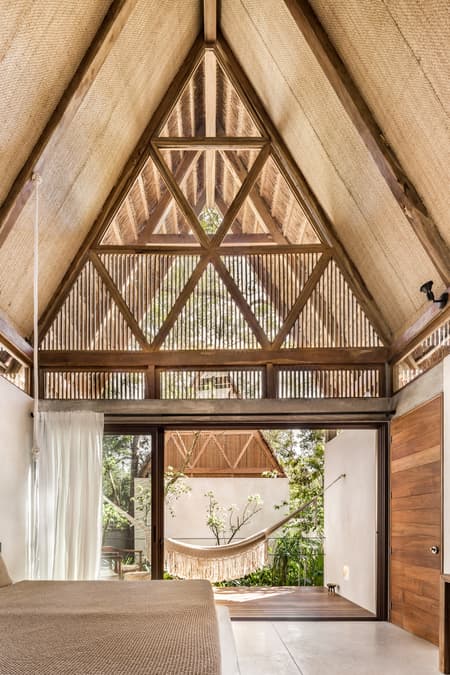
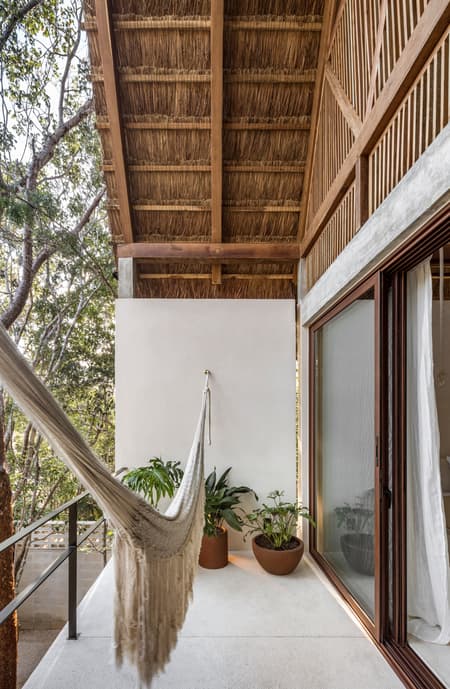
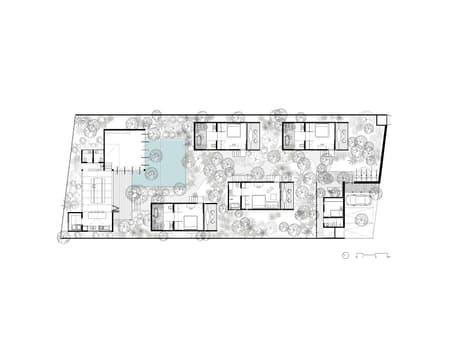
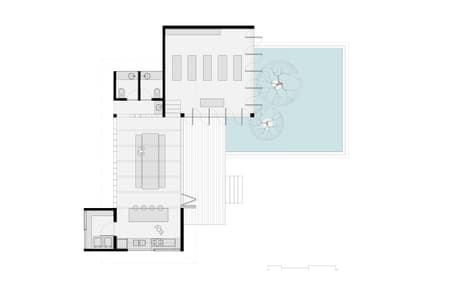
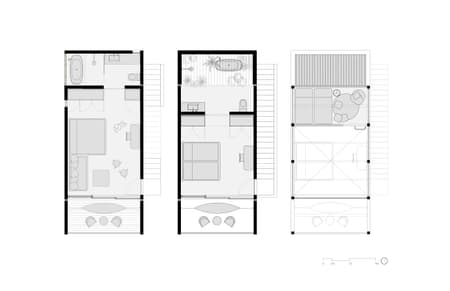
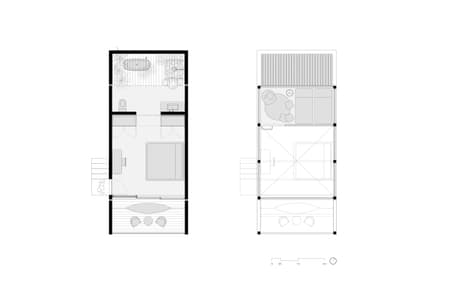
The hotel has five 50m2 lodges, formed by a double height room, a mezzanine or “tapanco”, a terrace and an indoor-outdoor bathroom. At the back of the lot the social areas are located, with a dining space and yoga pavilion hanging in cantilever over the pool. The main idea of this water element is to be extruded from the ground in between the vegetation. For this reason, two old zapote trees were preserved, which look as they were rising from the pool itself.
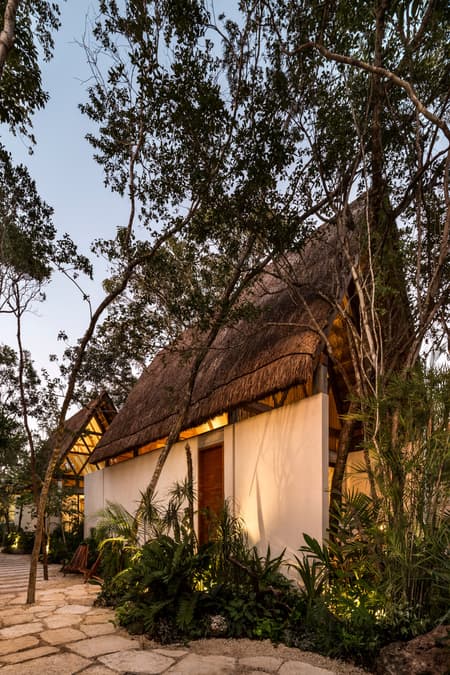
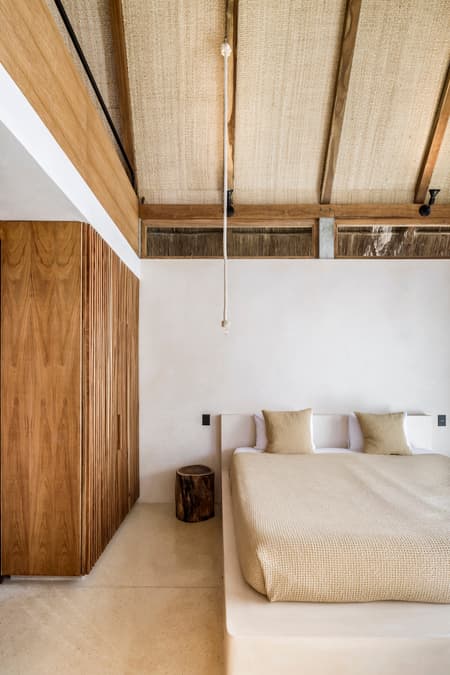
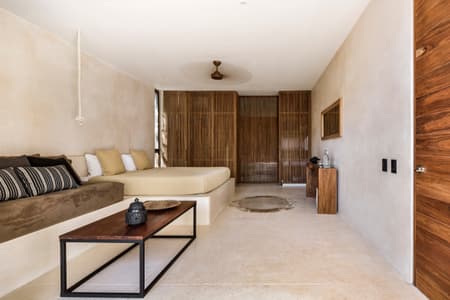
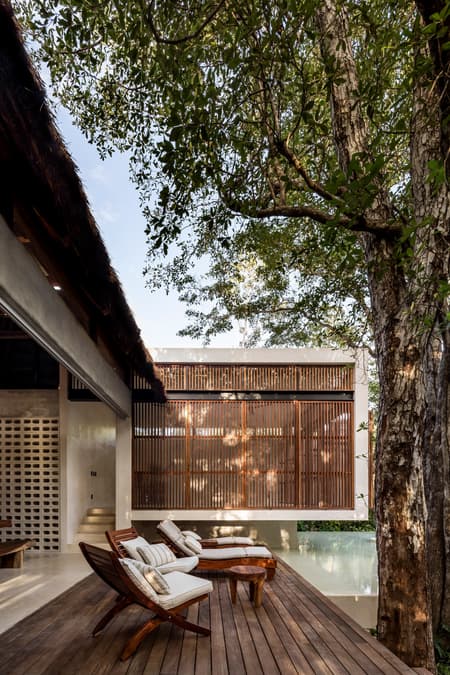
All the project is composed by local materials, as well as low maintenance and natural textures, which provide a warm atmosphere to the buildings. A particular finish found on the walls is “chukum”, a Mayan stucco characteristic of the region, which uses a tree resin to give its distinctive color, appearance and durability. The objective was to use materials that age with dignity, so that with the passing of time the architecture acquires character and a deeper sense of belonging.
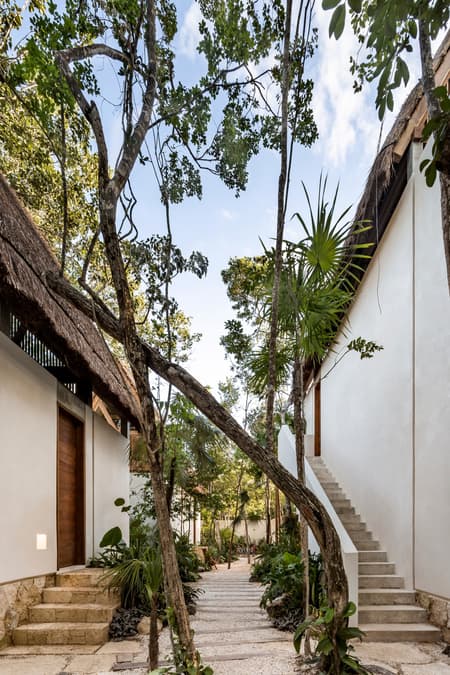
The different volumes of the complex are scattered along the lot, between the trees and stone paths, which provide a sensation of being in a small village in the Mayan jungle. Throughout the design process there was a search for pure forms and natural materials that could blend with the surrounding context. In a sense, Jungle Keva is like an abstraction or simplification of vernacular architecture, easy to read, simple and with a social, natural and economic conscience.
La mayoría de los materiales seleccionados son locales o de la región y fueron elegidos por su calidad, diseño, tiempo de entrega, así como costo beneficio. También fue muy importante para nosotros contar con materiales que fuera de poco mantenimiento y de alta durabilidad, dado las condiciones de humedad y salitre que hay en la región.
Otro punto importante fue escoger materiales y productos que no requieran mano de obra especializada para su ejecución y que sean prácticos y fáciles de aplicar o instalar.
The first step for the construction of the project was to draw the footprint of each of the lodges on site, just to make sure none of the trees would be affected. The base for each building is made from local stone, obtained from the excavations required for the foundations and the pool. This base elevates the lodges one meter from ground level, providing better natural ventilation, protection against flooding, and lessens the impact on local wildlife, since they can still move around under the buildings.
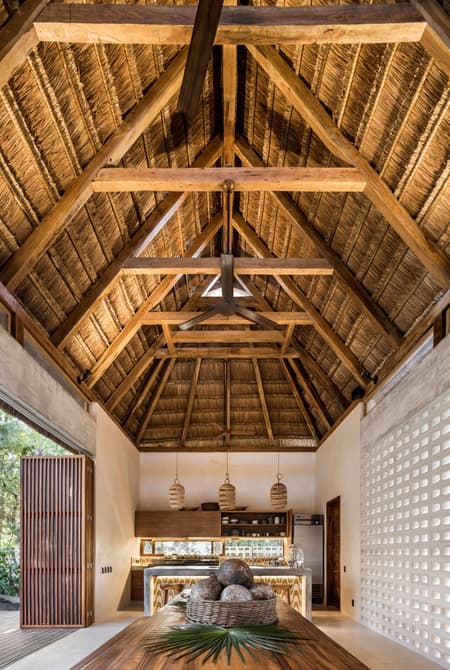
Walls are built with local concrete blocks, finished with low maintenance materials. The roof of the lodges is composed by a classic tropical structure called “palapa”. This is made from sustainably sourced wooden beams, covered with dry palm leaves on its exterior skin, together with a hand woven natural fabric called “petate” at the interior, thus providing better natural light reflection, a cleaner look and a superior thermal insulation layer. For the final finish of the floor we left exposed the structural concrete slab, revealing and polishing the fine sand aggregates, since local sand used for construction usually has the same beautiful white/beige color you would find by the beach in Tulum.
• Conservar la mayoría de los arboles existentes y edificar alrededor de ellos
• Uso responsable del agua y tratamiento de aguas negras
• Uso de mano de obra local
• Uso de materiales de la región
.• Inyectar 100% del agua pluvial al manto freático
• Soluciones pasivas, como ventilación cruzada y espacios de gran altura para garantizar un mayor nivel de confort al usuario y reducir la necesidad del uso de aire acondicionado.
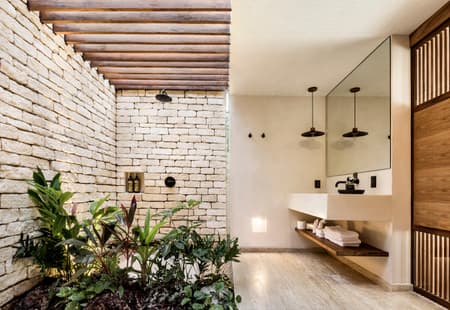
• Todos los espacios fueron diseñados bajo el concepto de “Biofilia”, el cual se establece que el contacto con la naturaleza es necesario para desarrollo psicológico y físico para el ser humano. Por esta razón, cada área del proyecto tiene vista o está en relación con el entorno natural, incluso los baños.
• Todos los materiales empleados en el proyecto son de bajo o nulo mantenimiento, lo cual les da una vida útil mayor a las edificaciones, reduce costos de operación y se adaptan a las condiciones climáticas de humedad y salitre de la región. Un ejemplo de esto es el chukum, un estuco desarrollado y empleado por los mayas, el cual utiliza la resina de un árbol para dar características impermeables y de alta durabilidad al acabado final de los muros.
• Preservation of 70% of existing trees.
• The project has a sewage treatment system, which provides reusable clean water for personal use or irrigation.
• 100% of rainwater is injected back to the natural underwater system.
• Passive design solutions are implemented throughout the project, to reduce the need of air conditioning usage, such as, proper sunlight orientation, cross ventilation, high ceilings and large overhangs or window coverage.
• All construction materials are sourced locally. Even excavation material was later used within the project.
• We applied only low use materials and finishes, which provides the buildings with a longer life span.
• Traditional knowledge was used for the wall finish of the project, by using the Mayan stucco technique called “chukum”, which by mixing the resin of a native tree together with plaster and local minerals, provides a finish that works efficiently against the harsh climate conditions of salt and humidity of the Yucatán peninsula.
• All the interior spaces are designed under the concept of Biophilia, which is based on scientific evidence that contact with nature in our built environment is necessary for our psychologic and physical health. For this reason, every space of the project has view or access with the natural environment, even the bathrooms.
• Para el desarrollo del proyecto únicamente se utilizó mano de obra local y ha habido un apoyo constante a los artesanos que saben trabajar el chukum para seguir conservando y desarrollando la técnica del acabado. También, se ha impulsado a los labradores de pierda de la región, los cuales poseen una calidad única, que se pasa de generación en generación. Creemos que es importante impulsar y conservar el trabajo de estos artesanos, así como darles crédito por su trabajo y que la remuneración sea una que ellos establezcan y no una que se les imponga.
Founded in 2017, Jaque Studio is an architecture workshop, with a focus in creating projects that portray a strong identity and improve the urban and natural fabric.
Within the firm there is a real commitment in creating spaces that generate a unique and comfortable user experience, through the search of pure forms, aesthetic innovation and natural materials that blend with the surrounding context. We believe architecture must be easy to read, simple and with a social, natural, and economic conscience.
The studio has won several prizes and nominations. Just recently, the firm was awarded second place in Edification category of the Cemex Awards 2019. At international level, the firm has been nominated as a finalist in the Createurs Design Awards 2020 and Dezeen Awards 2019, for best hospitality design.
Architect graduated from Universidad Iberoamericana in Mexico City (2010). Holds a master’s degree in Environment, with specialization in Sustainable Cities and Regions, from the University of Melbourne of Australia (2014).
From 2010 to 2013, he formed part of the design team of JSa architecture firm in Mexico City. He was involved in the design of housing, office and residential developments throughout Mexico and Latin America. In 2015-2016 he collaborated as team leader with architect Juan Carral at JC Arquitectura, on hospitality and affordable housing projects in the Yucatan Peninsula.
In 2017 he founded Jaque Studio in Tulum, a design firm with a focus on passive design and urban resilience. In 2019 he was awarded the Silver Medal at the 3rd National Biennale for Young Architects in Mexico.