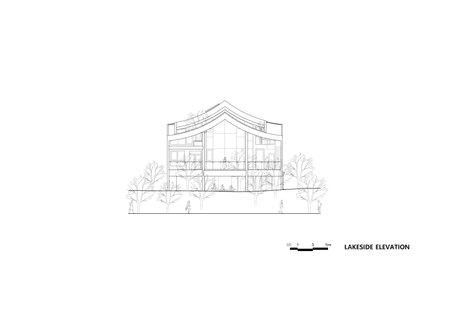
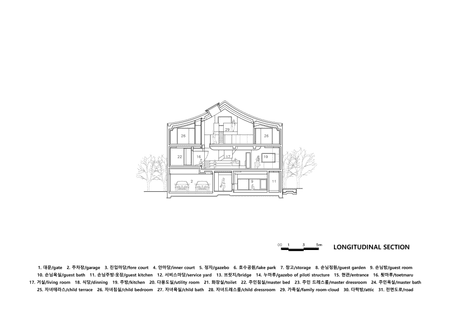
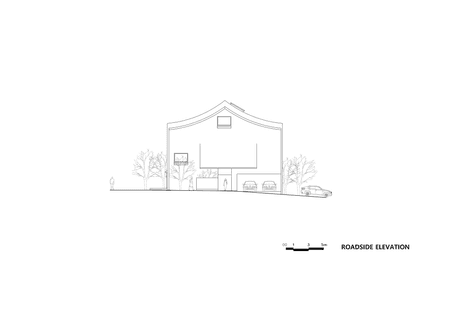
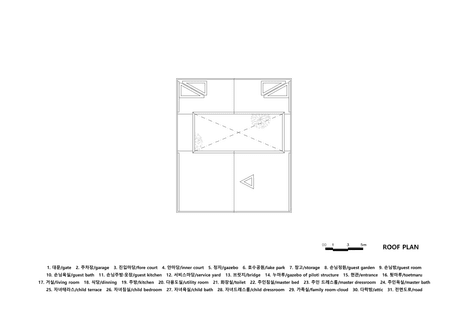
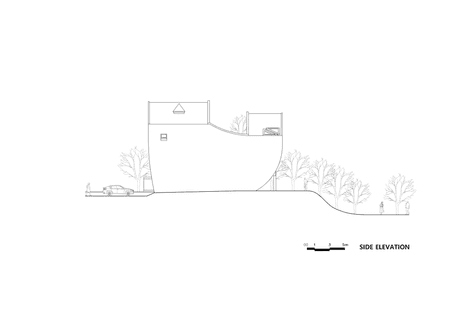
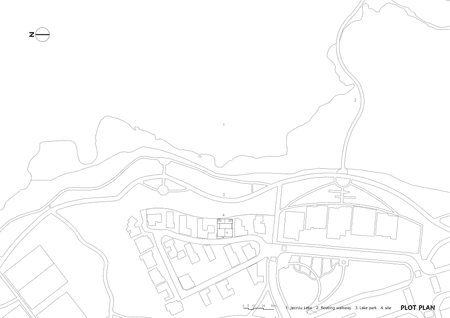
A young entrepreneurial couple is the owner of this house. They loved traditional Korean culture and wanted to build a recreational refuge from a troubled society on a site between nature and the city. They will move back and forth between a troubled society and a healing refuge, so they will enjoy striking contrasts between tension and relief in their daily life.
The site of this house is located beside a lake park in a newly developed residential town in Jeonju, a well-known historic and cultural city in Korea.
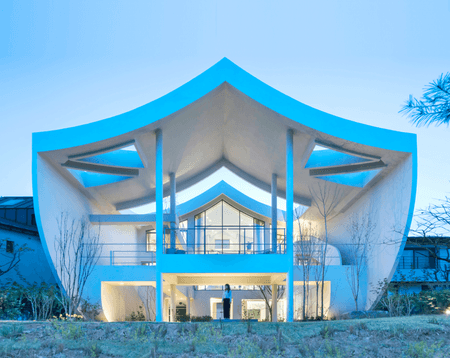
To satisfy the owner’s cultural desire for “Koreanness”, we tried to design their cultural refuge using traditional Korean architectural elements of space, form and building type – such as Numaru, Madang, and a soaring roof.
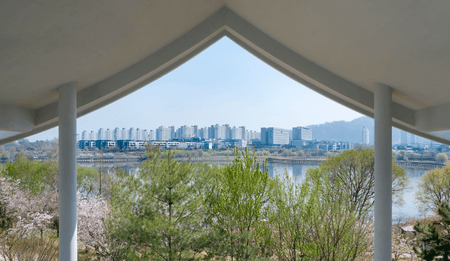
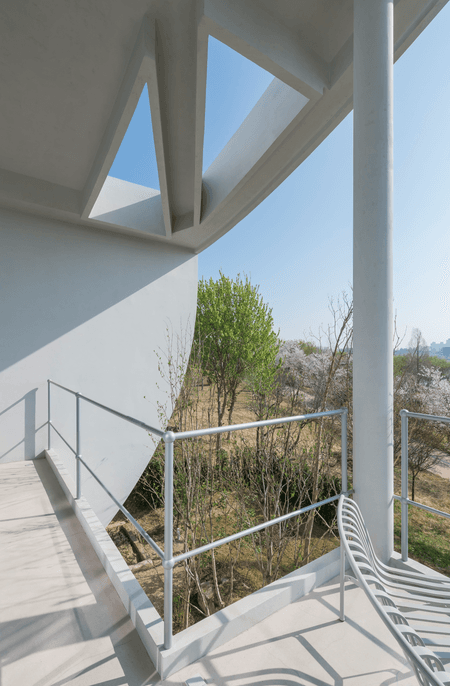
“Numaru”, a traditional Korean gazebo with a piloti structure, serves as the “Gate of Life” and has become an iconic concept of this house. This gate is an architectural viewfinder that frames the living landscape of nature and the city, and it is an interactive “Open Gate” to the outside world. This gate also acts as a filtering screen to block the gaze of visitors in the lakeside park. It is an “open wall” marking the boundary of the house and serving as an observatory to admire the changing natural scenery and the dynamic cityscape.
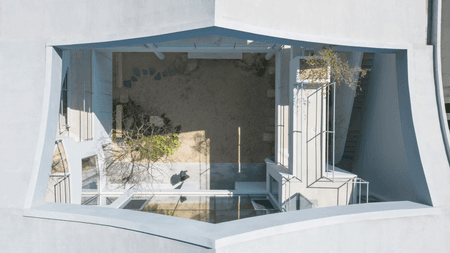
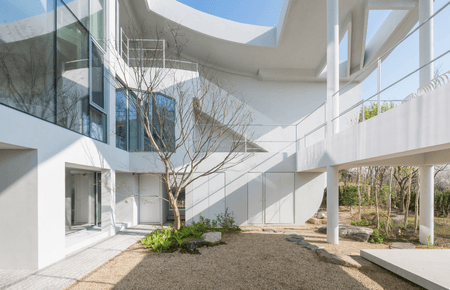
“Madang”, the traditional Korean inner courtyard and the secret garden of this house, is a tranquil and poetic outdoor space. It is the “lung” of this closed refuge, representing nature, the place for meditation and friendship.
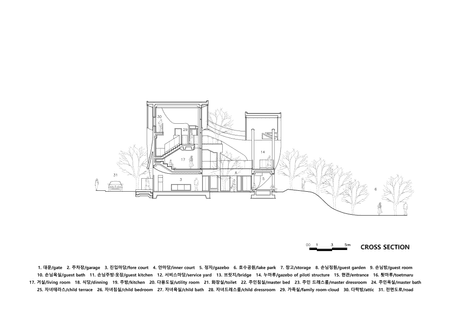
One of the defining characteristics of traditional Korean architecture is “soaring” form. We designed the form of this house with a “curved A”-shaped structure that is traditional but modern.
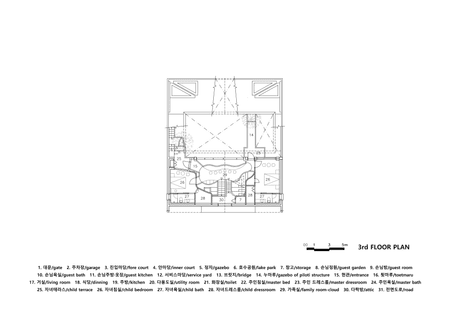
“HO-UN”, named by the owner, means “Cloud on the Lake”. The cloud-shaped family room, floating above the living room, symbolizes the realization of the hopes of all family members. We wish them a happy and fulfilling life in the future.좀