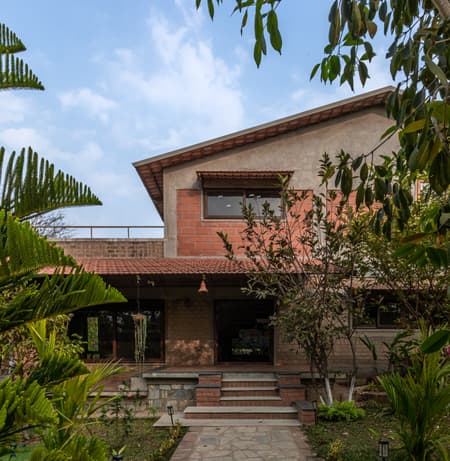
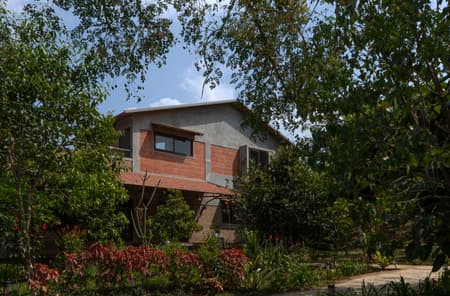
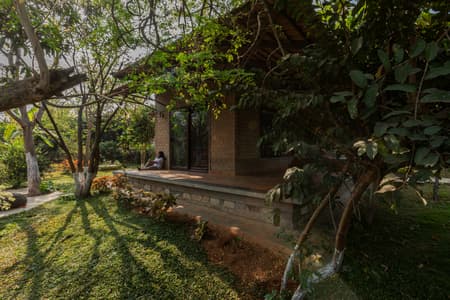
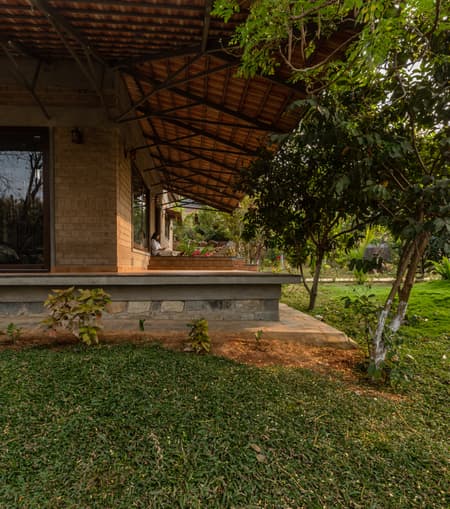
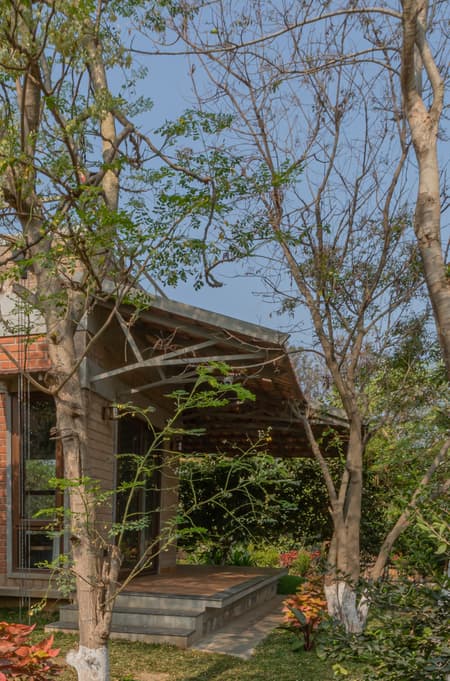
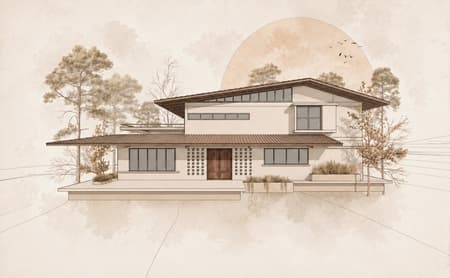
Svatman (स्वात्मन्)—literally, to be immersed within oneself—is conceived as a retreat that turns inward even as it remains deeply rooted in its landscape. Set within the undulating terrain of Shoolagiri, where rocky ground and dry vegetation define the horizon, the house resists the urge to announce itself. Instead, it settles quietly into a fertile mango belt, allowing the rhythms of cultivation and seasonality to shape its presence.
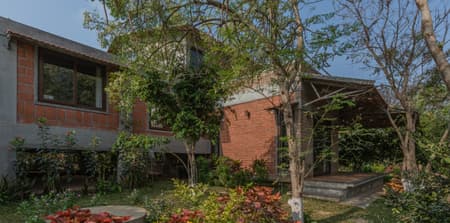
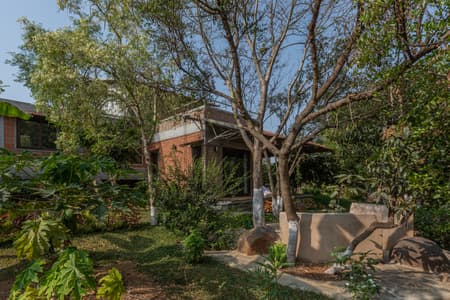
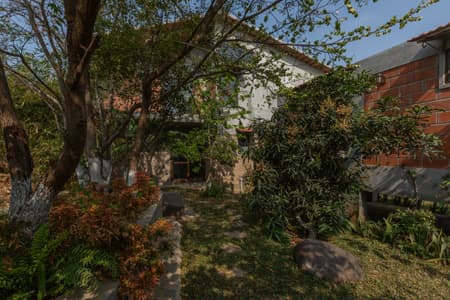
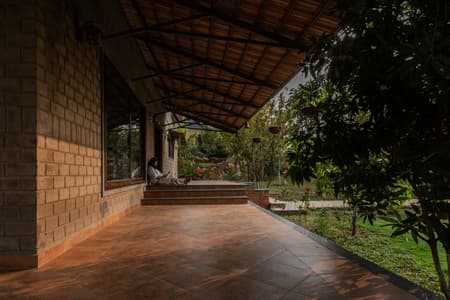
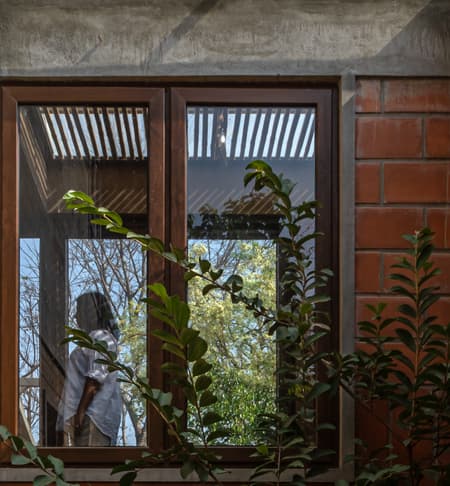
The planning begins with what already exists. Mature mango trees anchor the site, while a secondary layer of fruiting species—guava, papaya, water apple, chikoo, and gooseberry—extends the landscape into something lived and immediate. This density of green acts as both foreground and veil, revealing the house only in fragments. One does not encounter it all at once; it emerges gradually, through partial views and shaded approaches, drawing the visitor inward.
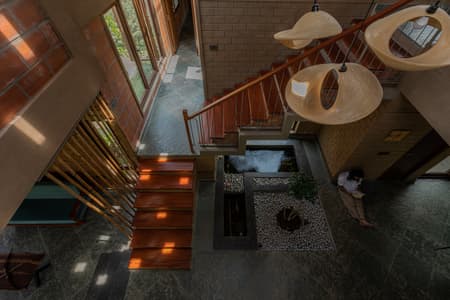
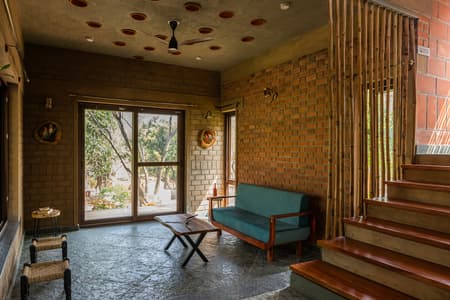
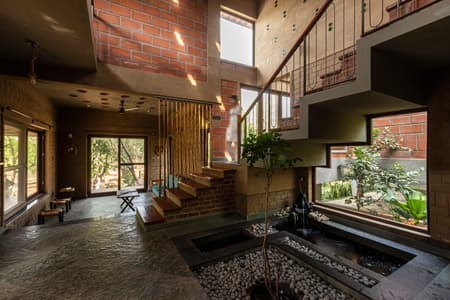
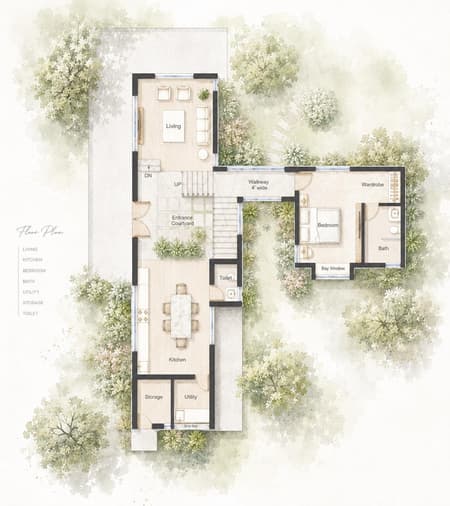
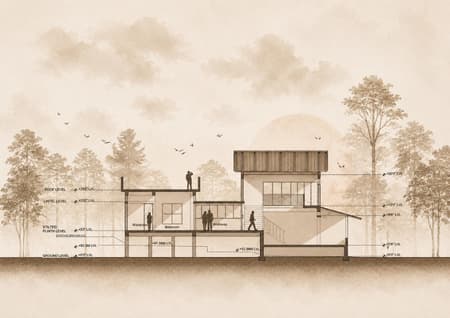
The architecture follows the land closely. The living space is held a step lower, placed along the natural lay of the land, giving it a sense of quiet enclosure. This sunken living is conceived directly in response to the terrain and is articulated through a clay filler slab roof, where the interplay of material and structure becomes both spatial and experiential. Framed by this clay filler and concrete composite slab, its textured soffit and moderated light lend the space a certain stillness—noticeably different from the openness that unfolds elsewhere. In counterpoint, the staircase to the guest suite lifts lightly above a koi pond, its stilted form negotiating the drop in terrain without disrupting it. These moments—of embedding and of lifting—shape the sectional character of the house.
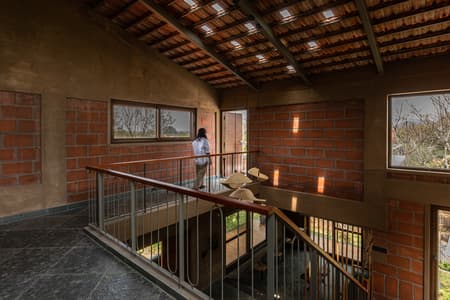
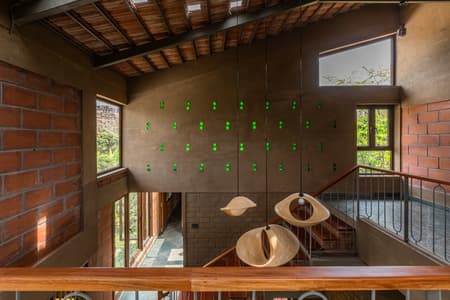
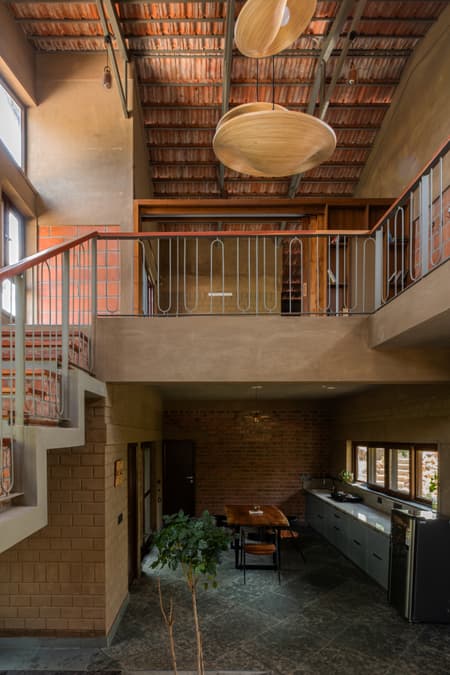
Entry is marked by a double-height court, where water and volume come together as a central anchor. A koi pond sits at its base, while light filters down from over 25 feet above, slipping across surfaces and into adjoining levels that are subtly staggered. This vertical void becomes the house’s point of orientation, binding spaces together while allowing each to retain its own scale and atmosphere.
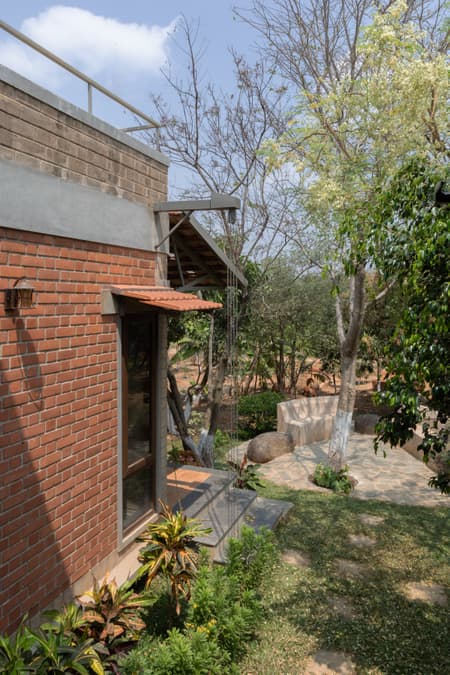
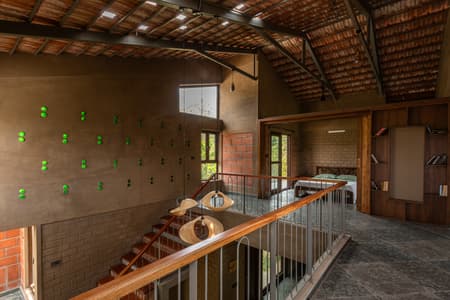
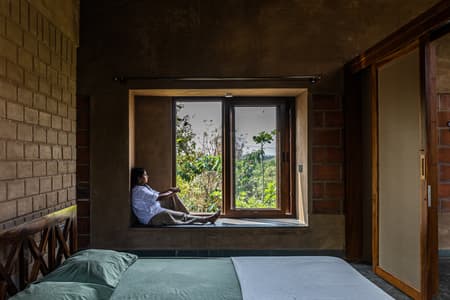
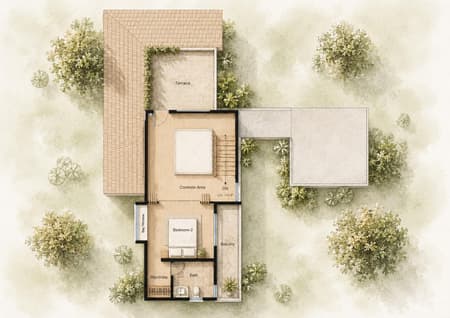
Movement through Svatman is less about passage and more about awareness. A bridged walkway spans this central volume, offering a continuous visual connection to the spaces below and to the landscape beyond. Openings are measured rather than expansive, framing the greens in parts—never fully revealing them, but allowing them to unfold with movement. The walkway extends outward to a terrace, where the house loosens its edges and the view finally opens up.
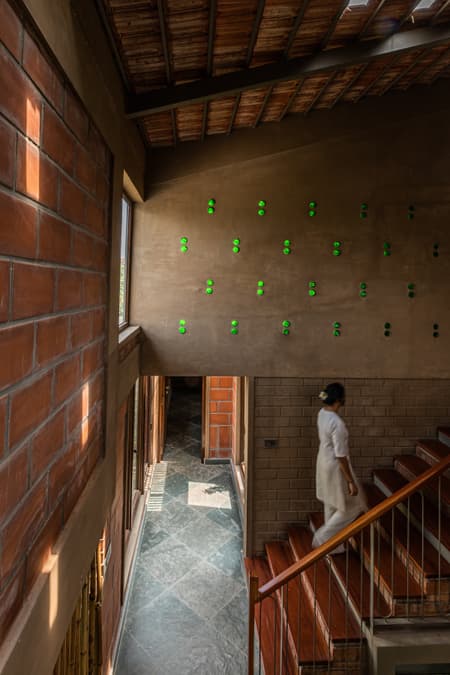
The staircase, positioned above the pond, reinforces this interplay between solidity and lightness. Its presence is steady, but never heavy, animated instead by the movement of light across its surfaces. As the day progresses, sunlight traces shifting patterns along the Kota stone floors, marking time in a way that is subtle yet constant.
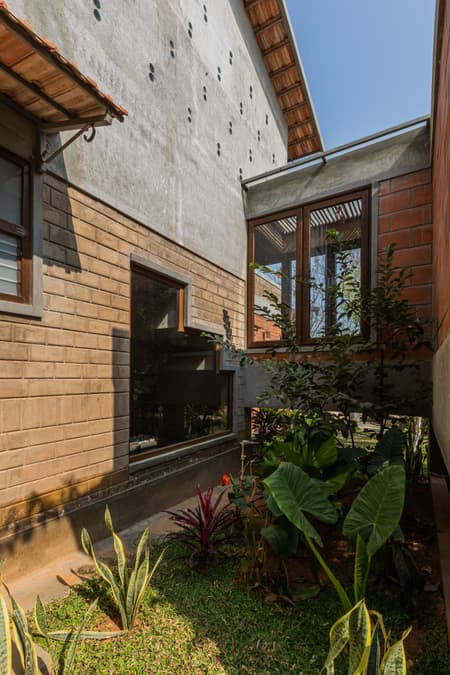
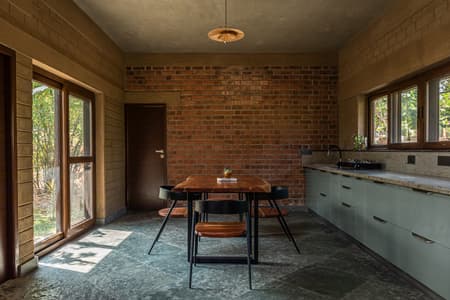
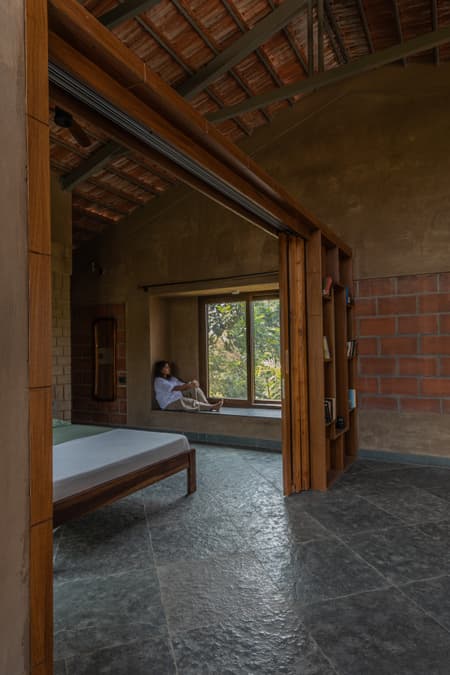
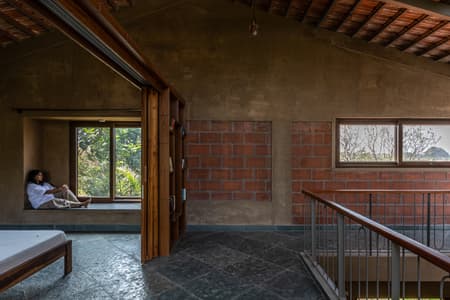
Materially, the house remains direct and unembellished. Compressed earth blocks, wire-cut brick, and hollow clay blocks form the envelope, their textures carrying through without excessive finish. Overhead, deep, pitched roofs clad in Mangalore tiles extend well beyond the walls, casting a consistent band of shade and giving the structure a protective edge against the climate. The roofscape, while familiar in form, is adapted with depth and layering to suit the context. The foundation on the other hand, uses granite leftover waste and slats from nearby quarries, forming the greater part of a completely load bearing structure, with minimal usage of concrete for the built.
Ventilation is resolved through section rather than addition. As volumes rise and interlock, warm air is allowed to move upward and out through high-level openings, setting up a gentle, continuous flow through the house. The use of Kota stone underfoot reinforces this approach—its density and cool touch grounding the experience of the interiors.
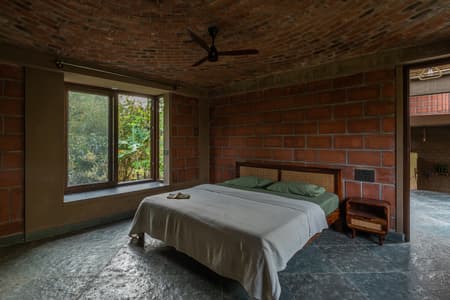
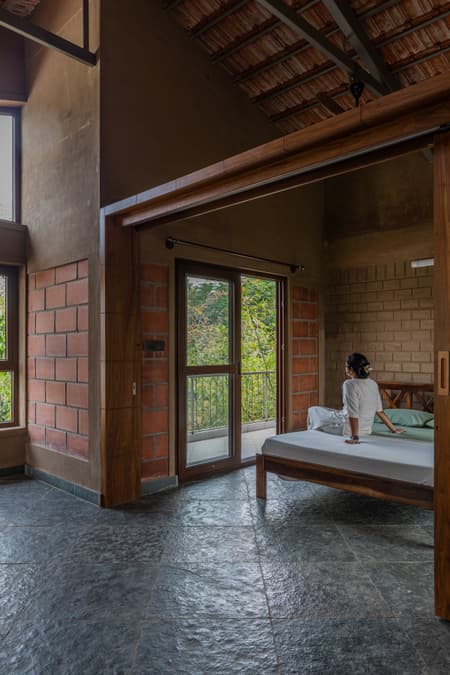
The guest bedroom is treated as a more contained retreat within this larger framework. It is defined by a Rohtak dome—constructed without steel, using brick and a simple cement screed—integrated seamlessly into the roofscape. The result is a space that feels both anchored and self-contained, shaped as much by technique as by intent.
The master suite, by contrast, engages with the openness of the house. It extends into the double-height volume, allowing it to function as part of a larger, flexible space during the day. This relationship shifts the room’s character—at times intimate, at others expansive—while maintaining visual continuity across levels.
Svatman does not rely on a singular gesture. Its strength lies in the accumulation of small, deliberate decisions—each one responding to the land, the climate, and the act of inhabitation. It is a house that reveals itself slowly, through light, movement, and material, inviting a quieter way of occupying space—one that turns attention inward even as it remains connected to its surroundings.