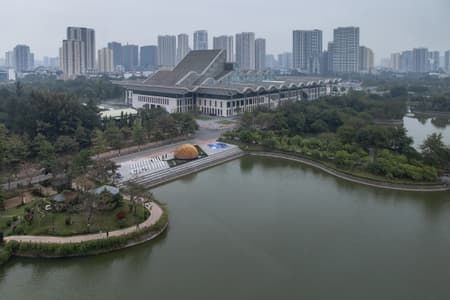
In the 2000s, statistics indicated that Hanoi has lost approximately 80% of its water surface area over the past fifty years. A multitude of lakes, ponds, canals, and low-lying fields have been sacrificed for urban development. This rapid transformation is a primary factor contributing to the city's chronic flooding after rainstorms, leading to its unofficial nickname: "Hà Lội," which translates to "Flooded Hanoi."
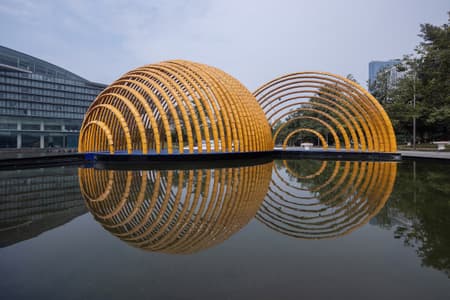
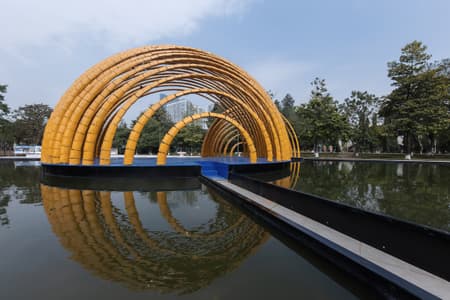
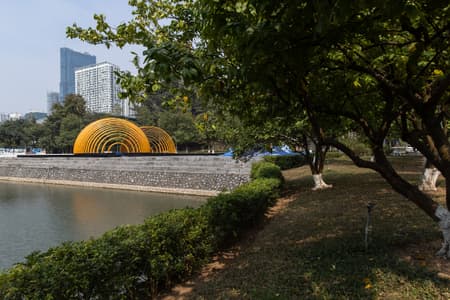
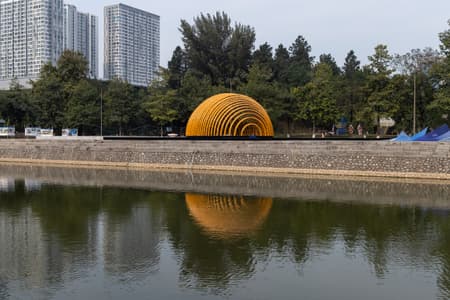
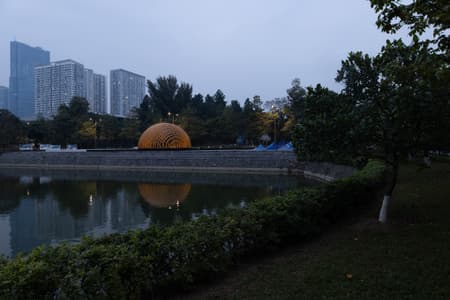
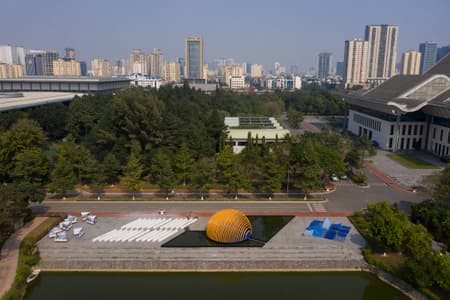
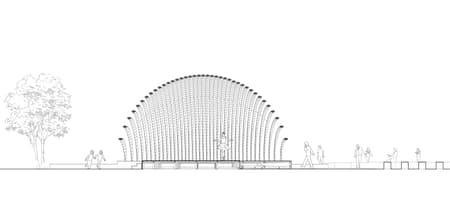
In response to the prevailing trend of "concretization," the Ashui Pavilion 2026 aspires to promote a widespread movement towards the "waterization" of urban spaces. This pavilion is envisioned as a "Source," from which water rays emanate and flow, thereby underscoring the indispensable role of water in human existence.
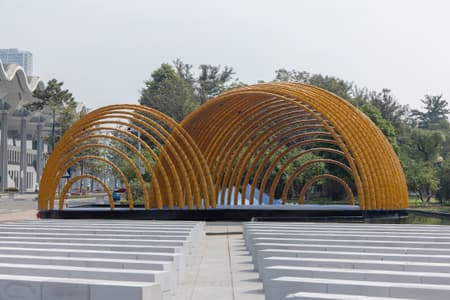
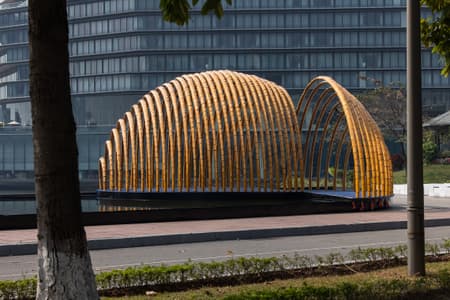
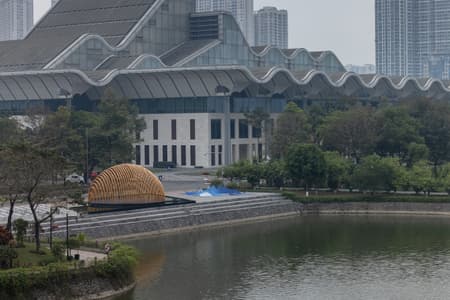
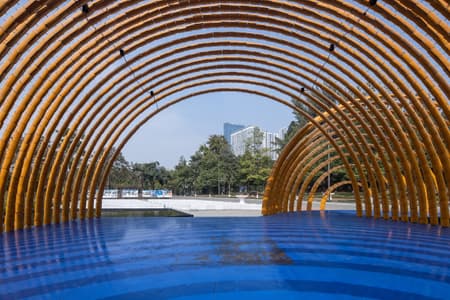
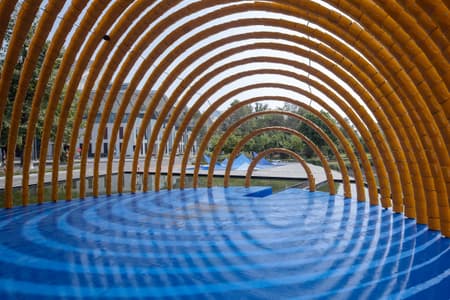
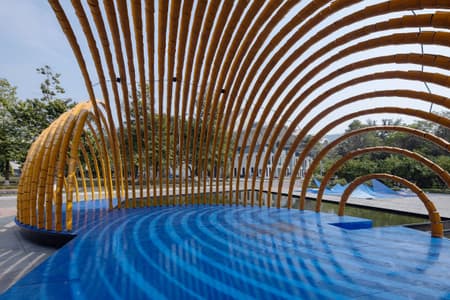
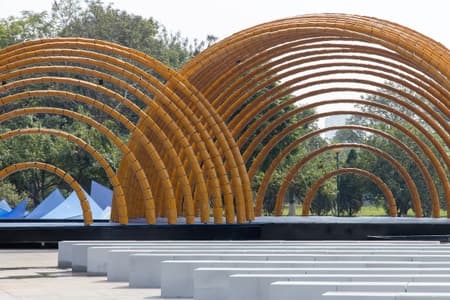
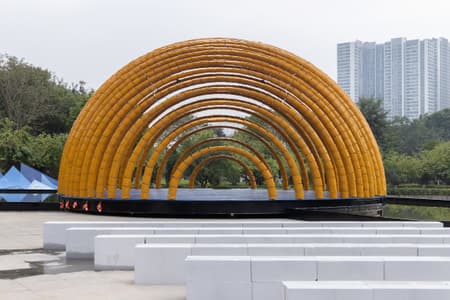
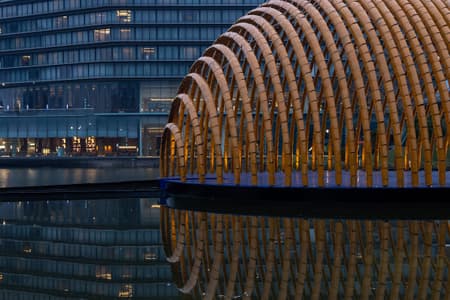
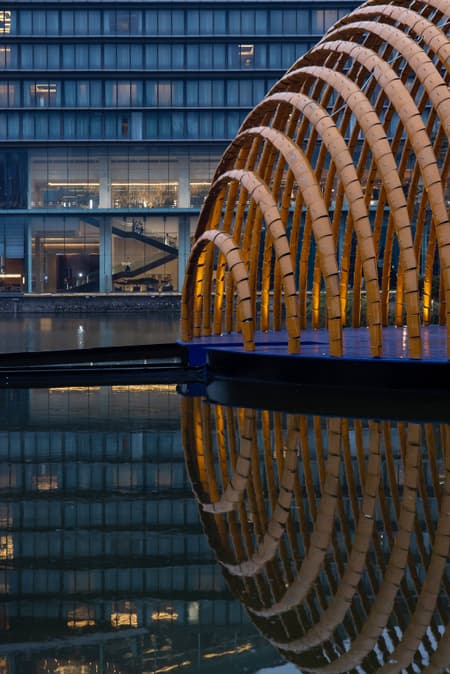
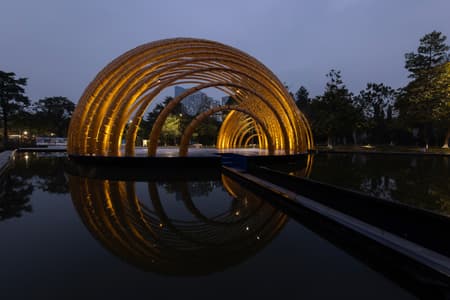
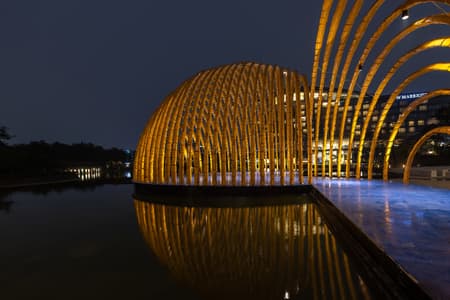
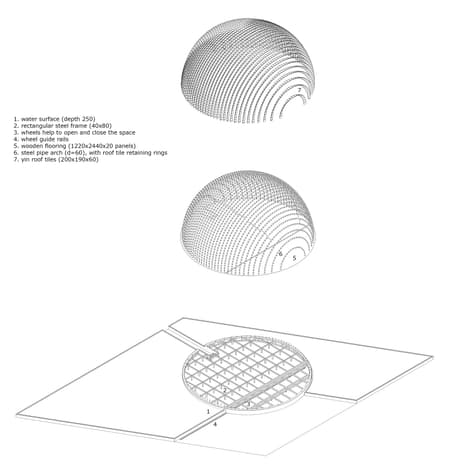
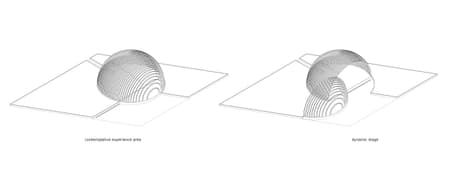
The design of this hemispherical structure (10 meters in diameter) is conceptually formed from various curves placed alongside one another. Depending on its intended function, the space can either expand into a dynamic stage or contract into a contemplative experience area.
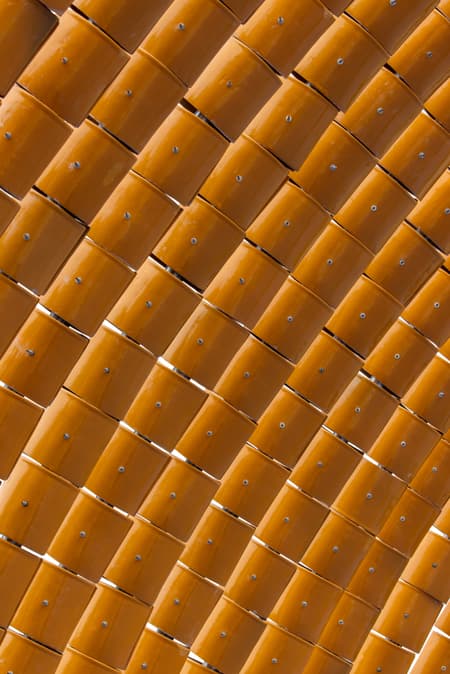
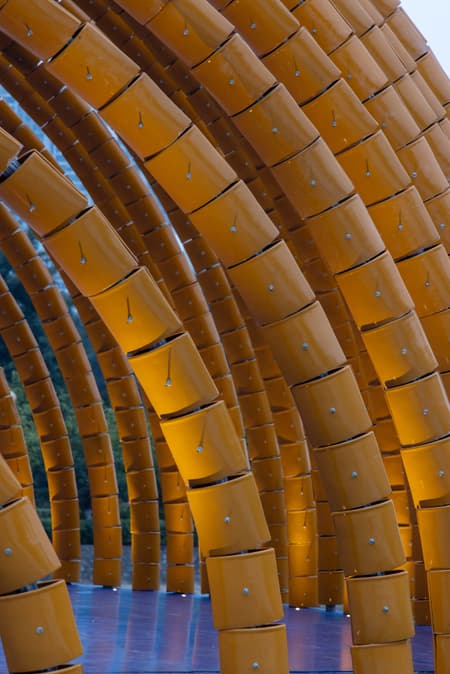
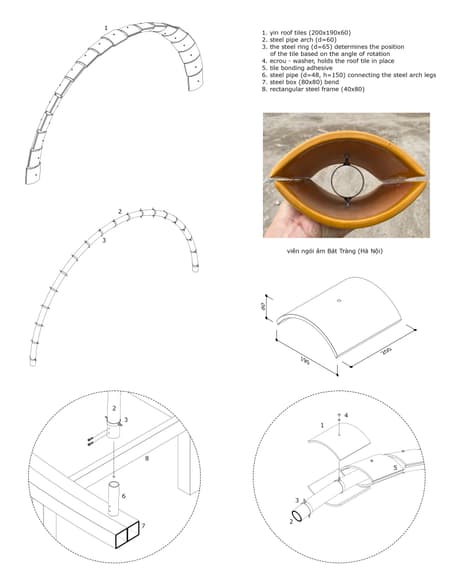
The predominant material employed to create the ambiance within the pavilion is traditional golden glazed concave tiles. Each tile symbolizes a bamboo joint (representing a droplet of water) that merges into familiar bamboo stalks (the glistening water rays), collectively forming a vibrant and expansive sky as commonly perceived. In association with this perception, sunlight filters through rain in a sun shower, shedding golden droplets that nurture life.ASHUI Pavilion = Cultivating Interdisciplinary knowledge, creating Urban flow, Humanistic and Sustainable Architecture.