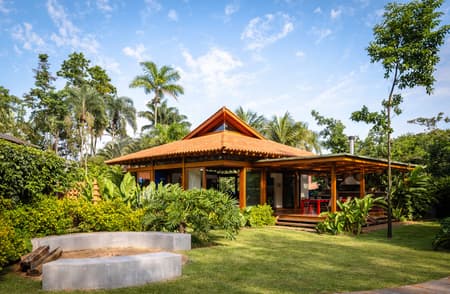
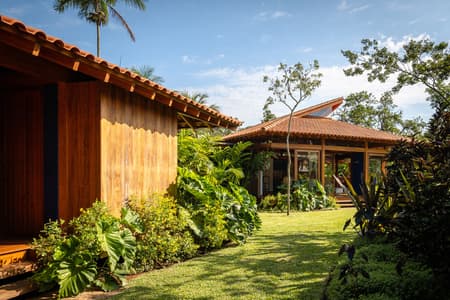
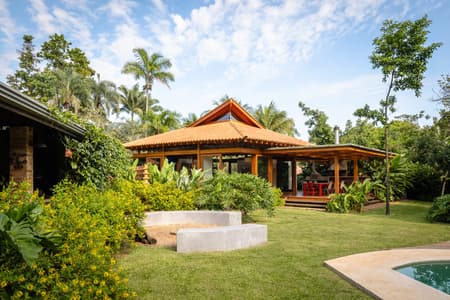
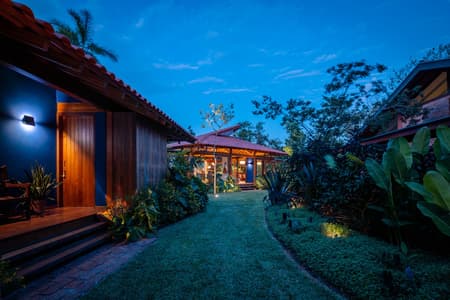
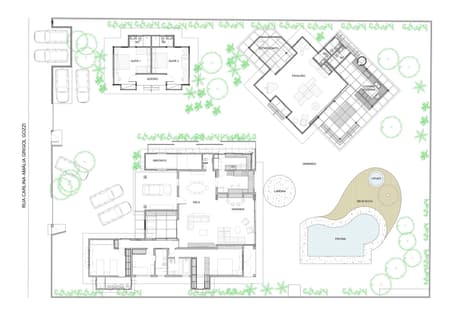
The expansion project of this residence was developed through the acquisition of the adjacent plot, which retained its original topography and vegetation. On this plot, two new buildings were proposed.
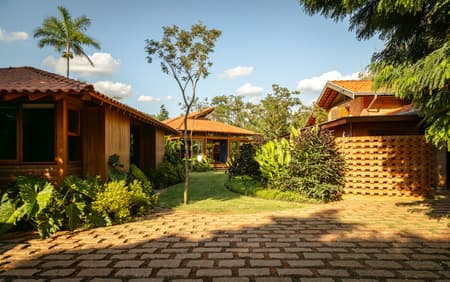
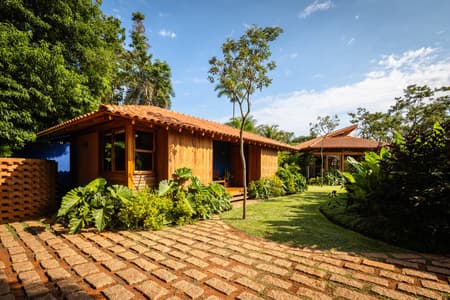
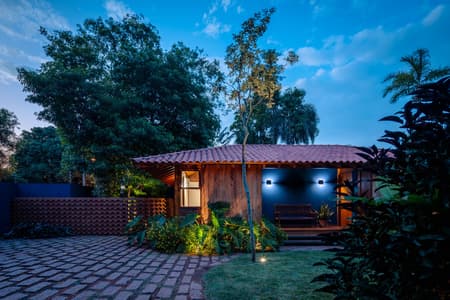
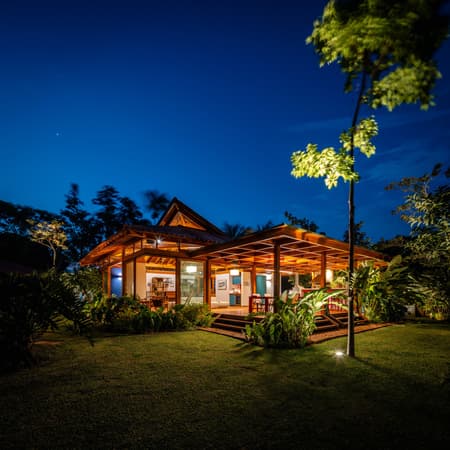
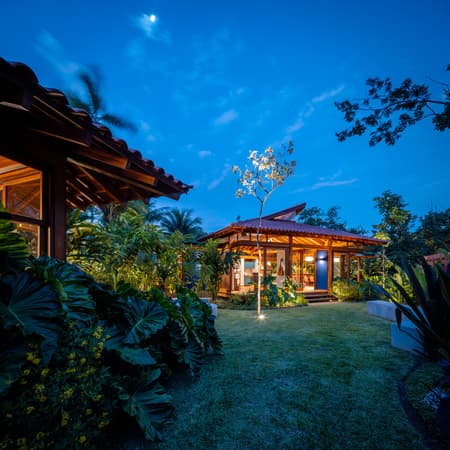
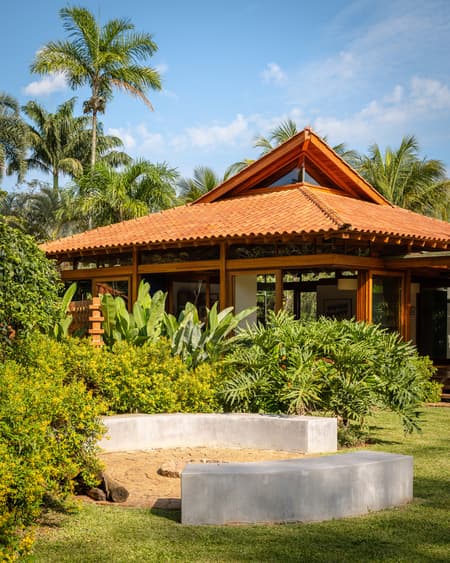
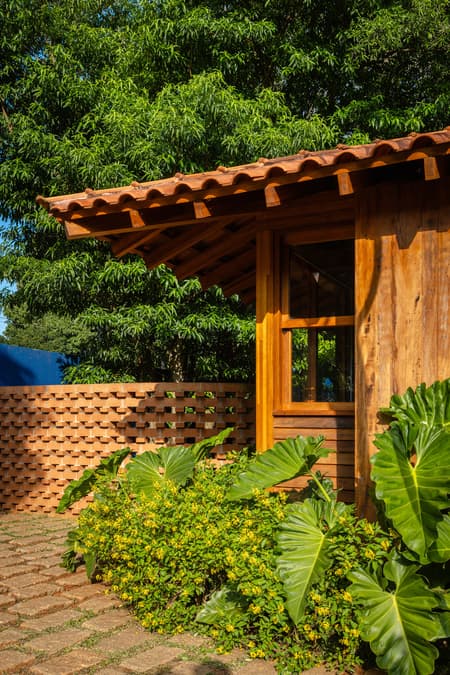
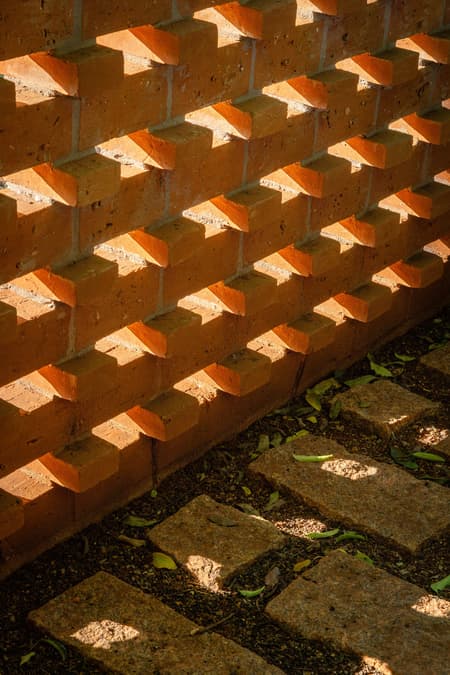
These new constructions are arranged along the longitudinal axis of the site, so that the resulting open spaces form pathways and small plazas for lingering and staying. Within this open area, a careful landscape design and an artistic mural weave the buildings together with vegetation and elements of concrete and brick, creating perforated walls that sometimes provide privacy and at other times reveal pleasant living spaces.
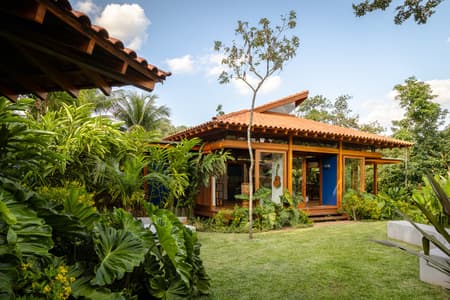
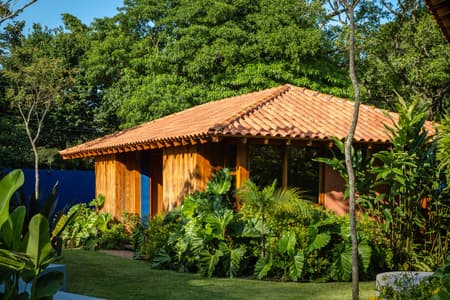
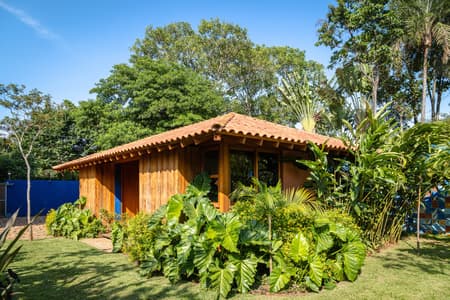
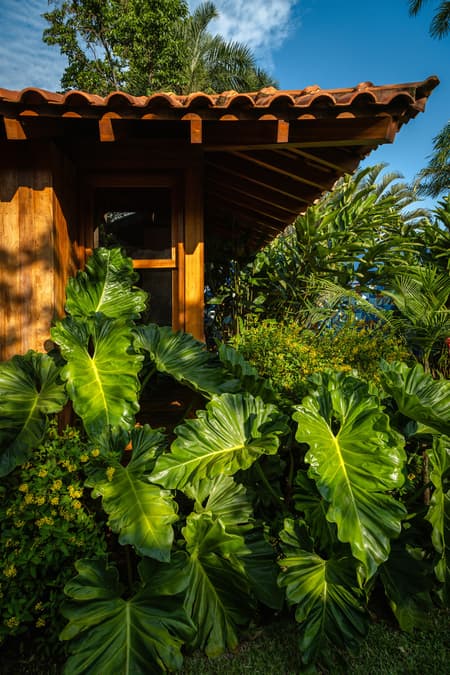
One of the new buildings, a small pavilion located in the front portion closer to the street, accommodates two suites, keeping the front area reserved for bedrooms, intimacy, and silence.
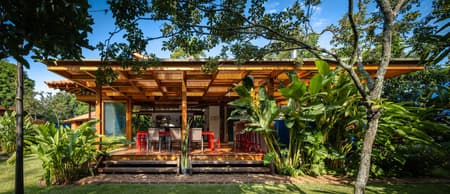
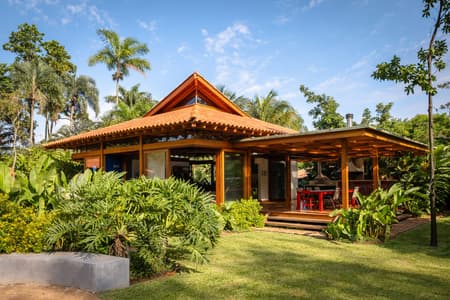
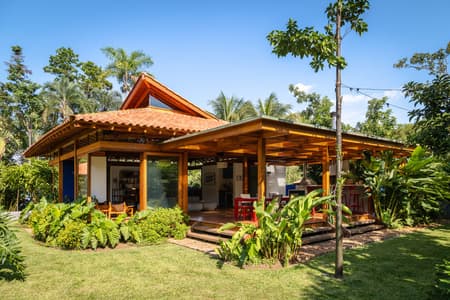
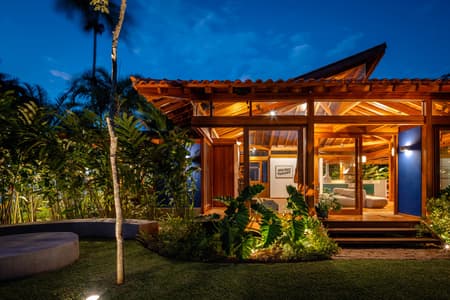
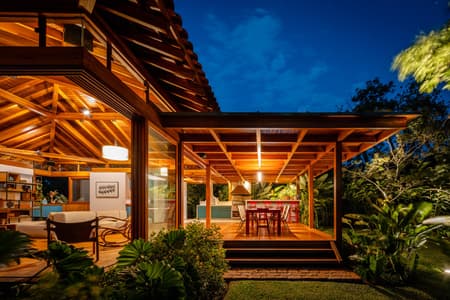
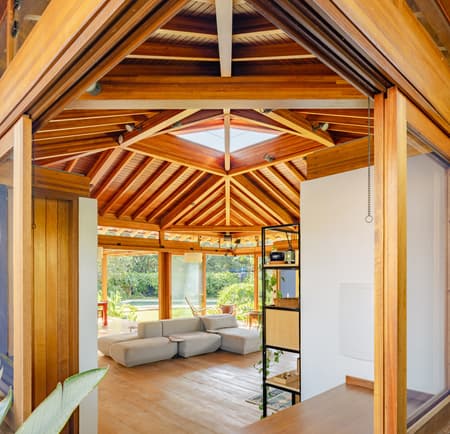
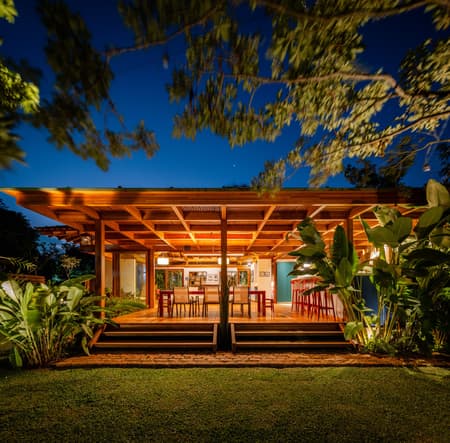
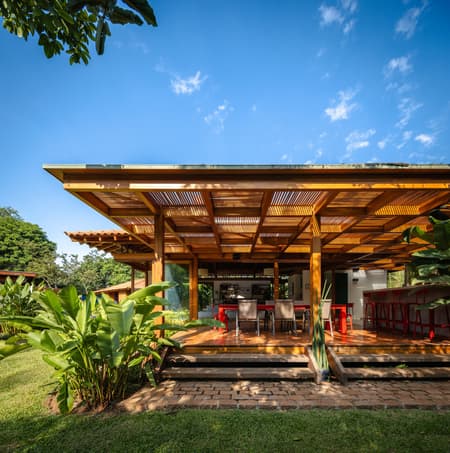
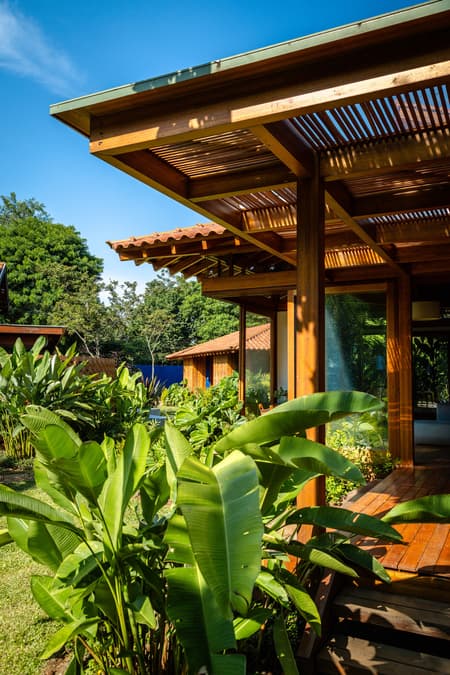
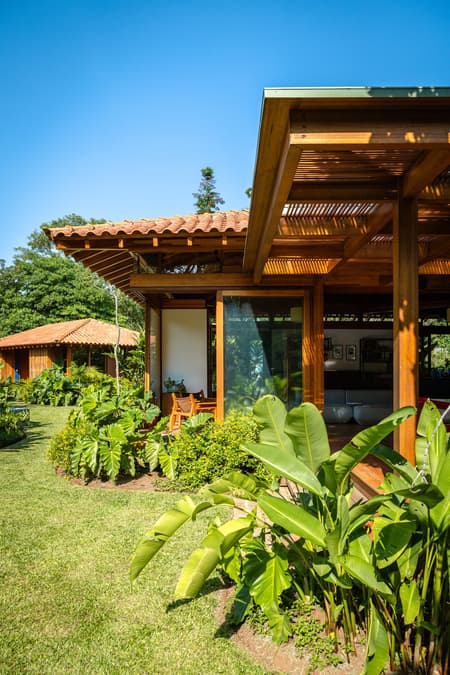
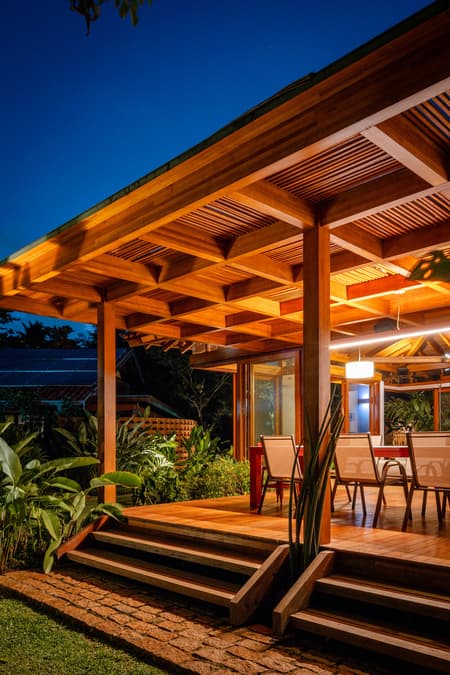
The other pavilion, more central and transparent, placed in a rotated position within the site, houses social gathering and celebration spaces. This pavilion, with a central 9 m x 9 m space, has no supports at the corners or in the center, allowing for a generous and flexible area for multiple possible uses. In addition to the open central space, there are also areas dedicated to specific functions such as bathrooms, a home theater, and an outdoor kitchen, accompanied by a large table on the veranda facing the garden and the pool.
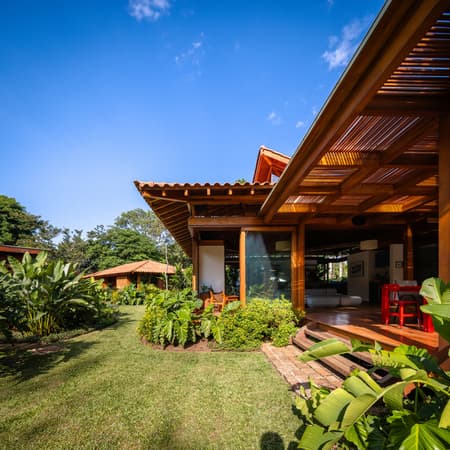
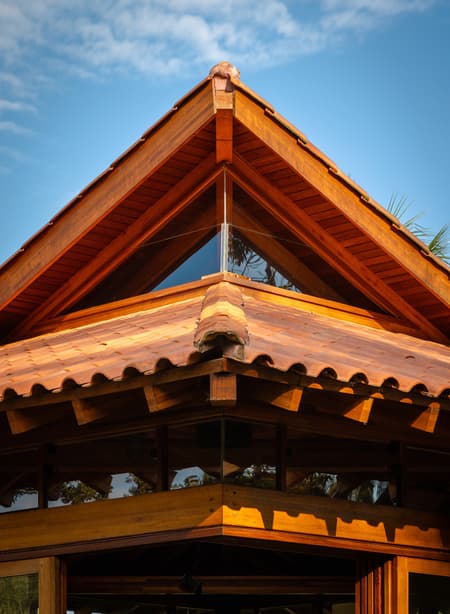
In harmony with the original buildings that compose the residence, the new constructions feature pitched roofs made of clay tiles as well as flat roofs using waterproofing membranes or glass.
The prefabricated structure of the new buildings explores modular and symmetrical designs, aiming to enhance logic and cost efficiency in construction.
The service areas containing plumbing installations are built on reinforced concrete structures, while the remaining areas consist of timber structures, with the floor level raised above ground moisture. Sliding window systems integrate the beautiful garden with the interior of the buildings.