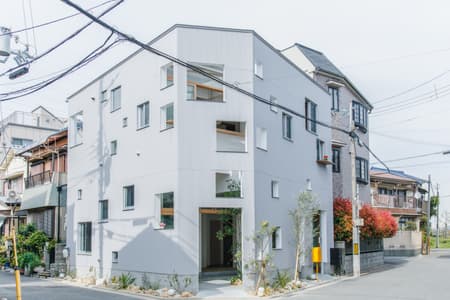
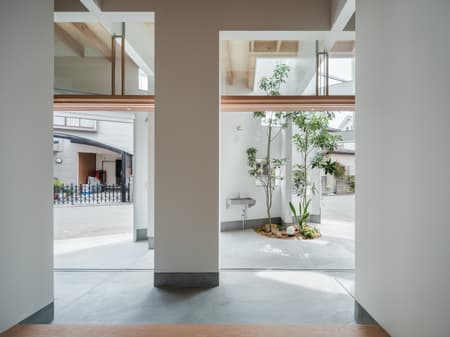
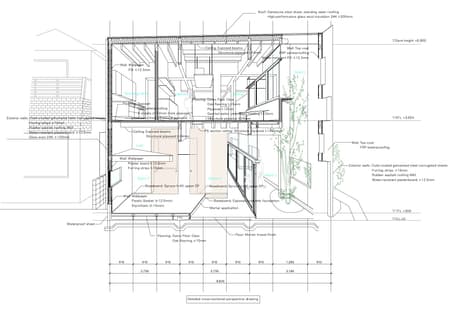
Inside and inside, inside and outside, creating distance through openings The site is surrounded by JR and private railways to the north and south, a huge ruins park and main roads to the east and west, and is a corner of a residential area cut off by urban infrastructure, with small houses neatly lined up. The streetscape is not particularly distinctive, and it looks like something you could find anywhere. Due to the convenient location, the area is undergoing a generational change through rebuilding, and they are trying to change the landscape from a two-story residential area without garages to a three-story residential area with garages. In other words, by creating a garage, the front yard on the first floor will be eliminated, and the third floor will increase the volume of the building.
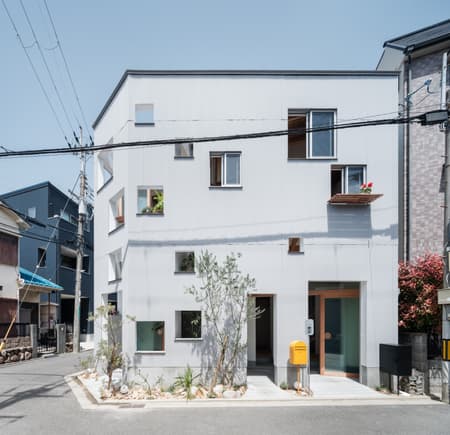
A new two-story building without a garage is planned for this location. Due to the characteristics of the site, which is an irregular pentagon and has two open sides on a corner, making it difficult to pinpoint the direction, we decided to solve the problem in the same way on all sides.
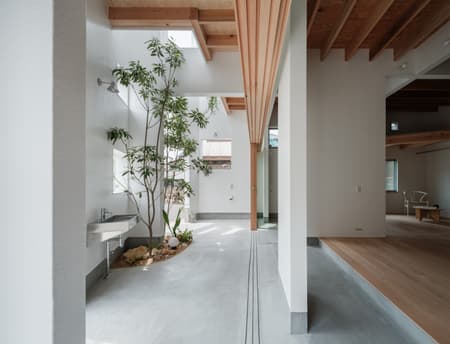
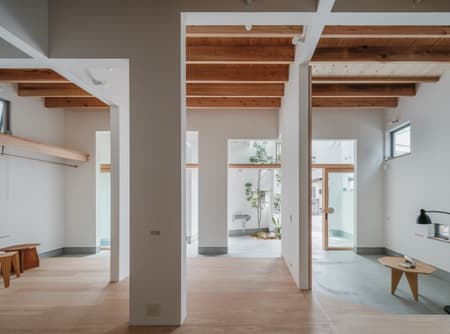
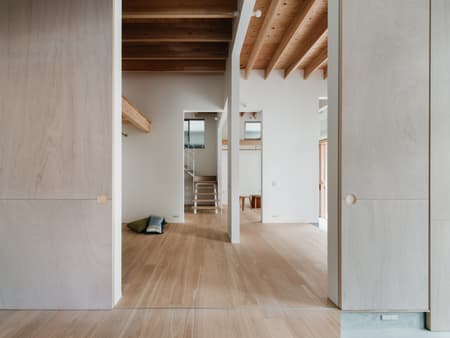
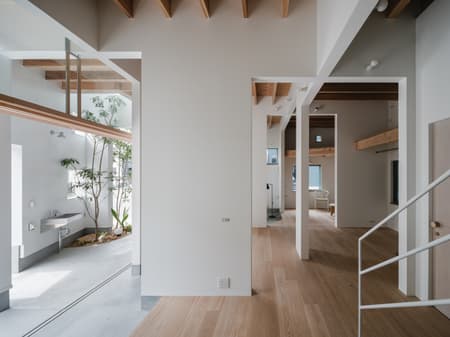
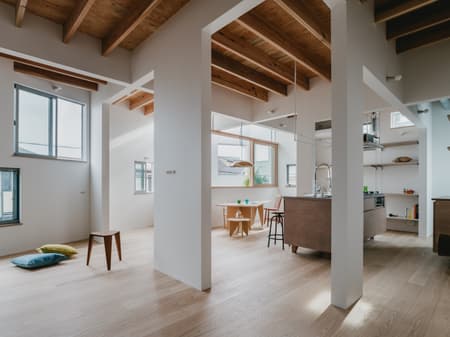
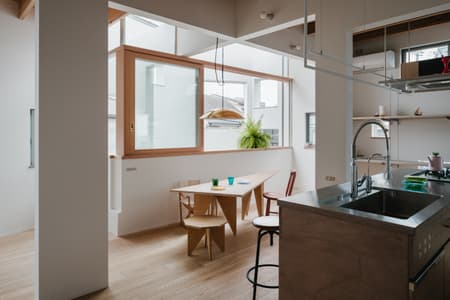
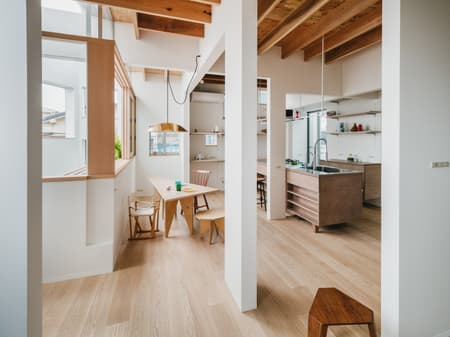
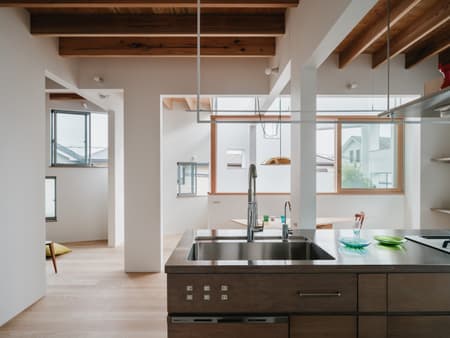
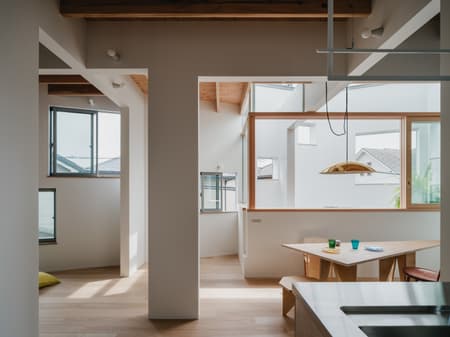
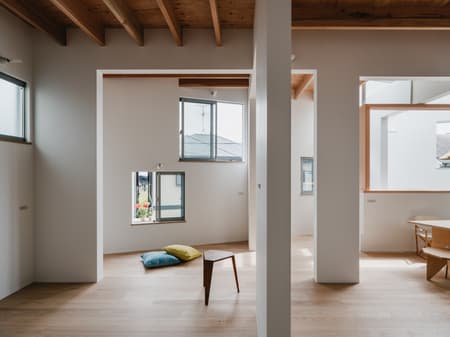
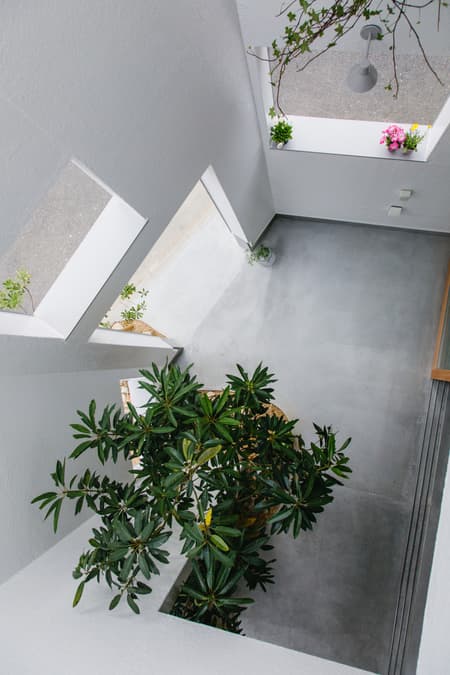
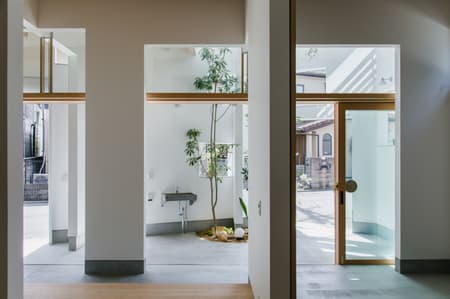
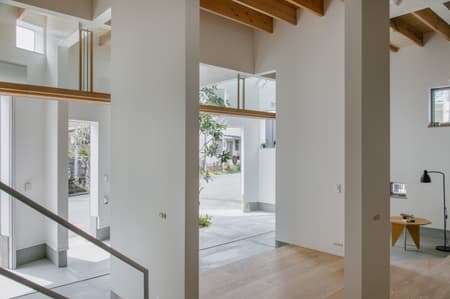
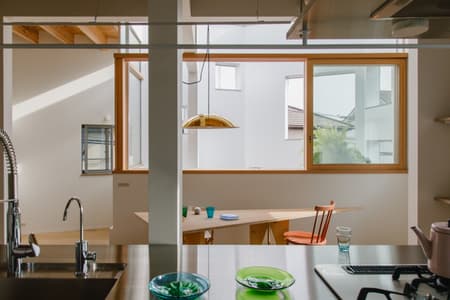
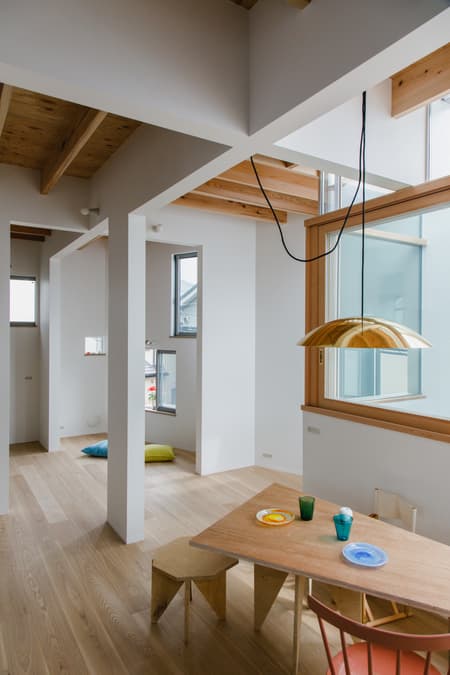
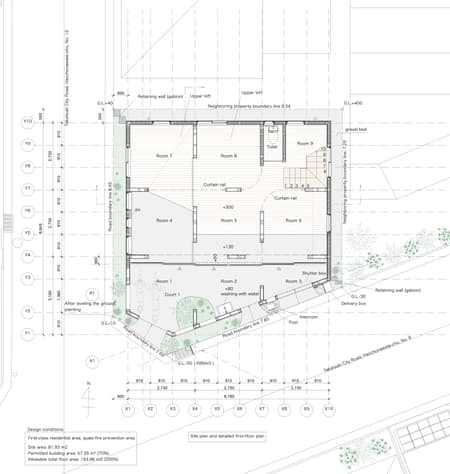
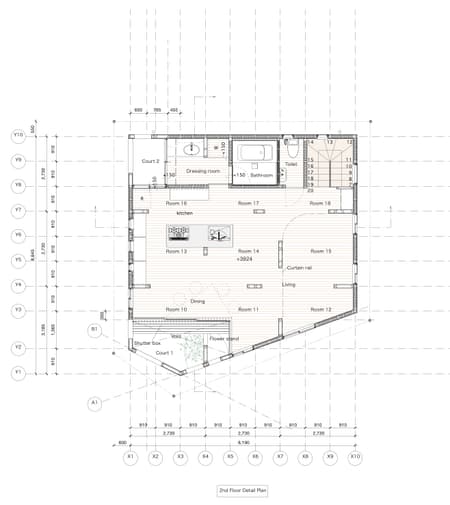
First, we drew a line one size smaller than the site boundary line and divided it into nine squares. By dividing it into nine, the building was built equally on all five sides in each direction. The intersections of the nine squares were opened, and the lines that did not intersect were closed. Then, the adjacent squares were spaced apart, and the lines of sight were clear of the diagonal squares, resonating with each other, creating four areas that intersect with the nine squares. The quality of the space was changed by aligning the height of the intersecting hanging walls and changing the height of the hanging walls at each intersection. Spaces were created based on the premise that the squares are separated by walls, such as space 6 and 8 on the first floor and space 15 on the second floor, and areas gently enclosed by hanging walls at the intersections of the squares, such as the transition space from space 5 to space 9 on the first floor (the entrance at the top of the stairs) and the kitchen and dining room on the second floor, providing living space.
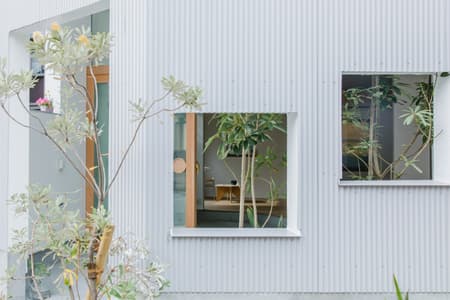
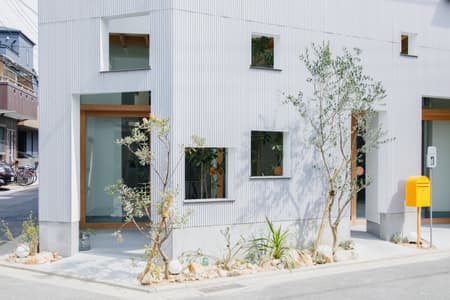
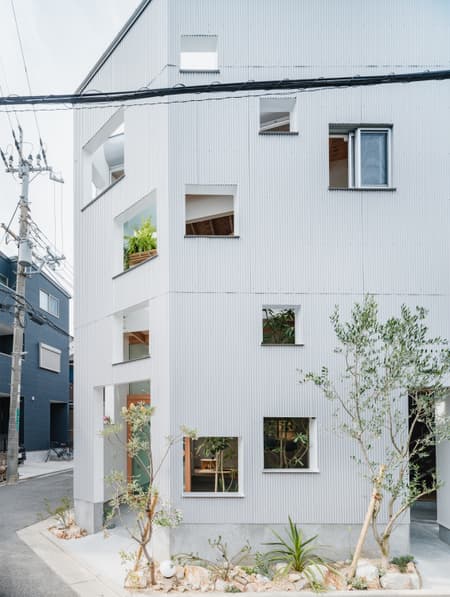
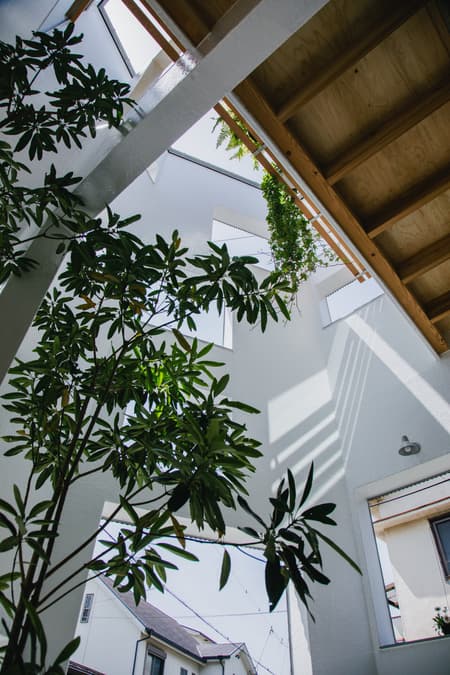
When the position of the line of sight changes as you move around in your daily life, the way you perceive the space changes, and it is connected or disconnected. As for the connection to the town, greenery was brought into the squares, and the front garden was pulled in by layering, and the ceiling was raised, making the overall building about 2.5 stories tall. For each direction, the windows are scattered around, taking into account the subtle characteristics of the neighborhood and shaping the opening positions and sizes, eliminating any sense of literacy regarding floor numbers and directions from the exterior. This allows the winedows to create a view that blends between the two-story building with no garage and a front yard and the three-story building with no front yard.