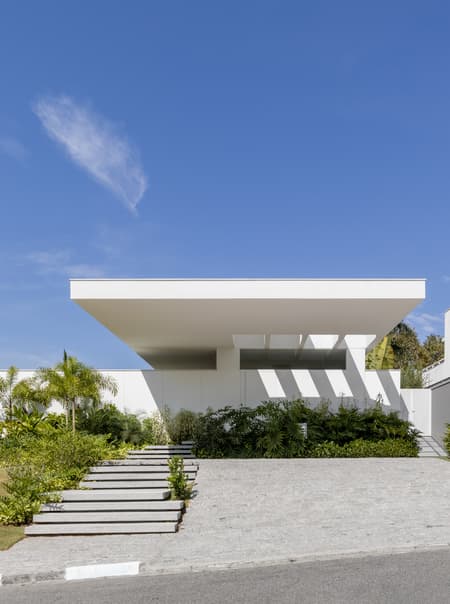
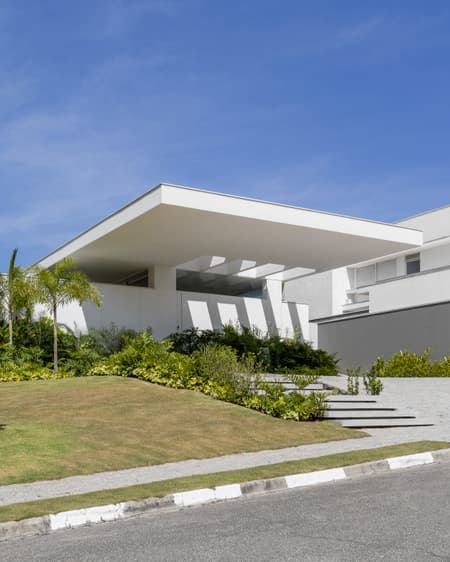
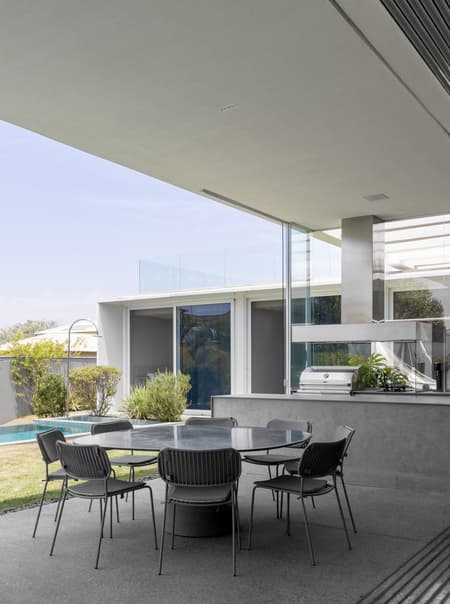
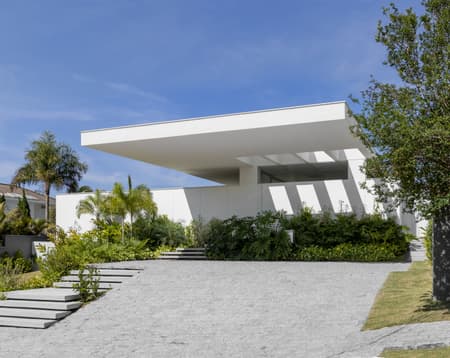
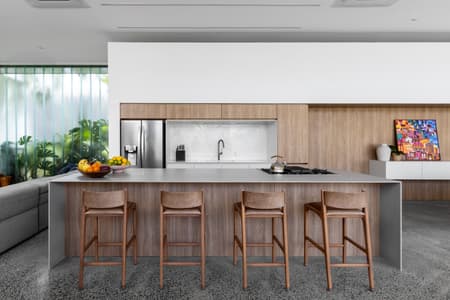
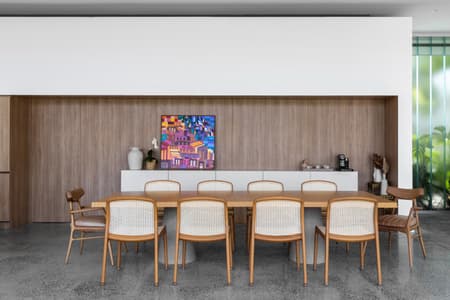
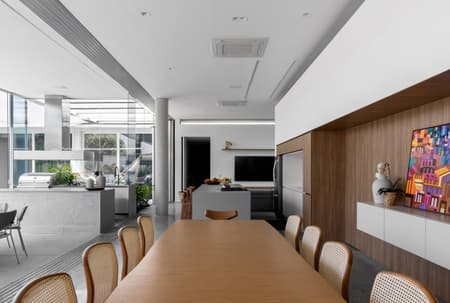
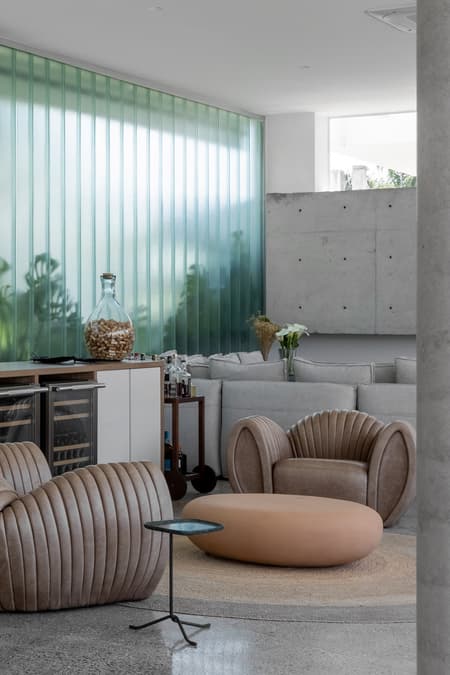
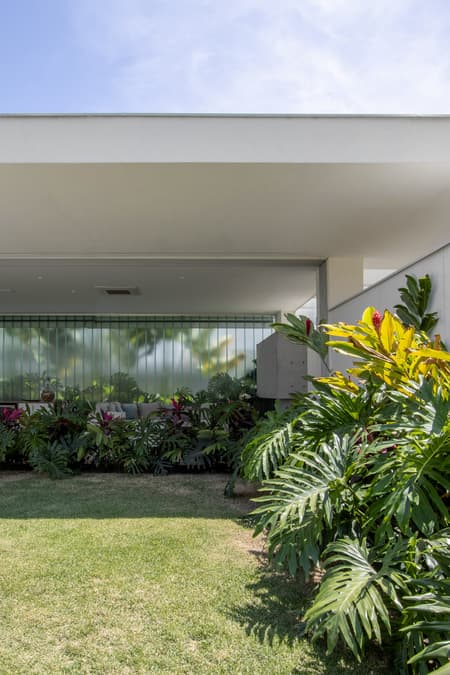
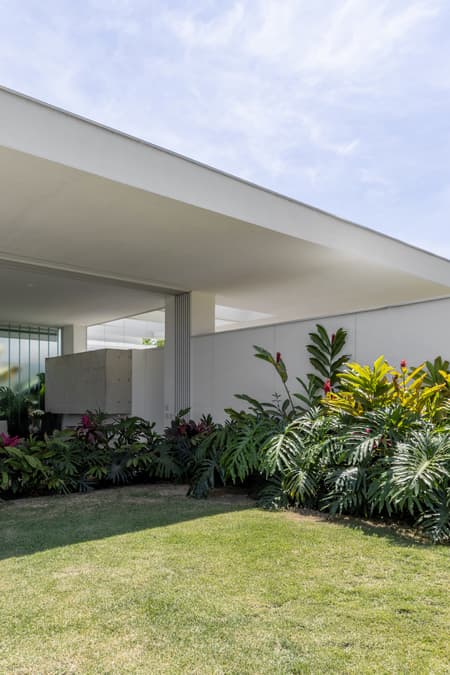
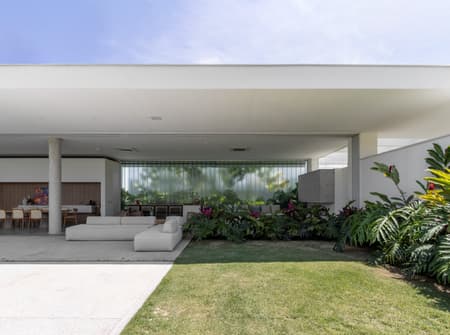
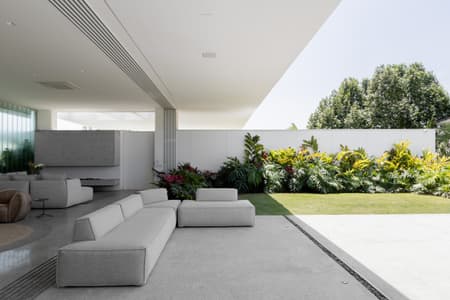
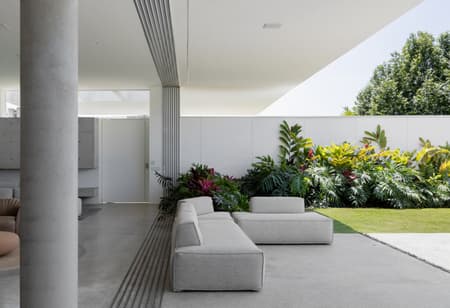
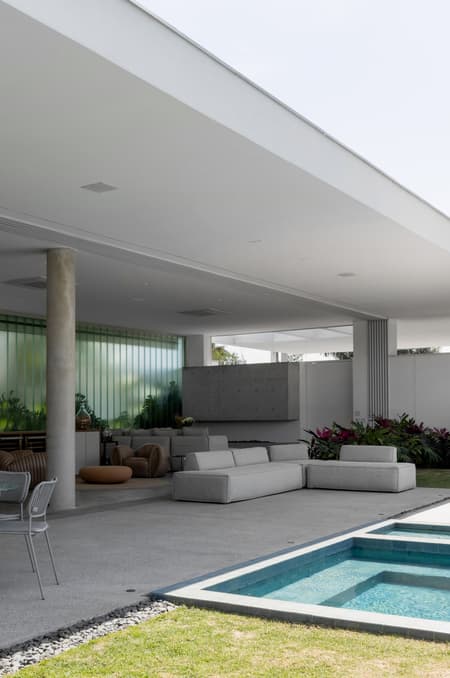
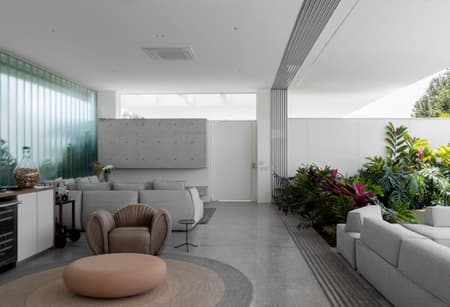
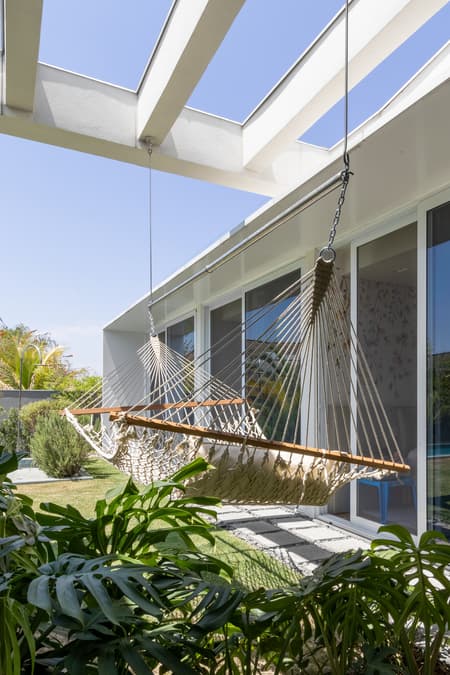
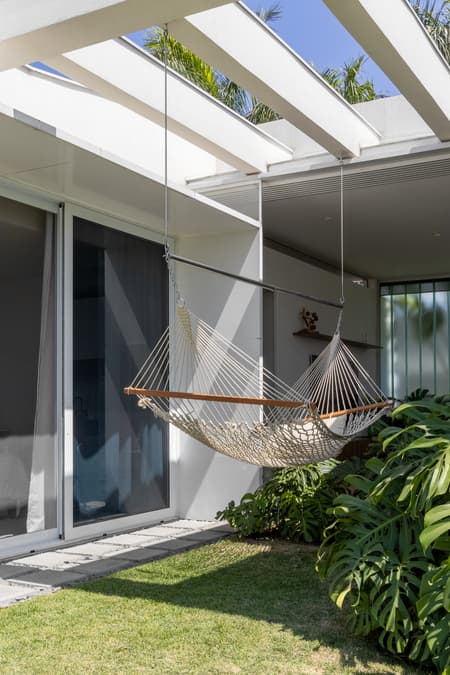
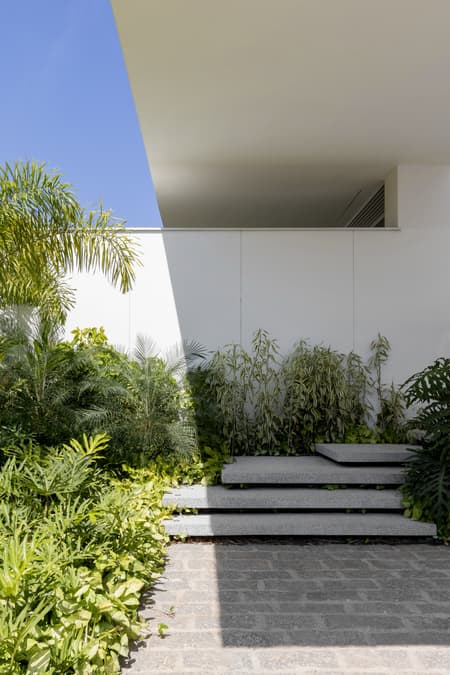
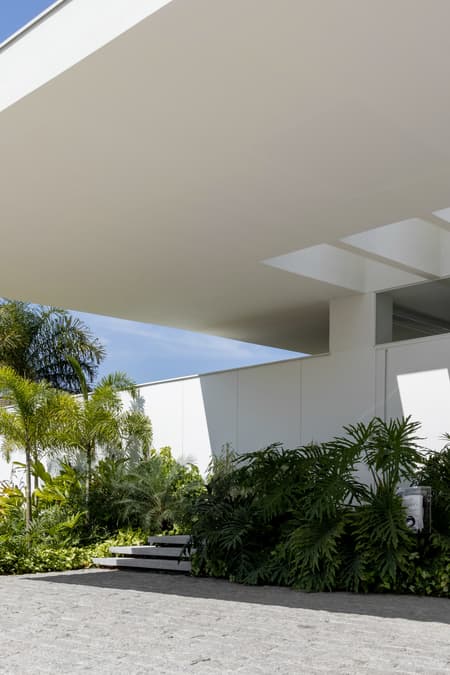
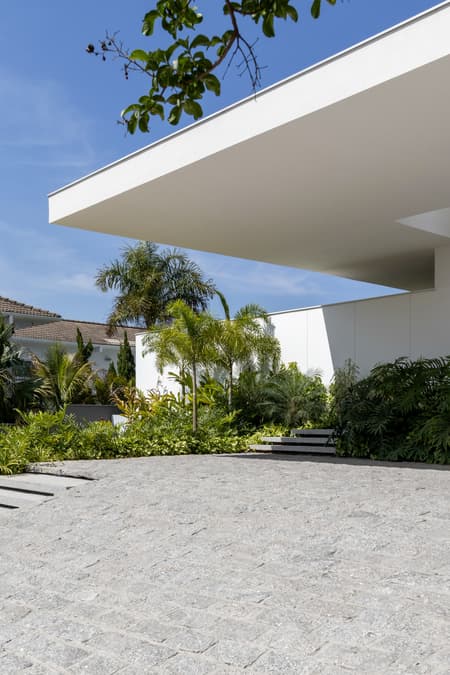
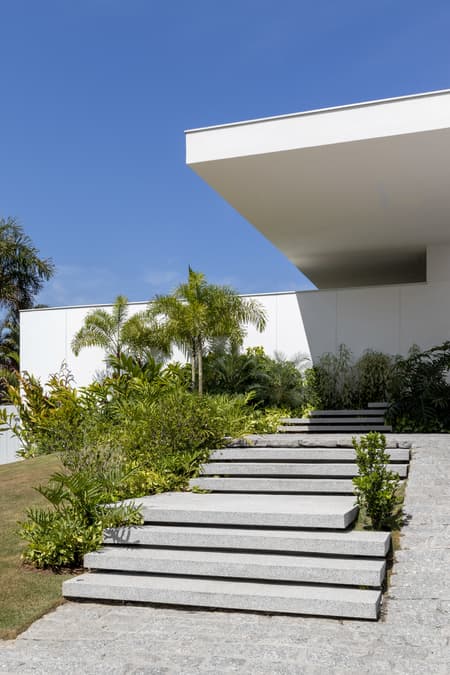
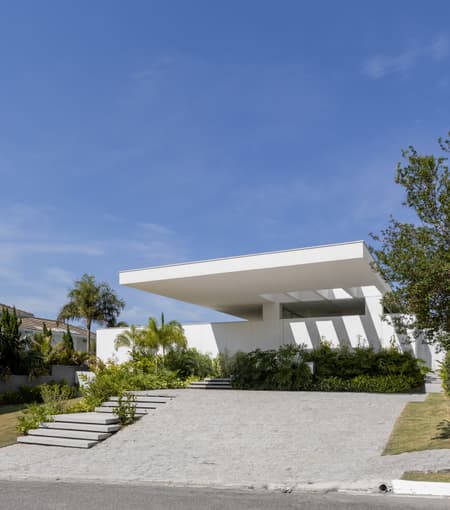
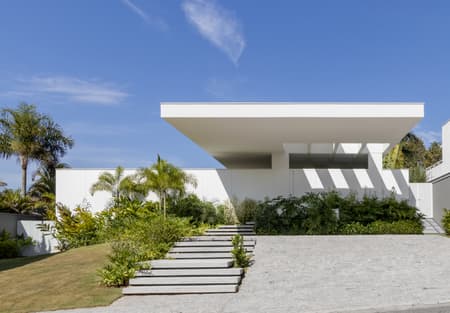
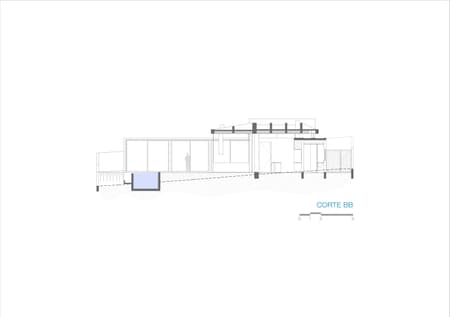
A large roof defines the house's main gesture: it starts from the social areas, extends to the garage, and stitches together — in a single movement — the boundaries between inside and outside. It is not merely shelter — it is an invitation. Beneath it, spaces dissolve and cease to compete, simply coexisting.
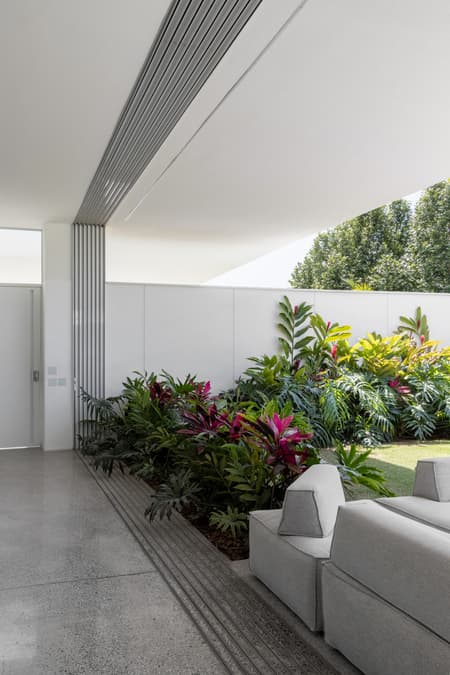
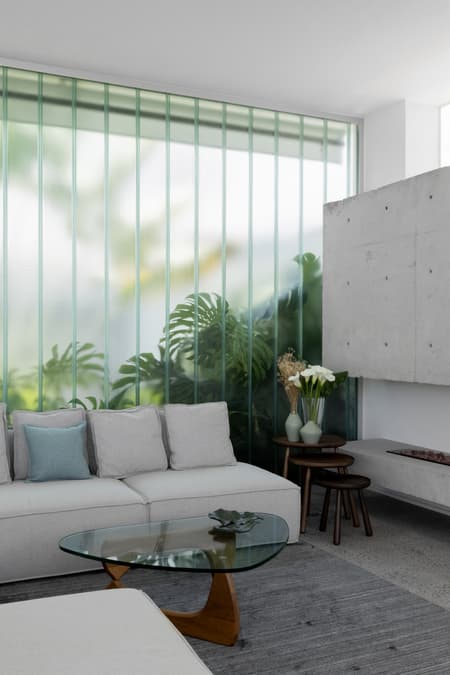
The chosen materiality does not demand attention. White asserts itself as necessary silence, a backdrop that returns protagonism to the gardens. They speak first — through texture, color, and the movement of light throughout the day. The architecture steps back so the landscape can come forward.
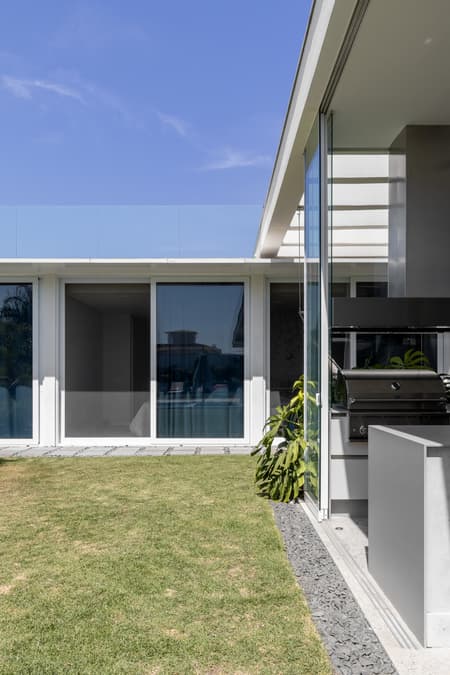
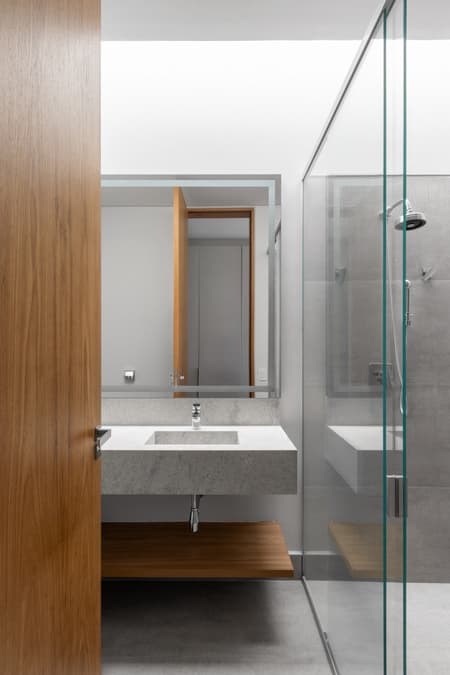
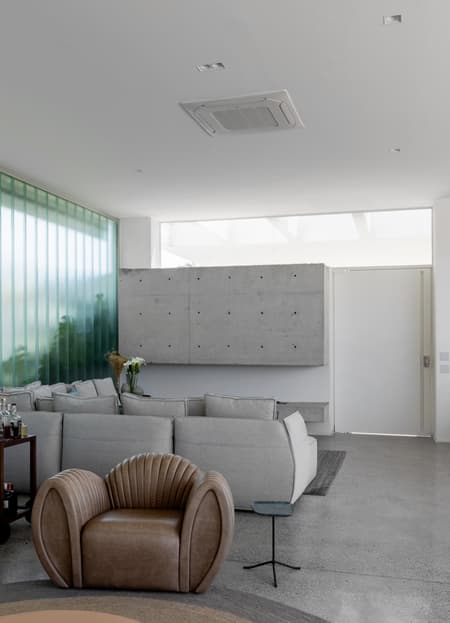
This gesture of stepping back, however, is not absence. It is precision. Every surface, every transition between materials was designed to create distinct sensations without breaking the continuity of space. Exposed concrete converses with smooth plaster; the floor that begins inside continues outside without interruption. The physical boundary exists, but the sensory boundary dissolves.
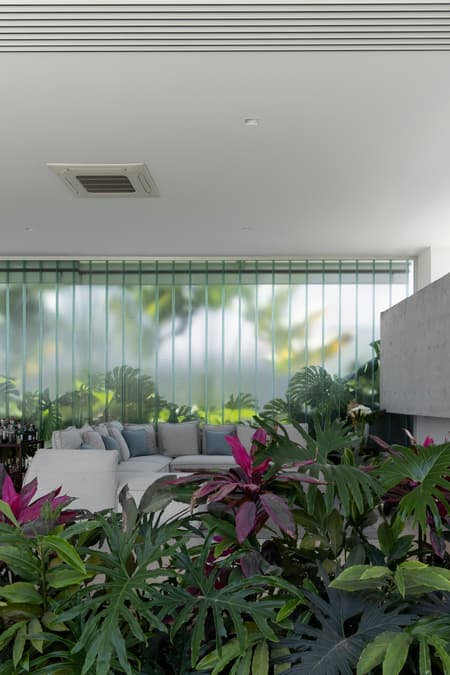
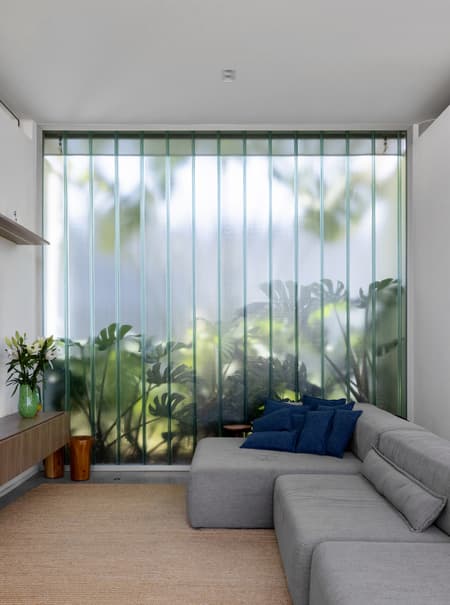
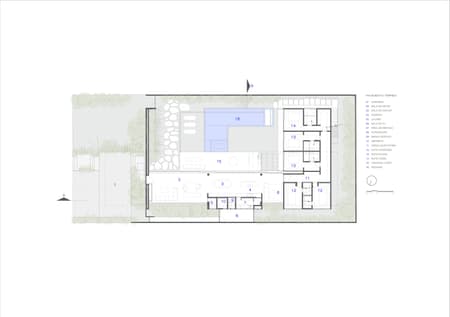
The central courtyard is where this logic reveals itself most clearly. It ceases to be a passageway and becomes a place — a shared space that the social and private areas inhabit at the same time. When the doors and windows open, there is no longer inside or outside: there is simply the house unfolding. The living room extends into the garden, the garden enters through the living room, and the courtyard breathes between them like the lung of domestic life.
The programs flow with ease because the floor plan does not confine them to isolated rooms. The architecture here is a generous framework — open enough to welcome routine without dictating it. Comfort is not concentrated in a single space: it permeates the entire house, built layer by layer through the choice of materials, the scale of the rooms, and the way natural light enters and travels through every corner throughout the day.
The result is a house that does not impose itself. It exists so that life may happen within it — and, often, beyond it.