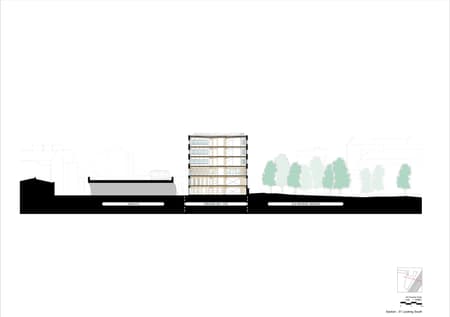
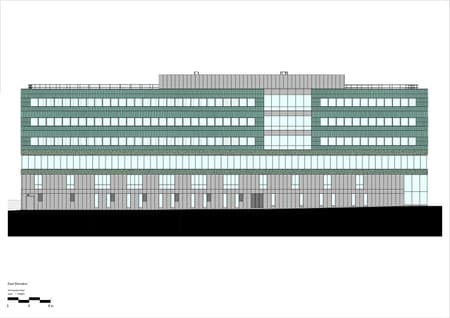
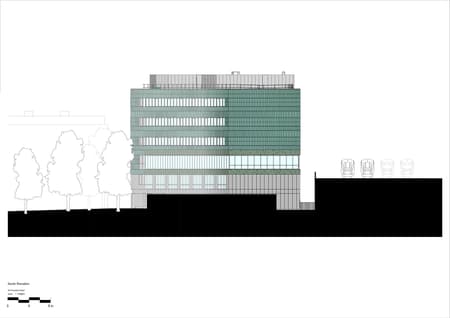
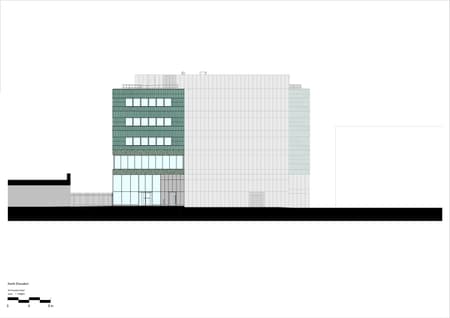
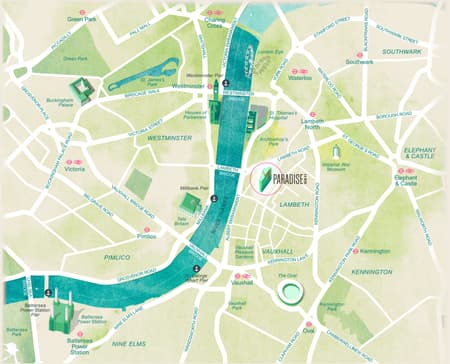
Feilden Clegg Bradley Studios (FCBStudios) has completed one of the UK’s lowest embodied carbon mass timber office development, in the heart of Lambeth for Bywater Properties, and it’s not just another sustainable office - it’s a milestone.
This mass timber, fully demountable structure is a powerful demonstration of how simplicity, circularity, and carbon-conscious design can define the future of global cities.
Completed five years ahead of RIBA’s 2030 sustainability targets, the six-floor building delivers 35% lower embodied carbon, locks away over 1,800 tonnes of CO₂ from the atmosphere - equivalent to the carbon emissions of building 24 new homes - and has been designed with a whole-life approach in mind. It is engineered for complete disassembly and reuse, a benchmark for circular construction.
“Paradise represents a bold step forward in how we think about workplace design,” said Alex Whitbread, Partner at FCBStudios. “It’s a project that demonstrates how ambitious sustainability targets, deep community collaboration, and a commitment to wellbeing can come together in a truly regenerative building.”
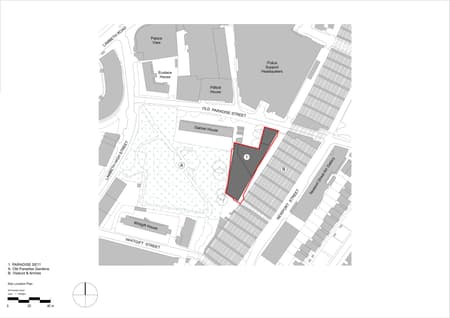
‘Paradise SE11’, named after Old Paradise Gardens which the building adjoins, set out to create a new standard for workspace design, putting sustainability and wellbeing at the forefront. Natural light floods into the floorplates offering views out to the gardens, connectivity to the passing trains and across to the city skyline in the distance. Generous floor heights, exposing the timber structure for a natural finish and access to green spaces, all contribute to a healthy workplace and human-centric design.
Pavlos Clifton, Head of Development at Bywater said, “This is us rethinking what a central London development can be, not just in form, but in feeling. A place where sustainability, community and creativity don’t just co-exist, they drive everything. Paradise is timber-led, design-forward, and proudly different. It’s rare to get the chance to shape something this meaningful. Even rarer to do it with a team that genuinely believes in a better way of building.”
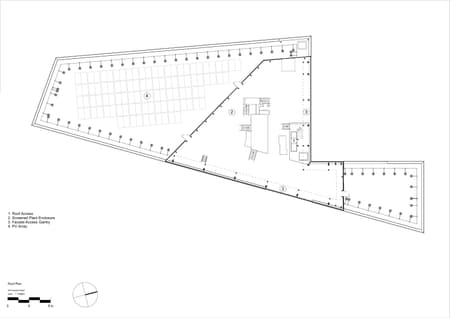
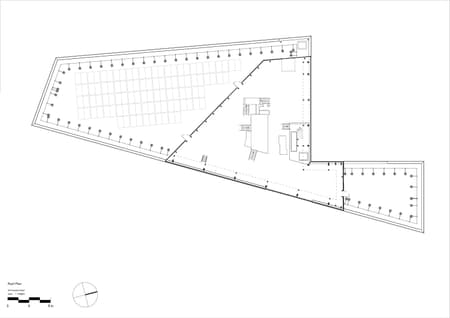
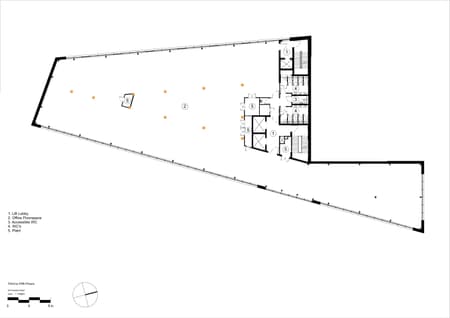
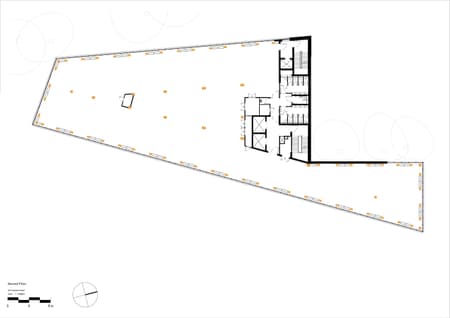
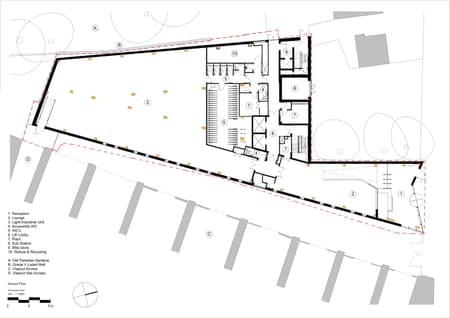
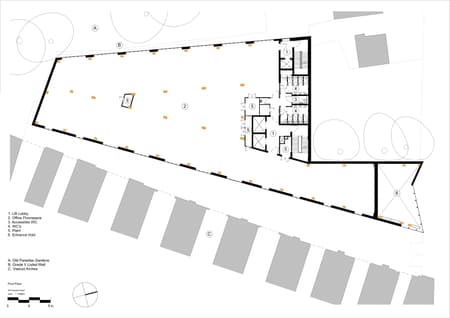
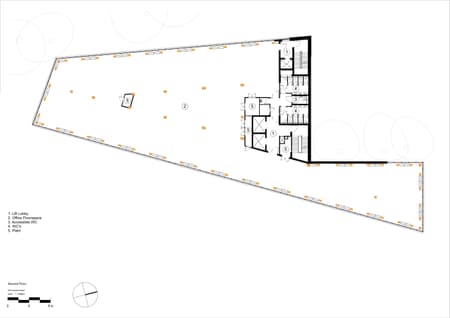
Designed for flexibility, the ground floor offers space for workshop use and maker space with the upper floors created for adaptability and reconfiguration, dynamically shapeshifting to suit tenant needs.
With over 45 years of sustainable workplace design experience, FCBStudios embraced the opportunity to partner with a like-minded developer committed to putting people and planet first.
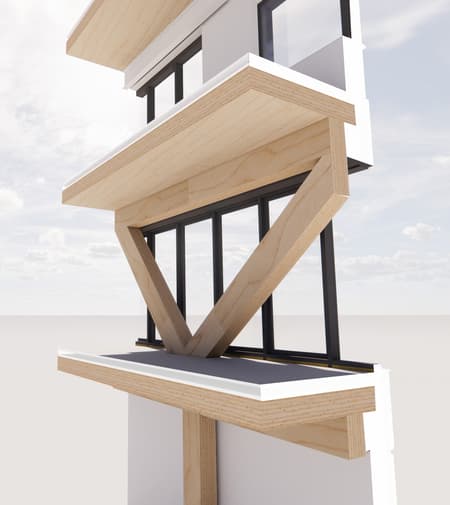
Designing Simplicity: A Collaborative Blueprint At the core of Paradise lies a commitment to designing out complexity. The project team challenged conventional construction methods, opting instead for a streamlined, elegant timber structure that prioritises simplicity, adaptability, and material honesty. This meant eliminating adhesives in favour of mechanical fixings that allow for future disassembly and reuse, a foundational step towards true circular construction.
The decision to expose the timber structure drove a fundamental shift in design thinking. Achieving this required early and close collaboration between architects, structural engineers, fire consultants, and acoustic specialists. Every element, from junctions to finishes, was considered in detail to ensure the exposed timber met performance standards without compromising its visual integrity or the building’s sustainability goals.
One of the key challenges was resolving material interfaces in a way that preserved the building’s demountable nature. Conventional solutions, such as grout or cementitious screeds, were avoided. Instead, the team developed alternatives using stone wool insulation, dry-fix techniques, and reversible fastenings. These methods support future flexibility while ensuring that the carbon stored in the timber remains locked away for generations.
Human Wellbeing: At the Core of Urban Futures More than a technical achievement, Paradise is a human-centric building. Floorplates are flooded with natural light, air quality is passively managed with openable façades, and views across Old Paradise Gardens offer vital biophilic relief in the heart of the city.
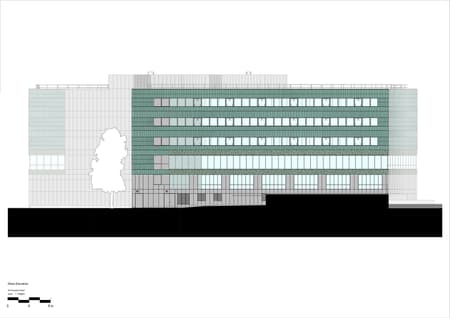
Legacy Materials, Living Facades One of the most visible symbols of Paradise’s legacy is its self-cleaning, demountable terracotta façade, designed in collaboration with local school children, drawing on the area’s Royal Doulton heritage. These tiles, like the building itself, are made to last over 100 years, and can be reused in the future.
A Platform for Global Imitation Paradise SE11 serves as a benchmark for the next generation of regenerative cities. By integrating circular economy strategies, prioritising design simplicity, and placing equal value on human wellbeing and environmental responsibility, the project establishes a replicable model for sustainable urban development. More than just an office building, it demonstrates how architecture can actively contribute to climate solutions, shifting the built environment from being part of the problem to becoming a key part of the answer.
This is workplace design which seeks to challenge the status quo and through rigorous testing and research and innovative approaches proves that environmentally and socially responsible architecture can support the much-needed transition to regenerative design and a zero-carbon economy.
Paradise is more than a workplace, it’s a blueprint for a regenerative, low-carbon future. Built to be taken apart, celebrated for its simplicity, and designed to inspire what’s next.
In this film, Senior Partner, Alex Whitbread, and Bywater's Head of Development, Pavlos Clifton, talk through how they tackled the challenges head on to prove that things can be done differently, with the results speaking for themselves.

 Andy Stagg (19).jpg?w=450&q=75&dpl=dpl_76Rq87wxQwFvSi96M2iBpo5TN6QL)
 Andy Stagg (3).jpg?w=450&q=75&dpl=dpl_76Rq87wxQwFvSi96M2iBpo5TN6QL)
 Andy Stagg (15).jpg?w=450&q=75&dpl=dpl_76Rq87wxQwFvSi96M2iBpo5TN6QL)
 Andy Stagg (6).jpg?w=450&q=75&dpl=dpl_76Rq87wxQwFvSi96M2iBpo5TN6QL)
 Andy Stagg (25).jpg?w=450&q=75&dpl=dpl_76Rq87wxQwFvSi96M2iBpo5TN6QL)
 Andy Stagg (8).jpg?w=450&q=75&dpl=dpl_76Rq87wxQwFvSi96M2iBpo5TN6QL)
 Andy Stagg (9).jpg?w=450&q=75&dpl=dpl_76Rq87wxQwFvSi96M2iBpo5TN6QL)
 Andy Stagg (13).jpg?w=450&q=75&dpl=dpl_76Rq87wxQwFvSi96M2iBpo5TN6QL)
 Andy Stagg (20).jpg?w=450&q=75&dpl=dpl_76Rq87wxQwFvSi96M2iBpo5TN6QL)
 Andy Stagg (21).jpg?w=450&q=75&dpl=dpl_76Rq87wxQwFvSi96M2iBpo5TN6QL)
 Andy Stagg (22).jpg?w=450&q=75&dpl=dpl_76Rq87wxQwFvSi96M2iBpo5TN6QL)
 Andy Stagg (23).jpg?w=450&q=75&dpl=dpl_76Rq87wxQwFvSi96M2iBpo5TN6QL)
 Andy Stagg (18).jpg?w=450&q=75&dpl=dpl_76Rq87wxQwFvSi96M2iBpo5TN6QL)
 Andy Stagg (14).jpg?w=450&q=75&dpl=dpl_76Rq87wxQwFvSi96M2iBpo5TN6QL)
 Andy Stagg (16).jpg?w=450&q=75&dpl=dpl_76Rq87wxQwFvSi96M2iBpo5TN6QL)
 Andy Stagg (17).jpg?w=450&q=75&dpl=dpl_76Rq87wxQwFvSi96M2iBpo5TN6QL)
 Andy Stagg (10).jpg?w=450&q=75&dpl=dpl_76Rq87wxQwFvSi96M2iBpo5TN6QL)
 Andy Stagg (11).jpg?w=450&q=75&dpl=dpl_76Rq87wxQwFvSi96M2iBpo5TN6QL)
 Andy Stagg (12).jpg?w=450&q=75&dpl=dpl_76Rq87wxQwFvSi96M2iBpo5TN6QL)
 Andy Stagg (7).jpg?w=450&q=75&dpl=dpl_76Rq87wxQwFvSi96M2iBpo5TN6QL)
 Andy Stagg (5).jpg?w=450&q=75&dpl=dpl_76Rq87wxQwFvSi96M2iBpo5TN6QL)
 Andy Stagg (4).jpg?w=450&q=75&dpl=dpl_76Rq87wxQwFvSi96M2iBpo5TN6QL)
 Andy Stagg (2).jpg?w=450&q=75&dpl=dpl_76Rq87wxQwFvSi96M2iBpo5TN6QL)
 Andy Stagg (1).jpg?w=450&q=75&dpl=dpl_76Rq87wxQwFvSi96M2iBpo5TN6QL)
 Andy Stagg (26).jpg?w=450&q=75&dpl=dpl_76Rq87wxQwFvSi96M2iBpo5TN6QL)
 Andy Stagg (24).jpg?w=450&q=75&dpl=dpl_76Rq87wxQwFvSi96M2iBpo5TN6QL)
-P01.jpg?w=450&q=75&dpl=dpl_76Rq87wxQwFvSi96M2iBpo5TN6QL)