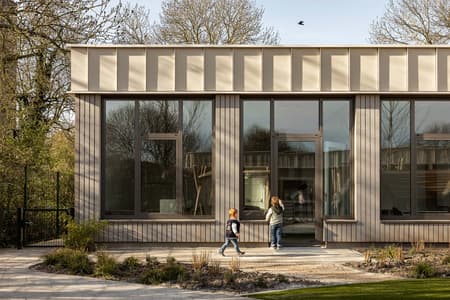
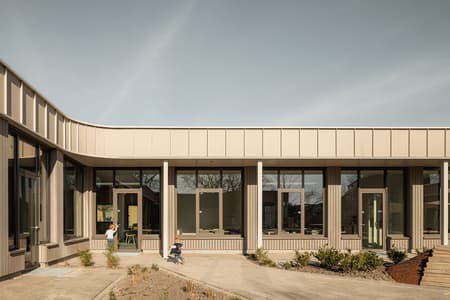
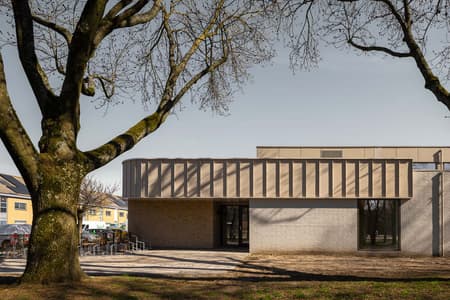
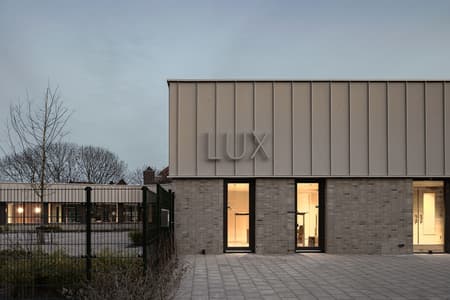
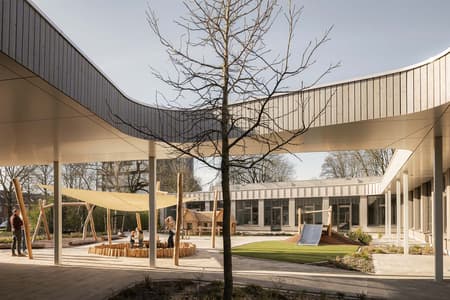
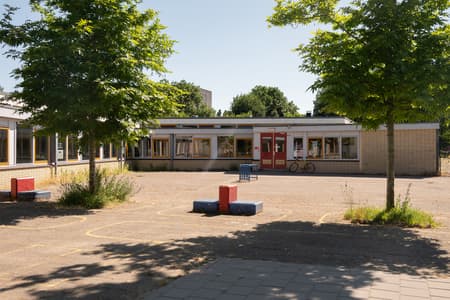
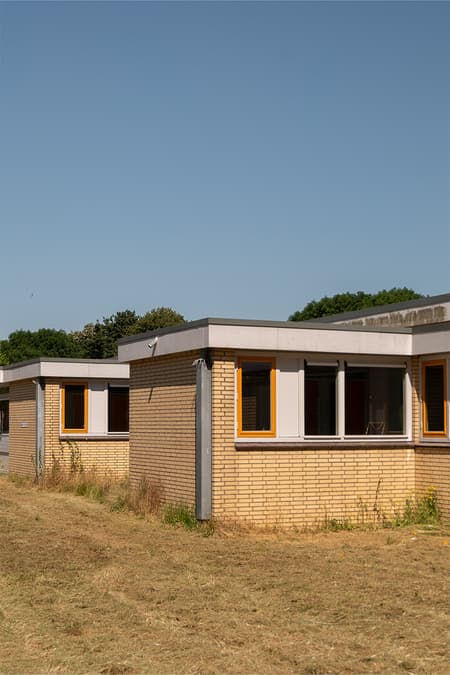
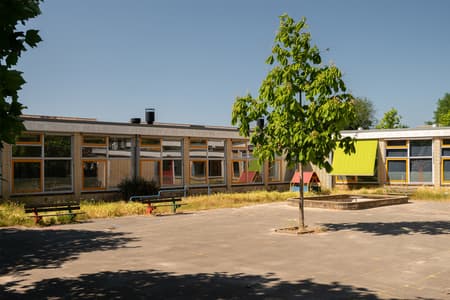
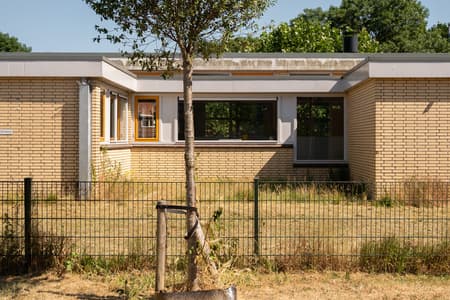
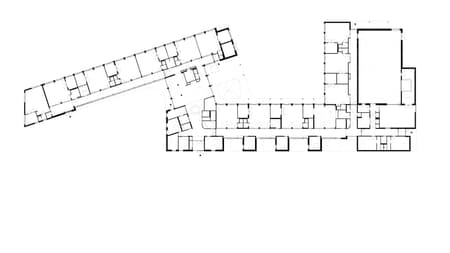
The Lux school in Utrecht was architecturally renovated by restoring its original 1973 structure and reorganizing the layout for clarity and connection. A central heart space was reintroduced, and a flowing canopy now unifies the building, highlights entrances, and offers sheltered outdoor areas. Extensions and patios create rhythm and soften transitions between inside and outside. Interior spaces are designed from the child’s perspective, with attention to texture, color, and quiet zones. The result is a cohesive, welcoming school with a strong identity, tailored to the needs of special education and integrated into its urban surroundings.
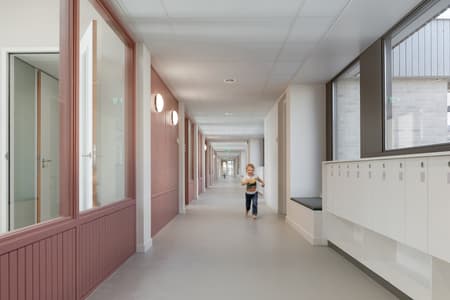
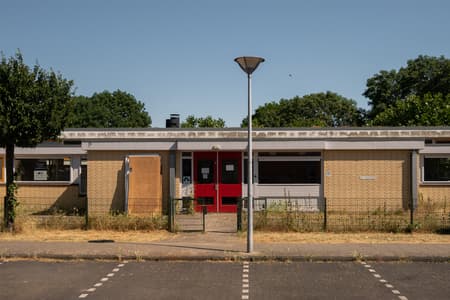
Introduction: The Lux school building on Stauntonstraat in the Utrecht district of Zuilen was built in 1973 and no longer met the current needs for special education in terms of spatial and functional aspects. The school offers education to children who learn more slowly and more difficult and need extra support. The building was very outdated and had a cluttered layout with long corridors, no clear entrance and a lack of a heart or meeting space. Nevertheless, thanks in part to the clear basic structure, the sustainability ambitions and the generous outdoor space, it was decided not to demolish the building, but to renovate it.
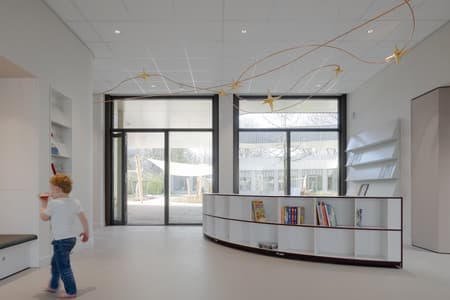
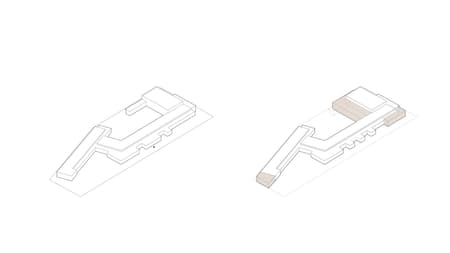
Past and present: The building has been expanded and renovated in many places in the past. We have moved in such a way that we have restored the building to its original structure. The heart has also been returned to the place where it once was. The choice of materials was coordinated with the original design and with the position of the school in the (yellow) district.
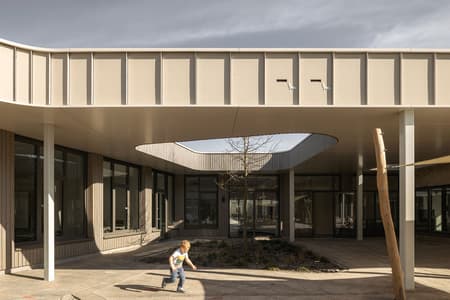
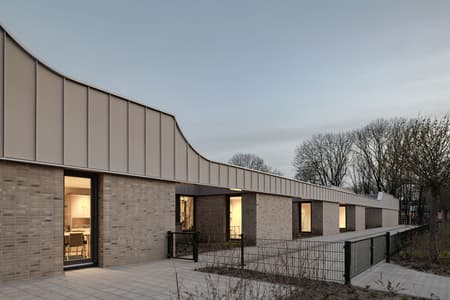
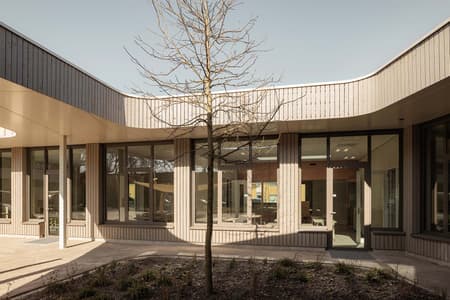
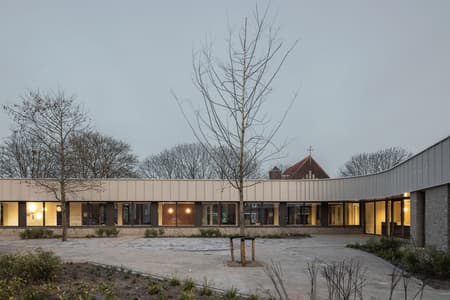
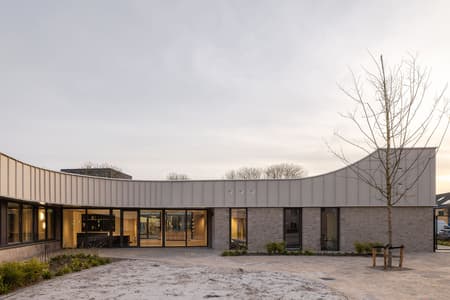
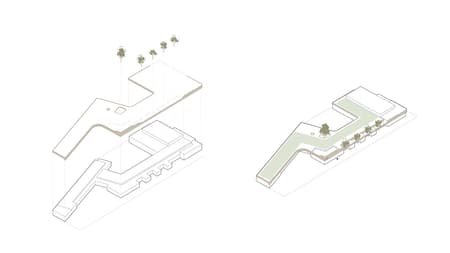
Canopy: The school's new canopy is pulled around the building like an elastic band and, in addition to the eaves, also acts as a connecting element. The canopy literally connects both wings into one school at this location. Where the two building wings meet, we open up the space again for a beautiful meeting space that connects the two outdoor spaces. Where the canopy is pulled up in a smooth line, we hide the installations on the roof and mark the new main entrance. Prominent, visible and proud on the Stauntonstraat.
Cross-section: In addition, the design was developed from the existing cross-section. The corridor zones on Stauntonstraat are lower than the adjacent group rooms. By organizing all the new installations here, we were able to reach both the corridor areas and the group rooms. The insulated shielding of these installations is used as a new architectural façade. At the place where the two building wings meet, a new meeting space has been created, which connects the two outdoor spaces and which – through the canopy – also offers shelter when playing outside. The new canopy consists of natural stone granulate panels enclosed between aluminum ribs. With curves, the distance between the ribs is halved.
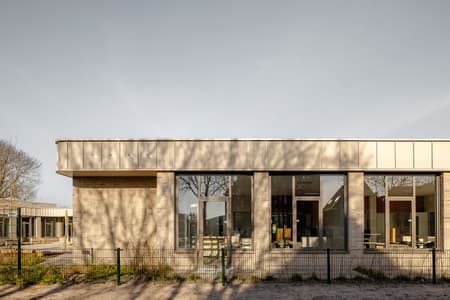
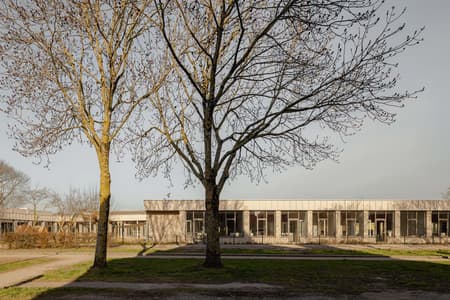
Extensions: The extensions on the street side have been made legible again, giving the long façade a beautiful rhythm. The attention now turns to the spaces in between – the patios – that form a soft transition between corridor and public space.
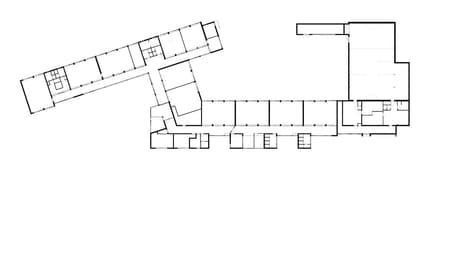
Interior/layout shell: The existing shell of the school is cleverly arranged. The main load-bearing structure consists of masonry columns with a load-bearing wall every three grids. The group rooms have been reduced to two grids by teaching in small groups. The third grid forms the link with the adjacent group room and includes a side room and a toilet, directly adjacent to the group room. This way the teacher maintains an overview. Overview and safety are created by the direct location of facilities at group rooms, such as a private toilet, secondary room and outdoor classroom. The offices are located around the main entrance, and the existing extensions provide space for specialist care such as speech therapy and play supervision. The team room is somewhat sheltered, adjacent to the new heart.
Interior materialization: For the interior, too, the focus has been on the sensitive experience from the child's point of view – with attention to colors, nature and textures. In the corridor zones, time-out areas have been created and snoozing rooms in which children can retreat. The spaces are particularly materialized to meet the needs and sensitivities of the children.
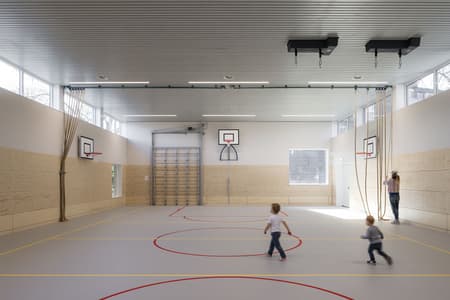
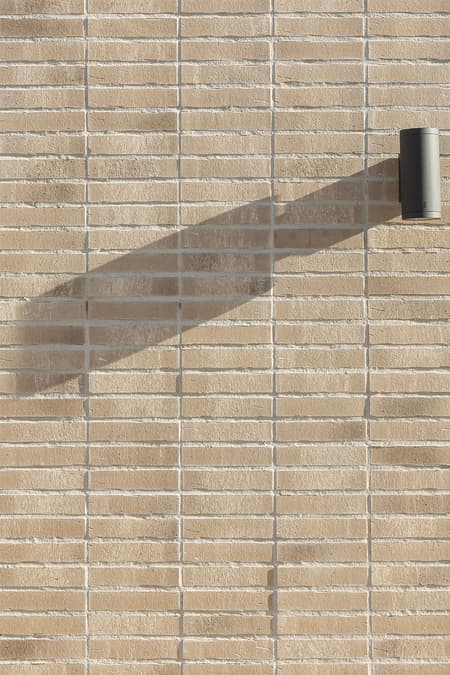
Sustainability: The greatest sustainability gains have been achieved because we have renovated instead of demolished. This leads to significantly less waste and CO₂ emissions, partly due to the reuse of materials. In addition to PV panels and an air heat pump, the canopies have also been used as sun protection. The new screed is designed as a PCM climate floor with underfloor heating. The building has very good airtightness and has an energy storage system (EOS). For the gymnasium, a Frenger ceiling provides heating and cooling, with a separate air treatment for ventilation. The existing shell is insulated on the outside and the roof has been reinforced for a green roof and PV panels. In view of the articulation of the volumes and the flattening of the masonry, a horizontal tile bond with ceramic strips was chosen. The existing frames act as adjustable frames for the new aluminium facades.
Together with the optimisation of the thermal shell, the school meets the ENG criteria in accordance with the current Building Decree 2012 (new construction).
Collaboration: We have enjoyed working together in various working groups for the integration of the program, sports and outdoor space to arrive at a coordinated design. Together with the design team, an integrated plan was made within a tight budget. The landscape strengthens the connection between building and neighbourhood and invites movement in a natural environment. The patios offer peace and shelter and form a link between inside and outside. Roosje Donselaar lets the children follow the stars with her art – a symbolic route for their development.
Reach: Lux has a regional reach. The students come from different levels and backgrounds, and some of them have physical disabilities. This school is visible and proud. The children can develop within this safe environment. We really wanted to give this special target group a face in society – something that unfortunately is not yet self-evident. Reusing an existing building in this way gives the district a new impulse.
Gekeken hoe we de huidige structuur kunnen gebruiken voor een integraal ontwerp. Een voorbeeld hiervan is het verslepen van de installaties boven het plafond. Hierdoor kon het dak behouden worden en was sloop minimaal.
Het toevoegen van het accupakket, omdat er 300 PV panelen op het dak liggen. Energie kan daardoor worden opgeslagen en zo is de school geen grootverbruiker geworden van energie.
PCM climate floor verwarmd niet alleen het gebouw, maar koelt ook. Hierdoor zijn grote aircounits in de lokalen niet nodig.
De luifel houdt meer zon tegen dan bijvoorbeeld screens. Het voordeel hiervan is dat het gebouw langer koel blijft omdat er ten slotte minder zon binnen komt. Dit komt allemaal ten goede voor het energieverbruik.
Naisolatie aan de buitenkant van de gevel, om de ruimte binnen optimaal te behouden.