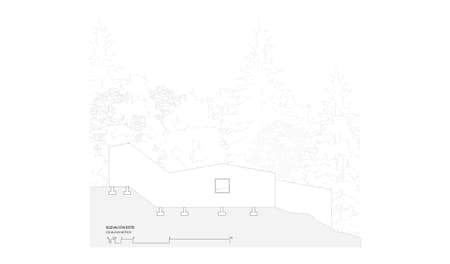
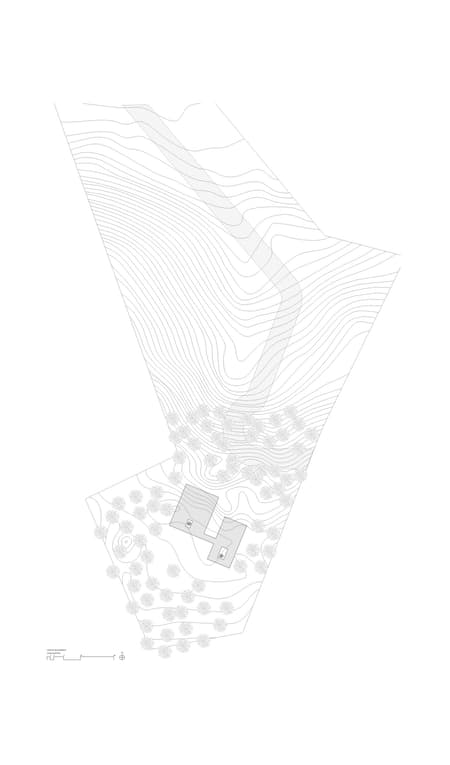
Inglés: Set on a steep hillside overlooking Lake Puyehue in southern Chile, Casa Ladera engages directly with its terrain. Rather than resisting the slope, the project adopts it as its primary ordering system—defining form, structure, and spatial organization.
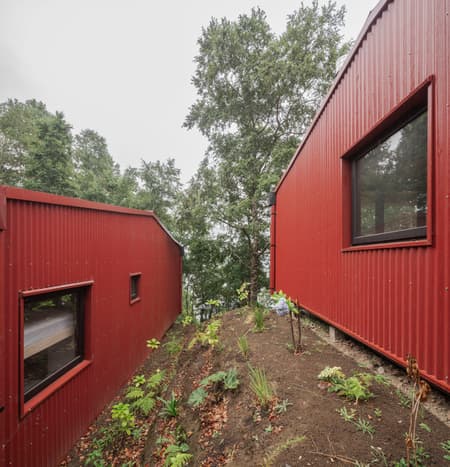
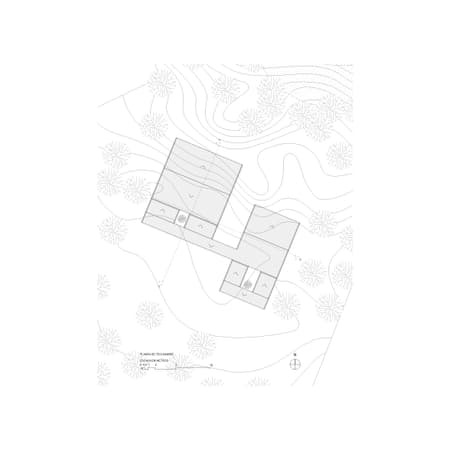
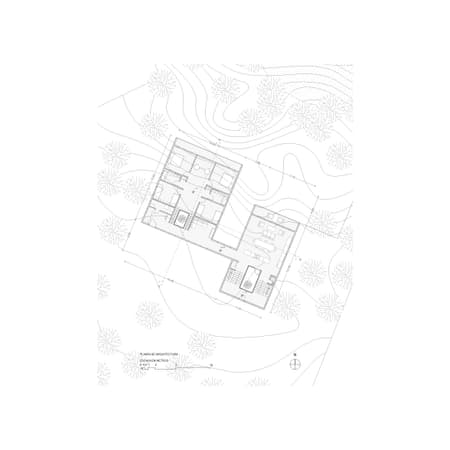
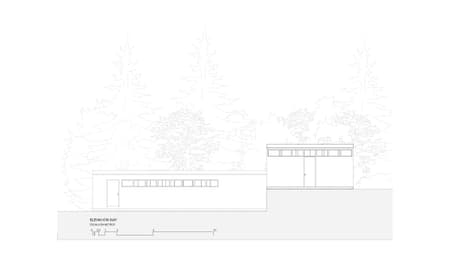
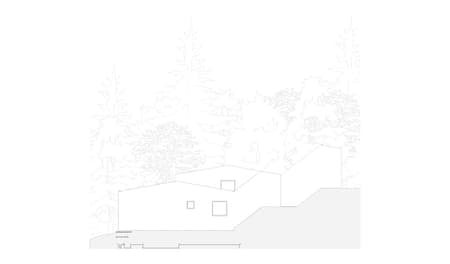
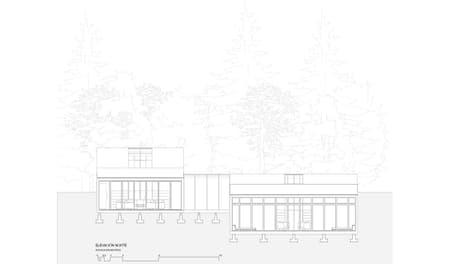
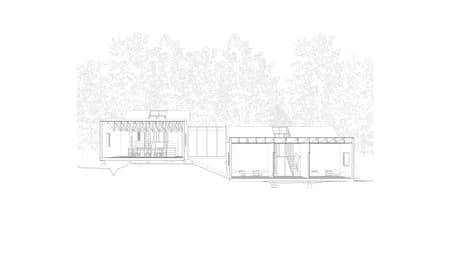
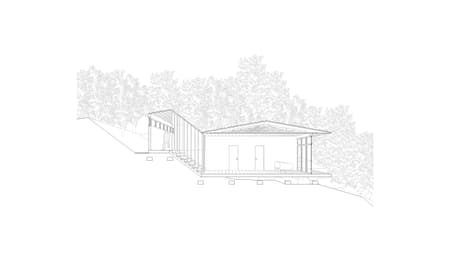
The house is composed of two offset volumes that descend with the natural topography. This decision minimizes intervention on the land while establishing a clear programmatic division: one volume accommodates collective life, while the other hosts private spaces. Their separation allows multiple generations to coexist, negotiating proximity and independence through distance and level differences.
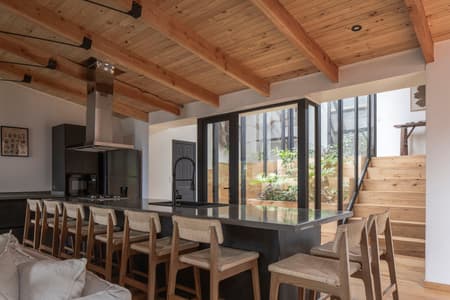
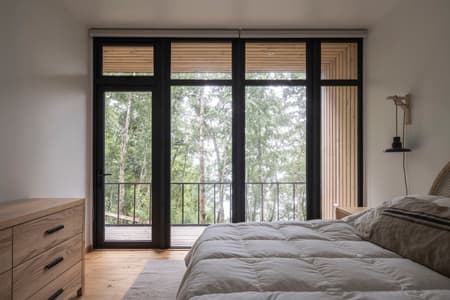
The social areas extend toward the landscape, forming an open and continuous interior that frames long views of the lake and surrounding forest. In contrast, the private volume withdraws slightly, engaging with more contained and introspective views. Circulation operates as a transitional sequence between both bodies, emphasizing changes in elevation and maintaining a constant dialogue with the exterior.
The project avoids formal autonomy. Its stepped configuration is not a gesture but a response—an embedded condition that allows the house to settle into the hillside. The resulting scale and fragmentation enable it to blend within the forest, appearing intermittently between the trees.
Material choices reinforce this integration. A restrained and durable envelope responds to the demands of the southern climate, while its tones and textures resonate with the влаж (humid) landscape. Over time, the house is intended to weather alongside its surroundings, deepening its connection to the site.