The experience of inhabiting a space once again; of recovering, of building upon what already exists.
To experience the transformative capacity of architecture and the beauty embedded in the collective act of transformation. To insist on inhabiting the city center, to rethink the city itself. To recognize the value of an existing structure, paying tribute to time and place. To understand history in order to become part of it.
We imagined re-inhabiting the city center. In doing so, we set out not only to rethink our own workspace but also to reflect upon the city we inhabit.
We encountered vibrant streets, intense flows of people, public transport, and vehicles. A coexistence of programs and communities, of green, civic, educational, commercial, and residential spaces.
We encountered the city itself: La Cañada and its canopy of tipa trees; Paseo Sobremonte with its abundant vegetation and fountains; the Municipal Palace and its iconic architecture; Plaza Independencia; the architecture of historic palaces alongside significant modern and contemporary interventions. Sequences revealed by the city as one moves through it—shaping our journey, informing both action and thought.
To remain is a conscious choice. It is an insistence on reclaiming a fragment of the urban fabric and, from there, constructing what is yet to come.
A place that gathers, connects, and enables.
A place that opens its doors to the public as a tribute to space itself.
A110 is located within the central area of Córdoba, Argentina.
Situated on Miguel Calixto del Corro Street, only a few meters from La Cañada stream, Paseo Sobremonte, the Municipal Palace of Córdoba, and the Palace of Justice, the project is embedded within a consolidated urban fabric characterized by a sustained process of densification. The area is surrounded by public institutions, commercial activity, and collective housing.
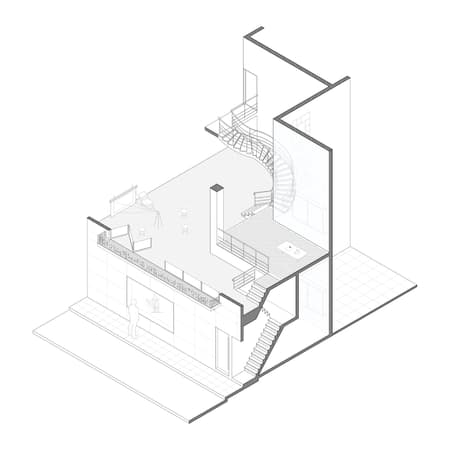
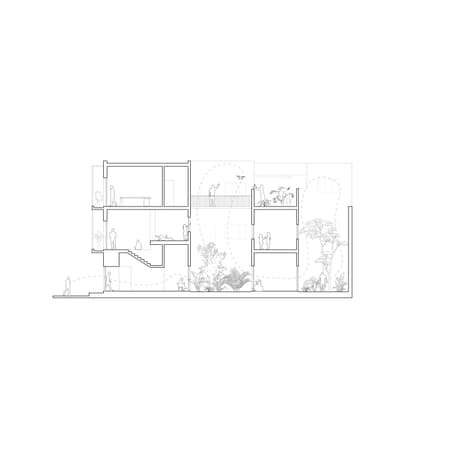
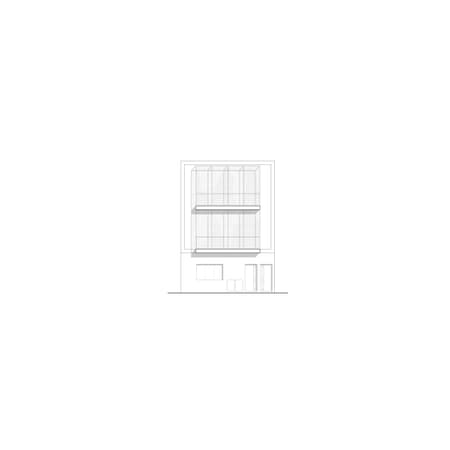
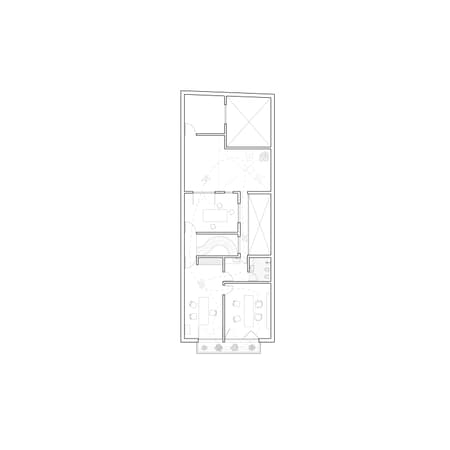
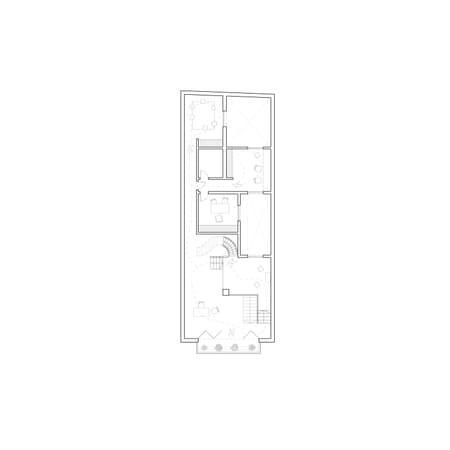
Defined by narrow sidewalks and a tight street section, the three-story building is organized along an east-west axis. The program unfolds through a sequence of courtyards that provide natural light and cross-ventilation to all interior spaces.
Originally constructed in the early twentieth century, the house underwent several transformations over time.
The property was initially composed of two levels, with one dwelling on the ground floor and another on the upper floor. During the 1950s, the building was acquired by a new owner who carried out the first major intervention: an expansion of the upper dwelling through the addition of a third level.
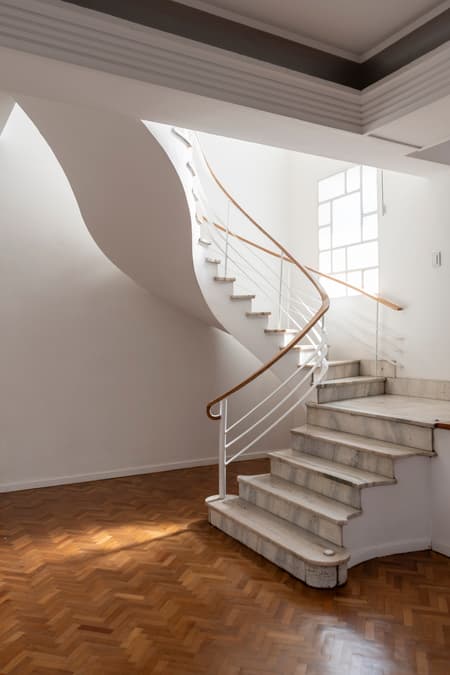
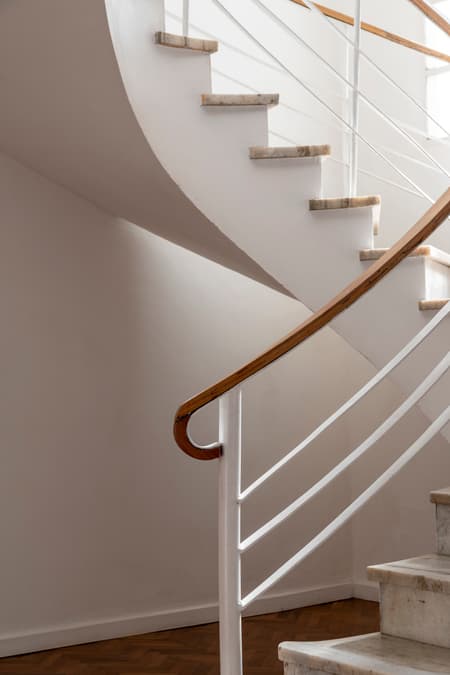
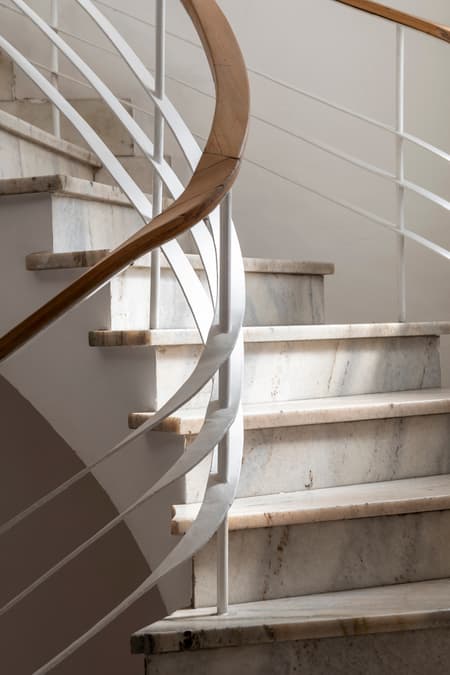
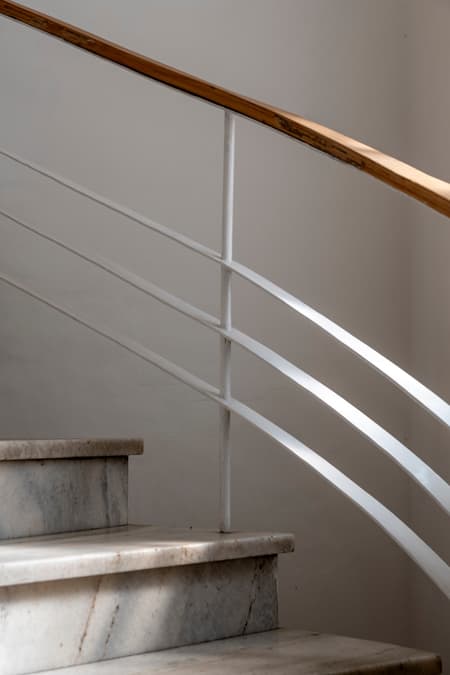
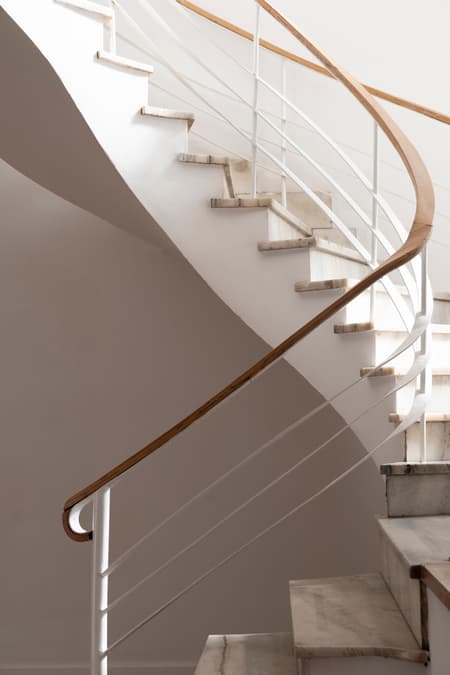
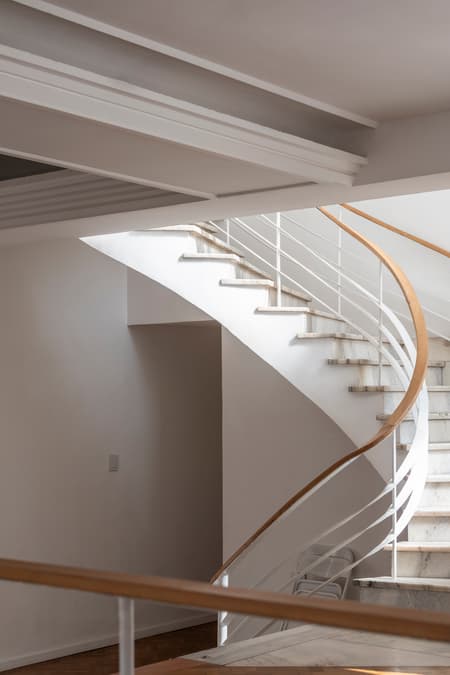
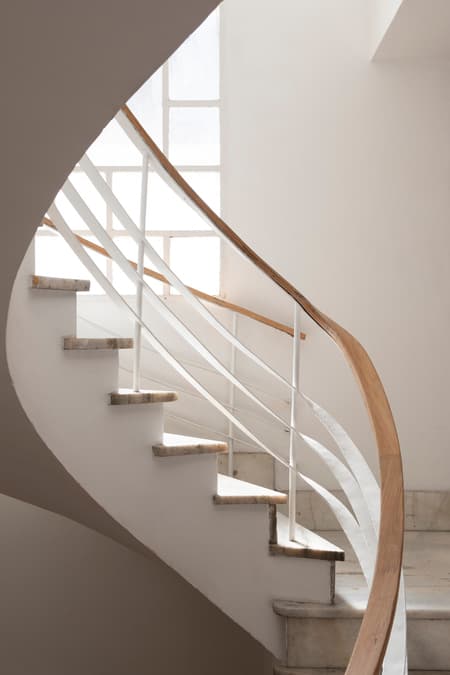
To accommodate this extension, a staircase was built that would become one of the defining features of the house and the central protagonist of its spatial organization.
With approximately 110 square meters per floor, the residential program was arranged around two alternating courtyards that introduced daylight and ventilation into the depth of the building.
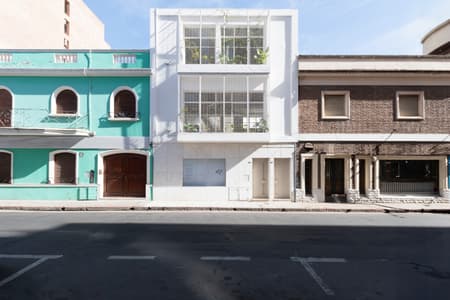
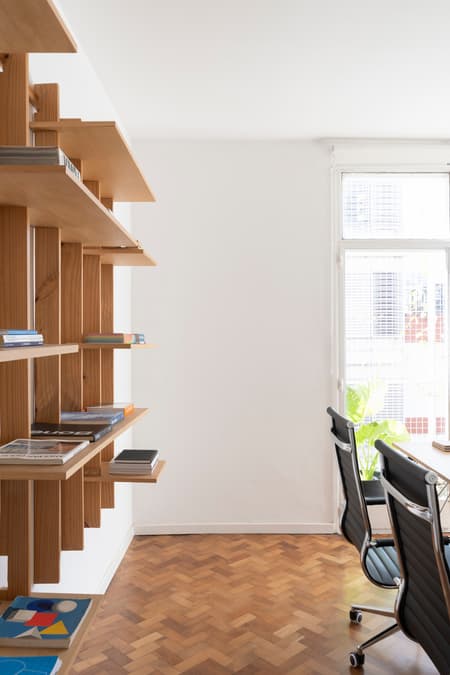
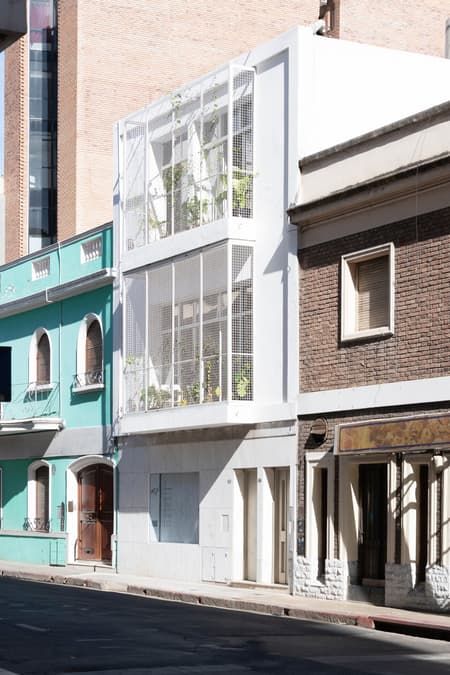
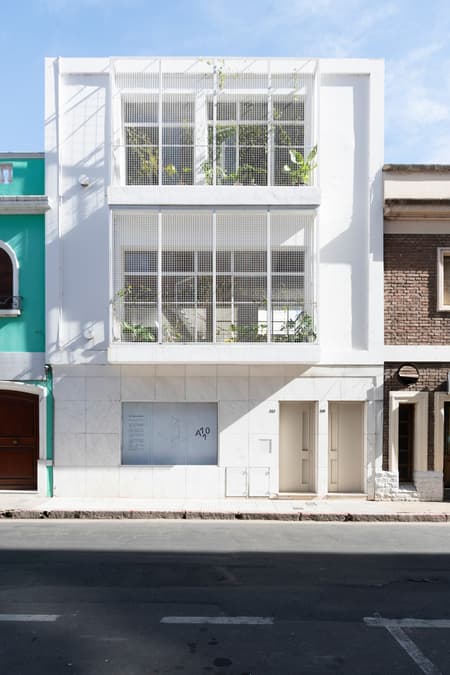
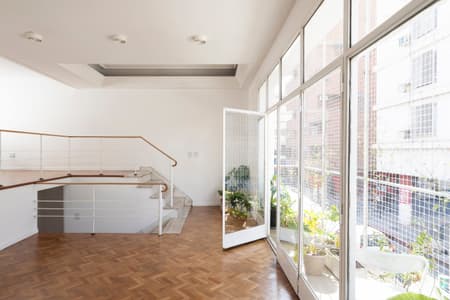
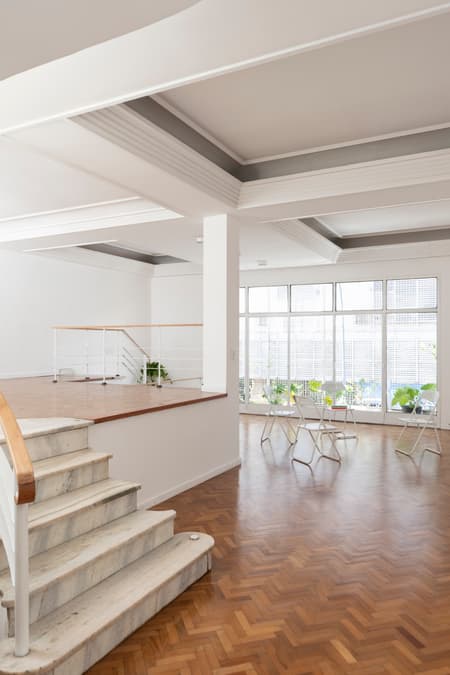
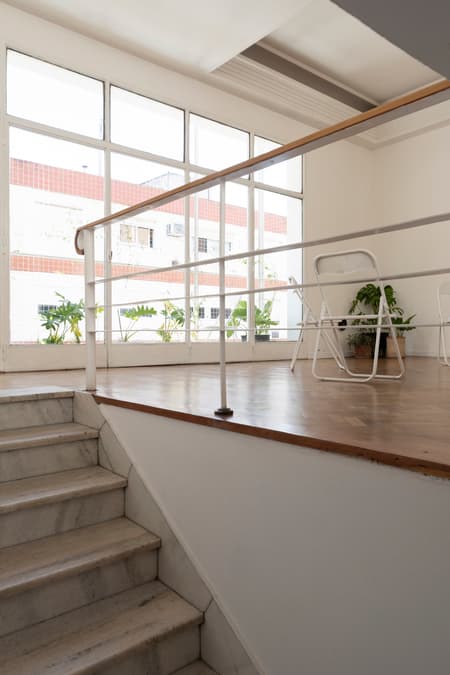
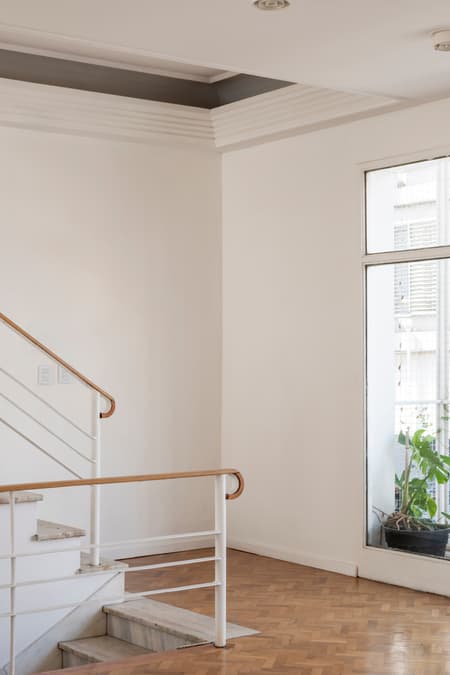
Facing the street, a marble-clad base supports a white volume above. Thick masonry walls, generous ceiling heights, white surfaces, and timber flooring define the identity of the interior. Vertical circulation is articulated through marble steps that extend the street into the first level before culminating in a sculptural spiral staircase leading to the upper floor.
Over time, and in response to the changing urban context surrounding it, the house gradually ceased to function as a residence. New uses were introduced, progressively altering its original character until it reached a state of near irreversible deterioration.
After remaining vacant for several years, the challenge became one of returning to its origins, transforming it into the home of our architectural practice.
The building had been abandoned, yet the intrinsic quality of its materials remained evident.
Through a process of imagining what once was, gathering historical information, and uncovering traces hidden within walls and floors, the project sought to return the building to its essential state before introducing subtle interventions responsive to contemporary needs.
Like a blank sheet of paper, the intention was to pay homage to both space and time.
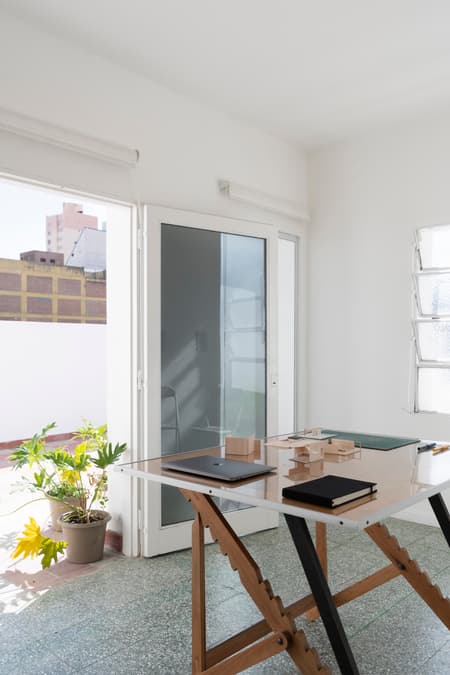
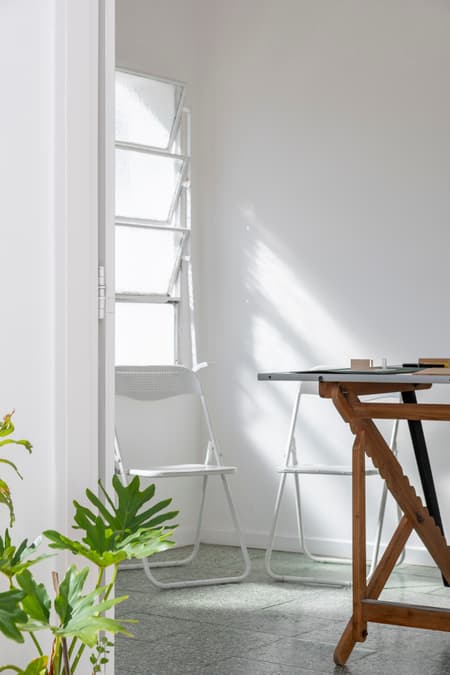
Following an extensive process of restoring carpentry, openings, floors, and walls, interventions focused on connecting previously fragmented rooms, creating greater spatial continuity and strengthening the relationship between interior and exterior.
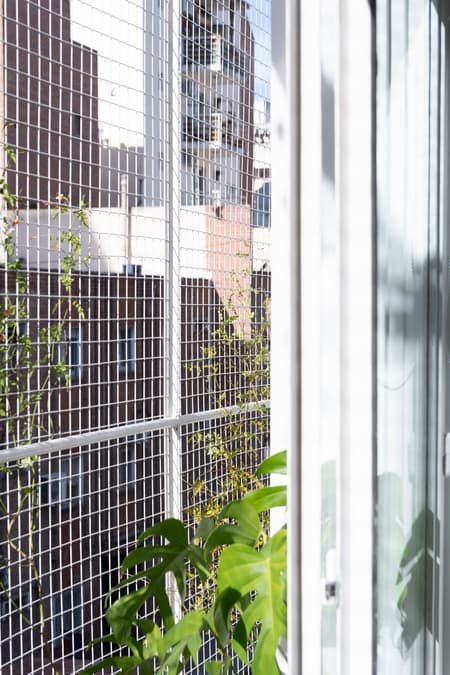
Toward the street, the project introduces a lightweight steel structure attached to the existing façade, establishing a new architectural language along Corro Street.
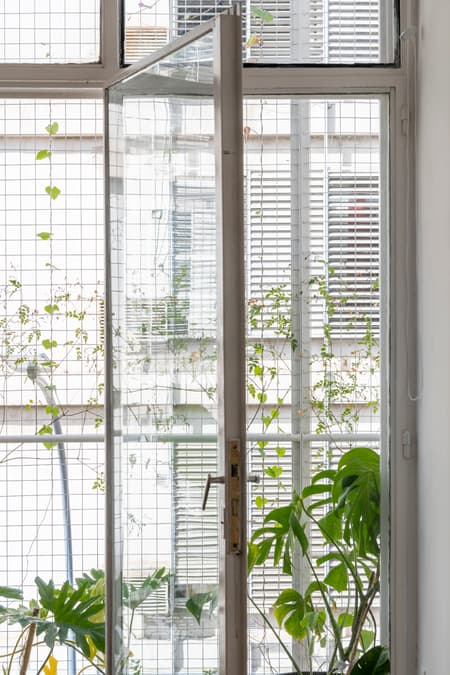
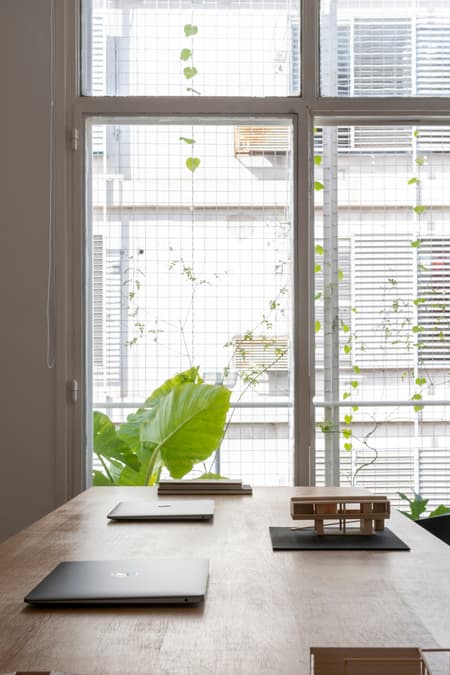
Conceived as an intermediary condition between public and private realms, this permeable filter accommodates vegetation that gradually occupies and transforms the structure, becoming an active component of the architecture.
Given the intensity of pedestrian and vehicular activity along the street, together with the environmental conditions generated by the surrounding urban context, this threshold space plays a fundamental role in the habitability of the interior.
Composed of modular steel frames and expanded metal mesh, the system responds both to the logic of assembly and to the progressive appropriation of the structure by vegetation.
This intermediate layer defines the intervention and becomes the building’s primary architectural language.