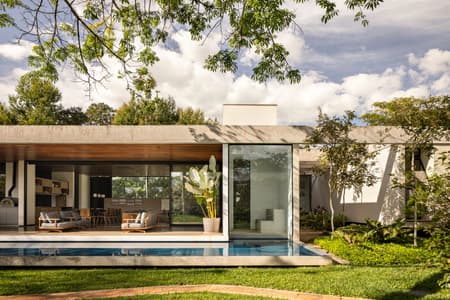
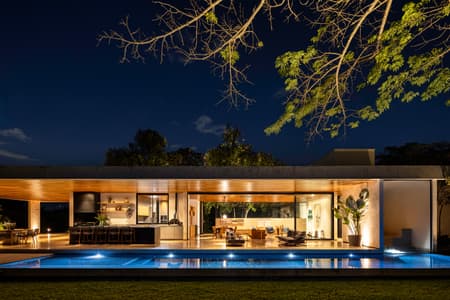
Set on a single level and embraced by a garden, Varanda House seamlessly integrates architecture and landscape within the Brazilian Cerrado.
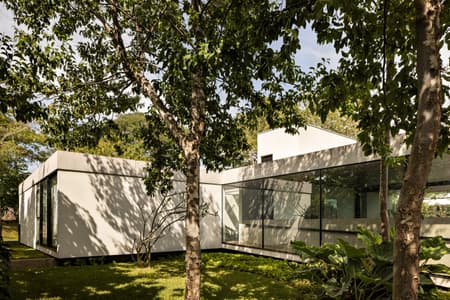
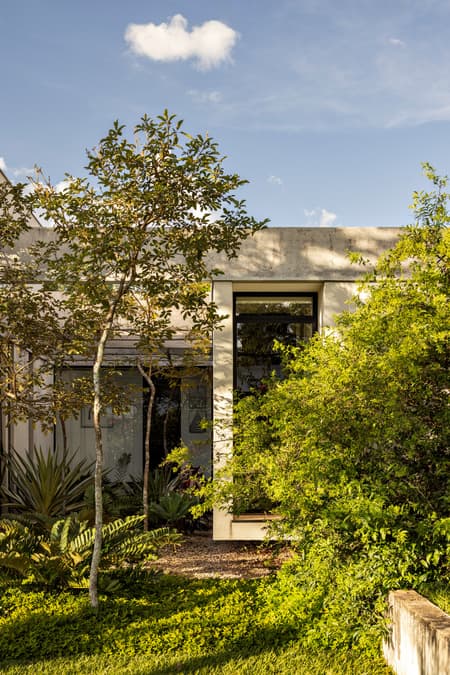
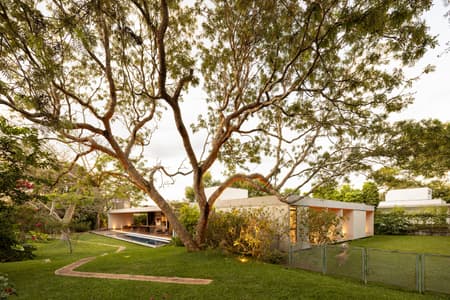
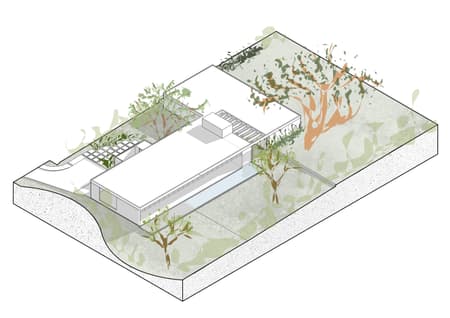
Conceived to fully engage with the site’s native vegetation, Varanda House emerged from a careful reading of its surroundings. The project occupies a generous plot with a gentle slope, richly populated by Cerrado species such as paineiras (silk floss trees) and other native flora.
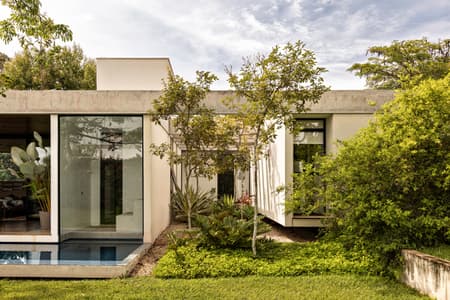
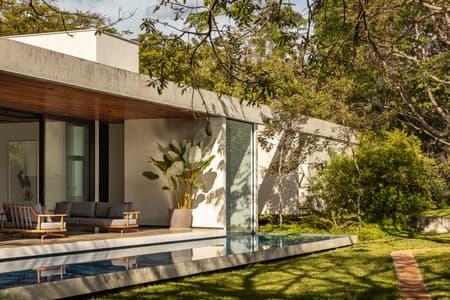
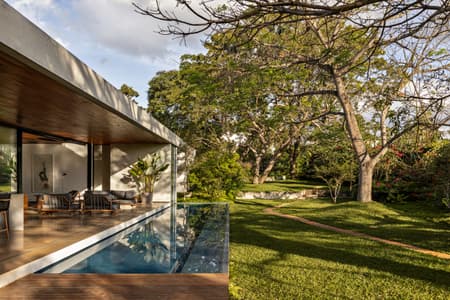
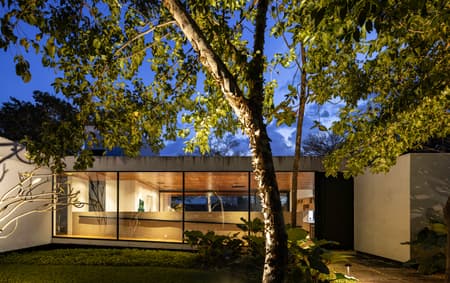
Positioned at the center of the site, the residence allows all main spaces to open onto the garden. Organized on a single floor, with subtle level changes that follow the natural topography, the house benefits from cross ventilation and a continuous connection to the outdoors.
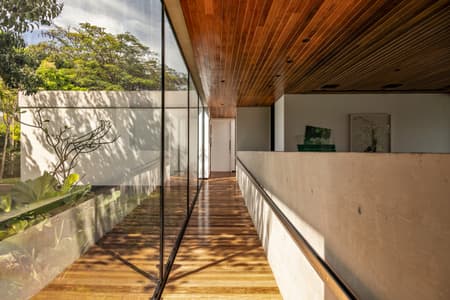
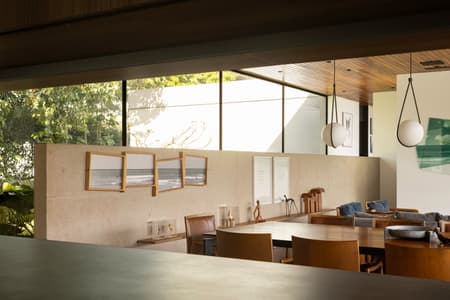
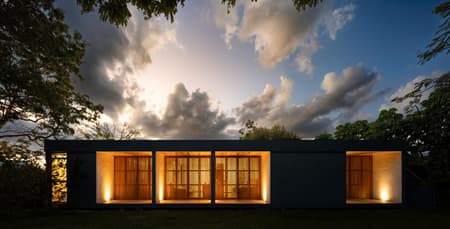
For clarity and functionality, the layout is divided into two volumes: social and private. The social block, located at the front and on the lower portion of the site, houses the living, dining, and kitchen areas. The private wing accommodates the children’s suites, a guest room, home office, family room, and the primary suite. These spaces face more secluded green areas, with reduced solar exposure and denser vegetation, ensuring greater comfort.
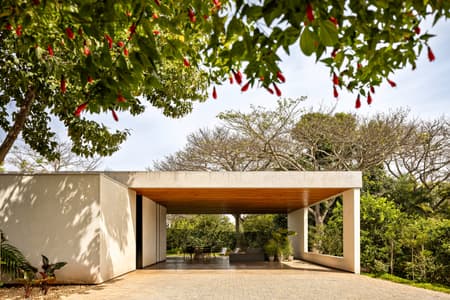
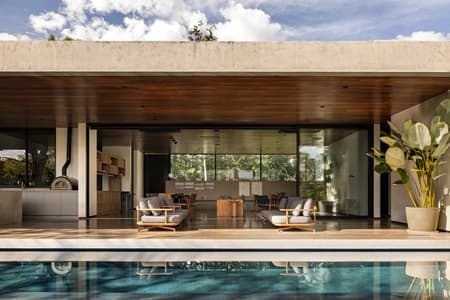
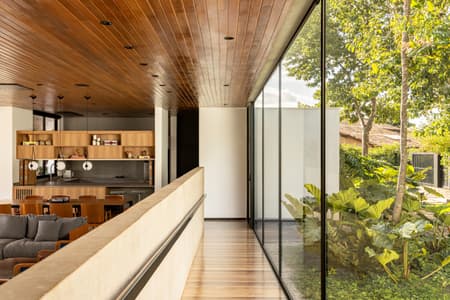
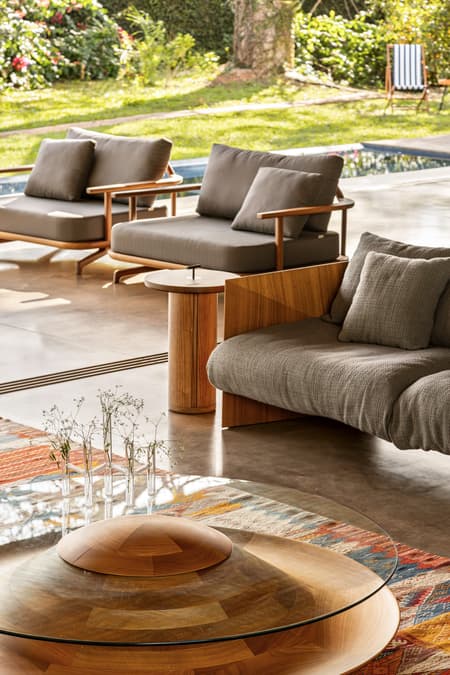
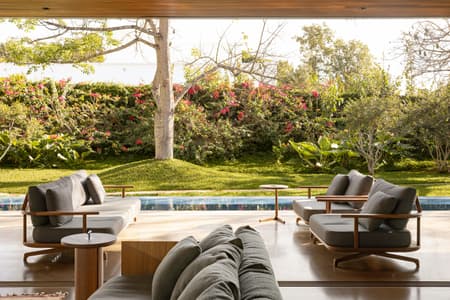
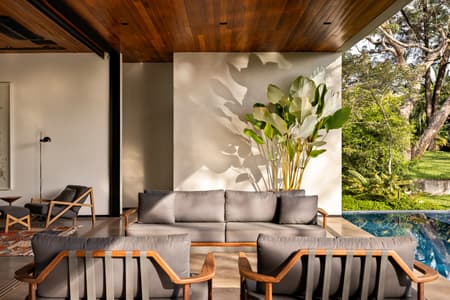
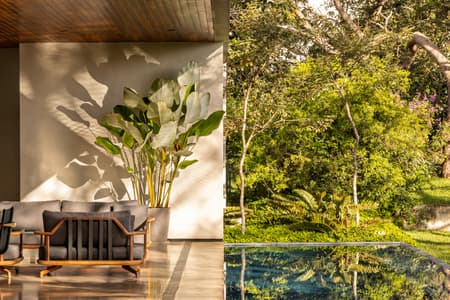
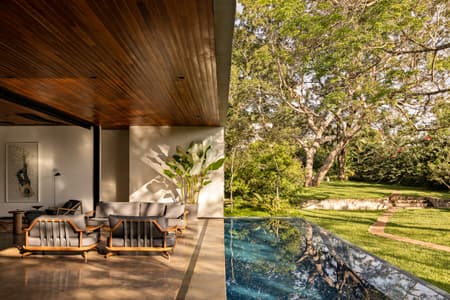
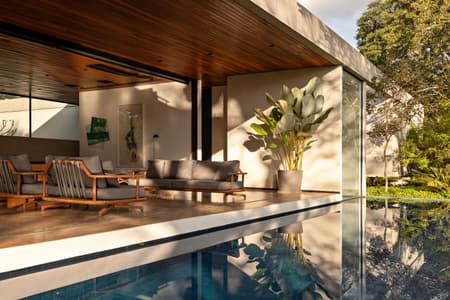
The expansive covered veranda, after which the house is named, acts as the project’s core. It connects the interior spaces to the pool, deck, sauna, and garden. Linking the two volumes, a large exposed concrete beam establishes a strong visual axis and unifies the composition.
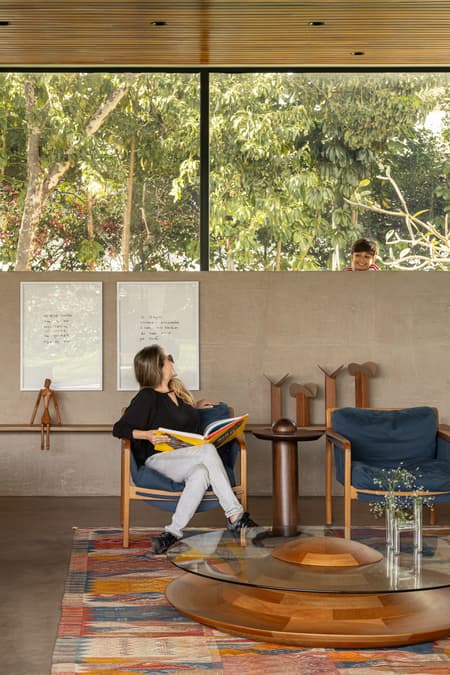
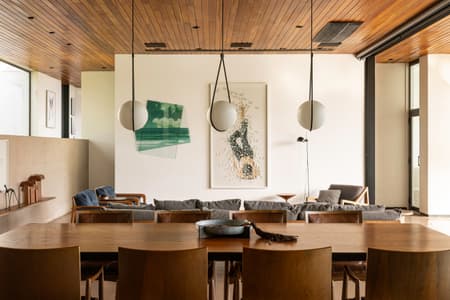
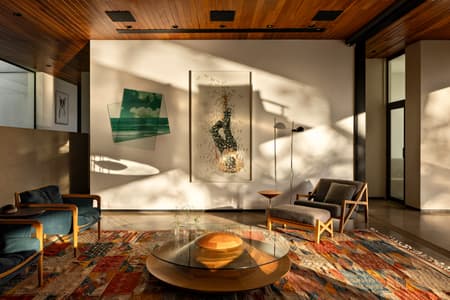
Designed for residents who are art enthusiasts and collectors, the house was envisioned as more than a home, it is a living gallery. To support this concept, the social areas feature increased ceiling heights and generous wall surfaces to display paintings, sculptures, and personal artifacts collected over time. Abundant natural light enhances the presence of the artworks, creating an ideal exhibition setting.
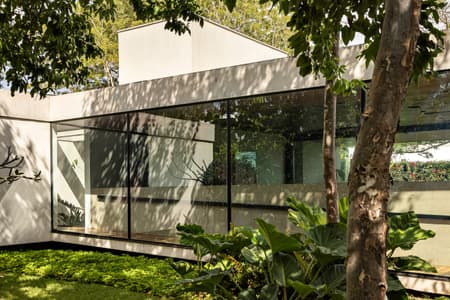
Material choices reinforce the dialogue between architecture and nature. Exposed concrete, used in structural beams and flooring within the social areas, provides continuity and cohesion. Neutral white walls ensure optimal luminosity, allowing the art collection to stand out. Wood, applied to the ceiling in the social areas and flooring in the private wing, introduces warmth and texture.
The social spaces benefit from generous daylight and natural airflow, ensuring both comfort and environmental efficiency. The bedrooms are oriented toward façades with lower direct solar exposure, improving thermal performance.
Landscape design plays a fundamental role beyond aesthetics. It contributes to the microclimate and deepens the sense of immersion in nature. The paineiras stand out as seasonal markers, with their blossoms and fibers signaling the passage of time, offering residents a tangible connection to natural cycles.
With a restrained yet open architectural language, Varanda House enables a fluid coexistence between nature and art. The project reflects the residents’ identity and reveals a lifestyle that is both welcoming and culturally engaged.