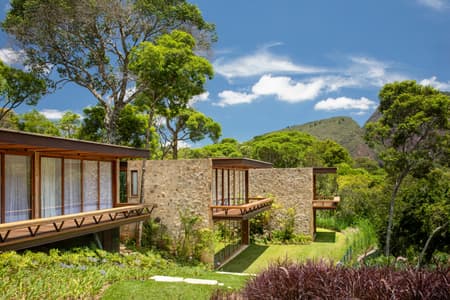
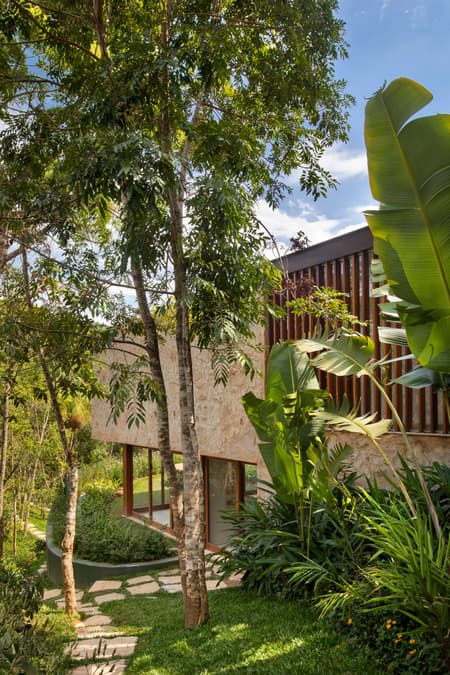
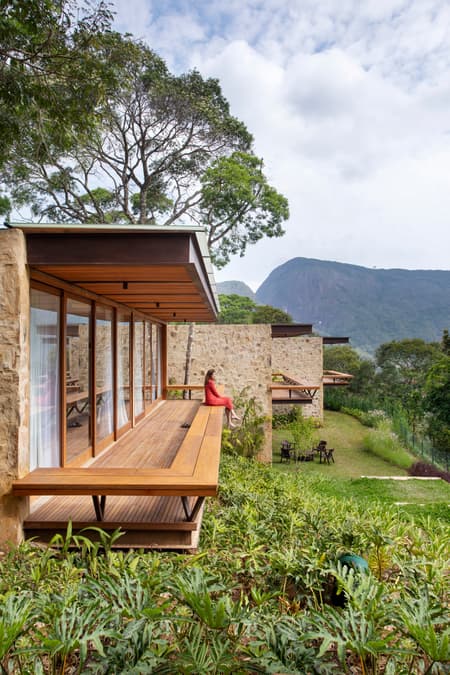
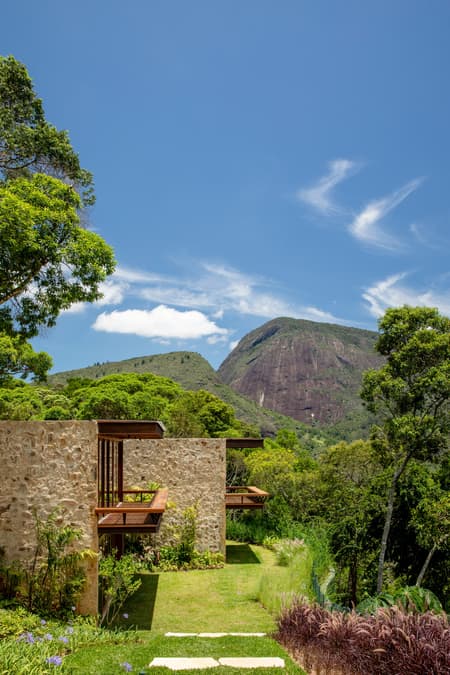
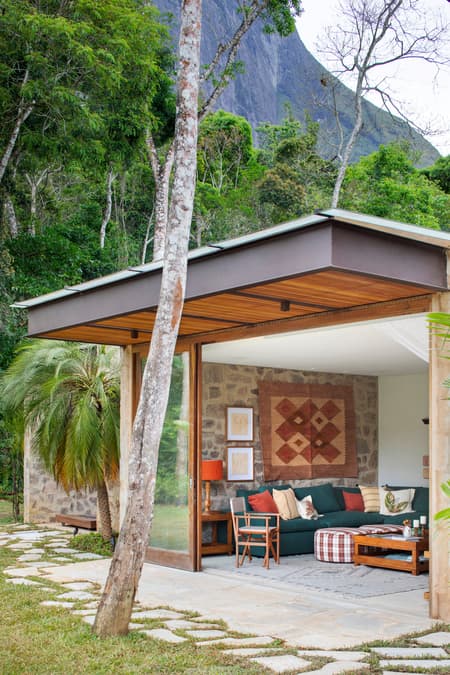
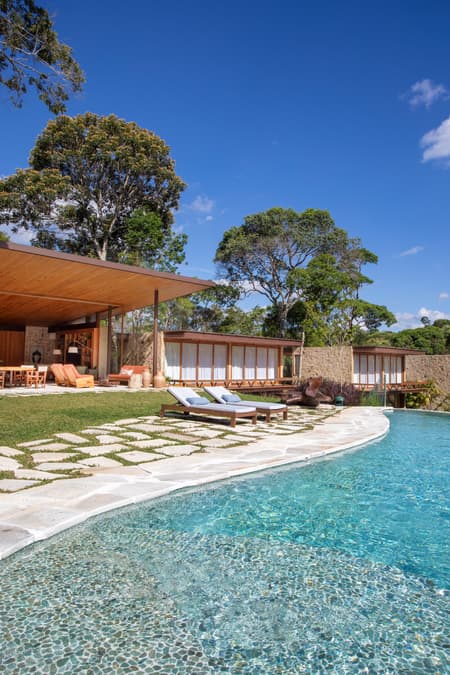
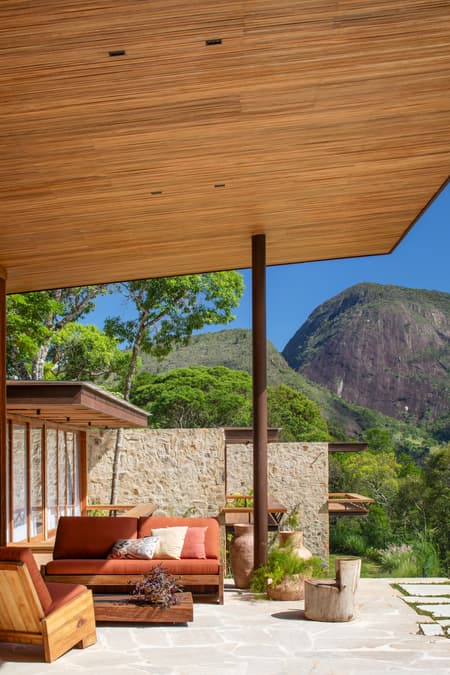
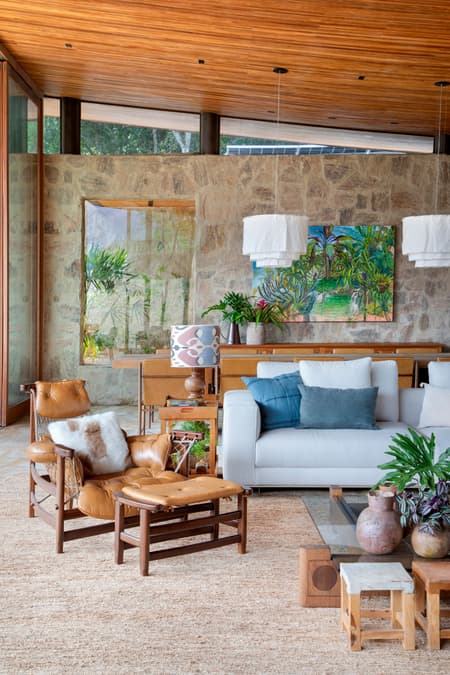
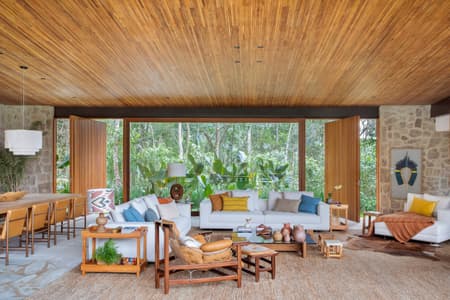
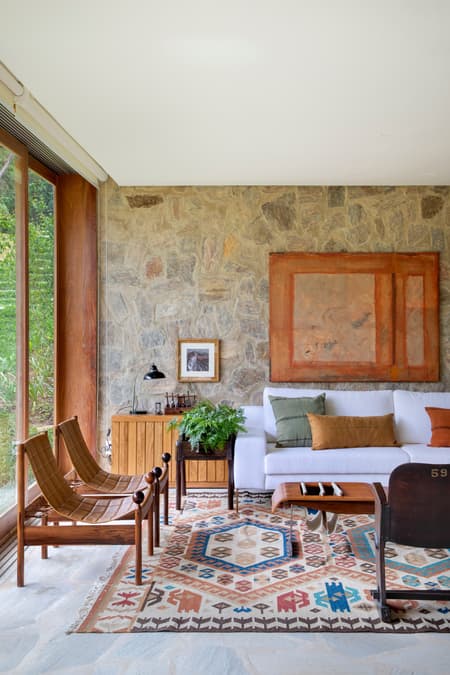
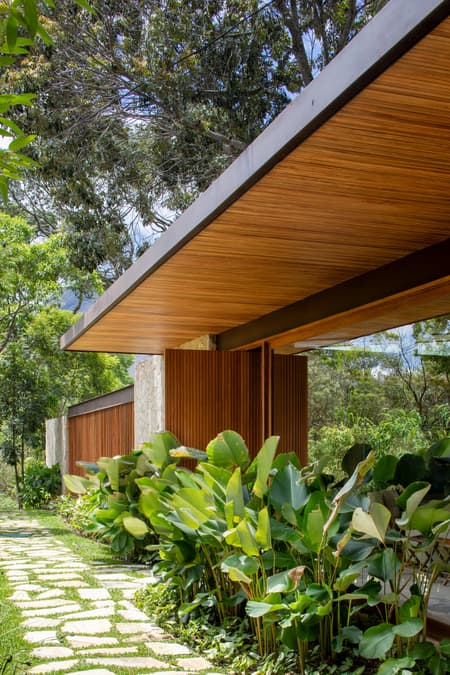
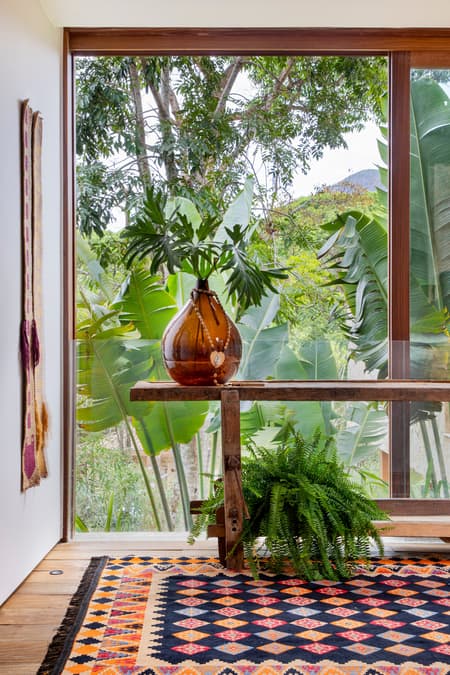
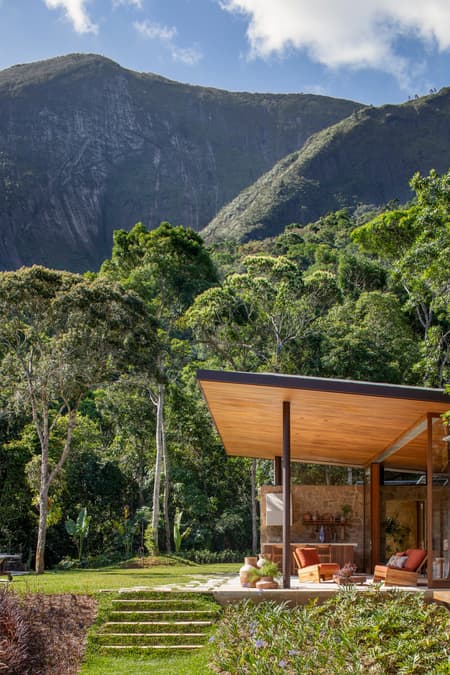
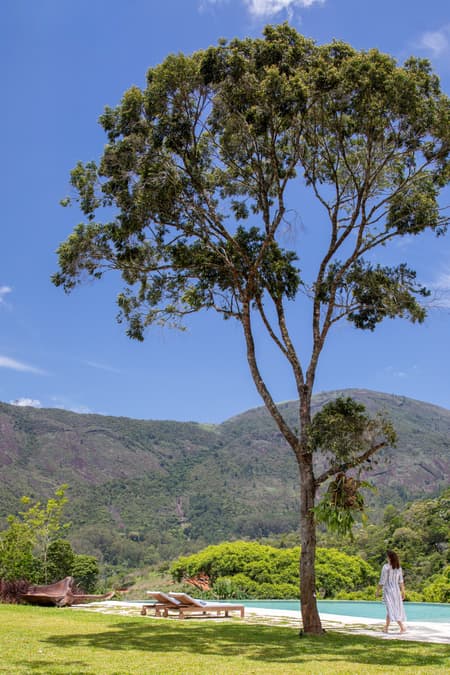
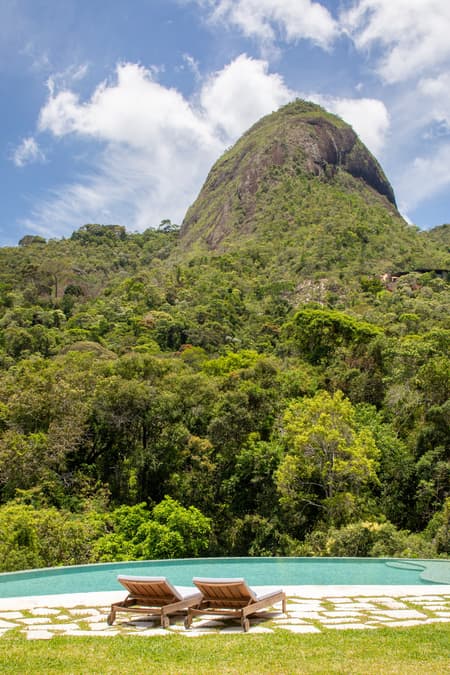
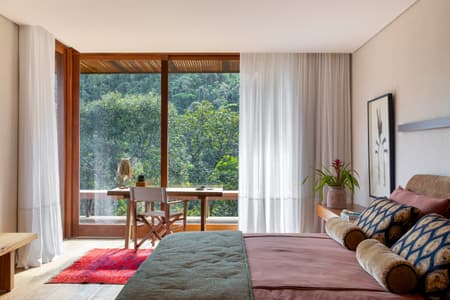
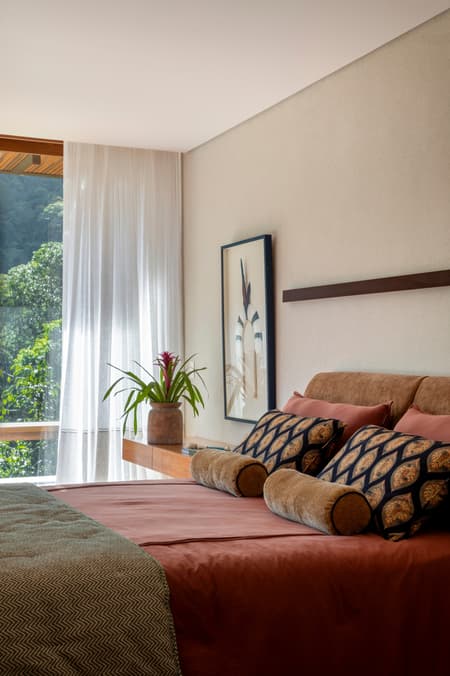
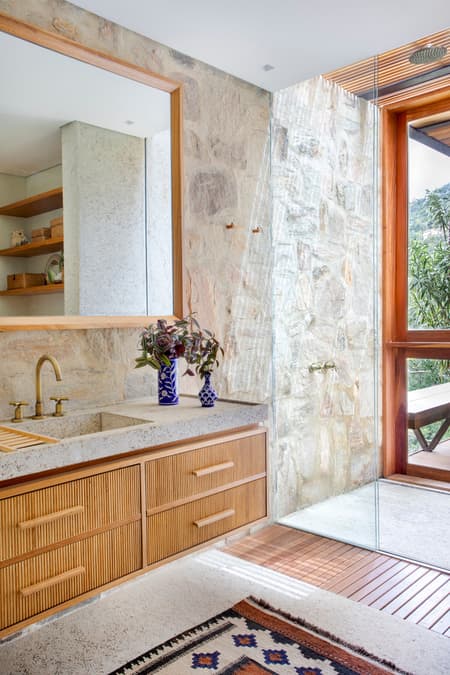
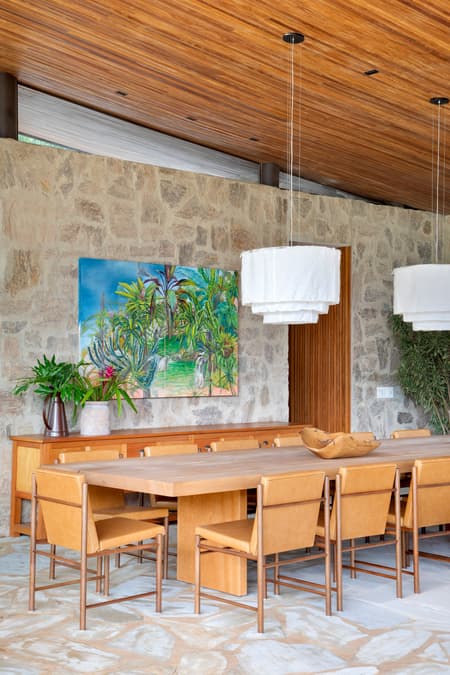
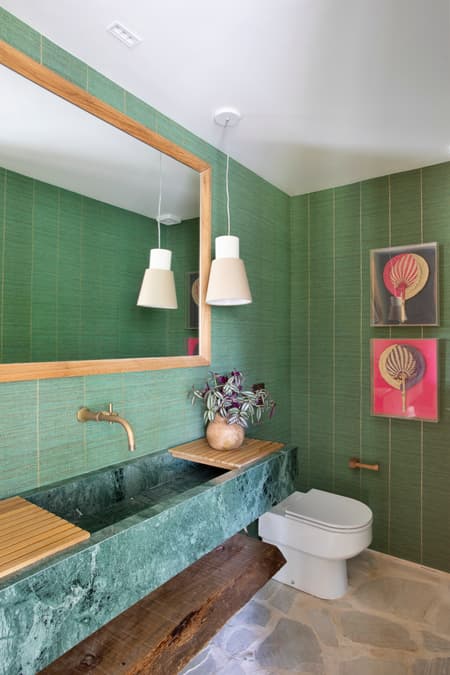
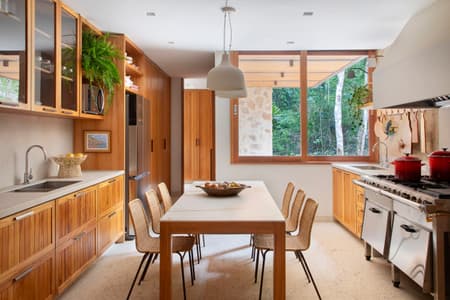
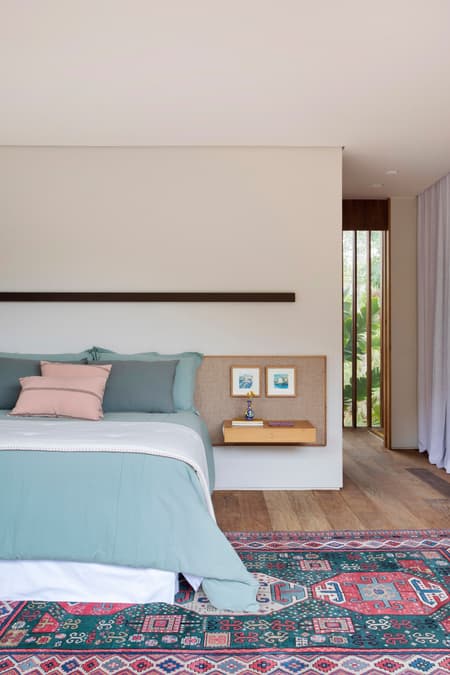
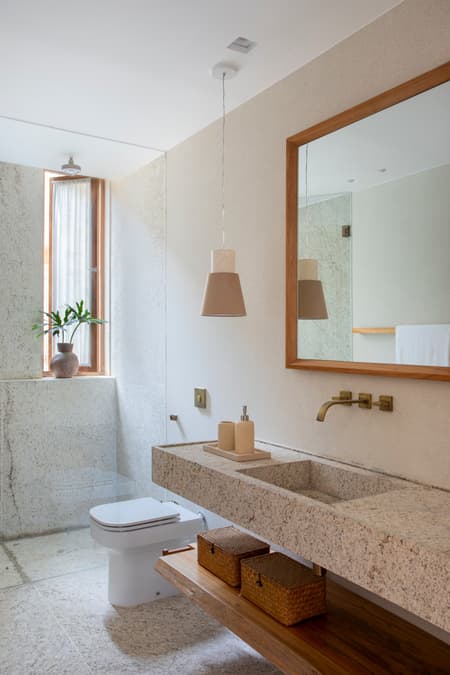
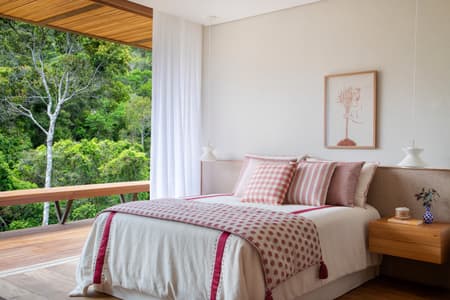
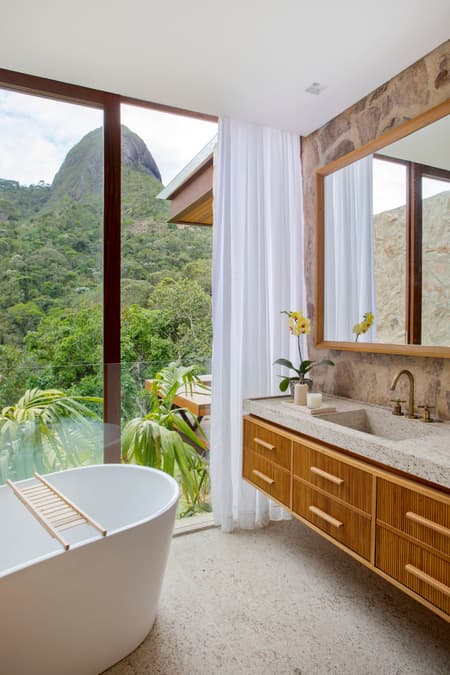
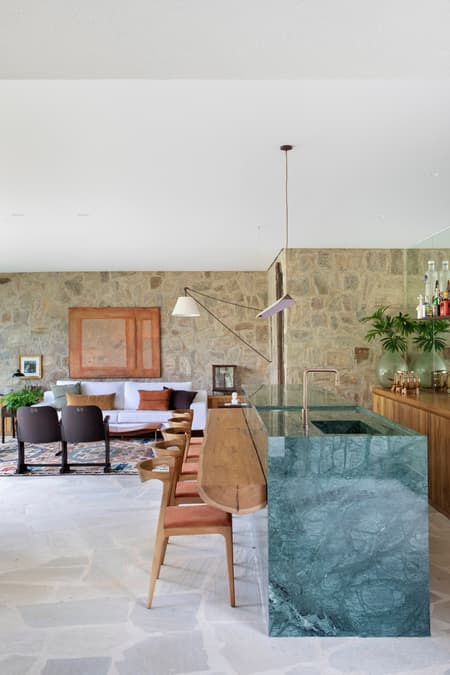
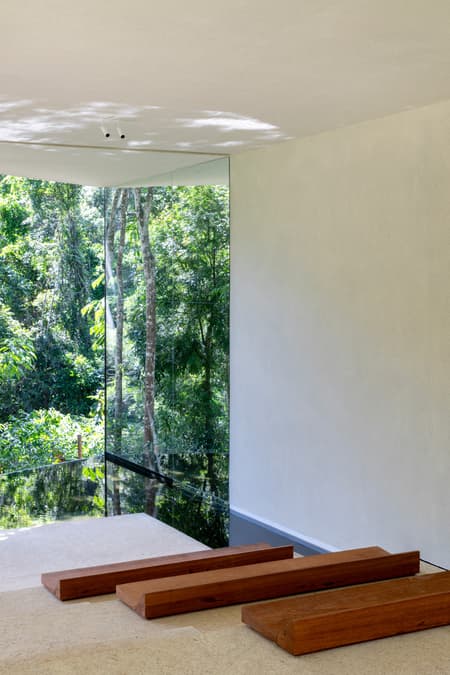
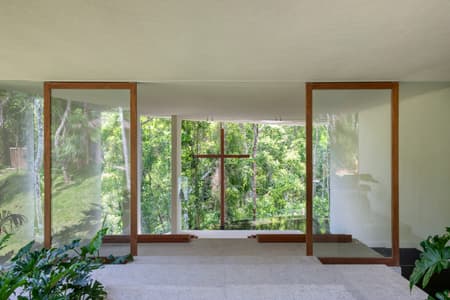
Located within a gated community in Araras, a district of Petrópolis in the mountainous region of Rio de Janeiro, this 1,300-square-meter country house was conceived to establish a direct and continuous relationship with the surrounding natural landscape. The architecture emphasizes large open spans, expansive floor-to-ceiling openings with full operability, and the predominant use of natural materials such as wood and stone, which blur the boundaries between indoors and outdoors and lend the residence a warm, timeless atmosphere. The homeowners’ desire for an essentially single-story house guided the architectural concept, resulting in volumes that gently fragment across the site and evoke the feeling of independent bungalows.
Designed by architects Carolina Escada and Patrícia Landau, partners at Escala Arquitetura (@escalarquiteturarj), the project was developed for the couple Simone Rodrigues—an engineer and owner of S. Rodrigues Engenharia (@srodriguesengenharia)—and Iran Coelho, an economist. The couple’s daughter, Isabela Coelho, an architect, also took part actively in the process as a project collaborator. “Our relationship with Simone began about 15 years ago through recurring professional partnerships on construction projects and, over time, evolved into a friendship,” the architects explain.
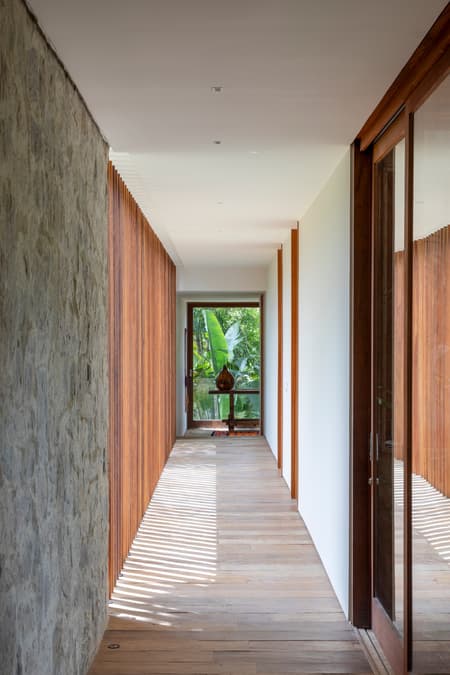
Set on a narrow site with a steep slope, the residence was built from the ground up over a four-year period, encompassing design, approvals, construction, and the completion of interior decoration. The challenging topography played a decisive role in organizing the architectural program, which is structured in a modular, contemporary manner across three independent buildings connected by wide corridors. The first module houses the TV room, kitchen, and service areas; the second brings together the main living spaces, with living and dining rooms integrated into a veranda with barbecue; and the third contains the private wing, composed of six suites that reinforce the reading of autonomous volumes.
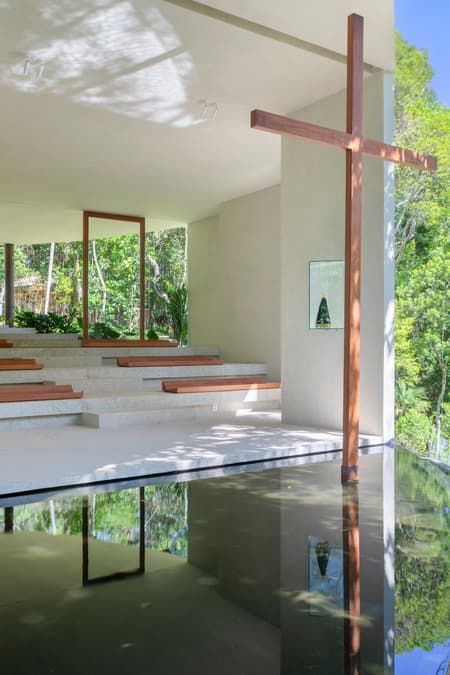
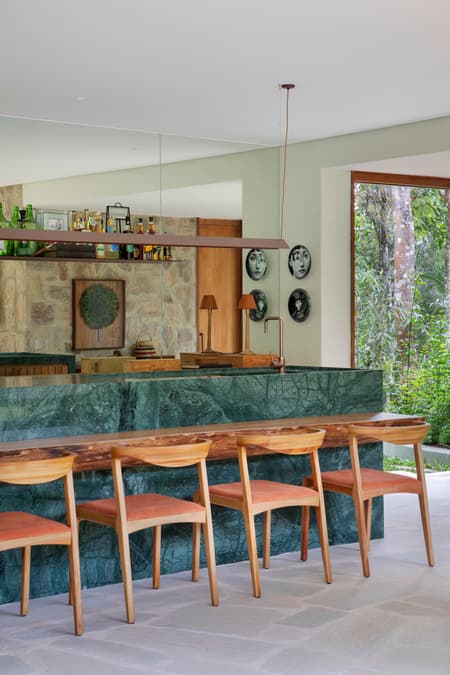
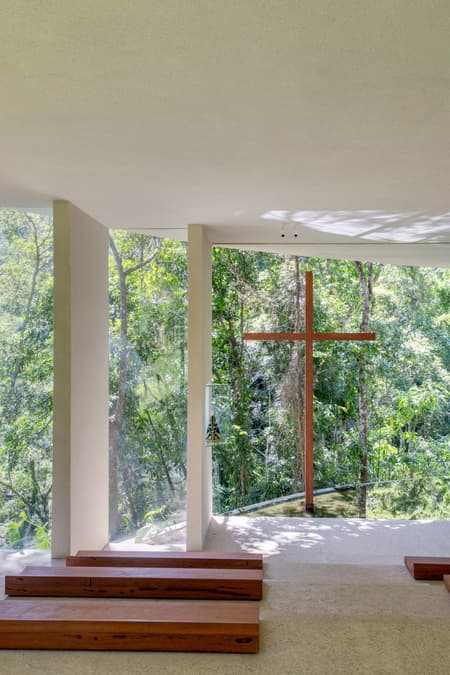
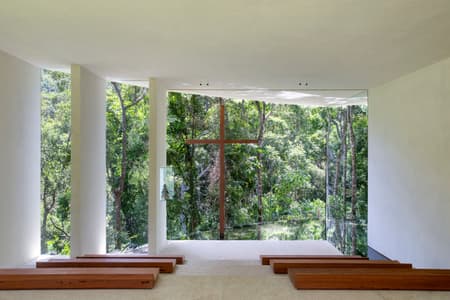
The site’s slope also made it possible to create a lower level dedicated to leisure and wellness, accommodating a lounge with bar, gym, sauna, ofurô soaking tub, and a chapel. The home’s layout further gave rise to a large grass-covered slab, a solution that optimizes the use of the steep terrain and creates a generous outdoor area defined by an organically shaped infinity-edge pool. Positioned as a lookout over the mountainous landscape, the pool maintains a direct connection with the main social areas.
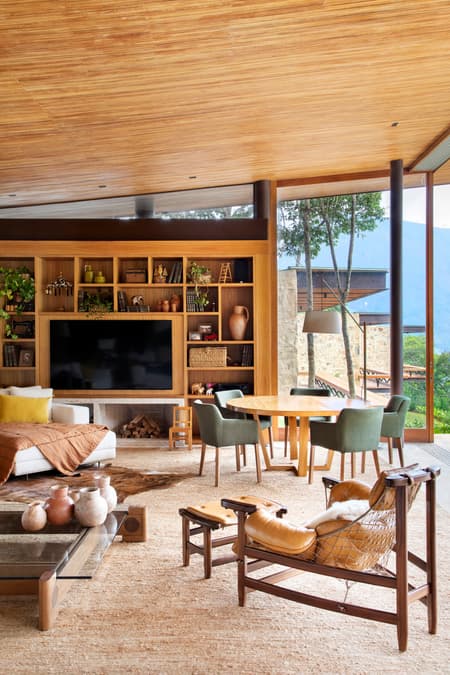
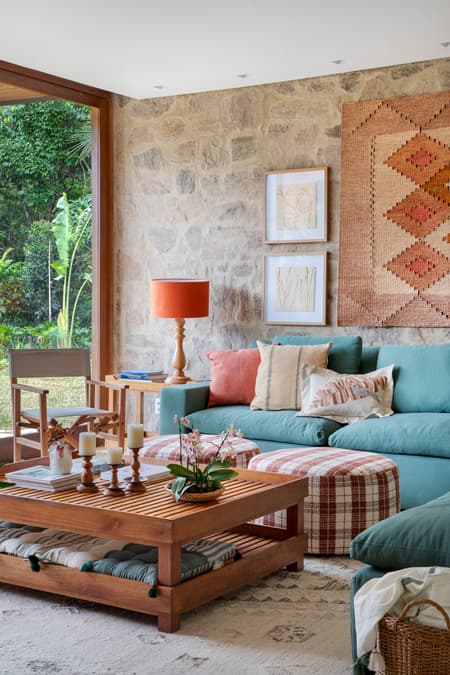
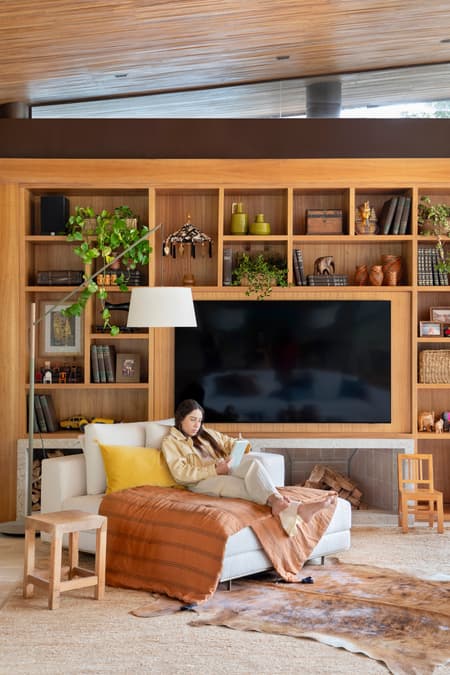
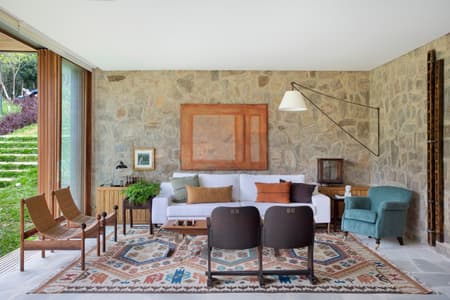
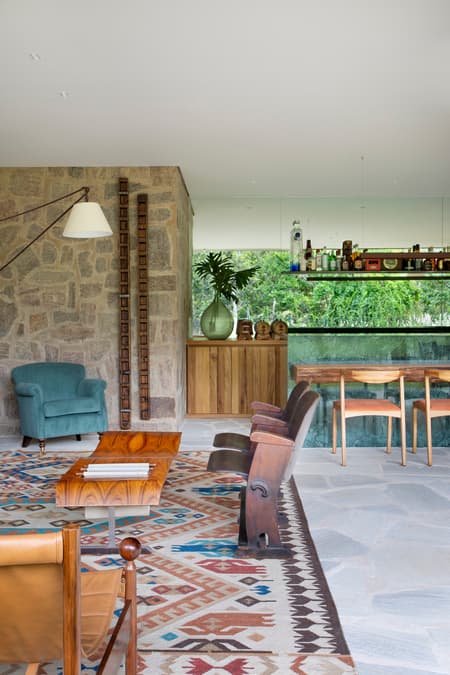
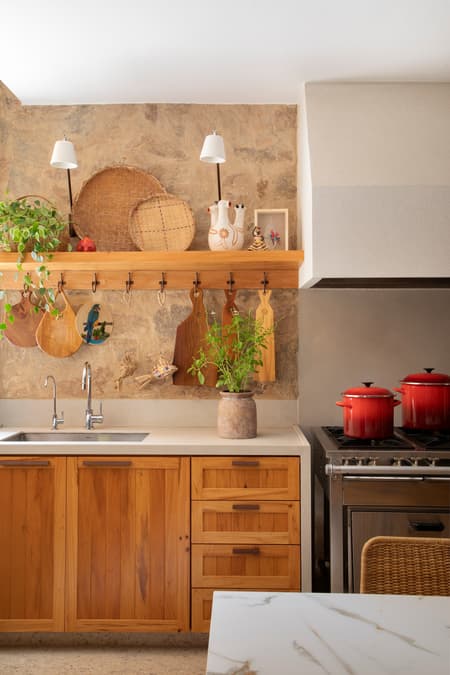
The project’s concept is rooted in the creation of welcoming spaces—an essential characteristic of a country house—expressed through the consistent use of natural materials. Wood and stone appear in finishes, furniture, and custom millwork crafted in peroba-mica and peroba-do-campo. The slatted cumaru wood ceiling, reclaimed wood flooring in the private wing, rustic granite in wet areas, São Tomé stone fragments in both interior social spaces and outdoor areas, as well as wood-look stone on select walls, all reinforce the residence’s rustic-contemporary character.
The color palette follows the same logic, based on natural tones with subtle earthy accents of green, mustard, and terracotta. The project’s Brazilian identity is further enhanced through the furniture curation, which blends pieces by renowned figures of Brazilian design—such as Bernardo Figueiredo, Jorge Zalszupin, Jean Gillon, and Aristeu Pires—with found furniture, reclaimed elements, vintage pieces, and objects brought back from the homeowner’s travels.
“The greatest challenge of this project was the narrow site with its steep slope, which required bold structural solutions to make possible a house with a sense of linearity,” concludes architect Patrícia Landau.