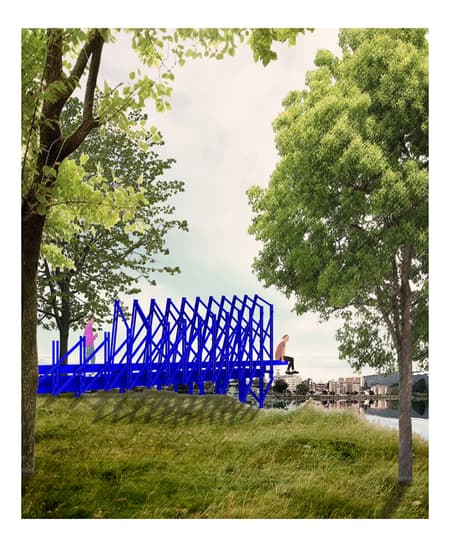
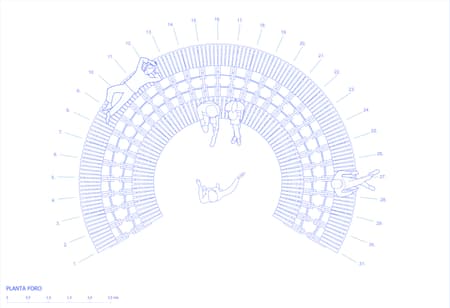
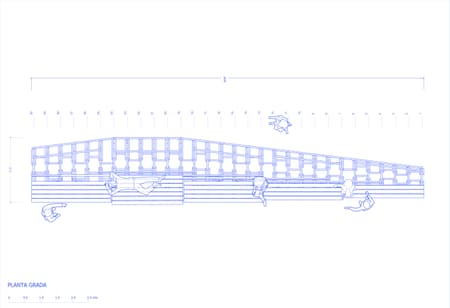
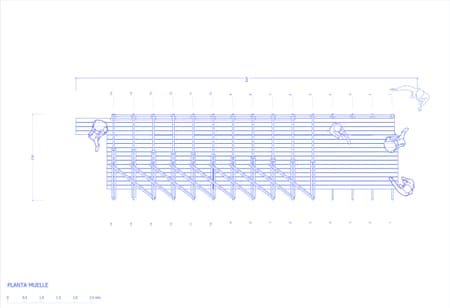
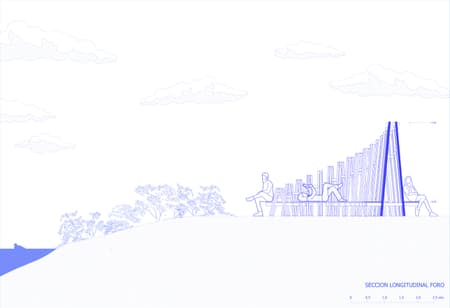
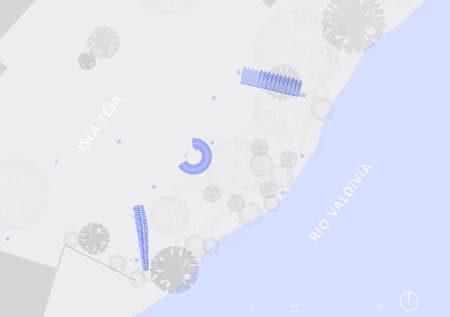
The proposal for the Scenic Pavillions is conceived as a strategy for territorial and landscape activation in the eastern sector of Isla Teja, in Valdivia Chile, along the stretch between the Architecture building of the Universidad Austral de Chile and the edge of the Calle-Calle River. Through the design and construction of three pavilions, the project seeks to consolidate this area as a space for movement, pause, and gathering, introducing new architectural references that engage in dialogue with the riverine landscape and its high ecological value.
The project originates from a collaboration between the architecture firm Dum Dum Lab — formed by Katherine Cáceres and Francisco Calvo together with Amaya Glaría, Constanza Grenet, and Valentina Cabrera — and the faculty and third-year students of the School of Architecture at the Universidad Austral de Chile, under the direction of Cristian Valderrama. The initiative was awarded through national FONDART 2021 funds, making it possible to articulate a proposal that combines design research, material exploration, and public space activation, understanding architecture as a device capable of mediating between the territory, collective use, and the natural cycles of the riparian environment.
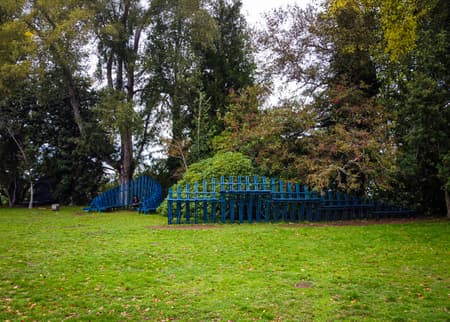
The project comprises three interventions organized along a pedestrian path of approximately 60 meters, forming a sequence of landmarks that function as active pauses within the landscape. Each pavilion is strategically sited to intensify distinct visual and spatial relationships with its surroundings, proposing specific moments of use and contemplation.
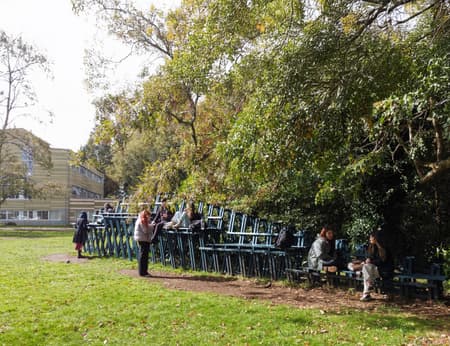
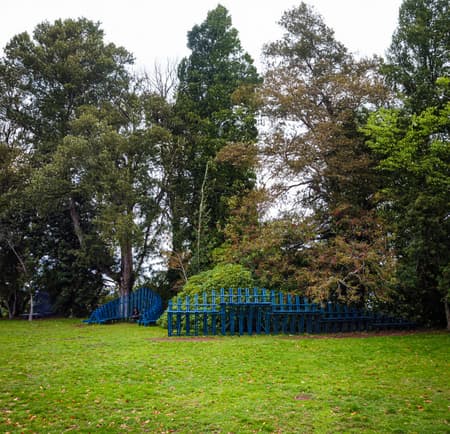
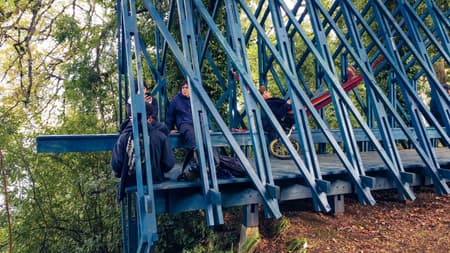
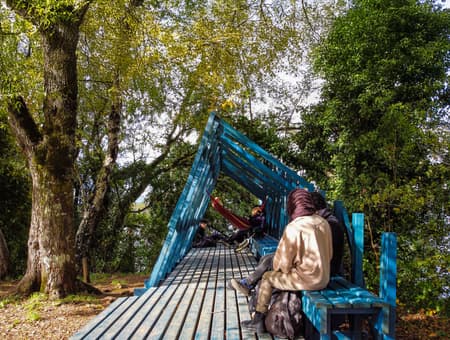
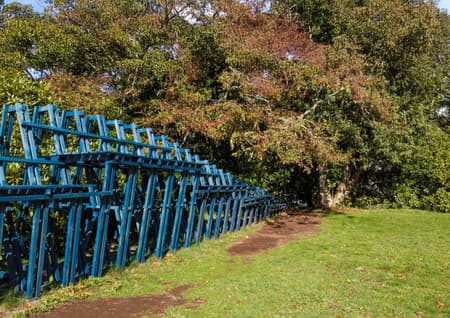
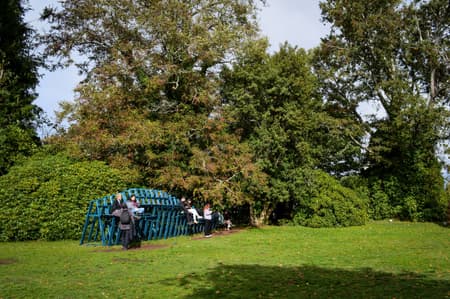
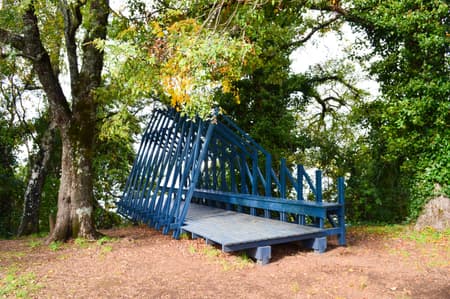
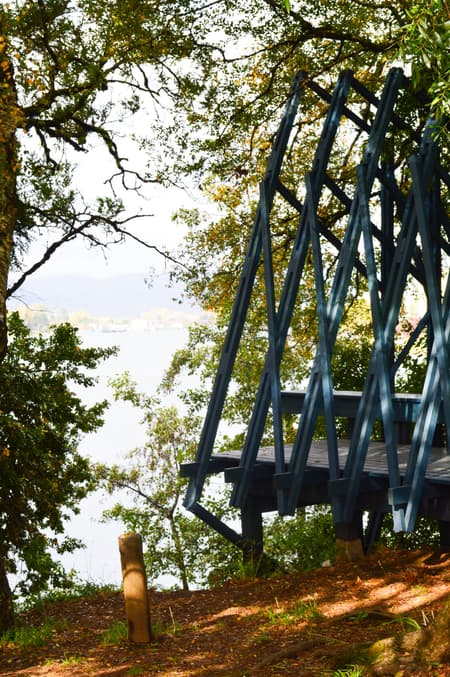
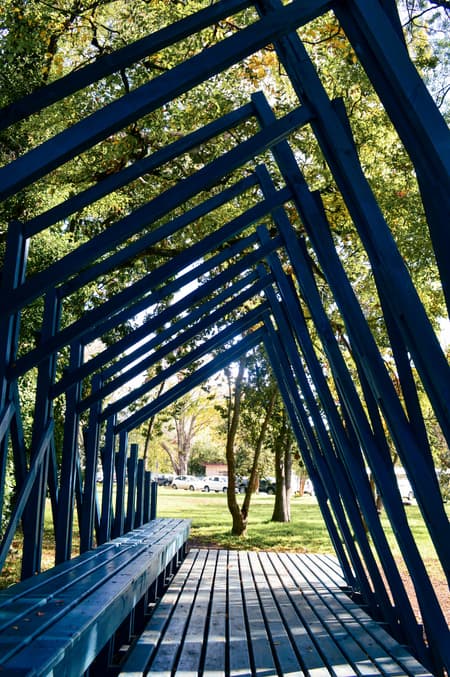
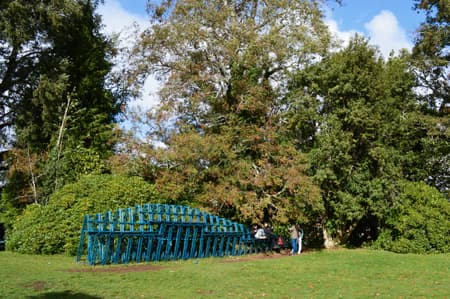
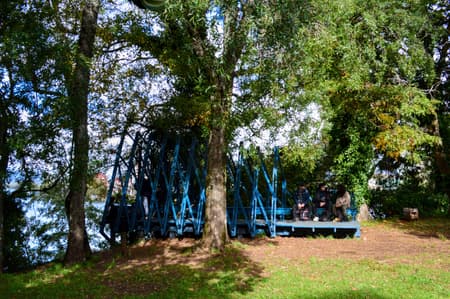
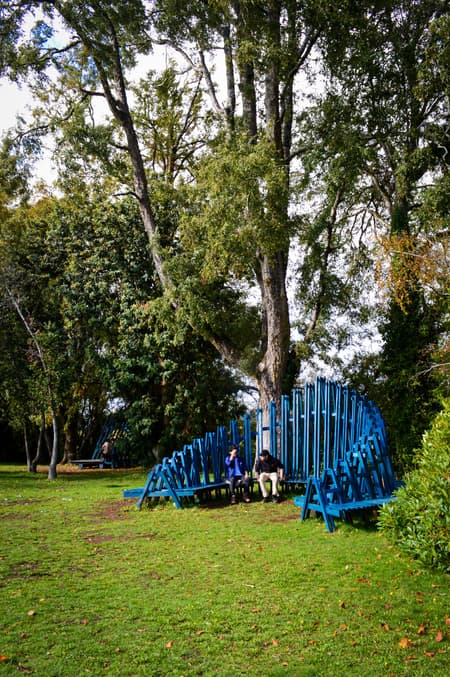
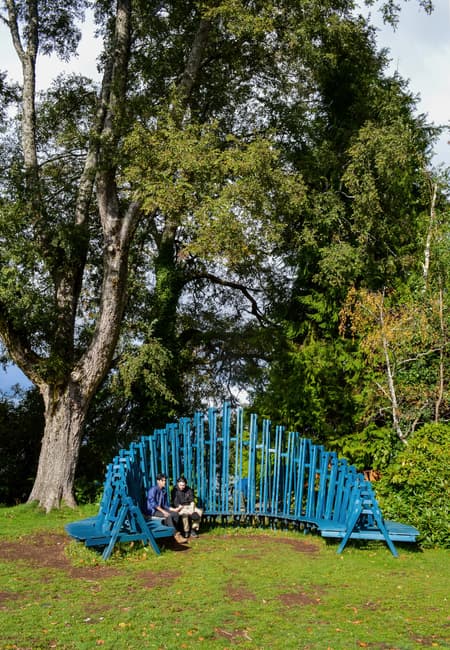
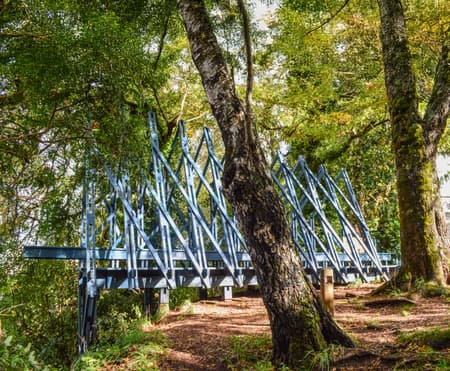
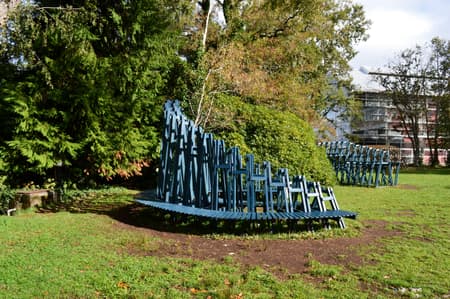
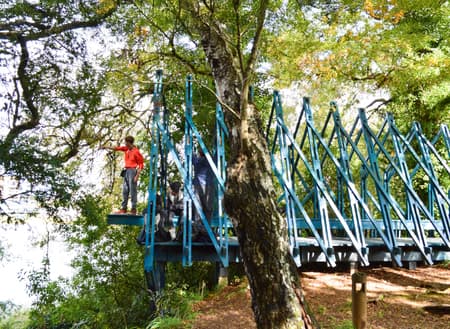
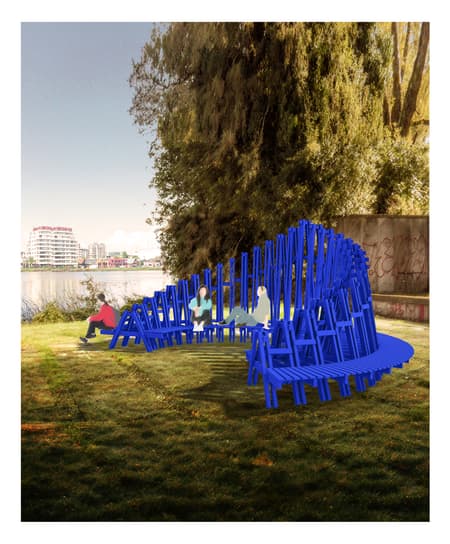
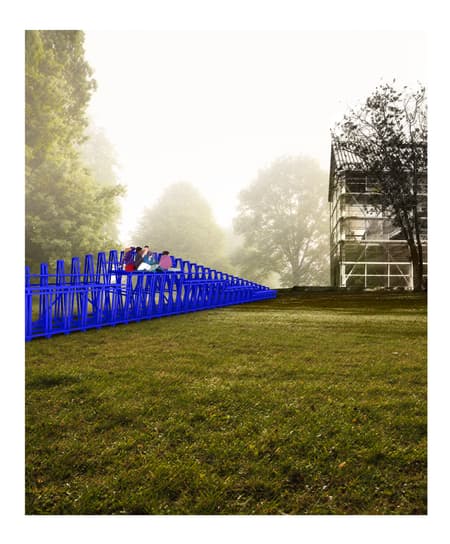
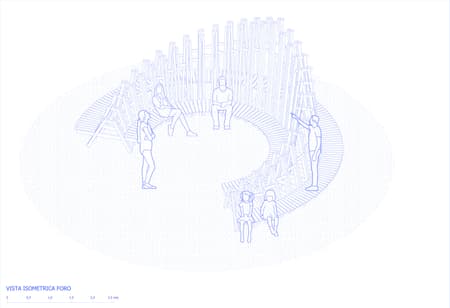
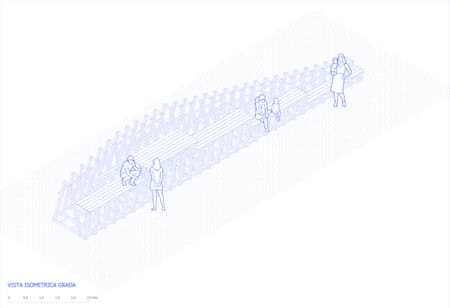
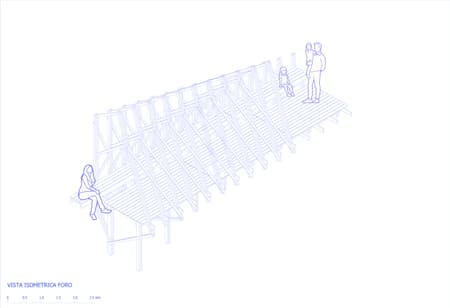
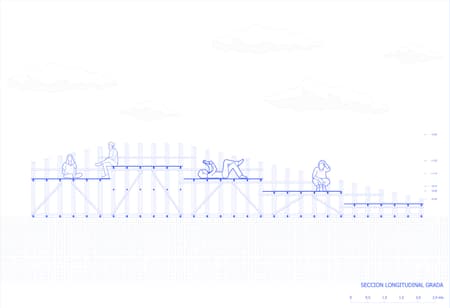
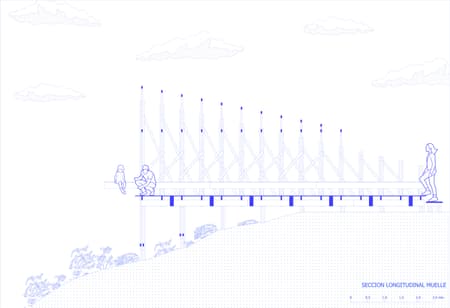
The Foro Pavilion takes the form of an open semicircle with a continuous bench, conceived as a space for gathering and lingering; its geometry emphasizes centrality and activates the path as a point of collective encounter. The Grada Pavilion proposes a sequence of five platforms at varying heights that allow users to gain elevation and broaden their views toward the campus and the landscape; this arrangement offers multiple positions for sitting, resting, and observing the surroundings. The Muelle Pavilion acts as a frame oriented toward the river, marking a strategic point of contemplation; its design directs the gaze toward the course of the water, reinforcing a more intimate and focused relationship with the riverine landscape.
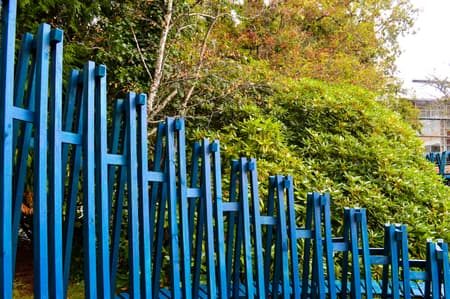
From a constructive standpoint, the three pavilions share a common logic based on timber framing systems composed of modules with gradual variations in dimension and configuration. This system makes it possible to generate diverse uses, frame views, and produce different atmospheres, reinforcing a recognizable design intent that is quick to execute and relies on small-scale timber sections. The use of high-quality pressure-treated timber, sponsored by Concón Maderas Impregnadas, ensures the durability of the works against the climatic conditions of southern Chile, establishing these interventions as lightweight yet lasting infrastructures within the landscape.