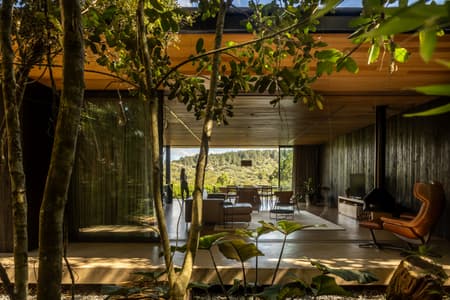
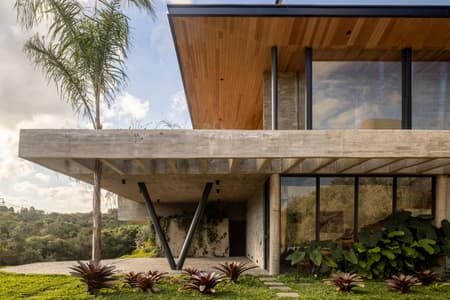
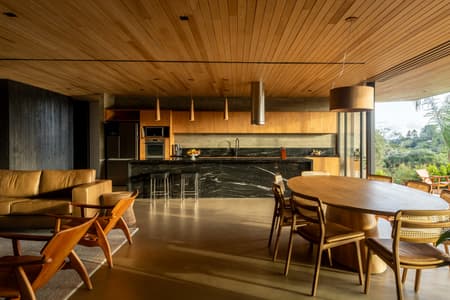
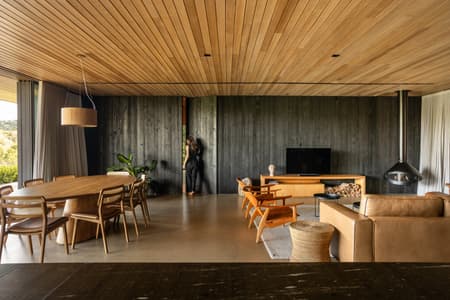
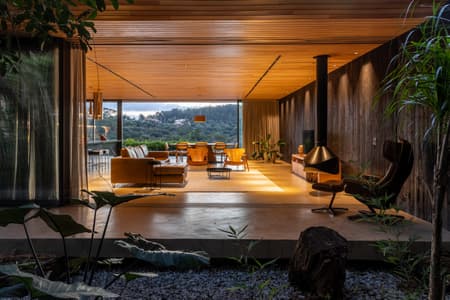
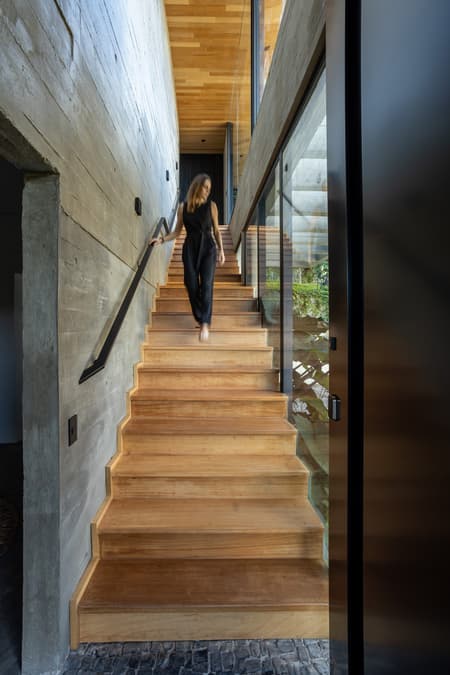
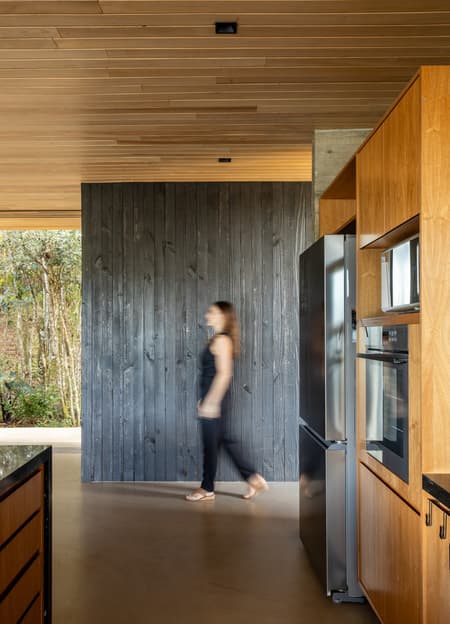
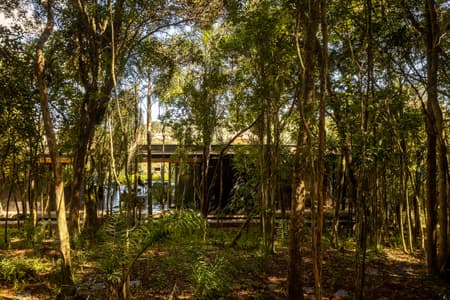
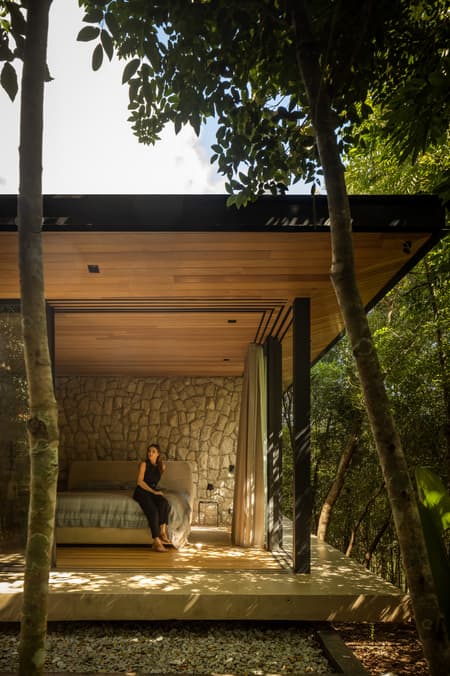
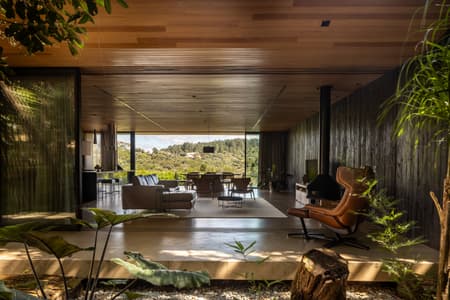
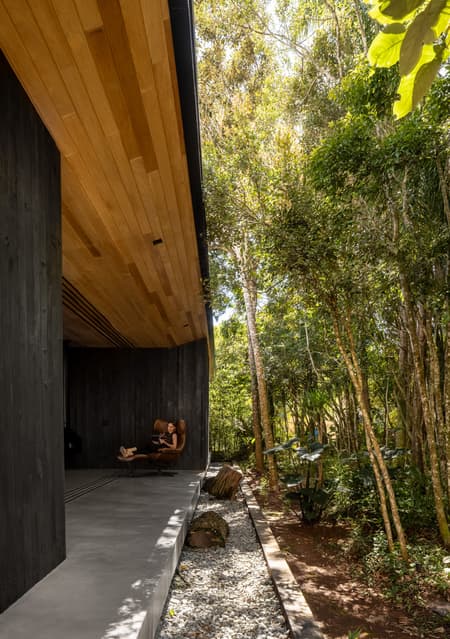
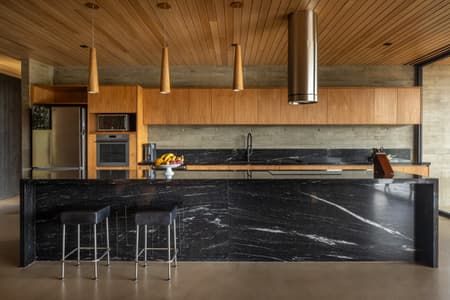
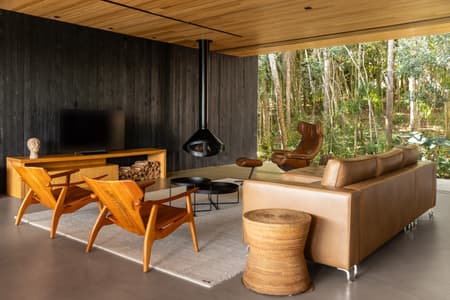
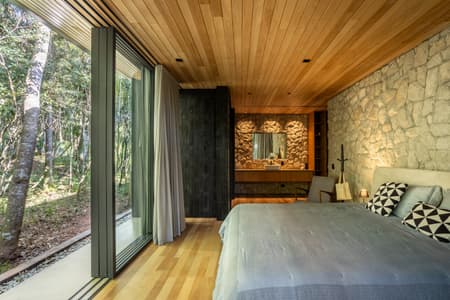
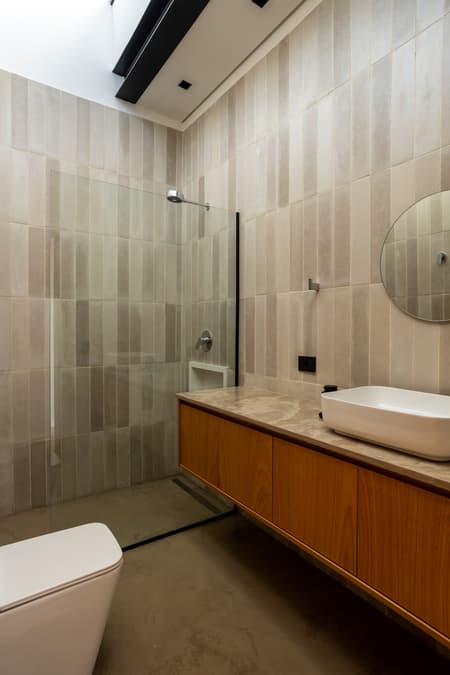
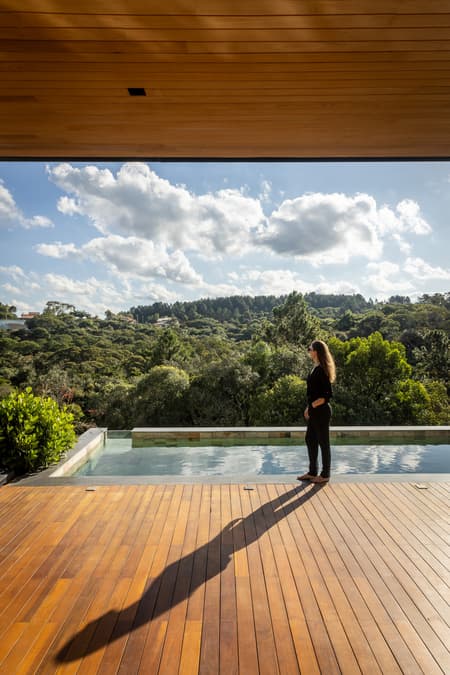
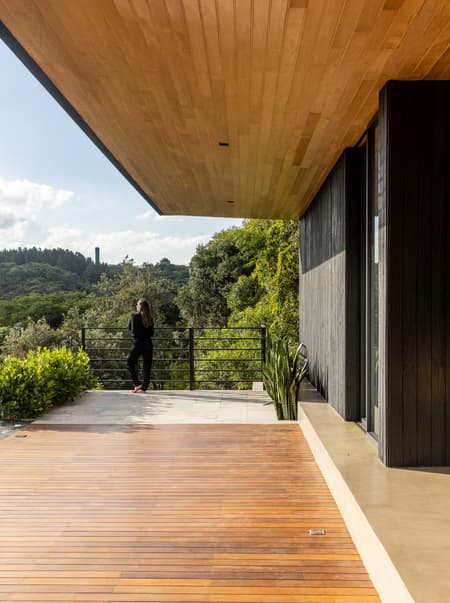
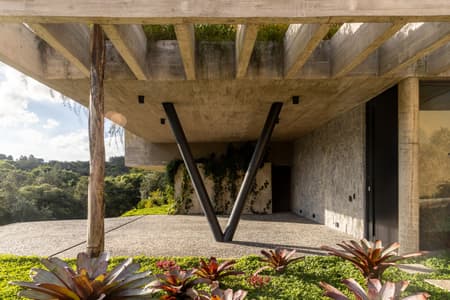
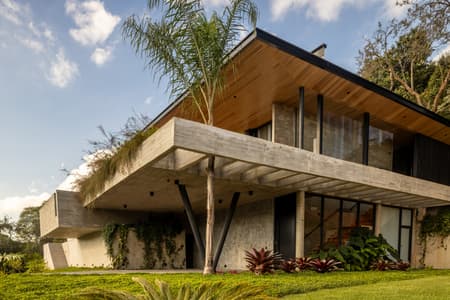
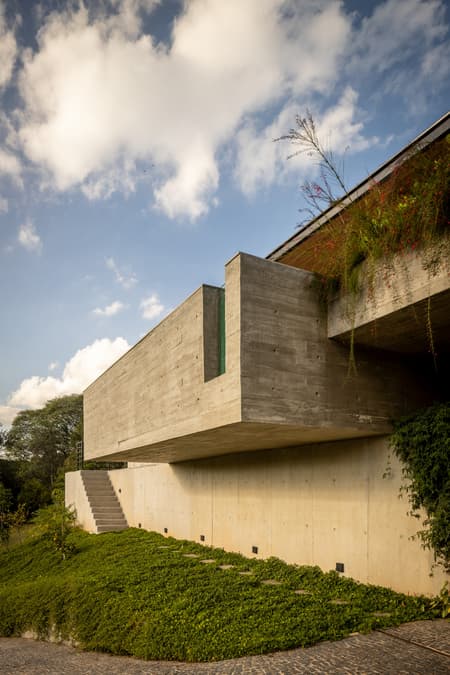
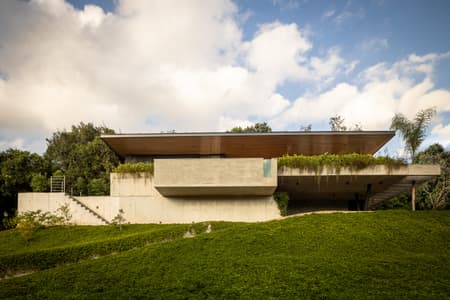
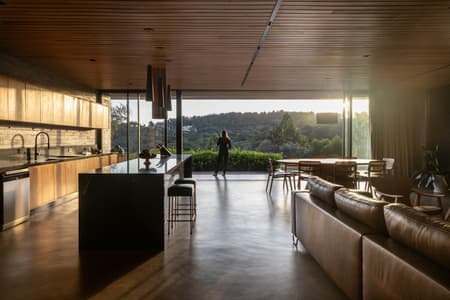
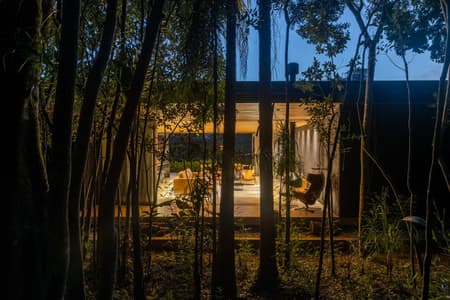
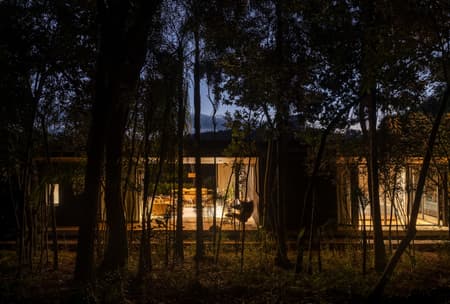
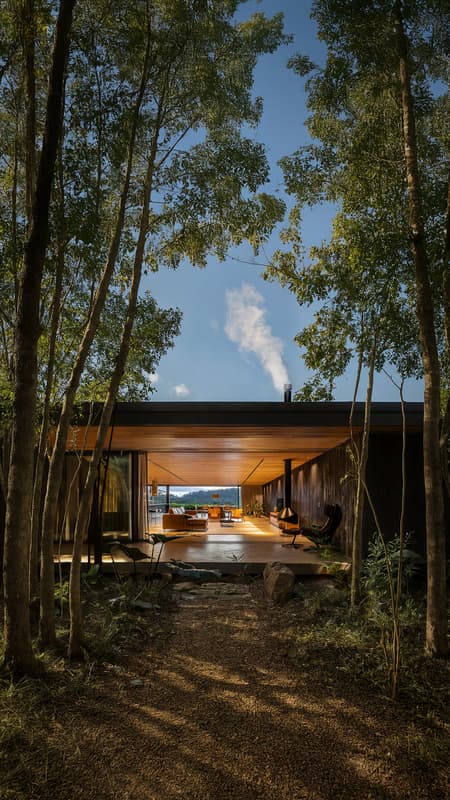
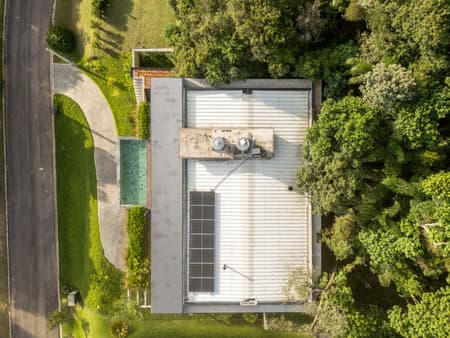
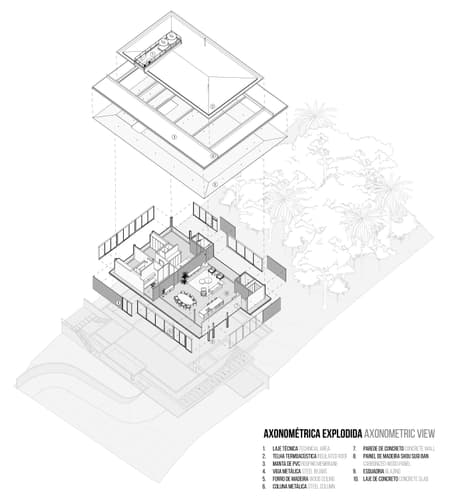
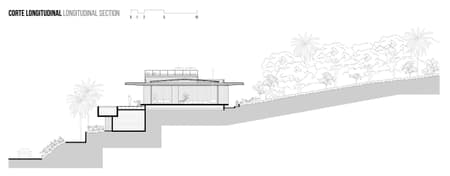
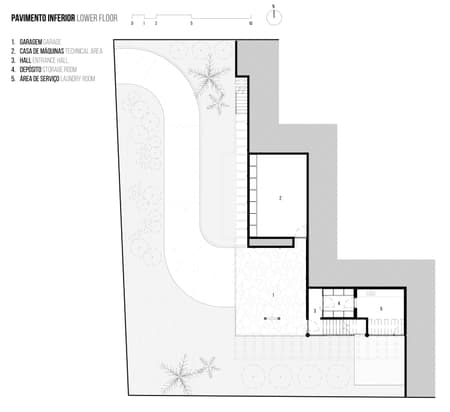
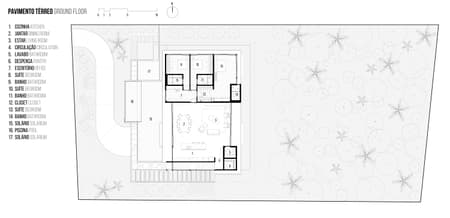
House 258 was born from the principle of designing appropriately for the site, occupying the land and landscape with subtlety and respect, while preserving the existing forest on the lot. The result is an architecture that, on one side, opens to the sunset and the surrounding valley, its facade marked by the golden tones of concrete under the sunset light, and, on the other, plunges into the shaded and silent forest, illuminated by the filtered light of the treetops. The lower floor, visible only from the front facade, is constructed entirely of exposed concrete and split stone. This solid base, which houses the garage, a support area, and serves as a retaining wall, also supports the slender pavilion of metal and wood structure above. The main access is via a staircase amidst concrete and glass that leads to the upper level. The house's plan is clear: a single rectangular volume divided in half by charred pine panels separates two distinct areas. The private area, consisting of three suites and an office, has a very intimate feel and a dominant view of the forest. The living space, consisting of a fully integrated living room, dining room, and kitchen, features large floor-to-ceiling windows that enhance the entry of light and the connection with the surroundings: on one side, the preserved forest and, on the other, the open valley. House 258 is a concrete exercise in architecture as a narrative of contrasts: between shadow and light, forest and valley, weight and lightness. A project that combines technical rigor, artistic sensitivity, and a commitment to responsible land use.