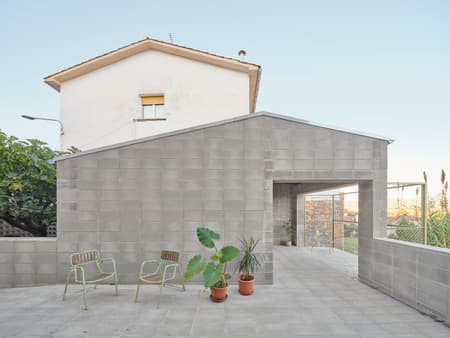
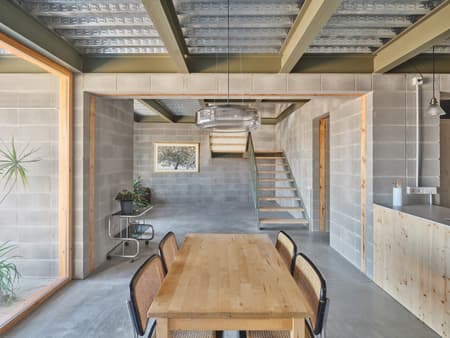
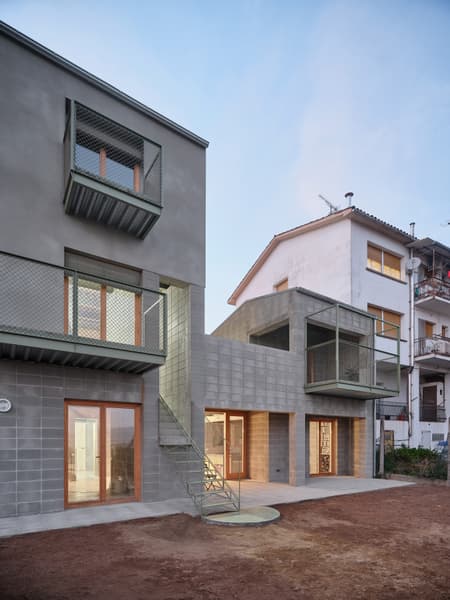
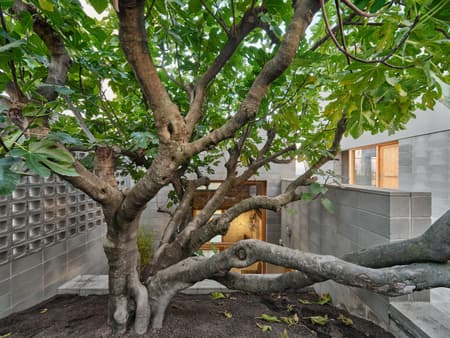
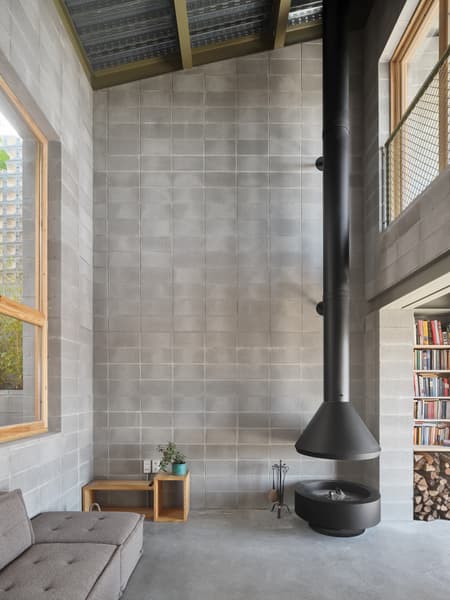
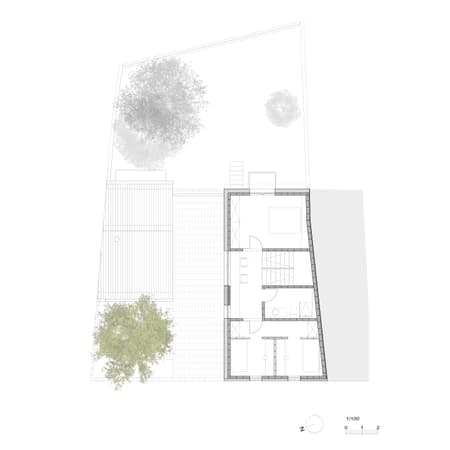
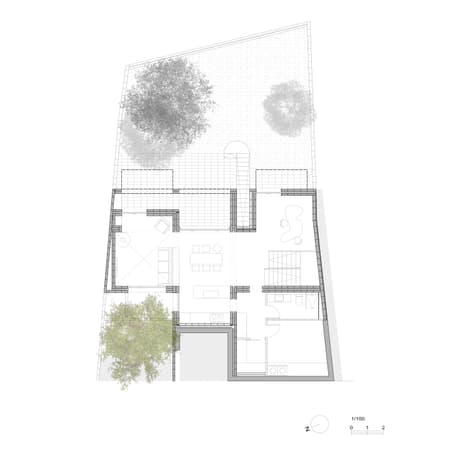
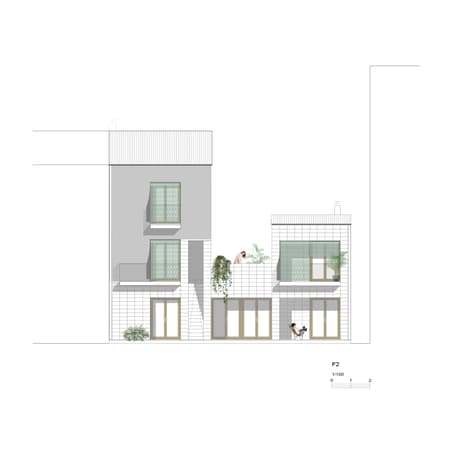
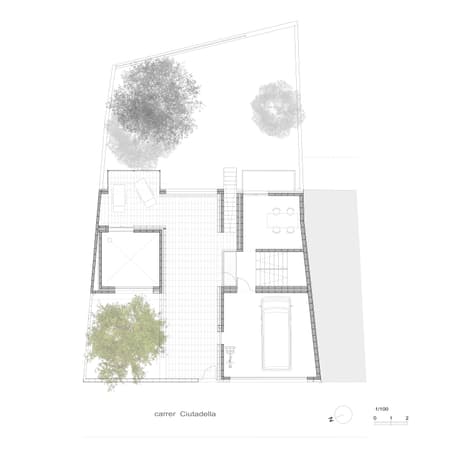
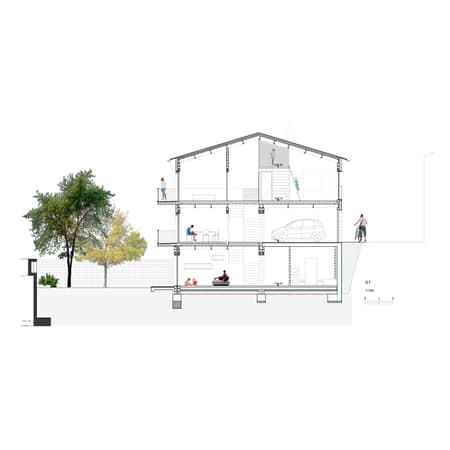
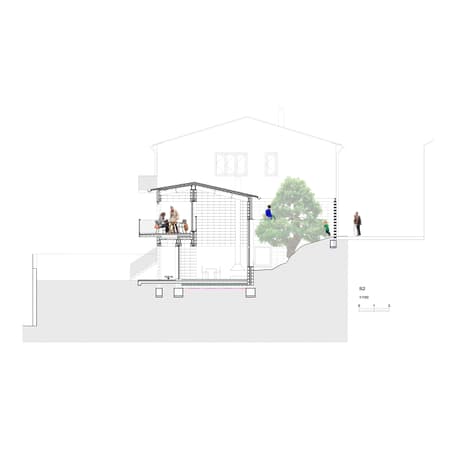
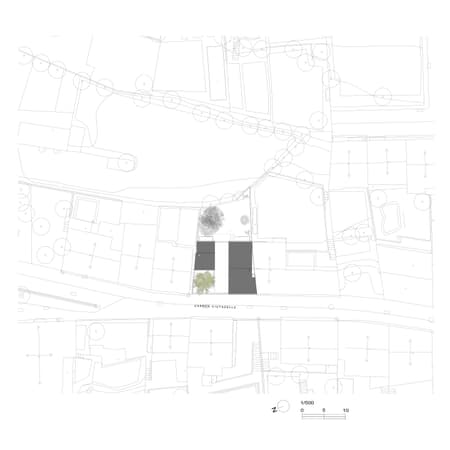
The project is guided by three existing conditions: a hundred-year-old fig tree, the difference in level between the street and the garden, and the humility of the neighbouring buildings. The house is fitted between the slope and the fig tree, respecting it and giving it prominence. The tree becomes the central element of the project, integrated into the daily life of the house through a courtyard and a double height living room that reinforces the visual relationship with it. The intention is to create a home that responds naturally to its surroundings while providing quality spaces through a responsible architectural approach.
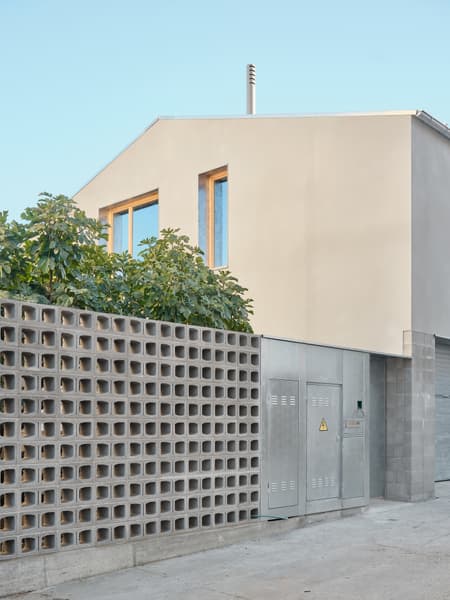
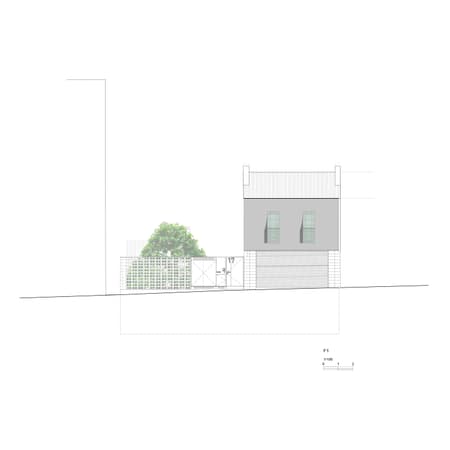
The organisation of the house is closely linked to the site’s topography. The day programme, including the living-dining-kitchen area and a multipurpose play space, is located on the semi-basement floor in direct connection with the garden. This arrangement follows the existing slope and requires hardly any earthworks. The rest of the programme is organised within a compact two-storey volume that completes the existing row of houses along the street and contributes to a certain volumetric homogeneity within the neighbourhood.
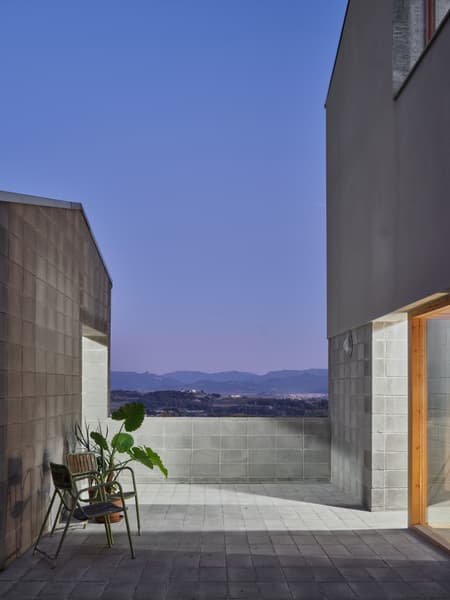
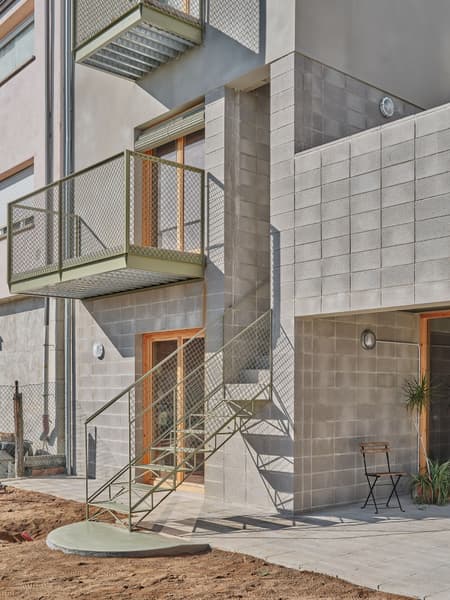
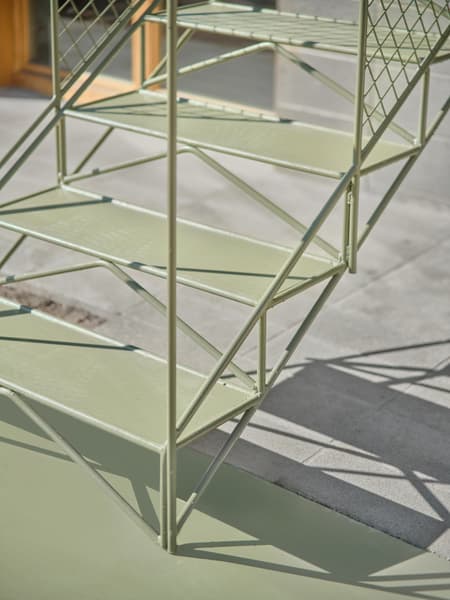
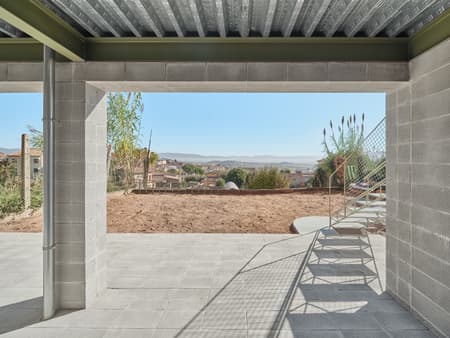
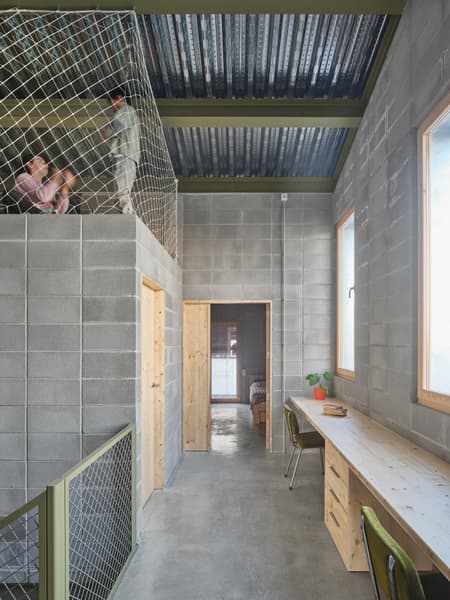
The dwelling adopts a non-hierarchical typology designed for two adults and two children. Rooms of the same size are arranged on both sides of the staircase and share a single toilet. The project allows spaces without a predefined use, making them adaptable as an office, study, guest room or shared activity area. The sloping roof section is also used to create a play space for children above the washbasin, recovering the concept of a tree hut. Access to the house takes place through an exterior entrance courtyard between the two volumes, while a covered staircase provides direct access to the garden without passing through the interior.
The neighbouring buildings are characterised by their humble and unpretentious nature, with a certain air of self-construction. In response, the project proposes an honest construction system based on double reinforced concrete block walls with insulation, replacing the outer layer with SATE cladding on the upper floor to integrate the building into the built environment. An economic system of load-bearing walls and exposed working roofs allows adaptation to the clients’ economic possibilities while leaving the materiality of the construction elements visible.
Sustainability is embedded in the project from the outset through the preservation of the hundred-year-old fig tree. The porches on the garden floor and the balconies on the upper levels provide solar protection during summer, while traditional rope shutters control solar radiation. The block walls and concrete pavement provide significant thermal inertia, and the courtyard containing the fig tree promotes cross ventilation. Together, these passive strategies contribute to good environmental performance and support the creation of a passive house. A double-height fireplace further helps mitigate the layering of warm air within the double-height living space.