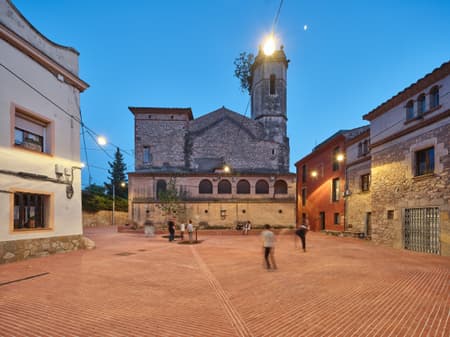
The project reclaims Riells Square as a pedestrian-focused civic space, transforming a formerly vehicle-dominated area into a place for social interaction and community life. The concept is rooted in recovering local identity, with the rediscovered historic well becoming the symbolic and geometric centre of the intervention.
A minimal and democratic design strategy (based on essential elements such as a bench, a tree, and a fountain) creates an inclusive and calm space that encourages everyday use and reinforces the village’s social dynamics.
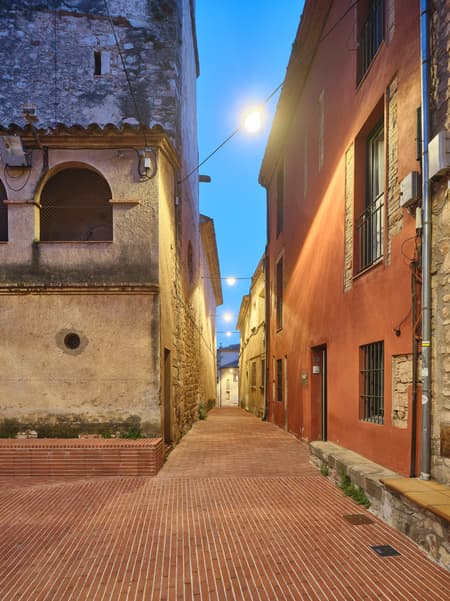
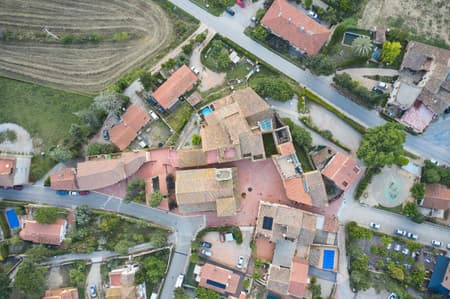
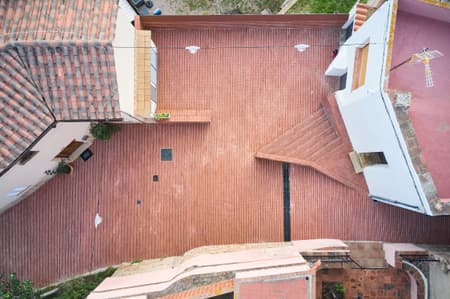
Located in a village characterized by a dispersed urban fabric and a strong relationship with its surrounding landscape, the historic centre lacked a clearly defined public realm. The proposal introduces a continuous, single-level platform that prioritizes pedestrians and ensures universal accessibility.
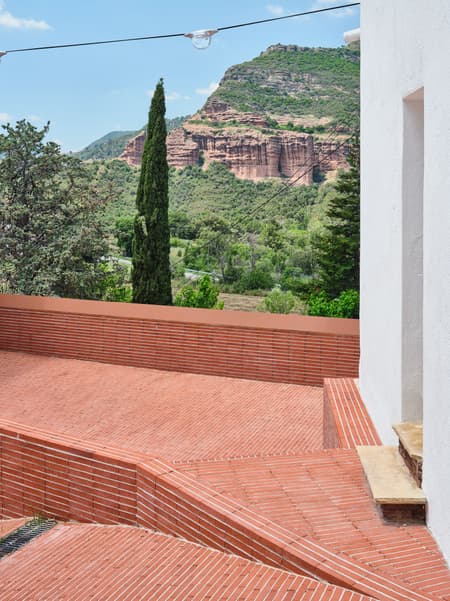
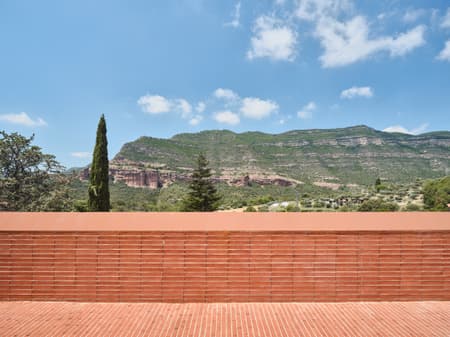
Material and visual strategies strengthen the connection to the reddish cliffs of the surrounding landscape, while the viewpoint area enhances long-distance views and reduces visual interference from less relevant elements.
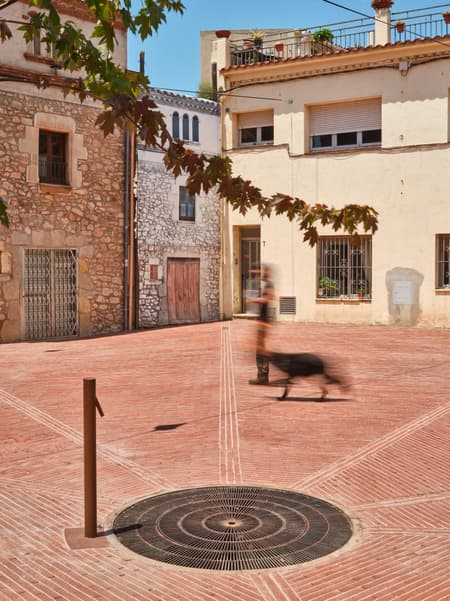
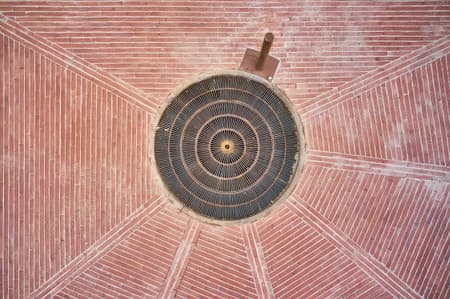
The square is organized around the central well, which structures both geometry and infrastructure. A radial paving layout directs circulation and water towards this focal point. The space remains open and flexible, allowing multiple uses.
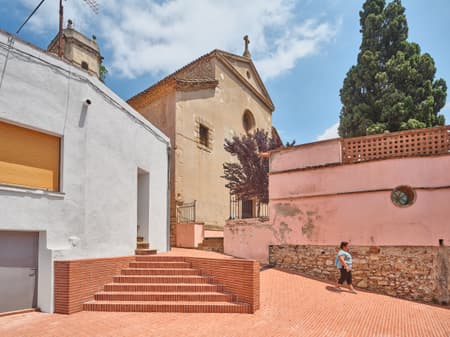
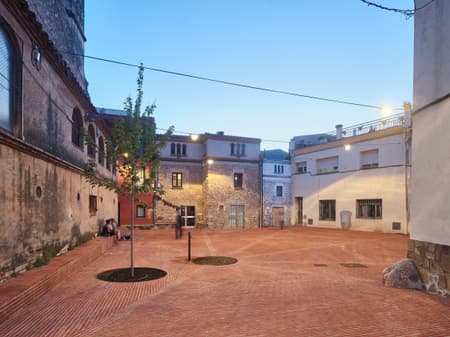
Peripheral elements, such as a linear bench along the church façade and a shaded area defined by a tree, provide comfort without limiting adaptability. The adjacent viewpoint incorporates stepped seating to resolve level changes and create a complementary social space.
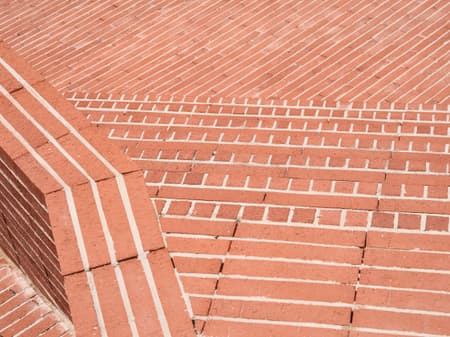
A single material (a reddish solid ceramic brick) is used throughout the project, ensuring visual coherence and integration with the landscape. It is applied to paving, seating, and steps, reinforcing the project’s identity.
The construction system is simple and durable, capable of supporting occasional vehicular access. The well is protected with a steel grille that maintains visibility, and suspended lighting introduces a warm, festive atmosphere.
Key challenges included integrating the historic well and balancing heritage preservation with accessibility. Community participation helped locate and recover the well, which became central to the design. A continuous platform resolved accessibility while preserving the historic character.
The project emphasizes durability, local materials, and low-impact solutions. Water drainage is integrated into the design, converging at the well. Warm, low-intensity lighting reduces energy consumption and enhances the atmosphere.
Overall, the intervention demonstrates how a minimal, context-sensitive approach can revitalize public space while reinforcing identity and sustainability.