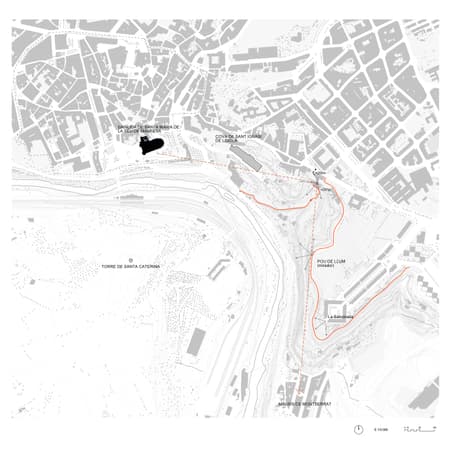
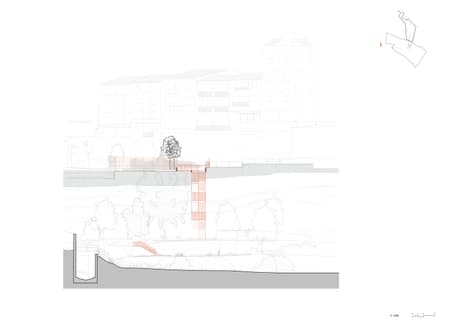
The intervention recovers a lost section of the Camino de Ignacio de Loyola in Manresa, linking the Pont Vell and the Creu del Tort to the Pou de llum. On March 25, 1522, Ignatius of Loyola went down from Montserrat to Manresa. He settled and lived for eleven months and wrote in the cave his Spiritual Exercises, the origin of the Society of Jesus
The path where Ignatius of Loyola prayed was, in the past, a path used by the people of the neighbourhood of Les Escodines, especially women, to go down to wash clothes in the Cardener River. The neighbourhood of Les Escodines, in particular, is named after the codines or stone terraces that delimit it on its south side. Before the action, the section of this itinerary that presents the most important orographic leap had disappeared: the one corresponding to the section between the Creu del Tort and the Font de Fans.
Inspired by Ignatius of Loyola, Beuys did a workshop "Acción Manresa" in 1966 talking about the transformative and restorative energy of the place. The landscape staircase of the Vall del Paradís is not only an infrastructure, it is a gesture of reconciliation with the place, a way of inhabiting the slope and of stitching together two cities, the old town and the Escodrines.
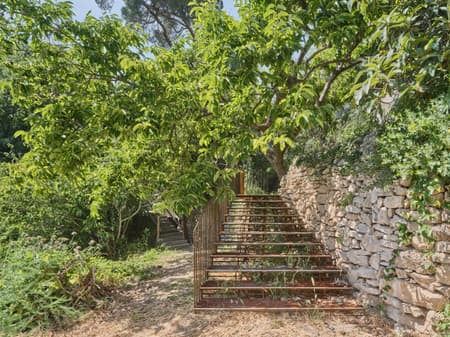
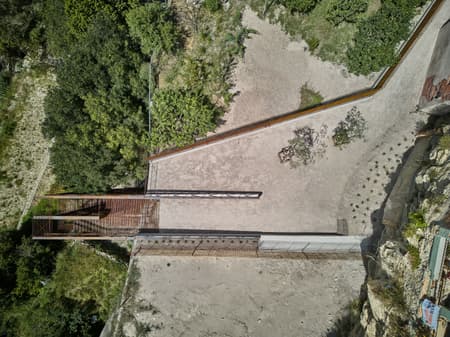
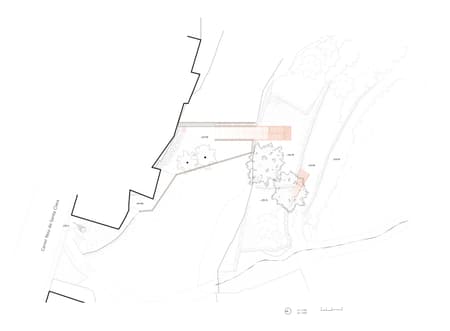
The project was born from the desire to restore a historical and human connection with the landscape of the Cardener River. The work is part of the agricultural fabric of the orchards of Cardener, respecting the existing vegetation and the dry-stone walls.
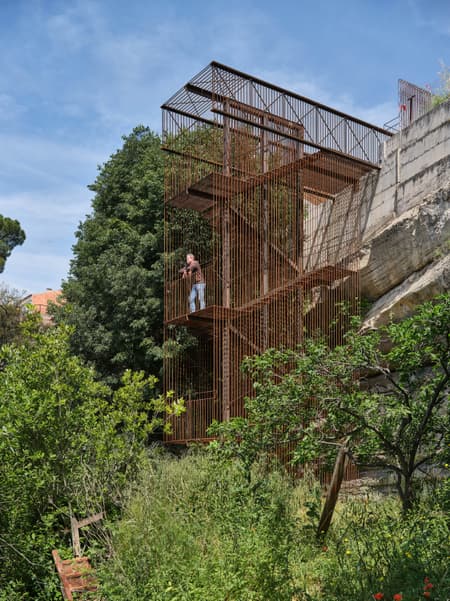
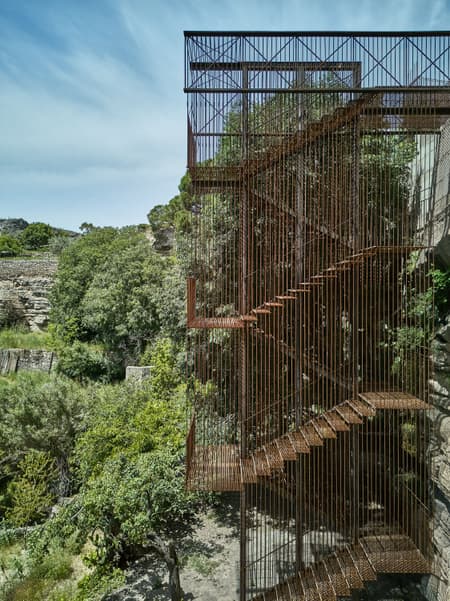
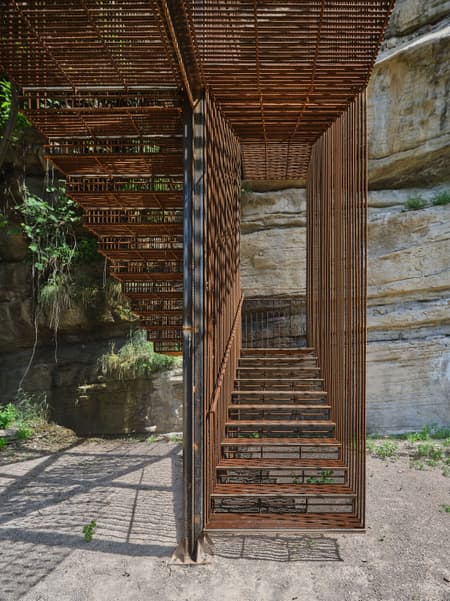
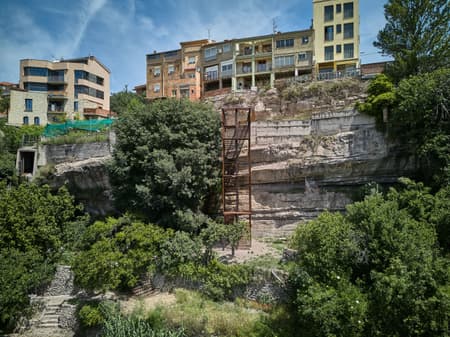
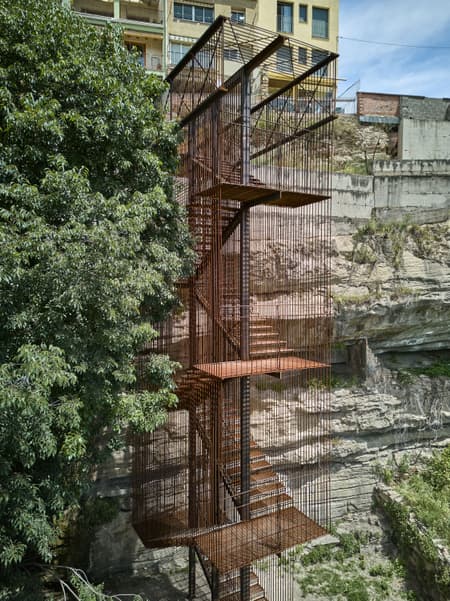
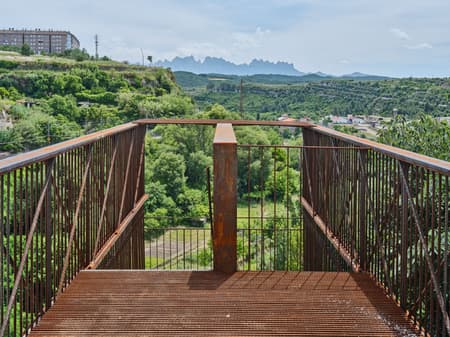
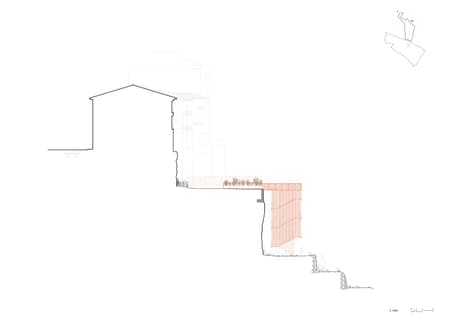
The staircase bridges the 13 metres of difference in height between the lower rocky terrace and the upper terrace, opening a new viewpoint to the Vall del Paradís, the Cardener and Montserrat.
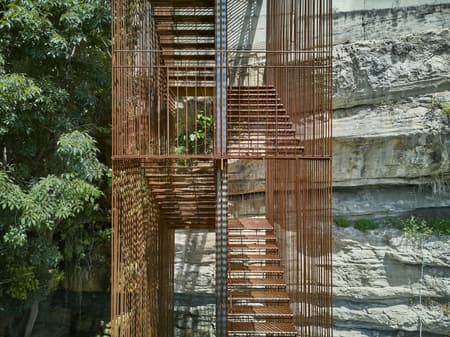
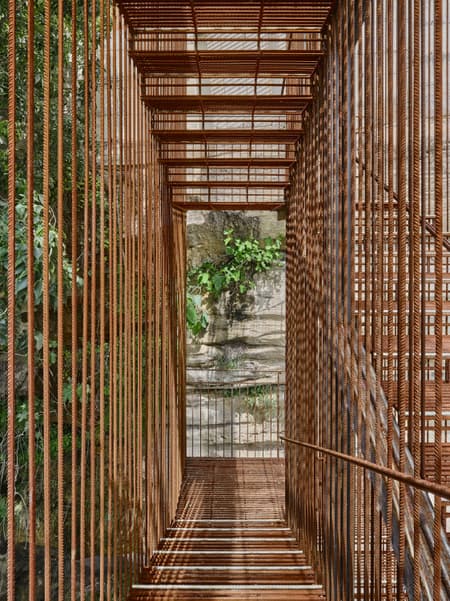
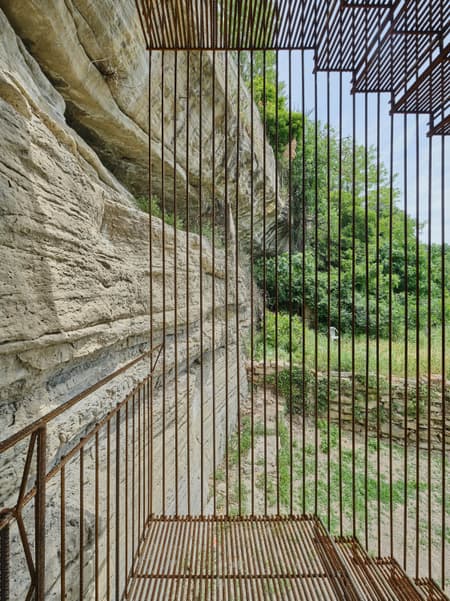
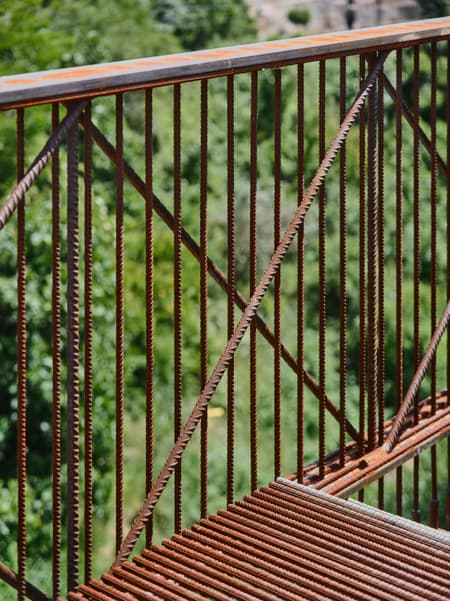
Architecture is understood here as a mediation between the body and the landscape: the tour proposes a physical and sensitive experience towards the landscape, recovering the nomadic idea of making a path; The gaze transforms as you advance, alternately touching the rock and opening up to the landscape generating an air/earth sequence that connects the person with the nearest and farthest landscape. The staircase invites you to stop, to feel the place and to recognize it. The staircase, separated from the rock, is presented as a permeable element, which allows you to see through. A curtain of corrugated steel filters the landscape without interrupting it, generating a subtle tension between interior and exterior, between protection and contemplation.
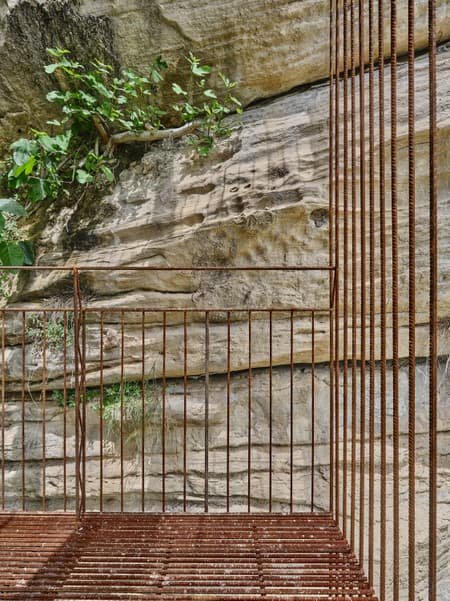
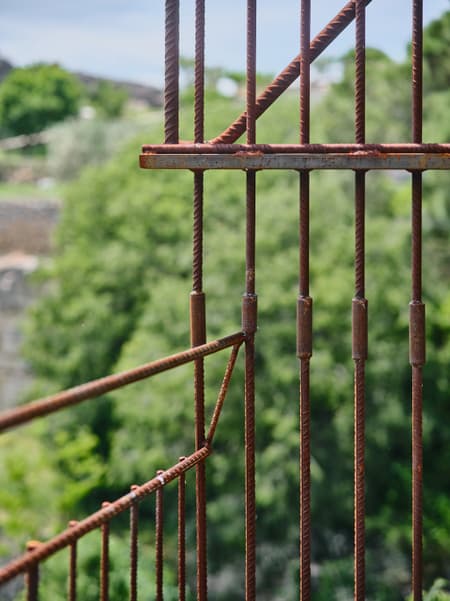
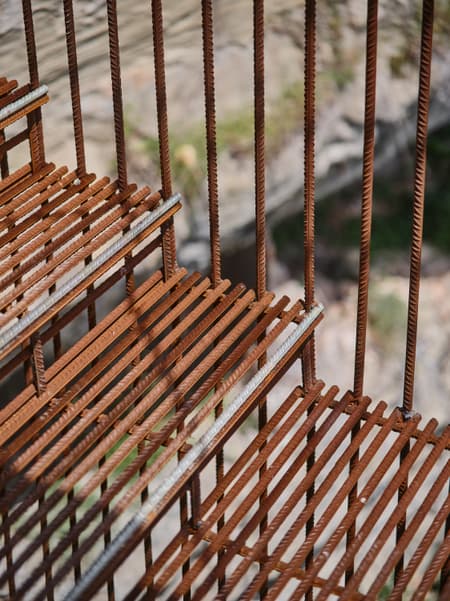
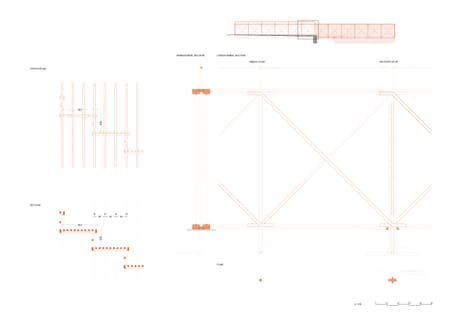
The structure is attached to the rock with concrete walls to the upper Terrassa, from where metal trusses are projected in cantilevered to support the staircase hung from steel corrugated, all in balance. The steel is very efficient working under traction and allows very small sections (Ø16mm corrugated bars) that achieve the desired transparency. The entire project is articulated around a unitary material language: steel. The repetition of a single Ø 16mm corrugated bar element builds the entire staircase. This formal austerity responds to an ethic of moderation: to use only what is necessary, allowing the material to dialogue with light, with time and with human presence.
The combination of materials establishes a dialogue between weight and lightness, between material and air. The pavement, also made of corrugated steel, is placed on top of the pre-existing ones, allowing the ground to breathe and allowing the natural drainage of water.
The duality between materials and the idea of man's balance from contact with the earth evokes the poetics of Joseph Beuys and his relationship between art, nature and human energy.
The project was born from the desire to restore a historical and human connection with the landscape of the Cardener River with a landscape, human and functional dimension.
The proposal manages to turn the route into a bodily experience and connection with the landscape, opening up new perspectives to the city and the views of Montserrat, providing an abandoned space with quality public and social space.
The connection becomes functional, social and landscape. At the same time as it recovers a lost connection, it manages to bring together two parts of the city that are far apart due to the orography itself and enhances a space of unusual beauty such as the Paradise Valley with its rock formations and terraced orchards.
The construction of the staircase was a constructive challenge due to the impossibility of accessing the area where it had to be located. The construction was carried out in a workshop and the 13-metre ladder was transported in two sections and hung with a mobile crane from Carrer del Peix, 7 metres from the upper terrace and 20 metres from the lower cave.
The proposed construction system allows construction and at the same time allows the landscape to pass without imposing itself, as one more layer of the history of the place.