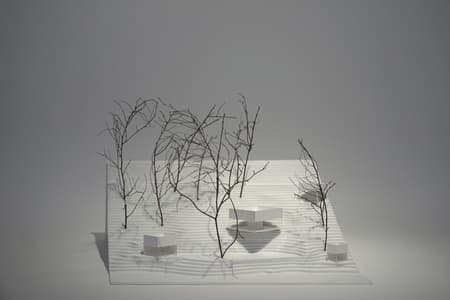
The clients had bought a plot, not far at all from their hometown, but in a surprisingly secluded setting best described as otherworldly. The idea was for a 'getaway' house – a private place to go to for a weekend or so – to swiftly get away from stress, work, city.
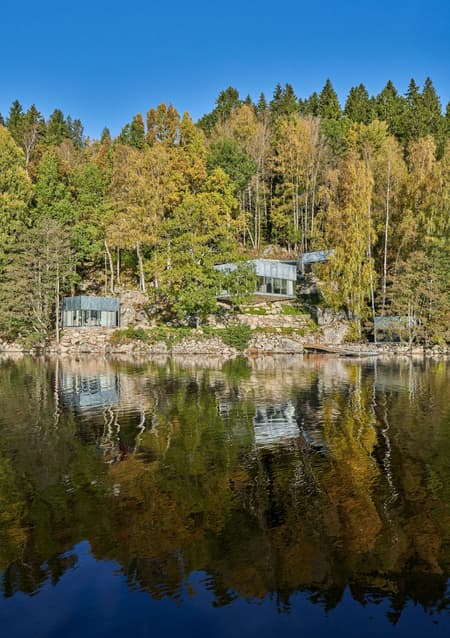
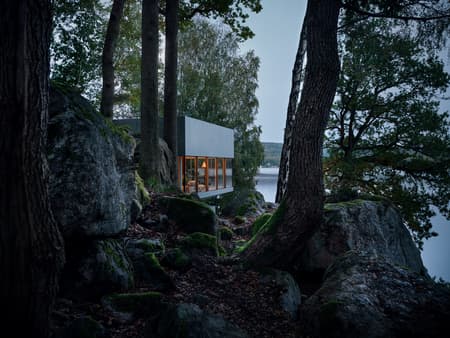
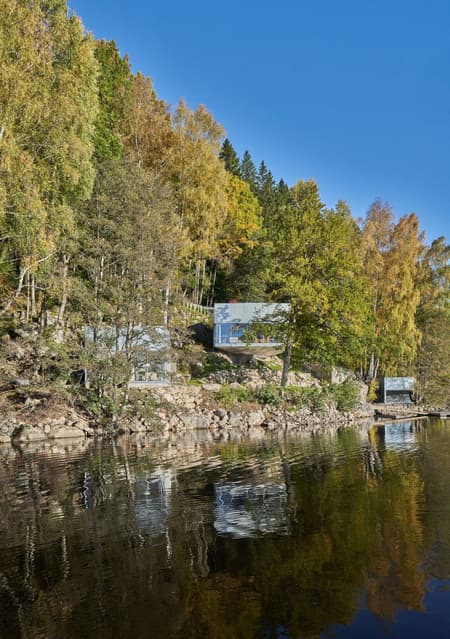
The rocky and steeply sloping site is reached from above, from a one-lane country road cut into a forested hill slope. The other end of the plot is where the slope ends at the shoreline of a long lake, stretching in a way that you can't tell its end, left or right. The scene is one where you're almost expecting a troll looking out from behind a mossy boulder and a fairy tale princess down by the lake, gazing at her own reflection from the still freshwater.
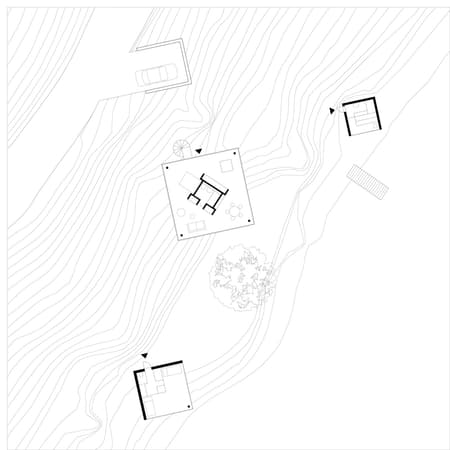
The sloping and rather inaccessible plot was a clear challenge for construction. The other constraint was a building allowance that was for a mere 65 square meters, with the addition of a couple of smaller, ancillary constructions. Yet the expectation was for a fully functional home for a family of four.
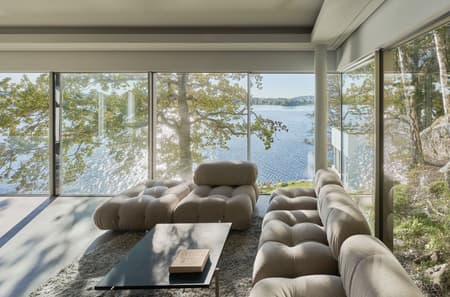
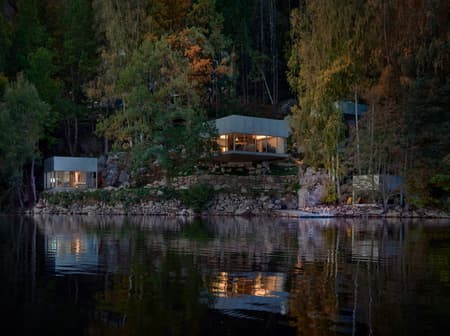
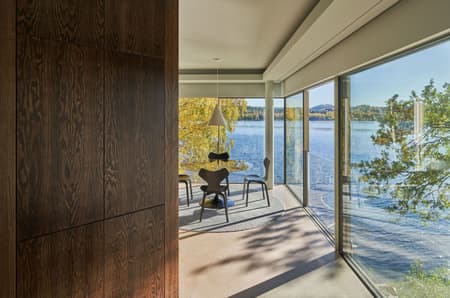
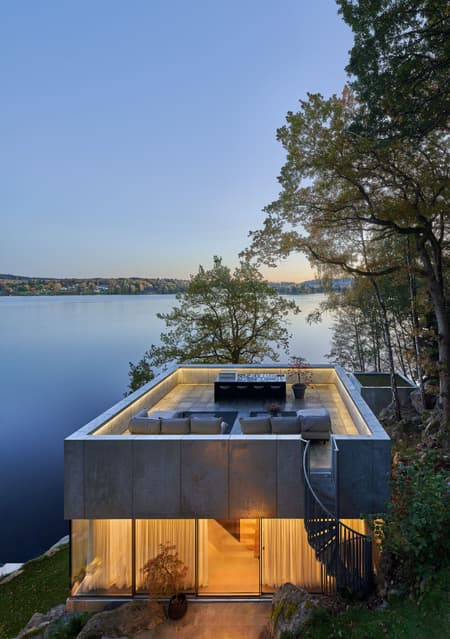
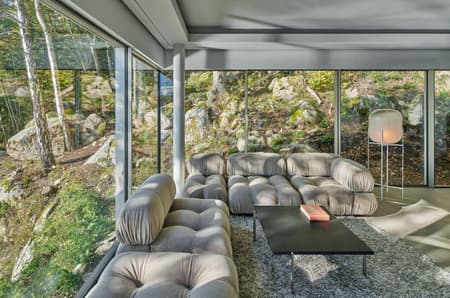
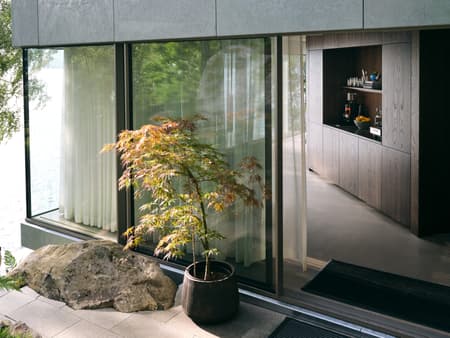
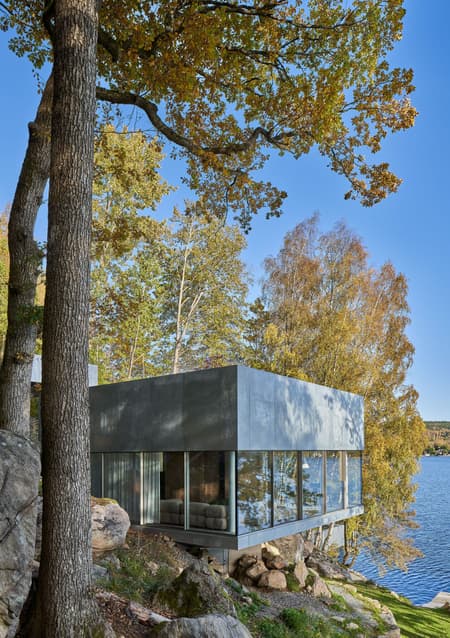
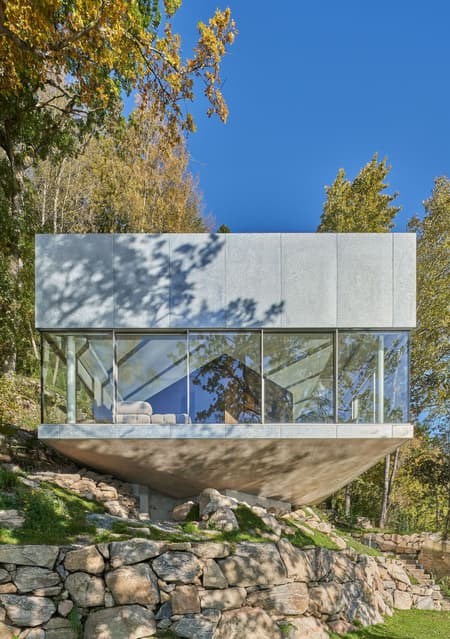
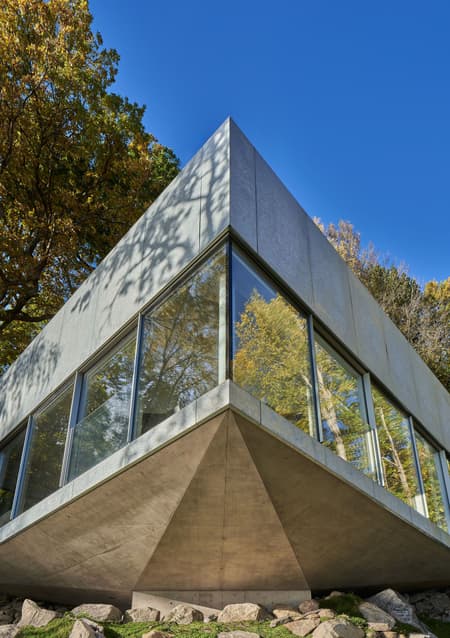
It was established from the outset to leave this enchanted nature as intact as possible, with a small visual imprint of the new. The concept can be likened to rock crystals breaking out from the hill between the trees, barely touching the ground. Only two materials are dominant: glass and galvanized steel. Chosen to meet the demand of being maintenance-free, but adding also the quality of being pure and 'honest', as the zinc is left untreated to slowly oxidize and patinize.
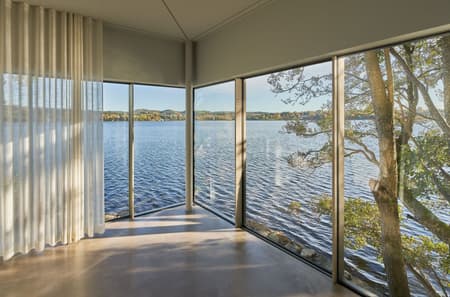
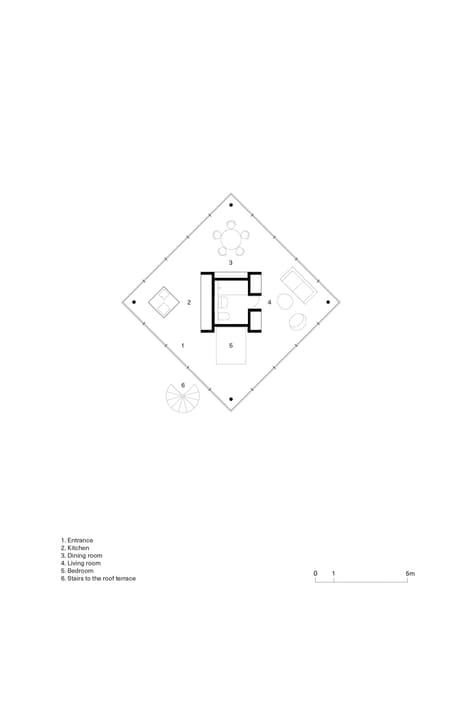
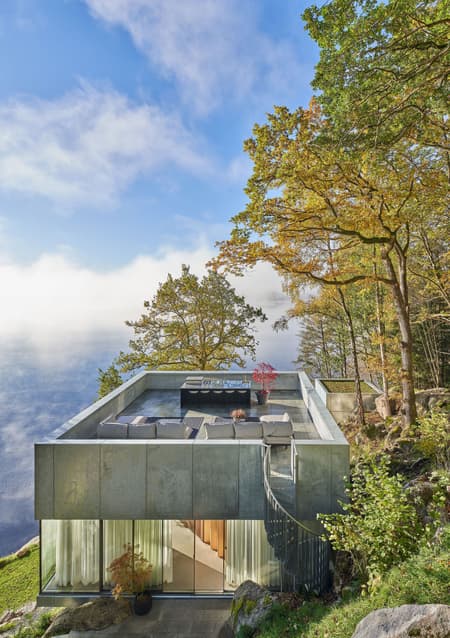
The little 'hamlet' of four scattered cubical buildings – main house, twin-bedroom annex, sauna, carport – are parallel to each other but at a 45-degree angle to the lake. Thus, making two sides, instead of one, face the lake view and at the same time stopping direct reflection from the glass as seen from the lake. The cubes are 'cut' at an 'equator' line, with all glass for the lower half and all galvanised for the upper half. In the case of the main house, the upper metal half hides a sunken roof terrace reached from a rear outdoor spiral staircase. This roof terrace offers a 50% addition to the total of flat ground to the plot, for outdoor living. When on the terrace, you find yourself literally 'in the trees', like the childhood tree house you secretly built with your friends.
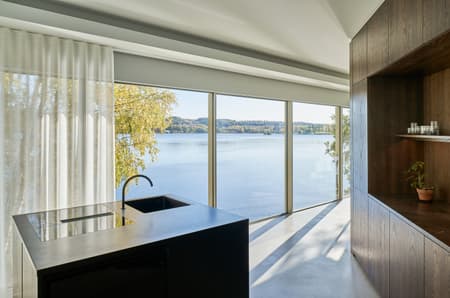
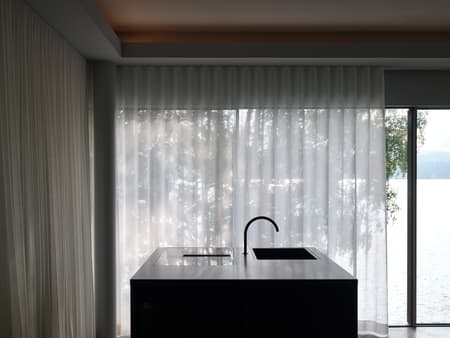
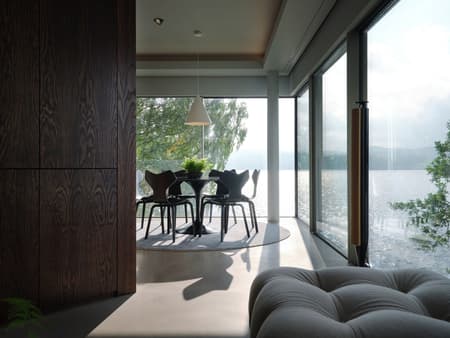
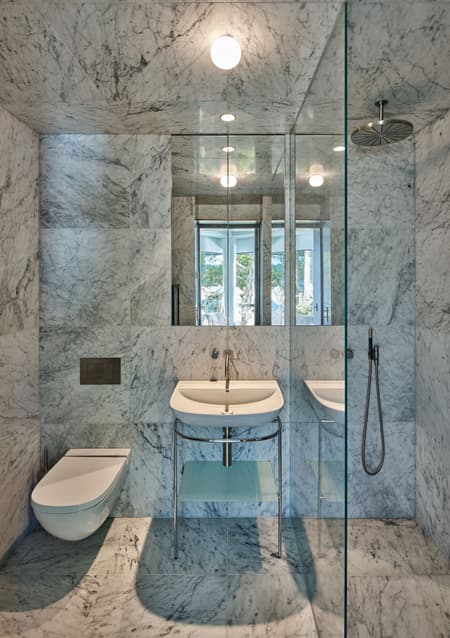
The primary feature of the main house is inside: A central, 'solid' core cube, containing bathroom, kitchen, and storage, is rotated in plan at a 45° angle to the house itself. The result of this is an open plan that still has four defined 'rooms' – entrance/kitchen, dining room, living room, bedroom – with an intact spatial flow. This core cube is entirely clad in wood, adding warmth to the otherwise 'hard' palette of concrete, glass, and steel. The inner cube is continued structurally underneath the house, making for the central 'mushroom stalk' foundation from which most of the house cantilevers out.

.jpg?w=450&q=75&dpl=dpl_6NKhQbYoNKZ4YGsW1tKTDHjTc7uH)
.jpg?w=450&q=75&dpl=dpl_6NKhQbYoNKZ4YGsW1tKTDHjTc7uH)
.jpg?w=450&q=75&dpl=dpl_6NKhQbYoNKZ4YGsW1tKTDHjTc7uH)
.jpg?w=450&q=75&dpl=dpl_6NKhQbYoNKZ4YGsW1tKTDHjTc7uH)
.jpg?w=450&q=75&dpl=dpl_6NKhQbYoNKZ4YGsW1tKTDHjTc7uH)
.jpg?w=450&q=75&dpl=dpl_6NKhQbYoNKZ4YGsW1tKTDHjTc7uH)
.jpg?w=450&q=75&dpl=dpl_6NKhQbYoNKZ4YGsW1tKTDHjTc7uH)
.jpg?w=450&q=75&dpl=dpl_6NKhQbYoNKZ4YGsW1tKTDHjTc7uH)