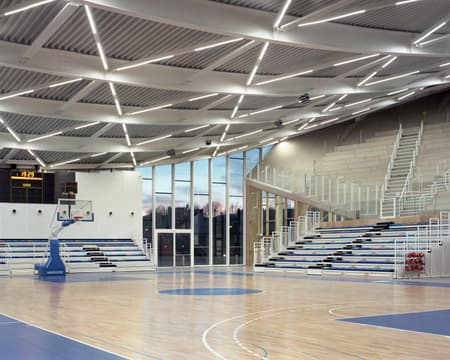
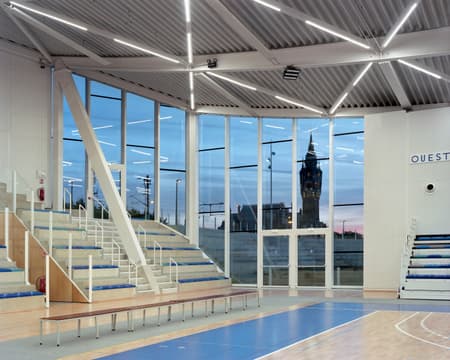
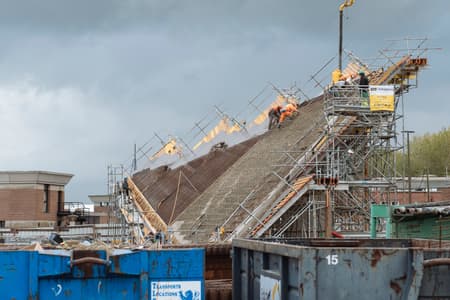
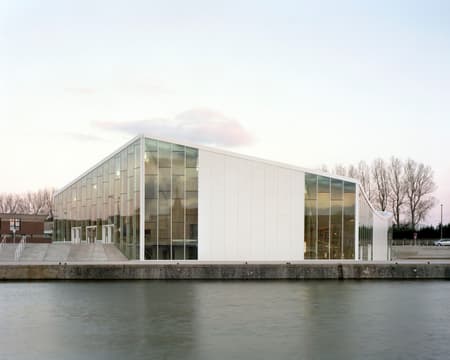
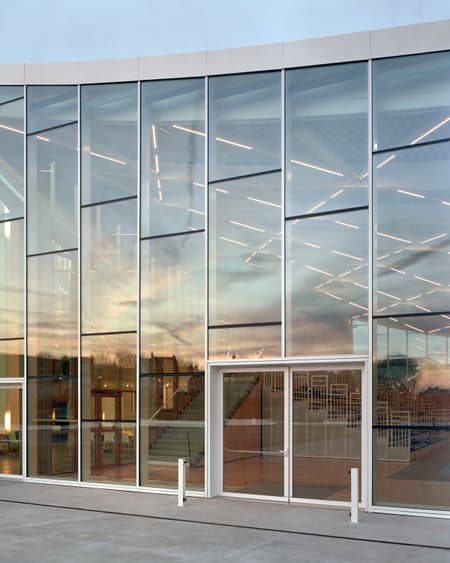
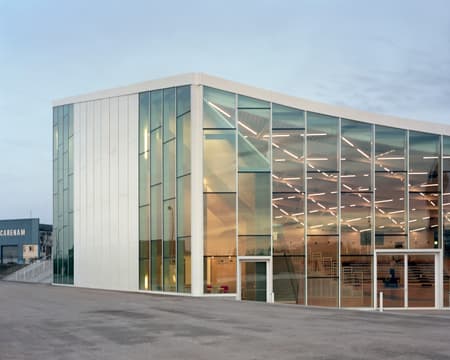
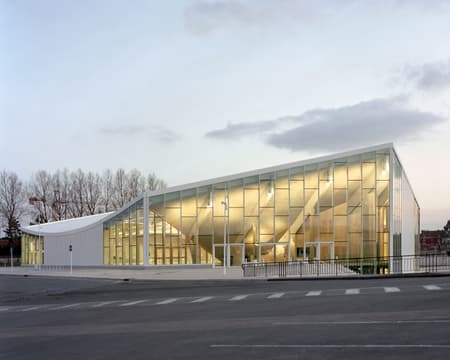
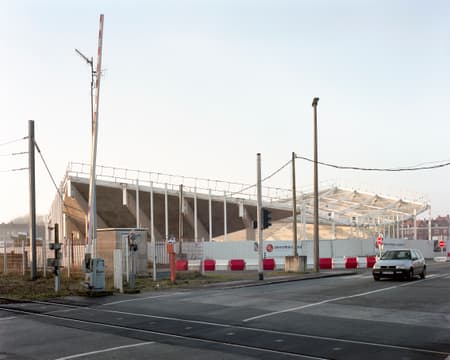
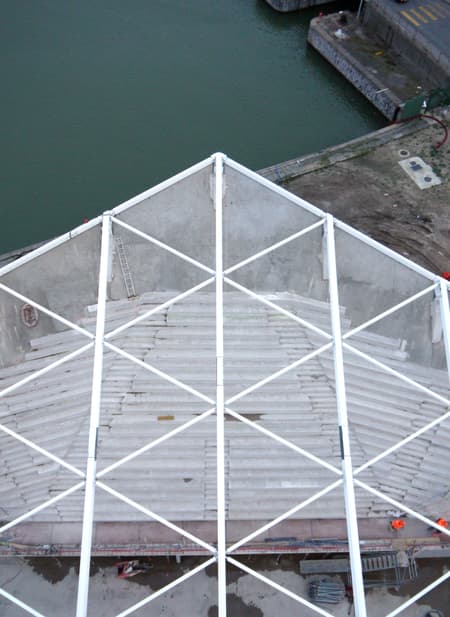
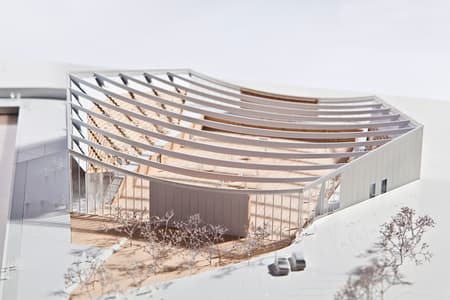
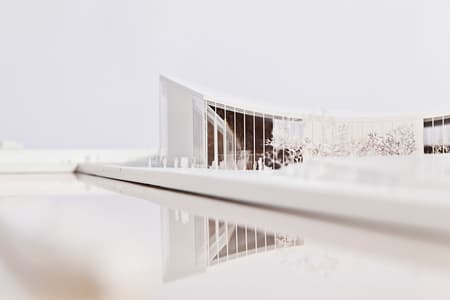
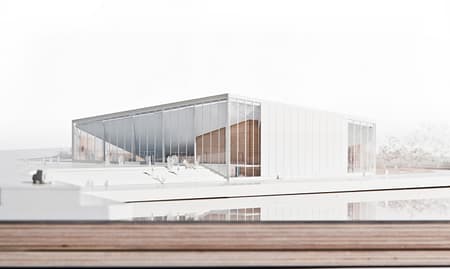
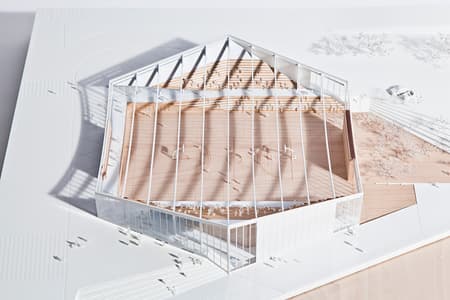
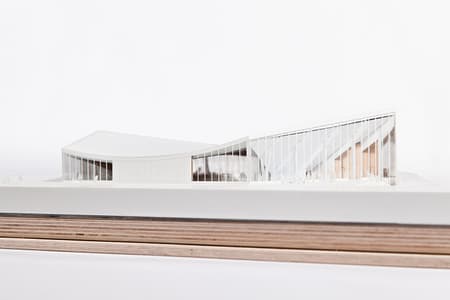
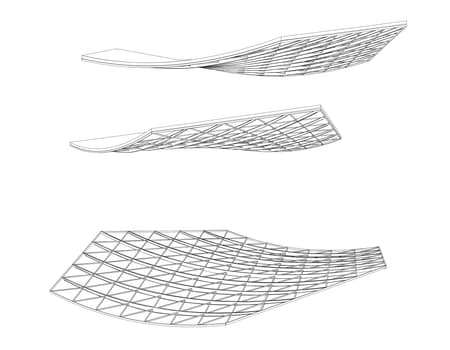
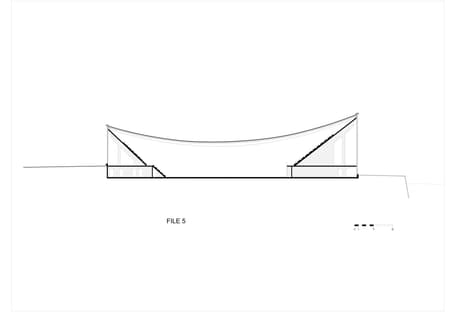
Static Diagram: The cross-sectional work synthesizes both the search for material and resource efficiency. The lightweight, tensioned roof spanning the north and south stands covers a distance of 64 meters. Transferring the roof loads to the inclined walls of the stands frees the façade from any load-bearing elements.
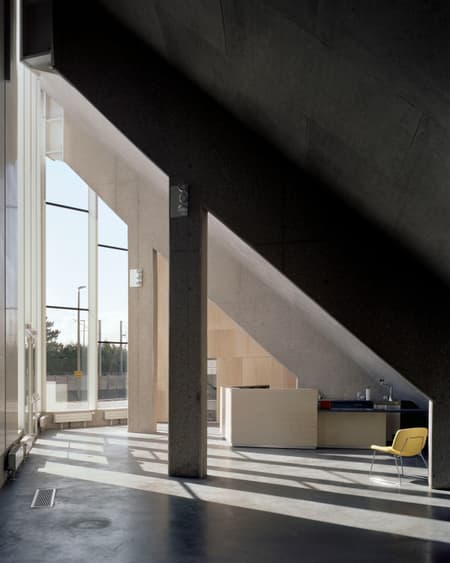
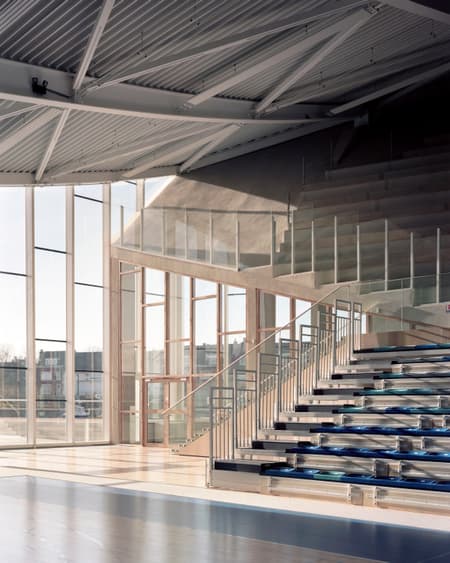
The open spaces beneath the stands house the public reception area, restrooms, and club offices. They also act as acoustic and thermal buffers between the sports hall and the exterior.
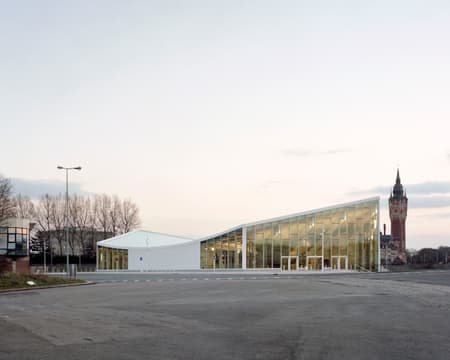
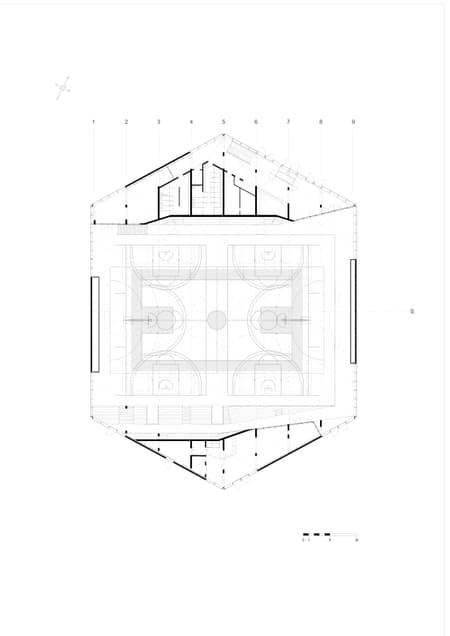
The two-level distribution of the program manages the separation between public and athletic areas and opens the facility on each façade at ground level to its steeply sloping surroundings.
Just as they reveal the facility through transparencies, the six façades open onto the different neighborhoods of Calais that the facility aims to reconnect. The geometry of the project also reflects the optimal organization of the stands, which promotes the cauldron effect characteristic of basketball games.
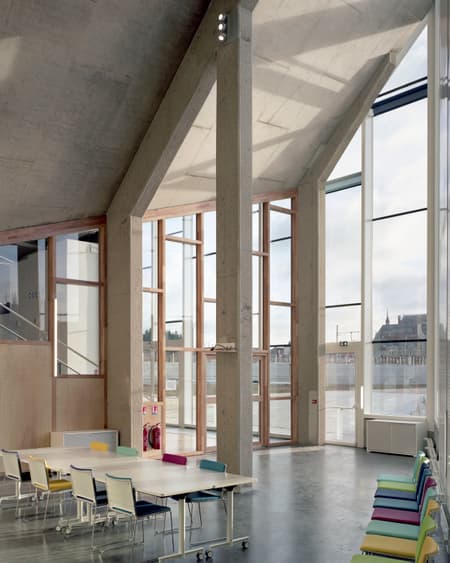
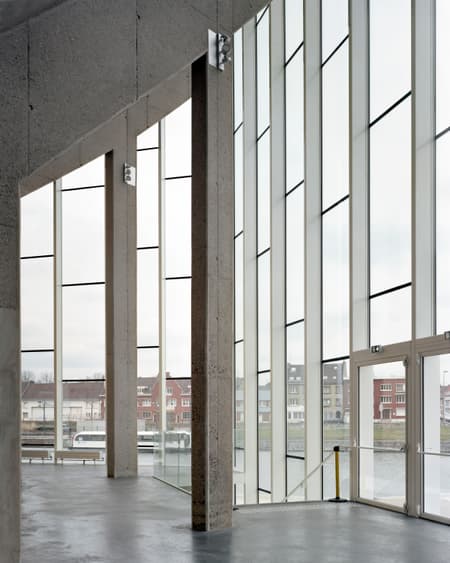
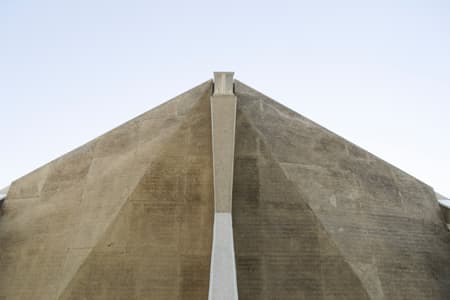
Materiality: The materials are chosen according to the forces they transmit; Steel primarily works in tension, while concrete works in compression. They are left raw, without secondary cladding, but meticulously crafted: the sandblasted concrete reveals the aggregates, whose color echoes the beaches of the seafront, and the finely chamfered edges reference the work of Auguste Perret.
The assembly details and joints are left visible, allowing the path of forces from the roof to the basement to be clearly visible.